Qian Zhan Wang

Search documents
【投资视角】启示2025:中国车路协同行业投融资及兼并重组分析(附投融资汇总和兼并重组等)
Qian Zhan Wang· 2025-06-05 03:13
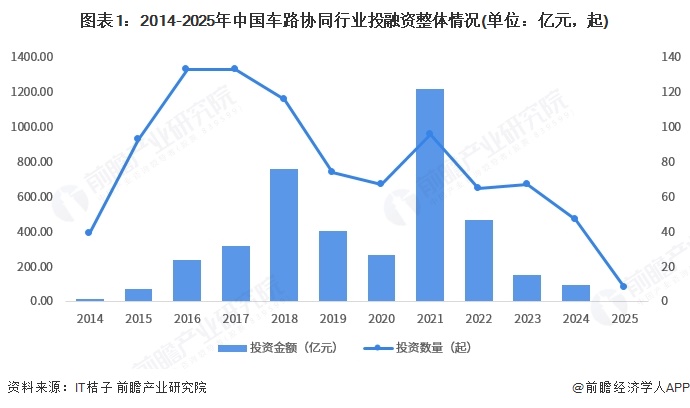
Group 1 - The overall investment scale in China's vehicle-road collaboration industry has increased, but the heat has declined since 2022, with investment events dropping to 65 in 2022 from a peak of 133 in 2017 [1][3] - The investment amount in the vehicle-road collaboration industry has shown fluctuations, reaching 757.92 billion RMB in 2018 and 1,220.47 billion RMB in 2021, but has decreased since 2022 [1][3] - The average single investment amount in the vehicle-road collaboration industry increased significantly to over 1.2 billion RMB in 2021, but is projected to decline to 208 million RMB by 2024 [3][6] Group 2 - The financing rounds in the vehicle-road collaboration industry have evolved from primarily angel and A rounds to a focus on A, B, and strategic investment rounds, indicating a maturation of the industry [6][11] - Investment activities are mainly concentrated in the fields of perception devices, communication, and data platforms [7][11] - The investment entities in the vehicle-road collaboration industry are predominantly investment firms, with notable representatives including Baidu Ventures and Yunhui Capital [14] Group 3 - The vehicle-road collaboration industry is experiencing a rapid development phase, with significant market demand driven by the integration of smart transportation infrastructure and autonomous driving technologies [9][18] - Mergers and acquisitions in the industry are primarily characterized by vertical integration, reflecting a broad coverage of the sector [16][18]




2025年中国航空发动机行业成本结构分析:材料成本占比最大【组图】
Qian Zhan Wang· 2025-06-05 02:10
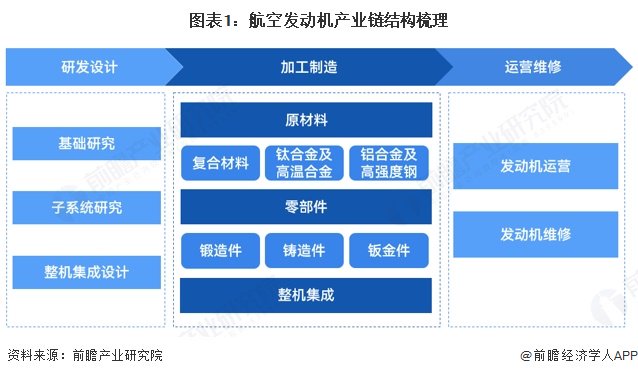
转自:前瞻产业研究院 行业主要上市公司:航发科技(600391);航发动力(600893);航发控制(000738);应流股份(603308);中航重机 (600765)等 ——制造阶段成本结构:原材料成本占比最高 航空发动机制造成本(不含控制系统)主要由两部分组成:原材料成本、劳动力成本,分别占比在 40%-60%,25%-35%。发动机使用的原材料主要是高温合金、钛合金,两者价值占比分别在35%、30% 左右。高温合金涉及的主要材料是镍、钴金属,钛合金主要是钛。发动机应用的其他材料还包括铝合 金、钢等。 ——中国已基本建立完整的研制生产体系 航空发动机产业链包括研发设计、加工制造(原材料、零部件、整机制造)、运营维修等环节。我国目前 已基本建立了完整的航空发动机研制和生产体系。 ——研发阶段成本结构:实验费用占比50% 据《航空发动机-飞机的心脏》所述,航空发动机研发阶段费用按成本构成拆分,设计费用占比10%、 试验费用占比50%、研发阶段制造费用占比40%。 本文核心数据:成本结构等 ——维护阶段成本结构:零备件航材成本占比过半 《发动机制造商另辟商机谈航空发动机售后服务和热端部件的典型修理技术》数据显 ...


从破局者到领导者!温氏盐焗鸡斩获“连续四年全国销售规模第一”权威认证
Qian Zhan Wang· 2025-06-04 11:10
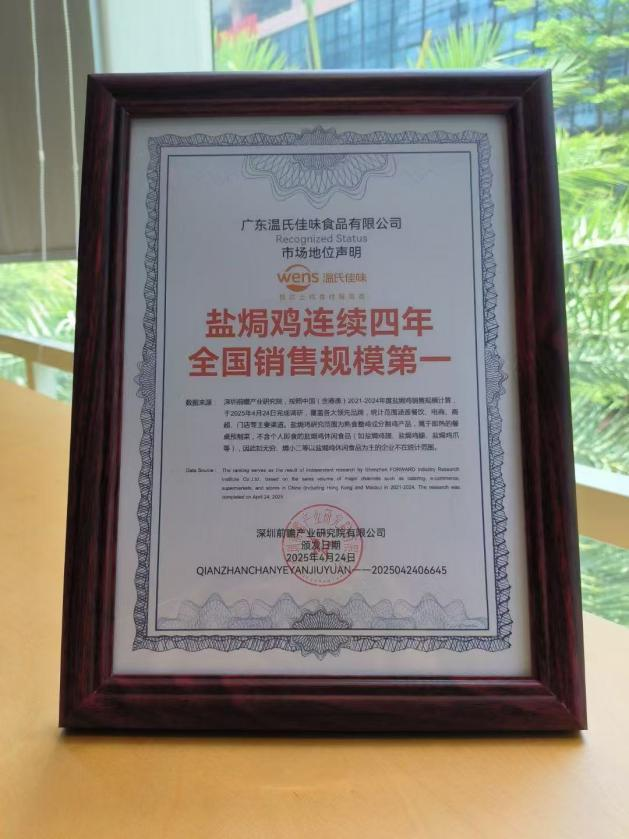
前瞻产业研究院作为全国领先的市场研究与认证机构,27年来深耕6600+细分市场,是国内唯一自主研发产 业大数据并获得"双软"认证产业咨询机构,能为企业市场地位证明提供专业背书。本次认证涉及的大量翔实 数据,均基于前瞻产业研究院自研行业数据库,企业相关负责人及行业专家访谈,以及企业年报、权威机构 数据、行业研究专题报告等公开资料,确保结论的客观性与公信力。 2025年4月,经过前瞻产业研究院专业认证,温氏佳味盐焗鸡连续四年全国销售规模第一(2021-2024年), 稳居盐焗鸡市场TOP1位置(不含休闲品)。本次认证标志着温氏在盐焗鸡品类领导者地位,代表着市场的 高度认可,同时也为消费者提供了更具公信力的选择参考。 一、盐焗鸡市场增长迅猛,温氏一骑绝尘 盐焗鸡起源于广东,是广东传统三大名菜之一,至今有千年历史。盐焗鸡主要选用客家山区土鸡为原料,经 10几道工序精制而成,有"鲜润、咸香、醇厚"的特点,是客家传统饮食文化品牌、世界客属华侨"寻根问 祖"的标志。因此盐焗鸡主要流行于广东惠州、深圳、河源、梅州等集中地,并在我国香港地区以及广东籍 华侨集中的海外地区都颇受喜爱。 近年来,为大力发展盐焗鸡产业,广东省加快了盐 ...

2025年中国纺织发展现状分析:规上工业增加值整体上涨,产能利用水平稳中有升
Qian Zhan Wang· 2025-06-04 05:10
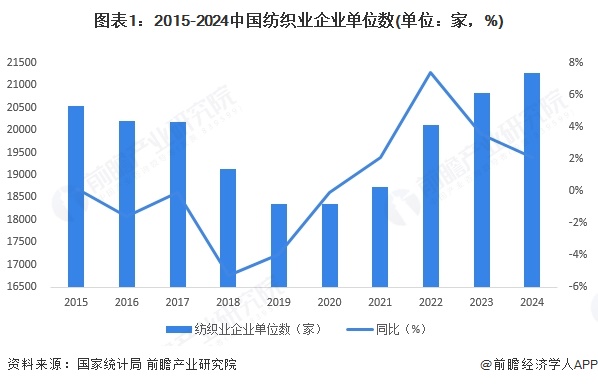
Group 1 - The number of textile enterprises in China has shown a fluctuating trend, decreasing initially and then increasing, with a total of 21,263 enterprises by the end of 2024, representing a year-on-year growth of 2.12% [1] - The industrial added value of the textile industry in China has been on an upward trend, with a significant increase of 5.1% in 2024, marking the highest growth rate in eight years, although still 0.7 percentage points below the national average [2] - The capacity utilization rate in the textile industry improved in 2024, reaching 78.5%, which is 2.1 percentage points higher than the previous year, indicating a stable growth in supply [5][6] Group 2 - The production situation in the textile industry for 2024 is generally positive, with significant growth in the output of chemical fibers, yarn, and clothing, among others, with yarn production reaching 22.779 million tons, a year-on-year increase of 1.3% [8] - Inventory levels in the textile industry have stabilized, with the inventory days for grey cloth and yarn fluctuating between 34.2 to 41.5 days and 24.4 to 32.4 days respectively in 2024, indicating a balanced market supply and demand relationship [9]
【蝶阀】行业市场规模:2024年中国蝶阀行业市场规模约130亿元 化工市场占比约25%~30%
Qian Zhan Wang· 2025-06-04 04:26
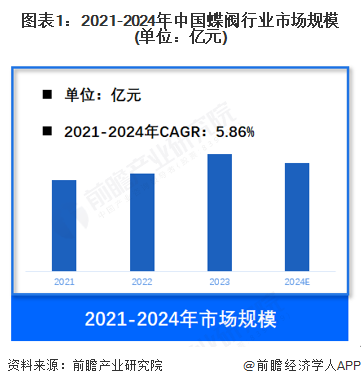
Core Insights - The Chinese butterfly valve industry is projected to reach a market size of approximately 13 billion yuan in 2024, with a compound annual growth rate (CAGR) of 5.86% over the past three years [1][3]. Industry Overview - Butterfly valves are designed to control fluid flow through a rotating disc, making them suitable for quick opening and closing applications, as well as flow regulation [1]. - The industry is experiencing a shift towards high-quality development, integrating advanced control technologies and sensors for remote control, automatic adjustment, and fault diagnosis, enhancing precision and reliability [1]. Application Market - The primary downstream applications for butterfly valves in China include natural gas, electric power, chemical, and water treatment industries, with the chemical and electric power sectors holding the largest market share [3]. - In the chemical sector, butterfly valves are crucial for managing various corrosive, toxic, and flammable media, accounting for approximately 25%-30% of the application market [3]. Industry Competition - The market concentration in the Chinese butterfly valve industry is relatively low, with key players including global leaders like Emerson and Flowserve, as well as domestic companies such as Neway and Jiangsu Shentong [5]. - Emerson offers a range of butterfly valve products, including the KEYSTONE series, while Flowserve provides various types of valves, including lined butterfly valves and high-performance options [5]. - Jiangsu Shentong is recognized as a leading domestic manufacturer, with a diverse range of butterfly valves used across multiple sectors, including metallurgy, nuclear power, and oil and gas [5].
【行业深度】洞察2025:中国靶材行业竞争格局(附海外竞争力分析、企业竞争力评价等)
Qian Zhan Wang· 2025-06-04 03:09
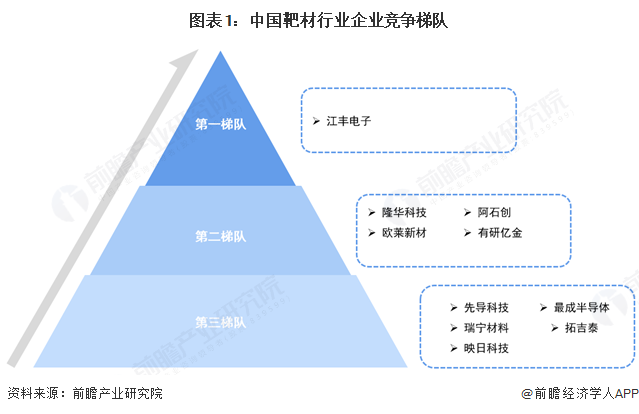
Group 1: Industry Overview - The demand for target materials in China is increasing due to the rapid rise of downstream industries such as semiconductors, flat panel displays, and photovoltaic new energy [1] - The competitive landscape of the target material industry is intensifying, with many listed companies entering the market [1] Group 2: Competitive Landscape - Jiangfeng Electronics leads the industry with a significant revenue scale, while Longhua Technology, Ashi Chuang, Oulai New Materials, and Youyan New Materials are in the second tier [1][3] - The third tier includes companies like Yingri Technology and Xian Dao Technology Group, which have a certain operational scale in target materials [1] Group 3: Company Performance - Jiangfeng Electronics' ultra-pure metal alloy target production increased by 38.29% year-on-year, while Ashi Chuang's sputtering target production grew by 56.88% [3] - Longhua Technology's electronic new materials business saw a 39.76% increase in production, and Oulai New Materials experienced significant growth in ITO targets and other materials [3][4] Group 4: Revenue and Profitability - Jiangfeng Electronics achieved a revenue of 2.333 billion yuan in 2024, with a growth rate of 39.51%, making it the industry leader [6] - Longhua Technology's electronic new materials business revenue reached 678 million yuan, with a year-on-year growth of 43.38% [6] Group 5: International Market Presence - Jiangfeng Electronics generated 1.445 billion yuan in overseas revenue, accounting for 40.10% of total revenue, reflecting strong international market expansion [9] - Longhua Technology's overseas revenue reached 137 million yuan, with a growth rate of 41.67%, while Youyan New Materials saw a decline in overseas revenue [9] Group 6: Regional Distribution - As of May 20, 2025, there are 1,549 companies in China related to target materials, with the majority located in Jiangsu and Guangdong provinces [10] - Guangdong has the highest number of target material companies at 266, followed by Jiangsu with 234, together accounting for 32.3% of the total [10] Group 7: Competitive Dynamics - The target material industry exhibits a stable competitive environment, with high standardization of upstream raw materials and a balanced market [12] - Existing companies have technical advantages, but the industry’s attractiveness may invite new entrants due to high profit margins [12]



预见2025:《2025年中国建筑节能行业全景图谱》(附市场现状、竞争格局和发展趋势等)
Qian Zhan Wang· 2025-06-04 02:12
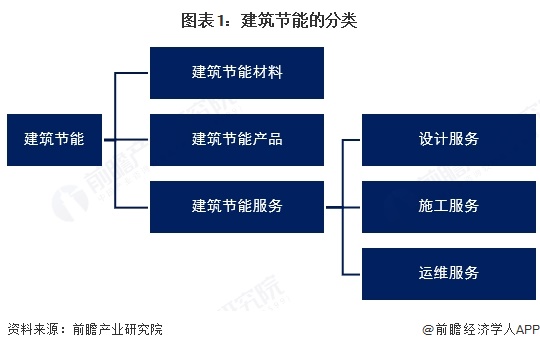
Industry Overview - The building energy-saving industry refers to the implementation of energy-saving standards and the use of energy-efficient technologies, processes, equipment, materials, and products throughout the planning, design, construction, renovation, and operation of buildings [1] - The industry can be categorized into energy-saving products, materials, and services, including design, construction, and operation services [1] Industry Chain Analysis - The upstream of the building energy-saving industry includes the manufacturing of energy-saving materials and equipment [2] - The midstream involves energy-saving products and materials such as thermal insulation materials and heating measurement equipment [2] - The downstream primarily consists of large public buildings, residential buildings, and commercial buildings as end users [2] Industry Development History - The global energy crisis in the 1970s prompted countries to initiate energy-saving programs, with China starting its building energy-saving efforts in the 1980s [5] Policy Background - China's "dual carbon" commitment aims to peak carbon emissions before 2030 and achieve carbon neutrality by 2060, leading to a transition towards zero-energy and zero-carbon buildings [10] - Policies focus on enhancing energy-saving standards for new buildings, retrofitting existing buildings, and promoting renewable energy applications [10] Current Industry Status - In 2022, the total energy consumption of the building sector was 18.4 billion tons of standard coal equivalent, accounting for 36.3% of the national energy consumption [13] - The total carbon emissions from the building sector reached 41.5 billion tons of standard coal equivalent, representing 39.1% of national energy-related carbon emissions [15] - The building operation phase remains the dominant contributor to carbon emissions within the building sector [21] Market Size and Growth - China's building energy-saving market is the third largest globally, with a market size of 160 billion yuan in 2023, projected to reach 195.8 billion yuan in 2024 [23] - The market is expected to grow at a compound annual growth rate of 4%, potentially exceeding 240 billion yuan by 2030 [32] Competitive Landscape - The building energy-saving industry features significant regional disparities in carbon emissions, influenced by population, GDP, climate, and energy structure [25] - Major companies in the sector include China Southern Power Grid, Dasintelligent, and China National Building Material, with a focus on providing comprehensive energy-saving solutions [27]




上下五千年,这座城市从未令一把手失望过
Qian Zhan Wang· 2025-06-04 01:59
Core Insights - The visit of General Secretary Xi Jinping to Luoyang highlights the importance of manufacturing and the successful transformation of the city into a model for industrial upgrading [1][5][19] Group 1: Economic Performance - In Q1 2024, Luoyang's GDP reached 1355.4 billion, with a year-on-year growth of 5.9%, marking the first time in seven quarters that it matched the provincial average [5][7] - The city's industrial added value growth rate is projected to be 7%, the highest in five years, driven by 17 advantageous industrial chains generating over 460 billion [3][18] Group 2: Industrial Transformation - Luoyang is focusing on "Four New and One Equipment" as key development areas, with five advanced manufacturing clusters and 17 advantageous industrial chains [3][18] - The city has seen significant advancements in modern agricultural machinery, new refractory materials, and artificial intelligence, with double-digit revenue growth in future industries [3][12] Group 3: Policy and Strategic Initiatives - Luoyang has implemented several major policies to support advanced manufacturing and industrial chain development, including the "2024 Luoyang Manufacturing High-Quality Development Action Plan" [8][12] - The establishment of a 100 billion industrial guidance fund aims to promote the development of key links in the industrial chain [15][18] Group 4: Innovation and Technology - The city is enhancing its innovation capabilities through initiatives like "Technology Loans" and the establishment of industrial internet systems [12][15] - Luoyang is actively engaging with the Qianzhan Industrial Research Institute to identify potential industrial opportunities and develop strategic plans [8][12] Group 5: Future Outlook - The economic recovery in Luoyang is evident, with projections for a 4.9% growth rate for the year, and significant increases in high-tech manufacturing and high-tech industry value added [18][19] - The city aims to continue focusing on the "Four New and One Equipment" sectors, with plans for over 300 major technological transformation projects [18][19]
2025年中国铅酸蓄电池行业龙头企业分析:坚持技术引领,行业龙头地位进一步巩固【组图】
Qian Zhan Wang· 2025-06-03 08:09
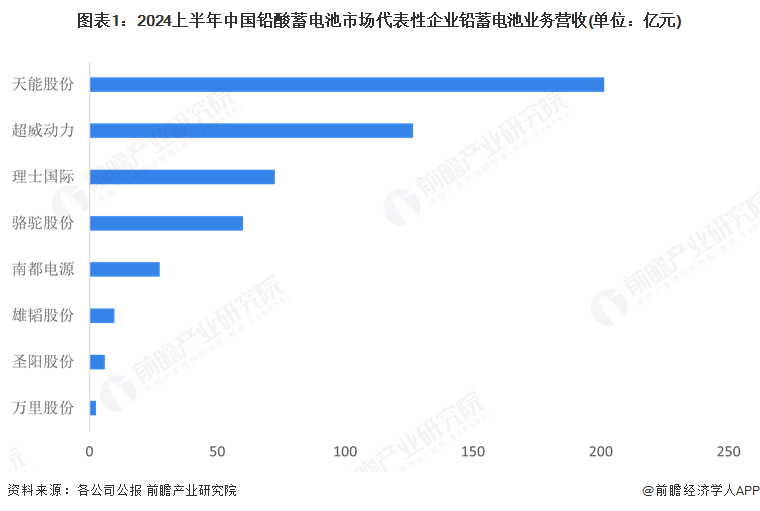
Group 1 - TianNeng Co., Ltd. leads the industry in sales revenue from lead-acid battery business, achieving 20.137 billion yuan in revenue in the first half of 2024, significantly higher than competitors like Chaowei Power, which reported 12.658 billion yuan [1][4] - The company has established ten production bases across five provinces in China and operates over 60 subsidiaries, positioning itself as a leader in the domestic new energy power battery sector [1] - TianNeng's revenue from lead-acid batteries accounted for 93.32% of total revenue in 2024, with a total of 41.835 billion yuan from this segment [7][9] Group 2 - TianNeng has faced operational pressures recently, with total revenue declining to 45.042 billion yuan in 2024, a decrease of 5.67% year-on-year, and net profit dropping to 1.555 billion yuan, down 32.54% [4] - The company has a limited presence in overseas markets, generating only 0.296 billion yuan from international sales, which is just 0.66% of total revenue [9] - Despite challenges, TianNeng is enhancing its lead-acid battery technology and manufacturing scale, with a production output of 12,227.67 million KVAh in 2024, reflecting a year-on-year decrease of 6.05% due to market demand suppression and raw material price fluctuations [12]

2025年全球硅钢行业发展现状 亚洲地区需求增长迅速【组图】
Qian Zhan Wang· 2025-06-03 07:16
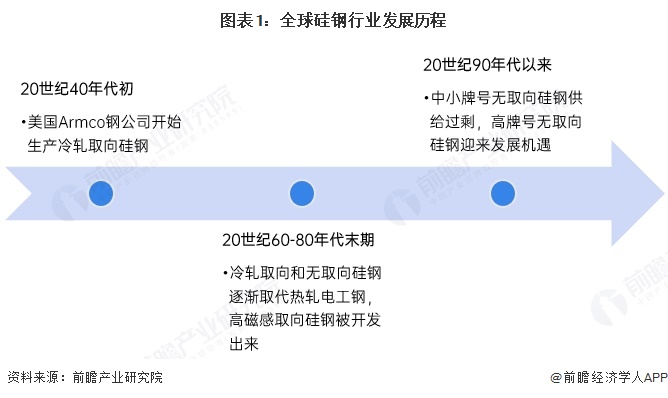
Core Insights - The global silicon steel industry is experiencing significant growth, driven by increasing demand in the automotive and power sectors, particularly for electric vehicles and transformers [11]. Industry Development History - The silicon steel industry began developing in the late 19th century, with a shift from hot-rolled to cold-rolled oriented silicon steel initiated by the American Armco Steel Company in the early 1940s [1]. - By the 1960s to late 1980s, hot-rolled electrical steel was phased out in favor of cold-rolled oriented and non-oriented silicon steel, with advancements in non-oriented silicon steel technology [2]. Market Size and Growth - The global silicon steel market was valued at $30.7 billion in 2023, with a projected growth rate of 5.6%, leading to an estimated market size of approximately $32.4 billion in 2024 [4]. - The industry is characterized by high competition and concentration, with Asia expected to account for over 50% of the global market share [4]. Regional Development Patterns - China leads the oriented silicon steel market with a production capacity share of 56%, followed by Japan (11%) and the USA (7%) [6]. - In the non-oriented silicon steel market, China holds a dominant position with a 67% share, while other Asian countries collectively account for 17% and Europe for 15% [8]. Future Market Outlook - The silicon steel market is anticipated to maintain a growth trend, with a projected compound annual growth rate of 5%, potentially reaching a market size of $43.4 billion by 2030 [11].