Qian Zhan Wang

Search documents
2025年中国多模态大模型行业核心技术现状 关键在表征、翻译、对齐、融合、协同技术【组图】
Qian Zhan Wang· 2025-06-03 05:12
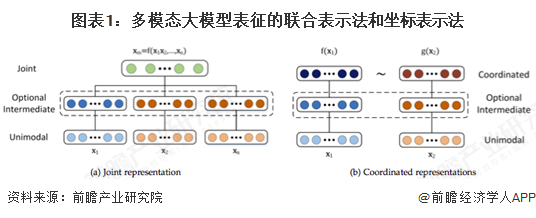
Core Insights - The article discusses the core technologies of multimodal large models, focusing on representation learning, translation, alignment, fusion, and collaborative learning [1][2][7][11][14]. Representation Learning - Representation learning is fundamental for multimodal tasks, addressing challenges such as combining heterogeneous data and handling varying noise levels across different modalities [1]. - Prior to the advent of Transformers, different modalities required distinct representation learning models, such as CNNs for computer vision (CV) and LSTMs for natural language processing (NLP) [1]. - The emergence of Transformers has enabled the unification of multiple modalities and cross-modal tasks, leading to a surge in multimodal pre-training models post-2019 [1]. Translation - Cross-modal translation aims to map source modalities to target modalities, such as generating descriptive sentences from images or vice versa [2]. - The use of syntactic templates allows for structured predictions, where specific words are filled in based on detected attributes [2]. - Encoder-decoder architectures are employed to encode source modality data into latent features, which are then decoded to generate the target modality [2]. Alignment - Alignment is crucial in multimodal learning, focusing on establishing correspondences between different data modalities to enhance understanding of complex scenarios [7]. - Explicit alignment involves categorizing instances with multiple components and measuring similarity, utilizing both unsupervised and supervised methods [7][8]. - Implicit alignment leverages latent representations for tasks without strict alignment, improving performance in applications like visual question answering (VQA) and machine translation [8]. Fusion - Fusion combines multimodal data or features for unified analysis and decision-making, enhancing task performance by integrating information from various modalities [11]. - Early fusion merges features at the feature level, while late fusion combines outputs at the decision level, with hybrid fusion incorporating both approaches [11][12]. - The choice of fusion method depends on the task and data, with neural networks becoming a popular approach for multimodal fusion [12]. Collaborative Learning - Collaborative learning utilizes data from one modality to enhance the model of another modality, categorized into parallel, non-parallel, and hybrid methods [14][15]. - Parallel learning requires direct associations between observations from different modalities, while non-parallel learning relies on overlapping categories [15]. - Hybrid methods connect modalities through shared datasets, allowing one modality to influence the training of another, applicable across various tasks [15].





【干货】矿用机器人产业链全景梳理及区域热力地图
Qian Zhan Wang· 2025-06-03 03:53
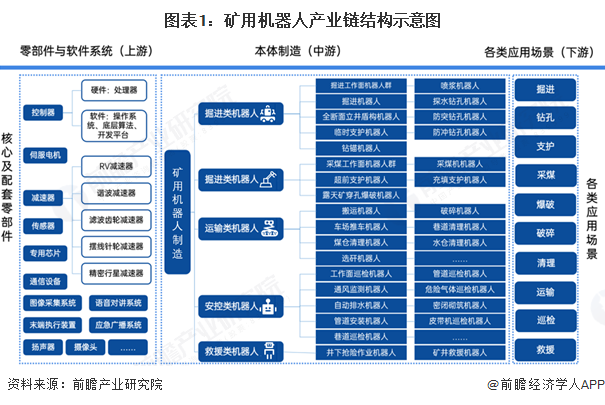
Core Insights - The article discusses the mining robot industry chain, highlighting its similarities to the general robotics industry chain, which includes upstream components, midstream manufacturing, and downstream applications [1][3]. Industry Overview - The mining robot industry relies heavily on international suppliers for core components, with major players like the "Four Families" of robotics controlling key parts, while companies like NVIDIA and Horizon dominate the AI chip market [3]. - Key manufacturers in the midstream include companies such as CITIC Heavy Industries, Zhengzhou Coal Mining Machinery, and China Railway Construction Heavy Industry [3]. Regional Analysis - The mining robot industry is well-developed in regions such as Guangdong, Shaanxi, Shandong, Jiangsu, and Shanxi, with Guangdong and Jiangsu having strong upstream component and equipment manufacturing capabilities [4]. - Other regions with a complete industry chain include Beijing, Hunan, Liaoning, Shanghai, Anhui, and Fujian [4]. Cost Structure - The core components of mining robots, including controllers, servo systems, and reducers, account for 70% of the total cost, with reducers being the most expensive at 35% [8]. - Controllers represent about 15% of the total cost, while servo systems account for 20% [8]. Value Chain Analysis - The growth potential for suppliers of the robot body is limited compared to upstream and downstream players, with the highest profit margins found in reducers (40%), followed by servo systems and integrated systems (35%) [11]. - The profit margin for controllers is 25%, while the robot body has the lowest margin at 15% [11].


【投资视角】启示2025:中国电线电缆行业投融资及兼并重组分析(附投融资事件、产业基金和兼并重组等)
Qian Zhan Wang· 2025-06-03 03:26
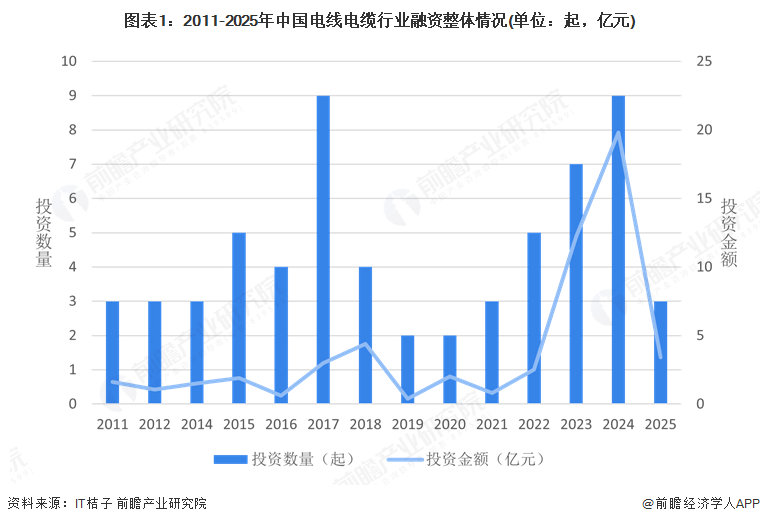
转自:前瞻产业研究院 行业主要上市公司:金杯电工(002533.SZ);宝胜股份(600973.SH);远东股份(600869.SH);金龙羽(002882.SZ);汉 缆股份(002498.SZ);尚纬股份(603333.SH);起帆电缆(605222.SH)等 本文核心数据:电线电缆行业投融资规模;代表性企业融资事件;兼并重组 1、近期国内电线电缆行业投融资规模近年迅速增长 电线电缆行业作为传统制造产业,据IT桔子统计,2020年及之前国内融资事件较少;2021年,随着新能源的 火热和智能电网等兴起,以及产业升级背景下对高端制造装备的需求,都进一步刺激了特种电线电缆的发 展,具有核心研发技术优势的企业获得资本融资,投资数量从2020年的2起增长至2024年的9起;融资金额也 从2020年的2亿元升至2024年的19.8亿元。2025年截至3月31日,我国电线电缆行业融资数量已有3起,金额 累计已达3.4亿元。 2、电线电缆领域单笔融资规模呈增加趋势,投资轮次开始集中在晚期战略投资阶段 从单笔融资金额来看,2011-2017年平均规模基本在5000万元以下,近年来整体呈升高趋势,2024年平均单 笔融资金额 ...





2025年中国AR眼镜产业十大创新企业:Xreal、雷鸟创新、灵伴科技、光粒科技、星纪魅族……
Qian Zhan Wang· 2025-06-03 01:20
Core Insights - The AR industry is increasingly recognized as a key area for strategic development in the digital economy, with significant government support in China [2][4]. - AR glasses are positioned as a crucial component of the AR technology landscape, with policies evolving from the "13th Five-Year Plan" to the "14th Five-Year Plan," highlighting the industry's importance [2][4]. - The competitive landscape in the AR sector is diverse, with major players categorized into three groups: international tech giants, domestic smartphone manufacturers, and emerging AR companies [4][5]. Industry Overview - The Chinese government views AR as a vital part of its strategic emerging industries, with ongoing support and investment [2]. - The "14th Five-Year Plan" explicitly includes VR/AR as one of the seven key industries in the digital economy, indicating a strong commitment to the sector's growth [2]. - Future plans, such as the "15th Five-Year Plan," are expected to continue prioritizing VR/AR technologies, focusing on domestic technical support and development [2]. Competitive Landscape - International tech giants like Microsoft, Meta, Apple, Samsung, and Google leverage their technological expertise and brand influence to invest heavily in AR research and development [4][5]. - Domestic smartphone manufacturers, including Huawei and Xiaomi, integrate AR technology into their products, benefiting from established user bases and supply chains [4][5]. - Emerging AR companies such as Xreal, Rokid, and Thunder Innovation adopt unique technological advantages and innovative strategies to carve out market positions [4][5]. Market Dynamics - Chinese AR companies are rapidly capturing the consumer market by overcoming key technological challenges, particularly in waveguide technology [7][9]. - According to IDC data, in 2023, Xreal, Rokid, and Thunder Innovation held global market shares of 45%, 14%, and 13%, respectively, while foreign brands dominate high-end and professional segments [7][9]. - The integration of AI and innovative application scenarios is driving the growth of consumer-grade AR products in China [9]. Key Players - Xreal, founded in 2018, leads the global AR market with a 47.2% share as of 2024, focusing on consumer-grade AR glasses [15][17]. - Thunder Innovation, established in 2021, is notable for its unique optical solutions and has developed the world's first mass-produced full-color Micro LED waveguide AR glasses [19][21]. - Rokid, founded in 2014, specializes in human-computer interaction technologies and has a diverse range of AR products applied across various industries [22][23]. - INMO, established in 2020, focuses on smart glasses and has made significant advancements in AR and AI technologies [24][25]. - Starry Meizu, founded in 2021, has quickly gained market share with its AR glasses, achieving a 41.5% market share in the 2000-2999 yuan price segment [26][27]. Technological Trends - The AR glasses market is evolving with advancements in optical and micro-display technologies, including optical see-through and video see-through methods [43][45]. - Optical waveguide technology is becoming a key focus, enabling clearer imaging and larger fields of view, which are essential for consumer adoption [49][50]. - The integration of AI with AR is anticipated to transform user experiences, with predictions that AR glasses could eventually replace smartphones within the next decade [50].


电线电缆产业招商清单:宝胜股份、远东股份、起帆电缆等最新投资动向【附关键企业名录】
Qian Zhan Wang· 2025-06-02 06:09
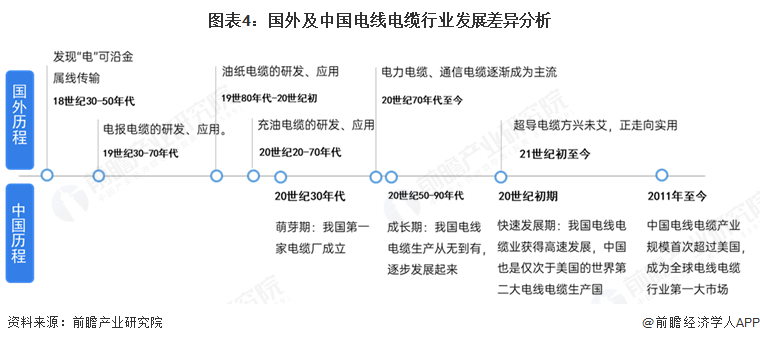
Core Viewpoint - The wire and cable industry is a crucial foundational industry for the national economy, widely applied in power transmission, communication, construction, and transportation, reflecting the manufacturing level of a country [1][10]. Industry Overview - The wire and cable industry has experienced rapid growth in China since the 1990s, supported by national policies and market demand, making China the second-largest producer of wire and cable globally, surpassing the US in 2011 [1][10]. - The industry is characterized by a mature industrial system, with upstream industries providing raw materials, midstream companies focusing on various cable products, and downstream sectors including engineering machinery, communication, and power industries [4][10]. Market Dynamics - The global market for wire and cable products is shifting towards the Asia-Pacific region, particularly China, driven by the rapid development of industries such as electricity, oil, chemicals, and urban rail transit [10][22]. - In 2021, the total sales revenue of the wire and cable industry in China reached 1,115.4 billion yuan, with Baosheng Co. leading the market with a revenue of 40.659 billion yuan, capturing a market share of 3.65% [10][18]. Leading Companies - The top 10 global wire and cable manufacturers in 2023 include three Chinese companies, indicating an increase in international competitiveness and overall strength [3][4]. - Baosheng Technology Innovation Co., established in 2000, is the only large state-owned enterprise in the domestic wire and cable industry, with a registered capital of 137,136.62 million yuan [13][16]. R&D and Innovation - The wire and cable industry is focusing on R&D in areas such as renewable energy, underwater cables, and advanced materials, reflecting the industry's adaptation to new applications and technologies [22][23]. - Baosheng Co. has been recognized as a leading brand in the industry, participating in drafting 85 industry standards and holding advanced production technologies [17][18]. Cost Structure - The cost structure of the wire and cable industry shows that raw material costs account for approximately 71%, labor costs for about 14%, facility costs for around 10%, and electricity costs for about 5% [18][20]. Regional Distribution - The majority of wire and cable enterprises in China are concentrated in economically developed regions, particularly in Hebei, Guangdong, and Zhejiang provinces, with Hebei alone housing 3,944 related enterprises [20][22]. Future Outlook - The industry is expected to continue evolving with the integration of new technologies and the push for green and low-carbon manufacturing practices, aligning with national policies for sustainable development [25][23].
2025年中国多模态大模型行业模型现状 图像、视频、音频、3D模型等终将打通和融合【组图】
Qian Zhan Wang· 2025-06-01 05:09
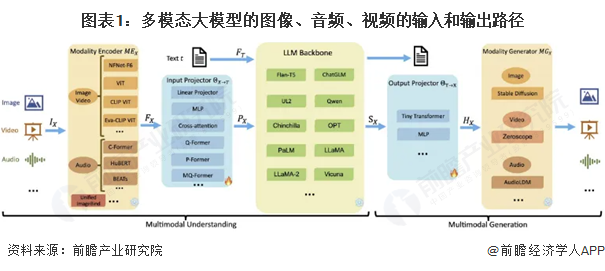
Core Insights - The exploration of multimodal large models is making gradual progress, with a focus on breakthroughs in visual modalities, aiming for an "Any-to-Any" model that requires successful pathways across various modalities [1] - The industry is currently concentrating on enhancing perception and generation models in image, video, and 3D modalities, with the goal of achieving cross-modal integration and sharing [1] Multimodal Large Models in Image - Prior to the rise of LLMs in 2023, the industry had already established a solid foundation in image understanding and generation, resulting in models like CLIP, Stable Diffusion, and GAN, which led to applications such as Midjourney and DALL·E [2] - The industry is actively exploring the integration of Transformer models into image-related tasks, with significant outcomes including GLIP, SAM, and GPT-V [2] Multimodal Large Models in Video - Video generation is being approached by transferring image generation models to video, utilizing image data for training and aligning temporal dimensions to achieve text-to-video results [5] - Recent advancements include models like VideoLDM and Sora, which demonstrate significant breakthroughs in video generation using the Diffusion Transformer architecture [5] Multimodal Large Models in 3D - The generation of 3D models is being explored by extending 2D image generation methods, with key models such as 3D GAN, MeshDiffusion, and Instant3D emerging in the industry [8][9] - 3D data representation includes various formats like meshes, point clouds, and NeRF, with NeRF being a critical technology for 3D data representation [9] Multimodal Large Models in Audio - AI technologies related to audio have matured, with recent applications of Transformer models enhancing audio understanding and generation, exemplified by projects like Whisper large-v3 and VALL-E [11] - The evolution of speech technology is categorized into three stages, with a focus on enhancing generalization capabilities across multiple languages and tasks [11]
2025年中国AR眼镜产业最具潜力企业:雷鸟创新、灵伴科技、影目科技、XREAL、亮风台
Qian Zhan Wang· 2025-06-01 03:14
Core Insights - The AR glasses industry is experiencing unprecedented growth opportunities due to advancements in AI, 5G communication, and optical technology, with global AR shipments expected to reach 1.8 million units by 2027, reflecting a CAGR of 37.7% [2] - China, as the largest consumer electronics market, shows significant potential in the AR glasses sector, driven by a large consumer base, a complete industrial chain, and strong government support for technological innovation [5] Industry Overview - The AR glasses market is projected to exceed 8 million units by 2030, indicating a robust growth trend that attracts global attention [2] - A competitive landscape has emerged in China, characterized by a "battle of hundreds of glasses," with both established tech giants and emerging startups actively exploring the AR glasses market [5] Key Players - Leading domestic AR manufacturers are primarily startups, which have rapidly gained market presence through keen market insights and efficient execution [5] - Notable companies in the Chinese AR glasses market include: - **Thunderbird Innovation**: Founded in 2021, it has raised over 1 billion RMB in initial funding and completed multiple rounds of financing totaling over 500 million RMB [10][11] - **Rokid**: Established in 2014, it has raised over 2 billion RMB, with a valuation exceeding 1 billion USD [12][14] - **INMO**: Founded in 2020, it has achieved a valuation of 1.5 billion RMB and focuses on AR and AI integration [16] - **XREAL**: Founded in 2017, it has raised over 300 million USD and holds a significant market share in the global AR market [19][20] - **Lightwind**: Established in 2012, it has raised over 500 million RMB and provides AR solutions across various industries [21][22] Market Dynamics - The AR glasses market in China is dominated by a few key players, with XREAL, Thunderbird Innovation, Rokid, and INMO collectively holding over 80% of the market share based on shipment volume [6] - The market is characterized by a significant focus on consumer applications, with 91% of users primarily using AR glasses for viewing and gaming [23] Technological Trends - The industry is witnessing rapid technological advancements, including improvements in optical display technology and the integration of AI with AR, enhancing user experience and product capabilities [30] - The supply chain for AR components is increasingly localized, with a focus on domestic production of critical components like optical waveguide lenses and Micro-OLED displays [30] Future Outlook - The AR glasses market is expected to expand significantly, with shipments projected to reach 240,000 units in 2023, a year-on-year increase of 133.9%, and an estimated 484,000 units in 2024 [30] - The industry is supported by national strategies and policies, with significant funding allocated to promote research and development in AR technologies [30]

预见2025:《2025年中国丝绸行业全景图谱》(附市场现状和发展趋势等)
Qian Zhan Wang· 2025-06-01 01:11
Industry Overview - Silk is defined as a natural protein fiber, often referred to as the "queen of fibers" and "second skin," known for its luxurious appearance and skin-friendly properties, aligning with the trend of green consumption [1] - The silk industry in China has developed a complete industrial chain encompassing raw material supply, silk manufacturing, and product distribution [3][4] - Major silk products include raw silk, silk fabrics, and silk quilts, with the industry experiencing significant historical evolution from ancient times to modern-day [7][8] Industry Development Status - The silk market in China has shown fluctuations since 2020, with a slight decline in 2022 due to the pandemic and international consumption issues, but rebounded in 2023 with revenues reaching 724.2 billion yuan, a 9.0% increase year-on-year [13] - The production of silk quilts has decreased by 7.53%, while raw silk and satin production have increased by 3.79% and 6.25%, respectively [15] - The silk weaving and processing sector has the largest revenue share, with silk processing companies seeing a revenue increase of 11.36% in 2024 [16] Competitive Landscape - The silk industry is regionally concentrated, with upstream silk production primarily in Guangxi and manufacturing in Jiangsu and Zhejiang [19] - Jiaxin Silk is identified as the leading company in the industry, achieving a revenue of 3.817 billion yuan in 2024, marking a 6.41% growth [21] Future Trends and Predictions - The silk industry is expected to focus on technological innovation and industrial upgrades, with AI and smart production becoming increasingly prevalent [24] - Sustainable development is a key direction, driven by environmental policies and consumer demand for green products [24] - Brand building and market expansion are intensifying, with companies focusing on enhancing brand recognition and international competitiveness [24]



【最全】2025年融资租赁行业上市公司全方位对比(附业务布局汇总、业绩对比、业务规划等)
Qian Zhan Wang· 2025-05-31 07:10
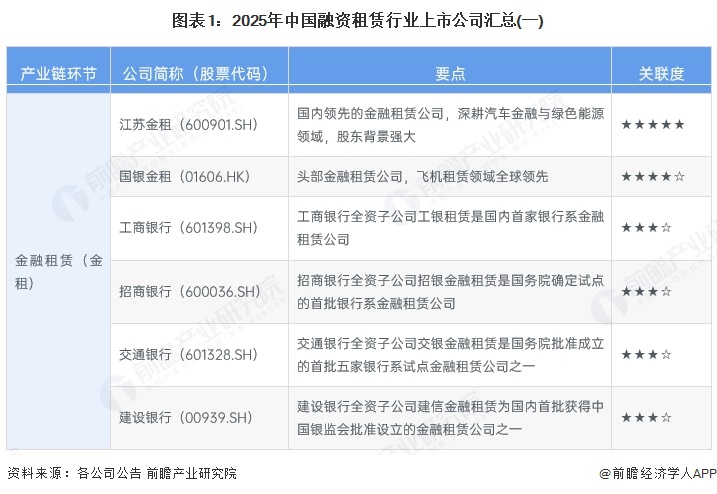
Summary of Key Points Core Viewpoint - The financing leasing industry in China has seen significant growth, with over 20 listed companies, primarily concentrated in the Hong Kong market due to its more flexible listing environment compared to mainland China [1]. Group 1: Overview of Listed Companies - The majority of financing leasing companies are listed in Hong Kong, where the listing requirements are relatively lower, attracting many firms to seek financing through this market [1]. - Only two financing leasing companies, Bohai Leasing and Jiangsu Jinzu, have successfully listed in the A-share market due to stricter regulations [1]. Group 2: Company Profiles and Business Layout - Jiangsu Jinzu (600901.SH) is a leading financial leasing company focusing on automotive finance and green energy, backed by strong shareholders [2]. - Guoyin Jinzu (01606.HK) is a top financial leasing company, globally leading in aircraft leasing [2]. - Bohai Leasing (000415.SZ) is a global leader in aircraft and container leasing, with a significant asset scale [5]. - China Aircraft Leasing (01848.HK) is the largest independent aircraft leasing company in China and the first listed in Asia [5]. - Far East Horizon (03360.HK) is a comprehensive financing leasing leader covering multiple sectors including healthcare and education [5]. Group 3: Financial Performance and Business Metrics - The revenue of Bohai Leasing for 2024 is projected at 384.31 billion, while Far East Horizon is expected to generate 377.49 billion [6]. - Guoyin Jinzu anticipates a revenue of 120.92 billion with a net profit margin of 15.88% for 2024 [14]. - Jiangsu Jinzu's revenue is projected at 39.59 billion with a net profit margin of 56.25% [14]. - The financing leasing business of China Aircraft Leasing is expected to generate 43.50 billion (HKD) with a net profit margin of 7.49% [14]. Group 4: Future Business Plans and Strategies - Jiangsu Jinzu plans to deepen its equipment leasing business and expand its customer base among small and medium enterprises [17]. - Guoyin Jinzu aims to focus on digital transformation and expand its vehicle retail financial services [17]. - Bohai Leasing intends to optimize its business structure and explore new areas such as green leasing [17]. - Far East Horizon will continue to deepen its presence in healthcare, education, and infrastructure sectors [17]. - China Aircraft Leasing plans to enhance its aircraft leasing capabilities and explore new business models [17]. Group 5: Industry Trends and Developments - The financing leasing industry is increasingly focusing on technology empowerment and digital transformation to support the real economy and green development [15]. - Companies are expected to enhance risk management and compliance to improve their core competitiveness and market influence [15].


汽车零部件产业招商清单:宁德时代、福耀玻璃、华域汽车等最新投资动向【附关键企业名录】
Qian Zhan Wang· 2025-05-31 06:05
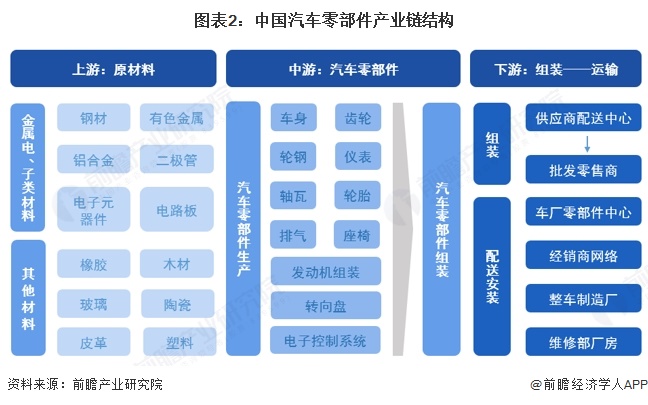
Core Insights - The rapid growth of the new energy vehicle (NEV) industry in China has provided a historical opportunity for the automotive sector, breaking the long-standing foreign brand monopoly in traditional fuel vehicles and fostering competitive domestic enterprises [1][3] - The NEV industry has driven the development of key components such as batteries, motors, and electronic control systems, as well as infrastructure like charging stations, contributing to technological innovation and industrial upgrades in related fields [1] - China has established a comprehensive automotive parts supply chain, making it the largest and most complete in the world [1] Industry Development - Major cities in China, including Shenzhen, Shanghai, and Beijing, are actively building their NEV industries to create world-class "NEV capitals" [3] - Local governments prioritize attracting automotive parts manufacturers to enhance regional economic competitiveness and sustainability [3] - The clustering effect from these initiatives reduces operational costs and promotes technological exchange and innovation among companies [3] Key Players in Automotive Parts Industry - The automotive parts industry in China includes numerous key players across various segments: - Engine systems: Weichai Power, Huayu Automotive - Body components: Fuyao Glass, Zhongce Rubber - Driving systems: Zhongce Rubber (tires), Huawei (autonomous driving systems) - Electronic systems: CATL, Joyson Electronics [3] Market Size and Trends - The automotive parts manufacturing industry in China generated revenues of 3.63 trillion yuan in 2020, with the market size surpassing 4.5 trillion yuan in 2023 [21] - The domestic automotive parts industry is expected to see significant growth due to the push for localization and the increasing demand for core components like automotive electronics and semiconductor chips [23][25] Leading Companies - CATL, founded in 2011, is a leading player in the automotive parts industry, specializing in battery systems and holding a significant market share in both power and energy storage batteries [9][12] - CATL's market share in the power battery sector exceeds 5%, while in the energy storage battery sector, it dominates with over 30% market share [15][17] - The company has invested heavily in R&D, with over 700 billion yuan in cumulative investment over the past decade, and 186 billion yuan in 2024 alone [19]