
Zhong Guo Zi Ran Zi Yuan Bao

Search documents
安徽桐城15座废弃矿山重披绿装 生态治理总面积达34.89公顷
Zhong Guo Zi Ran Zi Yuan Bao· 2025-09-23 01:49
Core Viewpoint - The article highlights the successful implementation of ecological restoration in mining areas in Tongcheng City, Anhui Province, showcasing a model project that integrates mining activities with environmental recovery and green development [1][2]. Group 1: Ecological Restoration Efforts - Tongcheng City has accelerated its ecological restoration work in mining areas, completing the restoration of 15 abandoned mines with a total area of 34.89 hectares [1]. - The city adheres to the principle of "mining while restoring and greening," transforming previously barren and damaged landscapes into vibrant green areas [1]. Group 2: Planning and Strategy - The city has developed the "Tongcheng City Land Space Ecological Restoration Plan (2022-2035)," which outlines clear goals and tasks for ecological restoration in mining areas, targeting a total restoration area of 124.47 hectares [2]. - A new mechanism for coordinated management of active and historical mining sites has been established to promote green mining practices [2]. Group 3: Innovative Approaches - Tongcheng City aims to achieve a win-win situation for economic and ecological benefits by integrating surplus sand and gravel from restoration projects into the municipal public resource trading platform for regulated sales [2]. - The city encourages the development of specialty industries such as greenhouse fruits and vegetables and edible fungi in restored mining areas, linking ecological restoration with rural industrial revitalization [2]. Group 4: Regulatory Measures - The city implements a "one mine, one policy" approach to manage geological disaster prevention, vegetation recovery, and land remediation, ensuring the sustainability of restoration outcomes [2]. - Public awareness campaigns are conducted to promote the concept that "lucid waters and lush mountains are invaluable assets," fostering a collaborative atmosphere for ecological governance [2].
我国首个低空高光谱遥感数据获取行业标准发布
Zhong Guo Zi Ran Zi Yuan Bao· 2025-09-22 11:45
Core Points - The newly approved standard for low-altitude hyperspectral remote sensing data acquisition is the first of its kind in China, set to be implemented on December 1, 2025 [1] - The standard addresses long-standing issues in the industry, including the lack of guiding standards, inconsistent technical processes, varying equipment performance, and significant differences in result quality [1] Group 1 - The standard was developed over nearly five years, initiated in 2020, involving multiple rounds of research, technical discussions, experiments, and expert validations [1] - It unifies technical standards, fills a gap in the industry, and provides a reference for production operations in related projects [1] - The standard clarifies technical parameters, serving as a basis for the development of related software and hardware products [1] Group 2 - The implementation of the standard is expected to enhance the quality and reliability of results, supporting more precise applications [1] - The standard will accelerate technological innovation and application, empowering industry development [1] - Low-altitude hyperspectral remote sensing technology is widely applied in various fields, including precision agriculture, ecological environment monitoring, mineral resources exploration, and emergency mapping [2]
“智斗”浒苔绿潮——北海局构建海洋灾害防控新体系纪实
Zhong Guo Zi Ran Zi Yuan Bao· 2025-09-22 09:43
Core Viewpoint - The article discusses the implementation of a comprehensive monitoring and early warning system for the green tide phenomenon in the Yellow Sea, focusing on the integration of advanced technologies to enhance disaster prevention and response capabilities [1][3]. Group 1: Monitoring and Early Warning System - The "Huang Hai Green Tide Disaster Monitoring and Early Warning Capability Enhancement Project" aims to improve monitoring and response to green tide outbreaks, which have become a global marine ecological disaster [1]. - The project employs a "space-sky-sea-coast" three-dimensional monitoring system, utilizing satellite remote sensing, drones, and artificial intelligence to enhance monitoring accuracy and timeliness [3][5]. - A drone monitoring algorithm and integrated data transmission technology have been developed to provide real-time analysis of green tide distribution and area, addressing previous inefficiencies in monitoring [3][6]. Group 2: Predictive Modeling - The project team has optimized predictive models for the entire lifecycle of green tide, including annual development trends and ecological dynamics during outbreak and decline phases [6][11]. - A multi-driver ensemble forecasting method has been developed to improve the stability of medium- to long-term environmental forecasts, enhancing prediction accuracy [6][11]. - The integration of automated extraction of predictive variables and parallel computing strategies has led to improvements in both forecasting precision and computational efficiency [11]. Group 3: Decision Support System - An intelligent decision support system has been created to optimize the scheduling of vessels for green tide removal, providing local governments with precise recommendations for effective response [8][12]. - The system incorporates multi-source data collection and situational analysis to enhance operational efficiency and decision-making for green tide management [8][12]. - The project has resulted in a significant reduction in the amount of green tide reaching the shores of Qingdao over the past three years, demonstrating the effectiveness of the implemented strategies [12]. Group 4: Future Developments - The North Sea Bureau plans to continue upgrading the monitoring and decision support systems, integrating cutting-edge technologies such as artificial intelligence and digital twins to further enhance marine ecological protection efforts [12][18].


江西九江加快构建实景三维应用生态
Zhong Guo Zi Ran Zi Yuan Bao· 2025-09-22 09:43
Core Insights - The article highlights the innovative governance model established in Jiujiang, Jiangxi Province, focusing on addressing issues of data fragmentation, regulatory lag, and decision-making reliance on experience [1] - The "Real Scene 3D Jiujiang Empowering Intelligent Governance of Land Space" project has been recognized as a typical case for high-quality development innovation applications by the National Data Bureau and the Ministry of Natural Resources [1] Group 1 - The project utilizes advanced technologies such as aerial oblique photography, laser point clouds, and AI models to achieve comprehensive 3D coverage of 19,000 square kilometers, creating a high-precision twin city that integrates "green mountains, clear rivers, famous cities, and lakes" [1] - This initiative provides precise spatial data support for various scenarios including spatial planning, ecological protection, and project management [1] - The Jiujiang Natural Resources Bureau plans to deepen the application of 3D technology in natural resource management, digital economy development, and public services, aiming to enhance the "Jiujiang model" of governance driven by technology and data [1] Group 2 - The project is the first of its kind in the province to achieve full 3D coverage, which is expected to serve as a replicable and promotable model for intelligent governance of land space [1] - The ongoing efforts will focus on building a 3D application ecosystem to effectively utilize spatial geographic data as a key resource for governance [1]
大数据智能找矿预测系统获国家专利
Zhong Guo Zi Ran Zi Yuan Bao· 2025-09-22 09:43
Core Viewpoint - The recent development of a "multi-scale big data fusion-based mineral exploration prediction system" has been awarded a national invention patent, marking a significant advancement in intelligent mineral exploration prediction technology in China [1][2]. Group 1: System Development - The big data intelligent mineral exploration prediction team has created an innovative system that integrates geological big data management, data mining, multi-factor information extraction, multi-scale grid computing, intelligent prediction evaluation, and decision support [1]. - This system effectively combines geological exploration data, knowledge bases, algorithm libraries, model libraries, and software tools into a collaborative platform, enhancing the efficiency and accuracy of mineral exploration predictions [1]. Group 2: Future Directions - The construction of the big data intelligent mineral exploration prediction system is part of a demonstration initiative by the China Geological Survey to deeply integrate AI technology into geological survey applications [2]. - The team plans to further innovate by integrating cutting-edge technologies such as AI, large models, and intelligent agents into mineral exploration prediction, aiming to establish a new working model of "AI+" in geological exploration [2].
支撑新一轮找矿突破战略行动标准体系及标准研制三年行动计划印发
Zhong Guo Zi Ran Zi Yuan Bao· 2025-09-19 08:13
Group 1 - The core viewpoint of the news is the issuance of the "Standard System for Supporting a New Round of Mineral Exploration Breakthrough Strategic Action and Three-Year Action Plan (2025-2027)" by the China Geological Survey Bureau, which aims to enhance the standardization support for mineral exploration and ensure national energy resource security [1][2][7] - The "Standard System" focuses on the entire lifecycle of mineral exploration, emphasizing "green exploration and ecological protection," and incorporates technological innovation and digital empowerment across seven business areas, with a total of 1,510 standards included [1][7][8] - The implementation of the "Standard System" is a significant step in advancing the standardization of geological minerals in China, marking a new phase of systematic, holistic, and collaborative progress in the field [2][7][8] Group 2 - The action plan is aligned with the "National Standardization Development Outline" and the "Strategic Mineral Domestic Exploration Action Outline (2021-2035)," providing solid support for the green transformation and high-quality development of geological exploration [2][7] - The China Geological Survey Bureau has completed the development of standard systems in key areas such as digital governance and mineral exploration, reinforcing the foundation of standardization and enhancing its supporting capabilities for national resource management [2][8]
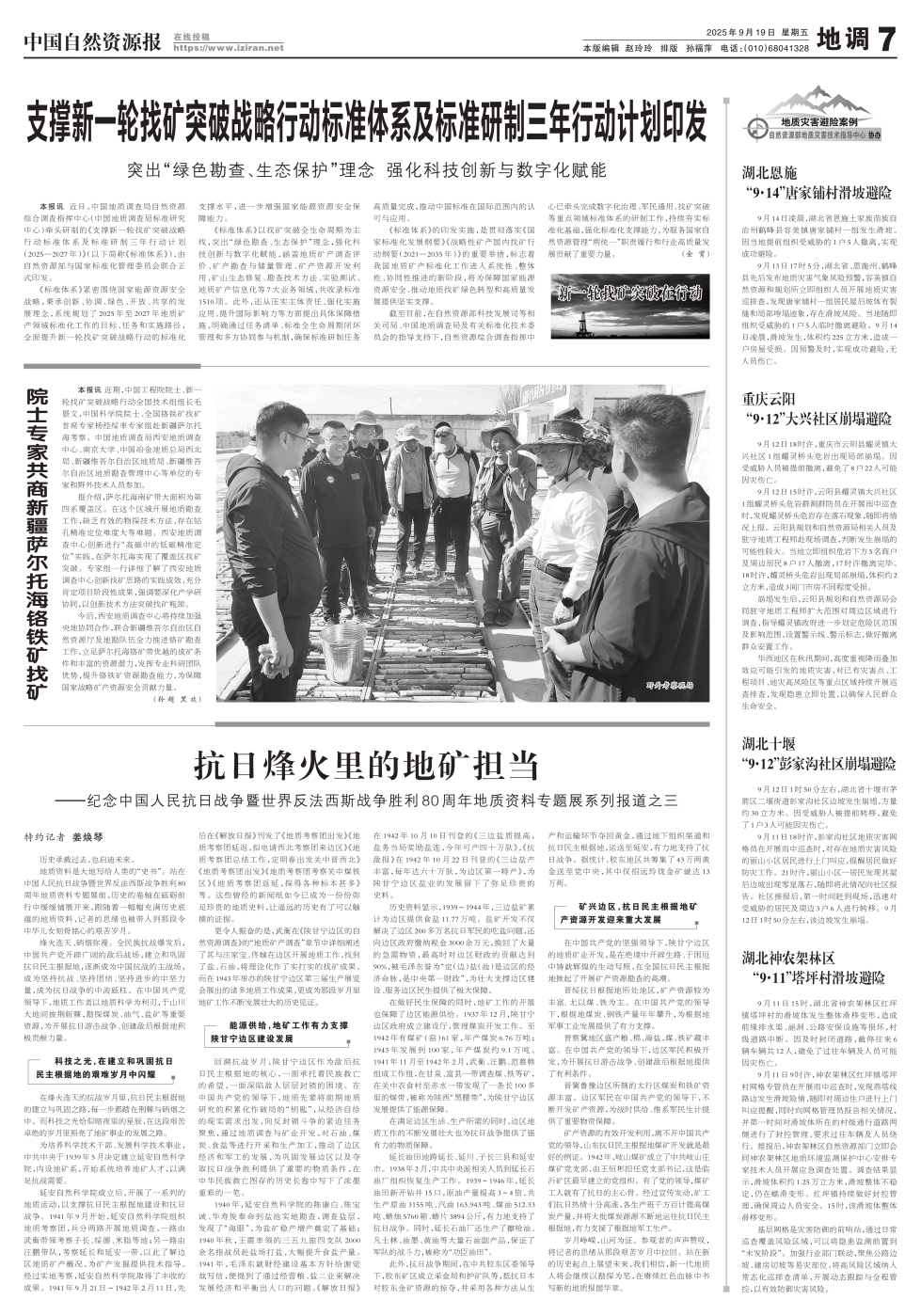
如何落实国家公园法,专家这样说(上)
Zhong Guo Zi Ran Zi Yuan Bao· 2025-09-19 06:53
Core Points - The National Park Law of the People's Republic of China was passed and will take effect on January 1, 2026, marking a new phase in the legal and systematic construction of natural protected areas centered around national parks [2] - The law aims to maintain the authenticity and integrity of natural ecosystems, establish a new pattern of land and space protection, and enhance the ecological civilization system to safeguard national ecological security [2] Management System - The National Park Law addresses the long-standing issue of fragmented governance by establishing a unified and efficient management system for national parks, involving various government levels and departments [13] - The law provides legal guarantees to resolve multi-headed management and overlapping responsibilities, but emphasizes that implementation will be the real test [13] Balancing Responsibilities - National park management agencies are responsible for protection, while local governments focus on economic and social development, leading to potential conflicts between short-term economic gains and long-term ecological protection [15] - A scientific ecological compensation and benefit-sharing mechanism is proposed to align the interests of both parties, ensuring that local residents benefit from conservation efforts [15] Coordination Mechanism - The law requires the establishment of a coordination mechanism for national parks that span multiple administrative regions, necessitating a permanent office for effective management and oversight [17] - This mechanism aims to unify standards and policies across regions to ensure systematic protection [17] Integrated Law Enforcement - The law grants management agencies comprehensive law enforcement responsibilities to address issues of overlapping or absent enforcement [19] - Effective integration of various enforcement powers and training for personnel is essential for successful implementation [19] Long-term Stability and Efficiency - A sustainable funding mechanism is crucial for the management of national parks, combining central government funding with local contributions and social capital [21] - The use of technology and smart management systems is emphasized to enhance monitoring and decision-making processes [21] Public Participation - The law promotes public participation in national park protection, ensuring that local communities benefit economically from conservation efforts [22] - Mechanisms are established to facilitate community involvement in park management and decision-making [22] Case Study: Wuyi Mountain National Park - Wuyi Mountain National Park has implemented eco-friendly practices in tea farming, promoting biodiversity and improving local livelihoods [28] - The park has created job opportunities for local residents in conservation and tourism, demonstrating a successful model of integrating ecological protection with community development [28] Ecological Compensation - The law mandates the establishment of an ecological compensation mechanism to balance environmental protection with economic development [33] - Specific compensation measures have been implemented in Wuyi Mountain National Park to support local farmers while ensuring ecological integrity [33] Future Outlook - The National Park Law is expected to strengthen ecological security and improve the well-being of local communities, contributing to a harmonious coexistence between humans and nature [34]
福建龙岩新罗区法院审结一起滥伐林木案
Zhong Guo Zi Ran Zi Yuan Bao· 2025-09-19 03:34
Group 1 - The case involves illegal logging activities by an individual who cut down trees without the necessary permits, resulting in significant ecological damage [1][2] - The court has introduced a new model for ecological restoration by investing the ecological damage compensation into the construction of a forest food display and science popularization base, aiming to achieve both ecological restoration and industrial development [2] - The defendant was sentenced to 1 year and 8 months in prison, with a 2-year probation, and fined 10,000 RMB for the crime of illegal logging [2] Group 2 - The court's decision reflects a shift towards integrating ecological restoration with sustainable industrial practices, creating a unique "ecological bank" in the region [2] - The involvement of ecological technology investigators in the case highlights the importance of expert assessments in determining restoration strategies and loss evaluations [2] - The case demonstrates a proactive approach to addressing ecological damage through innovative solutions rather than traditional restoration methods [2]
贵州多部门联合打击涉重金属污染违法活动
Zhong Guo Zi Ran Zi Yuan Bao· 2025-09-19 03:34
Group 1 - Guizhou Province has launched a special action plan to address illegal dumping and solid waste disposal, aiming to complete heavy metal hazard remediation by the end of 2030 [1] - The plan focuses on illegal dumping sites for hazardous waste, industrial solid waste, construction waste, and discarded electronic products, utilizing advanced technologies like satellite remote sensing and drones for inspections [1][2] - A comprehensive pollution source list will be established to identify environmental hazards, with targeted remediation strategies developed for areas with significant heavy metal risks [3] Group 2 - Strict enforcement measures will be implemented against environmental violations, including illegal dumping of hazardous and industrial waste, with enhanced collaboration between environmental and judicial authorities [2] - The initiative includes a commitment to improve the management of solid waste transportation and disposal, with severe penalties for violations that damage natural resources [2] - New mining projects must adhere to green mining standards, and outdated heavy metal production capacities will be phased out to optimize industrial structure [3]
山东阳谷局:提升司法协作效率 化解不动产登记难题
Zhong Guo Zi Ran Zi Yuan Bao· 2025-09-19 03:27
Core Points - The article highlights the successful resolution of a property registration issue for a resident in Yanggu County, Shandong Province, thanks to the proactive engagement of the local real estate registration center and its collaboration with various departments [1][2] - The case involved a dispute over the area of a relocation house, leading to a court ruling that required the real estate company to assist in the registration process, which they initially refused to comply with [1] - The registration center implemented a "cross-departmental collaborative registration" mechanism to address the issue, ensuring efficient communication and coordination among the court, housing, and tax departments [1][2] Summary by Sections Case Resolution - A resident named Wei successfully obtained his property registration certificate after a dispute with a real estate company regarding the area of his relocation house [1] - The court's ruling mandated the company to assist in the registration, but they failed to comply, prompting the case to enter the enforcement stage [1] Collaborative Mechanism - The registration center quickly received the court's execution document and initiated a collaborative process to confirm the case requirements and execution basis [1] - The center coordinated with the housing department to verify compliance with housing planning and worked with the tax department to confirm tax payment processes [1] Efficiency Improvement - The registration center assigned dedicated personnel to follow up on the case progress, ensuring real-time communication with relevant departments to streamline the registration process [1] - The center aims to enhance its collaboration with the court, housing, and tax departments further, focusing on information sharing and process integration to optimize service delivery [2]