Jing Ji Wang

Search documents
食品消费需求升级倒逼行业转型,食品制造业从供给侧激活消费新动能
Jing Ji Wang· 2025-12-29 09:16
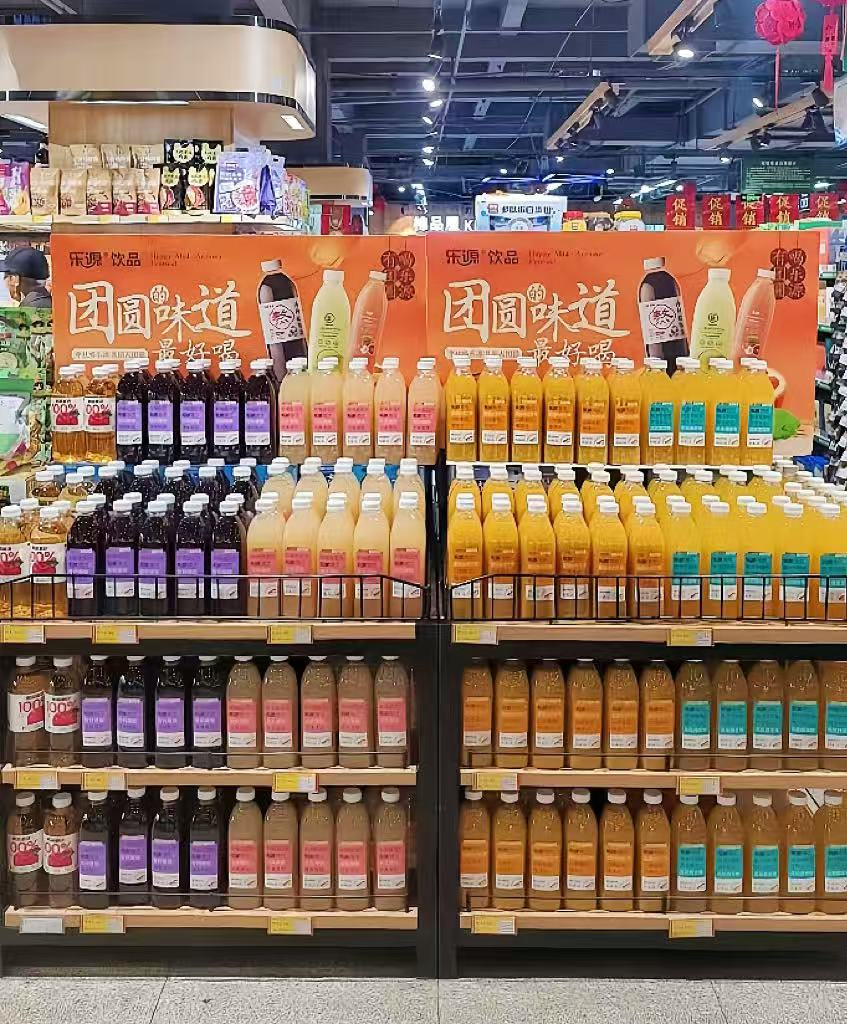
Core Insights - The food industry is experiencing a wave of group label standards aimed at addressing misleading labeling practices such as "100% pure" and "0 additives" [1] - The introduction of multiple group standards is driven by consumer demand for transparency and clean labels, leading to an industry transformation [3][4] Group 1: Industry Standards and Consumer Demand - The release of the "General Requirements for Clean Label Foods" and other standards marks a significant increase in group standards in the food industry since early 2025, with 12 standards introduced [4] - These standards focus on promoting a new ecosystem in food manufacturing characterized by "less additives, traceability, and transparency" [4] - Consumer interest in ingredient lists has evolved from brand recognition to a demand for transparency across the entire supply chain [4] Group 2: Product Innovation and Market Trends - The trend of "health claims turning into scientific quantification" indicates that consumers are seeking precise nutrition and scientific formulations rather than vague claims of "no additives" [4] - Companies like Leyuan Health are shifting their product positioning from "tasty" to "healthy," targeting young female consumers aged 18-35 who prioritize self-care [4][5] - The popularity of keywords like "clean label" and "clean ingredient list" has surged on platforms like Xiaohongshu, reflecting changing consumer priorities [5] Group 3: Technological Advancements in Food Manufacturing - Food manufacturers are responding to changing consumer demands through innovations in production processes, such as HPP (High-Pressure Processing) and fermentation technology [6] - Leyuan Health has achieved innovation in "low sugar without compromising nutrition" by employing advanced sterilization and filling techniques that preserve the freshness of fruits and vegetables [8] - The company has established flexible production capabilities, allowing for small-batch, multi-flavor production to quickly adapt to market changes [9] Group 4: Strategic Collaborations and R&D - Leyuan Health has formed a strategic partnership with the Chinese Academy of Agricultural Sciences to shift product innovation from experience-driven to data-driven approaches [10] - The integration of modern technology in product development has led to the creation of unique offerings, such as the "Double Pomelo Juice," which addresses specific consumer preferences [11] - The company is also exploring new product lines, such as tomato beverages, to meet modern taste preferences while retaining nutritional value [11] Group 5: Future Competitive Landscape - The future of competition in the food industry is expected to shift from resource-based competition to supply chain and consumer insight competition [11] - As consumer standards for food quality continue to rise, the focus of competition will transition from marketing battles to technological advancements and value-based competition [11]

AI“唤醒”千年宝 故宫文脉焕新声
Jing Ji Wang· 2025-12-29 09:16
Core Viewpoint - The integration of AI technology with cultural heritage, exemplified by the "Listening to Treasures Speak" AI interactive podcast launched by the Palace Museum and Volcano Engine, revitalizes the communication of traditional culture and enhances engagement with historical artifacts [2][3][4]. Group 1: Cultural Heritage and Technology - The Palace Museum, celebrating its centenary in 2025, has preserved Chinese civilization's material foundation through the protection and restoration of artifacts, especially during tumultuous historical periods [2]. - The "Listening to Treasures Speak" podcast utilizes AI to transform stories of 30 national treasures from nine museum departments into interactive audio content, allowing users to engage with the history and culture of artifacts in a personalized manner [3][4]. - The technology enables users to generate unique audio experiences by using their own voices, creating a family-specific "national treasure podcast" that makes learning about cultural heritage more engaging [3][4]. Group 2: User Engagement and Experience - The platform offers role-playing features that enhance the immersive experience of cultural exploration, allowing users to choose different roles and interact with content tailored to their interests [4]. - The shift from passive to active engagement in cultural dissemination is emphasized, as families can record their voices to narrate the stories of artifacts, fostering a deeper connection with traditional culture [4]. - The collaboration between the Palace Museum and Volcano Engine also includes the creation of an AIGC film, "Palace Treasures Reunion Night," which brings artifacts to life in a digital format, further expanding the boundaries of cultural transmission [4][5]. Group 3: Cultural Responsibility and Innovation - Volcano Engine's commitment to cultural responsibility is demonstrated through various initiatives, including the creation of digital assets for traditional crafts and the development of platforms for public access to ancient texts [5]. - The evolution of cultural transmission methods, from artifact preservation to AI-driven engagement, reflects a deep respect for the roots of Chinese civilization while adapting to modern technological advancements [5]. - The ongoing integration of AI technology in the cultural sector is expected to awaken more traditional Chinese culture, contributing to the construction of a culturally strong nation [5].

收评:沪指微涨0.04% 机器人概念、数字货币概念等涨幅居前
Jing Ji Wang· 2025-12-29 07:55
Market Overview - The Shanghai Composite Index closed at 3965.28 points, with a slight increase of 0.04%, and a trading volume of 903.82 billion yuan [1] - The Shenzhen Component Index closed at 13537.10 points, down by 0.49%, with a trading volume of 1235.52 billion yuan [1] - The ChiNext Index closed at 3222.61 points, decreasing by 0.66%, with a trading volume of 537.97 billion yuan [1] Sector Performance - The robotics sector showed strong performance, with companies like Wuzhou Xinchun and Tianqi Co., Ltd. hitting the daily limit [1] - The commercial aerospace sector continued its strong trend, with China Satellite achieving four consecutive trading limits [1] - The digital currency sector was active, with Cuiwei Co., Ltd. hitting the daily limit and Lakala rising over 12% [1] - The carbon fiber sector saw significant gains, with Heshun Technology hitting a 20% daily limit, along with Shenjian Co., Ltd. and Jilin Chemical Fiber also reaching their daily limits [1] Other Notable Sectors - The oil, diversified finance, aerospace, wind power, and photovoltaic sectors were among the top gainers [1] - Conversely, the energy metals, battery, pharmaceutical retail, commercial retail, brewing, and lithium mining sectors experienced declines [1]

国有企业破解新型与隐性腐败难题的思考
Jing Ji Wang· 2025-12-29 03:36
Core Viewpoint - The fight against corruption in state-owned enterprises remains a significant challenge, with new and hidden forms of corruption emerging, necessitating urgent and systematic governance measures [1][2][13]. Group 1: Characteristics of New and Hidden Corruption - New and hidden corruption exhibits five prominent characteristics: indirect profit acquisition, concealed transactions, technological empowerment, cross-sector involvement, and delayed consequences [1]. - Indirect profit acquisition involves methods such as "shadow companies" and false transactions, elongating the benefit transfer chain [1]. - Concealed transactions disguise corrupt practices under normal market activities using terms like "consulting fees" and "service fees" [1]. - Technological empowerment utilizes digital currencies and blockchain to obscure fund flows [1]. - Cross-sector involvement integrates corruption into finance, capital operations, and technological innovation [1]. - Delayed consequences mean that the harmful effects may only become apparent years later, often resulting in significant losses of state assets [1]. Group 2: Upgrading Supervision and Governance - Traditional supervision methods focusing on overt cash transactions are inadequate against sophisticated corruption tactics [2]. - The Central Commission for Discipline Inspection has issued guidelines to aid in the discovery and evidence collection of new forms of corruption [2]. - State-owned enterprise discipline inspection departments must evolve from passive responses to proactive warnings and from isolated actions to systematic governance [2]. Group 3: Integration of Political and Professional Supervision - There is a need to reshape the understanding of discipline inspection, moving beyond mere case handling to recognizing the political implications of hidden corruption [3]. - Supervision should focus on whether the supervised entities are loyal to the party and the people's interests, prioritizing national and enterprise benefits over personal gains [3]. Group 4: Professional Knowledge and Risk Management - Inspectors must possess expertise in finance, capital operations, and digital economy to effectively identify hidden corruption [4]. - A shift from reactive corrections to proactive involvement in decision-making processes is essential, particularly in high-risk areas like major investments and acquisitions [5]. Group 5: Establishing a Robust Supervision System - A comprehensive and intelligent supervision system is necessary to combat new forms of hidden corruption [6]. - Key processes in decision-making, procurement, and personnel selection should be transparent and subject to public scrutiny [6]. - The establishment of a "clean risk big data pool" will facilitate the use of big data and AI to identify and preemptively address corruption risks [7]. Group 6: Cultural and Ethical Foundations - Building a culture that discourages corruption is crucial, requiring long-term efforts to create an environment that nurtures integrity [10]. - Education on corruption risks should be relevant and relatable to employees, using real cases to illustrate the consequences of corrupt behavior [10]. - Leadership must exemplify integrity, ensuring that ethical behavior is ingrained in the organizational culture [11][12]. Group 7: Continuous Improvement and Strategic Focus - Addressing new and hidden corruption is a long-term battle that tests the political acumen and professional capabilities of discipline inspectors [13]. - A holistic approach combining political supervision, institutional strength, intelligent oversight, and cultural integrity is essential for effectively combating corruption [13].
首份个人AI产业发展白皮书发布,个人超级智能体将迎规模化落地
Jing Ji Wang· 2025-12-29 03:16
Core Insights - The white paper released by Lenovo and IDC outlines the framework for the personal AI industry, focusing on its definition, core characteristics, and market development trends [1][4]. Group 1: Definition and Characteristics of Personal AI - Personal AI is defined as a user-centered system that integrates software, hardware, and services, with data and algorithm sovereignty belonging to the user [4]. - Four key characteristics of personal AI are identified: user-centric personal superintelligence, AI terminals combined with personal cloud, cross-platform open ecosystems, and trustworthy security based on personal AI sovereignty [4]. Group 2: Industry Structure and Transformation - The personal AI era will shift the industry center from operating systems and commercial platforms to personal superintelligence, fundamentally altering the industry structure [4]. - Personal AI promotes a unified technology system characterized by multi-end integration, end-cloud collaboration, and deep software-hardware fusion [4]. Group 3: Ecosystem and Market Predictions - The white paper emphasizes a transition from a platform-centric structure to a multi-layered collaborative ecosystem, with personal superintelligence as the primary user interface [6]. - IDC predicts that 2026 will mark the beginning of the personal AI industry, with traditional AI terminal shipments in China expected to exceed 300 million units [6].


电竞旗舰荣耀WIN系列发布:性能、续航、散热全面夯顶
Jing Ji Wang· 2025-12-29 03:16
Core Viewpoint - Honor has launched the WIN series, positioning it as the "annual esports powerhouse," aiming to set new industry standards in performance, battery life, cooling, and display experience while enhancing audio and communication features for an innovative gaming experience [1][3]. Group 1: Product Features - The Honor WIN series includes two versions: Honor WIN and Honor WIN RT, featuring the fifth-generation Snapdragon 8 chip, LPDDR5X, and UFS 4.1, achieving AnTuTu scores exceeding 4.4 million [3]. - The series incorporates the Honor Phantom Engine 3.0, utilizing AI technology for frame prediction and rendering optimization, improving low frame rates by up to 20 FPS for a smoother gaming experience [3]. - The devices are equipped with a 10,000mAh battery, marking a significant advancement in battery capacity within the industry [8]. Group 2: Cooling Technology - The Honor WIN series features the Honor East Wind Turbo cooling system, which includes a dual 360° airflow design and an ultra-compact fan, enhancing cooling efficiency by 30% and reducing chip temperatures by up to 7°C [7]. - The series also employs a 3D butterfly VC cooling system with advanced materials and designs, ensuring sustained high performance without overheating [7]. Group 3: Display and Audio - The devices come with a 185Hz high-refresh-rate esports display, supporting advanced gaming features and a 3500Hz instantaneous touch sampling rate for rapid screen response [11]. - The audio system includes dual 1216 stereo speakers and AI surround bass technology, providing an immersive gaming experience [11]. Group 4: AI and Gaming Ecosystem - The Honor WIN series features a full-link AI gaming manager with functionalities like AI smart updates and AI control enhancements, aimed at improving the overall gaming experience [12]. - Honor has established a strategic partnership with the Delta Action Fire Professional League, making the WIN series the designated mobile device for the league [12]. Group 5: Camera and Design - The series is equipped with a 50MP main camera and a 12MP ultra-wide-angle lens, featuring flagship-level stabilization and advanced zoom capabilities [13]. - The design emphasizes a lightweight and thin profile with premium materials, enhancing user comfort [13].

全品类高端向上突破:小米17 Ultra领衔,发布中央空调、智能手表等多款高端新品
Jing Ji Wang· 2025-12-26 08:22
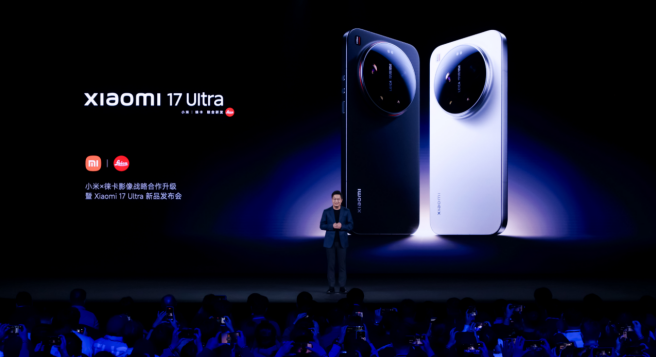
Core Insights - The event marked the launch of the Xiaomi 17 Ultra and the upgraded strategic partnership with Leica, celebrating Xiaomi's 15th anniversary and Leica's 100th anniversary [1][3][12] - The Xiaomi 17 Ultra is positioned as a high-end flagship device, introducing significant technological innovations, particularly in mobile imaging with optical zoom capabilities [3][7] Product Launch Details - The Xiaomi 17 Ultra is available in four colors, with pricing starting at 6,999 yuan for the 12GB+512GB model and going up to 8,499 yuan for the 16GB+1TB model [5] - The event also introduced several other products, including the Mijia Central Air Conditioning Pro and Xiaomi Buds 6, with prices ranging from 699 yuan to 51,999 yuan [6] Technological Innovations - The Xiaomi 17 Ultra features a new 1-inch sensor and a 200-megapixel camera, marking a shift from digital cropping to optical zoom, thus enhancing image quality [7][9] - The long-focus lens is the first Leica APO optical certified lens in mobile imaging, showcasing Leica's high standards for optical performance [11] Strategic Developments - The partnership with Leica has evolved into a "strategic co-creation model," integrating Leica's optical and design expertise into Xiaomi's products [7] - Xiaomi's high-end product strategy is gaining momentum, with significant sales growth in the premium segment, including a 50% increase in sales for the Xiaomi 15 Ultra [17][19] Future Outlook - Xiaomi is set to continue its high-end strategy, with a focus on core technology investments, having allocated 235 billion yuan in R&D in the first three quarters of the year [20] - The company aims to establish itself as a leader in the global tech industry, with a comprehensive ecosystem that includes smartphones, automotive, and smart home appliances [15][19]

第二批疏解央企有序落地,中国农发集团雄安总部项目开工
Jing Ji Wang· 2025-12-26 08:02
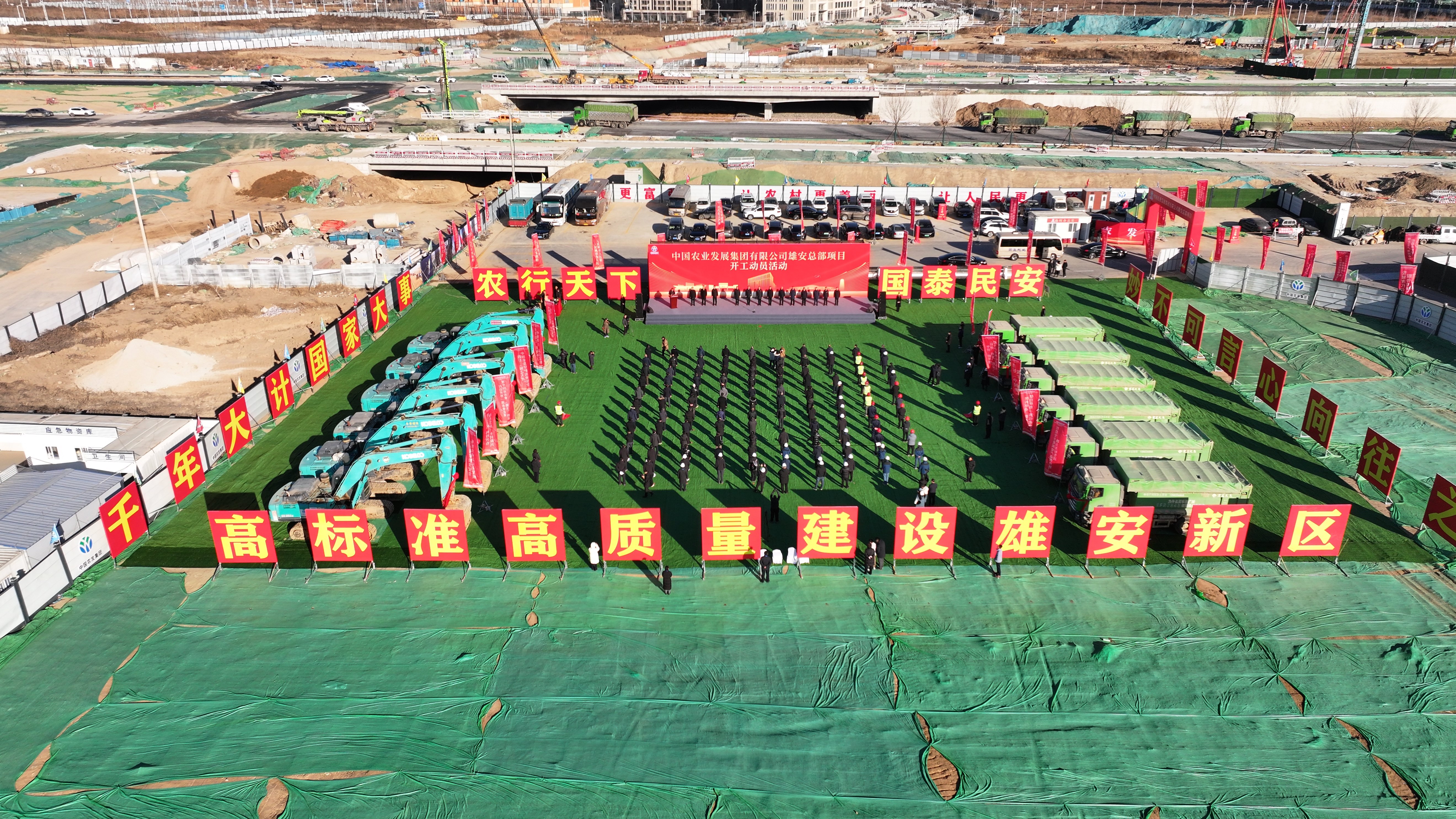
12月25日,中国农业发展集团有限公司(以下简称"中国农发集团")雄安总部项目开工动员活动在雄安新区举行。作为第二批疏解央企之一,中国农发 集团以实际行动积极响应国家疏解北京非首都功能的重大战略,全面融入雄安新区高质量建设进程 项目建成后,将成为雄安新区汇聚农业科技资源、推动农业产业高质量发展的重要载体,显著增强新区在农业科技创新与产业协同方面的引领能力,为 雄安新区经济社会发展注入新的强劲动力。 中国农发集团将以项目建设为新的起点,进一步深化与雄安新区的融合发展,加强与京津冀区域农业相关产业的协同联动,加快推进世界一流农业企业 建设步伐,为高标准高质量推进雄安新区建设现代化城市持续贡献"农发力量"。 中国农发集团雄安总部项目坐落于雄安新区启动区中心区域,隶属于启动区企业总部功能板块。项目秉承"科技赋能、绿色引领、开放协同"的设计理 念,融合中式合院布局与传统建筑精髓,采用中正对称的空间形态,注重生态低碳与人文场景的有机结合,致力于打造集总部办公、科技创新于一体的现代 化综合平台,力争成为雄安新区高质量建设的标杆工程。 12月25日,中国农业发展集团有限公司雄安总部项目开工动员活动在雄安新区举行。赵伟彤 摄 ...
中央企业第十届不动产盘活工作研讨会在北京举行
Jing Ji Wang· 2025-12-26 08:01
Core Insights - The seminar focused on "activating stock assets to drive change through practice," attracting nearly 100 attendees from central enterprises, local state-owned assets, industry experts, and financial institutions, with over 130,000 online viewers [1] Group 1: Seminar Objectives and Themes - The seminar aimed to create a high-level dialogue platform for policy interpretation, experience exchange, and practical exploration regarding the activation of state-owned real estate [1] - The event was hosted by Xu Jinhua, a senior researcher and chairman of the Enterprise Observation Report, emphasizing the importance of activating stock assets to optimize the layout of state-owned economies and enhance the vitality of state-owned assets [1] Group 2: Key Presentations and Insights - Xu Shixiang, Chairman of the Market Service Professional Committee of the China State-owned Assets Exchange Association, discussed the necessity, current status, and strategies for activating stock real estate, highlighting a shift from asset appreciation to cash flow-driven operations in the context of the real estate market entering a stock era [2] - Sun Wu, Vice President of Hyatt China and CEO of Yifei Hotel Management Company, shared innovative paths for transforming low-efficiency holdings into value, advocating for a shift from fixed leases to dynamic win-win arrangements and from heavy asset operations to light asset collaborations [2] Group 3: Risk Management and Policy Recommendations - Ren Zhen, Deputy General Manager of Beijing Jiuhui Huana Enterprise Management Group, focused on a systematic response to risks associated with state-owned real estate, proposing a dual-track approach of market negotiation and legal measures to build a resilient risk control system [3] - Experts from the Ministry of Natural Resources provided insights on the challenges of property rights confirmation for state-owned enterprises, recommending the use of a policy toolbox to address issues through government confirmation, current situation rectification, and phased payments [2][3]
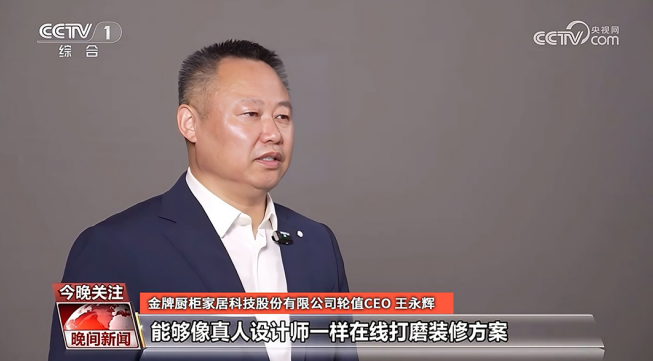
媒体聚焦定制家居行业转型升级,金牌家居解码AI家装设计智能体
Jing Ji Wang· 2025-12-26 08:01
Core Insights - The article highlights the technological innovation and AI integration in the custom home furnishing industry, focusing on Kingboard Home's advancements in AI home design and its transition from manufacturing to intelligent manufacturing [1][3]. Group 1: Transition to Intelligent Manufacturing - The custom home furnishing industry is experiencing a systemic leap due to the wave of artificial intelligence technology, with Kingboard Home embracing this trend by integrating AI, big data, and cloud computing into all processes from product design to user service [3]. - Kingboard Home has developed a data-driven flexible manufacturing and collaborative optimization system, achieving smart production scheduling, dynamic quality control, adaptive scheduling, and resource optimization, significantly enhancing flexible manufacturing capabilities [3]. - For instance, at the Chengdu super factory, Kingboard Home successfully addressed the challenges of large-scale flexible manufacturing through AI and digitalization, resulting in a production efficiency increase and a more than 10% improvement in per capita efficiency, along with a threefold increase in assembly efficiency [3]. Group 2: AI Home Design Innovation - The "Feiliu AI Home Design Intelligent System" represents a soft innovation aimed at enhancing user experience, allowing families to have their own AI designer that realizes their design visions [3][5]. - Feiliu AI supports multimodal interaction, enabling users to search or upload floor plans, generate aesthetically pleasing 3D renderings, and switch to 720° VR panoramic views for a virtual tour of their future home [5]. - The system allows for DIY layout adjustments, providing users with intuitive and responsive options for space layout and personalized space creation, along with automatic generation of cost estimates for hard and soft furnishings, ensuring clear and controllable renovation budgets [5]. Group 3: Future Directions - Kingboard Home plans to continue deepening the integration of "AI + industry" innovation, using technology as a driving force to enhance large-scale personalized customization capabilities and overall service experience [6]. - The company aims to evolve into a new quality production enterprise, contributing new momentum to the sustainable evolution of the home furnishing industry [6].