
Jing Ji Wang

Search documents
经合组织上调今年全球经济增长预期至3.2%
Jing Ji Wang· 2025-09-24 02:25
Group 1 - The OECD's mid-term economic outlook report predicts a global economic growth rate of 3.2% for 2025, an increase of 0.3 percentage points from the June forecast, while growth is expected to slow to 2.9% in 2026, consistent with the June prediction [1] - The report highlights stronger-than-expected resilience in global economic growth, particularly in emerging market economies, during the first half of 2025 [1] - The report warns of significant risks to the global economic outlook, including potential increases in tariff rates, renewed inflation pressures, heightened concerns over fiscal risks, and reassessment of financial market risks [1] Group 2 - The report forecasts that the U.S. economic growth rate will decline from 2.8% in 2024 to 1.8% in 2025, further slowing to 1.5% in 2026, due to the offsetting effects of tariffs and tightened immigration policies against strong investment growth in high-tech industries [1] - The Eurozone's economic growth is projected to be 1.2% in 2025 and 1.0% in 2026 [1] - The G20 countries' overall inflation rate is expected to decrease from 3.4% in 2025 to 2.9% in 2026, with core inflation rates in developed economies projected to fall to 2.6% and 2.5% in the next two years [1] Group 3 - The report recommends that countries enhance cooperation within the global trade system while improving the transparency and predictability of trade policies in response to economic security concerns [2] - Central banks are advised to remain vigilant and respond swiftly to changes in risks affecting price stability [2] - There is a call for increased structural reform efforts to improve living standards and unlock the potential benefits of new technologies such as artificial intelligence [2]
历届合作艺术家同台见证,国窖1573发布第五款艺术新春酒
Jing Ji Wang· 2025-09-24 02:23
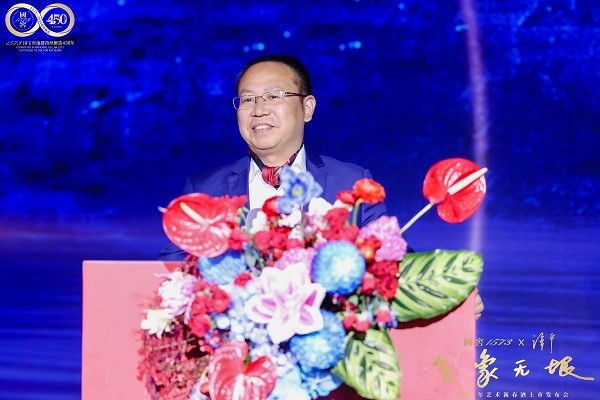
Core Viewpoint - The launch of the 2024 Guojiao 1573 × Tan Ping "Boundless Atmosphere" Art Spring Wine represents a fusion of traditional Chinese liquor with contemporary art, aiming to enhance the global appreciation of Chinese culture [1][2]. Group 1: Product Launch - The 2024 Guojiao 1573 × Tan Ping "Boundless Atmosphere" Art Spring Wine was unveiled at a press conference held at the Qingdao West Sea Art Museum [1]. - This is the fifth edition of the Guojiao 1573 Art Spring Wine, featuring a collaboration with contemporary artist Tan Ping [1]. - The wine is inspired by Tan Ping's artwork "Intruder," incorporating abstract elements into the design of the bottle and packaging [2]. Group 2: Company Background - Guojiao 1573's brewing cellar dates back to 1573, making it a national key cultural relic protection unit in the liquor industry [1]. - The traditional brewing technique of Luzhou Laojiao has been passed down for nearly 700 years and is included in the first batch of national intangible cultural heritage lists [1]. Group 3: Artistic Collaboration - Tan Ping is recognized as a contemporary artist in China, known for his exploration of various artistic fields and his significant impact on the establishment of abstract art in China [1]. - The collaboration aims to merge the classic taste of Guojiao 1573 with Tan Ping's artistic achievements, promoting a harmonious representation of the New Year [2]. - The event included a special segment for the Guojiao 1573 Art Public Welfare Torch Relay, emphasizing the brand's commitment to art and public welfare [4]. Group 4: Marketing Strategy - Since 2017, Guojiao 1573 has engaged with international artists and musicians to enhance its brand image and promote Chinese culture globally [4]. - The annual production of each edition of the Guojiao 1573 Art Spring Wine is limited to 60,000 pieces worldwide, emphasizing exclusivity [4].


兰石中科:以纳米新材料撬动产业升级,冲刺科创板引领绿色转型
Jing Ji Wang· 2025-09-23 09:58
Group 1 - The core viewpoint emphasizes the strategic importance of new materials in driving the green transformation of traditional industries and fostering new productive forces, with Lanzhou Lanshi Zhongke Nano Technology Co., Ltd. emerging as a notable player in this field [1] - The company has achieved a breakthrough in the continuous and large-scale preparation of nano materials at normal temperature and pressure, overcoming the limitations of traditional batch production methods in terms of efficiency, cost, and environmental impact [2] - Lanzhou Lanshi Zhongke has established multiple production lines, including an annual output of 4,000 tons of nano magnesium hydroxide, 4,000 tons of magnesium-aluminum hydrotalcite, 5,000 tons of nano zinc oxide, and 1,500 tons of nano lithium iron phosphate precursor materials, achieving industry-leading standards in particle size control, dispersion, and batch stability [2] Group 2 - The company aligns with national strategies and aims to list on the Sci-Tech Innovation Board, which has become a preferred platform for hard-tech enterprises, supported by recent policies that enhance inclusivity for technology companies [3] - Lanzhou Lanshi Zhongke plans to submit its IPO application by the end of 2027, leveraging capital market opportunities to accelerate technological iteration and expand production capacity [3] - The company occupies a unique position in the resource recycling and new materials intersection, providing irreplaceable value in promoting low-carbon transformation in traditional industries, with no direct competitors in the A-share market [4] Group 3 - The national focus on green technology and new materials under the "dual carbon" goals has led to increased support for companies like Lanzhou Lanshi Zhongke, which reduces production energy consumption and costs while aiding downstream enterprises in resource recycling [5] - Guotai Junan Securities is set to provide comprehensive capital services for the company’s upcoming issuance, ensuring strong support for its market entry [5] - The growth trajectory of Lanzhou Lanshi Zhongke reflects the transformation and upgrading of Chinese SMEs through technological innovation, positioning it as a benchmark enterprise in the new materials sector [8]
第十届清华同衡学术周开幕
Jing Ji Wang· 2025-09-23 09:30
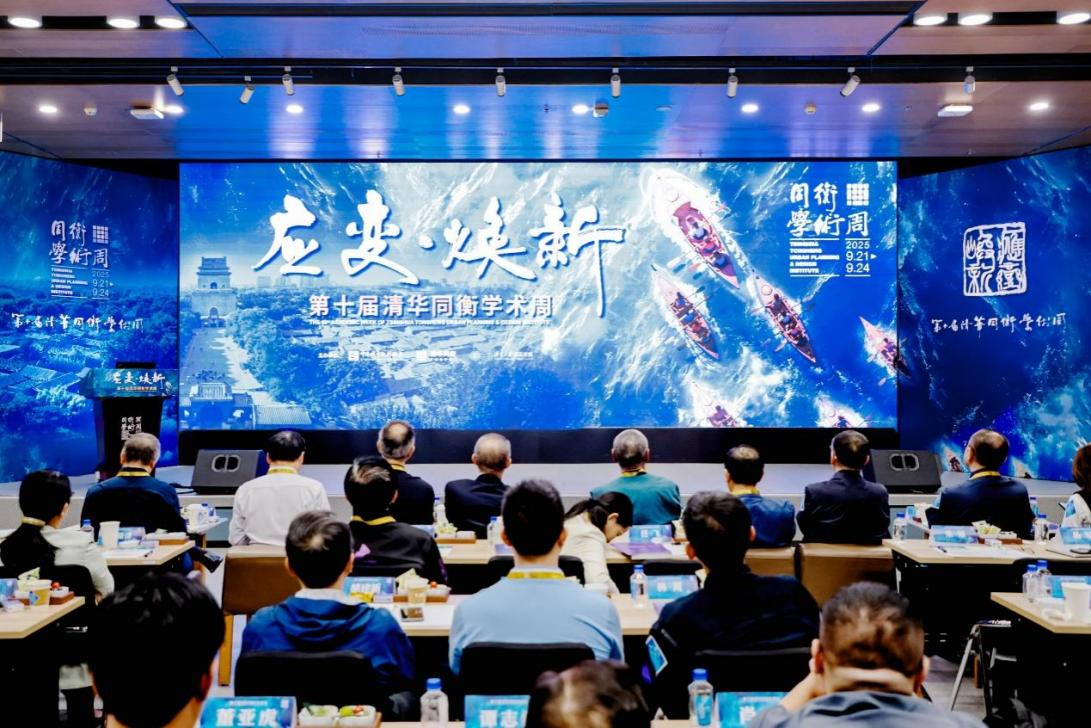
Core Insights - The 10th Tsinghua Tongheng Academic Week, themed "Adaptation and Renewal," commenced in Beijing, focusing on high-quality urban development and the transformation of planning industries [1][3] - The event serves as a vibrant academic brand and exchange platform, emphasizing the need for proactive adaptation to changes and challenges in urban planning [3] Group 1: Event Overview - The academic week is co-hosted by the China Urban Planning Association, Tsinghua Tongheng Planning and Design Institute, and Tsinghua University School of Architecture, lasting for four days [1] - The opening forum featured cross-disciplinary experts and scholars discussing urban issues and envisioning a renewed future for cities [1] Group 2: Key Discussions - The summit forum included top experts from various fields such as industrial innovation, human-centered cities, AI technology, and strategic development, facilitating interdisciplinary dialogue [5] - A report by Yin Zhi from Tsinghua University's New Urbanization Research Institute highlighted the importance of optimizing the modern urban system as a key task from the Central Urban Work Conference [5] - The report also discussed the comprehensive regional development strategy and the need for differentiated spatial governance models to meet the modernization demands of a large population country like China [5]
成德携手“链”动未来 装备制造共谱新篇
Jing Ji Wang· 2025-09-23 09:25
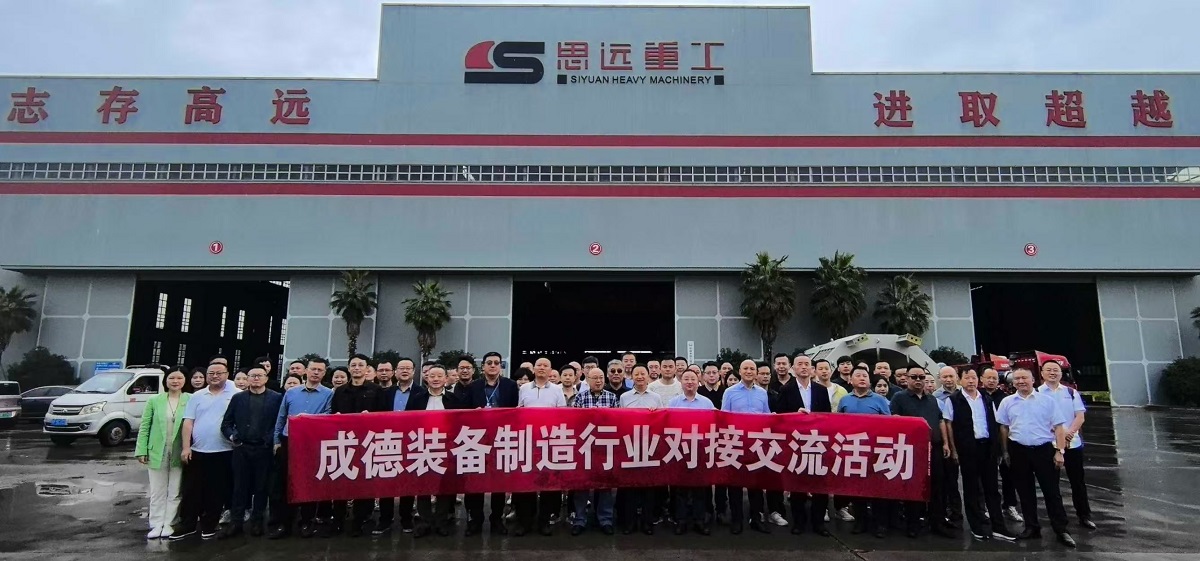
Core Viewpoint - The deep dialogue between Chengdu and Deyang's equipment manufacturing enterprises is injecting new momentum into the collaborative development of the Sichuan-Chongqing region, emphasizing the synergy between traditional heavy machinery and innovative smart manufacturing [1][13]. Group 1: Industry Characteristics - Chengdu and Deyang are both core areas of Sichuan's equipment manufacturing industry, with significant complementary industrial characteristics. Deyang has a strong foundation in heavy machinery and power generation equipment, while Chengdu is transforming into a "smart equipment innovation highland" leveraging intelligent manufacturing and digital supply chains [2][4]. Group 2: Supply and Demand Matching - The event facilitated direct discussions on cooperation, with specific needs identified such as Chengdu Tianma Railway's demand for high-precision bearing forgings, which Deyang Jiuyis Forging can fulfill with customized production capabilities [5]. - Chengdu Ruilong Machinery's need for wear-resistant heavy machinery spare parts aligns perfectly with Deyang Wanlian's specialized alloy components, which can extend the lifespan of mining equipment parts by over 30%. A total of 23 preliminary cooperation intentions were established, with 11 having clear follow-up timelines [7]. Group 3: Innovation and Learning - The visit to Deyang's intelligent workshop showcased the integration of giant CNC gantry milling machines with digital twin systems, impressing Chengdu representatives with Deyang's transformation path combining robust fundamentals and intelligent thinking [8][10]. Group 4: Future Outlook - The event yielded fruitful results, with ongoing enthusiasm for collaboration. The two chambers of commerce plan to establish a regular communication mechanism to promote the transition from "point-to-point" cooperation to "industrial chain" integration, forming a complete industrial chain of "heavy equipment + intelligent control + international supply chain" [11].
土耳其卫生部长梅米什奥卢到访科兴集团
Jing Ji Wang· 2025-09-23 09:25
科兴集团愿与土耳其的科学家和医学专家共同开展疫苗研发和临床研究。目前科兴集团有成熟的技术平 台能力,成立了科兴联合研究院,专注于创新研发,聚焦肿瘤、自免、CAR-T等领域的创新生物药早期 开发。未来双方合作不仅局限于疫苗生产和技术转移,而是加强技术合作,通过科研合作推出更多的疫 苗,推动更多的科研成果转化,我们希望让更多创新疫苗和成果及时惠及两国乃至更多国家的人民。 梅米什奥卢部长表示,我们始终将 "为了人民和全人类的福祉" 置于首位。新冠疫情成为了一块"试金 石",是一场关于善良的考验。我们两个国家、两个民族,都选择了善良,并且通过了这场考验。正如 我们彼此相助,我们也支持了所有有需要的周边民族和国家。我们与科兴公司的合作堪称典范,不仅实 现了技术转让,还携手成立了一家新的本土疫苗企业。 编辑:孙庭阳 近日,土耳其卫生部长凯末尔·梅米什奥卢率代表团到访科兴集团,考察科兴流感生产车间,了解大兴 生物医药产业基地的发展,与科兴集团董事长、总裁兼首席执行官尹卫东进行会谈。 尹卫东董事长热烈欢迎部长一行并表示,中国和土耳其全面战略合作关系持续深化,为双方各领域务实 合作注入强劲动力。 尹卫东董事长表示,"为人类消除 ...
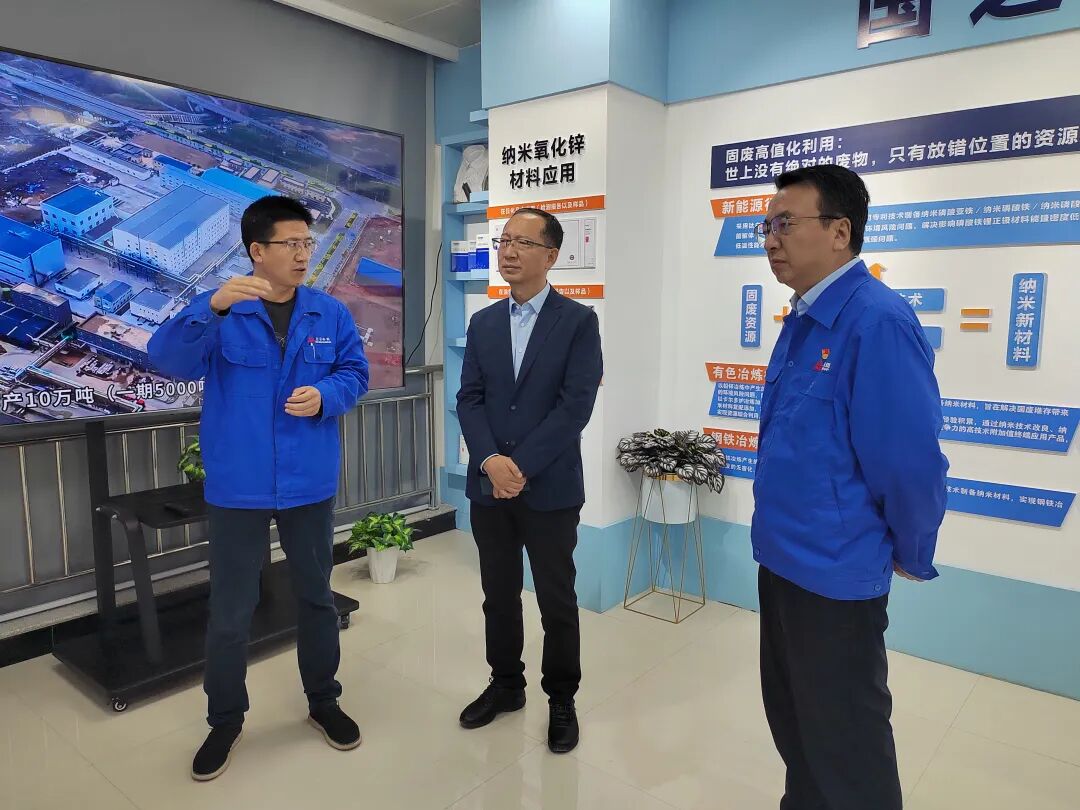
金川集团党委常委、副总经理、金川集团铜贵股份有限公司党委书记、董事长邢晓钟一行到兰石中科参观交流
Jing Ji Wang· 2025-09-23 09:25
Core Viewpoint - The visit by Jinchuan Group's leadership to Lanshi Zhongke highlights the ongoing collaboration and mutual trust between the two companies, focusing on advancements in nanomaterials and resource recycling technologies [1][3]. Group 1: Company Collaboration - Jinchuan Group and Lanshi Zhongke have established a solid foundation of mutual trust and collaboration through previous research partnerships, which has led to significant results in industrial trial projects [3]. - Both companies have reached multiple agreements to strengthen strategic cooperation, particularly in the areas of technology research and raw material supply [3]. Group 2: Technological Advancements - Lanshi Zhongke showcased its core technologies related to nanomaterials and the progress of technology transfer during the visit, emphasizing its innovative approaches in high-value utilization of non-ferrous metallurgy solid waste [3]. - Jinchuan Group's leadership praised Lanshi Zhongke's achievements in integrating nanomaterials technology with resource recycling, indicating a commitment to further joint efforts in these fields [3]. Group 3: Future Directions - The collaboration aims to expand the application of new materials in high-end equipment manufacturing, contributing to the enhancement of the industrial chain's value [3]. - Lanshi Zhongke expressed gratitude for Jinchuan Group's long-term support and aims to accelerate the transformation of scientific achievements into productive forces through continued joint efforts [3].
奥士康加速布局AI算力领域,高阶HDI产品实现规模化交付
Jing Ji Wang· 2025-09-23 09:25
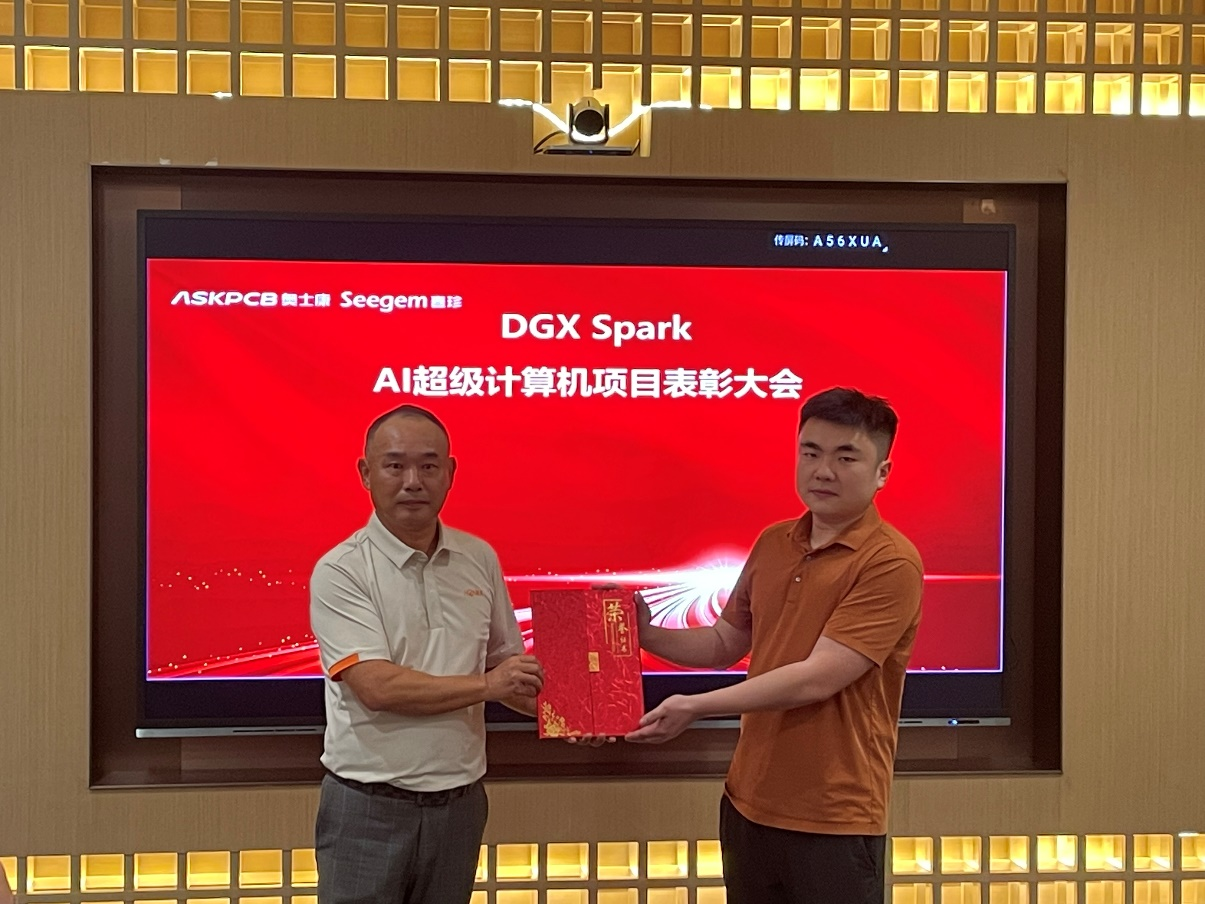
Core Insights - The company held a recognition event for the DGX Spark AI supercomputer project, highlighting the contributions of core teams in customer development, product research, engineering design, and mass production [1] - The DGX Spark AI supercomputer demands extreme performance, reliability, and stability from PCB technology, which the company has addressed through advanced interconnect technology, high-frequency materials, and innovative packaging techniques [1][3] - The company has established a complete AI computing infrastructure solution, demonstrating its capability to handle high-end AI computing projects from technology development to mass production [3] Technology and Production Capabilities - The company has achieved a four-layer HDI mass production capability and has successfully developed six-layer HDI technology for small batch supply, catering to high-end market demands such as AI servers and high-performance computers [3] - The company’s advancements in signal integrity optimization, thermal management, and multilayer wiring design have led to a perfect balance of high precision, stability, and efficiency in its products [1][3] Market Position and Future Outlook - The demand for AI computing power is experiencing explosive growth due to the emergence of large models like DeepSeek, positioning the company as a key supplier of high-end PCB products essential for AI supercomputers [3] - The company is expected to expand its high-end production capacity as it deepens its technological investments and industry layout in the AI computing sector, supported by the release of production capacity in Thailand and the implementation of convertible bond projects [3]
达能科学营养赋能健康老龄化
Jing Ji Wang· 2025-09-23 09:25
Core Insights - Danone China upgraded the "Danone Nutrition Week" during the 17th National Nutrition Science Conference, focusing on "Nutrition Empowerment, Building a Healthy China Dream" to promote scientific communication and public participation [1][2] - The conference featured a forum on "Nutrition and Healthy Longevity," attended by over 200 nutrition and medical experts, emphasizing the importance of early nutritional intervention for public health and longevity [1] - The National Center for Food Safety Risk Assessment highlighted Danone's significant contributions to nutrition science in China through research funding and public education [1] Group 1 - Danone and the Chinese Nutrition Society launched the "2025 China Nutrition Society-Danone Dietary Nutrition Research Fund," focusing on "Nutrition and Aging" to support innovative research in gut health, muscle loss, and cognitive function [2] - Since its establishment, the fund has supported over 300 research projects with a total funding exceeding 53 million yuan, becoming a key driver in China's nutrition research field [2] - The President of the Chinese Nutrition Society praised Danone's long-term commitment to supporting nutrition science in China, emphasizing its role in advancing scientific research and societal progress [2] Group 2 - Danone's President for North Asia and Oceania stated the company's mission is to bring health to as many people as possible through food, integrating research innovation with local needs [3] - The company aims to enhance public awareness of nutrition and health through the "Danone Nutrition Week," supporting the "Healthy China" strategy and contributing to healthy aging [3]


货拉拉被约谈
Jing Ji Wang· 2025-09-23 08:26
Core Viewpoint - The market regulatory authority has urged Huolala to strictly comply with the Anti-Monopoly Law of the People's Republic of China and to implement compliance responsibilities, ensuring fair market competition and protecting the rights of truck drivers and consumers [1] Group 1 - The regulatory body has emphasized the need for Huolala to standardize its business practices and participate fairly in market competition [1] - The authority has called for the promotion of fair, just, and transparent platform rules and algorithms within the industry [1] - The initiative aims to foster a healthy and regulated development of the industry [1]