Hu Xiu

Search documents
打工人花钱排队谈“虐恋”,一次698元,值吗?
Hu Xiu· 2025-10-24 00:40
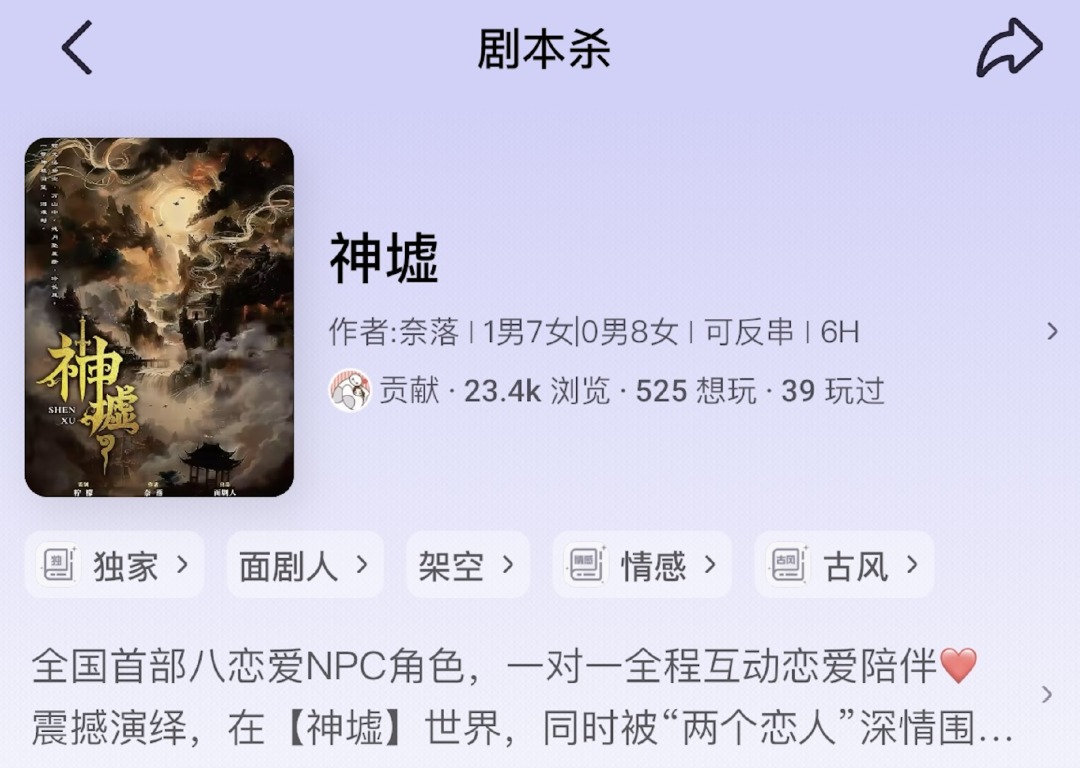
Core Insights - The article discusses the rising trend of "romantic companion" (恋陪) roles in the script-killing (剧本杀) industry, where players engage in immersive romantic experiences with NPCs designed to fulfill emotional needs [8][30][49] - The market for script-killing has evolved significantly, with a projected market size exceeding 17.2 billion yuan in 2024, despite a 60% closure rate of shops from 2022 to 2023 [30][49] Industry Trends - The script-killing industry has shifted from traditional murder mystery formats to more emotionally immersive experiences, focusing on romance and emotional engagement rather than just solving crimes [31][34] - The introduction of "romantic companion" NPCs has created a new niche, attracting players willing to pay premium prices for personalized romantic interactions, with some experiences costing up to 698 yuan per person [2][20] Player Demographics - The primary demographic for romantic companion experiences consists of young, attractive women, often from the post-2000 generation, who seek validation and emotional connection through these immersive experiences [28][49] - Players are increasingly willing to invest significant amounts of money, sometimes exceeding thousands of yuan, to ensure a high-quality experience, reflecting a growing trend of emotional spending [21][23] Market Dynamics - The competition among script-killing venues has intensified, with establishments striving to create "internet celebrity" experiences that can draw in customers from surrounding cities [5][20] - The romantic companion roles have become a focal point for many venues, leading to a shift in how traditional script-killing games are structured and marketed [37][40] Emotional Engagement - The emotional depth of these experiences is highlighted, with players often seeking therapeutic benefits from the narratives, which allow them to explore love and connection in a controlled environment [34][46] - The article notes that the desire for emotional connection is driving the popularity of these experiences, especially among young women who face societal pressures regarding relationships [47][49]

当代90后自救指南
Hu Xiu· 2025-10-24 00:39
Core Viewpoint - The article discusses various methods that individuals use to cope with negative emotions, emphasizing the importance of self-care and personal strategies to manage stress and anxiety in contemporary life [10][11][39]. Group 1: Personal Strategies for Managing Emotions - Individuals often engage in physical changes in their environment, such as changing personal care products and cleaning their spaces, to help shift their emotional state [2][4][8]. - Engaging in creative activities, such as playing musical instruments, is highlighted as a way to find solace and express emotions [5][17]. - The act of decluttering and organizing personal belongings is seen as a therapeutic method to alleviate stress [4][11]. Group 2: Social Interactions and Support - Conversations with friends, whether casual or deep discussions, are common methods for individuals to process their feelings and find relief from negative emotions [18][20][31]. - Cooking for family and friends is mentioned as a fulfilling activity that not only distracts from negative feelings but also provides a sense of accomplishment and connection [20]. Group 3: Physical Activities and Self-Care - Engaging in physical activities like running, swimming, or simply spending time outdoors is noted as an effective way to release pent-up emotions and improve mood [25][32]. - Self-care routines, such as taking a shower or washing hair, are described as simple yet effective ways to refresh one's emotional state [33]. Group 4: Creative Expression and Reflection - Writing is presented as a powerful tool for self-reflection and emotional processing, allowing individuals to articulate their feelings and gain clarity [36][39]. - The article emphasizes the importance of understanding one's emotions and finding personal methods to cope, reinforcing the idea that self-love is crucial in combating negative feelings [40][41].
维基百科在AI时代的衰落
Hu Xiu· 2025-10-24 00:07
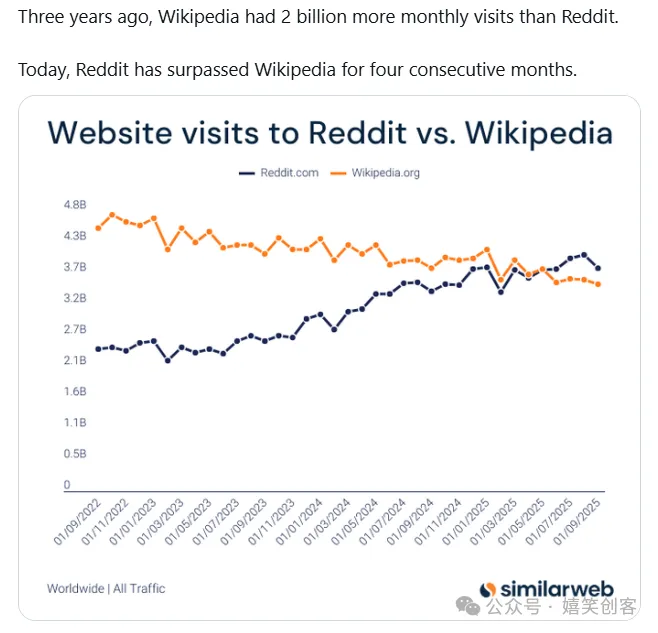
Group 1 - The core viewpoint of the article discusses the decline of Wikipedia in the era of AI, particularly with the rise of large language models (LLMs) like GPT, which are seen as capable of replacing traditional encyclopedias [1][3] - The article suggests that community-driven platforms like Reddit are thriving, as they provide valuable real-world data for AI models, highlighting a shift in content generation dynamics [3] - There is a comparison made between platforms, indicating that the value of Xiaohongshu may surpass that of Zhihu, while Stack Overflow is facing significant challenges [4] Group 2 - The article emphasizes the enduring human need for genuine interaction, suggesting that many AI companions are merely substitutes, and that fatigue with these alternatives may arise quickly [4] - It reflects on the gaming industry, questioning the actual number of players who engage deeply with games, and whether the monthly active users truly represent dedicated gamers [5]
汪汪队:7年我们救出了270人
Hu Xiu· 2025-10-24 00:01
Core Points - The article highlights the challenges and successes of a rescue team led by Su Jianhua, focusing on the use of search and rescue dogs in mountainous regions during emergencies [3][11][81] - It emphasizes the importance of training and the emotional bond between the rescue dogs and their handlers, showcasing the dedication of the team in saving lives [10][62][79] Group 1: Rescue Operations - The rescue team faced significant challenges during a snow rescue operation, including difficult terrain and communication issues, which made locating a missing person particularly urgent [5][6][13] - The successful rescue of a lost individual demonstrated the effectiveness of trained search and rescue dogs, which played a crucial role in locating and assisting the victim [7][48][56] - The article discusses the high incidence of missing persons in mountainous areas, with a significant portion related to mental health issues and elderly individuals [14][13][60] Group 2: Training and Development - The rigorous training process for search and rescue dogs is highlighted, with a high dropout rate and extensive hours required to prepare them for real-life rescue scenarios [16][41][46] - Su Jianhua has trained over 20 rescue dogs and has participated in more than 500 rescue missions, showcasing the team's commitment to improving their skills and effectiveness [17][41][49] - The introduction of tracking dogs has significantly improved the success rate of rescues, demonstrating the evolution of training methods and techniques [48][46][80] Group 3: Community and Future Initiatives - The rescue team is involved in a project to train stray dogs as search and rescue dogs, aiming to provide new opportunities for these animals while enhancing rescue capabilities [81][88] - The article emphasizes the need for community support and awareness regarding the potential of local breeds, such as the Chinese rural dog, in rescue operations [84][85][87] - The emotional connection between the rescue team and their dogs is a recurring theme, illustrating the profound impact of these relationships on both the handlers and the animals [78][79][75]

印度航母:依旧用最不靠谱的方式,表达最坚定的自信
Hu Xiu· 2025-10-24 00:01
Core Insights - The article discusses India's unique approach to showcasing its confidence through cultural expressions like dance and yoga, particularly in the context of its aircraft carrier development [1] Group 1 - India's aircraft carrier development reflects a blend of military ambition and cultural identity [1] - The article highlights the contrast between India's aspirations and the perceived reliability of its methods [1] - Cultural elements such as dance and yoga are emphasized as integral to India's naval narrative [1]
拍月亮变“P月亮”,当手机摄影被AI算法入侵
Hu Xiu· 2025-10-23 23:48
Core Viewpoint - The article discusses the advancements in smartphone imaging technology, particularly the integration of AI algorithms, and the resulting debates over the authenticity of images produced by flagship devices [6][27][39]. Group 1: Advancements in Imaging Technology - Major flagship smartphones are pushing the limits of imaging capabilities, with models like Xiaomi 17 Pro featuring a Leica ultra-dynamic main camera with a dynamic range of 16.5 EV, and OPPO Find X9 Pro equipped with a Hasselblad 200 million pixel telephoto lens supporting up to 120x digital zoom [1]. - AI technology has become deeply integrated into the imaging processes of flagship smartphones, enhancing features such as image correction and post-processing [8][10]. - The trend of AI-enhanced photography is evident in devices like vivo X300 Pro, which has been developed in collaboration with suppliers to optimize AI algorithms for better user experiences [9]. Group 2: User Experience and AI Algorithms - Users often prefer "one-click" operations for photography, leading manufacturers to default to AI algorithms in the background to simplify the process [7][10]. - Despite the benefits of AI in enhancing photo quality, there are concerns about the "algorithmic taste" overshadowing the authenticity of images, particularly in extreme scenarios like long-distance zoom or high saturation scenes [11][17]. - The debate continues over the balance between realistic photography and algorithmic enhancements, with some users expressing dissatisfaction when AI alters images in unexpected ways [5][6]. Group 3: Industry Trends and Future Directions - The smartphone industry is moving away from purely hardware-based improvements, such as larger sensors, towards software solutions to meet growing consumer demands for better imaging [22][39]. - Companies are recognizing the need to balance AI enhancements with the authenticity of captured images, with some manufacturers like OPPO and vivo aiming to reduce the computational traces in their photography [38][41]. - The evolution of smartphone photography is expected to continue focusing on simplifying user experience while improving image quality through AI, but with a renewed emphasis on maintaining the integrity of real-world scenes [39][40].

新车销量为何集体“注水”?
Hu Xiu· 2025-10-23 23:41
Core Viewpoint - The automotive industry is criticized for creating a false impression of high demand by announcing over 10,000 orders within 24 hours of a new car launch, while actual insurance registrations are significantly lower, indicating a trend of self-deception within the industry [1] Group 1 - The practice of announcing exaggerated order numbers has become a common occurrence in the automotive sector [1] - There is a growing skepticism regarding the authenticity of these reported figures, as they do not reflect actual sales or registrations [1] - The industry is urged to move away from such misleading marketing tactics to restore credibility [1]
狂卖85座万达广场,王健林还是没等来救赎?
Hu Xiu· 2025-10-23 23:35
Core Insights - Wang Jianlin, once a billionaire known for his ambition to earn "one billion first," has seen his wealth decrease by over 82 billion yuan in a year [1] Group 1 - The drastic decline in Wang Jianlin's net worth highlights the volatility and risks associated with high-profile investments in the current market environment [1] - Recent images show Wang Jianlin appearing significantly thinner, indicating potential personal and professional stress [1]
奔驰“天价”补偿鼓励员工离职,此计划不涉及中国市场
Hu Xiu· 2025-10-23 23:22
Group 1 - Mercedes-Benz is implementing its largest layoff plan in history, with approximately 4,000 employees having accepted severance packages, which are designed with a gradient compensation structure linked to job level and tenure, with the highest compensation reaching "N+11" and senior management receiving up to €500,000 (approximately 4.1 million RMB) [1] - The layoff plan is not related to the Chinese market, and the company aims to encourage around 30,000 employees to voluntarily leave by offering generous severance packages [1] - The company expects to save approximately €5 billion annually by 2027 through outsourcing decisions, not filling vacant positions, and severance payments [1] Group 2 - In the first half of 2025, Mercedes-Benz's net profit declined by 55.8% due to deep industry transformation, intensified market competition, and tariffs, prompting the company to streamline operations [2] - Mercedes-Benz is accelerating its electrification and digital transformation efforts, planning to launch a series of new models over the next two years, covering all market segments from entry-level to high-end [2] - The company is focusing on the Chinese market, with plans to introduce multiple exclusive products from 2025 to 2027, developed locally and featuring unique applications and vehicle content [2] Group 3 - The German automotive industry is experiencing a wave of layoffs, with Volkswagen planning to cut over 35,000 jobs in Germany by 2030 and Bosch announcing a reduction of approximately 13,000 positions by the end of 2030 [3] - ZF Friedrichshafen has also stated it will cut around 7,600 jobs in its powertrain division before 2030 [3]
野兽先生的金融赌局
Hu Xiu· 2025-10-23 22:04
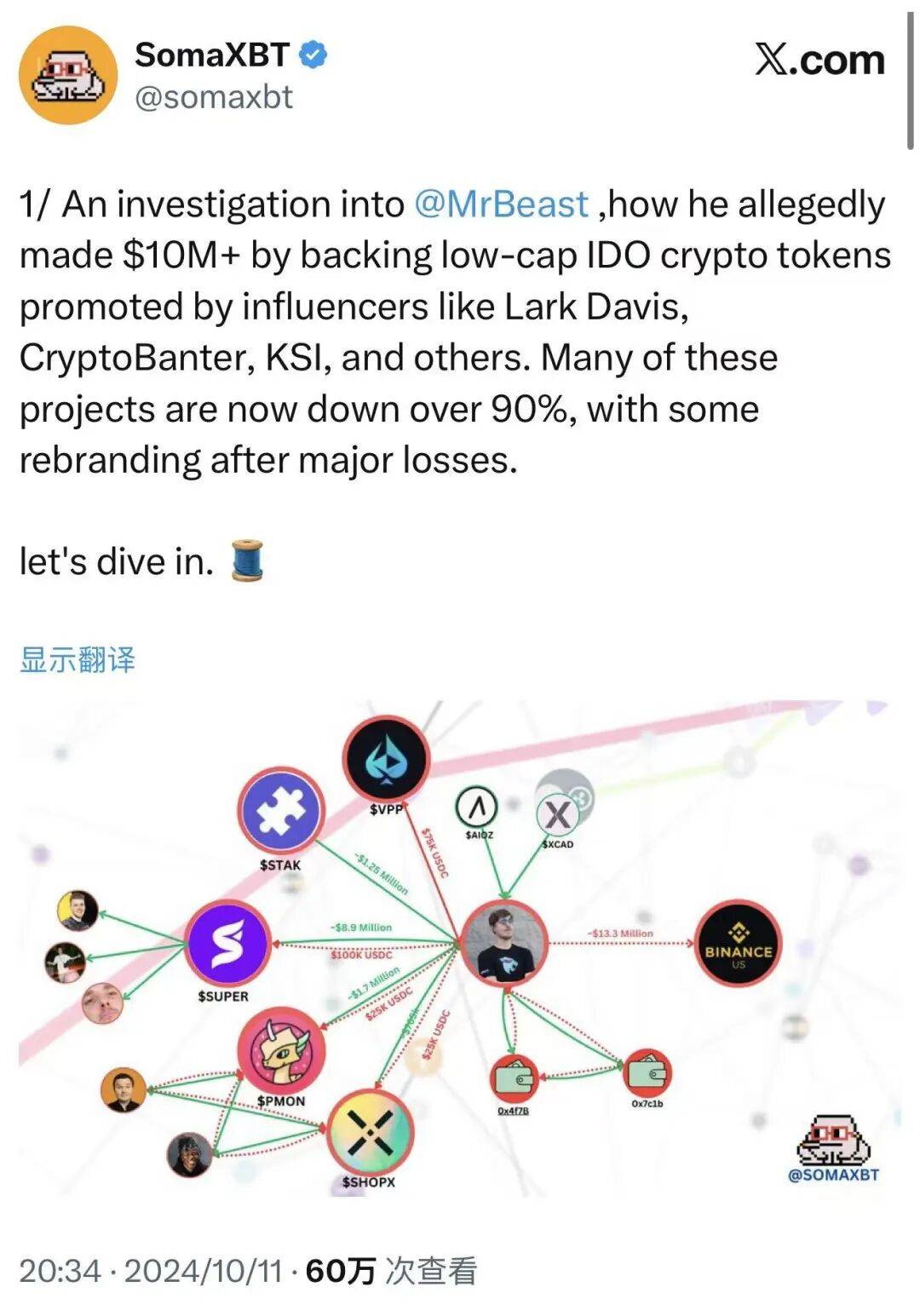
Core Insights - MrBeast is expanding his business empire into the financial sector with a trademark application for "MrBeast Financial," aiming to create a SaaS platform that includes crypto payment processing, microloans, and investment management [1][3][39] - The move comes as traditional banks lose trust among younger generations, particularly Gen Z, who prefer digital experiences over physical bank branches [8][9][10] - MrBeast's past controversies in the crypto space raise questions about his ability to gain trust in the financial sector, especially after accusations of exploiting his influence for profit [5][26][30] Group 1: MrBeast's Business Expansion - MrBeast plans to extend his brand from snacks and virtual restaurants to banking and investment services [2][4] - His financial services will target a demographic that is increasingly skeptical of traditional banking [7][8] - The potential for MrBeast Financial to redefine trust in finance is significant, as it seeks to merge social media influence with financial services [23][45] Group 2: Gen Z's Relationship with Banking - Only 16% of Gen Z expresses strong trust in traditional banks, compared to higher trust levels in older generations [9][10] - This generation seeks financial services that integrate social experiences and personal values, rather than traditional banking models [17][18] - Gen Z is influenced by financial influencers on social media, indicating a shift in how financial products are discovered and trusted [16][19] Group 3: Regulatory Challenges - MrBeast Financial will face multiple regulatory hurdles, including scrutiny from the SEC and CFTC regarding its compliance with securities laws [55][56] - The evolving regulatory landscape for cryptocurrencies presents both opportunities and challenges for new entrants like MrBeast Financial [48][51] - The need for robust compliance measures, including anti-money laundering and consumer protection protocols, will be critical for the platform's success [57][60] Group 4: Trust and Reputation - Trust is a central theme in MrBeast's venture into finance, as past controversies could undermine his credibility [46][70] - The financial sector requires a different approach to trust compared to the entertainment industry, emphasizing stability and prudence [81][82] - The outcome of MrBeast's financial experiment could reshape perceptions of trust in both the financial industry and influencer-driven markets [72][76]