
Hu Xiu

Search documents
政策出现重要“微调“线索
Hu Xiu· 2025-12-21 11:48
1、政策出现重要"微调"线索,市场节奏会提前吗? 如有疑问请以音频内容为准,添加妙投小虎哥微信:miaotou515,入群有机会与董小姐进一步交流。 本篇评级为★★★,主要围绕以下内容展开: 先看政策。其实12月初我们就给大家分析过,国内两场重要会议奠定了总体基调:12月属于短期动荡行 情,会议结束后市场需要向下消化预期差,普遍能感受到压力,尤其是一些热门板块。上周科技赛道整 体回调,排在全市场倒数前列;相反,政策顺风受益的板块里,消费表现最热——除商业航天"红得发 紫"外,赛道涨幅前五名中有四个都与消费相关,这就是政策的威力:在政策引导下,市场出现短期轮 动。 接下来的问题是:节奏会怎样?如果12月属于动荡行情,那么越接近1月,越可能出现转机,尤其是1月 中下旬。我们从政策上可以找到几条线索: 第一,上周四,中央财经委发布对中央经济工作会议的"十问十答"解读稿,其中提到:"我们最近也关 注到这几个月消费和投资增速有所放缓,需要持续加力扩内需。"这句话意味着大方向确定后,局部节 奏、力度可能根据市场情况微调。 第二,本周召开的国常会新闻通稿里出现"靠前发力抓落实,以扎实有效的工作巩固拓展经济稳中向好 势头"的 ...
“扩大内需是战略之举”,消费稳了?| 1218 张博划重点
Hu Xiu· 2025-12-18 13:56
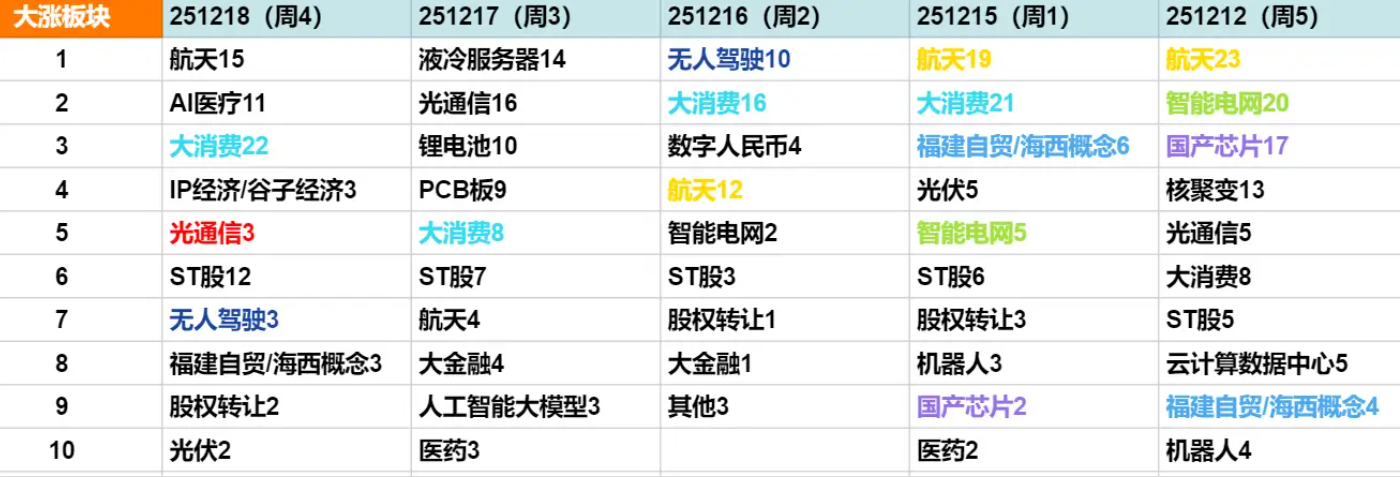
12月18日,三大指数涨跌不一,沪指低开回升,创业板指低开低走跌超2%。沪深两市成交额1.66万亿,较上一个交易日缩量1557亿。截至收盘,沪指涨 0.16%,深成指跌1.29%,创业板指跌2.17%。 | 大涨板块 | 251218 (周4) | 251217 (周3) | 251216 (周2) | 251215 (周1) | | --- | --- | --- | --- | --- | | 1 | 航天15 | 液冷服务器14 | 无人驾驶10 | 航天19 | | 2 | AI医疗11 | 光通信16 | 大消费16 | 大消费21 | | 3 | 大消費22 | 锂电池10 | 数字人民币4 | 福建自贸/海西概: | | 4 | IP经济/谷子经济3 | PCB板9 | 航天12 | 光伏5 | | 5 | 光通信3 | 大消费8 | 智能电网2 | 智能电网5 | | 6 | ST股12 | ST股7 | STHIS | STH56 | | 7 | 无人驾驶3 | 航天4 | 股权转让1 | 股权转让3 | | 8 | 福建自贸/海西概念3 | 大金融4 | 大金融1 | 机器人3 | | 9 ...

李蓓“等风来”
Hu Xiu· 2025-12-18 11:22
Core Viewpoint - The article discusses the response of Li Bei, founder of Hanxia Investment, to a critical piece published by Huxiu, highlighting the strong influence and performance of Li Bei in the private equity sector. The discussion revolves around the risks in current asset allocation strategies and the potential for investment opportunities in a changing economic landscape [1][2]. Group 1: Current Market Risks - Li Bei identifies significant risks in mainstream asset allocation, which is heavily concentrated in four strategies: quantitative enhancement, sci-tech funds, all-weather strategies, and overseas assets. Each of these strategies carries distinct risks, such as the impact of small-cap factors and the potential fallout from the AI bubble in the U.S. [2] - The current valuations of these strategies are considered high, and the crowded positions pose substantial risks, particularly if economic conditions shift [2][7]. Group 2: Investment Strategy - Hanxia's current portfolio is characterized by a "deep value" approach, focusing on industry leaders with an average PE of 8 times, PB of 0.8 times, and a dividend yield of 5%. Approximately 80% of the holdings exhibit strong cyclical characteristics [3][4]. - The portfolio also includes strategies to steepen the yield curve by buying medium- to short-term government bonds while shorting long-term bonds, which is expected to mitigate losses during prolonged deflation [5][6]. Group 3: Economic Outlook - Li Bei categorizes the future economic scenario into two possibilities: a reversal of deflation, which would negatively impact the mainstream strategies but benefit Hanxia's investments, and a continuation of deflation, where Hanxia may experience slight losses or gains while mainstream strategies continue to rise [6][10]. - The article notes that the current market's asset concentration poses a significant risk, as evidenced by past instances of severe sell-offs in crowded trades, such as in the renewable energy sector [7]. Group 4: Market Dynamics - The future market dynamics may not simply be a binary outcome of either technology growth or cyclical recovery. If AI technology continues to evolve and applications expand, the tech market may persist, while cyclical sectors could also gain recognition if their fundamentals improve [8]. - The article emphasizes that even in a recovering economic environment, both cyclical and tech sectors could thrive simultaneously, depending on market conditions and investor sentiment [8][10]. Group 5: Investment Philosophy - Li Bei's investment philosophy suggests that diversifying into Hanxia's products, which are inversely correlated with mainstream assets, can effectively reduce overall portfolio volatility. The low valuation and high dividend characteristics of Hanxia's holdings provide strong downside protection in volatile markets [9]. - However, this strategy relies heavily on accurate macroeconomic predictions, and if deflation persists longer than expected, the appeal of these cyclical assets may diminish for short-term investors [10].
年底波动期,什么时候过去?
Hu Xiu· 2025-12-18 11:03
如有疑问请以音频内容为准,添加妙投小虎哥微信:miaotou515,入群有机会与董小姐进一步交流。 新闻解读评级说明:五星重磅,四星重要,三星级以下大家选择听。 本篇评级为★★★,主要围绕以下内容展开: 1、波动期什么时候结束?中财办解读经济工作会议,有个细节值得注意 2、继续划重点,关注政策暖风赛道 1、波动期什么时候结束?中财办解读经济工作会议,有个细节值得注意 这两天的行情就如坐过山车:昨天大幅上涨之后,今天又迎来向下回踩,12月的波动在此过程中被演绎 得淋漓尽致。首先波动较大的是科技板块,这与中美两国市场存在联动性。昨晚美国纳斯达克指数下跌 1.8%,主要源于市场对美国各大科技公司"烧钱模式"未来能否回本的终极担忧;这一担忧迅速波及全球 科技板块,中国市场亦感同身受。 因此,最近我们看到,人工智能这一庞大组合已盘整近三个月。盘整如此之久并非好迹象:参与科技板 块交易的资金中,既有机构资金,也有相当比例的个人投资者和投机资金,这些资金的耐心普遍有限。 三个月的长期波动缺乏财富效应,容易引发部分资金离场;尤其考虑到年底资金面本就偏紧,很多资金 会趋于谨慎,均可能在年底引发较大波动。 当然,不少朋友注意到, ...
美股AI多空拉锯战,空头首战告捷
Hu Xiu· 2025-12-18 10:30
Core Viewpoint - The recent significant decline in the US AI sector stocks, including major players like Oracle, Nvidia, and AMD, indicates a fundamental shift in valuation logic, moving from growth expectations to a focus on return on investment (ROI) [1][11]. Group 1: Market Reaction - The AI sector experienced a collective drop, with Nvidia down 3.81%, AMD down 5.29%, and Oracle down 5.40%, resulting in the loss of hundreds of billions in market value [1][6]. - The catalyst for this decline was the termination of a $10 billion financing deal by Blue Owl Capital with Oracle, raising concerns about Oracle's debt levels and spending [2][3]. Group 2: Systemic Risk - The exit of Blue Owl Capital signifies a crack in the funding chain for AI infrastructure, leading to fears of systemic risk across the industry [4][5]. - The market's reaction suggests that if a major player like Oracle, which has over $500 billion in orders, cannot secure funding for significant projects, it raises alarms about the entire AI infrastructure sector [4]. Group 3: Diverging Institutional Views - Analysts from KeyBanc and Stifel have lowered Oracle's target price due to concerns over its financial health and ability to fulfill its substantial order backlog [7]. - In contrast, Morgan Stanley's Joseph Moore remains bullish on Nvidia, raising its target price, arguing that the market is overreacting to competitive threats [9]. Group 4: Valuation and ROI Focus - The focus of investment has shifted from capital expenditure to ROI, with firms like Wellington Management emphasizing the need for sustainable returns to justify AI investments [11]. - Current estimates suggest that the AI industry must generate approximately $600 billion in annual revenue to validate the significant investments being made, while actual revenue projections for 2025 are much lower, around $150 billion to $200 billion [12][13]. Group 5: Impact on A-shares - The decline in US AI stocks has also affected related A-share companies, with significant drops observed in stocks like Zhongji Xuchuang and Xinyi Sheng [14].


李蓓被流量耽误了
Hu Xiu· 2025-12-17 22:01
Core Insights - The article discusses the rise and fall of Li Bei, a prominent figure in the private equity industry, highlighting her unique ability to blend investment acumen with social media influence [2][3][4] - It emphasizes the dual nature of her career, where her strong performance was initially supported by her ability to generate significant public interest, but recent performance declines have led to a backlash against her public persona [9][10][12] Company Overview - Li Bei founded Hanxia Investment in 2017 after a decade of experience in public and private equity, gaining recognition for her investment strategies and public engagement [4][5] - Hanxia Investment quickly grew to manage over 100 billion yuan, leveraging Li Bei's social media presence to attract clients and enhance brand visibility [7][8] Performance Analysis - Hanxia's performance peaked between 2018 and 2021, with average returns of 16.67%, 6.38%, 99.99%, 64.42%, and 0.74% from 2018 to 2022, respectively [10][11] - However, post-2022, the firm faced significant challenges, with Li Bei's misjudgments leading to substantial losses, including a 30% net value decline and underperformance compared to market indices [12][14][20] Market Position and Strategy - The article notes that Li Bei's strategy shifted from a low-volatility approach inspired by Bridgewater to a high-risk, high-reward model akin to Soros, which initially yielded high returns but later contributed to volatility and losses [23][24] - The competitive landscape has evolved, with quant funds gaining traction and outperforming traditional discretionary strategies, posing a challenge to Hanxia's business model [29][30] Future Outlook - Despite recent setbacks, there is potential for recovery if macroeconomic conditions improve and if Hanxia can adapt its strategies to align with market trends [31][32] - The article suggests that while Li Bei's expertise in macroeconomic analysis remains valuable, her reliance on personal judgment may hinder future performance in a rapidly changing investment environment [20][30]
白银的上涨,历史上更疯狂!| 1217 张博划重点
Hu Xiu· 2025-12-17 14:01
Core Viewpoint - The market experienced a collective rebound on December 17, with significant gains in major indices, indicating a positive shift in investor sentiment [1] Group 1: Market Performance - The Shanghai Composite Index rose by over 1%, while the ChiNext Index increased by more than 3% [1] - The total trading volume in the Shanghai and Shenzhen markets reached 1.81 trillion, an increase of 87 billion compared to the previous trading day [1] - By the end of the trading session, the Shanghai Composite Index had gained 1.19%, the Shenzhen Component Index rose by 2.4%, and the ChiNext Index increased by 3.39% [1] Group 2: Sector Performance - The financial sector showed strong performance in the afternoon, with Huatai Securities nearing a trading limit and China Pacific Insurance rising over 4% [1]
5年上市、6年盈利,“国产英伟达”的叙事要被沐曦讲通了?
Hu Xiu· 2025-12-17 04:58
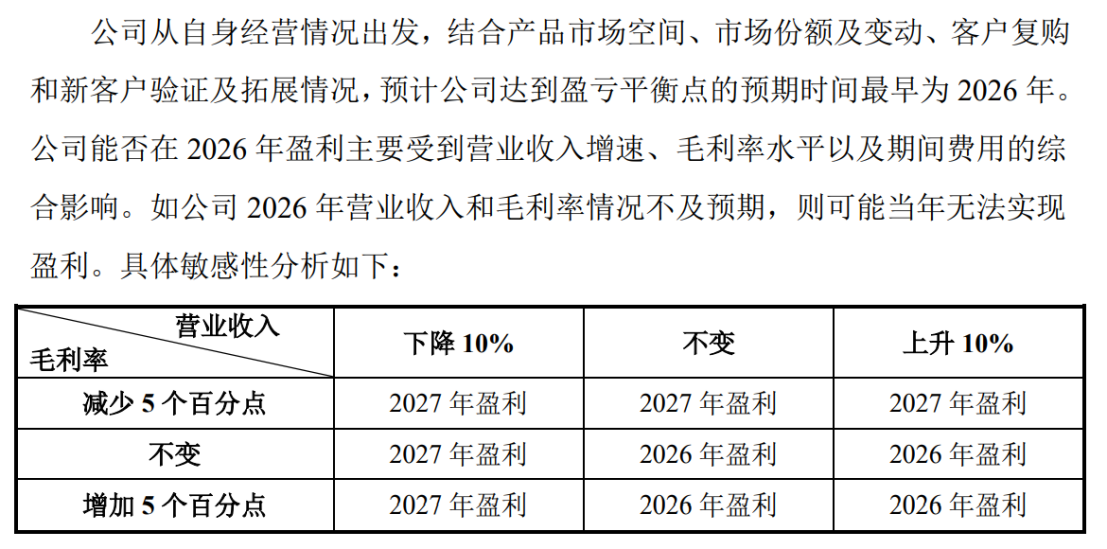
Core Viewpoint - The capital market is currently favoring the narrative of domestic GPUs, with a focus on the recent listing of Muxi Co., which has achieved significant market attention and high initial returns for investors [2][30]. Group 1: Muxi Co. Listing and Market Performance - Muxi Co. debuted on the A-share market with an opening increase of 568.83%, reaching a price of 700 yuan, allowing investors to earn approximately 297,700 yuan per share [2]. - As of December 17, Muxi's market capitalization was 329.9 billion yuan, closely trailing behind other domestic GPU companies like Moer Thread and Cambrian [2]. - Muxi's first-day performance is notable as it has no price limit, making its market value susceptible to fluctuations driven by market sentiment [2]. Group 2: Competitive Landscape and CUDA Compatibility - The compatibility with NVIDIA's CUDA ecosystem is a critical issue for domestic chip manufacturers, as CUDA has become an industry standard [4][10]. - Muxi Co. has chosen a strategy of high compatibility with CUDA through its self-developed software stack, MXMACA, which aims to minimize user migration costs [20][21]. - The company has registered over 15,000 users for its MXMACA software stack since its open-source community launch on February 14, 2025, indicating a positive reception [20]. Group 3: Financial Performance and Profitability Outlook - Muxi's revenue surged from 430,000 yuan in 2022 to 1.236 billion yuan in the first three quarters of 2025, reflecting a significant compound annual growth rate [26]. - Despite not being profitable yet, Muxi anticipates achieving profitability by 2026, which is earlier than competitors like Moer Thread [26][35]. - The company’s core product, the Xiyun C500, has successfully completed its first batch of chips, with the next generation, the Xiyun C600, expected to enter mass production in early 2026 [29]. Group 4: Market Valuation and Future Potential - The capital market's valuation of Muxi is influenced by the narrative of becoming "China's NVIDIA," with potential market capitalization estimated at around 250 billion yuan based on comparisons with Moer Thread [33][36]. - If Muxi can demonstrate the commercial viability of its C600 product in 2026, its market value could significantly increase, potentially surpassing that of Moer Thread and Cambrian [36].
邮轮旅游,细分市场增量!| 1216 张博划重点
Hu Xiu· 2025-12-16 13:09
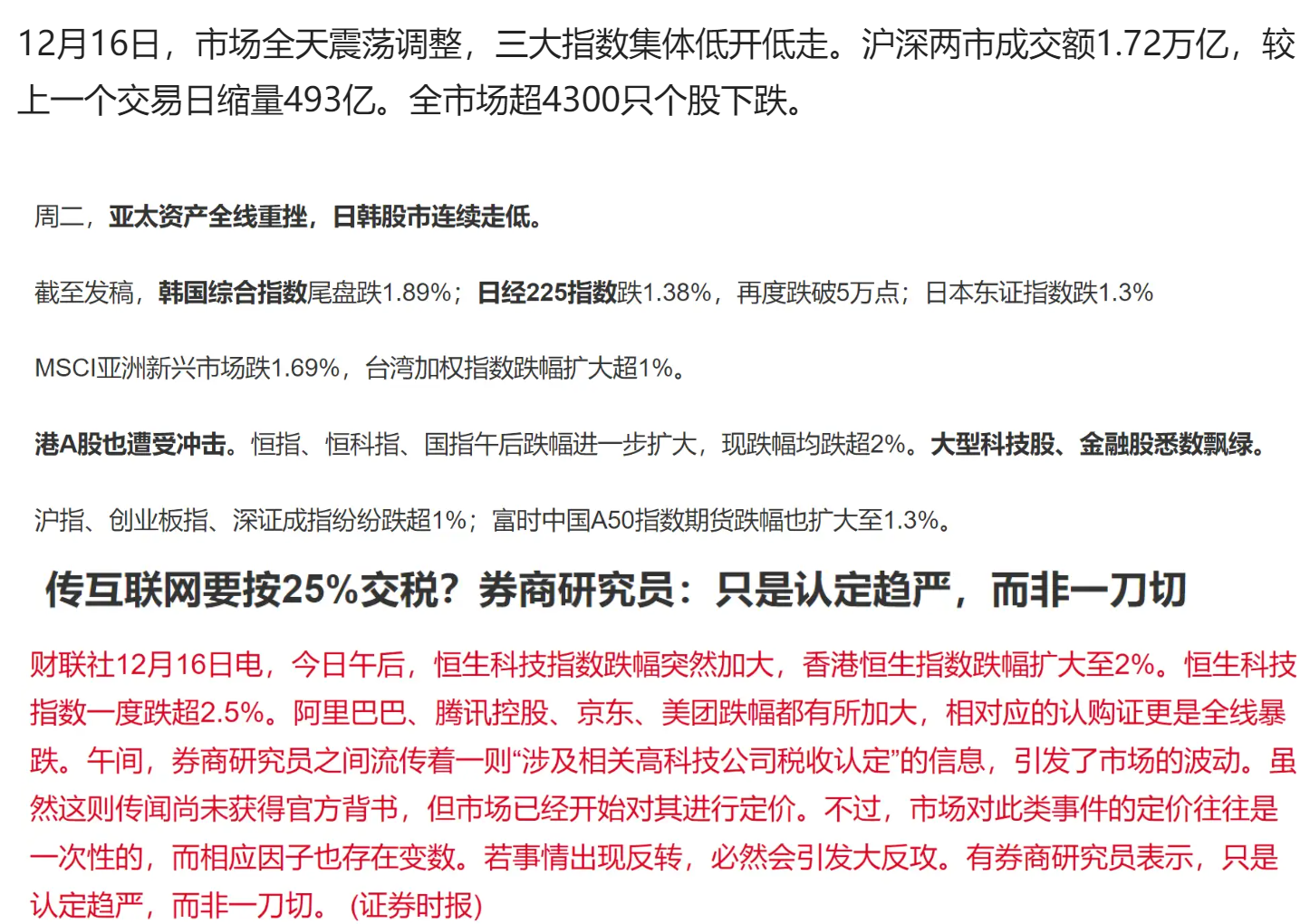
Market Overview - The market experienced a day of volatility with all three major indices opening lower and continuing to decline throughout the day, resulting in a total market volume decrease of 49.3 billion [1] - In the Asia-Pacific region, all asset classes faced significant declines, with the South Korean Composite Index dropping by 1.89% and the Nikkei 225 Index falling by 1.38%, breaking below the 50,000 mark [2] Hong Kong Market Impact - The Hang Seng Index and related indices saw a sharp increase in their decline, with the Hang Seng Technology Index and the National Index both falling over 2.5% [3] - Major tech companies such as Alibaba, Tencent, JD.com, and Meituan experienced increased losses, reflecting market concerns over potential tax implications for high-tech companies [3] Japanese Monetary Policy - Historically, each interest rate hike by the Bank of Japan has been associated with global economic downturns, as seen in past events such as the 2000 Nasdaq crash and the 2008 subprime mortgage crisis [4] - Current discussions indicate that Japan is at a critical juncture regarding interest rate increases, with implications for global financial stability [4]
《求是》重要文章说了什么,指向什么方向?
Hu Xiu· 2025-12-16 11:39
本篇评级为★★★,主要围绕以下内容展开: 1、《求是》重要文章说了什么,指向什么方向? 今天国内市场向下回踩得有些狠:上证指数下跌1.1%,创业板指跌2.1%。进入12月后,国内股票市场 的财富效应迅速萎缩——这一点我们已在近日的音频中反复提及,总原则仍叫"谨慎为金"。多重肉眼可 见的压力中,最典型的是刚结束的两次会议:12月8日的政治局会议和12月11日的中央经济工作会议。 政策节奏总体讲究"稳扎稳打",而此前市场预期却是"高举高打",于是部分资金不得不面对预期落差, 进而对整体市场形成压制。当然,我们并非说"稳扎稳打"之下所有行业、所有赛道都无亮点;熬过12月 及1月初的典型波动期后,政策指向的亮点大概率会逐步浮现,转化为潜力与机会。 今天政策层面又有新表态:《求是》杂志发表了一把手的重要文章,标题为《扩大内需是战略之举》。 《求是》的地位毋庸赘述,其基本代表最高层声音;此文又是两次会议后一把手发表的首篇综述,意有 所指,可视为来年工作的重中之重。标题已点明重点——"扩大内需是战略之举",并非权宜之策,而是 短、中、长期都要"徐徐图之"。 本文为妙投付费内容,上述仅为摘要,购买本专栏即可解锁完整内容。新用 ...