Counterpoint Research

Search documents
Motorola成为欧洲第二大折叠屏手机品牌;欧洲折叠屏手机市场增长停滞
Counterpoint Research· 2025-06-11 09:55
Core Insights - The foldable smartphone market in Europe remains a niche segment, with only 1.5% of total smartphone sales in Q1 2025, reflecting a year-on-year growth of 4% [1][3][6] Market Overview - The 4% year-on-year growth in foldable smartphone sales is seen as a warning sign for a category still in its early growth phase, with high pricing and consumer uncertainty regarding value and durability being significant barriers [3][6] - Samsung continues to lead the market, but has faced significant competition leading to a decline in market share since Q1 2024 [6][8] - Motorola has overtaken HONOR to become the second-largest foldable smartphone brand in Europe, with Google, Xiaomi, and TECNO also performing well after launching competitive new products [6][8] Competitive Landscape - The competitive landscape for foldable smartphones is intensifying, with several brands launching innovative products that challenge Samsung's long-standing dominance [8] - Upcoming releases from Samsung, including the Galaxy Fold7 Ultra, are expected to reinvigorate the market and address the competitive pressures [8]



电视与平板电脑推动2024年平板显示市场复苏;汽车领域将引领未来增长
Counterpoint Research· 2025-06-05 08:32
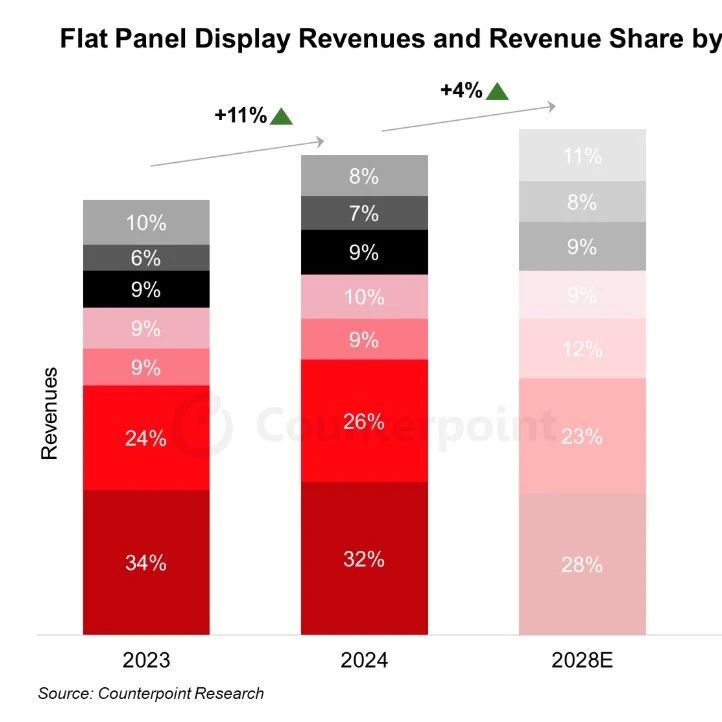
Core Insights - The global flat panel display market is expected to grow by 11% year-on-year in 2024, driven by strong performance across various product categories, particularly televisions and tablets [2][3] - The automotive sector is anticipated to become a significant growth driver in the future, with high single-digit to low double-digit revenue growth rates expected [3][7] Market Performance - In 2024, television panel revenue is projected to increase by 19%, primarily due to rising demand in the large-size segment, which also improves the overall average selling price [2] - Smartphone panel revenue is expected to remain flat, aligning with downstream shipment trends, and is projected to decline in the long term [2][3] Product Insights - The iPad 13 Pro series utilizing OLED panels is contributing to a recovery in tablet revenue, returning to pre-pandemic levels [2] - The flat panel display market is entering a product-driven growth phase, with expectations for a new cycle around 2027 when foldable devices from Apple are anticipated to enter the market [2] Sector Analysis - Monitor and PC panel revenues are expected to achieve double-digit growth in 2024 after hitting a low at the end of 2023, with future growth projected to stabilize at mid-single-digit levels [5] - The AR/VR panel market is facing a downturn due to declining device shipments, but growth is expected to resume in the next couple of years, particularly with the integration of AI technologies [7] Automotive Sector - The automotive display market is highlighted as a key growth area, with increasing demand for larger and more sophisticated displays driving revenue growth [7][9] - The evolution of in-cabin infotainment systems is becoming a competitive battleground for automakers, especially among Chinese manufacturers [9]
2024年新能源汽车新车电池装机量同比增长22%,中国厂商主导市场,关税引发供应链调整
Counterpoint Research· 2025-06-05 08:32
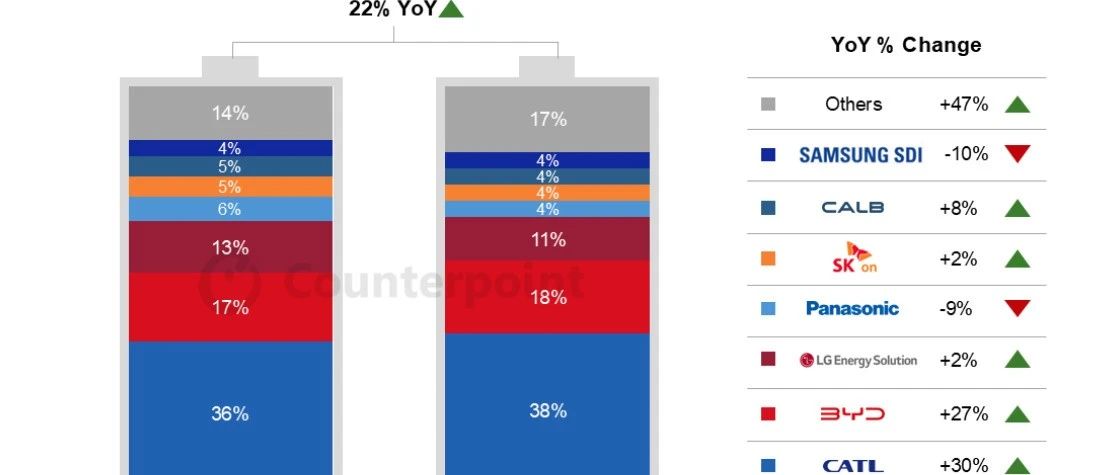
Core Insights - The global new energy vehicle (NEV) battery installation volume is expected to grow by 22% year-on-year in 2024, with Chinese manufacturers surpassing a 70% market share [2][4] - CATL leads the market with a 38% share, followed by BYD at 18%, benefiting from strong domestic demand and export expansion [2][4] - The shift in battery structure is influenced by the rising share of plug-in hybrid electric vehicles (PHEVs), which increased from 30% in 2023 to 37% in 2024, impacting overall average battery capacity [4] Market Dynamics - The decline in market share for LG Energy Solution, Panasonic, and SK Innovation is attributed to weak demand in Europe and the US, delays in new factory launches, and reduced orders from traditional automakers [2] - CALB is the only second-tier manufacturer maintaining stable momentum amidst these challenges [2] Battery Capacity Trends - Despite an increase in average battery capacity for battery electric vehicles (BEVs), the overall average battery capacity for NEVs decreased by 1% due to the higher proportion of PHEVs [4] - PHEVs are particularly popular in regions with underdeveloped charging infrastructure, such as Europe and China [4] Supply Chain Adjustments - Upcoming tariffs on Chinese electric vehicles and battery components in Europe and the US are prompting a restructuring of global supply chains [4] - Automakers are shifting production to Mexico, the southeastern US, India, and Indonesia to avoid high import costs, while reevaluating their strategies for battery, power system, and chip production [4] Analyst Perspectives - Counterpoint analysts emphasize that China's battery advantages now extend beyond cost to include scale, execution, and industry integration [2] - Policy pressures are forcing automakers to rethink production layouts, with localized and flexible supply chains becoming crucial for the future [4]


iPhone 16领跑2025 Q1全球智能手机市场
Counterpoint Research· 2025-06-05 08:32
Core Insights - Apple iPhone 16 became the best-selling smartphone globally in Q1 2025, marking a return to the top spot for the base model after two years [6][7] - Apple maintained a strong presence in the Top 10 list, occupying five positions for the fifth consecutive March quarter, while Samsung saw a decrease in models listed compared to the previous year [2][6] - The low-end smartphone segment (priced under $100) showed significant growth, accounting for nearly 20% of global smartphone sales in Q1 2025 [6][8] Group 1 - iPhone 16 performed exceptionally well in Japan and the Middle East and Africa, with Japan showing the highest growth rate for the base model due to improved economic conditions and subsidy policy adjustments [5][6] - iPhone 16 Pro Max and iPhone 16 Pro ranked second and third respectively, although the Pro series faced challenges in the Chinese market due to government subsidies favoring models priced below 6,000 yuan (approximately $833) and intense competition from Huawei [5][6] - iPhone 16e debuted strongly, ranking sixth in the global Top 10 list in its first month of sales, with expectations to surpass the previous SE model's first-year sales due to significant technological upgrades [7][8] Group 2 - Samsung Galaxy S25 Ultra ranked seventh in Q1 2025, down from fifth place in Q1 2024, attributed to a shorter sales window [6][7] - Galaxy A16 5G rose to fifth place, achieving a 17% year-over-year growth, primarily due to expanded distribution in North America, which became its largest market [7][8] - Galaxy A06 saw significant growth, moving up four positions compared to its predecessor, reflecting a general increase in demand for low-end smartphones, particularly in emerging markets [8]


Apple iPhone市场份额报告汇总
Counterpoint Research· 2025-06-05 08:32
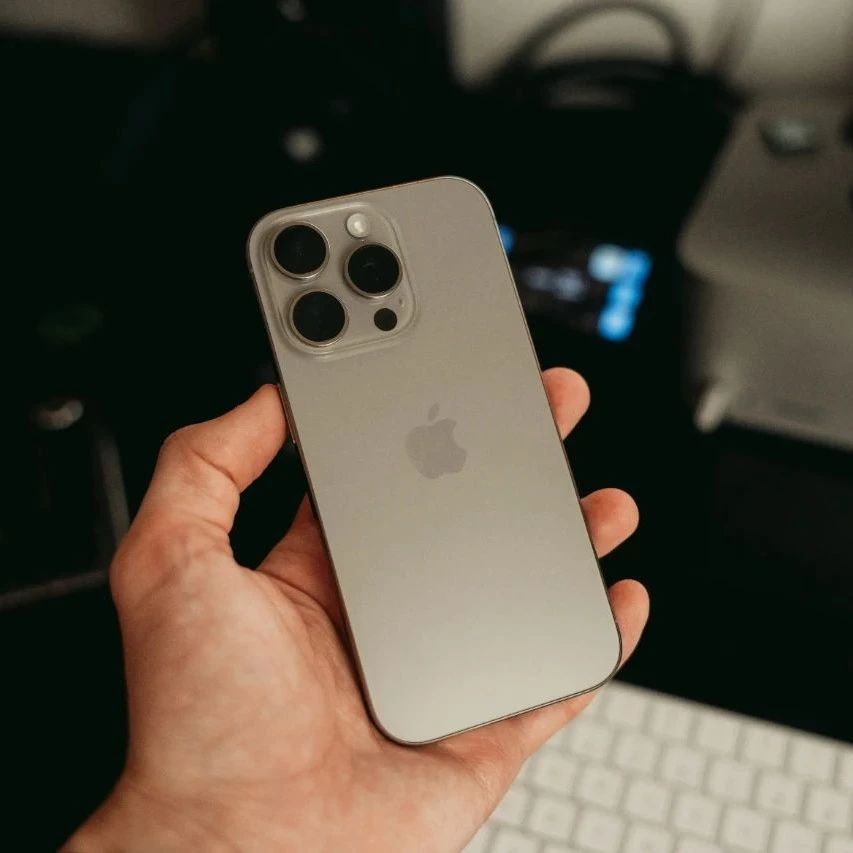
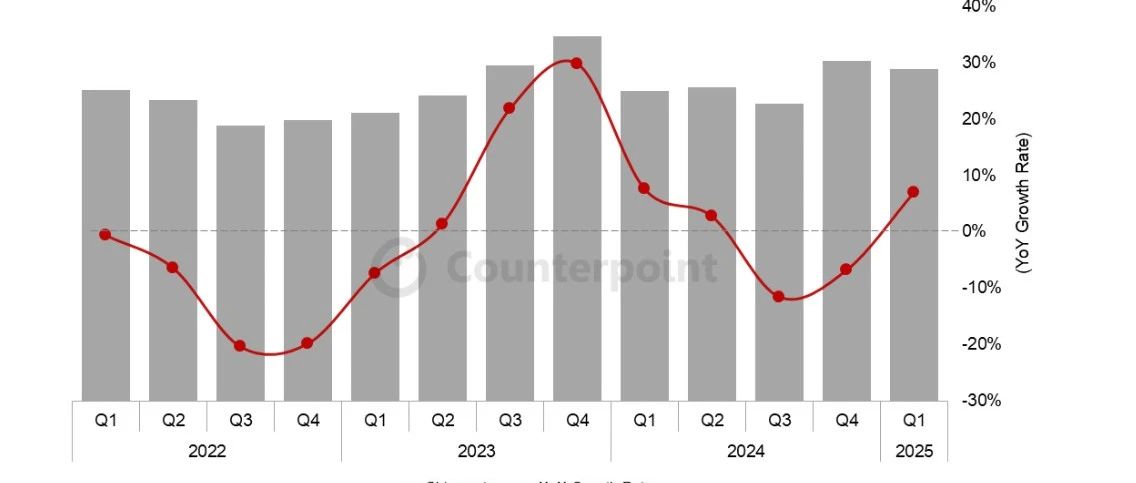
Core Insights - Apple iPhone shipments are projected to grow by 12% year-on-year in Q1 2025, maintaining its position as the leading brand in the global smartphone market, driven by strong performances in North America, Japan, and India, along with the launch of the iPhone 16e [3] Group 1: Market Share Analysis - In Q1 2023, Apple's iPhone market share was 21%, which decreased to 17% in Q2 and Q3, before rising to 23% in Q4 2023. The market share is expected to stabilize at 19% in Q1 2025 [2] - The annual market share of Apple has fluctuated over the years, starting from 9% in 2008 and reaching 16% in 2023, with a forecasted increase in 2024 [6] Group 2: Regional Performance - In India, Apple experienced a significant year-on-year shipment growth of 29%, attributed to the ongoing trend of premiumization and deeper penetration in tier-2 and tier-3 cities, supported by local manufacturing and R&D investments [3] - The North American market saw a 21% year-on-year increase in shipments, largely due to the release of the iPhone 16e, which enhanced Apple's appeal in the mid-range market and reduced competitors' market space [3]

2025年Q1中东非洲智能手机出货量增长7%:节日促销成关键驱动力
Counterpoint Research· 2025-05-29 02:32
Core Viewpoint - The smartphone market in the Middle East and Africa is experiencing a recovery with a 7% year-on-year growth in Q1 2025, driven by strong holiday demand, improved supply, and moderate inflation [1][4]. Market Dynamics - In 2024, the smartphone market in the region is expected to enter an adjustment phase as brands focus on clearing old inventory and reducing new product launches, leading to a decrease in active brands [2]. - The recovery in early 2025 is attributed to supply improvements and the release of pent-up demand, particularly for budget models priced under $100 [2][4]. Smartphone Shipment Growth - The growth in smartphone shipments is primarily seen in the low-end market, which is the fastest-growing segment due to increased competition [4]. - The penetration rates for 5G and OLED technologies reached 33% and 42%, respectively, supported by network deployments and the introduction of popular large-screen Android devices [4][5]. Brand Performance - Samsung maintained its market leadership with a 15% year-on-year increase in shipments, focusing on fewer, higher-quality models [9]. - Transsion holds a 32% market share, up from 29% the previous year, with TECNO leading in the mid-range market due to strong promotions [9]. - Xiaomi's shipments decreased by 2%, but its LTE smartphones saw a 27% increase, indicating a competitive push in the low-end market [10]. - Apple experienced a 4% increase in shipments, driven by the launch of the iPhone 16e, which performed well in price-sensitive markets [10].

智能手机厂商如何在AI Agents时代保持竞争力?
Counterpoint Research· 2025-05-29 02:32
Core Viewpoint - AI agents are reshaping the global technology landscape, serving as a new interface that can execute tasks based on simple commands, fundamentally changing human-computer interaction and challenging the dominance of smartphone manufacturers over operating systems [1][2]. Group 1: Rise of AI Agents - The future may see multiple AI agents coexisting on a single smartphone, each acting as an entry point for different services, leading to a multi-agent ecosystem [2][3]. - Major tech companies like Meta, Tencent, and ByteDance are leveraging AI agents to strengthen their ecosystem, creating closed systems that lock users into their platforms and diminish the control of smartphone brands [2][3]. Group 2: Implications for Smartphone Manufacturers - Smartphone manufacturers risk becoming mere hardware assemblers if they fail to adapt to the AI era, losing control over software, services, and revenue streams [5][6]. - The introduction of proprietary AI agents by smartphone brands can serve as intermediaries to direct user needs to their partners, creating opportunities for emerging startups to gain traffic support [5][6]. Group 3: New Business Opportunities - A new model of AI agent distribution is emerging, where users select agents based on their needs, prompting smartphone manufacturers to upgrade their app stores to AI agent stores [6]. - To seize this opportunity, manufacturers must invest in an open AI ecosystem, supporting independent AI startups and ensuring seamless integration of third-party agents to counter the closed ecosystems of internet giants [6].

预约上海 MWC 专属洞察!与 Counterpoint 分析师面对面聊 AI、6G、智联未来
Counterpoint Research· 2025-05-29 02:32
Core Insights - The 2025 Shanghai MWC will focus on key industry topics such as mobile terminals, AI, 6G, satellite communication, and AIoT [1][3] - Counterpoint analysts will engage in discussions about industry transformation trends and the global market positioning of Chinese manufacturers [3][4] Group 1 - The event will explore the transformative impact of AI on terminal technology and the vision and key technological research for 6G [3] - There will be discussions on the large-scale implementation of satellite communication and new scenarios for AIoT [3] - The conference aims to provide insights into how Counterpoint's research and services can support business needs [3][4] Group 2 - Industry professionals and partners interested in the mobile ecosystem are encouraged to schedule meetings with analysts at the event [3] - Continuous updates and deep insights into the global technology market will be available through Counterpoint Research [4]

政策支持与中国车企助力泰国电动汽车市场增长
Counterpoint Research· 2025-05-29 02:32
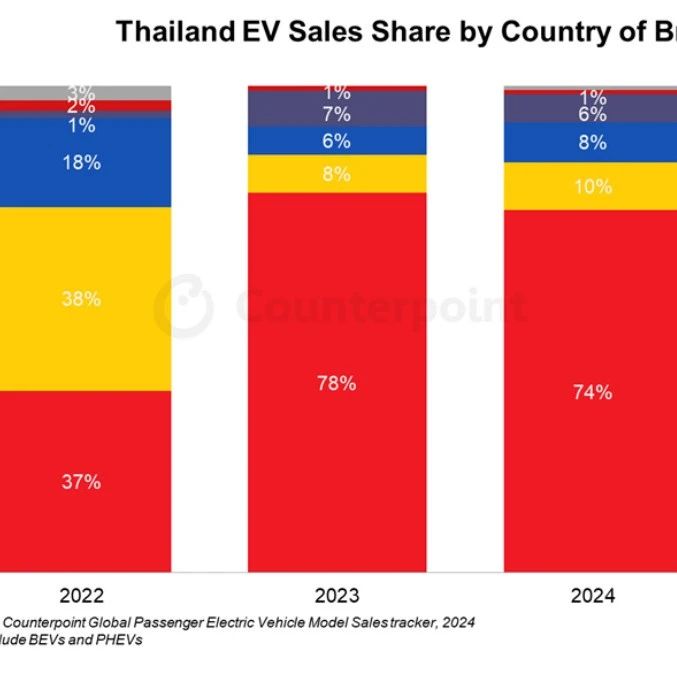
Core Insights - Thailand is projected to be the largest electric vehicle (EV) market in Southeast Asia in 2024, despite a year-on-year decline of 11% in EV sales due to increased household debt and tighter credit policies affecting consumer demand [1][4] - The Thai government is committed to promoting electric vehicle adoption through initiatives like the "30@30" industrial policy and the "EV3.5" incentive program, aiming to accelerate the country's transition to electric mobility [1][4] - Chinese automotive brands are seizing market opportunities in Thailand, capturing nearly 75% of the EV market share in 2024, with brands like BYD, Deepal, MG, Neta, and Aion leading the market [1][4] Market Dynamics - The number of active Chinese automotive brands in Thailand has increased from 9 in 2023 to 18 in 2024, indicating a significant acceleration in market entry [1] - Japanese automakers are losing their long-standing dominance in the Thai EV market due to slow electrification efforts, creating space for Chinese brands to gain consumer trust through competitive pricing and advanced features [1][4] Government Initiatives - The "EV3.5" government incentive program and "30@30" policy are attracting investments and positioning Thailand as a regional hub for electric vehicles [4] - Thailand's strong supply chain and strategic location are enhancing its appeal to battery and EV manufacturers, solidifying its position in the global electric vehicle ecosystem [4]
Counterpoint 2025年Q1各地区市场智能手机数据报告
Counterpoint Research· 2025-05-22 09:41
Core Insights - The global smartphone market saw a 3% year-on-year revenue growth in Q1 2025, driven primarily by Apple, vivo, and non-top five brands [2][3] - The average selling price (ASP) increased by 1% to $364, marking the highest Q1 record, attributed to a continued trend towards high-end devices [3] Regional Market Performance - **China**: Smartphone sales increased by 2.5% year-on-year in Q1 2025, supported by government subsidies [7] - **United States**: Smartphone sales revenue declined by 2% year-on-year, primarily due to weakness in the high-end market, where sales dropped by 4% [15] - **India**: Smartphone shipments decreased by 7% year-on-year, but Apple achieved a 29% growth, marking its highest Q1 shipment record in India [19][20] - **Vietnam**: Smartphone shipments fell by 5% year-on-year, with Apple experiencing a 37% increase in shipments, maintaining a strong market presence [24] Brand Performance - Among the top five smartphone brands, only Apple and vivo reported revenue growth [3] - Huawei led the market with a 28.5% year-on-year revenue increase, achieving its highest market share since 2021 [14] - Xiaomi also saw double-digit growth, benefiting from a broader product range and government subsidies [14]