Counterpoint Research

Search documents
小米2025年Q2财报:多元化增长全面提速
Counterpoint Research· 2025-09-04 01:04
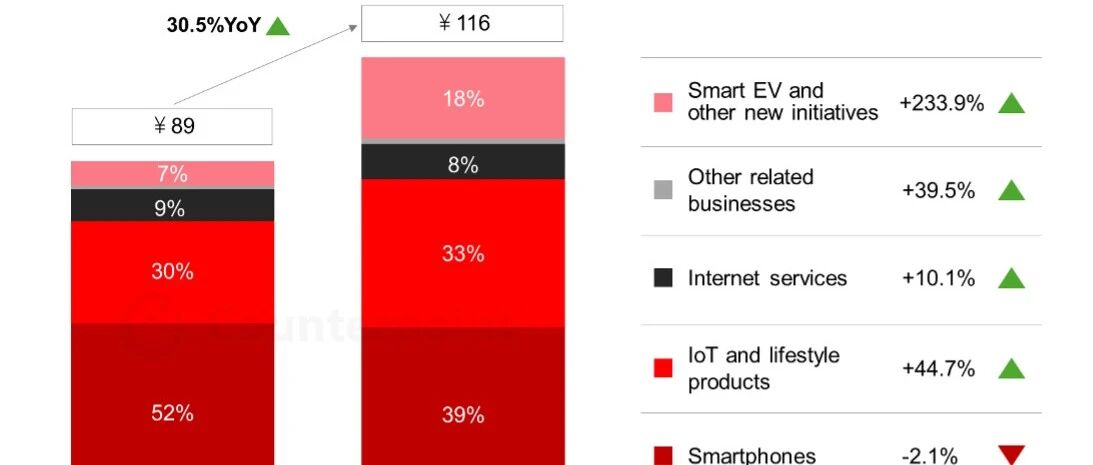
Core Viewpoint - Xiaomi's diversified strategy is supporting resilient growth, with significant contributions from its automotive and IoT businesses, despite a decline in smartphone revenue [4][10]. Financial Performance - In Q2 2025, Xiaomi's revenue grew by 30.5% year-over-year, with the smartphone business accounting for less than half of total revenue [4]. - The IoT business achieved a record revenue of 38.7 billion yuan, marking a 44.7% year-over-year increase, driven by the expansion of offline stores [8]. - Smartphone revenue declined by 2% year-over-year, with a 2.7% drop in average selling price (ASP) [10]. Product and Market Strategy - Xiaomi's smartphone shipments have seen eight consecutive quarters of year-over-year growth, although revenue was offset by ASP declines [9]. - The launch of the YU7 electric SUV exceeded expectations with over 240,000 orders in 18 hours, indicating strong demand for Xiaomi's automotive offerings [15]. - Xiaomi plans to open 1,000 new direct stores annually to enhance channel control and operational efficiency [8]. Innovation and R&D - Xiaomi's first self-developed 3nm flagship chip, XRING O1, has been officially released, showcasing its commitment to long-term innovation and breakthroughs in the high-end market [9][15]. - The company is expected to invest 30 billion yuan in R&D by 2025, with approximately 25% allocated to AI [15]. Strategic Insights - The integration of smartphones, electric vehicles, and AIoT is central to Xiaomi's strategy, creating a connected ecosystem that enhances user engagement and drives IoT hardware sales [11]. - Xiaomi's electric vehicle business is projected to achieve quarterly or monthly profitability by late 2025, although full profitability will take longer due to significant initial investments [15].

2025年Q2印度EMS市场格局:迪克森登顶最大智能手机厂商,巴格瓦蒂增速最快
Counterpoint Research· 2025-09-04 01:04
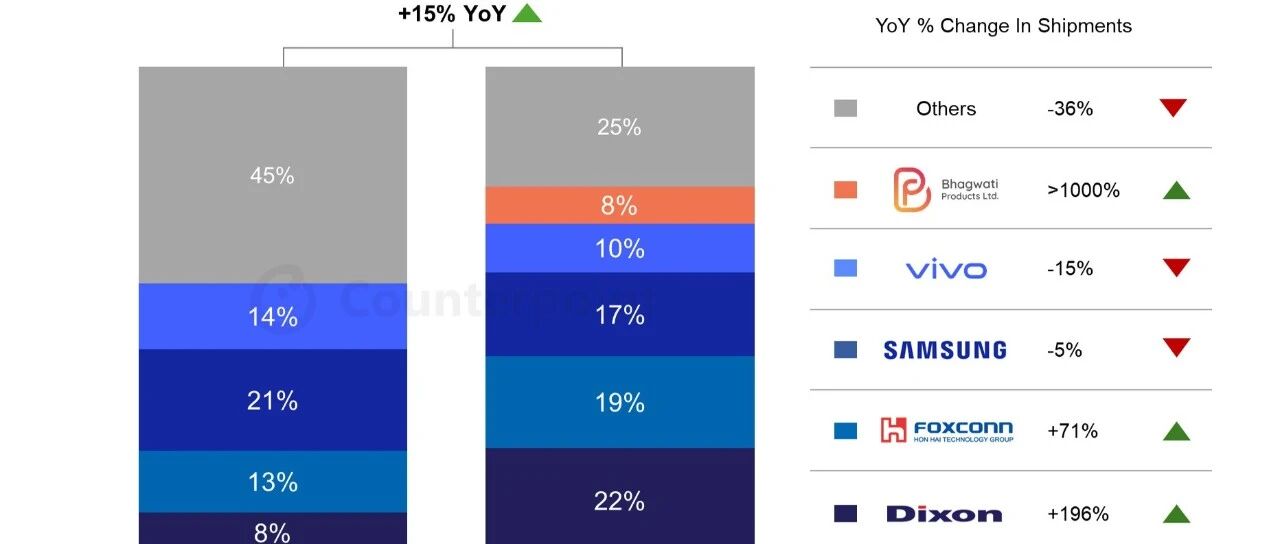
Core Insights - The article highlights the significant growth of smartphone manufacturing in India, driven by a 15% year-on-year increase in shipments in Q2 2025, primarily due to a 32% surge in exports and an 8% rise in domestic shipments [4][8]. - Dixon Technologies has emerged as the largest smartphone manufacturer in India, with a remarkable 196% increase in shipments, fueled by orders from Motorola, Transsion brands, Xiaomi, and Realme [4][8]. - The article emphasizes the critical role of Indian manufacturers as major Chinese OEMs outsource production to India, with expectations for further expansion of India's EMS landscape [6][9]. Export Growth - Apple has become the largest exporter in Q2, benefiting from geopolitical shifts and increased demand, particularly for iPhones, which has positively impacted Foxconn and Tata Electronics [9]. - The combined market share of Apple and Samsung in India's smartphone export market remains stable at over 93%, indicating a strong reliance on these brands for export growth [9]. - Future sustainability of India's EMS sector depends on building a robust local supply chain and increasing investment in domestic smartphone component manufacturing [9]. Market Dynamics - Bhagwati Products Limited (BPL) has entered the top five smartphone manufacturers in India, achieving the fastest growth in the market, supported by increased orders from Vivo and OPPO [4][8]. - The article notes that several manufacturers are forming joint ventures to invest in local component production, which will enhance India's domestic value addition [9]. - The Indian government's initiatives, such as the Electronics Components Manufacturing Plan, are expected to play a pivotal role in expanding the electronic manufacturing supply chain in India [6].
2025年Q2全球智能手表市场增长;华为智能手表出货量首次夺冠超越苹果
Counterpoint Research· 2025-09-04 01:04
Core Insights - The global smartwatch shipment volume has increased by 8% year-on-year, marking a return to growth after five consecutive quarters of decline [3][4]. - Huawei has surpassed Apple for the first time in smartwatch shipments, becoming the global leader in Q2 2025, driven by a 52% year-on-year growth [4][6]. - The Chinese market plays a crucial role in this recovery, with rising consumer demand and a focus on multifunctional, ecosystem-integrated devices [4][8]. Market Performance - Huawei's global shipment share reached a historic high of 20% in Q2 2025, benefiting from strong performance in the Chinese market and strategic expansion overseas [8]. - China has become the largest high-end smartwatch market globally, surpassing North America for the first time [8][11]. - The overall smartwatch market is expected to continue its recovery in 2025, with an estimated growth rate of around 7% [8][11]. Competitive Landscape - Apple has experienced a decline in global smartwatch shipments for seven consecutive quarters, losing its top position, but remains a leader in the high-end segment due to its iOS ecosystem and strong user loyalty [9][11]. - Xiaomi and Little Genius have seen significant growth in shipments, with Xiaomi excelling in the budget smartwatch market and Little Genius dominating the children's smartwatch segment [9]. - Samsung's shipments have decreased by 3%, reflecting a broader trend of consumer hesitation in purchasing, as many are waiting for new product releases expected in Q3 2025 [9][11]. Regional Insights - The strong performance of domestic brands and a loyal user base have propelled China to become the largest market for high-end smartwatches in Q2 2025 [11]. - The growth in the Chinese market is supported by affordable options, government subsidies, and deep integration with local application ecosystems [11]. - The global smartwatch market is entering a new innovation cycle, with health and AI becoming core differentiators for long-term competitive advantage [11].


2025年Q2印尼智能手机出货量同比下滑7%,三星、小米助力缓解跌势
Counterpoint Research· 2025-09-04 01:04
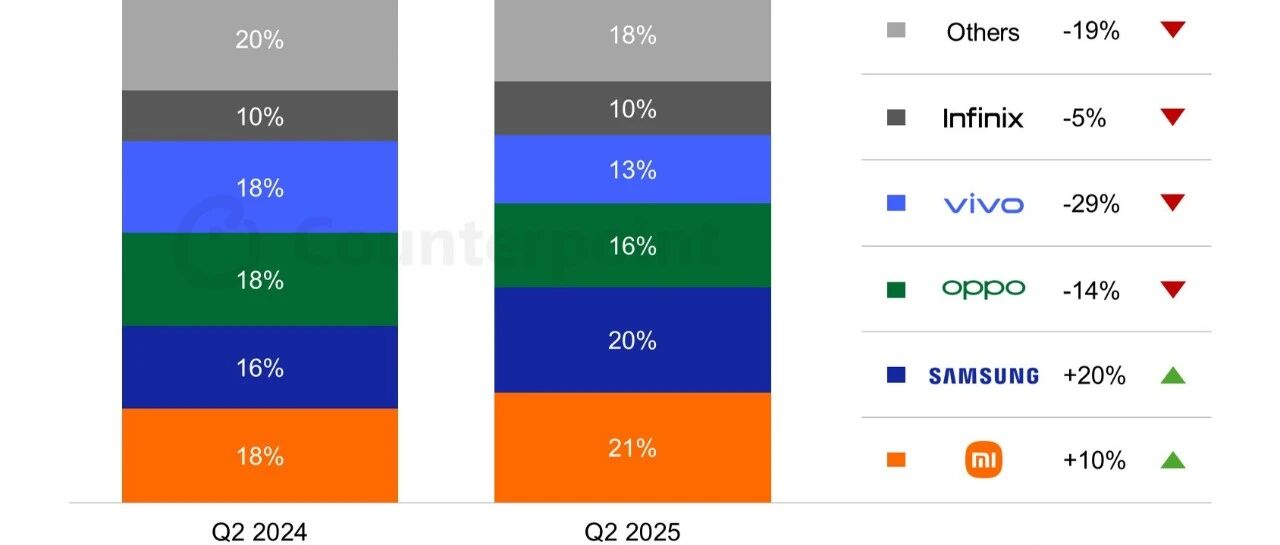
Core Viewpoint - The smartphone shipment volume in Indonesia decreased by 7% year-on-year in Q2 2025 due to cautious consumer spending and macroeconomic uncertainties [3][4]. Group 1: Market Dynamics - Most smartphone brands in Indonesia experienced a decline in shipment volume in Q2 2025, except for Samsung and Xiaomi, which saw year-on-year growth of 20% and 10% respectively [4][9]. - The demand during the holiday season was notably weaker compared to previous years, with consumer purchases focusing on entry-level models priced under $150, which saw a 3% increase in shipment volume [6][10]. - The government’s consumption stimulus policies primarily targeted basic livelihood areas, providing limited support to the smartphone market [6]. Group 2: Brand Performance - Samsung achieved the highest shipment growth among major manufacturers, with a 20% increase, positioning it as the second-largest brand in market share, following Xiaomi [6][9]. - Xiaomi maintained its market leadership with a 21% share, supported by offline channel expansion and a diversified product portfolio, including the newly launched 15 series and Pocophone F7 series [6][9]. - OPPO and Vivo experienced significant declines in shipment volume, with decreases of 14% and 29% respectively, due to a strategic shift towards higher price segments and a lack of new entry-level products [7]. Group 3: Future Outlook - The share of 5G smartphones in Indonesia reached a record high of 35% in Q2 2025, driven by the demand for entry-level models [10]. - The Indonesian government is enhancing 5G infrastructure by constructing 8,500 new base stations, which is expected to improve market conditions [10]. - As macroeconomic confidence improves in the second half of 2025, the smartphone market in Indonesia is anticipated to experience growth [12].

到2030年全球半导体营收将突破1万亿美元,受“Agentic AI”与“Physical AI”兴起驱动
Counterpoint Research· 2025-08-28 02:02
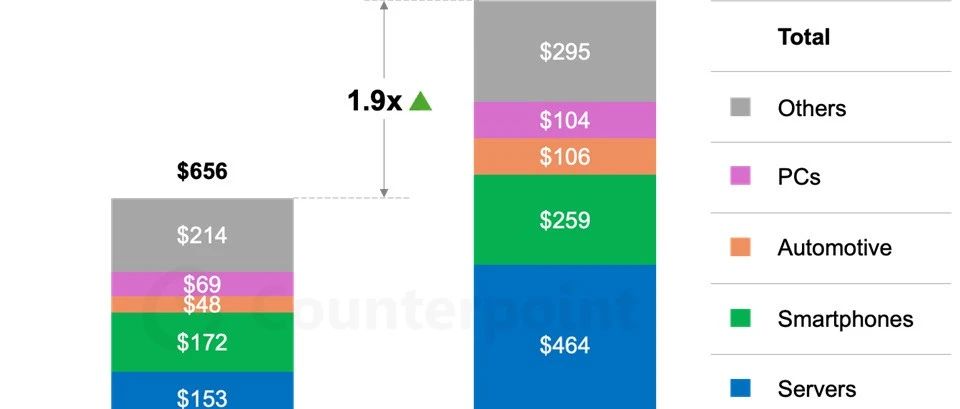
Core Insights - Counterpoint Research predicts that global semiconductor revenue will nearly double from 2024 to 2030, exceeding $1 trillion [4][5]. Group 1: Semiconductor Market Growth - The growth in semiconductor revenue is driven by the infrastructure needed for AI transformation, transitioning from GenAI to Agentic AI and eventually to Physical AI [5][9]. - Major demand will come from hyperscalers, with a focus on advanced AI server infrastructure to support the increasing needs for multi-modal GenAI applications [5][9]. Group 2: AI Token Economy - The emergence of the "Token economy" is highlighted, where tokens are becoming the new currency for AI, significantly increasing token consumption as applications evolve from basic text to richer multi-modal GenAI [7][10]. - The second phase of this economy is marked by exponential growth in token generation, supporting complex conversational AI and multimedia content production, which will drive substantial demand for computing power, memory, and networking in the semiconductor sector [7][10]. Group 3: Future of AI and Semiconductor Industry - The AI market in 2024 will be hardware-centric, with approximately 80% of direct revenue coming from semiconductor infrastructure and edge devices [10]. - The long-term evolution will see a shift from Agentic AI applications to Physical AI, promoting the development of autonomous robots and vehicles over the next decade [9][10].
2025年Q2中东非智能手机出货量同比增长3%,由5G普及与高端需求驱动
Counterpoint Research· 2025-08-28 02:02
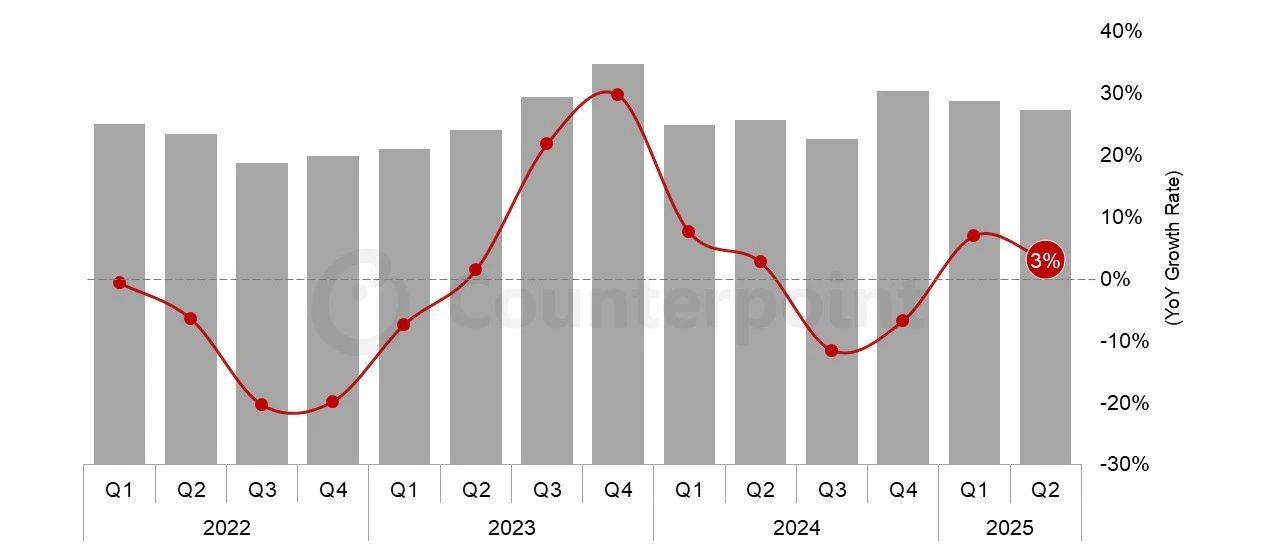
Core Insights - The smartphone market in the Middle East and Africa (MEA) experienced a 3% year-on-year growth in Q2 2025, marking the second consecutive quarter of growth driven by Eid al-Adha sales, economic recovery, and improved consumer purchasing power supported by stronger local currencies [4][7][8] - The average selling price (ASP) of smartphones increased by 7% year-on-year, indicating a shift towards higher-end models among consumers [5][7] - The market is witnessing consolidation, with smaller brands facing challenges while leading players strengthen their positions through differentiated products and broader offline coverage [5][12] Market Performance - The smartphone market in MEA saw a 3% year-on-year increase in Q2 2025, supported by channel activities and affordable 5G models [7][8] - The 5G penetration rate reached 37%, with demand for affordable models under $100 driving sales, particularly in Nigeria [8] - The $200–$599 price segment accounted for 56% of the market, reflecting strong demand in this range [8] Brand Analysis - Transsion Group led the market with a 26% share, driven by TECNO's strong distribution and effective marketing [12] - Samsung achieved a 1% year-on-year growth, benefiting from its A series and AI-driven marketing strategies [12][13] - Apple saw a significant 28% increase in shipments, driven by strong promotions for the iPhone 16e and high-end demand [13] Consumer Trends - Consumers are increasingly favoring models with advanced features such as AI translation, 5G connectivity, and high-refresh-rate displays [5][8] - The entry-level price segment (under $100) continues to expand, maintaining the largest market share due to increased supply and financing options [5][8] - Many consumers are waiting for festive discounts to secure better prices, indicating a price-sensitive market [5]
创新驱动欧洲折叠屏智能手机市场增长;荣耀引领欧洲折叠屏增长,市场份额激增三倍
Counterpoint Research· 2025-08-28 02:02
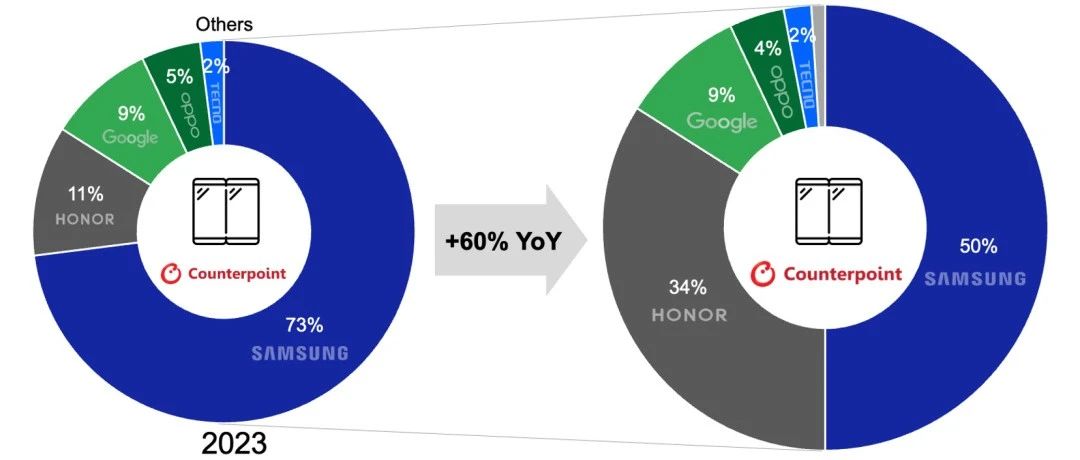
Core Insights - 2024 is a pivotal year for the foldable smartphone market in Europe, with a projected 37% year-on-year growth in sales, despite currently representing only about 2% of total smartphone sales in the region [2] - The primary driver of this growth is the book-style foldable smartphones, which are expected to see a 60% increase in sales [2] Group 1: Market Dynamics - The competition in the foldable smartphone market is intensifying, with Samsung's market share dropping from 98% in 2022 to 73% by the end of 2023 due to new entrants like Honor, Google, and OnePlus [3] - Honor's Magic V2 has gained significant traction, accounting for 27% of book-style foldable smartphone sales in Europe, and the upcoming Magic V3 is expected to further enhance its market position [4] - Samsung's Galaxy Z Fold7 is anticipated to be its most advanced foldable smartphone yet, addressing previous technological gaps [8] Group 2: Future Projections - By 2028, book-style foldable smartphone sales are expected to exceed 2% of total smartphone sales in Europe, capturing nearly 10% of the high-end smartphone market [4][11] - Apple's entry into the foldable smartphone market in 2026 is expected to further accelerate competition and innovation, particularly in high-end segments [11] - The foldable smartphone market is projected to experience a rebound in sales in the second half of 2025, following a decline in the first half due to macroeconomic factors [11]
英伟达财报公布前的财报前瞻
Counterpoint Research· 2025-08-28 02:02
Core Viewpoint - Counterpoint Research anticipates Nvidia's revenue to grow by 52% year-over-year and 4% quarter-over-quarter, with gross margins remaining above 70%, although slightly down from last year due to uncertainties in key markets [5]. Company Overview - Counterpoint Research is a global market research firm focused on the technology ecosystem, providing services to clients ranging from smartphone OEMs to chip manufacturers and large tech companies [4]. - The firm has a team of experienced analysts covering various roles, offering comprehensive services including market data, industry insights, and strategic consulting [4]. Revenue and Growth Projections - Nvidia's data center business is expected to contribute approximately 88% of total revenue, with growth rates aligning closely with overall revenue growth [5]. - The automotive and robotics computing solutions are projected to grow significantly, although their growth is from a smaller base compared to the data center business [5]. Market Dynamics - The recent US-China export agreement alleviates some pressure on Nvidia's market access, as most products are produced in China, providing a substantial semiconductor opportunity worth billions annually [5]. - Despite the current lack of large-scale monetization in the end market, capital expenditures from hyperscale cloud providers and sovereign capital remain robust, driving demand for AI infrastructure [5].


2020-2027年全球显示设备支出将攀升至760亿美元
Counterpoint Research· 2025-08-21 01:02
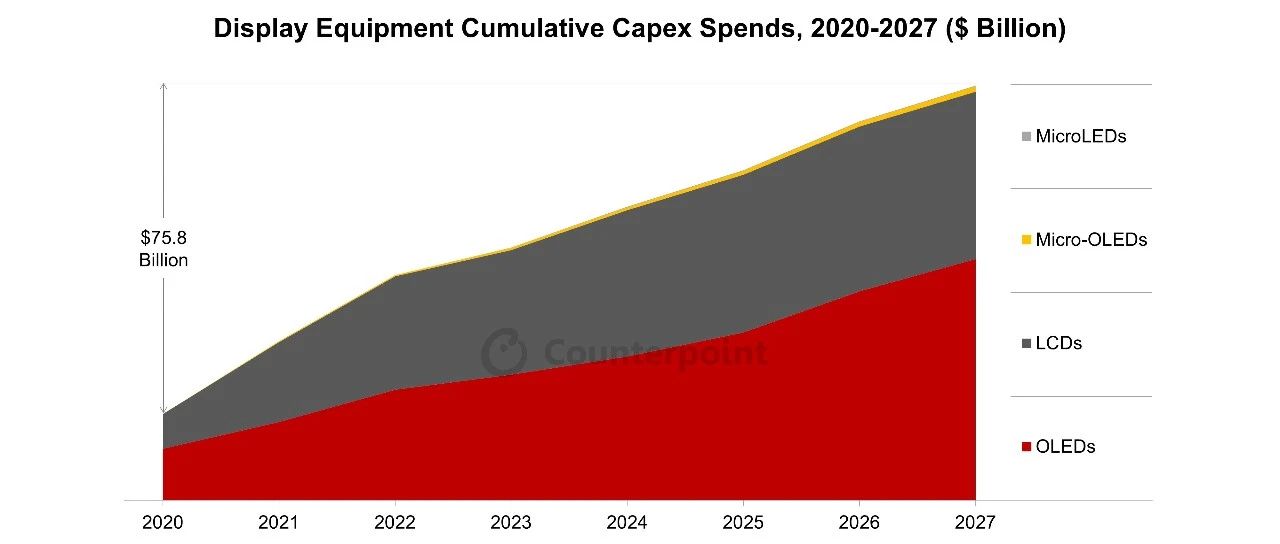
Core Viewpoint - The global display equipment spending is projected to reach $75.8 billion from 2020 to 2027, driven by increasing demand for OLED and LCD displays across various industries including IT, automotive, and mobile devices [4][5]. Group 1: Market Trends - The major technology driving capital expenditures is OLED, followed by LCD and Micro-OLED. By 2025, OLED-related equipment spending is expected to grow by 31%, while LCD spending is projected to decline by 45% [6]. - From 2025 to 2027, OLED is anticipated to account for 80% of total investments, with LCD's share dropping to just 17% [6]. Group 2: Technological Developments - Most manufacturers with 6th generation OLED production lines are expanding to 8.7 generation without changing deposition methods, benefiting from stable yields and advancements in Fine Metal Mask (FMM) technology [7]. - Chinese manufacturers are exploring alternatives to FMM technology, with companies like Visionox and Huaxing Optoelectronics adopting new deposition methods such as photopatterned OLED and RGB inkjet OLED [9]. Group 3: Competitive Landscape - Canon, including Tokki and Anelva, is expected to continue leading the display equipment market, with a projected revenue growth of 9% by 2025, capturing a market share of 12% [11]. - The market share of Applied Materials is expected to slightly decline to 9%, while Nikon's market share is anticipated to decrease with a projected revenue drop of 22% this year [14]. - The display equipment supply chain is lengthy and fragmented, with 170+ manufacturers tracked. The competitive landscape is shifting due to geopolitical changes and the rise of local Chinese suppliers [14]. Group 4: Industry Insights - The report covers progress in OLED, LCD, and Micro-OLED production lines, market sizes, shares, and forecasts, along with quarterly revenues of over 130 display equipment suppliers [18].
全球前五大晶圆设备制造商2025年Q2业绩表现
Counterpoint Research· 2025-08-21 01:02
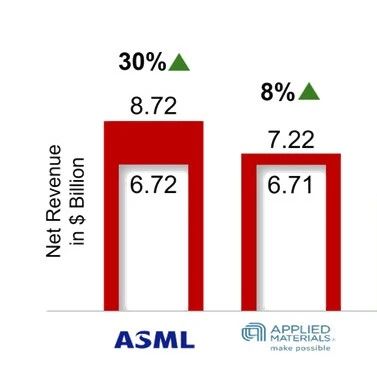
Core Insights - The global pure wafer foundry revenue is expected to grow by 17% year-on-year in 2025, driven by demand for AI and high-performance computing chips [5] - The wafer fabrication equipment market is projected to see a net revenue increase of 21% year-on-year in the first half of 2025, supported by advanced process investments and strong HBM demand [7] - Service revenue is anticipated to grow by 20% year-on-year, primarily due to customer upgrades, automation deployments, and the widespread adoption of intelligent equipment solutions [7] Highlights for H1 2025 - The Japanese market revenue increased by 150% year-on-year, driven by domestic wafer fab expansions and capacity enhancements of major wafer fabs [7] - Despite a 17% year-on-year decline in the Chinese market revenue in the first half of 2025, a rebound in customer spending in Q2 partially offset this decline [7] - Increased R&D investment, capital expenditure, and significant technological changes are expected to further drive net revenue growth for the year [7] Outlook for H2 2025 - Equipment manufacturers will prioritize market diversification strategies in the second half of 2025 to mitigate impacts from trade restrictions and tariff uncertainties [7] - Geopolitical tensions, US-China export controls, and weak demand in cyclical markets such as IoT and automotive will pose short-term risks [7] - The sustained strong demand for AI and advanced process foundry services is expected to partially offset these pressures [7]