Counterpoint Research

Search documents
Apple季度营收创历史新高
Counterpoint Research· 2025-08-07 01:03
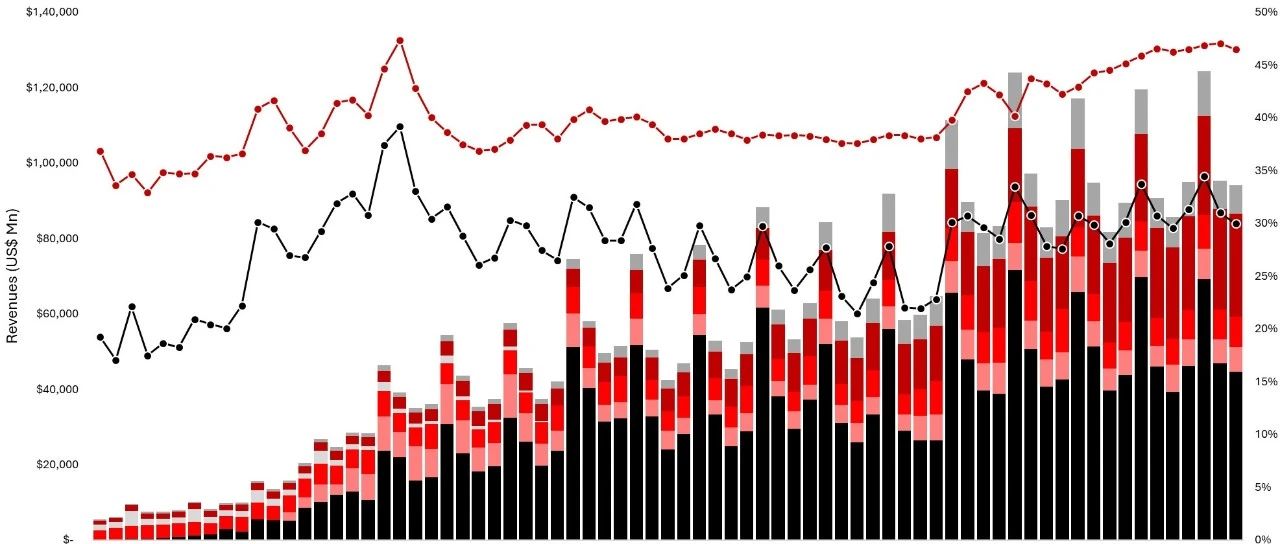
Core Viewpoint - Apple achieved a record revenue of $94 billion in Q2 2025, marking a 10% year-over-year growth, the highest increase in 14 quarters, driven by hardware and service business growth [4]. Group 1: Revenue and Business Performance - Hardware business grew by 8%, while service business saw a 13% increase, indicating a robust overall growth trend [4]. - iPhone accounted for 47% of total revenue, with Mac contributing 9%, marking the fastest-growing segment [4]. - Service business reached a historical high, comprising 29% of total revenue [4]. Group 2: Market Dynamics and Strategies - Apple focused on inventory clearance, particularly in the Chinese market, with significant discounts during the 618 shopping festival [6]. - The U.S. market saw over 70% of iPhone shipments manufactured in India, reflecting Apple's strategy to diversify supply chains amid tariff uncertainties [8]. - The demand for iPhone 16e in Japan was strong, making it one of Apple's fastest-growing regions [6]. Group 3: Product-Specific Insights - Mac revenue grew by 15%, driven by strong demand for MacBooks equipped with M4 chips and back-to-school purchasing [6]. - Wearable devices, home, and accessories segment continued to decline, with Apple Watch and AirPods revenue both decreasing [6]. - The decline in the wearables segment is attributed to extended replacement cycles and the absence of new Apple Watch SE models [6]. Group 4: Trade and Manufacturing Context - Recent developments in U.S.-India trade agreements, including a 25% tariff on India, create uncertainty, but key products like smartphones may still be exempt [10]. - India's electronic manufacturing policies, such as the Production-Linked Incentive (PLI) scheme, are crucial for competing with China and Vietnam [10].


2025年第二季度全球PC出货量:增长加速,关税担忧加剧
Counterpoint Research· 2025-07-23 09:15
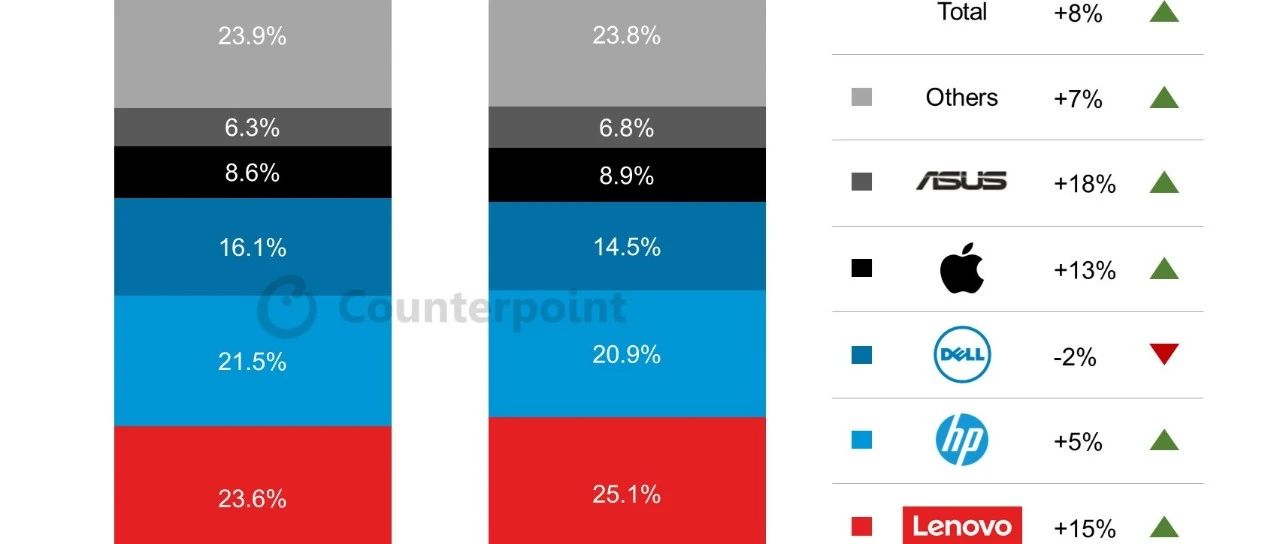
Core Viewpoint - The global PC shipment volume is expected to grow by 8.4% year-on-year in Q2 2025, marking the largest increase since the pandemic peak in 2022, driven by the end of Windows 10 support, the rise of AI PCs, and early procurement due to anticipated tariff changes [2][4]. Group 1: Market Dynamics - The growth in Q2 2025 is primarily driven by demand from the commercial sector, as large enterprises and public institutions accelerate device upgrades ahead of the Windows 10 support deadline [2][6]. - Lenovo, Apple, and Asus all saw shipment increases exceeding 10%, further solidifying their market leadership [2][4]. - The global PC manufacturing industry remains highly concentrated in China, posing significant challenges in reducing tariff risks in the short term [2][6]. Group 2: Future Outlook - PC shipment growth may slow in the second half of 2025 due to uncertainties surrounding U.S. tariff policies, but demand for AI PCs is expected to become a significant growth driver by 2026 [6][8]. - Counterpoint predicts that over half of the laptops shipped in 2026 will be AI laptops, indicating a shift in market dynamics [6][9]. - The ongoing geopolitical landscape is prompting PC suppliers and manufacturers to diversify production away from China, with countries like Vietnam, India, and Mexico emerging as alternative manufacturing hubs [6][9]. Group 3: Strategic Adjustments - Ensuring a reliable and cost-effective supply chain for products aimed at the U.S. market has become a top priority for PC manufacturers [9]. - The transition to manufacturing outside of China is a long-term process that requires significant investment in infrastructure, employee training, and logistics [9]. - The diversification of production bases is a strategic response to mitigate risks associated with trade disruptions and to enhance competitiveness in a rapidly changing environment [9].

受需求疲软和补贴放缓的影响,2025年Q2中国智能手机出货量同比下降2%
Counterpoint Research· 2025-07-23 09:15
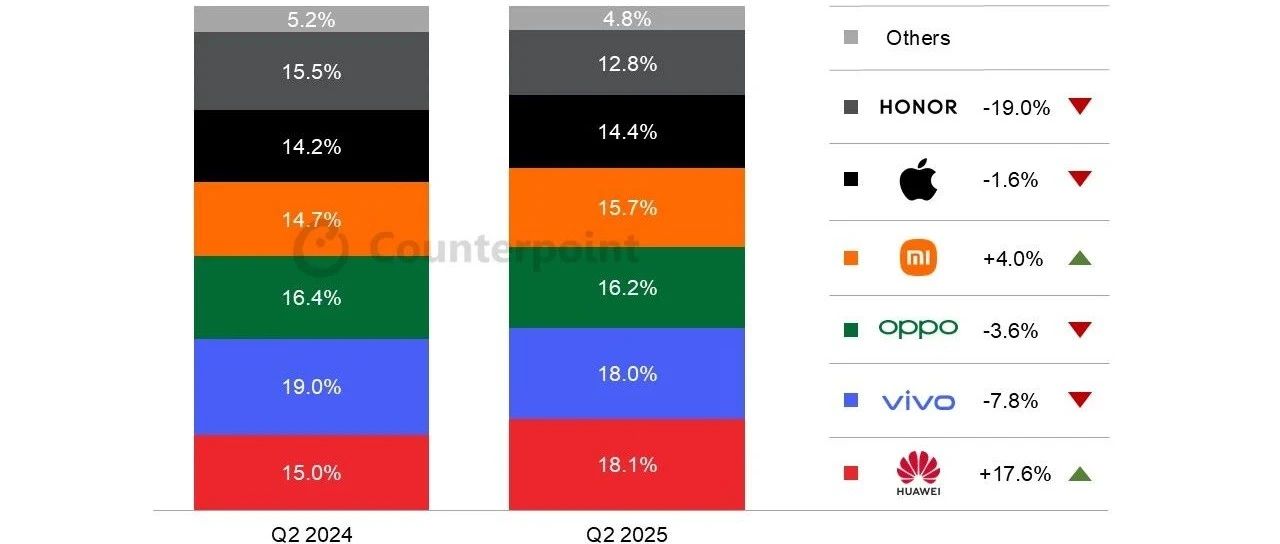
Core Viewpoint - The Chinese smartphone market experienced a year-on-year decline of 2.4% in Q2 2025, influenced by seasonal factors and demand front-loading due to subsidies [2][3]. Market Performance - Huawei maintained its leading position with a market share increase from 15% to 18.1% year-on-year, driven by strong sales of the mid-range nova 14 series and significant price reductions on high-end models [2]. - Vivo ranked second in shipments, supported by its strong offline channel network and the successful performance of its Y series in lower-tier cities [6]. - OPPO's Reno 14 series launched before the 618 shopping festival, continuing the strong sales momentum from the previous series, appealing particularly to young female consumers [6]. - Xiaomi achieved a market share of 15.7%, with growth driven by price reductions on popular models like Redmi K80 and Xiaomi 15, despite not launching new mid-range products during the promotional period [6]. - Apple saw strong performance from the iPhone 16 series, particularly the Pro models, due to unprecedented price cuts, although this may pressure sales of the iPhone 17 in the latter half of the year [7]. Future Outlook - The demand for smartphones in China is expected to remain weak, consistent with previous forecasts, but sales stability is supported by promotions and subsidies [8]. - Counterpoint anticipates a slowdown in growth for the Chinese market in 2025, with summer promotions and early flagship releases in Q3 expected to boost sales and lay a solid foundation for Q4 performance [8]. - The company will continue to monitor the evolving global market landscape, particularly regarding tariff policies, rising component costs, and changes in consumer demand [8].
调研:电池性能成为印度经济型智能手机配置优先考虑的重点
Counterpoint Research· 2025-07-23 09:15
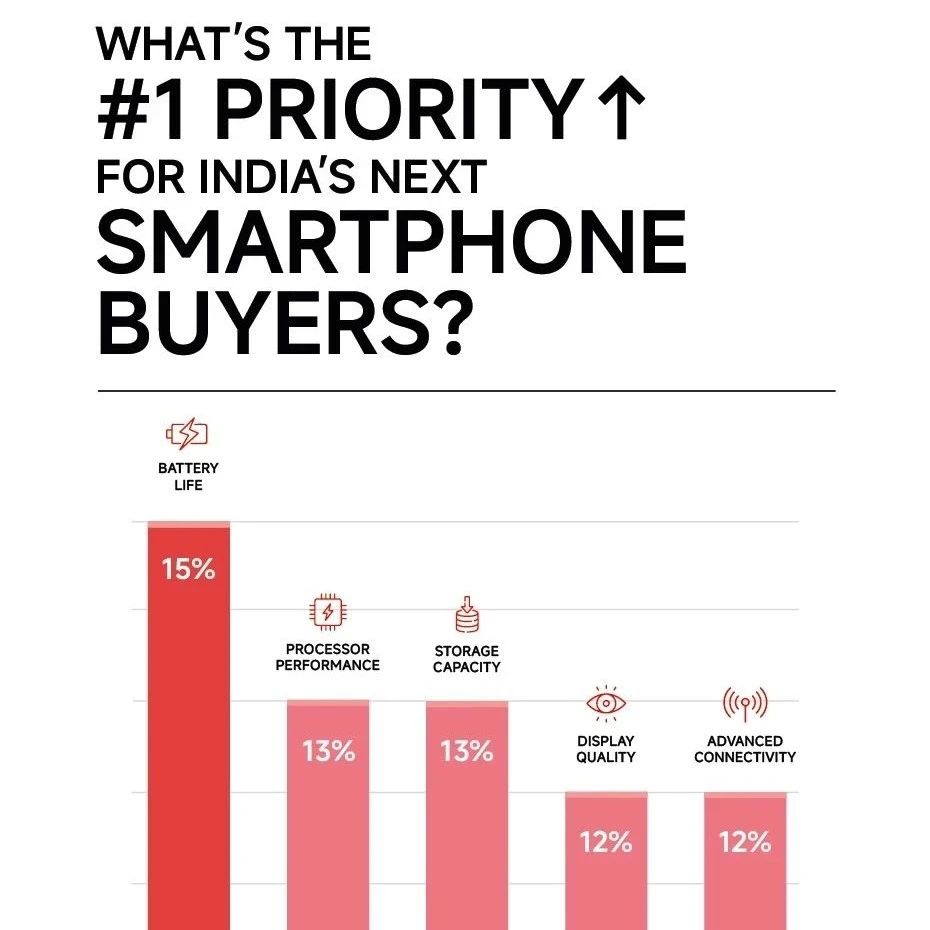
Core Insights - The article emphasizes the importance of battery life as a key consideration for consumers purchasing smartphones in the budget segment (under ₹20,000 or approximately $230) in India, despite the overall priority still being on SoC processors [2][3]. Group 1: Consumer Preferences - A recent survey by Counterpoint Research indicates that battery life is the most critical factor for 15% of consumers planning to buy smartphones under ₹20,000 [2][6]. - The top three factors influencing smartphone purchase decisions are processor performance, battery life, and storage capacity [2][3]. - The average battery capacity of smartphones in India has reached 5212 mAh, reflecting the growing consumer reliance on smartphones for various daily tasks [3][8]. Group 2: Market Trends - The increasing dependence on smartphones for social media, digital payments, photography, and other tasks has raised consumer expectations for performance, battery life, and usability [8]. - Consumers are becoming aware that larger battery capacities often lead to heavier devices, prompting a preference for lightweight designs that do not compromise on battery life [8]. - In the budget smartphone market, battery life has transitioned from being a supplementary feature to a decisive factor in purchase decisions [8]. Group 3: Company Overview - Counterpoint Research is a global market research firm focused on the technology ecosystem, providing insights and data across various sectors including smartphones, semiconductors, and consumer electronics [9]. - The company serves a diverse clientele, from smartphone OEMs to chip manufacturers and large tech firms, with a team of experienced analysts offering comprehensive market data and strategic consulting [9].
嵌入式光传输技术,CPO的到来将推动人工智能超级计算的拓展
Counterpoint Research· 2025-07-17 01:25
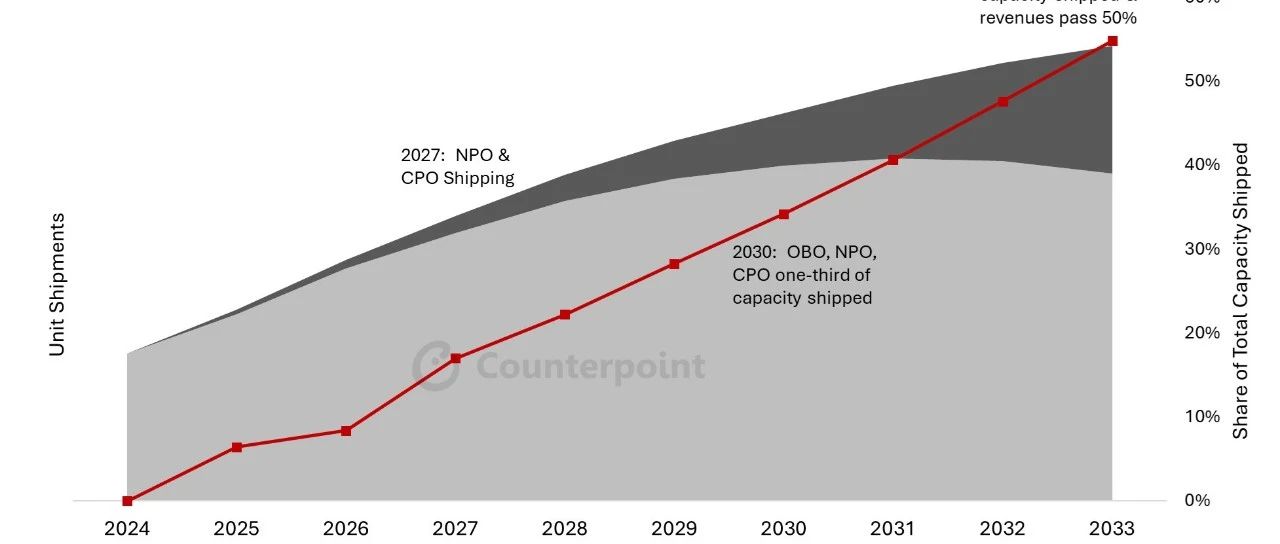
Core Viewpoint - The report from Counterpoint Research highlights the significant growth potential of integrated semiconductor optical modules, particularly embedded optical interconnects, which are expected to achieve a compound annual growth rate (CAGR) of 50% by 2033, driven by advancements in AI and high-bandwidth network architectures [2][3]. Group 1: Market Trends - The shipment volume of integrated optical solutions, including On-Board Optical (OBO), Near-Package Optical (NPO), and Co-Packaged Optical (CPO), is projected to grow at a CAGR of 50% by 2033 [2]. - The transition from copper to optical technology is anticipated to enhance bandwidth and reduce power consumption, with embedded optical modules expected to see a significant increase in adoption [2][3]. - By 2027, widespread adoption of NPO and CPO is expected to drive a triple-digit year-on-year revenue growth, with their share in total shipments reaching double digits [2][3]. Group 2: Technological Advancements - CPO is identified as a game changer for AI computing, enabling ultra-high bandwidth expansion and significant reductions in power consumption [3][5]. - The shift towards "less copper, more light" will lead to a substantial decrease in copper usage at each stage of transition from OBO to NPO to CPO, resulting in nonlinear performance improvements [7]. - The performance of 3D CPO solutions may exceed current technologies by up to 80 times, marking a significant leap in capabilities [7]. Group 3: Key Players - Major companies leading the CPO field include NVIDIA, Intel, Marvell, and Broadcom, with ongoing technological evolution expected to be a gradual process [3][5].
美国电动汽车市场重启:没有联邦补贴下的破局之路
Counterpoint Research· 2025-07-17 01:25
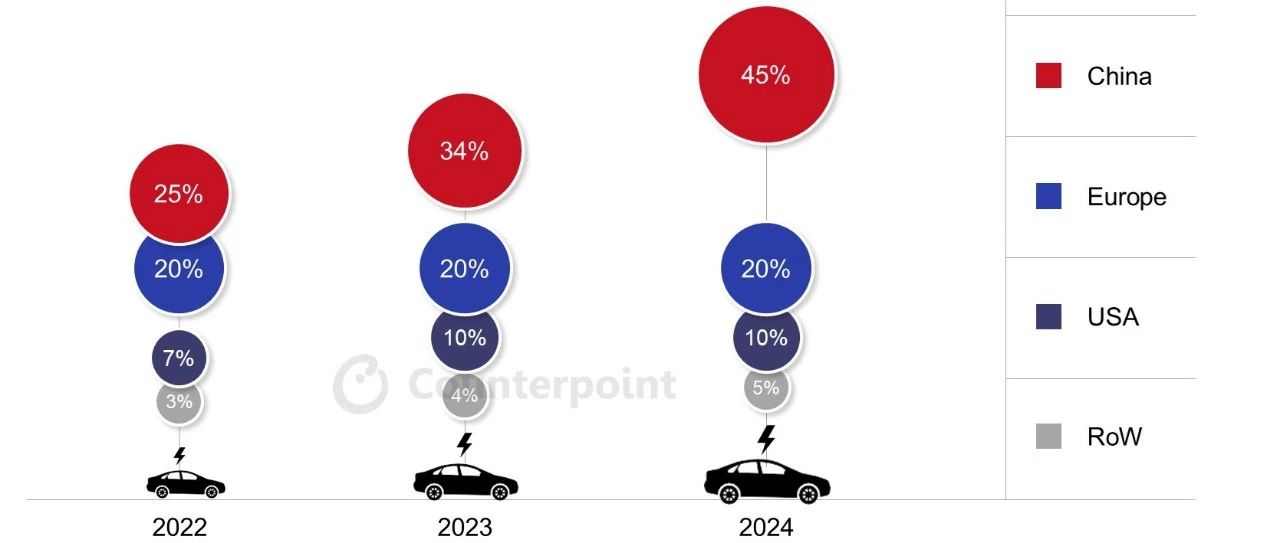
Core Viewpoint - The "Big and Beautiful" Act marks a significant turning point in the U.S. electric vehicle (EV) market, signaling the end of federal EV incentives, which will compel automakers to quickly adjust their strategies to maintain momentum in EV development [2][13][15]. Group 1: Impact of Policy Changes - The cancellation of federal subsidies for EVs is expected to severely affect consumer demand, particularly for foreign automakers like Hyundai-Kia and Volkswagen, compared to domestic brands [2][3]. - The Biden administration's previous incentives led to a more than 50% year-on-year increase in EV sales in 2023, raising the market share of EVs in U.S. passenger car sales from 7% in 2022 to 10% in 2023 [3][5]. - The upcoming end of federal EV tax credits is anticipated to create a short-term spike in sales as consumers rush to take advantage of the incentives before they expire [5][13]. Group 2: Strategic Shifts Among Automakers - Tesla may focus on clearing inventory rather than new R&D, with plans to launch an affordable EV priced below $25,000 in early 2026 to regain market share [5][9]. - General Motors is likely to shift its focus from EVs to hybrid vehicles to manage short-term risks, despite having invested heavily in its EV product line [9][10]. - Ford is expected to reassess its EV strategy due to high battery costs and diminishing subsidies, potentially prioritizing profitable hybrid and gasoline models [9][10]. Group 3: Challenges for New Entrants - Startups like Rivian and Lucid, which rely on high-end pricing, may face significant challenges without federal support, making it difficult to attract buyers and sustain growth [6][9]. - Some states continue to offer local incentives, such as Colorado's $2,500 rebate for EV purchases, which may provide some relief to consumers [6][10]. Group 4: Market Dynamics and Consumer Behavior - The shift in policy is likely to create a more polarized market, where companies with strong hybrid lineups or global EV platforms may adapt and benefit, while others may need to scale back ambitions [13][15]. - Economic uncertainty and the loss of financial incentives could suppress demand in the short term, particularly in the mass market, potentially delaying the adoption of EVs and altering brand strategies in the U.S. market [13][15].


2025年Q2全球智能手机出货量同比增长 2%,得益于发达市场的增长;三星继续领跑
Counterpoint Research· 2025-07-17 01:25
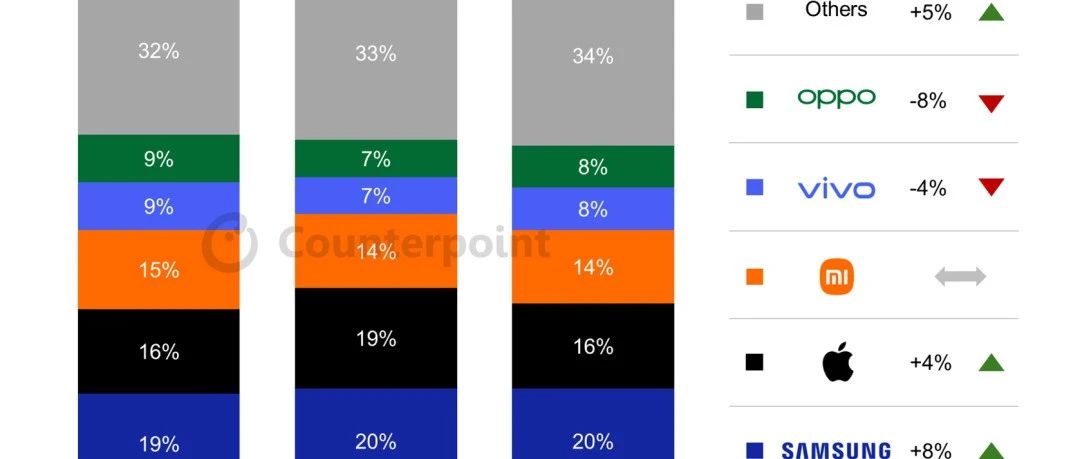
Core Viewpoint - The global smartphone shipment is projected to see a slight year-on-year growth of 2% in Q2 2025, marking the second consecutive quarter of growth, primarily driven by contributions from North America, Japan, and Europe [2][3]. Market Dynamics - The first quarter's shipment disruptions due to tariff concerns have started to ease in the second quarter, although markets like China and North America still face some impacts, leading to inventory build-up in North America [2]. - There is a rising interest in entry-level and budget 5G devices in emerging markets, while high-end demand remains stable in mature markets [2]. Brand Performance - Samsung retained its position as the global leader in smartphone shipments, achieving an 8% year-on-year growth, supported by resilient performance across regional markets and strategic product launches, particularly in the mid-range A series [3]. - Apple continued its growth trajectory with a 4% year-on-year increase in shipments, driven by strong performances in North America, India, and Japan, alongside stable demand for the iPhone 16 and iPhone 15 series [3]. - Motorola experienced a significant year-on-year growth of 16%, primarily fueled by strong demand in the Indian market and the North American prepaid market [4]. Competitive Landscape - Xiaomi's performance in Q2 2025 remained flat year-on-year, ranking third, with strong demand in Central Europe and Latin America, and stable momentum in China [4]. - Vivo and OPPO ranked fourth and fifth, respectively, showing stable performance in the mid-range market and signs of recovery in overseas markets like Latin America and the Middle East and Africa [4]. - OPPO solidified its position in the entry-level market with strong performance from the A5 Pro, while Vivo benefited from promotional activities during China's "618" shopping festival [4].


调研:美中两国机器人出租车用户期待更安全的自动驾驶体验
Counterpoint Research· 2025-07-17 01:25
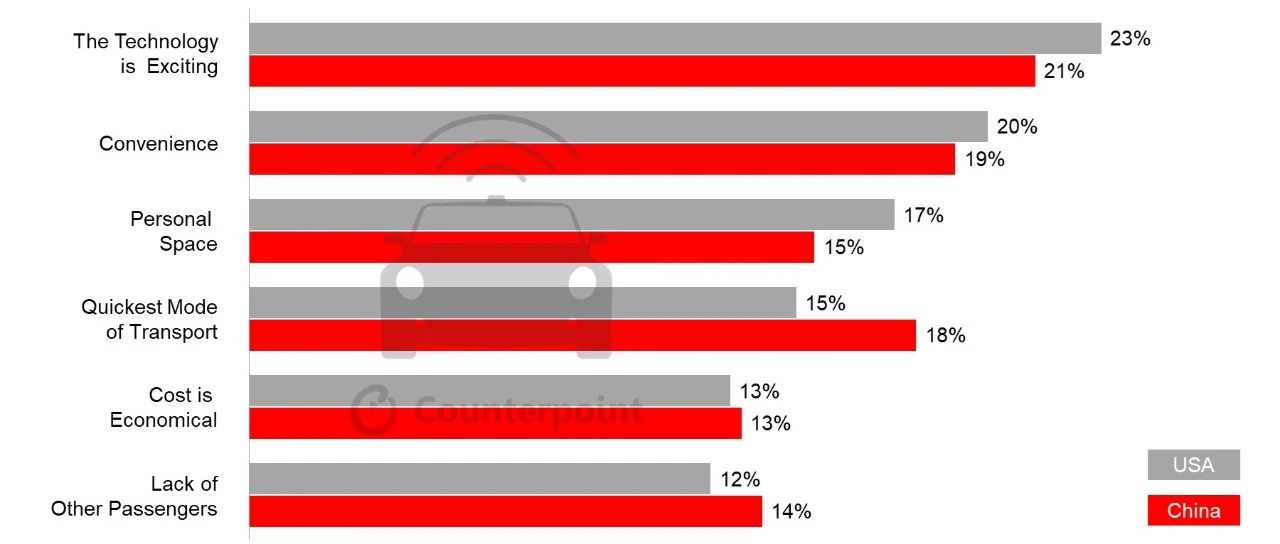
Core Insights - The article discusses the growing interest and deployment of autonomous taxi services by companies like Waymo, Tesla, WeRide, and Baidu's Apollo in major markets such as the US and China, highlighting the high costs of research and deployment that limit commercialization to a few pioneers [2][3] - Consumer sentiment towards autonomous taxis is mixed, with excitement about the technology but significant concerns regarding safety and trust in the technology's maturity [3] Market Trends - Autonomous taxis have completed millions of rides in select cities in the US and China over the past year, indicating a gradual acceptance among consumers [3] - A survey conducted by Counterpoint Research involving 2,000 consumers each from the US and China revealed that the primary attraction of autonomous taxis is the "novelty/excitement" factor, with 23% of US respondents and 21% of Chinese respondents citing this as the main reason for interest [3] Consumer Sentiment - Safety is identified as the core pain point for users who have experienced autonomous taxi rides, with 64% of US respondents expressing that the technology is not yet mature enough for large-scale deployment [3] - In China, 43% of respondents reported an increase in public transportation usage compared to the previous year, reflecting a shift in consumer behavior [3]
2025年上半年中国智能手机市场预计同比增长:五大趋势重塑竞争格局
Counterpoint Research· 2025-07-11 07:48
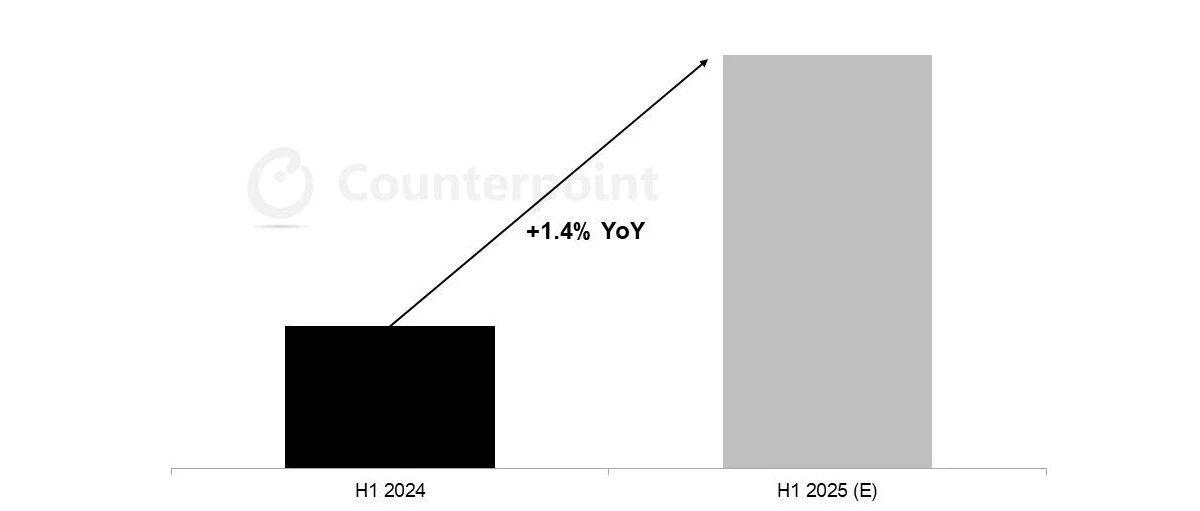
Core Insights - The Chinese smartphone market is expected to see a 1.4% year-on-year increase in shipments in the first half of 2025, acting as a stabilizer amid global market uncertainties [3] - Five key trends are reshaping the market landscape, including national subsidies, AI implementation, and supply chain dynamics [3] National Subsidy Program - The Chinese government has launched a subsidy program worth approximately RMB 300 billion (around $41.4 billion) to stimulate the purchase of consumer electronics, including smartphones priced below RMB 6,000 (about $828) [5] - The first round of funding significantly boosted Q1 sales but revealed challenges in implementation, particularly for small and medium-sized manufacturers [5] - Despite execution challenges and a slowdown in subsidy disbursement, the program is expected to continue through 2025 and possibly into 2026, although its marginal effectiveness is diminishing as the market matures [5] Apple’s Market Performance - Apple achieved an 8% year-on-year growth during the 2025 "618" promotional season by significantly reducing the prices of the iPhone 16 series [6][8] - The price reduction for the iPhone 16 Pro made it eligible for the national subsidy, with its price dropping over 30% from the launch price [8] Xiaomi’s Innovations - Xiaomi launched its first self-developed application processor (AP), the Xring O1, after nearly four years and an investment of over $1.8 billion, which will be used in the Xiaomi 15S Pro and its tablet line [9] - The company is expected to enhance its market position in the high-end segment, particularly as younger consumers increasingly dominate this market [9] AI Integration in Smartphones - AI remains a hot topic in China, with 76% of smartphone users expressing familiarity with AI technologies [10] - Manufacturers are shifting towards a more pragmatic approach, focusing on real-world applications of AI rather than just marketing the technology [10] - The entry of internet giants into the smartphone market is intensifying competition, with companies like Tencent integrating AI into their ecosystems [10] Supply Chain Dynamics - Overall supply chain stability is observed, but increased cost pressures are anticipated in the second half of 2025, particularly for mid-range products due to rising component prices and supply chain disruptions [11] - The expected year-on-year growth in smartphone shipments for 2025 is projected to be less than 1%, with national subsidies remaining a crucial support factor [11]
AirPods累计营收预计于2026年突破1000亿美元
Counterpoint Research· 2025-07-11 07:48
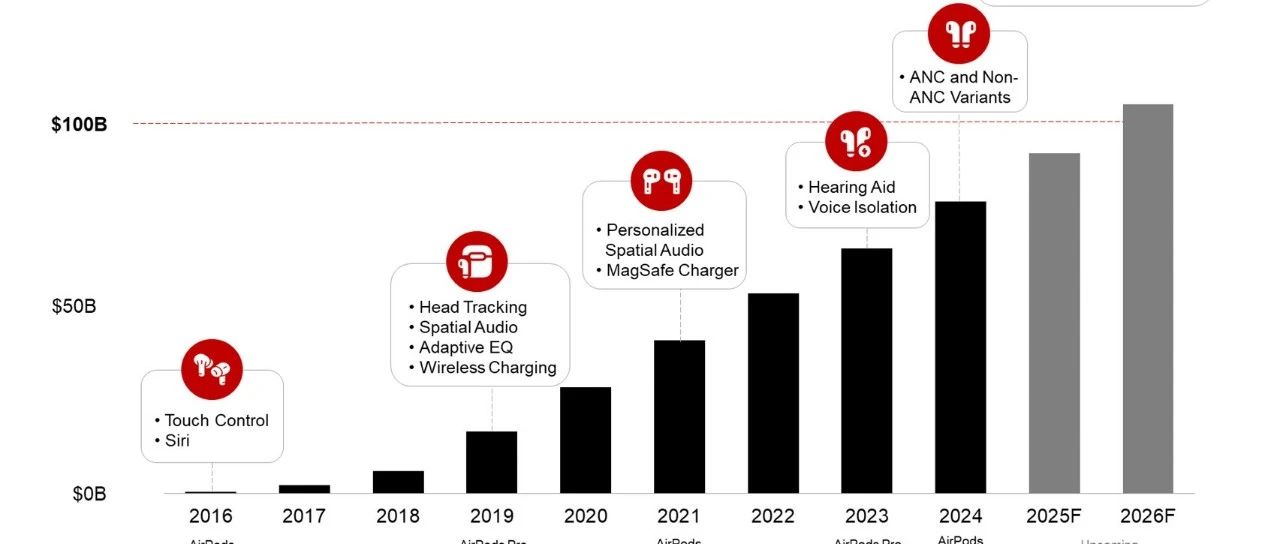
Core Insights - Counterpoint Research projects that Apple's revenue from AirPods will see a year-on-year growth of 2.4% by 2026, with cumulative revenue surpassing $100 billion, driven by product line expansion and continuous feature evolution [2][3]. Group 1: Product Strategy - Apple has expanded its AirPods product matrix, introducing a budget-friendly model without Active Noise Cancellation (ANC) in 2024, setting a new entry price point [2][3]. - This strategic move allows Apple to reach a broader price-sensitive user base, including consumers in emerging markets and students, which are becoming significant drivers for iPhone sales [2][3]. Group 2: User Experience and Innovation - Apple is continuously innovating to enhance user experience, with features like Active Noise Cancellation, seamless integration with iOS, instant pairing, and automatic device switching receiving positive feedback [2][3]. - The integration of health monitoring features is redefining TWS (True Wireless Stereo) headphones, with AirPods Pro 2 introducing FDA-certified clinical-grade hearing assistance, attracting new user demographics [2][5]. Group 3: Future Developments - Future AirPods models are expected to incorporate health functionalities such as heart rate monitoring and temperature sensing, reinforcing their positioning as wearable health devices [5]. - Apple Intelligence will enhance the AirPods experience with innovations like real-time translation and advanced gesture control, aiming to create a more versatile product that improves audio and call experiences while expanding into content creation and advanced health tracking [5].