Counterpoint Research

Search documents
2025年Q2美国智能手机销量同比增长9%,三大运营商表现强劲
Counterpoint Research· 2025-08-21 01:02
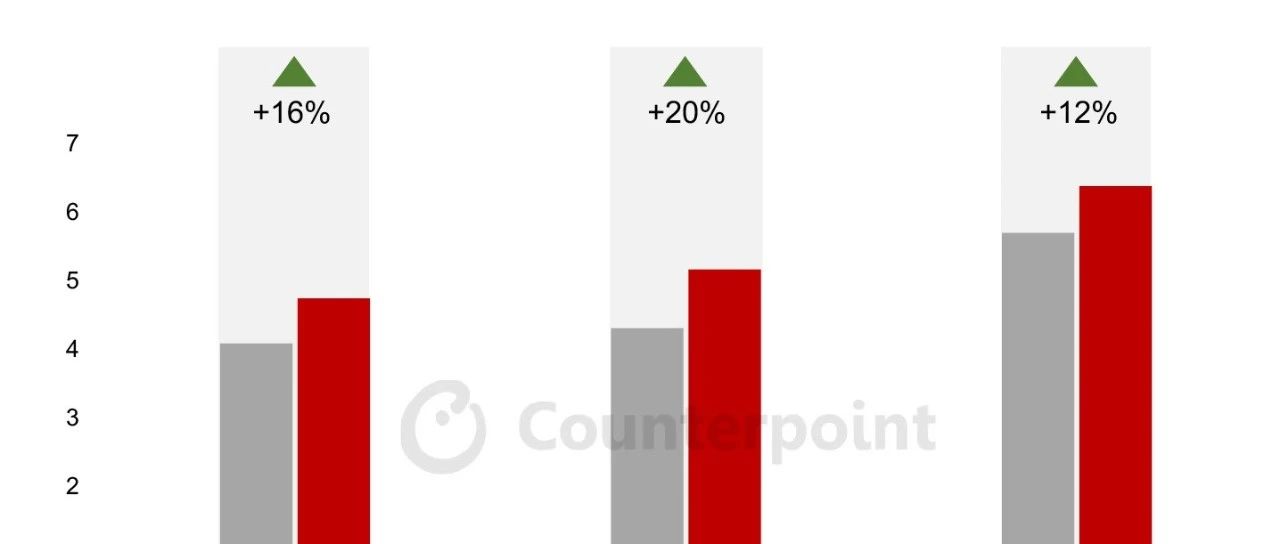
Core Insights - The US smartphone market is projected to grow by 9% year-on-year in Q2 2025, driven by strong performances from major carriers [4] - The average selling price of smartphones increased by 2%, contributing to an 11% year-on-year revenue growth, reaching $17.5 billion [6][8] - Apple and Samsung experienced significant sales growth due to effective marketing and promotional activities, while HMD announced its exit from the US market [7][8] Market Performance - Major US carriers AT&T, T-Mobile, and Verizon reported smartphone sales growth of 16%, 20%, and 12% respectively, attributed to summer promotional activities [4] - High-end device sales increased by 11% year-on-year, supported by the strong demand for flagship models [6][8] - The average selling price for smartphones in Q2 2025 was $647.53, up from $632.59 in the previous year [6] Brand Analysis - Apple's sales revenue grew by 10% year-on-year, benefiting from the marketing of the iPhone 16e and various promotional offers from carriers [6][8] - Samsung's smartphone sales volume increased by 16% year-on-year, aided by the launch of the S25 Edge and effective marketing strategies [7][8] - HMD's sales plummeted by 41% year-on-year, leading to its exit from the US market, creating opportunities for competitors like Motorola and TCL to fill the gap [7][9]

2025年上半年印度智能手机出口量同比增长30%,达到4000万部
Counterpoint Research· 2025-08-21 01:02
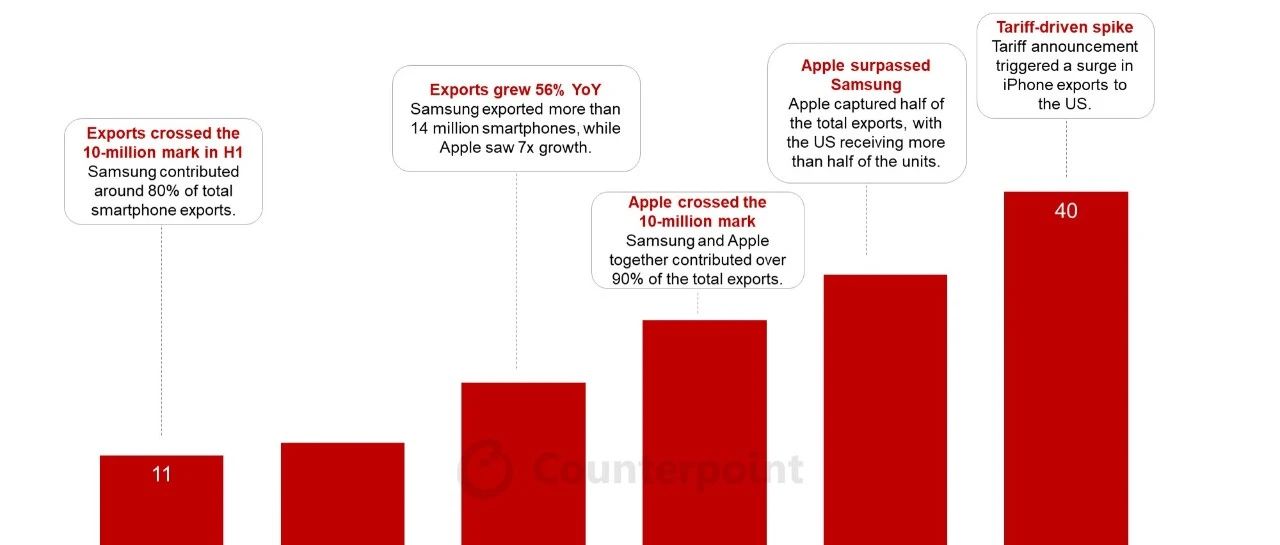
Core Viewpoint - The article highlights the significant growth of India's smartphone exports, driven by local manufacturing and government initiatives, particularly the Production-Linked Incentive (PLI) scheme, positioning India as a key player in the global smartphone supply chain [4][5][9]. Summary by Sections Smartphone Export Growth - India's smartphone exports are projected to grow by 30% year-on-year in the first half of 2025, reaching 40 million units, reflecting the ongoing development of the Indian electronics manufacturing ecosystem [4]. - Nearly 99% of smartphones sold in India are locally produced, showcasing the country's efforts to build a robust domestic production base [4]. Key Markets and Trends - The United States remains the largest destination for Indian smartphone exports, accounting for 54% of total shipments in the first half of 2025, up from 30% in the same period of 2024 [5][7]. - Exports to Europe have decreased by 25%, with its share dropping from 47% to 27%, primarily due to Apple shifting a significant portion of its shipments to the U.S. to build inventory [5]. Brand Performance - Apple’s exports grew by 53%, surpassing 20 million units for the first time in the first half of 2025, driven by enhanced manufacturing capabilities and favorable government policies [5][7]. - The iPhone 16 led the export rankings, accounting for 18% of total smartphone exports [7]. - Motorola emerged as the fastest-growing brand, with exports increasing sevenfold, 95% of which were directed to the U.S. market [8]. Future Outlook - The Indian smartphone export market is expected to continue its growth trajectory, supported by major brands' expansion and government initiatives like the PLI scheme [9]. - However, the recent announcement of potential tariffs on Indian goods by the U.S. government introduces uncertainty into the supply chain dynamics, necessitating flexibility from manufacturers to adapt to changing trade policies [9].


WAIC 2025解码:中国的AI巨头真正释放了什么信号?
Counterpoint Research· 2025-08-14 01:03
Core Insights - The WAIC 2025 highlighted the importance of global cooperation in AI governance, with China proposing the establishment of a global AI governance body and releasing a framework with 13 cooperation points [2][3]. Group 1: AI Safety and Governance - Geoffrey Hinton emphasized the potential risks of AI, suggesting that humans could become akin to "poultry" if AI systems operate independently [3]. - Hinton's visit to China signifies the necessity of China's involvement in addressing AI governance and safety issues, aligning with the multilateral AI governance framework signed with representatives from Europe, Southeast Asia, and parts of Africa [3]. - The conference shifted focus from merely accelerating AI development to emphasizing safety principles and multilateral dialogue [3]. Group 2: Alibaba's AI Innovations - Alibaba launched three high-performance open models and a new AI smart glasses product at WAIC 2025, reinforcing its open-source AI strategy [4][5]. - The smart glasses are lightweight, screenless, and integrated with Alibaba's Qwen model, aiming to embed AI into daily interactions [5]. - This move positions Alibaba's open-source models as competitive against both domestic and international counterparts, transforming open-source competition into a platform battle [5][8]. Group 3: Unitree Technology's Robotics - Unitree Technology introduced the R1 humanoid robot, designed for general tasks with dynamic movement and real-time perception capabilities, priced at approximately $5,600 [6][9]. - The R1 targets a broader audience, including developers and research institutions, rather than just enterprise clients, marking a shift towards accessible robotics [6]. - This pricing strategy poses a competitive threat to Tesla's humanoid robot ambitions, as Unitree's offering is significantly cheaper and aims to democratize access to robotics technology [9].


2025年上半年全球智能眼镜出货量同比激增110%,其中Meta占据了70%以上的市场份额
Counterpoint Research· 2025-08-14 01:03
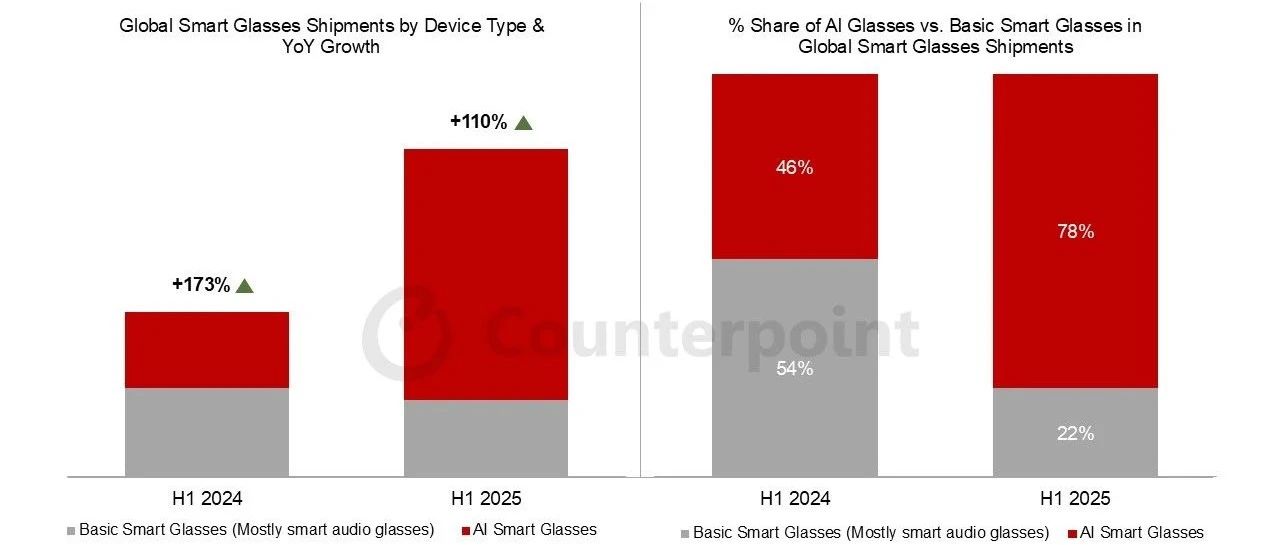
Core Insights - The global smart glasses market experienced a significant year-on-year growth of 110% in the first half of 2025, driven by strong demand for Ray-Ban Meta smart glasses and the entry of new brands like Xiaomi and RayNeo [4][8][12]. - AI smart glasses accounted for 78% of total shipments in the first half of 2025, up from 46% in the first half of 2024, with a year-on-year growth rate exceeding 250% in the AI glasses segment [4][8]. Market Performance - The global smart glasses market saw a 110% increase in shipments in the first half of 2025, largely due to the strong demand for Ray-Ban Meta smart glasses and the introduction of new players like Xiaomi and RayNeo [4][8]. - Meta's market share in the global smart glasses market rose to 73% in the first half of 2025, attributed to robust demand and production capacity expansion by its key manufacturing partner, Luxottica [8][12]. Competitive Landscape - Ray-Ban Meta AI glasses saw a year-on-year shipment increase of over 200%, reflecting strong market demand and Luxottica's enhanced production capabilities [8][12]. - Other active AI smart glasses manufacturers in the first half of 2025 included Xiaomi, RayNeo, Kopin Solos, and Thunderobot, with Xiaomi's AI glasses becoming the fourth best-selling model globally despite being on the market for only about a week [12][16]. Future Outlook - More new AI smart glasses are expected to enter the market in the second half of 2025, including products from Meta and Alibaba, which are anticipated to further drive market growth [16][17]. - Counterpoint has raised its market forecasts for smart glasses for 2025 and 2026, expecting a compound annual growth rate of over 60% from 2024 to 2029, benefiting all ecosystem participants [17].

Harman与Bose稳居主导,中国车企及电动汽车发展趋势正在重塑全球车载音响市场
Counterpoint Research· 2025-08-14 01:03
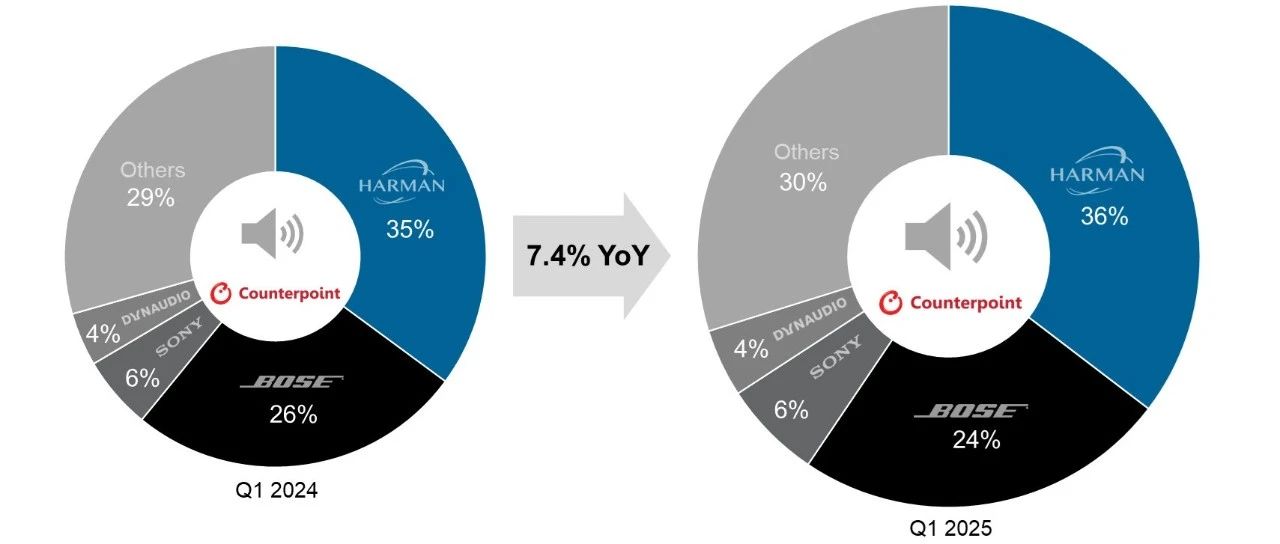
Core Viewpoint - The global passenger car audio system market is dominated by Harman and Bose, which together account for nearly 60% of total sales, while Chinese companies are rapidly emerging in this space [4][6]. Group 1: Market Dynamics - The global passenger car audio system market is primarily led by Harman and Bose, with a significant market share held by these two companies [4]. - AAC Technologies is the only Chinese company among the top ten suppliers in the global passenger car audio system market [4]. - Chinese automotive brands are increasingly gaining influence globally, with companies like Sonavox, WANOS, Nobo Automotive, and ADS Audio rising quickly [4]. Group 2: Product Development - Chinese automakers such as Xiaopeng, Leap Motor, and Geely are developing their own in-car audio systems to enhance supply chain control and create differentiated product experiences [4][6]. - There is a notable trend of Chinese car manufacturers actively increasing the number of speakers in high-end models, with brands like NIO, Zeekr, and BYD offering vehicles equipped with over 20 speakers [6]. Group 3: Technological Advancements - The competition in the car audio system market is being reshaped by the increasing integration of software-defined audio features, allowing for personalized audio experiences through OTA updates [7]. - High-end models are adopting immersive audio technologies, such as Dolby Atmos, enhancing the user experience with 360-degree sound fields [7]. - The quiet cabin environment of electric vehicles is driving demand for high-quality audio systems, making premium sound a crucial factor in consumer purchasing decisions in China [7].
2025年Q2印度智能手机出货量同比增长8%,iPhone 16成出货量最高机型
Counterpoint Research· 2025-08-07 01:03
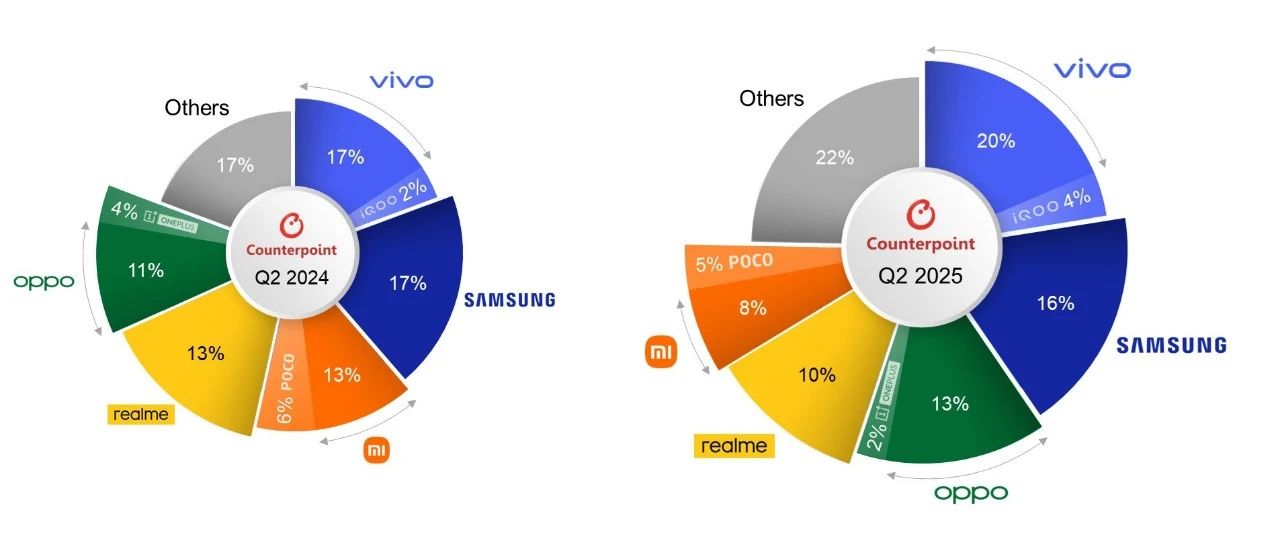
Core Insights - The Indian smartphone market experienced a robust rebound in Q2 2025, with shipments and wholesale value increasing by 8% and 18% year-on-year, respectively, driven by a 33% increase in new product launches and effective marketing strategies during the summer promotional period [4][5][8]. Market Dynamics - The recovery of the Indian smartphone market in Q2 2025 was further supported by an improved macroeconomic environment, which boosted consumer confidence and spending. Retail inflation fell to a six-year low, easing household budget pressures, while a reduction in the central bank's repo rate made financing more accessible. Additionally, tax relief policies introduced earlier in the year increased disposable income and savings, creating favorable conditions for non-essential purchases [5][8]. - The ultra-premium segment (priced above 45,000 INR, approximately 510 USD) saw a remarkable year-on-year growth of 37%, making it the fastest-growing price segment. This growth was fueled by promotional strategies from brands like Apple and Samsung, which included trade-in offers and zero-interest installment plans [5][8]. Competitive Landscape - In Q2 2025, OEMs and channel partners conducted numerous online and offline promotional activities, helping some OEMs clear existing inventory and launch new products. Vivo achieved a 23% year-on-year growth in the 10,000-15,000 INR (approximately 110-170 USD) price range, driven by strong demand for its Y and T series [8][9]. - Samsung maintained its position as the second-largest brand, benefiting from summer promotions for its A and S series, as well as attention garnered from its N-1 flagship model upgrades. OPPO also performed well, securing the third position through product optimization and enhanced retail partnerships [9][14]. Key Brands and Performance - iPhone 16 emerged as the best-selling model in Q2 2025, highlighting strong consumer demand. Apple achieved its highest-ever second-quarter shipments in India, supported by ongoing promotional offers and flexible financing options [8][14]. - Nothing brand recorded a remarkable 146% year-on-year growth, becoming the fastest-growing brand for six consecutive quarters, primarily due to the launch of CMF Phone 2 Pro and expansion of its retail network [14]. - Motorola's G and Edge series saw an 86% year-on-year increase in shipments, aided by expanded distribution channels in smaller cities [14]. - Lava became the fastest-growing brand in the sub-10,000 INR (approximately 110 USD) segment, achieving a 156% year-on-year growth driven by competitive new products and improved after-sales service [14]. Market Projections - The Indian smartphone market is expected to surpass 50 billion USD in 2025, while global smartphone manufacturing is projected to see a slight decline, with Indian manufacturing anticipated to grow against this trend [15].
2025年Q2全球智能手机营收首次突破1000亿美元,创历史同期新高
Counterpoint Research· 2025-08-07 01:03
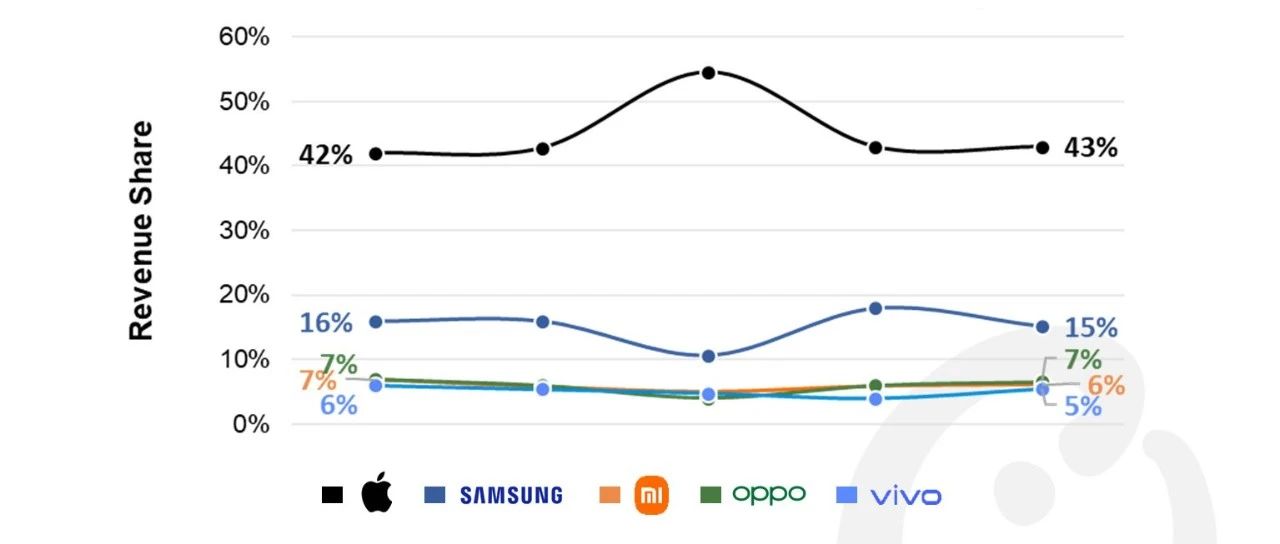
Core Insights - The global smartphone market revenue grew by 10% year-on-year in Q2 2025, surpassing $100 billion for the first time in this quarter, marking a historical record [3][4][6] - Apple led the market with a revenue increase of 13%, capturing 43% of the global smartphone market revenue [3][4][9] - The average selling price (ASP) of smartphones reached a historical high of nearly $350, with a year-on-year increase of 7% [4][10] Market Dynamics - Despite macroeconomic headwinds, the global smartphone market experienced both sales and revenue growth in Q2 2025, driven by relaxed U.S. tariff policies and strong demand for high-end devices in developed markets [6][9] - The ASP for OPPO increased by 14%, the highest among the top five brands, while its revenue also grew by 10% [9] - Samsung maintained its lead in global smartphone shipments, with a revenue growth of 4%, supported by strong demand for its mid-range A series and the Galaxy S25 series [9] Future Outlook - The trend towards premiumization in the global smartphone market is expected to continue, with revenue growth anticipated to outpace shipment growth in 2025 [10] - Emerging trends such as generative AI smartphones and foldable devices are projected to create significant growth opportunities for the global smartphone market [10]
2025年全球纯晶圆代工营收预计同比增长17%,受AI与高性能计算芯片驱动
Counterpoint Research· 2025-08-07 01:03
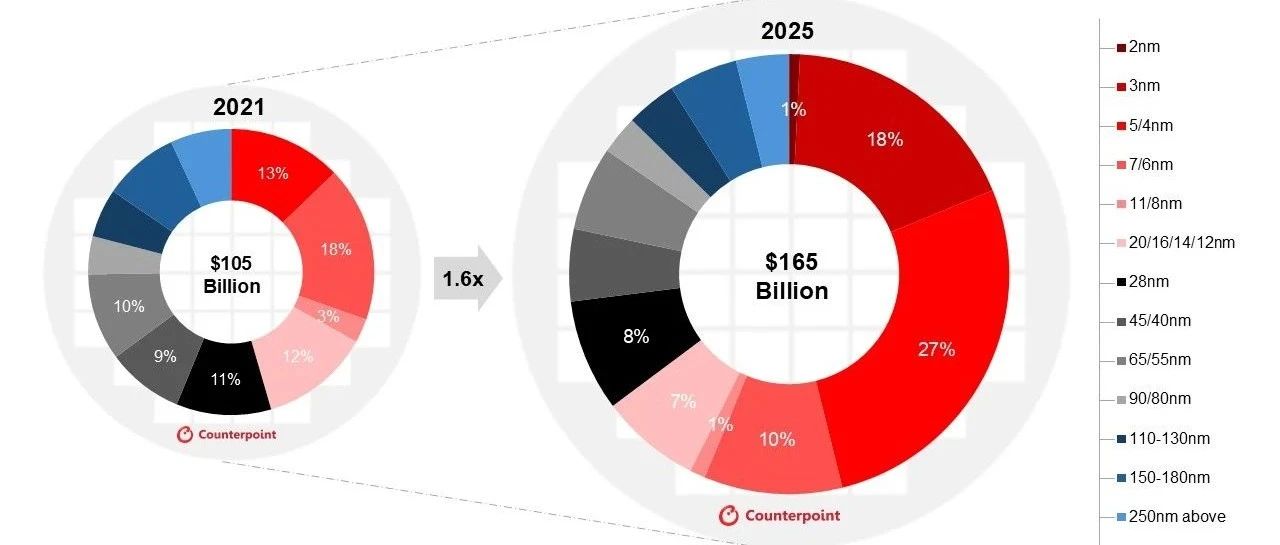
Core Viewpoint - The global pure foundry industry is projected to achieve a revenue of $165 billion by 2025, reflecting a 17% year-on-year growth and a compound annual growth rate (CAGR) of 12% from 2021 to 2025, driven by advanced nodes like 3nm and 5/4nm [4][8]. Industry Summary - The revenue from the global pure foundry market is expected to reach a historical high of $165 billion in 2025, compared to $105 billion in 2021, indicating a strong growth trajectory [8]. - Advanced process nodes (7nm and below) are anticipated to contribute over 56% of total revenue by 2025, fueled by demand for AI smartphones, high-performance computing (HPC), and server chips [8]. - The introduction of the 2nm process is expected to further tilt the revenue structure towards advanced nodes, with projections indicating that it will contribute over 10% of revenue by 2027 [8][9]. Node-Specific Insights - The 3nm node is expected to see a revenue increase of over 600% by 2025, reaching approximately $30 billion, while the 5/4nm nodes are projected to exceed $40 billion in revenue [4]. - The 20-12nm node range is expected to remain stable, contributing about 7% of total revenue, reflecting a transition of some chips from mature nodes to intermediate nodes [7]. - The 28nm node is highlighted as a standout among mature nodes, with an expected CAGR of 5%, despite the overall revenue share of mature nodes declining from 54% in 2021 to 36% in 2025 [9]. Competitive Landscape - TSMC is expected to be the largest beneficiary in the advanced node sector, followed by Samsung and Intel, while UMC, GlobalFoundries, and SMIC will continue to benefit from stable market demand, albeit at a slower growth rate [9]. - Innovations in front-end process technologies, such as High-NA EUV, and advancements in back-end packaging technologies are creating diverse opportunities for foundries [9].
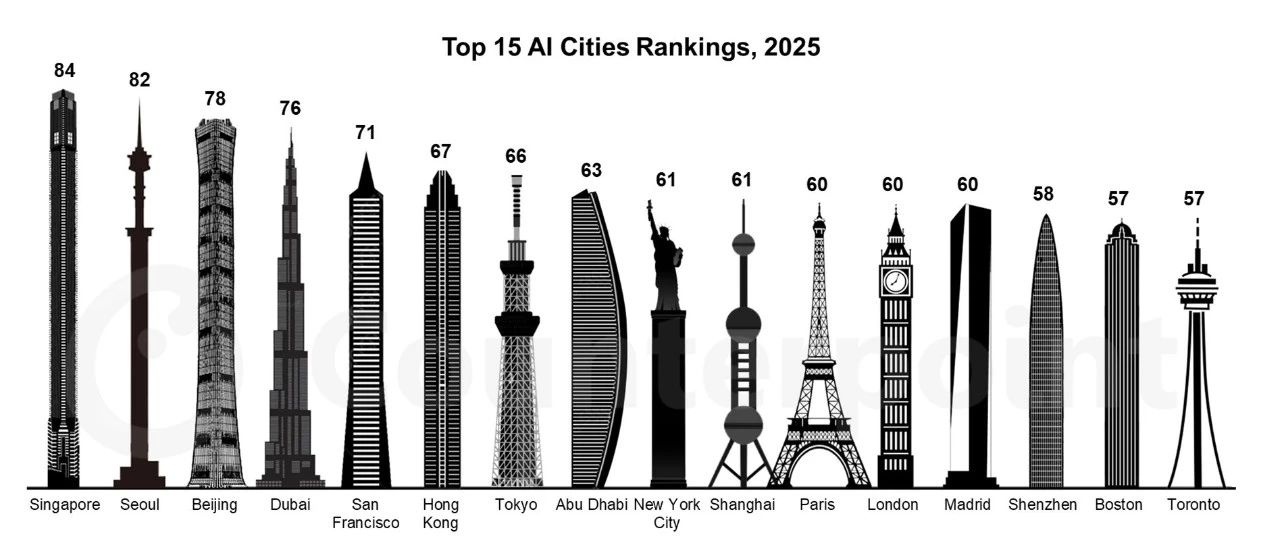
新加坡在Counterpoint Research的《2025年全球AI城市指数》中获评全球顶级AI城市
Counterpoint Research· 2025-08-07 01:03
Core Insights - Counterpoint Research's report ranks Singapore as the top AI city globally, followed by Seoul, Beijing, Dubai, and San Francisco in the top five [4][8][9] Ranking Summary - The report evaluates AI adoption in the world's 100 largest metropolitan areas, scoring each city out of 100 [6][8] Regional Highlights - Singapore's success is attributed to government-supported initiatives that foster a vibrant startup ecosystem and public-private collaboration in sectors like healthcare and transportation [7] - Seoul ranks second due to active AI deployment in healthcare and education, with significant contributions from companies like SK Telecom and Naver [7] - Beijing is set to provide formal AI education to all primary and secondary students starting in 2025, alongside initiatives with China Unicom and Huawei [7] - North America leads in AI city development, but China is rapidly catching up, with cities like Wuhan, Chengdu, and Suzhou making significant investments in supercomputing [7][8] - Europe lags behind due to a more complex regulatory environment, while the Middle East shows potential for growth [7][8] Key Players in AI City Development - Microsoft and Google are identified as major players driving AI city initiatives through data center development and AI training programs [8][11] - Huawei excels in promoting AI in telecommunications with its 5G-A technology [8] - Nvidia's supercomputing facilities in Dallas position it as a leader in global computing capabilities [8] Noteworthy City Performances - Dubai surpasses San Francisco in overall scores due to substantial investments in AI across various economic sectors, including a plan to train 1 million AI engineers [9] - Riyadh, Bangalore, and Hangzhou are highlighted as rapidly developing AI cities with significant investment potential [9][12] Telecommunications Ecosystem - Telecommunications infrastructure is crucial for AI city development, with cities like Beijing deploying 10G fiber and Boston expanding to meet AI computing demands [12] - Innovations such as GPU-as-a-Service by Singtel and AI-driven network management by STC in Riyadh are examples of how telecom companies are enhancing AI city capabilities [12]
中国智能手机平均电池容量居全球首位,2025年5月同比增幅达11%
Counterpoint Research· 2025-08-07 01:03
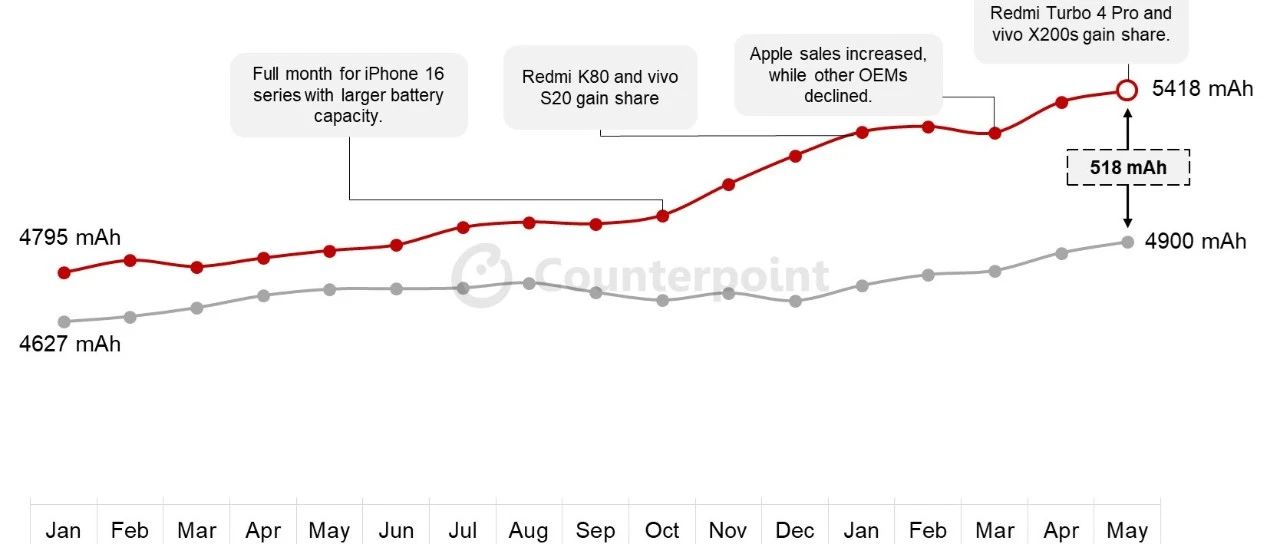
Core Insights - The average battery capacity of smartphones in China is projected to reach 5418mAh by May 2025, marking an 11% year-on-year increase, while global markets see only a 3% growth [4][8] - The adoption of silicon-carbon (SiC) battery technology is significantly contributing to the higher battery capacities in China, with a notable increase of over 500mAh compared to global averages [4][8] - Major OEMs in China are experiencing double-digit year-on-year growth in average battery capacity, with the market share of smartphones with 6000mAh and above rising from 9% to 35% within a year [6][8] Battery Technology Trends - SiC batteries offer higher energy density, allowing for larger capacities within the same physical size, and support thinner device designs [6] - The first smartphone featuring SiC batteries was launched in February 2023, with widespread adoption expected to begin in the second half of 2024, represented by popular models such as Honor X60 Pro, Redmi K80, and vivo S19 [6][8] - The trend of increasing battery capacity is likely to continue as more OEMs adopt new battery technologies to address consumer demands for longer screen usage times and high-energy applications [6][8] Market Positioning - Counterpoint Research anticipates that China will maintain its leading position in smartphone battery capacity in the coming quarters, potentially widening the gap as more models are launched in China before being introduced globally [7] - As global OEMs await further maturation of battery technology, growth in other regions is expected to be gradual, although the gap in battery capacity may eventually narrow as more manufacturers promote large-capacity batteries as a differentiating feature [7]