Refinitiv路孚特

Search documents
杭州活动报名倒计时|新数据驾驭2026年大宗商品市场展望
Refinitiv路孚特· 2025-11-25 06:02
Core Insights - The article highlights the increasing uncertainty and volatility in the commodity market for 2025, driven by global economic slowdown and geopolitical tensions, leading to a complex scenario of "falling prices and heightened volatility" [2] - It emphasizes the need for companies to redefine resilience and competitiveness in light of these challenges, particularly with the upcoming launch of platinum and palladium futures [2] Market Dynamics - The commodity market is experiencing a divergence in trends across energy, metals, and agricultural products, with traditional supply-demand logic being disrupted [2] - Companies are facing unprecedented challenges in cost control, supply chain stability, and strategic transformation [2] Event Details - A seminar hosted by the London Stock Exchange Group (LSEG) in Hangzhou will explore the opportunities presented by the "14th Five-Year Plan" for the copper market and provide exclusive data on gold, silver, platinum, and palladium [2][3] - The event is scheduled for December 4, 2025, and will feature various expert speakers discussing market insights and forecasts [3][4] Expert Contributions - Kian Pang Tan, an expert in agricultural research, will share insights on the palm oil market, leveraging over ten years of experience and advanced data analysis techniques [6] - Fu Xiaoyan, a senior director at Nanhua Futures, will discuss opportunities in the copper market, drawing from extensive experience in the futures industry [7][8] - Chen Xiaoyan, the agricultural research director at Dadi Futures, will provide an outlook on the cotton market amid changing tariff dynamics [9] Data and Analytics - LSEG emphasizes the importance of structured data utilization in commodity trading, highlighting the need for accurate information to enhance decision-making processes [13][14] - The company offers comprehensive solutions for energy, metals, and agricultural trading, utilizing a vast database and a team of analysts to support clients in identifying market opportunities [16][17][20]


杭州活动报名倒计时|新数据驾驭2026年大宗商品市场展望
Refinitiv路孚特· 2025-11-24 06:03
Core Insights - The article highlights the significant uncertainty and volatility in the commodity market for 2025, driven by global economic slowdown and geopolitical tensions, leading to a complex scenario of "falling prices and increasing volatility" [2] - The year 2025 is identified as a critical period for market restructuring and for companies to redefine resilience and competitiveness, particularly with the upcoming launch of platinum and palladium futures [2] Event Details - The event organized by the London Stock Exchange Group (LSEG) will take place on December 4, 2025, in Hangzhou, Zhejiang, from 15:00 to 17:00 [3] - The agenda includes various thematic discussions, including the impact of the "14th Five-Year Plan" on the copper market and the outlook for the cotton market amid changing tariffs [4][5] Speaker Profiles - Kian Pang Tan, Head of Agriculture Research at LSEG, specializes in palm oil and sugar market analysis, with over ten years of experience in agricultural research [9] - Fu Xiaoyan, Senior Director at Nanhua Futures Research Institute, has extensive experience in the futures industry and focuses on copper market research [10] - Wang Yaoyao, Head of Commodity Sales at LSEG, has over ten years of experience in the commodity sector, providing data and analysis solutions to enhance research efficiency and trading decisions [14] Commodity Market Insights - The article emphasizes the importance of structured data utilization in commodity trading, highlighting that timely and accurate information is crucial for decision-making [18] - LSEG offers comprehensive solutions for energy, metals, and agricultural trading, leveraging a vast database and a strong analyst team to provide insights and competitive advantages [19][22][23][25]

【隆重推出】理柏数据携手Snowflake平台:顶尖基金数据云端赋能
Refinitiv路孚特· 2025-11-24 06:03
Core Insights - LSEG has launched "LSEG Lipper on Snowflake" service to meet the growing demand for fund information among asset management firms, investment advisors, and individual investors [1] - The service provides comprehensive global data coverage, including over 350,000 collective investment products across 80 registered sales markets [1] - LSEG Lipper has over 50 years of experience and is trusted by global investment professionals for its expertise and market insights [2] Comprehensive Coverage - The service covers a wide range of investment products, including mutual funds, closed-end funds, exchange-traded funds, hedge funds, domestic retirement funds, pension funds, and insurance products [1] - It offers access to a historical database of over 500,000 securities, including merged or liquidated funds [2] Customizable Solutions - LSEG provides highly customizable and flexible services that support all major cloud service providers and their regional deployment combinations [2] - The platform integrates ESG and climate metrics into client solutions, making it a reliable source for complex fixed-income analysis [12] AI-Driven Analysis Solutions - The company offers a range of AI-driven analytical tools and models supported by a robust open and scalable infrastructure [8] - These tools help automate complex analysis tasks and provide actionable insights, enhancing competitive advantages for clients [8] Client Interaction and Solutions - LSEG maintains strong relationships with major financial institutions, providing solutions for buy-side and sell-side clients across various functions [16] - The solutions are designed to improve portfolio performance and capture excess returns through automation [17] Risk Management - The company’s data and models assist in identifying interest rate and credit risks at both corporate and portfolio levels, which is crucial for achieving robust financial performance [20]

最后报名机会 | 金融的未来:全球首场 AI 自主交易加密货币对决洞察
Refinitiv路孚特· 2025-11-21 01:03
Core Insights - The financial industry is experiencing a historic moment with six leading AI models, including GPT-5 and Gemini 2.5Pro, competing in real-money cryptocurrency trading [1] - The Alpha Arena challenge, hosted by Nof1.ai, aims to test AI's ability to navigate volatile markets without human intervention [1] - The upcoming webinar will analyze the event's design, highlight the performance of participating models, and discuss the implications for algorithmic trading and financial decision-making [1] Event Details - Date: November 21, 2025 (Friday) [2] - Time: 15:00 – 15:40 [2] Learning Opportunities - The event will provide insights into different AI strategies and their implications for risk management, adaptability, and trust in autonomous systems [1][8] - Participants can expect practical insights and deep reflections relevant to financial experts and technology enthusiasts [1]
杭州线下活动报名中 | 2026年大宗商品市场展望
Refinitiv路孚特· 2025-11-20 06:08
Core Insights - The article highlights the significant uncertainty and volatility in the commodity market for 2025, driven by global economic slowdown and geopolitical tensions, leading to a complex scenario of "falling prices and increased volatility" [2] - It emphasizes the need for companies to redefine resilience and competitiveness in the face of unprecedented challenges in cost control, supply chain stability, and strategic transformation [2] Event Overview - A seminar hosted by LSEG in Hangzhou will explore the opportunities presented by the "14th Five-Year Plan" for the copper market and how to utilize LSEG weather data to forecast agricultural market trends [2][4] - The event is scheduled for December 4, 2025, from 15:00 to 17:00 at the Hyatt Hotel in Hangzhou, Zhejiang [4] Speaker Profiles - Kian Pang Tan, Head of Agriculture Research at LSEG, specializes in palm oil and sugar market analysis, with over ten years of experience in agricultural research [6] - Fu Xiaoyan, Senior Director at Nanhua Futures Research Institute, has extensive experience in the futures industry and currently focuses on copper market research [7] - Chen Xiaoyan, Director of Agricultural Research at Dadi Futures, has a background in information consulting and commodity trading [8] LSEG's Commodity Trading Solutions - LSEG provides comprehensive data and analytical methods for energy, metals, and agricultural trading, leveraging machine learning and artificial intelligence to enhance market predictions [15][17][19] - The company emphasizes the importance of structured data utilization for gaining a competitive edge in commodity trading [12][22]

LSEG Academy | 金融的未来:全球首场 AI 自主交易加密货币对决洞察
Refinitiv路孚特· 2025-11-19 06:03
Core Insights - The financial industry is experiencing a historic moment with six leading AI models, including GPT-5 and Gemini 2.5Pro, competing in real-money cryptocurrency trading [1] - The Alpha Arena challenge, hosted by Nof1.ai, aims to test AI's ability to navigate volatile markets without human intervention [1] - The upcoming webinar will analyze the event's design, highlight the performance of participating models, and discuss the implications for algorithmic trading and financial decision-making [1] Event Details - Date: November 21, 2025 (Friday) [2] - Time: 15:00 – 15:40 [2] Learning Opportunities - The event will provide insights into different AI strategies and their implications for risk management, adaptability, and trust in autonomous systems [1][8] - Participants can engage in interactive learning experiences and access a variety of educational resources to enhance their professional skills [6][9]
LSEG跟“宗” | 美官员出尔反尔12月或不减息 上周五美股债虚金全杀
Refinitiv路孚特· 2025-11-19 06:03
Core Viewpoint - The article discusses the impact of the U.S. government shutdown on the Federal Reserve's interest rate decisions and the implications for commodity markets, particularly gold and silver [2][29]. Group 1: Market Sentiment and Federal Reserve Actions - The likelihood of a rate cut in January has dropped significantly from 67.6% to 17.4% over the past four weeks, indicating a shift in market sentiment regarding future monetary policy [2][29]. - The unexpected retirement announcement of Atlanta Fed President Bostic has raised speculation about political influences on the Fed, particularly from Trump, who is perceived to have a hawkish stance [2][29]. - The article highlights a recent sell-off in stocks, bonds, and gold, with gold prices dropping by $100 but remaining above $4,000 [2][29]. Group 2: Commodity Market Dynamics - Managed positions in COMEX gold have decreased by 1.1% to a net long position of 493 million, while silver has seen a 5.1% increase in net long positions [4]. - Year-to-date, net long positions in U.S. futures for gold have declined by 13%, while platinum and copper have seen significant fluctuations, with copper's net position turning from negative to positive [8][11][13]. - The article suggests that the recent volatility in copper prices has been influenced by Trump's tariff announcements, which have led to sharp price movements [15]. Group 3: Investment Opportunities and Risks - The article posits that if Trump can influence the Fed to lower rates, gold prices may continue to rise, indicating potential investment opportunities in precious metals [30][32]. - The gold-to-North American mining stock ratio has decreased by 3.5%, suggesting that mining stocks have underperformed relative to gold, which may present a buying opportunity [19][21]. - The gold-silver ratio currently stands at 80.7, reflecting market sentiment, with a year-to-date decline of 11.2% [25]. Group 4: Broader Economic Implications - The article discusses the potential for a recession and its impact on commodity demand, suggesting that the global economic outlook may worsen, which could affect investment strategies [34]. - It emphasizes the importance of monitoring the Fed's actions and global economic indicators as they will significantly influence commodity prices in the coming months [35].

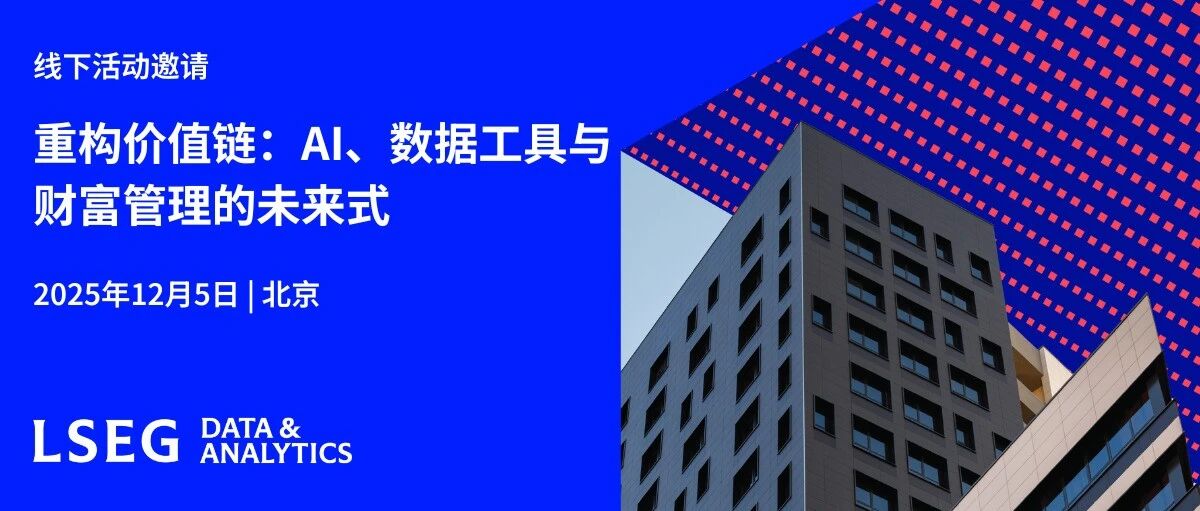
北京线下活动邀请 | 重构价值链:AI、数据工具与财富管理的未来式
Refinitiv路孚特· 2025-11-18 06:10
Core Insights - The wealth management industry is undergoing unprecedented transformation due to the rapid development of artificial intelligence and digital technologies, reshaping the competitive landscape through smart advisory, big data analysis, customer service, and risk management [1] Event Details - The event titled "Reconstructing the Value Chain: The Future of AI, Data Tools, and Wealth Management" will be held on December 5, 2025, in Beijing, providing a platform for industry elites to share experiences and explore collaboration opportunities [2] - The agenda includes registration, opening remarks, keynote speeches on the role of AI in financial digital transformation, and a discussion among industry leaders, followed by a Q&A session and a self-service lunch [2] Wealth Management Solutions - LSEG offers market-leading data, powerful digital tools, and actionable insights that empower wealth advisors and investors to make confident decisions [6] - The wealth management workflow solutions provide insightful digital tools and features that help advisors access information in real-time, enhancing their efficiency [8] - The wealth data solutions are flexible and intuitive, offering leading market data, advanced analytics, and a customer-centric experience [9] Investor Experience - Recent research highlights five ways to attract investors and build competitive advantages, focusing on the data, insights, and digital experiences that investors require, including digital assets, index strategies, social media for investment ideas, and market outlooks [11] Expertise and Coverage - LSEG provides unparalleled data coverage and workflow-centric solutions for the wealth management community, supported by over 700 dedicated employees with more than 30 years of experience and over 50 global partners [13]
聚焦气候变化|COP30净零排放图集
Refinitiv路孚特· 2025-11-17 06:03
Core Insights - 95% of countries failed to submit new Nationally Determined Contributions (NDCs 3.0) by the UN's February deadline, but major emitters have set 2035 targets, covering 71% of G20 emissions [1] - G20 countries with targets are expected to increase annual emissions reductions from -0.5% to -0.7% (2023-2030) to -2.6% to -3.5% (2030-2035), achieving an additional 13% to 18% reduction over five years [1] Transformation Risk Analysis - Over 70 countries have submitted or announced new 2035 targets despite geopolitical tensions, including major emitters like China, Russia, and Brazil, while the U.S. has withdrawn [3] - The new 2035 targets align with a global temperature increase forecast of 2.2–2.3°C, slightly better than the 2.4°C forecast under NDCs 2.0, but still above the Paris Agreement goal [3] - The acceleration in global emissions reduction is primarily driven by large emerging economies, with some countries like the UK and Australia committing to faster decarbonization, while others like Canada and Japan show slower rates [3] Physical Risk Analysis - By mid-century, climate physical disasters could put an additional 500 million people and $20 trillion GDP at high risk, with a total of 839 million people and $28.3 trillion GDP facing risks by 2050 [3] - Major cities like Tokyo, New York, and Shanghai will see increased exposure to climate risks, with over 80% of Japan's GDP and population facing typhoons at least once every ten years [3] - By 2050, over 327 million people will face extreme heat conditions, and 670 regions will experience severe water stress, impacting health and economic productivity [3] Implications for Investors - Investors must understand how government emission commitments reshape global growth trajectories and asset valuations, as climate physical risks increasingly challenge markets and economies [6] - The report provides detailed risk mapping and forecasts, translating macro climate models into actionable investment decisions [6] - The unique application of the implied temperature rise (ITR) metric offers a clear benchmark for assessing countries' climate goals against the Paris Agreement [8]

杭州线下活动报名中 | 2026年大宗商品市场展望
Refinitiv路孚特· 2025-11-13 06:03
Core Insights - The article highlights the significant uncertainty and volatility in the commodity market for 2025, driven by global economic slowdown and geopolitical tensions, leading to a complex situation of "falling prices and increased volatility" [2] Group 1: Market Overview - In 2025, the commodity market is expected to face challenges in cost control, supply chain stability, and strategic transformation due to the breakdown of traditional supply-demand logic [2] - The year is characterized as a period of market reshaping and a critical juncture for companies to redefine resilience and competitiveness [2] Group 2: Event Details - A seminar hosted by LSEG in Hangzhou will explore how to find certainty amid uncertainty, aiming to help businesses seize more opportunities [2] - The event is scheduled for December 4, 2025, from 15:00 to 17:00, with specific details to be provided in a confirmation letter [6] Group 3: Expert Contributions - The seminar will feature expert speakers, including Chen Xiaoyan, Director of Agricultural Products Research at Dadi Futures, and Fu Xiaoyan, Senior Director at Nanhua Futures Research Institute, both of whom have extensive experience in the commodity market [8][9] - Kian Pang Tan, Head of Agriculture Research at LSEG, will provide insights into palm oil and sugar markets, leveraging over ten years of experience in agricultural research [10] Group 4: Data and Analysis Solutions - LSEG offers comprehensive data management solutions and trading execution capabilities to provide a competitive edge in commodity trading [12] - The company emphasizes the importance of structured data utilization, including fundamentals, supply-demand, and alternative data sources, to enhance trading decision-making [14][15]