Z Potentials

Search documents
Z Product|估值10亿美金的计费系统Metronome,如何成为OpenAI、英伟达首选的计价底层
Z Potentials· 2025-12-29 04:53
Core Insights - Metronome is positioned as a key infrastructure provider for AI and software companies, facilitating the transition from traditional licensing models to usage-based billing systems [3][5][11] - The company has achieved significant growth, with a total funding of $128 million and a projected valuation nearing $1 billion, indicating strong market confidence in its business model [32][35] Group 1: Company Overview - Metronome was founded in 2019 in San Francisco by Scott Woody and Kevin Liu, both former Dropbox employees, aiming to create a real-time billing infrastructure for modern software companies [5][27] - The company has raised a total of $128 million across multiple funding rounds, with notable investors including Andreessen Horowitz and New Enterprise Associates [32][34] - Metronome's client base includes major AI and cloud infrastructure companies such as OpenAI, NVIDIA, and Databricks, serving over 150 million end users [5][8] Group 2: Product and Technology - Metronome's billing system is designed to handle complex pricing models, breaking down the billing process into four layers: usage recording, billable metrics, pricing structure, and customer contracts [5][12] - The platform allows for real-time tracking of usage and costs, enabling businesses to adjust pricing dynamically without extensive engineering changes [6][21] - By automating the billing process, Metronome transforms pricing adjustments from engineering challenges into straightforward business actions, particularly suited for high-frequency AI usage scenarios [6][8] Group 3: Market Trends and Positioning - The shift from seat-based pricing to usage-based models is a significant trend in the software industry, driven by the rise of AI technologies [11][35] - Metronome's infrastructure addresses the challenges faced by companies transitioning to these new pricing models, making it a critical partner for businesses looking to align pricing with value creation [11][12] - The company is seen as a leader in the usage-based billing space, capitalizing on the growing demand for flexible and scalable billing solutions in the AI era [35]


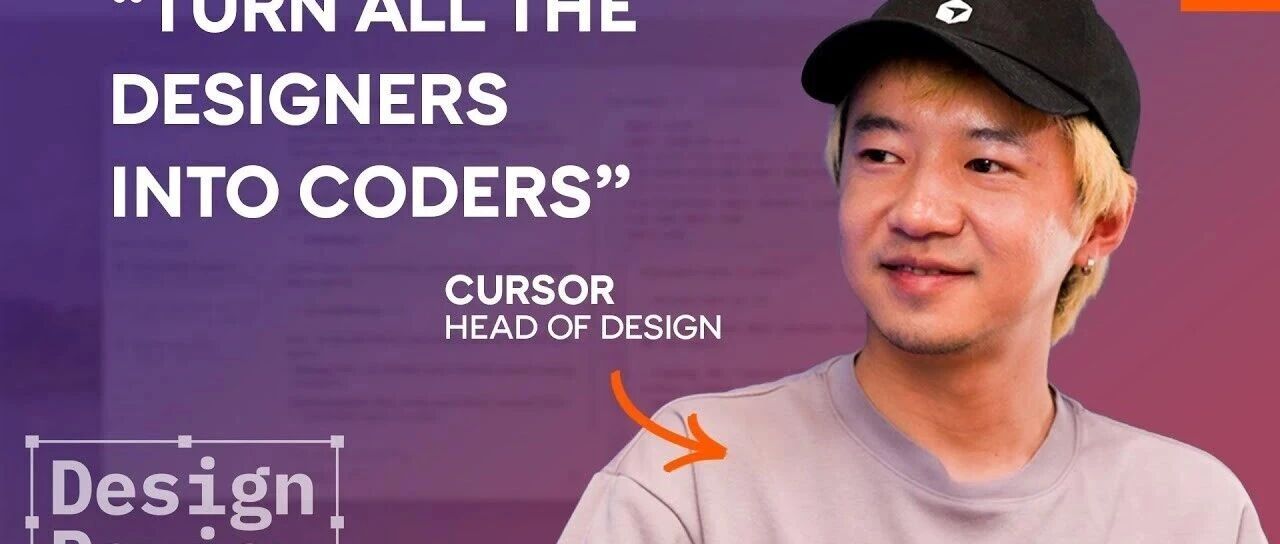
喝点VC|YC对话Cursor华人设计负责人:设计师将开始写代码,工程师将开始做设计,我们的共同语言就是代码
Z Potentials· 2025-12-28 02:04
Core Insights - The article discusses the evolution of design and engineering roles, emphasizing the merging of these disciplines through the use of AI tools like Cursor, which allows designers to code and engineers to design, creating a common language of code [4][62][66] - Ryo Lu, the design lead at Cursor, shares his vision of breaking down the barriers between designers and engineers, advocating for a hands-on, iterative approach to learning and building [5][11][62] Group 1: Design Philosophy - Ryo Lu's personal KPI for the year is to transform all designers into programmers, encouraging a collaborative environment where both roles can communicate through code [4][11] - The design process is shifting from a focus on perfection to an emphasis on building and iterating, where initial outputs may be rough but serve as a foundation for further refinement [62][64] - The importance of understanding core elements and primitives in design is highlighted, suggesting that simplicity and flexibility in foundational concepts can lead to more effective solutions [23][71] Group 2: Tool Development and User Experience - Cursor has evolved significantly, with a focus on integrating AI agents that enhance user interaction and streamline the coding process, making it accessible even for those without coding experience [17][20][62] - The design team at Cursor has implemented a new layout prioritizing AI agents, allowing users to interact with the tool more intuitively and efficiently [20][21] - Ryo Lu emphasizes the need for a clean and simple user interface that adapts to user preferences while maintaining functionality, avoiding the pitfalls of feature bloat [22][24] Group 3: Future of Design and Engineering - The future of design is envisioned as a sculpting process where designers refine AI-generated outputs, focusing on craftsmanship and detail rather than just initial creation [64][68] - The article suggests that as AI tools become more integrated into the design process, the roles of designers and engineers will continue to blur, fostering a more collaborative and innovative environment [66][70] - Ryo Lu advises designers to focus on core concepts that will remain relevant over time, ensuring that their work can evolve alongside changing technologies and user needs [71][72]
Z Product | Product Hunt最佳产品(12.15-21),Noiz上线表情包指挥AI配音功能
Z Potentials· 2025-12-28 02:04
Core Insights - The article highlights the top 10 products from December 15 to December 21, 2025, showcasing innovative tools and platforms that leverage AI and enhance productivity across various sectors. Group 1: Product Summaries - **Loki.Build**: An AI-native website builder that generates studio-grade landing pages from prompts, allowing real-time visual editing and integrated hosting and SEO features, targeting founders and small agencies [3][6][9]. - **hq0**: A branded video conferencing platform that allows meetings to occur on a company's own domain, automating note-taking and follow-ups, aimed at sales and customer service teams [10][13][14]. - **Unloop**: A tool that visualizes behavioral loops and employs AI to help users identify and break negative patterns, particularly beneficial for individuals with ADHD [15][17][20]. - **FrontierScience by OpenAI**: A benchmark for assessing doctoral-level reasoning in physics, chemistry, and biology, designed for researchers and AI product teams [21][24][27]. - **NOIZ AI**: An emotional voice tool that uses emojis to guide AI in delivering messages with appropriate emotional tones, targeting users who want to express feelings more authentically [28][30][33]. - **NexaSDK for Mobile**: A development kit that enables local multimodal AI on iOS and Android with minimal code, focusing on privacy and performance [34][36][42]. - **Monocle 3.0 for macOS**: A macOS tool that blurs background windows to enhance focus on the current task, designed for writers and developers [43][45][48]. - **TimeTuna**: A visually appealing scheduling tool that integrates video backgrounds and branding, aimed at independent professionals and teams [49][51][55]. - **Okara**: A privacy-focused AI workspace that allows users to switch between multiple open-source models for data analysis and content generation [56][58][61]. - **ManyPI**: A developer platform that converts websites into structured JSON APIs without the need for web scraping, targeting engineering and data teams [62][64][66].

速递|解读英伟达为何与Groq达成200亿美元巨额交易,“柔性垄断”消弭威胁
Z Potentials· 2025-12-26 03:43
Core Viewpoint - Nvidia has agreed to pay approximately $20 billion for the technology licensing of Groq, a startup aiming to challenge Nvidia's dominance in AI application chips, specifically inference computing chips [1][5]. Group 1: Transaction Details - The deal involves a non-exclusive licensing agreement, allowing Nvidia to design server chips that could be cheaper and faster for running AI applications compared to its existing product line [2]. - Groq's valuation in this deal is about three times higher than its previous funding round valuation of $6.9 billion [1]. - Nvidia plans to integrate Groq's low-latency processors into its AI factory architecture, expanding its platform for broader AI inference and real-time workloads [3]. Group 2: Groq's Background and Performance - Groq was founded in 2016 by Jonathan Ross, who was involved in the early development of Google's AI chips, and has recently launched a cloud business allowing small developers to run open-source AI models [3]. - Groq has raised approximately $1.8 billion from investors, including Blackrock and Tiger Global Management, and has adjusted its revenue forecast downwards due to challenges in competing with Nvidia [6][7]. - The company had projected over $40 million in revenue from its cloud business this year, with overall sales expected to exceed $500 million [8]. Group 3: Market Context and Competition - Nvidia's chips are widely regarded as the most powerful and efficient solutions for developing new AI models, but there is a growing demand for lower-cost alternatives like Groq's chips [2][10]. - Despite Groq's advancements, Nvidia maintains a stronghold in the high-end AI chip market, with its chips being the preferred choice for major cloud service providers [7]. - Other startups are also struggling to challenge Nvidia, with many seeking acquisition opportunities, as seen in Intel's negotiations to acquire AI chip startup SambaNova [11].

速递|OpenAI广告营收预测数据:非付费用户的广告相关收入,可能达到1100亿美元
Z Potentials· 2025-12-26 03:43
Core Insights - OpenAI is exploring advertising opportunities within ChatGPT, aiming to integrate sponsored content in a way that maintains user trust and engagement [1][3][5] - The company plans to leverage its growing user base, which has reached nearly 900 million weekly active users since its launch in 2022, with a target of 2.6 billion by 2030 [1][5] - OpenAI's entry into the advertising market poses a significant challenge to established players like Google, Meta, and Amazon, which currently dominate the digital advertising space [5][6] Group 1: Advertising Strategy - OpenAI is considering displaying sponsored information in ChatGPT responses when users express commercial intent, such as asking for product recommendations [1][2] - The company has created multiple design drafts for how ads might appear within ChatGPT, including sidebar placements and prioritized responses [2][3] - OpenAI aims to introduce ads subtly, ensuring they only appear when users show interest in specific topics, thereby minimizing disruption to the user experience [3][6] Group 2: Market Potential - The digital advertising market is projected to reach nearly $560 billion this year, with Google, Meta, and Amazon accounting for about 60% of this market [5][6] - OpenAI anticipates that its advertising model could generate significant revenue, with projections indicating that non-paying users could contribute approximately $110 billion by 2030 [6][7] - The company is actively recruiting talent from the digital advertising sector and enhancing shopping features to facilitate its entry into retail advertising [2][6] Group 3: User Engagement and Trust - OpenAI recognizes the importance of maintaining user trust while introducing advertising, as excessive sponsored content could lead to user dissatisfaction [3][5] - The company is aware that only 2.1% of ChatGPT queries are currently related to purchasable products, indicating a need for increased user adaptation to shopping through AI [7][8] - OpenAI has implemented various shopping-oriented features, such as partnerships with payment processors and e-commerce platforms, to encourage user engagement with shopping functionalities [7][8]

独家 | 清华00后博士融资数千万,打造全球现象级端侧算力引擎,性能领跑行业
Z Potentials· 2025-12-26 03:43
Core Insights - The article discusses the shift from cloud-based AI models to edge computing, emphasizing the need for local processing power to reduce costs, latency, and enhance privacy [3][4][6] - The company, Wange Zhiyuan, is developing an edge computing engine capable of running large models (30B, 50B parameters) on consumer-grade hardware, aiming to democratize AI access [4][5][14] - The breakthrough achieved by the company includes a 300 billion parameter model with only 4GB memory usage and a throughput of 30 tokens/s, making local devices comparable to cloud-based models [5][24] Group 1: Industry Trends - AI is transitioning from merely answering questions to delivering results, leading to an exponential increase in token consumption and computational demands [3][6] - The cost and unpredictability of cloud-based inference are significant challenges, prompting a reevaluation of where computational power should reside [3][4] - The future of AI is seen as a shift towards local capabilities, where users can leverage their own devices for AI processing, thus reducing reliance on expensive cloud services [6][21] Group 2: Company Developments - Wange Zhiyuan is focused on creating a local inference engine that can efficiently run large models on limited hardware, challenging the notion that only small models can operate on edge devices [4][15] - The company has successfully optimized its inference engine to allow for high-performance processing on consumer-grade devices, enabling a new level of AI interaction [5][28] - Recent funding of several million yuan in seed financing will accelerate the development of their edge computing solutions [5][30] Group 3: Competitive Landscape - The competitive landscape is primarily focused on cloud-based solutions, but Wange Zhiyuan differentiates itself by targeting consumer hardware for large model inference [28] - The company aims to eliminate the token-based pricing model by enabling local processing, which could make AI services more affordable and accessible [21][27] - The ability to run large models locally not only reduces costs but also enhances user privacy by keeping data on the device [27][28]
独家|清华机器人团队完成天使轮融资,发布迄今最大的桌面机器人CyboPal ONE
Z Potentials· 2025-12-25 03:39
Core Viewpoint - The article emphasizes that hardware should evolve from being passive containers to active entities with agency, as exemplified by the CyboPal ONE desktop robot, which aims to redefine user interaction and service capabilities in the AI era [1][2]. Group 1: Product Introduction - CyboPal ONE is introduced as the largest desktop robot to date, set to be unveiled at CES 2026 following a multi-million RMB angel round financing led by Heartflow Capital [1]. - The robot features a 6-degree-of-freedom mechanical arm that supports a lightweight 4K display, enabling millimeter-level active tracking and interaction with users [5]. Group 2: Competitive Landscape - The founder, Dr. Peng Tianfang, argues that the competition in hardware during the AI era will focus on "active service capabilities" rather than just technical specifications [6]. - The future of desktop interaction is defined by "intent direct connection," where the screen becomes a follower of user intent, capable of responding to gestures and voice commands [7]. Group 3: Team and Vision - The core team behind CyboPal ONE is described as a diverse group of idealists from Tsinghua University, combining expertise in robotics, L4 autonomous driving perception, and consumer electronics [9]. - The team's vision is to explore the human-machine relationship, aiming to restore freedom, health, and dignity to every carbon-based life form, positioning CyboPal ONE as a declaration of freedom in a silicon-based future [9].

速递|前谷歌TPU掌门人携Groq加入英伟达,英伟达以技术合作名义锁定低延迟芯片
Z Potentials· 2025-12-25 03:39
Core Viewpoint - Nvidia has entered into a licensing agreement with AI startup Groq, enhancing its investment in AI-related enterprises and gaining rights to integrate new technology into its products [1][2]. Group 1: Licensing Agreement and Strategic Moves - Nvidia has paid for the rights to use Groq's technology and plans to integrate its chip designs into future products [2]. - Groq's executives will join Nvidia to assist with the integration, while Groq will continue to operate independently and appoint a new CEO [2][3]. - This agreement is similar to Meta's collaboration with Scale AI, where large tech companies invest in smaller firms for technology licensing and executive recruitment [3]. Group 2: Market Position and Investment Strategy - Nvidia's technology dominates the data center sector, which is crucial for the new computing capabilities required for AI software and services [2]. - The company has committed to investing hundreds of billions to support various projects aimed at advancing the overall AI industry [3]. - Nvidia's investment includes a potential $100 billion commitment to OpenAI and acquiring shares in former competitor Intel [3]. Group 3: Competitive Landscape - Groq, founded in 2016, recently raised $750 million at a post-money valuation of $6.9 billion, aiming to expand its data center capacity [2]. - The low-latency chips from Groq will enhance Nvidia's product offerings and open new market opportunities [3]. - In the face of rapid advancements in self-developed chips by tech giants like Google, Microsoft, and Amazon, Nvidia's move aims to solidify its core customer base and attract new users [4].
速递|单图生成实时视频分身:扩散模型AI助手Lemon Slice获YC、Matrix等1050万美元投资
Z Potentials· 2025-12-25 03:39
数字头像生成公司 Lemon Slice 正致力于通过新型扩散模型为聊天场景增添视频维度——该技术仅需单张图像即可生成动态数字形象。 这个名为 Lemon Slice-2 的模型能够创建基于知识库运行的数字化身,可扮演 AI 智能体所需的任何角色,例如解答客户咨询、协助完成作业问 题,甚至担任心理健康支持顾问。 "在生成式人工智能的早期阶段,我的联合创始人开始尝试各种视频模型,我们明显意识到视频将走向交互化。 像 ChatGPT 这类工具之所以引人注 目,正是因为它们的交互性——我们希望视频也能具备这种特质。"联合创始人莉娜·科卢奇表示。 Lemon Slice 称该模型拥有 200 亿参数,仅需单张 GPU 即可实现每秒 20 帧的视频直播流生成。公司通过 API 和可嵌入小组件提供服务,企业仅需 一行代码就能将其集成至网站。创建数字化身后,用户可以随时变更角色背景、风格样式与外观形态。 除了拟人化形象,该公司还着力开发能够生成非人型角色的技术,以满足多元化需求。这家初创企业正运用 ElevenLabs 的技术为这些数字化身生 成语音。 Lemon Slice 由 Lina Colucci 、 Sidney ...

速递|前雅虎CEO六年折戟后转身,新公司Dazzle打造 AI助理,寻求“谷歌级”影响力
Z Potentials· 2025-12-24 03:13
Sunshine 公司累计从投资者处筹集了 2000 万美元资金,投资方包括 Felicis 、 Norwest Venture Partners 和 Unusual Ventures 。公司解散时,投资 者获得了 Dazzle 公司 10% 的股权,梅耶尔透露道。 回顾Sunshine 公司的发展困境,梅耶尔坦然承认其局限性,坦言公司试图解决的问题过于 "琐碎"且规模不足。"我认为我们未能将其打磨至我理想 中的整体精致度和易用性水平,"她补充道。 前雅虎 CEO 玛丽莎·梅耶尔不甘置身于生成式 AI 革命浪潮之外。 在执掌照片分享及联系人管理初创公司 Sunshine 六年却收效甚微后,这位传奇科技领袖已关闭该公司,转而创立 Dazzle ——一家致力于打造下一 代人工智能个人助理的新企业。 尽管梅耶尔尚未透露 Dazzle 功能的具体细节,但她已公开这家新公司以 3500 万美元估值完成了 800 万美元的种子轮融资。 本轮融资由 Forerunner 基金的柯尔斯滕·格林领投,凯鹏华盈、 Greycroft 、 Offline Ventures 、 Slow Ventures 及 Bling Capit ...