中关村储能产业技术联盟

Search documents
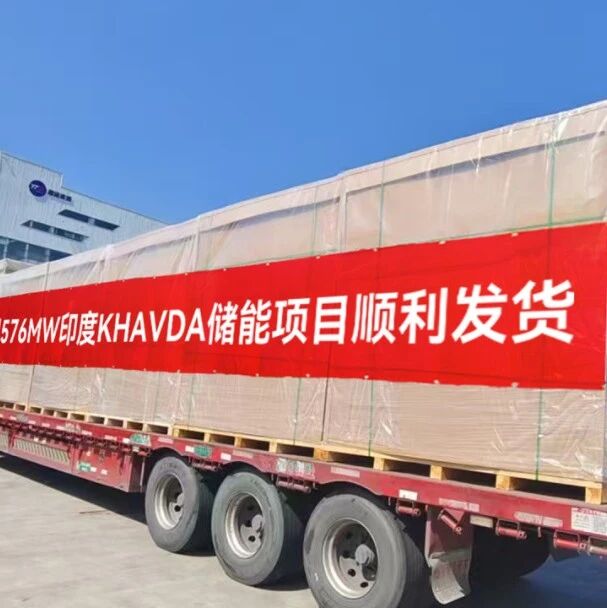
576MW!上能电气顺利供货印度最大储能电站
中关村储能产业技术联盟· 2025-12-22 08:05
Core Viewpoint - The article highlights the significant breakthrough achieved by Sungrow Power Supply Co., Ltd. in the Indian energy storage market, particularly through the successful delivery of 576MW energy storage inverters to the Kha vda energy base [2][4]. Group 1: Company Developments - Sungrow Power Supply Co., Ltd. has delivered 576MW energy storage inverters to the Kha vda energy base in India [2]. - The energy station, developed by the Adani Group, will have a total capacity of 1126MW/3530MWh, making it the largest energy storage station in India and one of the largest single energy storage stations globally [4]. - The operational energy station will help maintain grid stability, alleviate peak load pressure, and provide round-the-clock electricity supply [4]. Group 2: Industry Context - The Kha vda energy base is set to become one of the largest "renewable energy + energy storage" complexes globally [4]. - As of September this year, Adani Group's renewable energy operational capacity reached 16.7GW, with plans to add 15GWh of energy storage capacity by March 2027 and a total of 50GWh within five years [4].

新增装机同比下降67%!11月用户侧新型储能项目分析
中关村储能产业技术联盟· 2025-12-22 08:05
Core Insights - The article highlights a significant decline in the new energy storage capacity on the user side in November 2025, with a year-on-year decrease of over 65% [2] - The market structure has adjusted, with commercial and industrial storage accounting for nearly 90% of the new installations, and long-duration energy storage technologies are accelerating [2][3] - The East China region dominates the new installations, with Fujian leading in capacity [2][4] User-side Energy Storage Installation Scale - In November, the user-side energy storage market was primarily driven by commercial applications, accounting for nearly 90% of new installations, totaling 185.27 MW / 555.83 MWh, with year-on-year declines of 67% and 57% respectively [3][4] - The newly commissioned projects predominantly utilized electrochemical storage technology, with lithium iron phosphate battery technology making up over 99% of the installed capacity [4] Regional Distribution of User-side Energy Storage - New installations were mainly concentrated in Fujian, Guangdong, Hebei, Anhui, and Zhejiang, with East China leading the market, accounting for 52% of new installations [7] - Fujian had the largest new installed capacity, exceeding 25%, while Hebei had the highest energy capacity at 40% [7] - The region's high energy-consuming industries, such as steel and chemicals, are driving the demand for energy storage solutions [7] Peak and Valley Electricity Prices - Guangdong maintained the highest peak-valley price difference, with some areas exceeding 1.0 yuan/kWh, marking a 7.1% increase from the previous year [10] - 17 provinces and cities reported peak-valley price differences above 0.7 yuan/kWh, with 8 exceeding 1 yuan [10] User-side Energy Storage Project Registrations - The demand for user-side energy storage projects in November was higher than the previous year, with a national increase of 8% in the number of new projects [11] - Traditional markets like Zhejiang, Guangdong, and Jiangsu saw a decline in registration activity, while emerging markets such as Anhui, Henan, and Sichuan experienced significant growth [11] - The average project size in Jiangsu has doubled compared to the previous year, indicating a shift towards larger, centralized investments [11] Overall Analysis of New Energy Storage Projects - In November 2025, the total new installed capacity of energy storage projects reached 3.51 GW / 11.18 GWh, reflecting a year-on-year decrease of 22% and 7% respectively [14] - Despite the monthly decline, the cumulative installed capacity for the first 11 months of the year reached 39.5 GW, a 28% increase year-on-year [14]

华能8GWh储能大单揭晓!13强入围,谁是最大赢家?
中关村储能产业技术联盟· 2025-12-21 23:33
Core Insights - The procurement by China Huaneng Group's Clean Energy Technology Research Institute marks a significant milestone in the energy storage industry, with a total procurement scale of 8GWh across four segments [1][3] - The procurement serves as a critical observation point for the development trends in China's energy storage industry, with 13 companies shortlisted [3][4] Procurement Logic - Huaneng Clean Energy Institute focuses on clean energy technology R&D and aims to establish a new cooperative model that integrates technology, industry, and academia [4][5] - The procurement strategy emphasizes a system-level design and technology integration, ensuring that the selected companies adhere to Huaneng's technical standards while enhancing cost transparency and product quality [5] Bid Analysis - The procurement is divided into four segments: battery raw materials, DC container, AC/DC integrated container, and high-voltage direct connection systems [6] - The battery raw materials segment requires cells with a capacity of ≥314Ah and energy ≥1004.8Wh, with bids ranging from 0.29 to 0.35 yuan/Wh [6][7] - The DC container segment has a total capacity of 2GWh, with bids concentrated between 0.381 and 0.411 yuan/Wh, indicating a shift towards manufacturing efficiency [8][9] - The AC/DC integrated container segment has a procurement scale of 2GWh, with bids ranging from 0.416 to 0.523 yuan/Wh [10][11] - The high-voltage direct connection system segment focuses on high-voltage technology, with bids between 0.193 and 0.257 yuan/Wh [12][13] Company Profiles of Shortlisted Bidders - Chuangneng New Energy is expanding its production capacity significantly, with over 350GWh planned and a strong performance in order fulfillment [15][16] - Jiangsu Trina Storage leverages its parent company's vertical integration in the solar industry, enhancing its competitive edge in battery manufacturing [17][18] - CATL is recognized for its reliability and consistency in energy storage solutions, maintaining a leading position in the market [18] - Zhiguang Storage specializes in high-voltage cascade technology, successfully securing multiple segments in the procurement [19][20] - CRRC Zhuzhou Institute applies its expertise in high-voltage power electronics to energy storage systems, winning bids in all three system integration categories [20] - Dongfang Xuneng benefits from its state-owned enterprise background, excelling in complex project integration [21] - BYD's extensive industry chain positioning is expected to drive new growth in its energy storage business [22][23] - XJ Electric, with its deep understanding of grid needs, successfully entered the procurement for the DC container segment [24][29] - Haibo Sichuang, as a leading independent system integrator, aims to leverage its partnership with CATL for large projects [25][26] - Pinggao Group is transitioning towards energy system services, successfully bidding for the integrated container segment [26] - Mingyang Longyuan focuses on high-voltage power electronics, achieving significant technological breakthroughs [27][28] - New Fengguang is recognized for its cost-effective solutions in high-voltage cascade storage [28] - Xi'an Xidian has a strong foundation in grid-supporting technologies, successfully bidding for high-voltage systems [29][30] Industry Evolution Insights - The procurement reflects a shift in the industry towards stable delivery and robust engineering capabilities, moving beyond price as the sole competitive factor [31][33] - The focus on high-voltage and grid-supporting technologies indicates a growing recognition of their value in the market [32][33]

二氧化碳能用来发电了!“超碳一号”示范工程在贵州六盘水首钢水城钢铁厂成功投运
中关村储能产业技术联盟· 2025-12-21 03:36
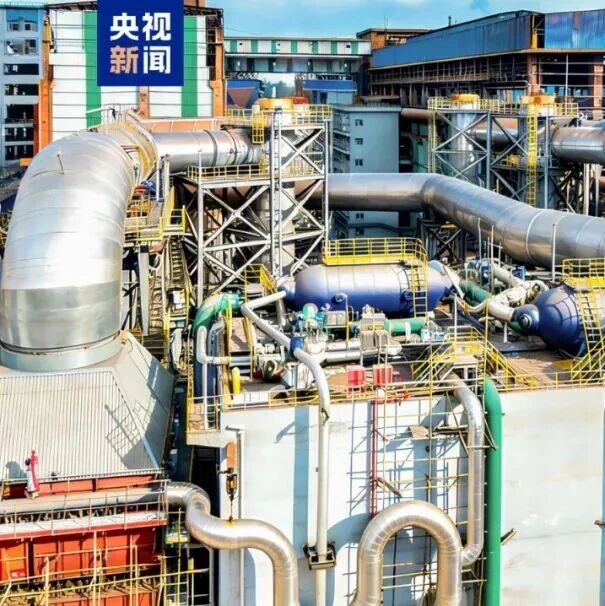
Core Viewpoint - The successful operation of the world's first commercial supercritical carbon dioxide power generation unit, "Super Carbon No. 1," marks a significant advancement in the commercialization of supercritical carbon dioxide power generation technology, transitioning from laboratory to practical application [2]. Group 1: Technology Overview - "Super Carbon No. 1" generates electricity by heating and pressurizing liquid carbon dioxide to a supercritical state, which allows it to store more energy and reduces flow resistance, leading to a simpler and faster response process compared to traditional steam generation methods [4][6]. - The supercritical carbon dioxide power generation process consists of four steps: compression, heating, expansion, and cooling, which collectively create a high-temperature, high-pressure environment to enhance internal energy [6]. Group 2: Efficiency and Output - Compared to existing sintering waste heat steam power generation technology, "Super Carbon No. 1" can improve power generation efficiency by over 85%, resulting in an additional annual output of more than 70 million kilowatt-hours [7]. Group 3: Future Applications - A new energy storage and power generation demonstration project combining molten salt storage and supercritical carbon dioxide power generation is expected to commence construction in Xinjiang in the first half of 2026, utilizing surplus wind and solar power [8]. - The supercritical carbon dioxide power generation technology has promising applications in offshore oil and gas drilling platforms and large vessels, offering advantages such as high efficiency, compact systems, fewer auxiliary systems, and a 50% reduction in space requirements [8]. - The technology is positioned to play a crucial role in energy conservation and carbon reduction efforts in traditional industries like steel and cement, which are significant energy consumers and carbon emitters [8].
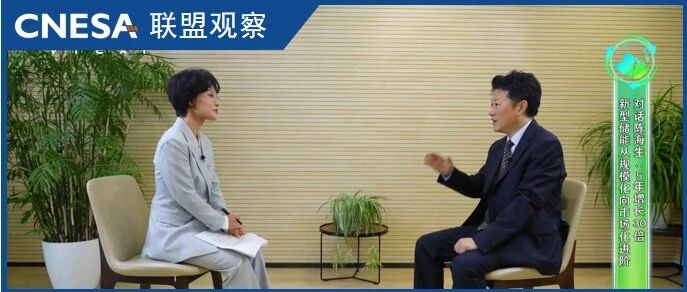
对话陈海生:新型储能5年增长30倍,未来企业创业和发展壮大的机遇期有多长?
中关村储能产业技术联盟· 2025-12-21 03:36
Core Viewpoint - The article discusses the rapid growth and transformation of China's new energy storage industry, highlighting its global leadership in installed capacity and the shift towards high-quality market development [2][5]. Industry Growth and Trends - As of mid-2023, China's new energy storage capacity reached approximately 95 million kilowatts, a nearly 30-fold increase over five years, accounting for over 40% of the global total [2]. - The demand for energy storage has surged due to the large-scale development of renewable energy, with pumped storage capacity growing from about 30 million kilowatts in 2020 to approximately 60 million kilowatts by mid-2025 [3]. - Lithium-ion batteries have seen their market share increase from 8% in 2020 to 60% currently, while pumped storage's share has decreased from nearly 90% to below 40% [3]. Market Dynamics - The lithium battery industry is experiencing price declines, with prices dropping more than the cost reductions achieved by many companies, leading to a polarized market where leading firms maintain profitability while others face losses [4]. - The storage industry is recognized as a trillion-yuan pillar industry with significant growth potential, as China leads in capacity, output, and patents [5]. Technological Developments - Solid-state batteries are anticipated to transition from liquid to semi-solid and eventually to solid-state technology, with mass production expected between 2025 and 2030 [6][7]. - Vehicle-to-grid (V2G) technology is seen as a promising development, allowing electric vehicles to interact with the grid and provide storage capacity, although challenges in technology and settlement mechanisms remain [8]. Applications in Construction - The "photovoltaic-storage-direct-flexible" technology allows buildings to become energy producers, but initial investment costs and regulatory standards need to be addressed for broader implementation [9]. Business Models - Different regions in China exhibit varying preferences for energy storage business models, influenced by local resource endowments and market demands [10][11]. - The shift from mandatory to voluntary energy storage integration in renewable projects is expected to enhance the quality of products and companies in the sector [12][13]. Future Outlook - The energy storage market is projected to grow significantly, with expectations of pumped storage capacity reaching 120 million kilowatts and new energy storage increasing to 200-300 million kilowatts by 2030 [16]. - The transition to a market-driven model for energy storage is essential, requiring improvements in technology, market structure, and pricing mechanisms to ensure sustainable investment [18].
两部门:电力中长期交易直接参与市场用户不再执行分时电价!
中关村储能产业技术联盟· 2025-12-20 02:18
Core Viewpoint - The article discusses the guidelines issued by the National Development and Reform Commission and the National Energy Administration for the signing and performance of medium- and long-term electricity contracts for 2026, emphasizing the importance of high-quality contract signing and flexible pricing mechanisms to ensure stable electricity supply and pricing. Group 1: Contract Signing Mechanisms - The document emphasizes the need to improve the quality of long-term electricity contract signing by implementing time-segmented and curve-based signing mechanisms, allowing for more accurate reflection of price signals across different time periods [1][9] - It encourages the signing of flexible pricing mechanisms that adjust according to market supply and demand and generation costs, rather than mandating fixed prices [2][10] Group 2: Cross-Province and Cross-Region Contracts - The notification requires that for cross-province and cross-region electricity delivery with clear priority generation plans, both sending and receiving parties must collaborate to fully sign annual medium- and long-term contracts, specifying monthly plans and delivery curves [4][8] - It also highlights the need for coordination among electricity trading centers to complete the signing of national contracts by December 25, 2025 [4][15] Group 3: Market Structure and Pricing - The document outlines that regions with operational electricity spot markets should have at least 24 trading time slots, while other provinces should optimize their medium- and long-term trading time slots based on actual electricity load curves [5][9] - It specifies that market participants directly involved in the market will not be subject to government-mandated time-of-use pricing [10] Group 4: Quality and Compliance in Contract Performance - The guidelines stress the importance of continuous and flexible trading within provinces, taking into account the characteristics of renewable energy generation and load [11] - It calls for the establishment of a robust mechanism to ensure high-quality signing and performance of medium- and long-term contracts, including a credit evaluation system for market participants [12][13]
电力中长期交易:直接参与市场用户不再执行分时电价!利好新型储能等灵活调节资源
中关村储能产业技术联盟· 2025-12-19 06:19
Core Viewpoint - The document outlines the guidelines for signing and fulfilling long-term electricity contracts for 2026, emphasizing the importance of high-quality contracts to ensure stable electricity supply and pricing in the market [6][7][8]. Group 1: Contract Signing Requirements - The document stresses the need for a high proportion of long-term electricity contracts, with coal-fired power plants required to sign contracts for at least 70% of the previous year's actual grid-connected electricity [7]. - For regions with tight electricity supply, local authorities may adjust the signing ratio upwards during peak seasons [8]. - The document mandates that electricity users should also ensure that their annual contract signing volume meets at least 80% of the expected electricity consumption [8]. Group 2: Improving Contract Quality - It is essential to enhance the quality of long-term contracts by implementing time-segmented and curve-based signing mechanisms, allowing for more precise reflection of price signals [9][10]. - The document encourages the adoption of flexible pricing mechanisms that reflect real-time supply and demand, rather than enforcing fixed prices [10]. - Regions are required to optimize the price formation mechanism, ensuring that market participants are not bound by government-mandated time-of-use pricing [10]. Group 3: Cross-Province and Cross-Region Agreements - The document requires that parties involved in cross-province and cross-region electricity transactions must fully sign annual long-term contracts and clarify monthly plans and delivery curves [3][8]. - It emphasizes the need for coordination between sending and receiving parties to establish stable inter-provincial electricity flows [3][8]. Group 4: Timeframe and Implementation - Local governments and the National Energy Administration are tasked with implementing these guidelines and must report their arrangements for the 2026 annual trading by December 10, 2025 [14]. - The Beijing and Guangzhou electricity trading centers are specifically mentioned to complete the signing of national long-term contracts by December 25, 2025 [3][14].
4519.56万元!河南2024年非独立储能项目省级奖励复核结果公示
中关村储能产业技术联盟· 2025-12-19 06:19
文 | 河南省发展和改革委员会 2025年12月18日,河南省发展和改革委员会此次公示了2024年度新建非独立新型储能项目的省级财政奖励复核结果,共涉及10个项目, 总 容量为376.63 MWh,累计发放奖励资金达4519.56万元 。若按此总额测算,平均奖励标准约为120元/kWh。 其中, 登封市联傲能源科技有限公司 的储能项目规模最大,核定容量达106.10 MWh,获批奖励1273.20万元,占总奖励金额的近三成,是此 次名单中单体获补金额最高的标杆项目。 原文如下: 关于2024年度新建非独立新型储能项目财政奖励资金省级复核结果的公示 按照《关于开展2024年度新建非独立新型储能项目省级财政奖励资金审核工作有关事项的通知》(豫发改办电力〔2025〕57号)要求,经委 托第三方机构评估,现将通过省级复核的项目和奖励资金予以公示。如有异议,请及时以书面或邮件形式实名向省能源局电力处反映。 附件:河南省2024年度新建非独立新型储能项目省级财政奖励资金省级复核情况表 河南省发展和改革委员会 2025年12月18日 | 序号 | 项目名称 | 核定容量 | 奖励金额 | | --- | --- | --- ...
世界500强伊藤忠正式入股未蓝新能源,强力拓展工商业储能
中关村储能产业技术联盟· 2025-12-18 23:00
文 | 深圳市未蓝新能源科技有限公司 近日,深圳市未蓝新能源科技有限公司(下称"未蓝新能源")宣布完成数千万人民币股权交割,新增股东为世界500强企业——伊藤忠商事株式 会社(下称"ITOCHU")。本次股权交割将为未蓝新能源在工商业储能领域的市场拓展注入强劲动力。 作为聚焦工商业电池储能产品及解决方案的高新技术企业,未蓝新能源成立于2019年,核心团队基因深厚——创始人宋峰及核心成员均源自比 亚迪电力科学研究院(EPRI),自2008年投身电池储能领域,已拥有超16年的技术研发与项目交付经验。创立至今,未蓝新能源先后获得原比 亚迪锂电高管天使轮投资和众为资本pre-A轮数千万投资等。目前,未蓝新能源已在英国和荷兰分别设立子公司,重点打造本地化的产品定义及 服务能力,旨在以电池储能为支点,全面聚焦用户侧分布式新能源资产智能运营与管理,持续为用户创造并提升价值;其产品与服务已成功覆盖 德国、瑞典、意大利、奥地利等30余个国家,且保持零事故应用纪录。 新股东ITOCHU成立于1858年,总部位于日本大阪和东京,系日本五大综合性商社之一。业务版图横跨能源、金融、消费品、ICT、重工业及 可再生能源等领域,在全球构建 ...
意大利西西里岛启动2.46亿欧元补贴,全面推动企业配置光储系统
中关村储能产业技术联盟· 2025-12-18 23:00
Core Insights - Italy's Sicily has announced a significant market boost by launching a tender for a total of €246 million (approximately $286.7 million) in special funding [3] - This initiative is part of the "Sicily 2021-2027 Development Plan" and the EU's "European Strategic Technology Platform" (STEP), focusing on "clean and resource-efficient technologies" [5] - The subsidy policy is highly open, allowing up to five entities (including research institutions) to form a consortium for application, and it welcomes European and international investors [6] Funding and Application Details - The first funding application window is set from December 15, 2025, to February 13, 2026, with companies passing initial administrative review allowed to submit final project documents [6] - This policy highlights the significant opportunities in the Italian and European energy storage markets and the demand for efficient global industrial chain integration [6] Upcoming Events - The 14th International Energy Storage Summit and Exhibition (ESIE 2026) will be held in Beijing from April 1 to 3, 2026, serving as a key platform for industry integration [6][8] - The summit aims to gather global partners, including European energy decision-makers and project investors, to explore cutting-edge technologies and innovative cooperation models [6]