混沌学园

Search documents
苹果AI,雷声大雨点小?看看苹果最新发布会背后有哪些AI产品
混沌学园· 2025-09-12 11:58
Core Viewpoint - The article discusses Apple's recent product launch and its implications for the company's AI strategy, highlighting the contrast between impressive hardware innovations and the underwhelming progress in AI capabilities, particularly with Siri [1][4][5]. Group 1: Product Launch Highlights - Apple's new iPhone Air features a remarkably thin design at 5.64 mm, crafted from aerospace-grade titanium, showcasing Apple's industrial design prowess [3]. - The launch event was marked by excitement and applause, reinforcing Apple's reputation for innovation in hardware [3]. Group 2: AI Strategy and Challenges - Apple's ambitious AI vision for 2024, which promised a unique integration of AI with personal data while prioritizing privacy, has not materialized as expected [7][8]. - User feedback on Apple Intelligence has been mixed, with many features described as convenient but lacking the transformative impact that was anticipated [8][11]. - The promised overhaul of Siri, envisioned as a powerful assistant capable of complex tasks, remains unfulfilled, leading to concerns about Apple's competitiveness in the AI space [8][11]. Group 3: Competitive Landscape - As Apple struggles with its AI advancements, competitors like Google have made significant strides, leading analysts to believe that Apple is falling behind in the AI race [11]. - Reports suggest that Apple may seek to leverage Google's Gemini model to enhance Siri, highlighting a potential reliance on competitors for AI capabilities [11]. Group 4: Current AI Features - The most utilized AI features in Apple products include writing tools for grammar and tone adjustments, priority notifications for managing alerts, and audio transcription for meetings [14][16][18]. - Creative tools such as photo cleanup and image generation are also popular, but these features are seen as basic compared to the more advanced AI capabilities offered by competitors [20][22][25]. Group 5: Hardware Innovations as AI Solutions - Apple is exploring hardware innovations, such as the new AirPods Pro 3, which incorporate AI for real-time translation and health monitoring, as a way to enhance the AI experience [28]. - The Apple Watch Series 11 utilizes AI for background health monitoring, demonstrating a shift towards integrating AI into wearable technology [30][33]. Group 6: Future Outlook - The article concludes that while Apple maintains a strong position in hardware, its AI strategy may be misaligned with the evolving demands of the AI landscape, which favors rapid iteration and open services [34][35]. - The disparity between Apple's hardware excellence and its AI capabilities raises questions about the company's future in the AI domain [36].



不办卡不推销,这家健身房如何“酷”出200+门店?
混沌学园· 2025-09-11 12:08
Core Viewpoint - The article discusses the dual challenges faced by founders in balancing company survival and quality management, highlighting the case of Super Monkey, a pioneer in the Chinese fitness industry, which successfully navigated multiple crises while maintaining high user and team recognition [2][8]. Group 1: Company Challenges and Strategies - Founders often confront two main questions: "Can the company survive?" and "Can it thrive after survival?" which involve cash flow, personnel, decision-making, quality, innovation, and culture [2]. - Super Monkey has managed to survive and thrive through challenges such as the pandemic, expansion missteps, and cash flow crises, maintaining high recognition among users and teams [2][8]. Group 2: Course Insights and Methodologies - The course will cover the founder's rapid decision-making and key choices, providing replicable management tools and practical governance methods, including how to establish safety and replicability through standards and systems [3][9]. - The course emphasizes the importance of corporate culture, illustrating that it is embedded in every decision and crisis, rather than just being a slogan on the wall [3][9]. Group 3: Practical Governance Tools - The course will introduce effective governance tools such as a quality control system, standards for good classes, and a KPI system for evaluating coach value, all of which are original and validated practices from Super Monkey [7][9]. - It will also explore how to activate individual sincerity and passion within the organization, using models to build a vibrant organization [9]. Group 4: Philosophical Reflections - The course will share deep reflections on the relationship between the quality of life for entrepreneurs and the health of the company, redefining what it means to "thrive" in business [9][10]. - It will address critical questions regarding the essence of thriving, crisis management, and the role of external expertise in company dynamics [10].

泡泡玛特爆火密码:为何“无用”却让人上瘾?
混沌学园· 2025-09-11 12:08
Core Viewpoint - The success of Pop Mart is attributed not just to selling toys, but to understanding and leveraging emotional value, which has become a key competitive advantage in the era of material abundance [1][11][19]. Group 1: Emotional Value - Emotional value is defined as the emotional benefits derived from products and services, driving positive consumer emotions and influencing purchasing decisions [12][28]. - The rise of emotional value is linked to societal changes, including ecological crises and economic instability, leading consumers to seek emotional fulfillment through products [45][46]. - Pop Mart's products serve as a means for consumers to escape reality and fulfill emotional needs, particularly among younger generations [29][60]. Group 2: Pop Mart's Business Model - Pop Mart's business model focuses on creating a community around collecting blind box toys, which fosters emotional connections and encourages repeat purchases [30][32]. - The company has successfully developed multiple IPs, reducing reliance on any single product and mitigating operational risks [32][33]. - Pop Mart's strategy includes a strong emphasis on social currency and community building, appealing to the emotional needs of its primary consumer base, the younger generation [37][39]. Group 3: Market Position and Growth - Pop Mart has expanded rapidly, with significant revenue growth, achieving 138.76 billion yuan in the first half of 2025, surpassing the total revenue of the previous year [19][28]. - The company has established a global presence, with plans to open 100 stores overseas by 2024, indicating a strategic approach to international market penetration [17][19]. - Pop Mart's unique approach to product development includes localizing designs to resonate with different cultural contexts, enhancing its appeal in international markets [55][57]. Group 4: Consumer Behavior and Trends - The primary consumer demographic for Pop Mart consists of the post-90s and post-95s generations, who prioritize emotional value and self-expression over traditional materialistic values [35][37]. - The shift in consumer behavior reflects a broader trend towards valuing emotional connections and community engagement, particularly in the context of social media and online interactions [39][40]. - Pop Mart's success is partly attributed to its ability to tap into the emotional and social needs of younger consumers, creating a vibrant community around its products [37][39].

祝所有老师节日快乐!
混沌学园· 2025-09-10 12:13
Core Viewpoint - The emergence of AI is likened to a beacon of hope in challenging economic times, presenting both opportunities and challenges for individuals and organizations to navigate this evolving landscape [3][4]. Group 1: Role of Educators - Educators are portrayed as essential figures in the transmission of knowledge and innovation, akin to Prometheus bringing fire to humanity, shaping minds and fostering curiosity [5][6]. - The narrative emphasizes that without educators, the transfer of both practical skills and abstract thinking would be impossible, highlighting their critical role in society [8][9]. - The impact of educators is illustrated through examples, such as Steve Jobs finding inspiration in a calligraphy class, which influenced Apple's design philosophy, showcasing the profound effect of teaching on innovation [5][10]. Group 2: Innovation and Knowledge Transfer - The text discusses the importance of effective knowledge transfer across generations, with educators serving as mediators in this process, even in the face of technological limitations [6][10]. - The mention of "Chaos" as an educational platform indicates a growing movement of innovative teaching, with over 600 educators contributing to the development of creative thinking among millions of students [10].

三位东北老铁,把AI创新热潮带进了哈尔滨!
混沌学园· 2025-09-10 12:13
Core Viewpoint - The article discusses the establishment of the Chaos AI Learning Centers in four cities in China, focusing on the collaborative efforts of local entrepreneurs to create a supportive learning environment for AI application and entrepreneurship [1][19]. Group 1: Learning Centers and Their Purpose - The first Chaos AI Learning Centers have been launched in Harbin, Chongqing, Tianjin, and Qingdao, aiming to explore real-world applications of AI [1]. - The Harbin Learning Center is designed to be a space for female entrepreneurs to connect and support each other, fostering a community of trust and collaboration [8][21]. - The learning centers aim to provide systematic business thinking and scientific methodologies to entrepreneurs in less resource-rich areas, helping them avoid pitfalls and achieve greater dreams [13][21]. Group 2: Founders and Their Experiences - The founders of the Harbin Learning Center, including Meng Siqi, Lan Qi, and Xiao Jun, are successful entrepreneurs in their respective fields, bringing diverse experiences to the center [3][12]. - Lan Qi emphasizes the importance of continuous supply of learning opportunities to keep participants engaged and motivated [13]. - Meng Siqi focuses on commercial innovation and aims to help local entrepreneurs embrace AI and enhance their capabilities [14]. Group 3: Community and Collaboration - The founders believe in the power of mutual support and collaboration, stating that trust among team members is essential for their collective success [10][17]. - They adopt a "three-person two-vote system" to address disagreements, ensuring that decisions are made in the best interest of the learning center and its participants [17]. - The community atmosphere in Harbin fosters a sense of belonging and encourages participants to share knowledge and resources [20][21]. Group 4: Future Vision and Mission - The mission of the Harbin Learning Center is to create a comfortable learning environment that attracts passionate individuals eager to grow and learn [21]. - The center aims to serve as a platform for sharing diverse perspectives and insights, ultimately enhancing creativity and productivity among entrepreneurs [21][23]. - The article concludes with a call for collaboration, highlighting the importance of community in driving innovation and growth in the AI era [23][24].

万亿即时零售市场,美团、阿里、京东谁将赢到最后?
混沌学园· 2025-09-09 12:06
Core Viewpoint - The intense competition among Meituan, Alibaba, and JD in the instant retail sector has led to significant market share shifts and financial impacts, with a combined subsidy investment exceeding 30 billion yuan, resulting in a profit decline of over 20 billion yuan for all three companies [2][3][12]. Market Dynamics - The instant retail market in China is projected to exceed 1 trillion yuan by 2025, with a total market size of 650 billion yuan in 2023, reflecting a growth of 9.46 times over five years and accounting for 4.2% of total online sales [3][19]. - Consumer habits have fundamentally changed, with nearly a quarter of consumers using instant delivery services more than ten times a month, indicating a strong demand for this market [3]. Competitive Landscape - Meituan holds a leading position with a market share of 65%, followed by Alibaba at 28% and JD at 7%, marking a shift from Meituan's previous dominance of 74% [2]. - The competition has intensified, with daily order volumes increasing from 80 million to 250 million due to aggressive subsidy strategies [11]. Company Strategies Meituan - Meituan's core advantage lies in its robust offline operational capabilities and mature delivery network, boasting the largest monthly average of 3.36 million delivery riders [5]. - The company aims to solidify its market position and expand into more local life services, with a projected GMV of over 400 billion yuan in 2024, reflecting a growth of over 30% [5]. Alibaba - Alibaba's strategy focuses on ecosystem synergy, integrating businesses like Ele.me and Fliggy into the Tmall Group to drive traffic to its slowing Taobao platform [6]. - The performance of Taobao Flash Purchase has been impressive, achieving a peak daily order volume of 120 million within four months and a 200% increase in monthly active users [6][7]. JD - JD differentiates itself by focusing on "quality delivery," leveraging its strong supply chain to enhance delivery efficiency and coverage [8][9]. - The company has been integrating its instant retail services to optimize resource allocation and improve operational efficiency [17]. Financial Impact - The aggressive competition has severely impacted profits: Meituan's adjusted net profit dropped by 89% to 1.49 billion yuan, JD's net profit fell by 50.8% to 6.2 billion yuan, and Alibaba's net profit decreased by 18% to 33.51 billion yuan [12]. Future Trends - The competition is expected to shift from subsidy wars to technology innovation and service upgrades, with increased investments in big data, AI, and IoT [19]. - Instant retail will expand into a wider range of product categories, including high-end luxury and customized goods [19]. - The industry may see consolidation as weaker platforms are eliminated or acquired, leading to increased market concentration [19]. Competitive Advantages - Meituan maintains a strong local life service network and diverse business structure, positioning it well for recovery once competition stabilizes [21]. - Alibaba's ecosystem synergy and strong cash reserves provide it with significant growth potential [21]. - JD's focus on quality and supply chain advantages positions it as a strategic player, albeit with a weaker stance in the delivery market [21]. Conclusion on Market Leadership - Based on current competitive dynamics, Alibaba is viewed as the most likely winner due to its ecosystem capabilities, followed by Meituan and JD [22].

AI重启行业:你的 “白日梦”,或许已在路上
混沌学园· 2025-09-09 12:06
Core Viewpoint - The article emphasizes that AI is not meant to replace humans but to liberate them, allowing a rediscovery of true values such as creativity, empathy, and innovative thinking [2]. Group 1: AI's Impact on Industries - Various industries are undergoing unprecedented transformations due to AI, which is lowering innovation costs and enabling previously unrealistic ideas to become feasible [2]. - Examples of ambitious ideas include designers wanting to create packaging that adapts to user emotions, programmers aiming to develop apps that understand local dialects, and teachers wishing to design customized courses that reflect local culture [2]. Group 2: Encouragement for Discussion - The article invites industry professionals to share their insights and dreams about how AI can reshape their respective fields, fostering a collaborative discussion on the potential of AI [3].

AiPPT创始人亲述:我如何用一张分析框架,找到被巨头忽视的百亿美金市场?
混沌学园· 2025-09-08 12:07
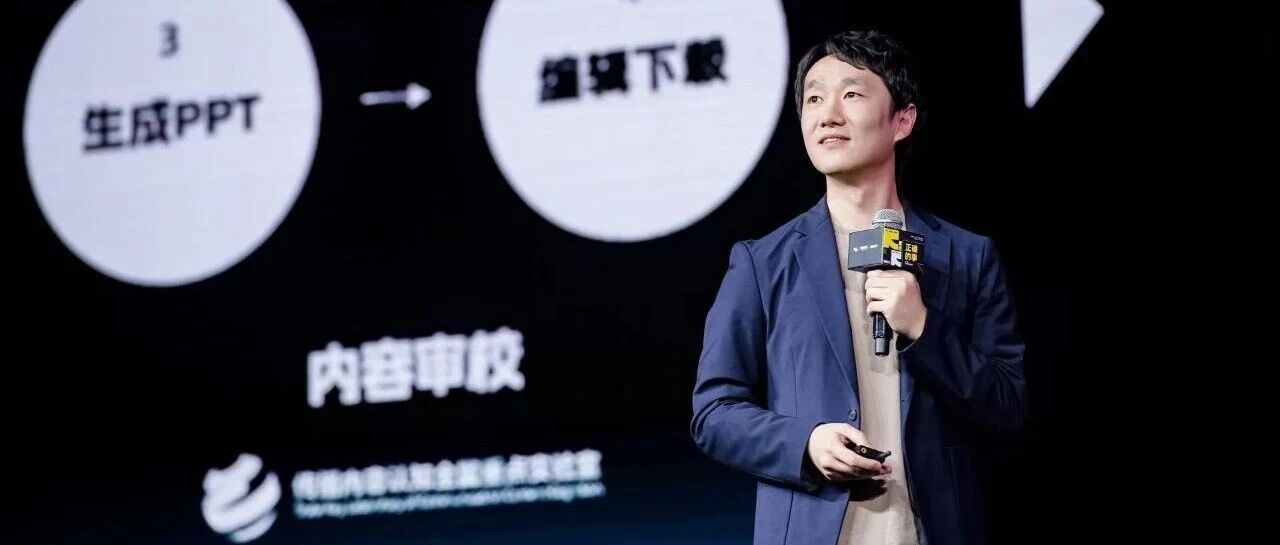
像素绽放 PixelBloom ( AiPPT.com )创始人 &CEO 赵充在混沌的课堂上这样讲到。 "我们的目标是在 12 个月之内干到 AI PPT 赛道的全球第一。" 8 月 30 日,像素绽放 PixelBloom ( AiPPT.com )创始人 &CEO 赵充做客混沌直播间,分享课程《 AI 时代的 生存法则:在巨头缝隙中野蛮生长》,为大家讲述了 AiPPT.com 20 个月从 0-2000 万用户的故事。 课程里,赵充的表达很真挚,他说我 不讲 AI 的想象力,不讲 AI 的宏大叙事,不讲如何用 AI 降本增效,只讲 如何用 AI 来创业 。他把 AiPPT.com 这款产品从 0 到 2000 万用户的整个流程全部拆解,毫无保留地分享给了 大家。 这不是吹牛,因为在 AI PPT 赛道 AiPPT.com 的市占率已经是全球第二,且它还在飞速增长中。 以下课程笔记近占课程内容的五分之一,完整内容请前往混沌 APP 观看。 赵充坚信出海也没有那么难,很多人以为没机会,是因为没用对"显微镜",一厘米宽的地方也能做到 100 米 深。 扫描下图二维码,观看完整课程 赵充是一名连续创业者,也是混 ...
黄仁勋的话白说了!
混沌学园· 2025-09-07 12:45
Core Viewpoint - The article discusses the geopolitical implications of AI talent competition, emphasizing that the true competition lies in the ability to attract and retain top talent rather than just technological advancements [5][17]. Group 1: AI Talent and Geopolitical Dynamics - Anthropic, a prominent AI company, has ceased services to "Chinese-controlled companies" due to legal and regulatory risks, highlighting the growing tensions in the AI sector [2][3]. - Huang Renxun, founder of NVIDIA, pointed out that 50% of global AI researchers are of Chinese descent, indicating a significant talent pool that the U.S. must consider in its strategic planning [6][8]. - The Hill & Valley Forum, established to address the strategic challenges posed by China's technological rise, serves as a platform for U.S. policymakers and tech leaders to discuss national security and AI [7][8]. Group 2: AI Research and Development Landscape - A report by Digital Science indicates that China produces nearly half of the world's AI research papers, establishing itself as a leading force in AI research [9]. - Chinese institutions like the Chinese Academy of Sciences and Tsinghua University have surpassed renowned U.S. institutions in AI paper citations, showcasing the quality of Chinese AI research [9][11]. - Despite the strong talent pool in China, many Chinese AI experts contribute to breakthroughs in U.S. companies, leading to a geographical disconnect between talent supply and value creation [11][12]. Group 3: National Strategies and Talent Flow - The U.S. government has implemented policies to restrict the flow of high-end tech talent, particularly targeting Chinese researchers, to protect national security and maintain technological dominance [8][13]. - China faces challenges in retaining its top talent, as many trained professionals contribute to U.S. technological advancements, raising concerns about the loss of strategic resources [13][14]. - The competition for AI talent has escalated to a national strategic level, with both countries recognizing the importance of controlling talent flow to secure technological advantages [13][17]. Group 4: Future of AI Ecosystem - The article suggests that the future AI landscape may become fragmented due to geopolitical tensions, leading to different AI ecosystems shaped by regional values and market needs [15][16]. - Companies are advised to adopt a global perspective in their talent strategies, establishing flexible organizational structures to mitigate geopolitical risks [16][17]. - The competition for AI talent is expected to intensify, with the ability to attract and retain top talent becoming a critical factor in determining future technological leadership [17].






从代码到资本:一部写给决策者的加密经济深度漫游指南
混沌学园· 2025-09-07 11:57
Core Insights - The article discusses the transformation of the cryptocurrency world into a significant player on the global financial stage, marked by three interconnected events: Circle's IPO, the signing of the GENIUS Act, and Hong Kong's push to become a Web3.0 hub [2][3][4]. Group 1: Key Events - Circle's IPO on the New York Stock Exchange, symbolizing the acceptance of stablecoins in traditional capital markets, saw its stock price surge over 168% on the first day [2]. - The signing of the GENIUS Act by President Trump established a clear regulatory framework for the stablecoin market, which has reached several hundred billion dollars [3]. - Hong Kong's implementation of the Stablecoin Regulation aims to attract top digital asset companies, marking the beginning of a global competition for financial influence [3]. Group 2: Blockchain Fundamentals - Blockchain is described as a "trust machine" that allows for the recording and confirmation of facts without relying on centralized intermediaries [8]. - The three revolutionary features of blockchain are decentralization, immutability, and transparency, enabling secure and trustworthy value exchanges among unknown individuals [11]. - Consensus mechanisms like Proof of Work (PoW) and Proof of Stake (PoS) are essential for the security and operation of blockchain networks, with PoS being more energy-efficient and environmentally friendly [12][13]. Group 3: Evolution of Digital Assets - The distinction between coins (native cryptocurrencies) and tokens (secondary assets built on existing blockchains) is crucial for understanding their respective roles in the ecosystem [21]. - Stablecoins emerged to address the volatility of cryptocurrencies, aiming to maintain a stable value by pegging to fiat currencies like the US dollar [23]. - The article outlines three main paths for stablecoin implementation: fiat-collateralized, crypto-collateralized, and algorithmic stablecoins, each with its own business model and risk profile [24][29][30]. Group 4: Centralized vs. Decentralized Exchanges - Centralized exchanges (CEX) operate similarly to traditional banks, providing user-friendly interfaces and high liquidity, but come with risks such as asset custody and regulatory compliance [41][44]. - Decentralized exchanges (DEX) allow for peer-to-peer trading without intermediaries, offering greater privacy and control over assets, but with complexities in user experience and potential security risks [45][49]. - The future trend is expected to be a fusion of CEX and DEX, leveraging the strengths of both to cater to different user needs [51]. Group 5: Real World Assets (RWA) - RWA refers to the tokenization of traditional assets on the blockchain, enabling greater liquidity and accessibility for investors [53][56]. - The tokenization of real-world assets is seen as a key driver for the next wave of growth in decentralized finance (DeFi), with the potential to unlock trillions of dollars in value [56]. - The rise of RWA presents a paradox where DeFi must accept some level of centralization and reliance on traditional legal frameworks to ensure asset value and ownership [60]. Group 6: Regulatory Landscape - The year 2025 is anticipated to be a pivotal moment for global regulatory frameworks surrounding cryptocurrencies, particularly stablecoins, with the US and Hong Kong leading the charge [63].