混沌学园

Search documents
被预言会“死”的传统写作巨头,Grammarly为何更值钱了?
混沌学园· 2025-09-19 11:58
Core Insights - The article discusses how Grammarly has successfully transformed itself in the face of competition from AI models like ChatGPT, evolving from a grammar-checking tool to a comprehensive AI productivity platform [2][23]. Group 1: Grammarly's Strategic Response - Grammarly not only survived the emergence of ChatGPT but executed a strategic counterattack by integrating generative AI features into its platform [2][7]. - The company launched "GrammarlyGO" in March 2023, allowing users to generate content and rewrite text directly within its interface, leveraging user-specific context and style preferences [7][8]. - Grammarly's long-standing commitment to data privacy and security has established a trust advantage over direct competitors like ChatGPT, making it a preferred choice for enterprises [8][12]. Group 2: AI Integration and User Engagement - Since its inception in 2009, Grammarly has utilized AI as a core driver, refining its writing assistance capabilities through machine learning and natural language processing [2][3]. - The platform has amassed over 30 million daily users and generated more than $700 million in annual revenue, creating a substantial data moat that enhances its AI models [3][4]. - Grammarly's integration with over 500,000 applications and websites has created an "AI highway," embedding its capabilities into users' daily writing processes [6][22]. Group 3: Vision and Future Direction - Under the leadership of new CEO Shishir Mehrotra, Grammarly has redefined its mission to become an "AI-native productivity platform," moving beyond traditional grammar checking [12][24]. - The company has made significant moves, such as acquiring Coda, to enhance its document creation capabilities and expand its AI-driven collaborative office ecosystem [14][24]. - Grammarly plans to introduce nine new AI assistants by August 2025, targeting academic and professional writing needs, further solidifying its position as a comprehensive writing assistant [20][21]. Group 4: Lessons for Entrepreneurs - Grammarly's journey illustrates the importance of redefining competitive advantages, emphasizing user trust and workflow integration over basic technological superiority [25]. - The company advocates for a "multiplicative model" approach, encouraging businesses to integrate new technologies with their core strengths rather than merely adding features [25]. - Transitioning from a tool to a platform that integrates deeply into user workflows is crucial for long-term sustainability and user retention [25].


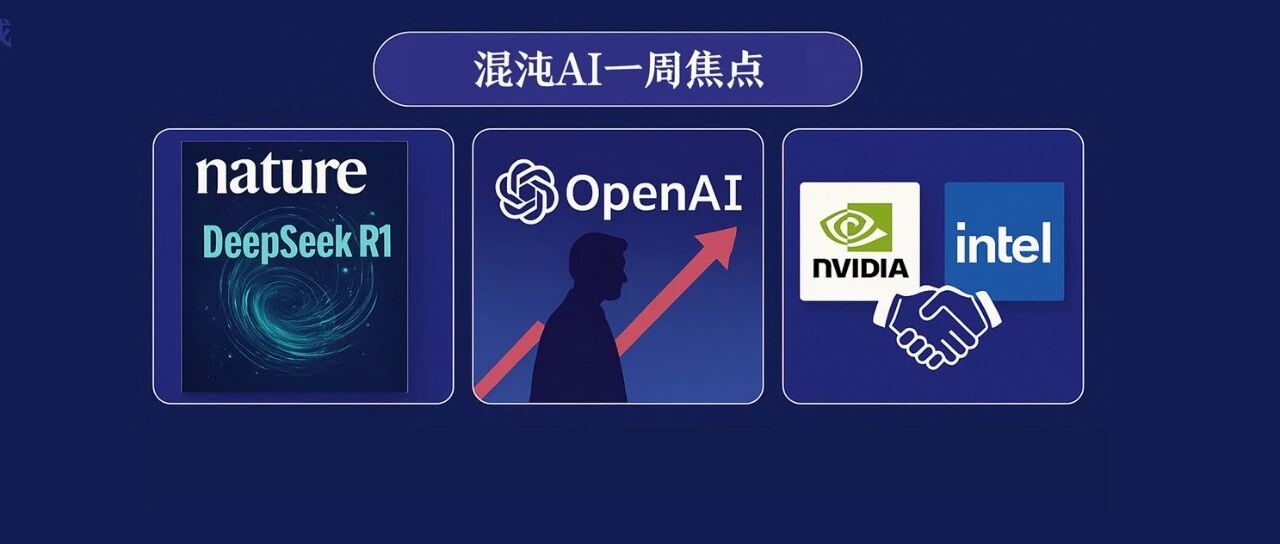
DeepSeek R1论文登上Nature封面;OpenAI顶尖人才出走;英伟达英特尔宿敌握手言和| 混沌AI一周焦点
混沌学园· 2025-09-19 11:58
Core Insights - Nvidia and Intel have formed a strategic partnership, with Nvidia investing $5 billion to acquire a 5% stake in Intel, leading to a 22% surge in Intel's stock price. The collaboration focuses on developing customized products for data centers and PCs, marking a significant shift in their competitive relationship [3][6][21]. Group 1: Technological Breakthroughs - DeepSeek's R1 model has been published in Nature, showcasing a training cost of approximately $294,000 and emphasizing the use of reinforcement learning instead of extensive manual data, setting a new standard for scientific transparency in AI [4][5]. - World Labs, founded by Fei-Fei Li, has released the Marble model, capable of generating persistent 3D worlds from a single image or text prompt, offering significant advancements in environmental modeling for various industries [9][10]. - Math's AI agent, Gauss, has achieved a formal proof of a complex mathematical theorem in just three weeks, a task that took a renowned mathematician 18 months, indicating a major leap in AI's capabilities in research [15][17]. Group 2: Industry Trends - The AI talent gap in China has exceeded 5 million, with a supply-demand ratio of 1:10, prompting a shift towards vertical AI competitions as a means to identify and cultivate practical talent [7][24]. - OpenAI's report reveals that ChatGPT has over 700 million weekly active users, primarily using the platform for practical guidance, information search, and writing, indicating its growing global reach and application [12][13][22]. - The 2025 Smart Expo highlighted five key sectors: intelligent robotics, low-altitude economy, smart homes, intelligent driving, and digital cities, showcasing the competitive landscape among major tech companies [14][16]. Group 3: Product Developments - The launch of the "ZhiYue Agent All-in-One Machine" aims to address information management challenges for CEOs, providing a localized solution that integrates with existing enterprise systems [10][23]. - Meituan has introduced its first life service agent, "Xiao Mei," which simplifies user interactions across various services, indicating a shift towards more personalized AI applications in local services [17][18]. - ByteDance has released Seedream 4.0, a powerful image model integrated into its AI creative agent, revolutionizing e-commerce marketing content production [19][20]. Group 4: Strategic Movements - The departure of prominent AI researcher Yao Shunyu from OpenAI signifies a shift in focus from enhancing model capabilities to creating valuable real-world applications, suggesting new opportunities for startups [19][22]. - The collaboration between Nvidia and Intel is seen as a restructuring of the core value network in the chip industry, indicating a move towards ecosystem collaboration rather than zero-sum competition [21][24].


起死回生后,她才知道企业文化绝不是虚的!
混沌学园· 2025-09-18 11:58
Core Viewpoint - Super Monkey has redefined the fitness industry in China through innovative business models and a focus on user experience, demonstrating resilience and adaptability during challenges such as the pandemic [2][3][4]. Group 1: Business Model and Growth - Super Monkey pioneered the pay-per-visit retail model in the Chinese fitness industry, significantly altering the cost structure and user engagement from 2014 to 2019 [6]. - The company reached a peak of over 200 stores, with daily class schedules averaging 11 to 14 sessions per classroom [6]. - During the pandemic in 2020, Super Monkey launched the "Super Monkey Stay-at-Home" initiative to support trainers and maintain engagement with users, resulting in a record single-day user recharge exceeding 1 billion RMB [7][6]. Group 2: Organizational Challenges and Innovations - After rapid expansion, Super Monkey faced challenges in maintaining quality and meeting user expectations, leading to a reassessment of its management approach [9][10]. - The company decided to part ways with external executives to refocus on its core strengths and internal capabilities [10]. - In 2022, the company faced low revenues despite opening new stores, prompting a strategic review and closure of underperforming locations [15][16]. Group 3: Quality Control and Standards - Super Monkey established a rigorous quality control system for its classes, introducing a random inspection mechanism to ensure high standards [20]. - The company identified six core elements for evaluating class quality, which included aspects like image, product, technique, sales, communication, and expressiveness [20]. - Following the implementation of these standards, class repurchase rates quickly returned to previous levels, indicating effective quality management [21]. Group 4: Company Culture and Values - The company emphasizes a culture of creativity and collaboration, encouraging employees to engage in meaningful work and fostering a sense of belonging [47][48]. - Super Monkey's culture is characterized by a commitment to doing "cool things" with like-minded individuals, which enhances employee satisfaction and engagement [47][48]. - The leadership believes that maintaining a strong company culture is essential for long-term success, focusing on hiring individuals who align with the company's values [41][42].

AI时代的新生存法则:别建灯塔,要造船
混沌学园· 2025-09-18 11:58
Core Insights - The article discusses the contrasting fates of two AI companies, Jasper and Notion, highlighting the importance of adaptability in the rapidly evolving AI landscape [1][3][20] - Jasper, once valued at $1.5 billion and experiencing rapid growth, faced a dramatic decline after the release of ChatGPT, leading to layoffs and a shift in business strategy [1][3] - In contrast, Notion embraced AI and saw its user base grow from 30 million to 100 million, demonstrating the potential for AI to enhance rather than hinder business [3][20] Group 1: AI's Impact on Business Models - The release of ChatGPT caused Jasper's traffic to drop by 40% within a month, showcasing the vulnerability of businesses with low barriers to entry [3][10] - The article emphasizes the need for companies to build adaptable business models ("ships") rather than static structures ("lighthouses") to survive in the AI era [7][16] - The discussion includes a metaphor about the changing nature of competition, where traditional barriers may no longer protect businesses from disruption [7][16] Group 2: Understanding AI's Evolution - The article outlines the rapid acceleration of AI technology, with ChatGPT reaching 100 million users in just two months, compared to seven days for DeepSeek [11][12] - It traces the evolution of AI from reliance on human rules to self-learning capabilities, marking a significant paradigm shift in technology [13][14] - The article posits that the introduction of AI as a foundational production element will fundamentally alter existing business rules and competitive landscapes [14][15] Group 3: Practical Applications and Strategies - The article stresses the importance of practical implementation of AI, advising businesses to assess their readiness and identify specific use cases [23][19] - It highlights successful case studies where AI has been effectively integrated into various industries, such as legal and automotive, improving efficiency and user experience [17][18] - The article concludes with a call to action for businesses to develop their own "AI flywheel" as a new competitive advantage, emphasizing the need for a structured approach to AI integration [18][23]

老,无所“依”|青山资本2025年度研究报告
混沌学园· 2025-09-17 11:58
Core Viewpoint - The article emphasizes the complexity and diversity within the elderly population in China, challenging the common narratives of aging as a homogeneous experience and highlighting the need for a nuanced understanding of their needs and behaviors [3][9][20]. Demographic Changes - Global population structures are undergoing significant changes, with median ages rising in both developed and emerging economies. By 2075, the median age in developed economies is projected to reach 47 years, while in emerging economies, it will be around 40 years [5]. - Life expectancy has increased globally, with the average rising from 62 years to 75 years over the past 50 years. In developed economies, it has risen from 72 years to 82 years, and in emerging economies, from 58 years to 73 years [7]. Aging in China - By the end of 2024, the elderly population (aged 60 and above) in China is expected to reach 310 million, accounting for 22% of the total population. The proportion of those aged 65 and above will be 15.6%, indicating that China has entered a deep aging society [9]. - The speed of aging in China is unprecedented, with the transition to a deep aging society occurring in just 21 years, compared to much longer periods in other countries [9]. Definition of Aging - Aging is a natural biological process experienced by nearly all animals. The concept of "elderly" has evolved from being a symbol of wisdom and authority in primitive and agricultural societies to a defined life stage in modern welfare states [15][16]. Internal Diversity of the Elderly Population - The elderly population in China is characterized by significant internal diversity, with varying experiences and backgrounds leading to different consumption behaviors and needs. This diversity is more pronounced than in previous or subsequent generations [18][20]. - Historical events and socio-economic changes have created distinct cohorts within the elderly population, leading to varying levels of education, health, and economic stability [21][24]. Consumption Patterns - The elderly population holds substantial wealth, with approximately 20% of global wealth owned by those aged 75 and above. In China, the total wealth of individuals aged 60 and above reached 78.4 trillion yuan in 2023 [28]. - The elderly exhibit a high savings rate of 60%, indicating a strong tendency towards precautionary savings. Their consumption patterns are influenced by their income, health status, and life experiences [29][31]. Market Opportunities - The elderly consumer market in China is vast and complex, with significant opportunities for businesses that can navigate its diversity. However, it is not a monolithic market, and understanding the nuances of different consumer segments is crucial for success [31][76]. - The article highlights the need for tailored products and services that address the specific needs of various subgroups within the elderly population, rather than a one-size-fits-all approach [76]. Digital Engagement - There is a significant digital divide among the elderly, with about 52% of those aged 60 and above being internet users. However, many remain excluded from the digital world due to various barriers, including lack of skills and access [78][80]. - The COVID-19 pandemic has accelerated digital adoption among the elderly, with many being forced to learn how to use smartphones and online services for essential tasks [84].

豆包为什么能反超DeepSeek?
混沌学园· 2025-09-16 12:01
Core Insights - The article highlights a significant turning point in the Chinese AI application market, with ByteDance's Doubao surpassing DeepSeek to become the leading native AI application with 157.42 million monthly active users, reflecting a 6.6% month-over-month growth [2] Group 1: Product Philosophy - The first principle of Doubao's product is to address user needs, focusing on the essential value of AI rather than technical competition, which differentiates it from other AI products [4] - Doubao's approach is more lifestyle and entertainment-oriented, making it accessible for a broader audience, including students and professionals, who use it for various purposes such as companionship and learning social skills [4] Group 2: Business Strategy - Doubao's success is attributed to ByteDance's "great effort leads to miracles" philosophy, leveraging massive traffic, professional data, and algorithmic advantages [6] - The application has benefited from significant advertising investments, with over 625 million ads placed in 2024, amounting to 1.5 billion yuan, enhancing its visibility and user acquisition [6] Group 3: Data and Model Development - Doubao is not a single text model but part of a family of models that includes text, video generation, and real-time voice capabilities, supported by ByteDance's extensive product ecosystem [7][8] - The introduction of the UltraMem sparse model architecture has improved inference speed by 2-6 times and reduced costs by up to 83%, enhancing Doubao's efficiency [7][8] Group 4: User Growth and Data Intelligence - The user base of Doubao has rapidly increased, with daily new users rising from 200,000 to 900,000 between May and July 2024, leading to over 160 million users by November 2024, providing vast data for model optimization [9] - The essence of AI products lies in data intelligence, creating a positive feedback loop where more users generate more data, making the AI smarter and attracting even more users [9] Group 5: Key Takeaways - Doubao's success illustrates the importance of returning to user scenarios, emphasizing that users prioritize practical solutions over technical specifications [10][11] - The core of data intelligence is the data flywheel effect, rather than isolated models, highlighting the need for AI applications to lower usage barriers for widespread adoption [11] - The story of Doubao serves as a reminder that the most fundamental answers often hold the most power in the evolving AI landscape [11]

北京大学教授胡泳:AI时代,“文科有用”
混沌学园· 2025-09-15 11:58
Core Viewpoint - The article discusses the impact of artificial intelligence (AI) on human intelligence, emphasizing the concept of "cognitive offloading" and the potential risks of over-reliance on AI tools [6][8][10]. Group 1: Cognitive Offloading and Its Implications - Cognitive offloading refers to the phenomenon where reliance on AI can lead to a decline in specific cognitive skills, such as memory and critical thinking [7][8]. - The article highlights that while AI can enhance efficiency, it may simultaneously suppress individual critical thinking abilities, leading to a dependency that diminishes problem-solving skills when AI is unavailable [9][10]. - The concept of "Flint Effect" is introduced, indicating that average IQ levels have been declining in recent years, potentially linked to factors like social media and AI reliance [10][11]. Group 2: The Role of Education in the AI Era - The article advocates for a shift towards "scoreless learning," suggesting that traditional grading systems should be replaced with more meaningful learning tasks that foster critical skills [19][20]. - It emphasizes the need for educational systems to cultivate abilities such as communication, collaboration, critical thinking, and creativity, which are essential in the AI age [22][23]. - The importance of humanities education is underscored, as it nurtures the unique human qualities that AI cannot replicate, such as empathy and personal experience [24][27]. Group 3: AI's Limitations and Human Uniqueness - The article argues that while AI excels in language processing and certain logical reasoning tasks, it lacks the depth of human intelligence, particularly in emotional and experiential understanding [15][17]. - It posits that AI's current capabilities do not equate to true understanding or consciousness, and there remains a significant gap between machine intelligence and human intelligence [16][18]. - The discussion includes the notion that AI-generated content often lacks the "soul" and diversity found in human-created works, raising concerns about the homogenization of creative expression [26][27].

半年亏损1000万后,他如何用一次性桶装水撕开千亿赛道丨创业者De故事
混沌学园· 2025-09-13 11:57
Core Viewpoint - The founder of Fujian Haoyiteng, Chen Yang, has successfully navigated the competitive bottled water industry by focusing on health-conscious drinking and adopting a differentiated business model of "large bottled water delivery + disposable empty bottles" to avoid direct competition with major national and local brands [2][5]. Group 1: Business Model Transformation - Chen Yang's entrepreneurial opportunity stemmed from a deep understanding of the connection between water and health, influenced by a report on water pollution and cancer during his high school years [5]. - In 2018, the company transitioned from a fresh milk delivery business to "natural spring water delivery," believing in the feasibility of this business model [5]. - The strategic decision to focus solely on large bottled water (12 liters and above) and not recycle empty bottles allowed Haoyiteng to avoid direct confrontation with traditional water companies from its inception [5][6]. Group 2: Competitive Landscape - The first layer of competition involves national water companies that rely on a retail model through distributors, while Haoyiteng employs a "self-operated delivery team + specialized delivery tools" model, making it difficult for giants to penetrate the household demand market [7]. - The second layer of competition highlights the limitations of capital and instant retail platforms, which can only handle products under 5 liters, while Haoyiteng focuses on the essential household product of 12 liters and above [8]. - The third layer of competition addresses the challenges faced by local water companies that use recyclable bottles, whereas Haoyiteng uses disposable PET bottles to eliminate cross-contamination risks and target family customers [9]. Group 3: Initial Challenges and Growth - In its early stages, Haoyiteng faced significant challenges, including a costly marketing strategy that involved giving away 200,000 to 300,000 bottles of water for free, resulting in a near-total loss of the initial investment of 10 million yuan [10][11]. - Despite these setbacks, the company maintained confidence in its business model, recognizing that the core competitiveness in the bottled water industry lies in the "operational system" rather than short-term marketing [11]. Group 4: Cost Structure and Operational Efficiency - Haoyiteng's use of disposable bottles, which cost over 5 yuan each compared to the 1 yuan cost of traditional recyclable bottles, is balanced by establishing factories near water sources to ensure quality and reduce transportation costs [13]. - The company offers a competitive price of 15 yuan for its large bottled water while maintaining reasonable profit margins, outperforming similar products from competitors like Nongfu Spring [13]. - By building its own delivery team, Haoyiteng has created a competitive moat, promising same-day delivery for orders placed before 4 PM and maintaining service even during adverse weather conditions [14]. Group 5: Embracing AI for Future Growth - Chen Yang's engagement with the Chaos AI Innovation Institute in 2024 has led to considerations for integrating AI technology into the delivery process, including route optimization, household water usage prediction, and smart customer service systems [15]. - This forward-thinking approach positions Haoyiteng to seize opportunities in an industry that has yet to fully embrace digital transformation, with AI seen as a key to redefining industry standards [15].

214亿!这位90后AI天才,太炸
混沌学园· 2025-09-13 11:57
Core Viewpoint - The article discusses the rise and challenges faced by Yang Zhilin, the founder of Moonshot AI, highlighting his journey from a top student to a prominent figure in the AI industry, and the competitive landscape shaped by DeepSeek's emergence. Group 1: Company Overview - Moonshot AI, founded by Yang Zhilin, focuses on developing advanced AI models, particularly the Kimi assistant, which supports long text inputs and has gained significant attention in the AI community [39][40]. - The company achieved a valuation of $3.3 billion by 2024, driven by its innovative AI solutions and substantial user engagement [42]. Group 2: Industry Context - The AI landscape in China has become increasingly competitive, with the emergence of DeepSeek disrupting the market and challenging existing players like Moonshot AI [45][56]. - DeepSeek's rapid success demonstrated the importance of cost efficiency and open-source strategies in gaining market share, contrasting with Moonshot AI's initial focus on advertising and user acquisition [57][58]. Group 3: Financial Performance - Moonshot AI's Kimi assistant saw a significant increase in monthly active users, rising from 4 million to 12.82 million within six months due to aggressive advertising spending [53]. - Despite the initial growth, the company faced challenges in maintaining its market position as competition intensified, leading to a decline in Kimi's market share [46][52]. Group 4: Technological Advancements - The release of Kimi K2 marked a significant technological advancement, being the first model with over a trillion parameters, which revitalized interest in Moonshot AI [63]. - Kimi K2's performance in evaluations positioned it among the top AI models globally, surpassing competitors and regaining attention in the tech community [64]. Group 5: Leadership and Vision - Yang Zhilin's leadership style emphasizes a blend of technical expertise and creative vision, drawing inspiration from his background in music and the arts [70][84]. - The company's culture reflects a commitment to innovation and a desire to push the boundaries of AI technology, aligning with Yang's long-term vision of transforming the industry [86].

Claude封锁中国,国产AI编程工具迎来黄金机会!苹果低调发布AI却引爆行业风潮 | 混沌AI一周焦点
混沌学园· 2025-09-12 11:58
Core Insights - Apple's recent product launch focused on hardware and user experience rather than AI, leading to positive market reception and raising questions about the relationship between AI features and product value [3][5] - The suspension of services by Anthropic and its Claude model in China presents significant opportunities for domestic AI programming tools like Tencent's CodeBuddy and DeepSeek, which are rapidly advancing in the market [4][6] - ASML's $1.5 billion investment in Mistral AI positions it as a leading AI company in Europe, emphasizing the integration of AI technology with semiconductor manufacturing [7][8] - Hinton's optimistic shift regarding AGI suggests a potential for AI to coexist with humanity, highlighting its applications in healthcare while cautioning against exacerbating social inequalities [8] - The AI application market is experiencing rapid growth, with a reported 1.7 billion downloads and a 67% year-on-year increase in in-app revenue, particularly driven by the Asian market [10][15] Business Trends - The rise of domestic AI tools is creating a golden opportunity for market entry as Claude restricts access to China, prompting entrepreneurs to focus on niche markets and customized solutions [18] - Mistral AI's success illustrates the effectiveness of a dual strategy of open-source user attraction and commercialization for revenue generation [19] - Deep integration of AI into vertical industries is essential for survival, as traditional applications face pressure from general AI assistants [20] - Entrepreneurs should monitor capital flows towards high-leverage areas such as AI memory, security, and voice interaction, which can drive broader innovation [21] - The intensifying competition necessitates the formation of cooperative ecosystems that bind partners, developers, and users into a value network [22]