混沌学园

Search documents
负债到年入6000万:他用中式炸鸡撕开行业红海丨创业者De故事
混沌学园· 2025-09-06 11:58
Core Insights - The article highlights the entrepreneurial journey of Wu Qingfang, the founder of the "Xu Xiaocheng" fried chicken brand, which has rapidly expanded to over 100 stores with an annual revenue of approximately 60 million [2][4]. Group 1: Market Opportunity and Business Model - Wu Qingfang identified critical flaws in the Korean fried chicken model, such as high investment costs and reliance on online sales, prompting him to innovate by adopting an operational model similar to that of braised food shops, which are more efficient and profitable [4][6]. - The brand "Xu Xiaocheng" was launched with a focus on combining the high profit margins of fried chicken with the operational efficiency of braised food shops, addressing market demand effectively [4][6]. Group 2: Growth Strategy and Marketing - The brand's rapid growth is attributed to its strategic use of new media, particularly Douyin (TikTok), which has generated significant customer interest and long queues at stores, enhancing brand visibility and sales [8][9]. - Differentiation from competitors like KFC and McDonald's is achieved by focusing on Chinese-style fried chicken, capitalizing on the rising trend of national culture, and introducing innovative product concepts such as "herbal thin batter" [9][10]. Group 3: Operational Efficiency and Innovation - To combat the challenges posed by the competitive delivery market, Xu Xiaocheng employs a factory-like approach to streamline operations, ensuring freshness and consistency while reducing costs [10]. - The brand has implemented a unique production model that separates delivery operations from traditional restaurant metrics, aiming for a profit margin of 15% by optimizing supply chain efficiency [10]. Group 4: Embracing Technology and AI - Wu Qingfang's engagement with AI and continuous learning through platforms like 混沌 (Chaos) has significantly influenced the brand's marketing strategies and operational processes [11]. - The integration of AI across various functions, including marketing and finance, is viewed as essential for the future of the restaurant industry, with a strong belief that companies must adapt to technological advancements to remain competitive [11].


突破1000万套!营收猛增67%!为什么是地平线?
混沌学园· 2025-09-06 11:58
Core Viewpoint - Horizon Robotics has demonstrated impressive growth with a 67.6% year-on-year revenue increase to 1.567 billion yuan in the first half of the year, alongside a remarkable gross margin of 65.4% [2][4] Financial Performance - The company has two main revenue sources: products and solutions, and software and licensing services, with both categories contributing nearly equally to total revenue [4] - Revenue from products and solutions surged 3.5 times year-on-year to 778 million yuan, with a shipment of 1.98 million units, where mid-to-high-end product solutions accounted for 49.5% of total shipments and contributed over 80% of revenue [4] - Software and licensing services generated 738 million yuan, reflecting a 6.9% year-on-year growth, serving over 30 automotive companies [5] Product Development - The Journey 6E chip has entered mass production, with initial models covering popular brands such as MG, Roewe, and Chery, and nearly 400 new models have been designated, over 100 of which feature mid-to-high-level assisted driving capabilities [6] - Despite expanding business scale leading to increased losses (operating loss of 1.592 billion yuan, net loss of 1.333 billion yuan), R&D investment reached 2.3 billion yuan, a 62% increase year-on-year, focusing on urban intelligent driving and cloud services [6] Strategic Methodologies - The company follows two fundamental strategic methodologies: competing in areas with no competition and avoiding risky ventures [9][10] - The first strategy emphasizes focusing on edge computing applications, such as robotics and smart vehicles, rather than competing directly with dominant players like NVIDIA [9] - The second strategy involves a strong emphasis on cash flow management, ensuring financial stability even during restructuring phases [10] Iterative Development - Horizon Robotics has undergone three iterations in its business strategy, evolving from a broad vision of becoming a leader in edge AI chips to a focused approach on automotive applications [15][17] - The first phase was marked by a lack of clear direction, leading to challenges in identifying practical applications for AI chips [16] - The second phase saw a pivot towards automotive chips, aligning with the industry's rapid growth and recognizing vehicles as the next generation of smart terminals [17] - The third phase shifted focus from basic functionality to emotional value, aiming to create products that resonate with consumers [19] Future Outlook - The company envisions a future where robots assist humans in various tasks, aiming to become a significant player in the robotics era, akin to Microsoft and Intel in their respective domains [21] - Horizon Robotics acknowledges the complexities of the commercial landscape and emphasizes the importance of understanding customer needs as a core principle of business design [23] - The journey over the past decade illustrates that successful companies can navigate through cycles by betting on unexplored territories while adhering to fundamental principles [24]

AI标识新规落地;红杉聚焦5大赛道与10万亿市场;美团、阿里加码技术护城河|混沌AI一周焦点
混沌学园· 2025-09-05 11:58
Core Insights - The article highlights the implementation of new AI content identification regulations in China, aimed at enhancing content credibility and combating misinformation [3][4][5] - Sequoia Capital's investment outlook emphasizes five key AI sectors with a projected market potential of $10 trillion, indicating significant growth opportunities in the AI industry [9][6] Regulatory Developments - The new AI identification regulations, effective from September 1, require explicit and implicit labeling of AI-generated content to mitigate the risks of misinformation [3][4] - The regulations are expected to drive compliance among AI platforms, potentially increasing operational costs for smaller companies and accelerating industry consolidation [4] Market Opportunities - Sequoia Capital identifies five focus areas for AI development over the next 12-18 months: persistent memory, seamless communication protocols, AI voice, AI security, and open-source AI [9] - The report predicts a tenfold to ten-thousandfold increase in computational power consumption by knowledge workers, creating substantial opportunities for emerging companies specializing in AI applications [9] Company Developments - OpenAI's acquisition of Statsig for $1.1 billion marks a strategic shift towards application commercialization, with a focus on enhancing ChatGPT and Codex products [9] - Meituan's launch of the Longcat-Flash-Chat model, featuring a 560 billion parameter architecture, demonstrates significant advancements in AI capabilities and cost efficiency [10][11] Performance and Challenges - Recent performance issues with GPT-5 and Claude 4.1 have raised concerns about model stability, highlighting the trade-offs between efficiency optimization and performance reliability [14] - The UItron multi-modal AI agent developed by Zhejiang University and Meituan has excelled in various evaluations, showcasing its capabilities in complex task execution [15] Financial Highlights - Alibaba's market value surged by $36.8 billion following positive Q2 earnings and rumors of a new AI chip, reflecting investor confidence in AI-driven growth [19] - Cloud-based AI company Yunzhisheng reported a 457% increase in revenue from its large model, indicating strong demand for AI solutions in various sectors [20] Industry Trends - The article discusses a shift from cost-focused strategies to building competitive advantages through compliance and ecosystem development in the AI industry [23][25] - The success of AI in healthcare, exemplified by the iAorta model, underscores the importance of integrating AI into existing market value chains rather than creating entirely new markets [26]


多邻国AI-First后的双刃剑:当友善的猫头鹰,做出最激进的商业决定
混沌学园· 2025-09-05 11:58
Core Viewpoint - Duolingo, a language learning app, is transitioning to an "AI-First" strategy, aiming to replace human contractors with AI, which has sparked backlash from loyal users who feel betrayed by this shift away from the app's original human-centric approach [3][6][36]. Group 1: Company Background and Growth - Duolingo started as a university research project with no revenue for five years and has grown into a "decacorn" with a market value exceeding $10 billion in less than a decade [2]. - As of Q2 2025, Duolingo boasts 128 million monthly active users, with a revenue growth of 41% year-over-year and a staggering price-to-earnings ratio of 200 [2]. Group 2: Strategic Shift to AI-First - The decision to pivot to an AI-First model was made by CEO Luis von Ahn, who emphasized the need to adapt to technological changes, similar to the company's previous successful shift to mobile [14][36]. - The core issue prompting this shift is a "value misalignment," where the company's mission to provide quality education clashes with its reliance on human content creators, leading to scalability and personalization challenges [13][19]. Group 3: Challenges and Limitations - Duolingo's content production has been historically slow and costly, taking 12 years to develop its first 100 courses, which is unsustainable for a rapidly expanding app [19]. - The reliance on human creators has resulted in a standardized learning experience, which contradicts the goal of personalized education [19][20]. Group 4: AI as a Solution - The introduction of generative AI is seen as a way to overcome the limitations of human content creation, allowing for rapid course development and personalized learning experiences [21][25]. - AI is expected to provide "unlimited production capacity," enabling the company to create courses in a fraction of the time previously required [25]. Group 5: New Business Model - The new business model combines gamified user engagement with generative AI, aiming to create a more personalized and scalable educational experience [33][34]. - The transition to AI is anticipated to enhance user retention and engagement by offering tailored content that resonates with individual interests [41]. Group 6: Market Reaction and Concerns - Following the announcement of the AI shift, Duolingo's stock price dropped by 38% within three months, indicating market skepticism about the company's new direction [39][48]. - Users have expressed concerns that the quality of AI-generated content may not meet the standards set by human creators, leading to a potential loss of the app's unique emotional value [47][48].

阿里达摩院闵蕾:做产品的逻辑已经变了!
混沌学园· 2025-09-04 11:58
Core Viewpoint - The article discusses how to achieve product innovation in the AI era by leveraging insights from top global companies' methodologies, emphasizing the importance of structured approaches in product planning, design, and promotion [10][42]. Group 1: Product Innovation Methodologies - The article highlights the product innovation methods of ten leading companies, including Apple, Amazon, Google, Tesla, Huawei, Alibaba, Tencent, ByteDance, Procter & Gamble, and Johnson & Johnson, each with unique frameworks and strategies [11][37]. - Commonalities among these companies include customer-centricity, iterative feedback, data-driven decision-making, cross-functional collaboration, and systematic processes [40][42]. Group 2: Specific Company Approaches - Apple employs a design-driven approach and the Apple New Product Process (ANPP), focusing on deep user insights and iterative prototyping [12][14]. - Amazon utilizes a reverse engineering method with PR/FAQ documents to clarify product concepts before development [18]. - Google implements OKR (Objectives and Key Results) and design sprints to align product development with its mission and ensure rapid iteration [20]. - Tesla applies first principles thinking and agile hardware development to enhance innovation speed [22]. - Huawei's "Five Looks and Three Decisions" method emphasizes comprehensive market analysis and systematic execution [24]. - Alibaba's middle-platform strategy standardizes capabilities for agile innovation across its business units [26]. - Tencent focuses on user value, a racehorse mechanism for product development, and agile methodologies for rapid iteration [28][29]. - ByteDance operates as an "application factory," emphasizing data-driven A/B testing for product development [31]. - Procter & Gamble prioritizes consumer insights and integrated marketing strategies [33]. - Johnson & Johnson maintains rigorous processes for product innovation across its healthcare sectors [35]. Group 3: Universal Product Innovation Framework - A universal product innovation framework is proposed, consisting of three stages: product planning, design and development, and promotion [42]. - In the product planning stage, companies should ensure the correctness of innovation directions through strategic opportunity analysis and deep market insights [43]. - The design and development stage focuses on creating a closed-loop value creation process, integrating definition, design, development, and validation [45]. - The promotion stage aims to maximize product value delivery to the market, drawing on successful strategies from leading companies [47]. Group 4: AI's Impact on Product Innovation - AI significantly shortens product innovation and iteration cycles, necessitating rapid learning and adaptation to maintain competitive advantages [50]. - In product planning, AI enables large-scale information insights, enhancing user and market analysis [51]. - For design and development, AI facilitates high-frequency iterative feedback, allowing for quick prototyping and user behavior analysis [54]. - In product promotion, AI enables personalized marketing strategies, enhancing user engagement and optimizing marketing content [55][56].





4000亿市值!泡泡玛特的底层商业原理
混沌学园· 2025-09-04 11:58
Core Viewpoint - The article discusses the recent stock price fluctuations of Pop Mart, highlighting its resilience and growth potential despite a temporary pullback, and emphasizes the importance of understanding its underlying business model to unlock value creation in the new consumption era [1]. Group 1: Market Dynamics - Pop Mart's market capitalization has increased from over 300 billion to over 400 billion, illustrating significant market interest and volatility [1]. - The founder, Wang Ning, notes that a daily fluctuation of two percentage points can lead to a change of 100 billion in market value, reflecting the dramatic nature of stock price movements [1]. Group 2: Business Model Insights - The article emphasizes the need for companies to address challenges related to overcapacity and consumer repurchase behavior in a market characterized by excess supply [1]. - Zhang Le, a key figure in the article, suggests that understanding consumer behavior and creating a sustainable business model is crucial for overcoming price competition [1]. Group 3: Course Content Overview - The course aims to dissect core issues in the consumption era, including strategies for companies to navigate from scarcity to overcapacity and the essence of generational consumption differences [6]. - It will explore the steps for "small but beautiful" brands to seize opportunities in the current market landscape [6]. Group 4: Learning Outcomes - Participants will learn how to quantify "emotional value" and apply it to product development [10]. - The course will provide tools to understand the emotional purchasing motivations of younger generations [8]. - Insights will be shared on the premium logic of "useless items" and how to drive repeat purchases [9].


这次阅兵式有多强?都在这15个关键词里了
混沌学园· 2025-09-03 04:23
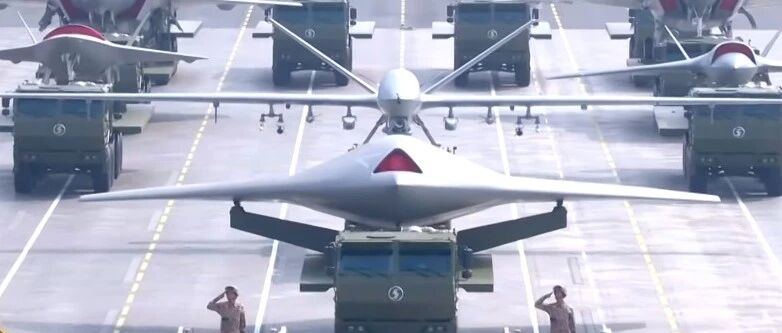
Core Viewpoint - The article discusses the highlights and key military equipment showcased during a recent military parade, emphasizing advancements in technology and the evolution of various military assets, particularly focusing on helicopters, tanks, missiles, and drones [4][6]. Group 1: Helicopters - The Z-20 helicopter, a 10-ton utility helicopter, is highlighted as a key model for the future of the military, having transitioned from a new entrant to a mainstay since its debut in the last parade [8][12]. - The Z-20T variant, equipped for assault, features wings and is designed to provide fire support for other helicopters during operations [12]. - Other helicopter models showcased include the Z-8, Z-10, and Z-19, each serving different roles within the military aviation framework [15][18]. Group 2: Tanks - The ZTZ-99A main battle tank, weighing nearly 60 tons and armed with a 125mm cannon, represents the pinnacle of ground combat vehicles, comparable to the US M1 Abrams [25]. - The ZTQ-15 light tank, weighing around 35 tons, is designed for operations in environments where heavier tanks struggle, showcasing a shift towards more versatile armored vehicles [27][28]. - The article introduces a new type of tank referred to as "Double Ridiculous," featuring an unmanned turret and advanced electronic systems for battlefield awareness and engagement [32][36]. Group 3: Missiles - The YJ series of anti-ship missiles, including YJ-17, YJ-18C, YJ-19, and YJ-20, were prominently featured, showcasing advancements in missile technology [48][49]. - The YJ-17 is noted for its high-speed capabilities, while the YJ-20 is designed for launch from various platforms, indicating a strategic enhancement in naval strike capabilities [58][60]. - The article emphasizes the importance of high-speed and maneuverable missiles in modern warfare, particularly in targeting moving naval assets [59][66]. Group 4: Laser Weapons - Laser weapons are highlighted as a cost-effective solution for modern defense, particularly against low-cost threats like drones and rockets, with the ability to engage targets without the high costs associated with traditional munitions [72][74]. - The article discusses the challenges of developing high-performance laser systems, which are now operational within the military [73][75]. Group 5: Drones - The introduction of loyal wingman drones signifies a shift in aerial combat, where these unmanned systems assist manned aircraft in complex combat scenarios [76][81]. - The article notes that these drones are not yet replacements for manned fighters but serve as critical support assets in modern air warfare [81][82]. Group 6: Advanced Aircraft - The J-20S, a dual-seat variant of the J-20 stealth fighter, is designed to enhance command and control capabilities in air operations, particularly in coordinating drone activities [85][87]. - The J-35, another fifth-generation stealth fighter, showcases the diversification of China's advanced aerial capabilities, with both naval and air force variants [89][90]. Group 7: Strategic Missiles - The Dongfeng-5C intercontinental ballistic missile, a key component of China's strategic nuclear deterrent, has been updated to carry multiple warheads for enhanced strike capability [137][139]. - The Dongfeng-61, a mobile strategic missile system, represents advancements in flexibility and rapid deployment for strategic operations [140][142]. Group 8: Transport Aircraft - The Y-20, China's largest transport aircraft, is evolving into various roles, including aerial refueling, indicating a significant enhancement in logistical capabilities [119][121]. - The Y-20B variant, equipped with advanced engines, marks a milestone in China's aviation technology, showcasing improvements in efficiency and performance [126][128].
AI咨询师2.0正式发布:洞察力,前所未有
混沌学园· 2025-09-02 11:58
Core Viewpoint - The launch of AI Consultant 2.0 marks a significant evolution in business analysis capabilities, aiming to provide strategic wisdom to enterprises, entrepreneurs, and investors by breaking down barriers of knowledge, cost, and efficiency [3]. Group 1: Cost Certainty - AI Consultant 2.0 introduces a fixed cost model for deep analysis, charging a consistent 500 points per analysis, eliminating hidden costs and ensuring budget control [6]. Group 2: Knowledge Depth - The new version boasts a powerful knowledge base, enhancing the quality of insights derived from data, which is crucial for strategic decision-making [8]. Group 3: Visualization and Analysis - AI Consultant 2.0 enhances the analysis process by generating optimal analysis paths and insights, transforming textual data into visual blueprints for clearer understanding [11]. - The platform integrates over 20,000 in-depth industry reports, providing refined professional insights rather than generic public information [12]. - The AI's ability to understand and remember uploaded documents has improved, allowing for personalized and customized consulting based on specific company reports and market research [13]. - Classic strategic analysis frameworks can now be visualized with a single click, improving clarity and efficiency in communication and reporting [13].

邵亦波谈AI与个人成长丨万字笔记
混沌学园· 2025-09-02 11:58
Group 1 - The article discusses the challenges and crises brought by the AI era, emphasizing the importance of personal growth and the new possibilities AI offers for human inner development [3][14][25] - It highlights the shift from a mechanical, efficiency-driven worldview to one that values emotional connection, meaning, and presence, contrasting Newtonian mechanics with quantum mechanics [15][19][21] - The article presents alarming statistics about the lack of meaning and connection in modern life, particularly among youth in countries like the UK and the US, where a significant percentage report feelings of loneliness and lack of purpose [22][23] Group 2 - The author suggests that AI, while a powerful tool, can lead to a more disconnected existence if not used consciously, as it operates purely on logic and data without understanding meaning [25][27][30] - There is a call for individuals to reconnect with their inner selves and emotions, advocating for practices that foster this connection rather than relying solely on external stimuli [31][32] - The potential for AI to assist in personal growth is acknowledged, with the idea that it can help individuals become more aware of their emotions and promote a deeper connection with themselves [34][35]

AI六小龙踩过的那些坑
混沌学园· 2025-09-01 11:58
Core Viewpoint - The emergence of the DeepSeekR1 model has highlighted the challenges faced by six prominent Chinese AI startups, collectively referred to as the "AI Six Dragons," which have experienced significant ups and downs in their development trajectories, including product shutdowns and talent loss [2] Group 1: Product Development Challenges - The AI Six Dragons have faced "product anxiety" and "ephemeral existence," with many AI applications launched in the past two years quickly disappearing due to lack of user research and high product mortality rates, particularly in virtual companionship and efficiency tools [3] - The C-end products are characterized by severe homogenization and lack of long-term viability, leading to wasted R&D resources and user fatigue [3] Group 2: Market Competition and Commercialization - The B-end market is dominated by large companies, making it difficult for the AI Six Dragons to monetize their products effectively, as seen with Baichuan Intelligent's shift to medical AI facing competition from established players like Huawei and Tencent [4] - Zero One's PopAI initially showed promise with a high ROI and significant user growth, but a rushed domestic version led to resource diversion and poor performance, resulting in key personnel departures and instability within the company [6] Group 3: Technological and Strategic Insights - The AI Six Dragons initially gained market share but faced pressure from low-cost models like DeepSeek, which changed industry dynamics and eroded competitive advantages [7] - Lessons learned from the AI Six Dragons include the importance of maintaining a clear strategic direction, prioritizing user experience over technical metrics, and balancing technology development with commercial viability [8] Group 4: Future Outlook - Despite the challenges, the AI Six Dragons have maintained positions in the global model intelligence rankings, indicating potential for future growth and adaptation in the evolving AI landscape [9] - The future of the domestic large model sector may not support all six unicorns simultaneously, but those that survive the current challenges may find opportunities for success in new verticals [12]