量子位

Search documents
下周三!量子位的这件大事就要来了|MEET2026
量子位· 2025-12-07 04:35
Core Insights - The MEET2026 Intelligent Future Conference is a significant event in the AI sector, featuring prominent speakers from academia and industry, including Tsinghua University and major companies like Baidu and Google Cloud [1][21][39] - The conference will cover a wide range of topics related to AI, including large language models, embodied intelligence, and cloud computing applications [3][39] - The event aims to provide practical insights and discussions on the current state and future of AI technology, focusing on real-world applications rather than theoretical concepts [33][34] Highlights - Highlight 1: The conference will feature a GenAI dialogue and an Agent roundtable, addressing pressing questions about AI's impact on industries and the evolution of autonomous technologies [5][8][12] - Highlight 2: Nearly thirty influential guests from academia and industry will participate, discussing the latest advancements and challenges in AI, including insights from Tsinghua University and leading tech companies [17][21] - Highlight 3: The event will release two important documents: the "2025 AI Top Ten Trends Report" and the "2025 AI Annual List," summarizing key developments and influential figures in the AI landscape [35][39] Event Details - The MEET2026 conference is scheduled for December 10, 2025, at the Beijing Jinmao Hotel, with a focus on how AI technologies are transforming various sectors [37][39] - The agenda includes a series of talks and discussions from industry leaders, covering topics from AI's role in enhancing productivity to the future of AI agents [41][42]





苹果芯片主管也要跑路!库克被曝出现健康问题
量子位· 2025-12-07 04:35
Core Viewpoint - Apple is experiencing significant executive turmoil, with key figures like Johny Srouji, the architect of Apple's self-developed chips, expressing intentions to leave the company, marking a critical moment for Apple's chip development strategy [1][3][10]. Group 1: Executive Departures - Johny Srouji, Apple's Senior Vice President of Hardware Technologies, has indicated he may leave Apple and join another company, making him the fourth executive to depart this month [3][10]. - Other notable departures include John Giannandrea, head of AI, and Alan Dye, Chief UI Designer, who has joined Meta [3][10][11]. - Alan Dye is recognized as a key figure in defining Apple's aesthetics post-Jony Ive and is now leading hardware, software, and AI interface integration at Meta [12]. Group 2: Internal Dynamics - Apple is reportedly trying to retain Srouji by offering increased compensation and even proposing a CTO position, which would place him as the second-in-command under CEO Tim Cook [8][9]. - The potential promotion of John Ternus, the current Senior Vice President of Hardware Engineering and a candidate for Cook's successor, complicates Srouji's situation, as he may not want to work under a different CEO [9][10]. Group 3: Leadership Restructuring - The recent executive changes are reshaping Apple's leadership structure, concentrating power among four key executives: John Ternus, Eddy Cue, Craig Federighi, and new COO Sabih Khan [18][17]. - The departures and restructuring come at a time when Tim Cook's health and future as CEO are under scrutiny, with discussions about who might succeed him intensifying [20][22].


Agent微调复活?英伟达开源8B新模型带飞GPT-5:在HLE狂卷37分,还把成本打下来
量子位· 2025-12-07 04:35
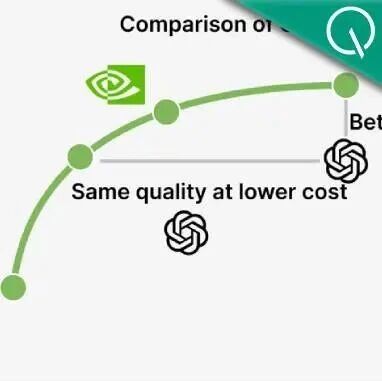
Core Insights - The article introduces a new paradigm in AI model orchestration, utilizing a smaller 8B model as a conductor to coordinate various tools and larger models, achieving better performance at lower costs [1][13]. Group 1: Model Performance - The Orchestrator-8B model achieved a score of 37.1% in the Humanity's Last Exam, outperforming GPT-5, which scored 35.1%, while also reducing computational costs by 2.5 times [1][9]. - In the FRAMES benchmark, Orchestrator-8B scored 76.3, compared to GPT-5's 74.0, and in the τ²-Bench, it scored 80.2 against GPT-5's 77.7 [9][10]. - The average cost for Orchestrator-8B was only 9.2 cents, with a latency of 8.2 minutes, significantly lower than GPT-5 [9][10]. Group 2: ToolOrchestra Framework - ToolOrchestra integrates various tools into a unified JSON interface, allowing the 8B conductor to think, call, and read feedback in multiple rounds until convergence [4]. - The framework employs GRPO reinforcement learning to maximize three rewards: correctness, efficiency, and user preference [4][5]. Group 3: User Preferences and Biases - The article highlights two biases in large models: self-enhancing bias, where models prefer to call upon similar models, and blind reliance on the strongest models, leading to increased costs [4][5]. - User preferences are taken into account, allowing the conductor to balance between local and cloud searches, speed, and cost [5][15]. Group 4: Application Scenarios - The Orchestrator-8B can be applied in various scenarios, such as internal Q&A and report analysis, where it defaults to local indexing and code execution for 80% of tasks [16]. - In research and development, it can set time and cost limits while considering source preferences [16]. - The framework allows for an end-to-end orchestration of functions and tools, moving away from rigid programming structures [16]. Group 5: Future Directions - The paper has made all code, models, and datasets publicly available for academic and industrial follow-up [14]. - The approach emphasizes a shift from relying solely on the strongest models to a more efficient use of diverse tools and models, enhancing cost-effectiveness and performance [15].

跨境电商的疑难杂症,被1688这个AI全包了...
量子位· 2025-12-07 04:35
Core Viewpoint - In the B2B sector, AI is rapidly evolving from a supportive tool to a genuine productivity driver that creates commercial value, particularly in cross-border e-commerce [1]. Group 1: Alibaba's 1688 Platform and AI Integration - Alibaba's 1688 platform is making significant investments in AI, launching various AI-native products to enhance its B2B supply chain capabilities [2][3]. - Over the past two decades, 1688 has connected over 1 million source factories with more than 100 million B-end buyers, establishing a robust B2B supply chain in China [5]. - The platform's annual transaction volume exceeds 800 billion yuan, with cross-border transactions accounting for over 200 billion yuan [6]. Group 2: Challenges in Cross-Border E-Commerce - Cross-border e-commerce involves three fundamental steps: product selection, procurement, and listing, each becoming exponentially more complex in an international context [7][8]. - Product selection is critical, as it can determine up to 50% of a cross-border e-commerce business's success, with the potential for significant revenue from trending products [10][11]. - Cultural and aesthetic differences across countries complicate product selection, making it challenging for domestic sellers to accurately predict consumer preferences [14][16]. Group 3: AI's Role in Product Selection - AI can streamline the product selection process by quickly analyzing vast amounts of data to identify potential products, significantly reducing the time required for traditional methods [21][24]. - For example, the AI tool "Aoxia" can provide quantitative market analysis and recommendations based on various metrics, transforming the selection process from intuition-based to data-driven [27][28]. Group 4: Procurement and Supplier Matching - The procurement process involves finding suppliers that can meet specific product requirements, which can be time-consuming and complex [30][31]. - AI can automate much of this process, allowing users to upload product images and receive matches from a database of suppliers, drastically reducing the time needed for supplier identification [36][38]. Group 5: Listing and Market Adaptation - Listing products for cross-border e-commerce requires adapting to various platforms and languages, which can be labor-intensive without AI assistance [41][43]. - AI can facilitate multi-modal content generation, enabling sellers to efficiently create listings that meet the diverse requirements of different platforms [46][51]. Group 6: Market Dynamics and Future Outlook - The cross-border e-commerce market is seen as a blue ocean compared to the saturated domestic market, with significant growth potential for those who can navigate its complexities [56][58]. - Despite the challenges, AI is positioned to bridge the gap between domestic sellers and international markets, making cross-border trade more accessible and efficient [80][82].


量子位编辑作者招聘
量子位· 2025-12-07 04:35
Core Viewpoint - The article emphasizes the ongoing AI boom and invites individuals to join the company "Quantum Bit," which focuses on tracking AI advancements and has established itself as a leading content platform in the industry [1]. Recruitment Opportunities - The company is hiring for three main directions: AI Industry, AI Finance, and AI Product, with positions available for both experienced professionals and fresh graduates [2][4]. - All positions are full-time and based in Beijing, Zhongguancun [2]. Job Responsibilities - **AI Industry Direction**: Focuses on innovations in infrastructure, including chips, AI infrastructure, and cloud computing [5]. - **AI Finance Direction**: Involves tracking venture capital and financial reports in the AI sector, monitoring capital movements within the industry [6]. - **AI Product Direction**: Concentrates on the application and hardware advancements of AI [6]. Benefits and Growth Opportunities - Employees will have the chance to engage with the latest AI technologies and tools, enhancing their work efficiency and creativity [6]. - The company offers a vibrant team environment, competitive salaries, and comprehensive benefits, including social insurance, meal allowances, and performance bonuses [6][12]. - New hires will receive mentorship from senior editors to accelerate their professional growth [6]. Company Impact and Reach - By 2025, Quantum Bit aims to have over 2.4 million subscribers on WeChat and more than 7 million users across all platforms, with a daily reading volume exceeding 2 million [12]. - The company is recognized as the top new media outlet in the AI and frontier technology sector according to third-party data platforms [12].

英伟达巧用8B模型秒掉GPT-5,开源了
量子位· 2025-12-06 05:40
闻乐 发自 凹非寺 量子位 | 公众号 QbitAI 英伟达端着一个8B小模型对GPT-5说: 不好意思,你还得练(bushi)。 何出此言?——英伟达携手香港大学开源的 Orchestrator-8B ,人类终极考试HLE分数更高、花钱更少、跑起来速度还更快。 哦对了,还在HuggingFace被狂赞,冲到了热门模型前五。 | Models 2,261,108 ( Filter by name | Full-text search ¥ Inf | | --- | --- | | Tongyi-MAI/Z-Image-Turbo | | | 136 Text-to-Image · Updated 3 days ago · ¿ 136k · † · ♡ 2.08k | | | deepseek-ai/DeepSeek-V3.2 | | | 17 Text Generation · .:: 685B · Updated 4 days ago · ¿ 8.69k · ↓ · ♡ 714 | | | � deepseek-ai/DeepSeek-V3.2-Speciale | | | 17 Text Generati ...

SpaceX估值8000亿美元超OpenAI,IPO就在明年
量子位· 2025-12-06 05:40
Core Viewpoint - SpaceX is negotiating a new round of internal stock sales that could increase its valuation to $800 billion, potentially making it the highest-valued private company globally, surpassing OpenAI's $500 billion valuation [1][3][13]. Valuation and Financials - The anticipated valuation of $800 billion (approximately ¥5.66 trillion) is nearly equivalent to Switzerland's GDP of $900 billion [2]. - SpaceX's valuation has doubled from $400 billion in July 2023 to $800 billion in less than six months [4][11]. - The company is expected to generate $15.5 billion in revenue for the year, slightly exceeding OpenAI's projected revenue of $13 billion [27][28]. Business Operations - SpaceX, founded in 2002, focuses on aerospace and space transportation, aiming to reduce launch costs and facilitate human colonization of Mars [6][7]. - The company has established a dominant position in the rocket launch market, collaborating with commercial satellite companies and NASA [19]. - SpaceX's satellite business, particularly through its Starlink division, is a significant driver of its high valuation, with approximately 9,000 satellites in orbit [25]. Future Prospects - SpaceX is reportedly planning an IPO in the second half of next year [17]. - The company is advancing its next-generation fully reusable rocket, Starship, which is intended for missions to Mars and beyond [21][22]. - There is speculation that SpaceX may package its rocket and satellite businesses together for the IPO, rather than spinning off Starlink as a separate entity [26].

图像编辑缺训练数据?直接从视频中取材,仅用1%训练数据实现近SOTA效果
量子位· 2025-12-06 03:21
Core Viewpoint - The article presents a novel approach to image editing by redefining it as a degenerate temporal process, leveraging video data to enhance the efficiency and effectiveness of image editing tasks [1][4]. Group 1: Current Challenges in Image Editing - Existing image editing methods based on diffusion models require large-scale, high-quality triplet data (instruction-source image-edited image), which is costly and fails to cover diverse user editing intents [3]. - There is a fundamental trade-off between structure preservation and texture modification; emphasizing one can limit flexibility while pursuing significant semantic changes may lead to geometric distortions [3]. Group 2: Video4Edit Approach - The Video4Edit project team redefines image editing as a special degenerate form of video generation, allowing for the extraction of knowledge from video data [4]. - By modeling the image editing task as a two-frame video generation process, the source image is treated as frame 0 and the edited image as frame 1, enabling the model to learn from video data and improve data efficiency [6][9]. Group 3: Knowledge Transfer and Efficiency - The use of single-frame evolution prior from video pre-trained models allows for the natural incorporation of structural preservation and semantic change balance mechanisms [7]. - The model learns to align editing intents rather than starting from scratch, leading to efficient parameter reuse and improved data efficiency [12]. Group 4: Data Efficiency Analysis - Introducing video priors significantly reduces the entropy of the hypothesis space, enhancing effective generalization capabilities [15]. - The temporal evolution-based fine-tuning offers higher sample efficiency, explaining why only about 1% of supervised data is needed to achieve convergence [16]. Group 5: Performance Evaluation - Video4Edit has been systematically evaluated across various image editing tasks, including style transfer, object replacement, and attribute modification, demonstrating its ability to accurately capture target style features while preserving source image structure [17]. - The model achieves comparable or superior performance to baseline methods using only 1% of the supervised data, indicating a significant reduction in dependency on labeled data while maintaining high-quality editing results [21][23].

14岁华人小孩,折个纸成美国天才少年
量子位· 2025-12-06 03:21
Core Viewpoint - A 14-year-old Chinese-American boy, Miles Wu, earned $25,000 through an innovative origami design that can support over 10,000 times its own weight, showcasing exceptional talent and creativity in engineering origami [2][14][17]. Group 1: Achievement and Recognition - Miles Wu won the highest award at the JIC (Thermo Fisher Scientific Junior Innovators Challenge) with a prize of $25,000, standing out among nearly 2,000 applicants [5][6]. - His project was developed independently without professional guidance or laboratory resources, highlighting his self-driven approach [7][8]. Group 2: Origami Innovation - The key to Miles' success lies in the "Miura fold," a unique engineering origami structure invented by Koryo Miura, which has applications in satellite solar panels and NASA's foldable solar arrays [10][11]. - Miles created a new variant of the Miura fold that can support its weight over 10,000 times, equivalent to a structure that could hold over 4,000 elephants [14][15]. Group 3: Practical Applications - Miles aims to design a quickly deployable emergency shelter based on the Miura fold, addressing the challenges of reliability, portability, and deployment speed in current emergency supplies [21][30]. - The Miura fold's characteristics, such as single degree of freedom, overall load distribution, and high compression ratio, make it suitable for emergency situations [34][36][37]. Group 4: Experimental Process - Miles transformed his living room into a makeshift laboratory, conducting rigorous tests on various origami models to determine the optimal design for strength and weight [40][41]. - After testing 54 folding variants and 108 rigorous tests, he identified the best-performing design, which surprisingly used ordinary copy paper [47][49].

量子位编辑作者招聘
量子位· 2025-12-06 03:21
Core Viewpoint - The article emphasizes the ongoing AI boom and invites individuals to join the company "Quantum Bit," which focuses on tracking AI advancements and has established itself as a leading content platform in the industry [1]. Group 1: Job Opportunities - The company is hiring for three main directions: AI Industry, AI Finance, and AI Product, with positions available for both experienced professionals and fresh graduates [2][4]. - Positions are open for various levels, including editors, lead writers, and chief editors, with a focus on matching roles to individual capabilities [6]. Group 2: Job Responsibilities - **AI Industry Direction**: Responsibilities include tracking innovations in infrastructure, such as chips, AI infrastructure, and cloud computing, as well as interpreting technical reports from conferences [6][7]. - **AI Finance Direction**: Focuses on venture capital, financial reports, and capital movements within the AI industry, requiring strong analytical skills and a passion for interviews [11]. - **AI Product Direction**: Involves monitoring AI applications and hardware developments, producing in-depth evaluations of AI products, and engaging with industry experts [11]. Group 3: Benefits and Work Environment - Employees will have the opportunity to engage with cutting-edge AI technologies, enhance their work efficiency through new tools, and build personal influence in the AI field [6]. - The company offers competitive salaries, comprehensive benefits including social insurance, meal allowances, and performance bonuses, along with a dynamic and open work culture [6]. Group 4: Company Growth and Reach - By 2025, Quantum Bit aims to have over 2.4 million subscribers on WeChat and more than 7 million users across platforms, with a daily reading volume exceeding 2 million [12].