机器人大讲堂

Search documents
成功率拉升40%!精度杀入0.3mm!视比特黑科技SmatFit引领汽车门盖装调的AI变革!
机器人大讲堂· 2025-07-14 03:36
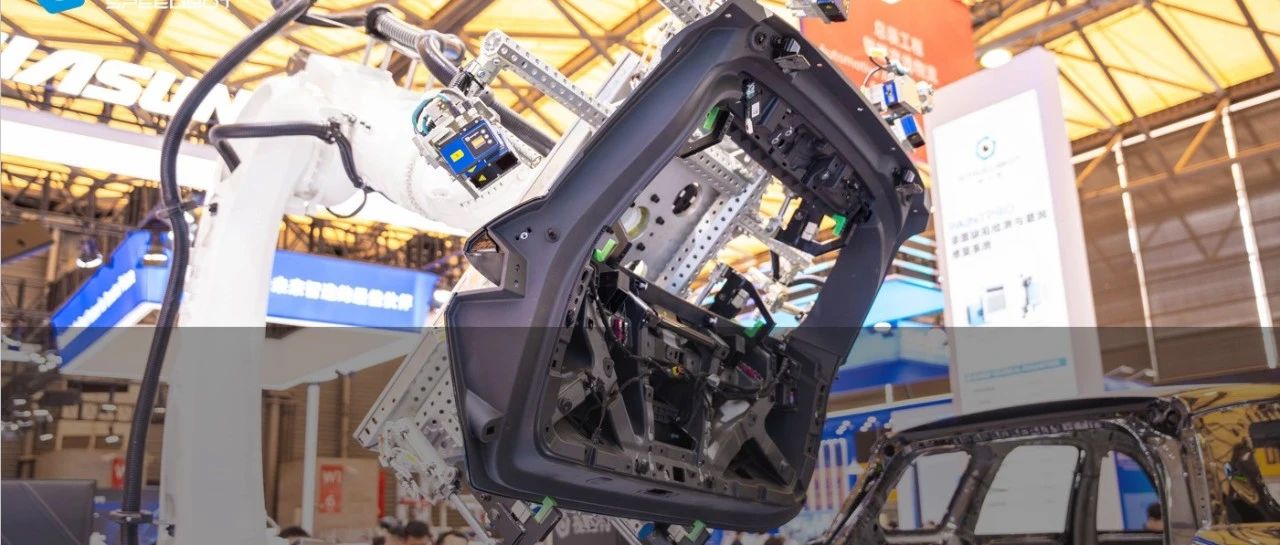
Core Viewpoint - The automotive manufacturing industry is undergoing unprecedented transformation due to the deep integration of robotics technology and intelligent manufacturing, with global investment in smart manufacturing expected to reach $120 billion by 2025, highlighting the importance of intelligent transformation for enhancing core competitiveness [1] Group 1: SmartFit System Overview - The SmartFit automotive door and cover intelligent adjustment system utilizes line laser and dual-camera configurations, achieving a repeatability precision of 0.05mm, capable of identifying various features such as gaps and height differences, suitable for automated adjustments in automotive assembly lines [3] - The system includes modules for door cover adjustment, hinge adjustment, and bolt tightening, maintaining adjustment precision within ±0.3mm, which is superior to conventional industry standards, with a single adjustment cycle of ≤1s and total adjustment time of ≤7s [5][6] Group 2: Precision Control and AI Integration - The precision level of door cover adjustments directly impacts vehicle quality and performance, with conventional automated systems typically achieving precision between ±0.5mm and ±1mm, while SmartFit achieves ±0.3mm, marking a significant improvement [6] - The SmartFit system employs AI algorithms for robust measurement of gaps and surface differences, allowing for optimal fitting of door covers to vehicle bodies without reliance on reference vehicles, enhancing production line flexibility and quality [8] Group 3: Hinge Adjustment and Monitoring - Hinge adjustments utilize a distributed vision system for multi-dimensional error monitoring, enabling real-time measurement of dimensional errors and optimal adjustment calculations, thus improving assembly quality and process stability [10] Group 4: Virtual Debugging and Cost Efficiency - The SmartFit system leverages a self-developed digital twin platform for virtual scene development and model training, utilizing a low-code development approach combined with pre-trained models to enhance development efficiency and reduce deployment costs [12] Group 5: Broader Intelligent Manufacturing Solutions - SmartFit has been successfully implemented in multiple automotive manufacturers, achieving fully automated adjustments for rear and tail doors while meeting production cycle requirements of 76 seconds [14] - The company also offers a range of intelligent manufacturing solutions covering key processes in automotive production, including welding, polishing, and inspection, with innovative technologies such as 3D vision for welding seam recognition and robotic force control for polishing [16][18] Group 6: Future Outlook - The development of robotics technology and intelligent manufacturing is profoundly changing the automotive manufacturing landscape, with a shift from traditional manual operations to automation, digitalization, and intelligence, leading to improved production efficiency and product quality [19][20]

Science Robotics重磅:软体机器人终于能拧螺丝了!MIT等团队让章鱼臂也能传递扭矩
机器人大讲堂· 2025-07-13 07:22
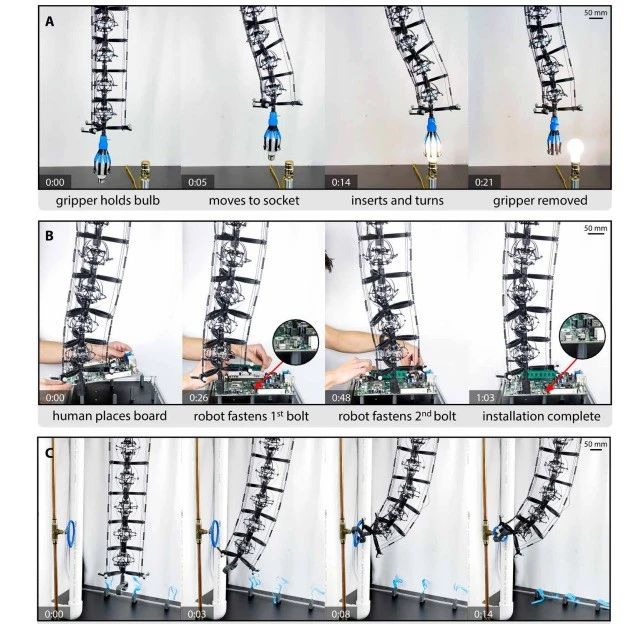
Core Viewpoint - The research team from MIT and Northeastern University has developed a soft robotic arm that combines flexibility and torque transmission capabilities, overcoming the traditional dichotomy between soft and rigid robots [3][19]. Group 1: Technological Breakthrough - The new soft robotic arm utilizes a mechanical metamaterial called TRUNC (Torsionally Rigid Universal Coupling), which allows for continuous torque transmission while maintaining flexibility [3][4]. - TRUNC exhibits a torsional stiffness that is 52 times greater than its bending stiffness, achieving a balance of softness and rigidity where needed [4][6]. - The design is inspired by natural structures, particularly plant stems, which can exhibit varying stiffness in different directions [6][19]. Group 2: Practical Applications - The TRUNC mechanism has been successfully tested in practical applications, such as drilling screws into wood at a 45-degree angle with an efficiency of 85.7% [7]. - The system can be combined into more complex structures, allowing for flexible drive shafts that can transmit torque along curved paths while maintaining a high degree of stiffness [8][10]. - A complete soft robotic arm system has been constructed, demonstrating high precision in positioning and trajectory tracking, with a standard deviation of 2.1 mm and 0.1 degrees in random point positioning tests [11]. Group 3: Demonstration Tasks - The robotic arm successfully completed three demonstration tasks: installing a light bulb, collaborating with a human to secure a motherboard, and operating a valve in a confined space [14][15]. - These tasks highlight the arm's ability to perform complex operations that traditional soft robots struggle with, showcasing its potential for safe human-robot collaboration [19]. Group 4: Future Prospects - The TRUNC technology has significant potential across various fields, including warehouse automation, extreme environments, and medical applications, where both safety and operational capability are crucial [21]. - The research indicates a shift in robotic design paradigms, emphasizing structural design over material properties to achieve desired mechanical characteristics [21][22]. - While the current system is complex and costly, ongoing research and engineering optimizations are expected to address these challenges, paving the way for broader applications [21].
机器人也能拥有生物思维?“BioMARS系统”让机器人生物学家成真!
机器人大讲堂· 2025-07-13 07:22
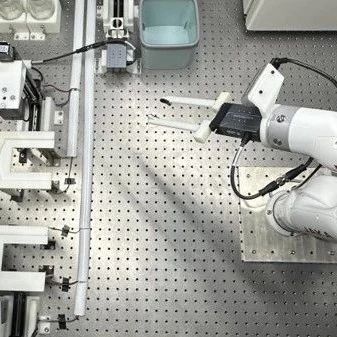
Core Viewpoint - The article discusses the development of the BioMARS system, which integrates natural language processing, computer vision, and modular robotics to automate biological experiments, overcoming limitations of traditional automation tools [1][21]. Group 1: BioMARS System Overview - BioMARS addresses common laboratory pain points such as literature review fatigue, execution errors from traditional robots, and difficulties in optimizing experimental parameters [2][3]. - The system consists of three core components: Biologist Agent, Technician Agent, and Inspector Agent, each with distinct roles in the experimental process [3]. Group 2: Biologist Agent - The Biologist Agent acts as the planner, automatically retrieving and understanding relevant literature to generate experimental plans based on laboratory resource constraints [6][3]. Group 3: Technician Agent - The Technician Agent serves as the executor, converting natural language experimental plans into executable instructions for robots, ensuring logical coherence and practical execution [7][3]. Group 4: Inspector Agent - The Inspector Agent functions as the supervisor, utilizing computer vision for multi-stage perception and error detection, enhancing reliability and safety by identifying operational deviations [10][3]. Group 5: Experimental Results - In comparative experiments with HeLa, Y79, and DC2.4 cell lines, BioMARS demonstrated significant advantages, achieving similar cell survival rates and morphology integrity as manual operations while improving reproducibility [11][12]. - Automation reduced the manual operation time for cell line passage from 60 minutes to 5-8 minutes, validating the system's feasibility and efficiency [12]. Group 6: Optimization Capabilities - Beyond executing preset experimental plans, BioMARS possesses advanced biological optimization capabilities, adjusting growth factor concentrations and culture times based on previous failures to enhance differentiation efficiency [17][18]. - The system employs decision-making strategies that incorporate biological knowledge, reducing reliance on manual tuning and providing scalable solutions for complex biological systems [18]. Group 7: Conclusion and Future Outlook - BioMARS represents a new generation of automated experimentation, integrating reasoning capabilities and marking a shift towards AI-native approaches in life sciences, potentially transforming high-throughput cell culture and drug screening processes [21].
90万欧元“白菜价”!中国上市公司抄底成功!买到Pepper和Nao,未来将投入2800万欧元运营
机器人大讲堂· 2025-07-13 07:22
Core Viewpoint - The acquisition of Aldebaran's core assets by Shengshi Technology for €900,000 (approximately ¥7.5 million) is seen as a strategic move that could reshape the global humanoid robot market, providing Shengshi with a well-known brand and technology heritage [1][2][4]. Summary by Sections Acquisition Details - Shengshi Technology successfully acquired Aldebaran's core assets, including the Nao, Pepper, and Plato robot series, along with technical documents, patents, trademarks, domain names, source code, designs, and inventory [1][2]. - The total investment for Shengshi, including debt repayment and operational costs in France, is expected to be no more than €28 million (approximately ¥234 million) [2]. Background of Aldebaran - Aldebaran, founded in 2005, was a pioneer in the commercialization of humanoid robots, achieving significant sales and recognition globally [2][4]. - The company faced financial difficulties, leading to multiple ownership changes, including acquisition by SoftBank and later by the German URG, ultimately resulting in bankruptcy due to high operational costs and market challenges [4]. Strategic Rationale for Acquisition - Shengshi Technology aims to fill a critical gap in humanoid robotics, leveraging its existing expertise in AI and robotics to enhance its product offerings [5][7]. - The acquisition is viewed as a way to gain access to a mature platform, brand recognition, and technology, facilitating a faster entry into the humanoid robot market [5][7]. Future Prospects - The integration of Aldebaran's technology with Shengshi's AI capabilities is expected to create significant synergies, potentially expanding into various human-robot interaction scenarios [8][10]. - Aldebaran's brand recognition in Europe and globally is anticipated to serve as a key entry point for Shengshi into international markets, complementing its existing presence in regions like the Middle East and Africa [8][12]. Market Context - The Chinese robot market is projected to grow rapidly, with an expected annual growth rate of 23%, potentially doubling in size over the next four years [12]. - China currently holds a significant share of the global robot market, with a leading position in humanoid robot patents and product releases [12][14].


人形机器人旋转关节:核心部件技术解析与产业竞争观察
机器人大讲堂· 2025-07-13 07:22
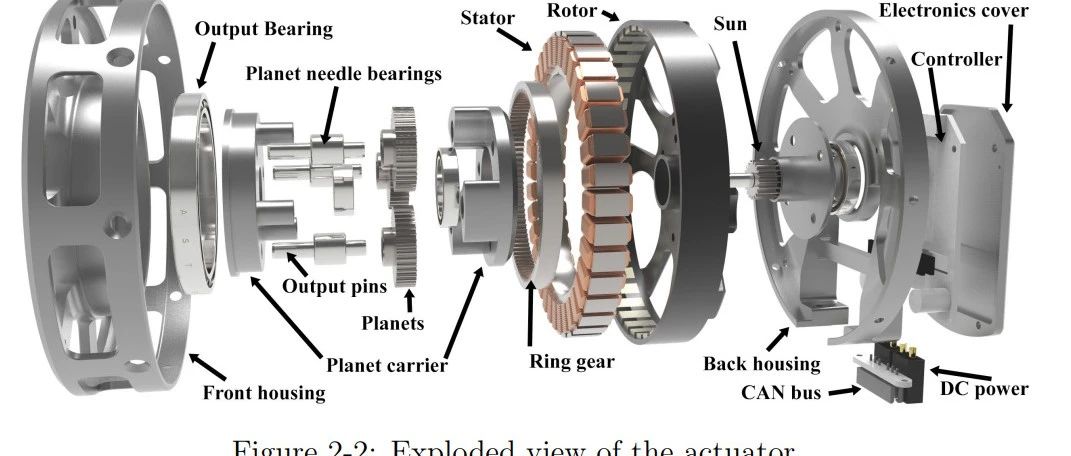
Core Insights - The article emphasizes the rapid growth of humanoid robots, particularly focusing on the significance of rotary joints as a core component that affects both performance and manufacturing costs [1] - The rotary joints are expected to maintain double-digit growth in the coming years due to the booming humanoid robot industry [1] Group 1: Technology Routes of Rotary Joints - The three main technological routes for rotary joints are rigid actuators, elastic actuators, and quasi-direct drive (QDD) actuators [2] - Rigid actuators have played a crucial role in early humanoid robot development due to their high torque output and precision, maintaining a dominant position in the market [4] - Elastic actuators enhance compliance control but face challenges in industrial application due to complex control algorithms and high hardware costs [4][6] Group 2: QDD Actuators - QDD actuators combine the advantages of both rigid and elastic actuators, becoming a mainstream solution for humanoid robot rotary joints [6] - They optimize structural design and control algorithms to reduce manufacturing costs and system complexity while ensuring joint performance [6][7] Group 3: Motors in Rotary Joints - Motors are critical for rotary joints, requiring high torque output, dynamic response, low inertia, and lightweight characteristics [8] - The frameless torque motor has emerged as a popular choice due to its compact design and flexibility, aligning well with high integration needs [8] - Axial flux motors show promise for future applications in humanoid robots due to their high torque density and efficiency [9] Group 4: Gearboxes in Rotary Joints - Gearboxes play a key role in torque output, precision, and lifespan of rotary joints, with harmonic and planetary gearboxes being the primary types used [10] - Harmonic gearboxes are widely used for their compact size and high precision, while planetary gearboxes are favored for their cost-effectiveness and durability [13][15] - Both types of gearboxes complement each other to meet diverse joint requirements [16] Group 5: Sensors in Rotary Joints - Sensors are essential for measuring force/torque information to achieve precise motion control in humanoid robots [17] - Force/torque sensors provide high precision but are costly and require careful installation [19] - Current loop sensors offer a cost-effective alternative with lower precision, suitable for cost-sensitive applications [21] Group 6: Market Competition in Core Components - The market for humanoid robot rotary joints is characterized by intense competition among core components like motors, gearboxes, and sensors [22] - Domestic companies such as Boke, Haozhi, and Weichuang have made significant advancements in frameless torque motors, enhancing domestic competitiveness [24] - The harmonic gearbox market is led by companies like Harmonic Drive and Lide, while the planetary gearbox sector is competitive with domestic players like Zhongdali and Niusidate [27][31] Group 7: Six-Dimensional Force Sensors - Six-dimensional force sensors are increasingly used in various fields, including humanoid robots, where they have become a standard trend [34] - The market for these sensors is expected to grow significantly, with a current average price of around 40,000 RMB for foreign brands and 20,000 RMB for domestic products [34] - The market is concentrated, with leading companies like ATI and Yuli Instruments holding significant market shares [35] Group 8: Future Outlook - The humanoid robot industry is seen as a new direction in industrial automation with substantial growth potential [36] - The demand for key products like motors, controllers, gearboxes, and six-dimensional force sensors is expected to rise as the industry develops [36] - Companies with technological advantages in gearboxes and sensors are likely to benefit from the growth in humanoid robot demand [36]
王田苗手记|价值孵化:何以“涌现”更多科技创新产业?
机器人大讲堂· 2025-07-12 03:28
Core Viewpoint - The article discusses the complexities of "value incubation" in the context of technological innovation and industry transformation, emphasizing the need for a deeper understanding and integration of technology and industry innovation to foster sustainable growth and address market demands [5][10]. Summary by Sections 1. Understanding "Value Incubation" - "Value incubation" is often misunderstood, with many equating it solely to "unicorn incubation," which limits its broader implications [6]. - The core of value incubation involves creating a sustainable innovation ecosystem that aligns with national strategies and market needs [10]. 2. Driving Forces of Technological Innovation - The current lack of driving forces for technological innovation stems from high risks and uncertainties in early-stage projects, compounded by institutional barriers in technology transfer from research institutions to industry [8][9]. - There is a need for a systematic approach to enhance the source of innovation, focusing on talent recognition and the establishment of supportive mechanisms for project development [11][12]. 3. Integration of Technological and Industrial Innovation - A significant gap exists between technological innovation and industrial needs, leading to inefficiencies in translating research into marketable products [13][14]. - The article highlights the importance of collaborative efforts between academia and industry to bridge this gap and enhance the effectiveness of innovation [15][16]. 4. Balancing Feedback Mechanisms - The article discusses the necessity of balancing positive and negative feedback mechanisms in the incubation process to ensure sustainable growth and market alignment [17][18]. - Positive feedback is essential in the early stages to encourage innovation, while negative feedback becomes crucial as projects mature to ensure they meet market demands [19]. 5. Regional Characteristics in Value Incubation - The article points out the issue of homogenization in value incubation across regions, stressing the importance of leveraging unique regional advantages to foster diverse innovation ecosystems [20][21]. - Different regions should focus on integrating local resources and addressing specific market needs to enhance their innovation capabilities [22].

招商局创投领投!柔性传感技术新锐力量「赛感科技」完成Pre-A轮融资!
机器人大讲堂· 2025-07-12 03:28
Core Viewpoint - The article highlights the successful completion of a multi-million Pre-A round financing by SaiGan Technology, a developer and manufacturer of high-performance flexible tactile sensors, aimed at enhancing core technology, product development, and market application exploration [1]. Group 1: Company Overview - SaiGan Technology, established in 2023, focuses on the research, production, and sales of next-generation high-performance flexible smart sensors and robotic electronic skin [1]. - The company’s technology originates from the Southern University of Science and Technology's ultra-flexible electronics laboratory, with a team of over 20 PhDs and postdoctoral researchers [2]. Group 2: Leadership - The founder and chief scientist, Professor Guo Chuanfei, is a prominent figure in the field of high-performance electronic skin and flexible electronics, while CEO Xiong Gengchao brings extensive industrial and commercialization experience [2]. Group 3: Product Development - SaiGan Technology is developing core technologies such as the SaiGan nano-interface capacitive sensors, tactile sensors, data acquisition devices, and analysis software, with applications in humanoid robots, consumer electronics, automotive electronics, and healthcare [4]. - The flexible smart sensors are designed with bendable and stretchable substrates that integrate micro-sensor arrays, capable of sensing pressure, temperature, and strain, characterized by thinness, high elasticity, and environmental adaptability [5]. Group 4: Market Position - The market for intelligent sensors is experiencing explosive growth, with SaiGan Technology's products becoming focal points in the smart sensing field [4].

人类的下一场手术,可能由自主机器人来操刀
机器人大讲堂· 2025-07-12 03:28
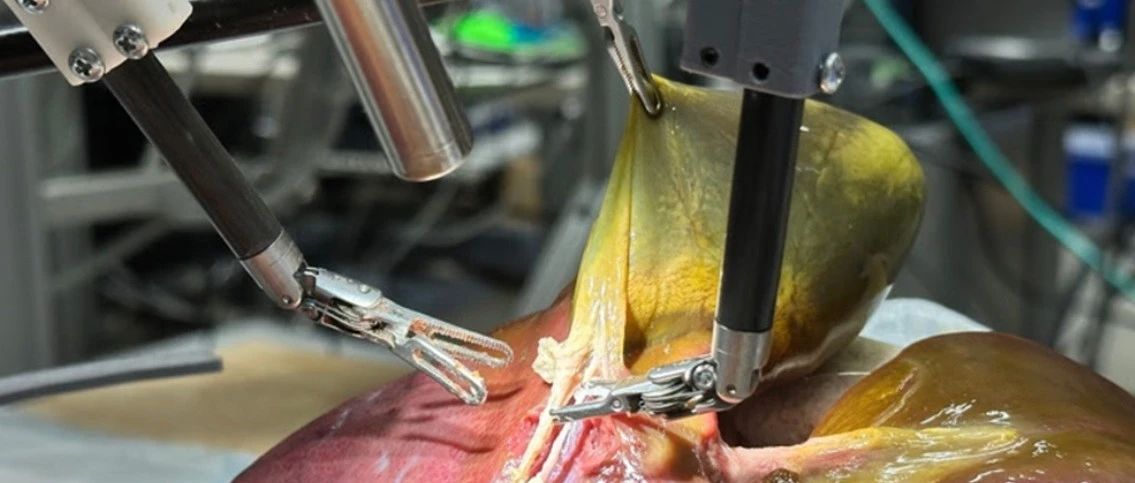
Core Viewpoint - Autonomous surgical robots are gaining global attention due to technological advancements and clinical needs, with the potential to revolutionize surgical procedures by enabling robots to make independent decisions during operations [1][2]. Definition and Understanding - Autonomous surgical robots are defined as robotic systems capable of performing surgical tasks independently, integrating advanced AI technologies for perception, decision-making, and task execution [2][3]. Technical Aspects - The goal of autonomous surgical robots is to enhance surgical precision, safety, and efficiency while reducing reliance on direct human intervention, ultimately allowing the robots to learn from experience and adapt to new situations [3][5]. Development and Progress - The SRT-H robot developed by Johns Hopkins University has demonstrated a 100% accuracy rate in recent surgeries, although it takes longer than human surgeons, indicating significant progress in autonomous surgical capabilities [5][9]. Classification System - The classification of autonomous surgical robots follows a tiered system from 0 to 5, where level 3 autonomy is currently the target for research, allowing robots to assist surgeons while still under human supervision [6][7]. Global Landscape - The development of autonomous surgical robots is uneven globally, with institutions like the University of North Carolina at Wilmington leading the way with their STAR system, which has shown superior precision and stability in animal trials [9][10]. Challenges and Limitations - Despite advancements, challenges remain in core technologies, particularly in perception, decision-making, and execution accuracy, along with the need for ethical standards and clinical validation [15][16]. Future Outlook - The future of autonomous surgical robots looks promising with advancements in AI, micro-manufacturing, and the potential for integration with technologies like 5G and cloud computing, which could enhance surgical quality and efficiency [16].
具身智能与复合机器人,差异到底在哪?
机器人大讲堂· 2025-07-12 03:28
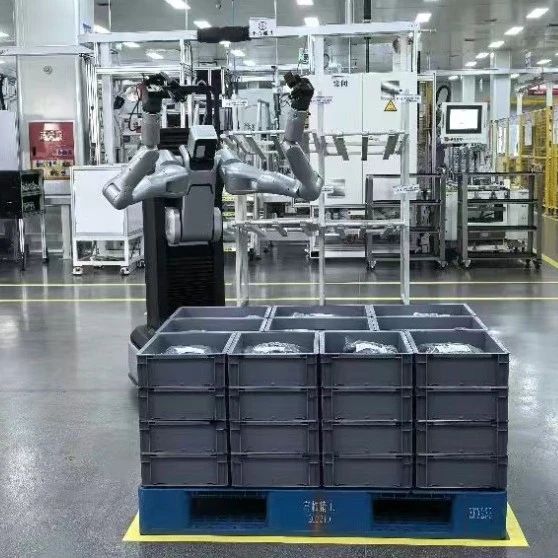
Core Viewpoint - The article discusses the differences between embodied intelligence (EAI) and composite robots, highlighting their distinct technological frameworks, control logic, and application scenarios [2][3][4]. Group 1: Technical Framework and Control Logic Differences - Composite robots are products of pure control theory, originating from the late 1970s, focusing on precise and consistent movements through pre-written control logic [3]. - Embodied intelligence relies on generative AI for control, allowing for flexibility and adaptability in decision-making without strictly predefined rules [3][4]. - The balance between generalization capability and consistency is crucial, with composite robots excelling in high-precision tasks, while embodied intelligence thrives in dynamic environments [4][6]. Group 2: Application Module Differences - Composite robots have a singular application logic, primarily driven by pre-set control logic, making them efficient in tasks requiring high consistency and reliability [6]. - Embodied intelligence systems are more versatile, integrating various technologies and allowing for autonomous decision-making and adaptability in diverse scenarios [6][7]. - The operational efficiency of embodied intelligence is maximized through a centralized "brain" that coordinates multi-modal information and optimizes task execution [7]. Group 3: Applicable Scenarios Differences - Composite robots are best suited for fixed, high-precision industrial environments where tasks are well-defined and require minimal error [9]. - Embodied intelligence is advantageous in complex, variable environments where autonomous learning and decision-making are essential, making it suitable for collaborative tasks [9].
合作邀约与优秀案例征集启动|2025 世界机器人大会——仿生机器人产业链技术与应用对接会
机器人大讲堂· 2025-07-11 10:35
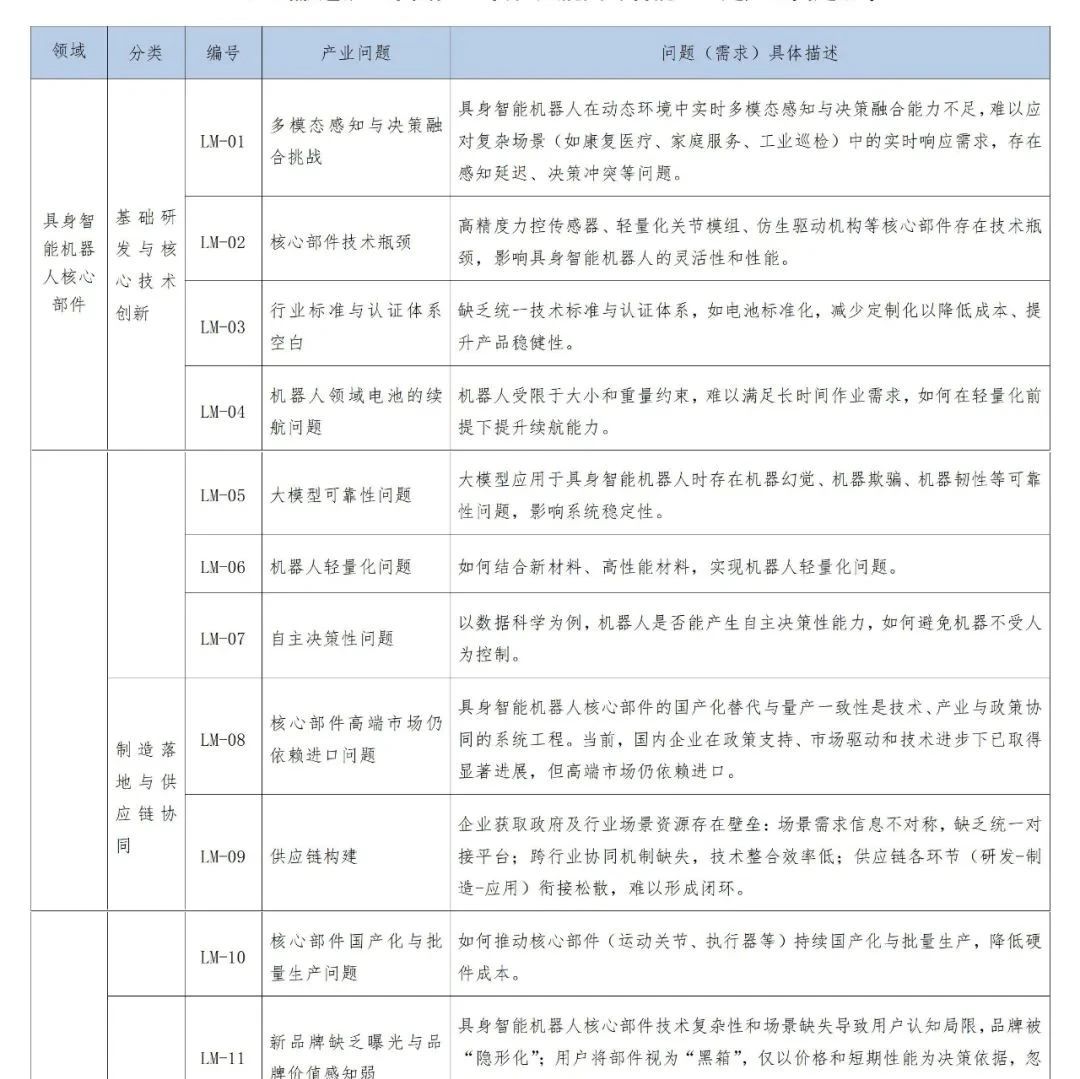
Core Viewpoint - The article emphasizes the rapid development of bionic robots, highlighting their integration of multiple disciplines such as biology, mechanical engineering, electronics, and artificial intelligence, showcasing significant potential for growth and application [1]. Forum Details - The forum theme is "Based on Core, Guided by Technology, Unlocking Infinite Possibilities of Bionic Robots" [2]. - Scheduled for August 10, 2025, from 14:00 to 17:30 at Beijing Yichuang International Exhibition Center, C Hall, second floor [2]. - Organized by Zhongguancun Rongzhi Special Robot Industry Alliance and Beijing Institute of Technology, with support from Public Safety Equipment Network [2]. Forum Highlights - The forum is a specialized event within the 2025 World Robot Conference, focusing on the technology and application of the bionic robot industry chain [2]. - It will feature keynote speeches, interactive discussions, and specialized exhibitions, providing a platform for collaboration among academia, research, and industry [2]. - Experts from universities, research institutions, enterprises, and investment organizations will discuss cutting-edge technologies, industry trends, application cases, and cooperation opportunities [2]. Forum Outcomes - The forum aims to facilitate cooperation agreements among academia, research, and industry, including talent development partnerships between universities and enterprises, technology research collaborations between research institutions and companies, and supply chain cooperation among upstream and downstream enterprises [3]. Collaboration Invitation - Relevant organizations are invited to become partners of the forum, presenting thematic reports and showcasing their achievements and products to enhance brand recognition within the industry [4]. Case Collection - Prior to the event, an expert seminar on industry issues has been held, focusing on technological innovation, industrial transformation, and ecological collaboration [5]. - The forum is open for the collection of solutions to industry problems, with 15 representative and innovative cases to be selected for promotion at the 2025 World Robot Conference [5][6]. Participating Companies - A list of companies involved in various sectors of robotics is provided, including industrial robots, service and special robots, medical robots, humanoid robots, and core components [8][9][10][11].