机器人大讲堂

Search documents
IEEET-ASE|基于视触觉传感器的柔性接触仿真与操作学习
机器人大讲堂· 2025-06-30 07:22
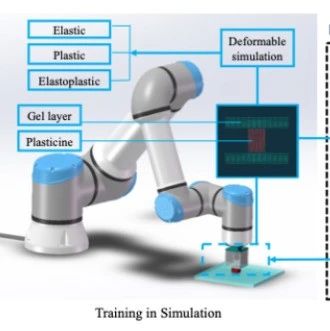
近期北京邮电大学方斌教授团队联合清华大学、 意大利比萨圣安娜大学、英国伦敦国王学院和德国汉堡大学 发布了基于掌状视触觉传感器的柔性接触仿真与操作学习,为基于视触觉传感器的柔性操作提供了新的思路。 相关工作发表在机器人、自动化领域 JCR Q1 期刊 IEEE Transactions on Automation Science and Engineering 。 研究背景: 可变形物体操控是机器人领域一个经典且极具挑战性的任务。相较于刚性物体,可变性物体具复杂的变形特性 (包括弹性变形、塑性变形和弹塑性变形),大量的自由度 (DOF) 需要复杂的建模方法,这使该问题更加复 杂。同时,可变形物体广泛存在于医院、工业和家庭环境中。因此,可变形物体操控在机器人技术发展中发挥 着至关重要的作用。 为此,本文开发了一款可变形物体与基于视觉的触觉传感器之间的软接触模拟器,该模拟器能够模拟视触觉传 感器与弹性、塑性以及弹塑性物体之间的接触变形。在此模拟器的基础上,本文提出了基于视触觉传感器的可 变形物体操控基准,包括可迁移的观测值、任务和专家演示系统。最后,本文搭建了相应的实验平台,完成了 相关任务的 Sim-to-rea ...

面对具身智能数据瓶颈问题!孙富春、赵明国、王鹤、庞江淼、赵同阳、仉尚航、卢宗青、高阳、唐剑都有怎样的思考?
机器人大讲堂· 2025-06-30 07:22
数据被视为具身智能(Embodied Intelligence)落地的"最后一公里",其核心在于,数据直接决定了智能体能 否从虚拟训练环境无缝迁移至复杂多变的物理世界,并实现稳定可靠的交互与决策。 与大语言模型数据不同,具身智能需要采集物理交互中的高维动态数据(如力反馈、材质摩擦、碰撞响应 等),但真实场景数据获取依赖精密传感器和硬件设备,且受限于场景多样性、安全风险及隐私等问题,目前 全国范围内具身智能最大开源数据集规模也只有百万级别,相比自动驾驶领域的单日上亿条数据,相差百倍以 上。 除数据规模外,在涉及具体智能体物理交互的相关问题(例如"抓取力度""滑动摩擦系数")时,这些数据难以 用语言进行精准描述。数据标注工作需结合动作意图与环境反馈,正因如此,大量数据的标注任务仍需依赖人 工完成。 针对具身智能数据问题,近日2025北京智源大会 上 孙富春、赵明国、王鹤、庞江淼、赵同阳、仉尚航、卢宗 青、高阳、唐剑 等行 业领军人物 ,分享了他们在具身智能数据方面的思考。 ▍ 孙富春:未来团队将采集200万条轨迹、数据总量52 TB 远超英伟达数据规模 清华大学计算机科学与技术系教授、中国人工智能学会副理事长孙富 ...
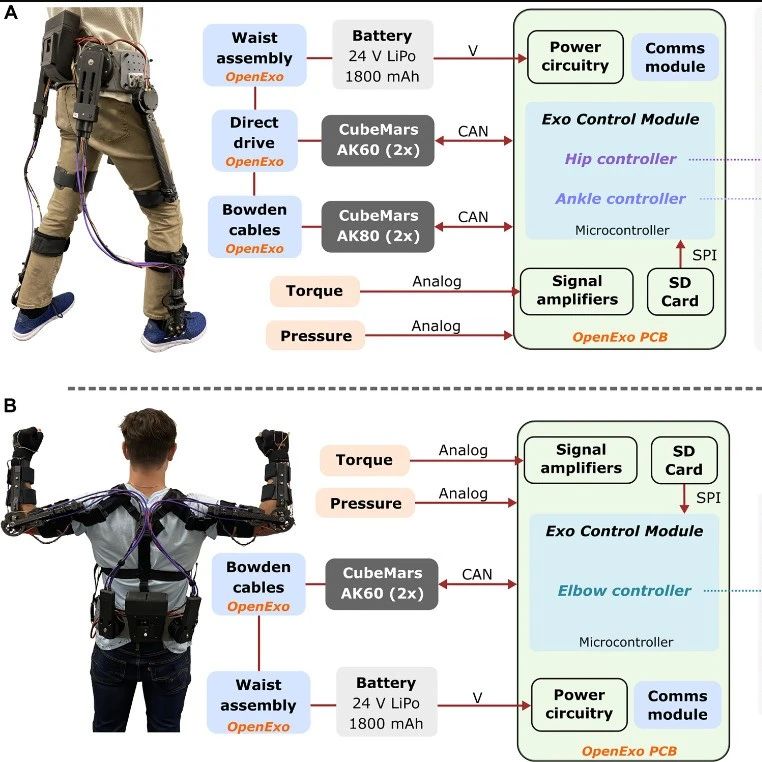
2025年,人形机器人电池哪家强?
机器人大讲堂· 2025-06-29 03:53
Core Insights - The article discusses the challenges and opportunities in the humanoid robot industry, particularly focusing on battery technology and energy requirements for operational efficiency [1][2][4]. Group 1: Market Potential - The global humanoid robot market is projected to reach between $30 billion to $50 billion by 2035, and $1.4 trillion to $1.7 trillion by 2050, with an expected annual production of 86 million units by 2050 [1]. - The demand for lithium batteries in humanoid robots is anticipated to exceed 100 million yuan by 2025, with a market size of 36 billion yuan by 2035 due to increased applications in various sectors [1]. Group 2: Battery Technology Challenges - Humanoid robots require higher energy density batteries, targeting over 300 Wh/kg, and need fast charging capabilities to minimize downtime in industrial applications [2]. - Current lithium-ion batteries improve at a slow rate of about 7% per year, indicating a need for disruptive innovations to meet the operational demands of humanoid robots [2]. Group 3: Alternative Energy Solutions - Solar panels have been explored as a potential energy source for robots, but their power output is insufficient for high-energy tasks, making them more suitable for low-power or stationary applications [4]. - Fast-charging technologies, such as sodium-ion batteries, can reduce downtime but may compromise battery lifespan and require substantial charging infrastructure [4]. Group 4: Solid-State Battery Developments - Solid-state batteries theoretically offer energy densities of 400-600 Wh/kg, but current production faces challenges, leading to a focus on hybrid approaches combining different technologies [5]. - Companies like Nandu Power and Delong Technology are advancing solid-state battery technologies, with Nandu Power achieving significant safety testing milestones and Delong planning substantial investments in production capabilities [7][9]. Group 5: Company Innovations - Companies such as Better Ray and Haopeng Technology are developing innovative battery solutions tailored for humanoid robots, focusing on safety, fast charging, and energy density improvements [12][13]. - Yiwei Lithium Energy is advancing solid-state battery technology with plans for mass production by 2025, while also achieving significant milestones in cylindrical battery production [15]. Group 6: Industry Collaborations - Various companies are forming strategic partnerships to enhance battery technology and applications, such as Nandu Power collaborating with Taillan New Energy and Yadi Company for solid-state battery innovations [8][12]. - The industry is witnessing a trend towards integrating AI and advanced monitoring systems in battery management to enhance safety and performance in extreme conditions [13].



IJRR发表!中山大学研究团队提出Koopman-ILC系统,实现对连续体机器人数据驱动建模与迭代学习控制!
机器人大讲堂· 2025-06-29 03:53
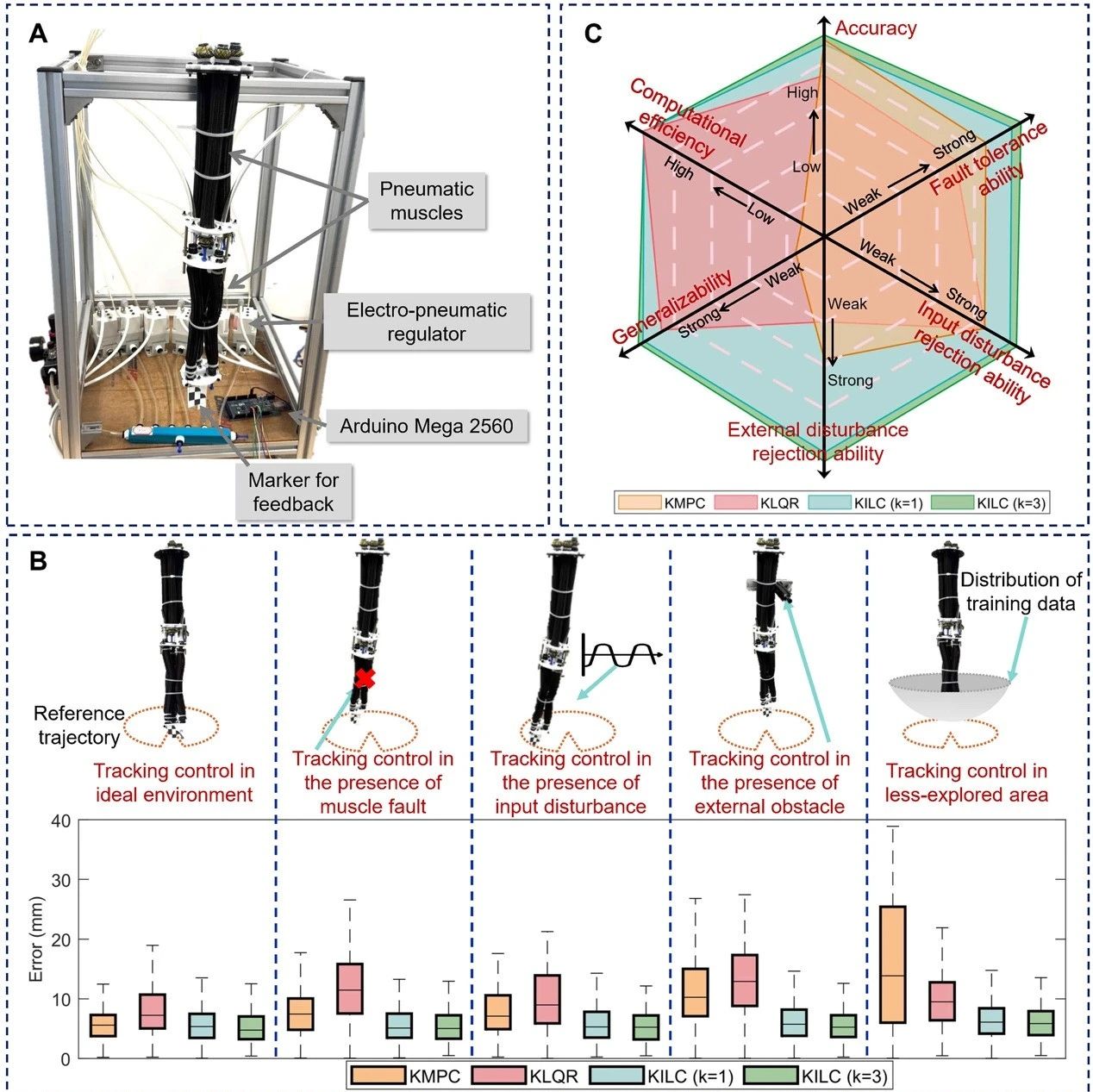
目前 已有的基于 Koopman算子的方法难以补偿不确定性和干扰,导致训练与现实之间的差距,从而造成性 能不佳。由于连续机器人天生的易受干扰性,这一差距很容易在实际场景中削弱其任务空间性能。 连续机器人控制中的鲁棒性与泛化能力 同时, 机器人可能需要在训练过程中未覆盖的区域进行操作,而且连续机器人的结构多样性进一步增加了控 制的复杂性。此外,现有基于 Koopman算子的控制方法的收敛性和鲁棒性尚未从理论或实验角度得到验证。 因此, 开发一种具有显著增强的鲁棒性、高计算效率、强泛化能力和严谨理论分析的数据驱动控制算法,对 于连续机器人而言至关重要 。 连续体机器人在近几十年受到了越来越多的关注。它们的柔顺性和灵活性使其在医疗、工业、农业和航空航天 等诸多领域具有重要应用价值。充分发挥其能力需要设计有效、高效且可靠的控制系统,而由于其结构复杂 性,这一任务仍然具有很大的挑战。 传统的连续体机器人控制方法通常依赖于对机器人物理模型的精确建模。然而,由于其柔性结构和不规则形 态,连续体机器人的建模极其困难,且容易受到环境影响,导致模型难以准确反映机器人的实际动态行为。因 此,研究人员转向了数据驱动的控制方法,尤其是 ...
公布最新研究!这次1XWorldModel如何颠覆人形机器人领域?
机器人大讲堂· 2025-06-29 03:53
Core Insights - 1X Technologies has launched the world's first humanoid robot world model, 1X World Model, which demonstrates significant advancements in technology and application scenarios [1][2] - The model utilizes video generation technology and end-to-end autonomous driving world models to simulate how the real world evolves under the influence of intelligent agents [2][3] Group 1: Model Capabilities - The 1X World Model showcases controllable actions, allowing it to generate different outcomes based on various action commands, demonstrating diverse generation characteristics from the same initial frame [3][7] - It accurately simulates interactions between objects, enabling the robot to lift and move objects while keeping others stationary under specified conditions [5][10] - The model can predict the consequences of executing precise actions in various scenarios, such as opening doors and wiping surfaces, showcasing its ability to generate physically plausible future states [8][10] Group 2: Evaluation and Performance - The evaluation of the model's performance has been enhanced through the collection of over 3000 hours of real operational data, allowing it to learn from diverse tasks in home and office environments [16][18] - The model's ability to predict future states and task success rates has been validated against real-world performance, establishing a robust feedback mechanism for model optimization [18][20] - Empirical evidence shows that checkpoints with higher performance in the 1X World Model evaluation tend to perform better in real assessments, indicating a strong correlation between predicted success rates and actual task scores [20][21] Group 3: Data Scaling and Transfer Learning - The research indicates a positive correlation between data volume and prediction accuracy, confirming that increasing data size improves the model's performance across various tasks [25][32] - Experiments demonstrate that the model can effectively transfer knowledge from one task to another, enhancing its ability to generalize from accumulated experiences [35][40] - The model's performance is significantly improved when trained with specific task data, allowing it to adapt to unfamiliar tasks and environments more effectively [40][41] Group 4: Future Implications - The advancements in the 1X World Model suggest a potential "data singularity" in robotics, where AI-generated data becomes indistinguishable from real data, revolutionizing training methodologies [41][42] - The model's success could accelerate the commercialization of household service robots and reshape the competitive landscape of the AI industry [42]
IJRR发表!浙大控制学院熊蓉团队提出驱动器空间最优控制框架,改善连续体机器人路径跟踪精度!
机器人大讲堂· 2025-06-29 03:53
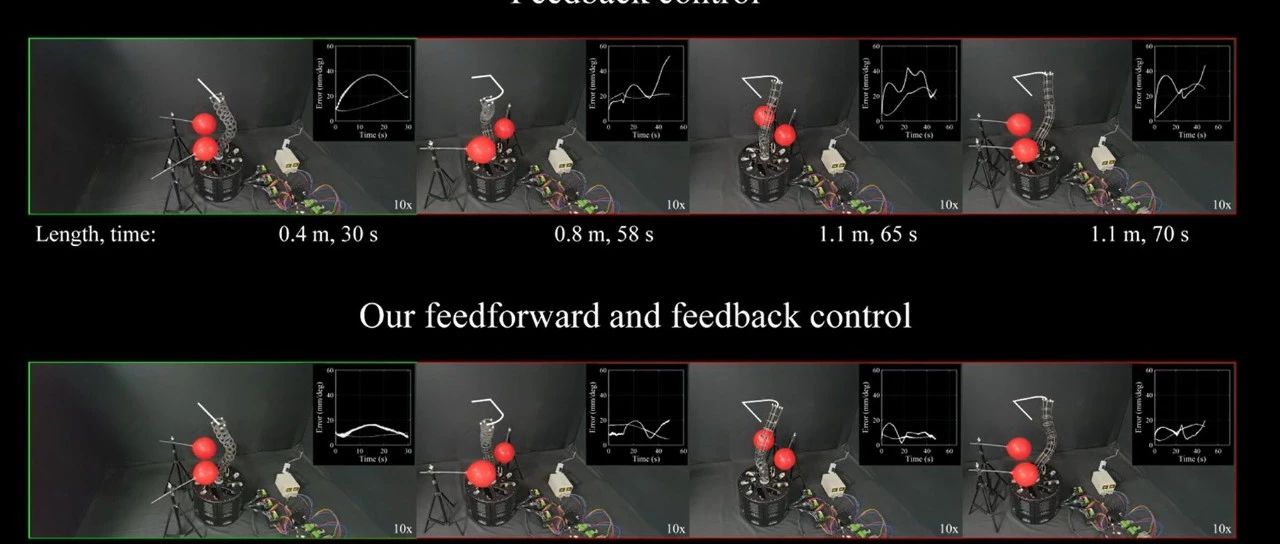
近年来, 连续体机器人 凭借其高柔顺性、灵活运动能力及轻量化和小型化结构,在医疗、工业检测、人机交 互等领域展现出巨大应用潜力。然而, 如何实现精准的路径跟踪仍是各类应用普遍面临的关键技术难题。 目前, 主流的路径跟踪方法依赖于逆运动学求解 ,即通过数学模型求解末端执行器期望运动路径下驱动器的 对应运动路径,并寻找多解以避开环境障碍物碰撞。然而,和刚性机械臂不同的是,连续体机器人多采用分段 等曲率模型,该模型缺乏逆运动学求解理论,传统数值方法依赖初值,也难以找到多解。部分研究采用模型预 测控制( MPC),通过在线优化调整控制策略,但 该方法无法保证全局最优性。 受刚性机械臂研究的启发, 有学者提出在执行器空间规划全局最优轨迹,作为前馈控制信号以提高跟踪精 度。 然而,连续体机器人的高度非线性特性使得其任务空间、配置空间和执行器空间之间的映射关系更为复 杂。 数值逆运动学算法通常只能提供单一解,且对初始值敏感,难以满足全局轨迹优化的需求。 因此,如何突破逆运动学求解的局限性,发展高效、多解、不依赖初始值的解算和规划方法,是提升连续体机 器人路径跟踪性能的关键。 ▍提出最优路径跟踪框架,实现运动控制突破性优化 ...
环动科技上市在即!国外巨头已经被迫降价
机器人大讲堂· 2025-06-28 02:19
Core Viewpoint - Zhejiang Huandong Robot Joint Technology Co., Ltd. (Huandong Technology) is a leading company in the domestic RV reducer market, currently preparing for its IPO on the Sci-Tech Innovation Board, with significant attention from the media regarding its upcoming listing [1][5]. Market Position and Growth - Huandong's RV reducer market share in China increased from 10.11% in 2021 to 24.98% in 2024, surpassing international competitors and significantly reducing Nabtesco's share from 51.77% to 33.79% [2]. - The company has developed over 40 types of RV reducers, covering load requirements from 3 to 1000 KG, with its heavy-duty industrial robot RV reducer recognized in the Ministry of Industry and Information Technology's list of major technical equipment [7]. Technological Advancements - Huandong Technology has made significant breakthroughs in design theory, precision grinding technology, and high-precision assembly, filling gaps in the domestic high-end reducer market [4]. - The company has collaborated with various research institutions and universities, leading to a 33.70% compound annual growth rate in R&D investment over the past three years, with R&D personnel accounting for 16.45% of its workforce by 2024 [9]. Challenges Ahead - Despite its advancements, Huandong faces challenges in retaining talent and securing continuous R&D investment, as many resources have shifted towards emerging fields like humanoid robots [7][10]. - The company is still in a catch-up phase regarding core components, primarily aligning its products with international standards set by leading companies [10]. Future Prospects - Huandong plans to raise 1.408 billion yuan for three major projects, with 1.1 billion yuan allocated for building an intelligent manufacturing base for precision reducers, which will increase production capacity to 320,000 units per year [15]. - If the domestic market's localization rate reaches 60%, Huandong's revenue could exceed 2 billion yuan, positioning it among the top three global RV reducer manufacturers [15].
4分14秒!同济具身智造团队创造纪录,揭秘双臂机器人的"进化"之路
机器人大讲堂· 2025-06-28 02:19
Core Viewpoint - The article highlights the significant achievement of Tongji University's embodied intelligence team in the 2025 Zhangjiang Embodied Intelligence Developer Conference and International Humanoid Robot Skills Competition, where they set a record of 4 minutes and 14 seconds in the box loading and unloading task, showcasing the practical application of embodied intelligence technology in industrial settings [1][14]. Group 1: Technical Achievements - The team achieved a positioning accuracy of ±0.2mm using Intel RealSense D435 depth camera combined with visual SLAM algorithms, demonstrating the feasibility of robots replacing humans in high-repetition, harsh industrial environments [2]. - The robot's design includes a 7-degree-of-freedom humanoid arm that mimics human arm joint structures, allowing for complex posture adjustments in confined spaces [2]. - The team improved task deployment efficiency by 60% through an AI-driven autonomous learning system [2]. Group 2: System Design and Collaboration - The dual-arm robot system expands the capabilities of industrial robots, with an 800mm lift column design that allows a working range of 200-2000mm, addressing the need for space utilization in factories [4]. - The left arm is responsible for identifying and placing parts, while the right arm transports them to the target box, with future research focusing on communication mechanisms for parallel scheduling to enhance overall efficiency [4][6]. - The perception system integrates a global vision system and multiple depth cameras, enabling dynamic obstacle avoidance and safe operation in unstructured environments [6]. Group 3: Real-World Application and Challenges - The team conducted real-world tests in collaboration with factories, overcoming challenges such as operating in confined spaces and dynamic lighting conditions [7][8]. - They utilized precise 3D environmental modeling to identify potential obstacles and set virtual safety boundaries, ensuring safe and reliable task execution in crowded environments [8]. - To address lighting variability, the team implemented hardware solutions like integrated compensatory light sources and software improvements for robust visual perception [8]. Group 4: Future Outlook - The team aims to achieve breakthroughs in three technical areas over the next 3-5 years: enhancing multi-modal perception, establishing high-fidelity industrial digital twin environments, and developing safe human-robot collaboration frameworks [12][13]. - The core challenges in industrial manufacturing include the constraints of dynamic, unstructured environments and the need for robust multi-modal perception and real-time decision-making [13]. - Opportunities lie in creating value loops that move from traditional automation to global autonomous responses, applicable in flexible assembly quality inspection and dynamic production line optimization [13].
Science Robotics最新模块化开源外骨骼系统
机器人大讲堂· 2025-06-28 02:19
Core Viewpoint - The research team from Northern Arizona University has developed a modular exoskeleton system that is fully open-source, allowing more researchers to participate in this promising field [1][17]. Group 1: Challenges in Exoskeleton Development - Exoskeleton technology has faced high barriers to entry, requiring expertise in multiple disciplines such as mechanical engineering, electrical engineering, robotics, and biomechanics [4][5]. - Current exoskeleton systems are often specialized for specific applications, limiting their adaptability to new research questions and environments [5]. - The existing systems create technology silos, making it difficult to reproduce research results due to independent software and hardware systems [5]. Group 2: OpenExo's Modular Design - OpenExo addresses these challenges with a modular design, allowing users to easily swap hardware modules and modify configurations without extensive coding or redesign [6][8]. - The system consists of four main components: software system, electronic architecture, hardware interface, and control scheme [8]. - The software is developed using C++ and Arduino, emphasizing modularity and reducing code redundancy [9]. - The electronic architecture is designed to be simple and intuitive, using a single board to control up to four joints, which differs from other open-source projects [9]. - Hardware designs include direct-drive hip joints and Bowden cable-driven ankle joints, all compatible with the same belt interface for quick assembly [10]. Group 3: Performance Validation - The system demonstrates high torque tracking accuracy, with root mean square errors for hip, ankle, and elbow joints being 0.30 Nm, 2.00 Nm, and 0.84 Nm respectively [12]. - Battery tests show that the hip joint configuration can run for 35 minutes, while the ankle configuration lasts 25 minutes, indicating potential for extended use with improved battery capacity [12]. - Real-world tests show that the exoskeleton reduces transportation costs by 8% to 18% in various walking scenarios, highlighting its practical value [13][15]. Group 4: Open Source and Community Engagement - OpenExo's significant contribution lies in its open-source philosophy, providing complete software packages, electrical designs, and hardware instructions [17][18]. - The research team aims to create an open research community, inviting contributions from various disciplines to accelerate exoskeleton technology development [19]. - The unified open-source platform allows for large-scale collaborative research, improving the reproducibility of results across different institutions [20]. Group 5: Future Improvements - The research team acknowledges that battery life remains a key limitation, particularly in high-torque applications, and is exploring ways to enhance battery efficiency [21]. - Continuous optimization of the Python application is planned, with features like deep learning and human-machine collaboration being considered for future updates [21].
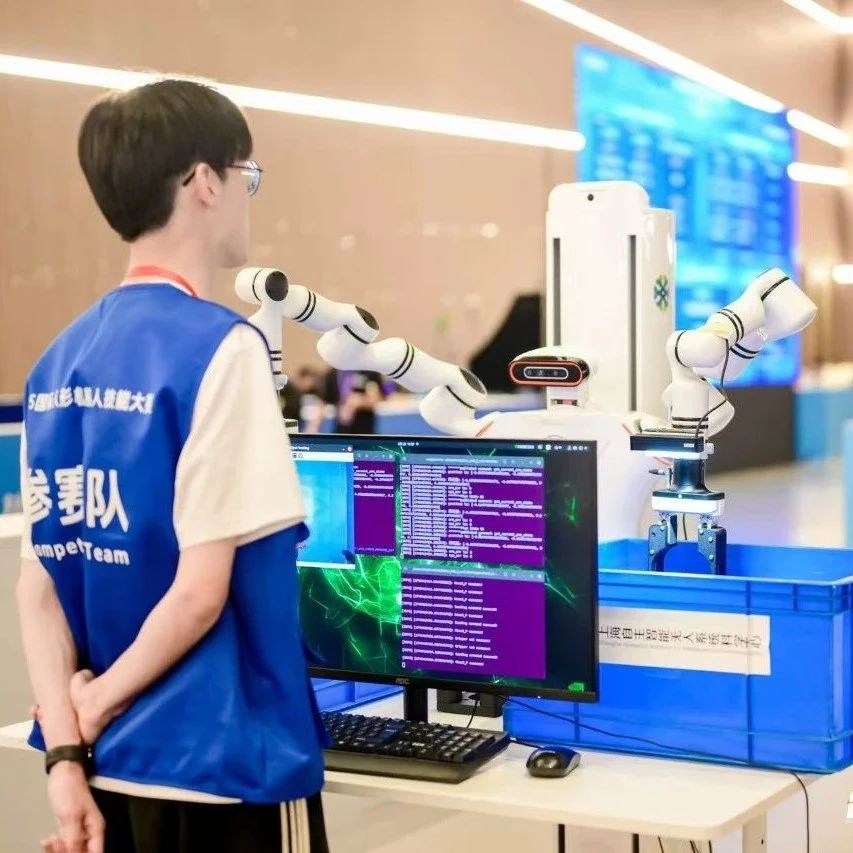
集萃智造:打造具身智能机器人,开启创新时代新篇章!
机器人大讲堂· 2025-06-28 02:19
Core Viewpoint - The article emphasizes the growing importance of embodied intelligence in robotics, highlighting the advancements made by Jicui Intelligent Manufacturing in developing core components and algorithms for collaborative robots, aiming to lead the industry transformation and societal progress through technological breakthroughs [1][25]. Group 1: Self-Developed Core Components - Jicui Intelligent Manufacturing has made significant breakthroughs in core hardware components for collaborative robots, including direct current frameless motors and high-precision dual-magnetic encoders, which enhance performance and reduce production costs [2][4]. - The company has achieved a competitive edge in the market with products like the non-teaching mobile welding robot and multifunctional unmanned vehicles, exporting to 34 countries and securing over 300 million yuan in orders [4] . Group 2: Development of New Algorithms - The company invests heavily in embodied intelligence algorithms, exploring imitation learning, reinforcement learning, and deep learning to enhance robots' autonomous learning and adaptability [5][7]. - Imitation learning allows robots to mimic human actions for tasks like welding and assembly, improving accuracy and efficiency [8]. - Reinforcement learning enables robots to optimize their behavior through trial and error in dynamic environments, enhancing decision-making capabilities [9]. - Deep learning improves robots' perception and recognition abilities, allowing for precise operations in various applications [10]. Group 3: Exploring Collaborative Robotics - Jicui Intelligent Manufacturing focuses on collaborative robots, emphasizing safety and ease of use, achieving international leading standards in precision and usability [12]. - The company's collaborative robots are utilized in various industries, enhancing production efficiency and product quality [12]. Group 4: Innovative Application Scenarios - The company has developed innovative robots for various sectors, including a coffee delivery robot for office buildings and smart cleaning robots for efficient indoor cleaning [15][16]. - In the smart factory sector, the non-teaching welding robot is set to revolutionize traditional welding processes, allowing for automated operations with voice control [20]. - In agriculture, the fruit-picking robot utilizes advanced systems to efficiently harvest fruits, addressing labor-intensive challenges [21]. Group 5: Future Outlook - Jicui Intelligent Manufacturing aims to become a leading international smart manufacturing technology research base, continuously innovating and expanding market reach [25][26]. - The company plans to deepen the application of embodied intelligence technology and collaborate with global research institutions to drive technological advancements [26].