机器人大讲堂

Search documents
能横着走的轮足机器人诞生?
机器人大讲堂· 2025-08-19 10:32
Core Viewpoint - The article highlights the innovative design and capabilities of the new wheel-legged robot FLORES developed by Hong Kong University of Science and Technology (Guangzhou), emphasizing its versatility in navigating various terrains and its energy efficiency compared to traditional robots [1][9]. Group 1: Robot Design and Capabilities - FLORES is capable of running on flat surfaces and climbing stairs, making it a unique addition to the field of robotic technology [1][6]. - The robot can traverse different terrains, including smooth roads, cobblestones, and grass, while maintaining stability and speed, showcasing its multi-terrain adaptability [6][12]. - Experimental results indicate that FLORES consumes only 30% of the energy of traditional wheel-legged robots during straight-line movement and 35% during turns, marking it as an energy-efficient option in the robotics sector [9][12]. Group 2: Technical Specifications - The hardware components of FLORES include an Intel i7-1165G7 CPU, various motors for joint movement, and a lithium battery with a capacity of 44.4V 8AH, which contribute to its performance [11]. - The innovative design features a unique front leg configuration that allows for seamless transitions between wheel and leg movements, enhancing navigation efficiency [15][18]. Group 3: Future Developments - The research team plans to enhance FLORES with a lightweight robotic arm for object manipulation and to enable more complex bipedal movements through advanced simulation techniques [20]. - FLORES is particularly suited for environments where flat surfaces and stairs coexist, making it ideal for tasks such as material transport and patrolling in office buildings and shopping malls [20].

快讯|人形机器人用于试鞋;Serve Robotics收购Vayu Robotics;机器人代孕在外网热议等
机器人大讲堂· 2025-08-19 05:40
Group 1 - Serve Robotics acquires Vayu Robotics to enhance delivery robots, leveraging large-scale AI models for urban deployment [1][3] - The acquisition aims to improve physical AI capabilities and includes a scalable multi-year contract to deploy up to 2,000 delivery robots on the Uber Eats platform across multiple U.S. markets [3] - Serve Robotics, spun off from Uber in 2021, has completed thousands of deliveries for partners like Uber Eats and 7-Eleven [3] Group 2 - Korean Air receives its first wearable robot, the X-ble Shoulder, from Hyundai and Kia, designed to enhance upper arm strength and reduce shoulder load during repetitive overhead tasks [4][6] - The X-ble Shoulder can reduce shoulder load by up to 60% and decrease anterior/lateral deltoid activity by up to 30%, improving productivity and comfort [6] Group 3 - Researchers at the Italian Dalle Molle Institute teach a robot to play drums using a machine learning algorithm, enabling the robot to learn human-like strategies for performing music [7][9] - This development could pave the way for robots to accompany live bands and provide a framework for teaching precise timing skills in other fields [9] Group 4 - A humanoid robot from KOID brand engages in promotional activities at a Hoka store, trying on shoes and participating in a campaign for a new AI and robotics ETF [10][12] - The KOID robot, manufactured by Unitree and powered by Stanford's OpenMind software, signifies potential future applications in customer service and retail assistance [12] Group 5 - Reports of a "pregnancy robot" being developed in China sparked significant online discussion, but the creator clarified that there are currently no such products or research plans [13][16] - The topic gained traction on social media, leading to widespread speculation despite the official denial from the company involved [16]

机器人创业者注意!通往XbotPark生态与千万融资的明月湖硬科技大赛报名倒计时!
机器人大讲堂· 2025-08-19 05:40
Core Viewpoint - The XbotMan—2025 Mingyue Lake Hard Technology Entrepreneur Competition is a significant opportunity for innovators in robotics and smart hardware, providing not only substantial prizes but also comprehensive support for project development and funding access [1][5][9]. Group 1: Competition Structure - The competition features a dual-track system: the "Seed Innovation Group" for early-stage projects and the "Innovative Enterprise Group" for established companies seeking funding [3][4]. - Participants in the Seed Innovation Group can include startups or individuals, while the Innovative Enterprise Group requires a core team of at least three members and existing technology or product prototypes [3][4]. Group 2: Resources and Support - Winning projects will share a total prize pool of 330,000 yuan and gain access to the Mingyue Lake International Smart Industry Innovation Base, which offers free office space and entrepreneurial funding ranging from 500,000 to 3.5 million yuan [5][19]. - The XbotPark ecosystem, initiated by Professor Li Zexiang from Hong Kong University of Science and Technology, has nurtured over 140 hard technology companies with an 80% survival rate and a 15% unicorn conversion rate, collectively valued at over 80 billion yuan [7][19]. Group 3: Industry and Financing Support - The competition will provide industry support through a Shared Factory and the Mingyue Lake Hard Technology Supply Chain Alliance, aimed at assisting projects in overcoming production challenges [8][10]. - Notable investment firms such as Sequoia Capital and Kexing Capital will participate in the event, offering direct financing opportunities to winning projects [9][19]. Group 4: Policy and Timeline - Outstanding projects will receive priority recommendations for provincial and municipal talent policies and technology project applications, with special channels for high-level talent and overseas returnees [12]. - The competition timeline includes registration from now until August 31, 2025, with preliminary rounds in September and finals in October [12][17].
最全奖牌榜出炉!一图速览
机器人大讲堂· 2025-08-19 05:40
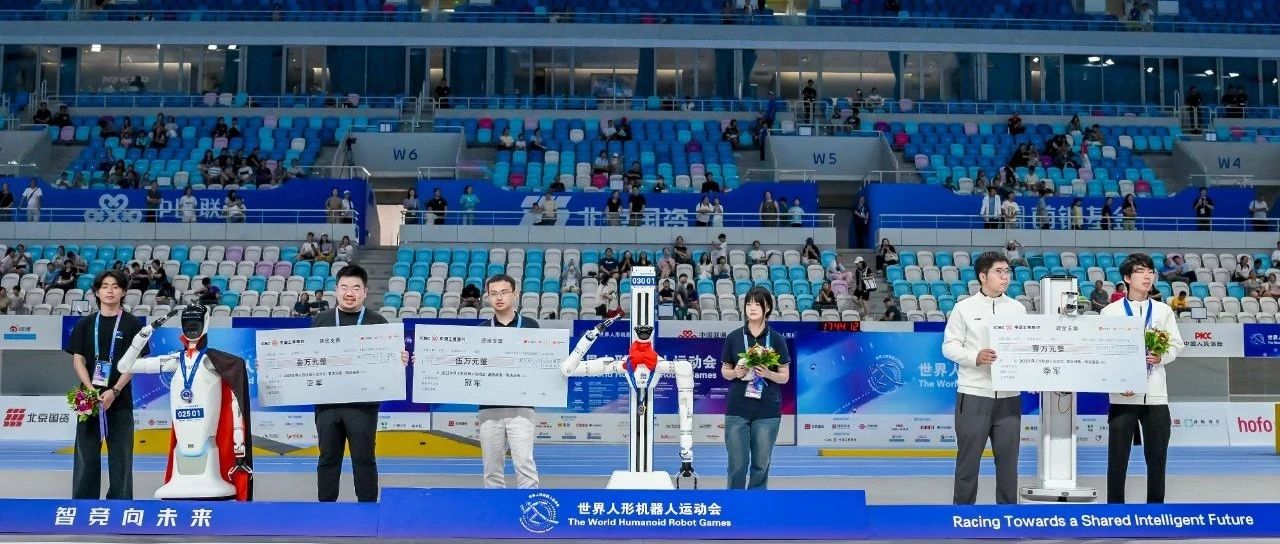
Core Viewpoint - The 2025 World Humanoid Robot Games successfully concluded on August 17, featuring 280 teams from 16 countries competing in 26 events over three days, marking the first comprehensive competition for humanoid robots globally [1]. Group 1: Competition Overview - The event included a total of 487 matches across various categories such as competitive events, performance events, scenario events, and peripheral events [1]. - Notable performances included the championship in the 100 meters by the team "Tian Gong" with the robot "Tian Gong Ultra" achieving a time of over 21.50 seconds [1]. Group 2: Event Results - In the 400 meters, "Ling Yi Technology" with the robot "Yu Shu H1" secured the championship with a time of 6 minutes and 34 seconds [2]. - The 1500 meters saw "Yu Shu Technology" win the championship with a time of 1 minute and 48.78 seconds [2]. - The 4x100 meters relay was won by "Gao Yi Technology" with a time of 33.71 seconds using the robot "Yu Shu G1" [2]. Group 3: Special Awards and Recognitions - The "Best Robot" award was given to the "Wolf Pack Team" [4]. - The "Popularity Award" was awarded to "Chiweng" with the robot "Yu Shu G1" [4]. - The "Best Interaction Award" in the table tennis category went to the "Exploration Extreme Team" [5]. Group 4: Industry Participants - Various companies participated in the event, including "Yu Shu," "Tian Gong," and "Ling Yi Technology," showcasing advancements in humanoid robotics [12][13]. - The event highlighted the growing interest and investment in humanoid robotics, with numerous teams representing educational institutions and tech companies [12][13].

聚焦落地!真实场景比拼!2025年第二届中关村具身智能机器人应用大赛报名开启
机器人大讲堂· 2025-08-19 05:40
Core Viewpoint - Humanoid robots and embodied intelligence are at the forefront of the current era, with significant events showcasing advancements in these technologies, such as the recent World Humanoid Robot Games and the upcoming Second Zhongguancun Embodied Intelligent Robot Application Competition [1][3]. Group 1: Event Overview - The World Humanoid Robot Games featured 280 teams from 16 countries, showcasing over 500 humanoid robots and resulting in multiple world records [1]. - The upcoming Second Zhongguancun Embodied Intelligent Robot Application Competition will focus on practical applications of humanoid robots and embodied intelligence, aiming to demonstrate real-world scenarios where these technologies can assist human production and life [1][3]. Group 2: Industry Ecosystem - Haidian District has become a core area for the development of embodied intelligence, housing 186 companies in this sector, including 24 humanoid robot firms, and 21 educational institutions offering relevant programs [3]. - The district aims to enhance innovation and industry collaboration through the competition, fostering a robust ecosystem for embodied intelligence [3]. Group 3: Competition Highlights - The competition will feature three main tracks: Embodied Intelligence Model Capability Challenge, Embodied Intelligence Scene Application, and Embodied Intelligence Academic Frontiers and Industry Ecosystem [9][12]. - Each track will have specific focus areas, such as household services, commercial services, industrial manufacturing, and safety emergency applications, showcasing the practical skills of participating robots [8][15]. Group 4: Awards and Incentives - Each competition track will offer substantial prizes, with first prizes set at 50,000 yuan, second at 30,000 yuan, and third at 20,000 yuan, to encourage participation from top global teams [9][27]. - An additional innovation incentive of 5,000 yuan will be awarded to outstanding teams, along with certificates recognizing their innovative capabilities [27]. Group 5: Significance of Participation - Participation in the competition provides teams with opportunities to showcase cutting-edge technologies, enhance team collaboration, and engage in academic exchanges with industry experts [30][31]. - The event serves as a platform for accelerating market promotion and transforming technological achievements into practical applications [31].

盈连科技外部轴模组:机器人的第七轴,开启更多可能!
机器人大讲堂· 2025-08-18 13:36
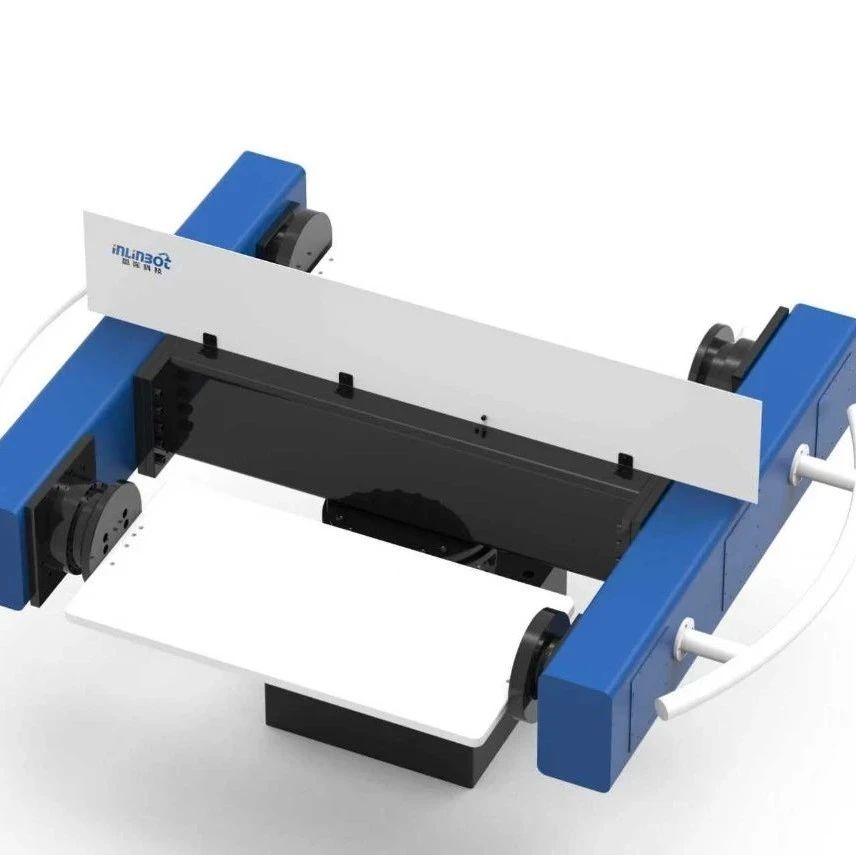
Core Viewpoint - Yinglian Technology has launched the "External Axis Module," redefining the flexibility of robots and enhancing automation lines' intelligence, efficiency, and adaptability, serving as the "seventh axis" for complex tasks like grinding, welding, spraying, and inspection [1]. Group 1: External Axis Module Features - The External Axis Module integrates an industrial-grade RV reducer and a high-performance servo motor, overcoming traditional external axis limitations and seamlessly extending six-axis robots [1][2]. - The module features high-precision RV reducers with a unique compound transmission structure, ensuring ultra-low backlash and high rigidity, while the servo motor provides rapid response and precise motion control [2]. - The design allows for direct connection to the robot's control cabinet via the ECAT bus, reducing command transmission delays to microseconds and eliminating compatibility risks [4]. Group 2: Advantages of the External Axis Module - The module offers ±0.01mm ultra-high precision, ensuring accurate compensation for cumulative errors during motion, thus maintaining high fidelity in command execution [13]. - It boasts a rapid response time of 0.1 seconds, allowing for quick adjustments to sudden load changes, enhancing processing quality and equipment lifespan [14]. - The compact design enables high torque output in limited spaces, suitable for various high-load applications [15]. - The system's lifespan is extended to 30,000 hours, significantly reducing maintenance costs due to its durable design [16]. - The native compatibility with Yinglian's ecosystem optimizes performance and simplifies wiring, leading to cost savings and reduced failure points [15]. Group 3: Application Scenarios - The External Axis Module excels in grinding and polishing, enabling precise positioning and continuous rotation for complex surfaces, ensuring consistent surface treatment quality [19]. - In welding applications, it enhances the positioning of large workpieces, improving welding quality and efficiency while ensuring consistent welding paths [20]. - For spraying and inspection, the module guarantees uniform rotation and height adjustments, facilitating efficient and thorough coverage of large structures [21].
人形机器人“奥运”摘两金一银!优理奇用硬核实力撕开商业化缺口
机器人大讲堂· 2025-08-18 13:36
Core Viewpoint - The 2025 World Humanoid Robot Games successfully concluded in Beijing, showcasing the capabilities of humanoid robots in various competitive events, with a notable performance by Youliqi Robotics' Wanda series robots, which won multiple medals and demonstrated their potential for commercial applications [1][10]. Group 1: Event Overview - The event attracted 280 teams and over 500 humanoid robots from 16 countries, featuring 487 matches across four main categories: competitive events, performance events, scenario events, and peripheral events [1]. - Youliqi Robotics' team excelled in the scenario events, winning gold in the "Hotel Reception Service" and securing both gold and silver in the "Hotel Cleaning Service" [1]. Group 2: Technical Capabilities - The Wanda series robots were evaluated under a rigorous judging system that assessed their movement, timing, stability, and adaptability in a fully autonomous manner, akin to an "Olympic" standard for the industry [2]. - The robots demonstrated advanced capabilities in tasks such as luggage transport and waste collection, highlighting their proficiency in mobility, path planning, environmental perception, and precise manipulation [2][10]. Group 3: Algorithm and Hardware Innovations - The Wanda series is powered by Youliqi's proprietary three-in-one algorithm, which includes UniFlex, UniTouch, and UniCortex, enabling the robots to perform complex tasks in dynamic environments [4][5]. - The hardware features a world-first mass-produced eight-degree-of-freedom bionic arm, enhancing the robots' ability to execute intricate spatial maneuvers and precise control [7][9]. Group 4: Commercial Viability - The successful performance of the Wanda series robots in the competition indicates significant commercial potential, particularly in hotel services where they can enhance operational efficiency without requiring additional hardware modifications [10][11]. - Youliqi Robotics is actively pursuing partnerships with hotel groups, property management companies, and elder care communities to facilitate the large-scale deployment of humanoid robots in various scenarios [13][14]. Group 5: Future Prospects - The ongoing advancements in humanoid robot technology are expected to expand their applications beyond hospitality and elder care into sectors like retail, education, healthcare, and industrial operations, driven by continuous algorithm optimization and hardware upgrades [14].
快讯|尼康子公司推出摄像机器人;卡西欧宠物机器人在日本热销;361度与斯坦德机器人合作等
机器人大讲堂· 2025-08-18 13:36
Group 1: North American Robotics Industry - The North American robotics industry continues to show strong growth, with a 4.3% increase in robot orders and a 7.5% increase in revenue in the first half of 2025 compared to the same period in 2024 [2] - A total of 17,635 robots were ordered in North America in the first half of 2025, with a total value of $1.094 billion [2] - The automotive sector led the growth with a 34% increase in orders, while the plastics and rubber sector grew by 9% and the life sciences/pharmaceutical/biomedical sector by 8% [2] - Collaborative robots (cobots) saw a growing market share, with 3,085 units ordered in the first half of 2025, valued at $114 million [2] - In the second quarter, cobots accounted for 23.7% of total orders and 14.7% of total revenue [2] Group 2: Strategic Collaborations - 361 Degrees International Limited announced a strategic partnership with Stand Robot Technology Co., focusing on wearable robots and high-performance materials [5] - The collaboration aims to enhance global sales of Stand's embodied intelligent robots, leveraging 361 Degrees' resources for material development and supply chain advantages [5] - The partnership will drive smart manufacturing and intelligent retail, optimizing production processes and enhancing consumer experiences [5] Group 3: Innovations in Robotics - Casio launched a small robotic companion named Moflin, priced at 59,400 yen (approximately $400), featuring AI capabilities that allow it to respond to voice and touch [8] - Moflin can develop over 40,000 different personality patterns, adapting to its environment and learning from its interactions [8] - Nikon's MRMC Cinebot Nano, the smallest and most affordable motion control system to date, was introduced at a price of £20,000 (approximately $27,000) [11] - The Cinebot Nano features a nine-axis robotic arm with a working range of one meter and a maximum camera payload of 7 kg [11] - VinMotion, a Vietnamese startup, showcased its humanoid robot prototype capable of synchronized dance, relying on real-time command execution through a network infrastructure [14] - The technology demonstrated by VinMotion highlights its expertise in motion control, real-time computing, and distributed coordination [14]

具身智能新星崛起,千樾科技天使轮融资背后的多足机器人蓝海
机器人大讲堂· 2025-08-18 13:36
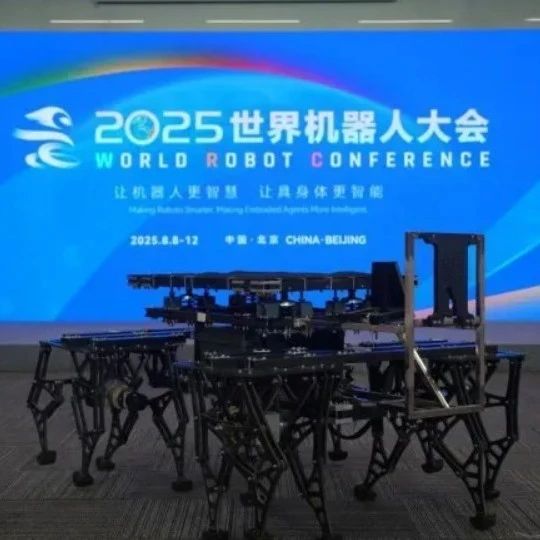
Core Viewpoint - The article highlights the innovative advancements of QianYue Technology in the field of multi-legged robots, showcasing their ability to combine heavy load capacity with precise control, marking a shift from robots as mere tools to collaborative partners in various industries [1][3]. Company Overview and Technological Breakthroughs - QianYue Technology, established in October 2015, focuses on the development and industrialization of multi-legged mobile robot systems, aiming to overcome the long-standing industry challenge of "heavy loads must be cumbersome" [4]. - The core product, the "Iron Horse Multi-Legged Robot," can carry up to 300 kg and features an innovative multi-joint torque feedback algorithm for precise collaboration with human operators [4][6]. - Key technological innovations include: - **Bionic Mechanism Design**: Inspired by the efficient movement of arthropods, enhancing adaptability and stability in rugged terrains [6]. - **Intelligent Motion Control**: Utilizing advanced algorithms for real-time sensing and response to external forces, ensuring safe and smooth collaboration [6]. - **Edge Intelligent Decision-Making**: Equipping robots with FPGA+GPU heterogeneous computing platforms for localized perception and decision-making in extreme environments [6][8]. - **Distributed Intelligent Perception and Power System**: Achieving a balance between high torque output for heavy loads and precise control for flexible operations [8]. Market Potential and Capital Interest - The capital market's enthusiasm for QianYue Technology stems from its recognized technological direction and alignment with national trends promoting smart mining construction [9]. - The Chinese government has made significant strides in smart mining, approving the establishment of key laboratories and implementing standards that facilitate the integration of smart equipment like QianYue's robots [9][12]. - The smart mining market is projected to reach over 2.3 trillion yuan by 2030, providing substantial growth opportunities for QianYue Technology [12]. Challenges to Scaling - Despite its technological advancements, QianYue Technology faces challenges in scaling its operations, including: - **Cost Control and Production Capacity**: The complexity of multi-legged robots leads to high production costs, necessitating design optimization and supply chain integration to reduce expenses [13]. - **Endurance and Reliability in Extreme Environments**: Current battery technologies limit operational time in harsh conditions, and the robots must meet stringent safety and durability standards for deployment in high-risk industries [13][14]. - Building trust with mining operators for large-scale deployment requires robust operational data and successful case studies [14]. Conclusion - QianYue Technology is poised for accelerated growth following its recent angel round financing, leveraging its core technologies and market recognition to establish a competitive edge in the evolving landscape of industrial robotics [15].
各赛项冠军背后的核心技术,到底有哪些?
机器人大讲堂· 2025-08-18 12:33
Core Viewpoint - The first World Humanoid Robot Games held in Beijing showcased advancements in robot technology across various competitions, highlighting the capabilities in motion control, environmental perception, and intelligent decision-making [1]. Competition Overview - The event featured 26 competitions across four categories: competitive events, performance events, scenario events, and peripheral events, with participation from 280 teams across 16 countries [1]. Medal Summary - Notable winners included: - Lingyi Technology won the 1500m race with a time of 6 minutes 34 seconds [2]. - The team from Beijing Dance Academy and Hubei Guanggu East Intelligence won the group dance competition with a score of 92.54 [2]. - The "Xingdong L7" team set a new record in the standing high jump at 95.641 cm [12]. Competitive Events Highlights - Yushutech emerged as a dominant force, winning multiple events including the 1500m, 400m, and 100m hurdles, showcasing a top speed of 4.78 m/s [5][6]. - The "Embodied Tian Gong Ultra" robot demonstrated significant advancements in autonomous navigation, achieving high speeds and stability during races [8]. Performance Events Insights - The "Songyan Power Little Rascal" team excelled in the free gymnastics event, scoring 41.6 points, attributed to its advanced dynamic balance algorithms [10]. - PNDBOTICS' Adam robot won the martial arts competition, showcasing high precision in executing complex movements [21]. Scenario Events Achievements - The "Lingzhi Team" won the factory material handling competition, leveraging advanced navigation and obstacle avoidance technologies [23]. - The "Wanda Future Warrior Team" excelled in hotel cleaning services, integrating multiple cleaning functions with intelligent navigation [25]. Future Outlook - The rapid advancements in humanoid robots indicate a shift towards practical applications, with a focus on dynamic movement capabilities and environmental adaptability [31].