机器人大讲堂

Search documents
快讯|达美乐用机器狗外送披萨;美国测试停车场巡检机器人;能用于水分析的机器人面世等
机器人大讲堂· 2025-08-21 10:11
Group 1 - FieldAI has raised $405 million in two consecutive funding rounds to accelerate global growth and plans to double its scale by the end of the year [1][3] - The core innovation of FieldAI is the Field Foundation Model (FFM), designed for embodied intelligence, capable of handling uncertainty, risk, and physical constraints [3] - FieldAI claims that its architecture represents a breakthrough in robotics, allowing robots equipped with FFM to adapt safely and dynamically to new and unexpected situations [3] Group 2 - Domino's UK has partnered with Boston Dynamics to launch the world's first pizza delivery robot dog named "Domidog," which can navigate and deter seagulls using 360-degree perception [4][6] - The robot dog is part of Domino's efforts to enhance last-mile delivery, previously experimenting with various delivery methods [6] Group 3 - A new robot capable of analyzing water has been developed to detect toxic pollutants like heavy metals and organic substances, utilizing a combination of decision-making algorithms and machine learning [7][9] - The robot system can autonomously collect water samples and measure their physical and chemical parameters, aiding in crisis response and sustainable resource management [9] Group 4 - A pilot project for a security robot named "Parker" is being planned in Silver Spring, Maryland, to patrol parking lots and enhance safety measures [10][12] - The robot is equipped with security cameras and can detect human presence and read license plates, but does not use facial recognition or audio recording [12] Group 5 - Researchers at UC San Diego have introduced a method called graphene-mediated optical stimulation (GraMOS) to control a robot dog using brain organoids connected to sensors [13][15] - This technology allows for rapid sensory-motor responses in the robot, potentially applicable in prosthetics, adaptive robotics, and bio-computing [15]



动捕设备能成为具身大模型的下一场蓝海吗?
机器人大讲堂· 2025-08-21 10:11
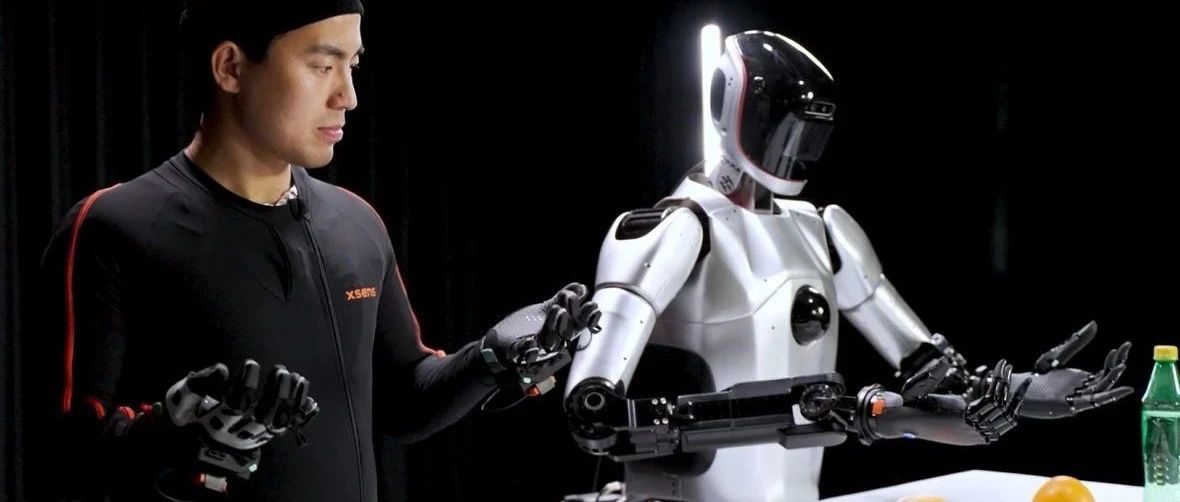
Group 1: Development of Embodied Intelligence - The concept of embodied intelligence dates back to the 1950s, with Turing laying the groundwork for its potential development [1] - Significant theoretical support was provided by researchers like Rodney Brooks and Rolf Pfeifer in the 1980s and 1990s, marking the early exploration and theoretical development phase [1] - The early 2000s saw the integration of interdisciplinary methods and technologies, leading to a more complete academic branch of embodied intelligence [1] - The rapid advancement of deep learning technology in the mid-2010s injected new momentum into the field, leading to increased industrial application since 2020 [1] Group 2: Large Models and Their Evolution - Large models refer to machine learning models with vast parameter counts, widely applied in NLP, computer vision, and multimodal fields [2] - The development of large models can be traced back to early AI research focused on logic reasoning and expert systems, which were limited by hard-coded knowledge [2] - The introduction of the Transformer model by Google in 2017 significantly enhanced sequence modeling capabilities, leading to the mainstream adoption of pre-trained language models [2] - The emergence of ChatGPT in late 2022 propelled advancements in the NLP field, with GPT-4 introducing multimodal capabilities in March 2023 [2] Group 3: Embodied Large Models - Embodied large models evolved from non-embodied large models, initially focusing on single-modal language models before expanding to multimodal inputs and outputs [4] - Google's RT series exemplifies embodied large models, with RT-1 integrating vision, language, and robotic actions for the first time in 2022, and RT-2 enhancing multimodal fusion and generalization capabilities in 2023 [4] - The future of embodied large models is expected to move towards more general applications, driven by foundational models like RFM-1 [4] Group 4: Data as a Core Barrier - The competition between real data and synthetic data is crucial for embodied robots, which often face challenges such as data scarcity and high collection costs [15] - The scale of embodied robot datasets is significantly smaller compared to text and image datasets, with only 2.4 million data points available [15] - Various organizations are expected to release high-quality embodied intelligence datasets in 2024, such as AgiBotWorld and Open X-Embodiment [15] Group 5: Motion Capture Systems - Motion capture technology records and analyzes real-world actions, evolving from manual keyframe drawing to modern high-precision methods [23] - The motion capture system consists of hardware (sensors, cameras) and software (data processing modules), generating three-dimensional motion data [23] - Different types of motion capture systems include mechanical, acoustic, electromagnetic, inertial, and optical systems, each with its own advantages and limitations [25] Group 6: Key Companies in Motion Capture Industry - Beijing Duliang Technology specializes in optical 3D motion capture systems, offering high-resolution and high-precision solutions [28] - Lingyun Technology is a professional supplier of configurable vision systems, providing optical motion capture systems with real-time tracking capabilities [29] - Aofei Entertainment focuses on motion capture solutions through investments in companies like Nuoyiteng, which offers high-precision products based on MEMS inertial sensors [30] - Liyade is a leading company in audiovisual technology, utilizing optical motion capture technology for various applications [31] - Zhouming Technology has developed a non-wearable human posture motion capture system that leverages computer vision and AI [32] - Xindong Lianke focuses on high-performance MEMS inertial sensors, expanding its business into motion capture hardware for robots [33]
非夕科技星穹论坛暨北京新址启幕在京举办:聚焦全球科技趋势,打造生态增长引擎
机器人大讲堂· 2025-08-21 10:11
Core Viewpoint - The article highlights the launch of the new office of Feixi Technology in Beijing and the "Starry Sky Forum," focusing on the latest trends in intelligent manufacturing and embodied intelligence, emphasizing the company's commitment to advancing adaptive robotics and general intelligent robotics technology [1][3][9]. Group 1: New Office and Ecosystem Development - The new office in Beijing integrates display, research, engineering, and service functions, leveraging the city's advantages in policy, research, talent, and industrial ecosystem to accelerate the development of adaptive robotics [3][5]. - The office features an advanced robot display area showcasing the latest adaptive robots and typical application cases, as well as research and testing spaces focused on technology validation and scenario adaptation for the northern market [5][8]. Group 2: Technological Advancements and Market Position - Feixi Technology's founder and CEO, Wang Shiquan, emphasized the company's long-term focus on the core concept of "human-like" robotics, enhancing robots' capabilities to handle complex tasks through a hierarchical intelligent system [9][10]. - Over the past nine years, Feixi has developed a comprehensive technology stack covering adaptive robot bodies, hierarchical intelligence, and operating system ecosystems, establishing a versatile platform for general robotics applications [10][11]. Group 3: Industry Applications and Future Prospects - Feixi's unique value proposition lies in its ability to meet diverse automation needs across various industries, including automotive, home appliances, consumer electronics, food, and healthcare, with scalable application scenarios [11]. - The company aims to continue collaborating with ecosystem partners to explore new business opportunities and enhance production capabilities for end customers [11]. Group 4: Forum Insights and Industry Challenges - During the forum, discussions highlighted the current automation rate in the automotive industry, which is only 10%-15%, indicating significant room for improvement through adaptive robotics and AI-enhanced perception [24]. - Key challenges in industrial automation include achieving high success rates, maintaining quality standards, and improving production pace to meet customer demands [18]. Group 5: Ecosystem Collaboration and Future Directions - Feixi's platform serves as a foundation for nurturing a diverse ecosystem, with partners from various sectors sharing insights on how to tackle challenges in food processing and other industries using general robotics technology [19][22]. - The roundtable discussion emphasized the importance of returning technology to practical applications and building a thriving symbiotic ecosystem to identify explosive growth opportunities [22].

上交大团队研发软体电液鳍驱动两栖机器人:三种运动模态自如切换!
机器人大讲堂· 2025-08-20 08:04
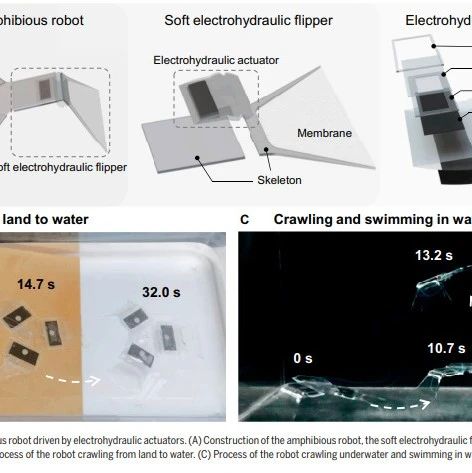
Core Viewpoint - The article discusses the development of a multimodal amphibious soft robot by a research team from Shanghai Jiao Tong University, highlighting its ability to seamlessly switch between land and water environments without structural modifications [1][2]. Group 1: Key Features of the Robot - The robot operates effectively in extreme temperatures, maintaining functionality in environments ranging from 2.1°C to 61.3°C [2]. - The core technology is the Soft Electrohydraulic Actuator, which enhances adaptability and safety compared to traditional rigid robots [5]. - The robot's design includes three symmetrically distributed soft electrohydraulic fins, each containing a sealed bag filled with silicone oil, allowing for bending motion when high-pressure electrical signals are applied [5][6]. Group 2: Motion Modes - The robot can perform three distinct motion modes: land crawling, underwater crawling, and swimming [8]. - In land crawling mode, the robot achieves a speed of 2.9 cm/s at an optimal driving frequency of 6 Hz, utilizing a unique friction mechanism [8][10]. - Underwater crawling relies on the interaction between the fins and water, achieving a speed of 3.2 cm/s at a frequency of 1.6 Hz [10]. - The swimming mode allows the robot to reach speeds of up to 5.9 cm/s, utilizing fluid dynamics to enhance propulsion efficiency [13]. Group 3: Environmental Adaptability - The robot demonstrates excellent adaptability to extreme temperatures, maintaining performance in both high and low-temperature water [14]. - A multi-layer waterproof design ensures long-term stability in aquatic environments, enhancing its operational reliability [14]. Group 4: Theoretical Modeling and Performance Optimization - The research team developed a force-electric-liquid coupling theoretical model to understand and optimize the actuator's performance [15]. - The actuator has a startup voltage threshold of approximately 3 kV, with bending angles increasing exponentially with voltage [15]. - Durability tests show that the actuator maintains its output performance after approximately 500 working cycles, indicating high reliability [15]. Group 5: Future Applications - The multimodal amphibious soft robot has potential applications in environmental monitoring, search and rescue, and pipeline inspection due to its ability to adapt to various environments without structural reconfiguration [15].
销售额5倍增长,拿下近千台机器人订单,还有近万台新品生产中?这家企业王者归来?
机器人大讲堂· 2025-08-20 08:04
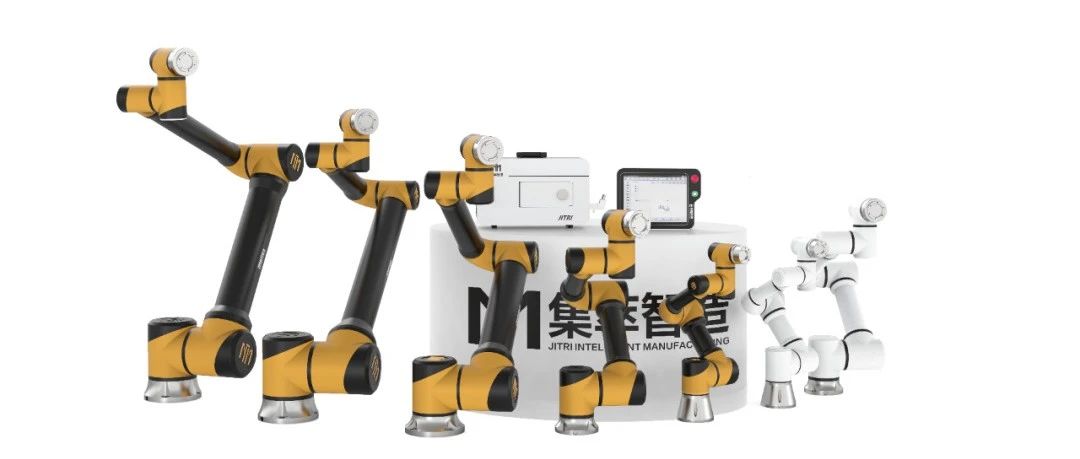
Core Viewpoint - The company, Jicui Intelligent Manufacturing, is experiencing exponential growth driven by advanced technology and a diversified product portfolio, with expectations of a strong comeback by 2025 due to the global smart manufacturing wave [1]. Sales Growth and Market Expansion - Jicui Intelligent Manufacturing has achieved a doubling of overall contract amounts compared to the same period in 2024, with overseas sales experiencing a remarkable 4-5 times growth, showcasing strong international competitiveness [1]. - The company has established a "four-dimensional integrated" business layout with a focus on global expansion, particularly radiating from the Yangtze River Delta, enhancing brand exposure and influence through continuous marketing efforts [1]. - The dual-channel strategy of "agents + direct sales + exhibitions + ecological cooperation" has demonstrated industry-leading market activity and sales capabilities, aiming to transition from "Made in China" to "Global Manufacturing" [1]. Product Matrix and Technological Leadership - The company attributes its growth to two core products that have performed exceptionally well due to market demand and capacity expansion [4]. Six-Axis Collaborative Robot - The IIMT-CI-W05 collaborative robot has undergone revolutionary upgrades, with nearly 1,000 orders received, particularly from major clients, establishing itself as a bestseller in industrial automation [5][7]. - Key features include an intelligent welding process package, an expert database for parameter matching, multi-terminal collaboration, and an open ecosystem with over 70 secondary development interfaces [7]. Coffee Robot - The coffee robot, a unique integration of collaborative robotics and unmanned vehicle technology, has achieved "production + delivery" capabilities, with nearly 3,000 units in mass production, targeting diverse commercial environments [9][15]. - Features include voice interaction for ordering, rapid coffee preparation in an average of 90 seconds, and smart monitoring for operational efficiency [13][15]. Capacity Upgrade and Competitive Strength - To meet surging market demand, Jicui Intelligent Manufacturing is launching a project for nearly 10,000 robotic units, marking a significant shift from technology development to large-scale production [18]. - The new facility will include two semi-automated production lines, increasing annual capacity to 8,000 robotic units and significantly shortening delivery times [20]. Future Outlook - The company aims to leverage its nearly 10,000-unit industrial base to enhance research and development investments and global service networks, driving robotic technology across various industries and showcasing "Chinese Manufacturing" on a global scale [22]. - Jicui Intelligent Manufacturing is positioned to transform from a follower to a leader in the smart manufacturing wave, with explosive order growth reflecting a broader trend of high-end equipment from China entering the global market [24].
具身智能,产业智变新引擎!「2025科技创变者大会」邀您共探产业变革浪潮
机器人大讲堂· 2025-08-20 08:04
Core Insights - The 2025 Science and Technology Innovator Conference focuses on "Embodied Intelligence" as a new engine for industrial transformation, emphasizing the importance of hard technology commercialization and a comprehensive service model that addresses the challenges of transitioning from technology to product [1][5]. Group 1: Conference Overview - The conference will feature a one-day main forum covering topics such as "embodied intelligence," "humanoid robots," "computing power," "chips," and "core components" [5]. - Over 500 participants, including scientists, entrepreneurs, industry experts, and investors, will discuss the development paths following breakthroughs in critical technologies [5]. Group 2: Technological Trends - Embodied intelligence is emerging as a bridge between the virtual and real worlds, driving intelligent upgrades across various industries [3]. - The past year has shown a clear trajectory of advancement in embodied intelligence, with significant developments in AI brain integration and physical robotics capabilities [3]. - The potential for a unified market similar to the automotive supply chain is anticipated, which could reshape supply chain dynamics [3]. Group 3: Industry Transformation in China - China is transitioning from a "follower" to a "local leader" in hardware technology and is accelerating its software technology development in the field of embodied intelligence [4]. - The industry chain is undergoing deep restructuring, with upstream hardware components moving towards domestic production, midstream platforms becoming more accessible, and downstream users seeking customized solutions [4]. Group 4: Application and Innovation - The conference will unveil the "Top 10 Applications of Embodied Intelligence," creating a platform for demand-side propositions and technology solutions [6]. - High-end manufacturing and consumer technology sectors will collaborate to validate and promote the industrialization of embodied intelligence [5]. Group 5: Ecosystem and Collaboration - The event aims to build an innovative community with over 500 ecosystem partners from various industries, including high-end manufacturing and consumer services [8]. - A comprehensive media outreach strategy will ensure extensive coverage, engaging a wide audience through various channels [8].

直播预告 | 从VLA具身算法拆解到RDT模型复现
机器人大讲堂· 2025-08-20 08:04
Core Viewpoint - The article highlights an upcoming live event focused on embodied intelligence technology, featuring expert Dr. Hu, who will discuss the VLA algorithm and RDT model, providing insights into their principles, applications, and development trends [1][2]. Group 1: Live Event Details - The live session is scheduled for August 21, 2025, at 19:00, hosted on the RoboTalk video platform [2]. - Participants will have the opportunity to engage in a multi-round lottery during the live stream, with chances to win various prizes [1]. Group 2: Key Highlights of the Live Session - Comprehensive interpretation of six categories of VA algorithms, focusing on understanding the content and advantages of different solutions [2]. - Full-chain analysis of the RDT model, covering architecture, dataset, training details, and inference effects [2]. - Sharing of practical replication experiences based on the EA200 platform, including algorithm replication and optimization strategies [2]. - Recommendations for quickly establishing an experimental environment for embodied intelligence [2].

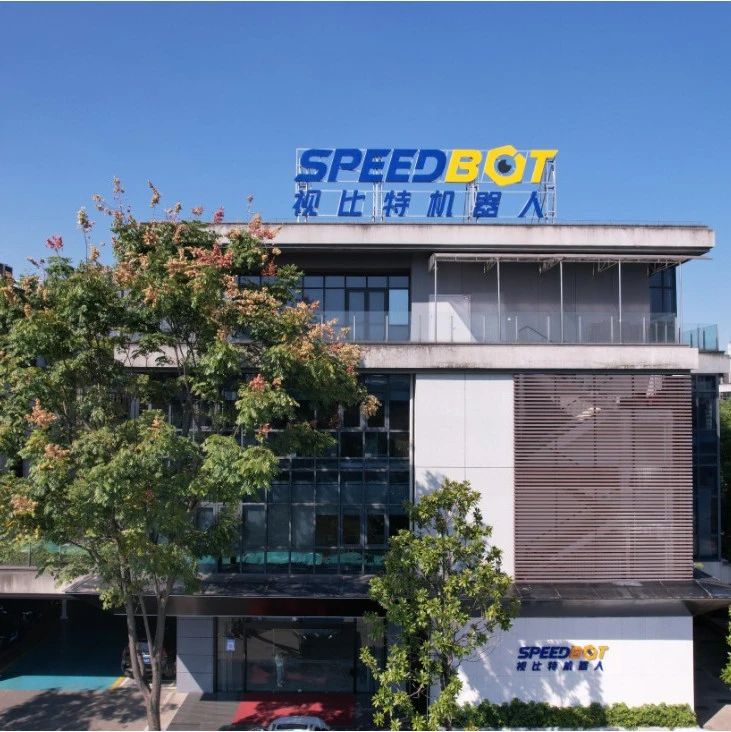
「视比特机器人」完成B+轮亿元级融资!加速国产工业具身智能落地
机器人大讲堂· 2025-08-20 08:04
Core Viewpoint - SpeedBot Robotics has successfully completed a billion-level B+ round financing, which will be used for further R&D of industrial embodied intelligence products and market expansion in the shipbuilding and lithium battery industries [1]. Group 1: Company Overview - SpeedBot Robotics was established in 2018, headquartered in Changsha, Hunan, with R&D centers in Shanghai and overseas branches in Germany, Singapore, the USA, and Canada [1]. - The company focuses on industrial embodied intelligence technology and systems, providing solutions for smart manufacturing, including embodied intelligent robots, intelligent measurement and detection equipment, and smart production lines [3]. Group 2: Technology and Products - The company has developed the Kunwu Industrial Intelligent Software Platform, which integrates cutting-edge technologies such as digital twins, low-code development, and industrial large models for one-stop production line design and development [5]. - SpeedBot has created the Xiangyun Industrial Quality Inspection AIOps platform, covering the entire process from AI model development to monitoring and operation, aimed at improving R&D efficiency and reducing delivery costs [5]. Group 3: Market Applications - SpeedBot has implemented large-scale solutions in heavy industry and automotive manufacturing, providing smart production line solutions for processes such as cutting, sorting, polishing, welding, and assembly [6]. - The company has developed several products for the automotive sector, including the MVM large-size high-precision multi-view measurement system and the SmartFit intelligent assembly system, achieving performance that meets or exceeds international standards [6]. Group 4: Recognition and Achievements - SpeedBot Robotics has demonstrated strong R&D and industrialization capabilities in the industrial intelligence field, receiving recognition as a national-level specialized and innovative "little giant" enterprise and leading several national and industry standards [8].
快讯|Evri 尝试将机器人狗用于送货;NVIDIA首款人形机器人将于11月亮相;哈佛大学团队发明柔软可穿戴外骨骼机器人
机器人大讲堂· 2025-08-20 08:04
Group 1 - WIRobotics launched its first general-purpose humanoid robot ALLEX, designed to respond to stimuli like a human and handle multiple tasks with 15 degrees of freedom (DOF) [2] - ALLEX can detect forces as low as 100 grams (gf) and is equipped with a gravity compensation mechanism providing 40 N of fingertip force, allowing it to perform high-load tasks efficiently [2] - The robot's lightweight design includes a mechanical hand weighing approximately 700 grams and a shoulder component weighing about 5 kilograms, enabling it to lift over 3 kilograms with a strength-to-weight ratio superior to many larger robots [2] Group 2 - Harvard researchers developed a new soft wearable robotic device that personalizes assistance for users by responding to their precise movements, enhancing daily task support [5] - The device consists of a vest with sensors and an inflatable balloon that provides mechanical assistance to weakened limbs, utilizing a machine learning model to track user movements and adjust support levels accordingly [5] Group 3 - Evri is testing a robotic delivery dog named Milo in Yorkshire, programmed to assist couriers in delivering packages and equipped with real-world training data, cameras, and laser mapping systems for safe navigation [8] - The deployment of Milo marks a significant milestone in the UK's "last mile" delivery, with plans for a fully autonomous version that can interact with the environment like a human courier [8] Group 4 - Seoul National University Hospital (SNUH) successfully performed a single-port robotic kidney transplant, offering a minimally invasive alternative to traditional surgery [11] - This method involves small incisions, significantly reducing pain and recovery time for patients compared to conventional procedures [11] Group 5 - Foxconn is preparing to produce humanoid robots in collaboration with NVIDIA, with a potential launch in the coming months [14] - The robots are part of NVIDIA's AI supply chain, with improvements made to their solutions, including advanced capabilities powered by a large language model (LLM) and robotic brain [14]


央视报道!哈工程最新研制成果“机器鱼”,4000米深海行动自如!
机器人大讲堂· 2025-08-20 02:14
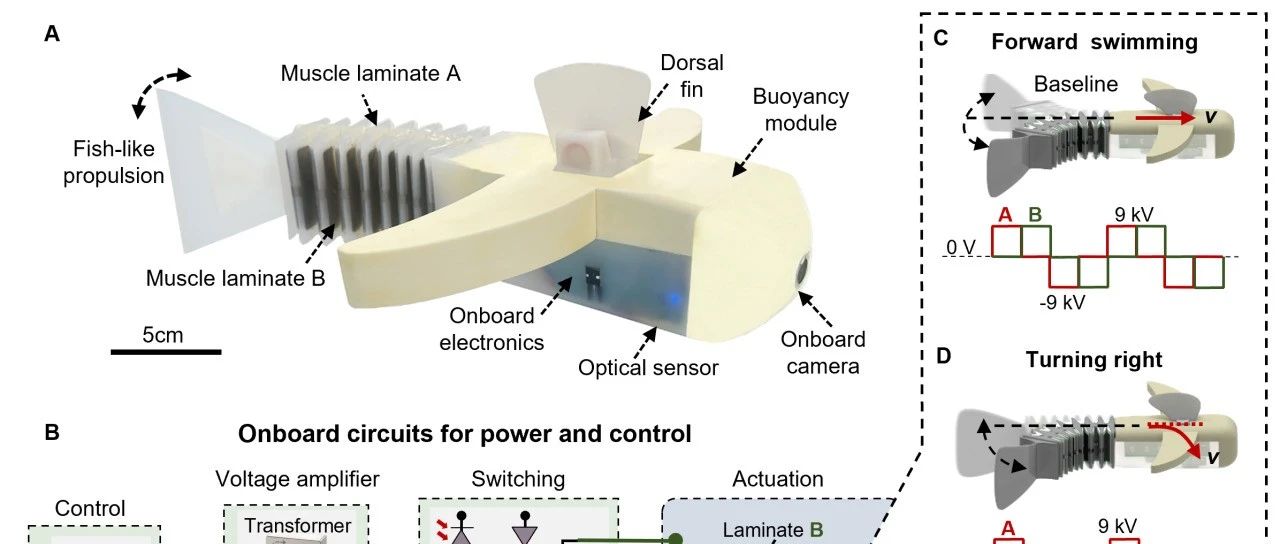
Core Viewpoint - The article discusses the development and significance of a new soft-bodied underwater robot that utilizes innovative electro-hydraulic actuation technology, enabling it to operate effectively in extreme deep-sea environments, overcoming the limitations of traditional rigid robots [4][10][22]. Group 1: Technology and Innovation - The soft-bodied robot measures 32 cm in length, has an 18 cm wingspan, and weighs only 670 grams, showcasing exceptional adaptability to deep-sea conditions [1][7]. - Traditional rigid robots struggle in the deep sea due to high pressure and complex environments, making soft-bodied robots a more suitable solution due to their flexible structure and minimal environmental interference [3][4]. - The research team led by Professor Li Guorui from Harbin Engineering University has pioneered the use of electro-hydraulic actuators (EHA) for deep-sea soft-bodied robots, which do not rely on external pumps, thus allowing for a more compact and flexible design [4][10]. Group 2: Design Features - The robot features a wave-shaped tail for propulsion, buoyancy modules for stability, and an integrated optical sensing module for height adjustment, enabling it to monitor its distance from the seabed continuously [7][9]. - It incorporates a micro deep-sea optical sensing system that allows real-time perception of its motion and environmental targets, enhancing its operational capabilities in extreme conditions [9][10]. Group 3: Performance and Testing - The research team successfully tested the robot in various depths, including a deployment at 3176 meters in the South China Sea, where it demonstrated reliable maneuverability and sensing capabilities under extreme pressure and complex flow conditions [17][21]. - The robot's innovative design allows it to perform complex trajectory movements and low-disturbance detection, marking a significant advancement in deep-sea exploration technology [22][24]. Group 4: Future Implications - The development of this soft-bodied robot represents a breakthrough in deep-sea exploration, providing a powerful tool for marine scientific research, resource exploration, and environmental monitoring [22][10]. - The integration of artificial intelligence and robotics is expected to drive significant advancements in ocean development, making the ocean economy a vital growth point for coastal regions [22].