中汽协会数据

Search documents
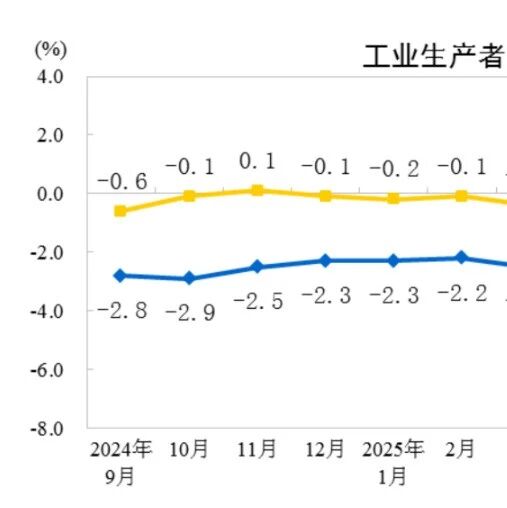
【数据发布】2025年9月份工业生产者出厂价格同比降幅继续收窄
中汽协会数据· 2025-10-15 09:13
Group 1: Industrial Producer Price Changes - In September, the industrial producer price index showed a year-on-year decline of 2.3%, with a narrowing decrease of 0.6 percentage points compared to the previous month [3] - The prices of production materials decreased by 2.4%, contributing approximately 1.81 percentage points to the overall decline in industrial producer prices [2] - The average industrial producer price from January to September decreased by 2.8% compared to the same period last year [3] Group 2: Price Changes by Category - In the category of industrial producer purchase prices, fuel and power prices fell by 8.1%, while chemical raw materials decreased by 5.5% [5] - The prices of food decreased by 1.7%, while durable consumer goods saw a significant decline of 3.9% [2][8] - The prices of non-ferrous metal materials and wires increased by 6.6%, indicating a contrasting trend within the industrial materials sector [5][8] Group 3: Month-on-Month Price Changes - In September, the industrial producer prices remained stable month-on-month, with production materials prices unchanged [6] - The prices of mining industries increased by 1.2%, while processing industry prices saw a slight decline of 0.1% [6] - The purchase prices for industrial producers showed a month-on-month increase of 0.1%, with notable increases in non-ferrous metal materials and fuel prices [6][8]

【数据发布】2025年9月份居民消费价格同比下降0.3% 环比上涨0.1%
中汽协会数据· 2025-10-15 09:13
Core Viewpoint - In September 2025, the national consumer price index (CPI) decreased by 0.3% year-on-year, with urban areas down 0.2% and rural areas down 0.5%. Food prices fell by 4.4%, while non-food prices increased by 0.7%. The average CPI from January to September showed a decline of 0.1% compared to the same period last year [1][4][8]. Price Changes by Category (Year-on-Year) - In September, the prices of food, tobacco, and alcohol decreased by 2.6%, contributing approximately 0.74 percentage points to the CPI decline. Notably, fresh vegetable prices dropped by 13.7%, impacting the CPI by about 0.35 percentage points, while pork prices fell by 17.0%, contributing 0.26 percentage points to the decline [4][8]. - Other categories showed mixed results, with prices for other goods and services, living goods and services, and clothing rising by 9.9%, 2.2%, and 1.7%, respectively. Medical care, education, culture, and housing prices increased by 1.1%, 0.8%, and 0.1%, while transportation and communication prices decreased by 2.0% [4][8]. Price Changes by Category (Month-on-Month) - In September, food, tobacco, and alcohol prices increased by 0.5%, contributing approximately 0.13 percentage points to the CPI increase. Fresh vegetable prices rose by 6.1%, impacting the CPI by about 0.13 percentage points, while pork prices decreased by 0.7%, contributing to a slight CPI decline [6][8]. - Other categories experienced varied changes, with prices for other goods and services and clothing rising by 1.3% and 0.7%, respectively. Living goods and services, as well as medical care, saw increases of 0.3% and 0.2%, while transportation and education prices fell by 0.9% and 0.4% [6][8]. Summary of Price Changes - The overall CPI for September showed a month-on-month increase of 0.1% and a year-on-year decrease of 0.3%. Urban CPI remained flat, while rural CPI increased by 0.2%. Food prices rose by 0.7% month-on-month but fell by 4.4% year-on-year [1][8]. - The breakdown of CPI changes indicates that while food prices are under pressure, other categories like clothing and services are experiencing price increases, reflecting a complex inflationary environment [4][6][8].
产业运行 | 2025年9月汽车工业产销情况简析
中汽协会数据· 2025-10-15 09:13
Core Viewpoint - The automotive market in China is experiencing steady growth, driven by favorable macroeconomic policies and a strong domestic demand, with production and sales growth rates remaining above 10% for five consecutive months [1]. Production and Sales Data - In September 2025, automotive production and sales reached 3.276 million and 3.226 million units, respectively, with month-on-month increases of 16.4% and 12.9%, and year-on-year increases of 17.1% and 14.9% [3]. - Passenger vehicle production and sales in September 2025 were 2.9 million and 2.859 million units, showing month-on-month growth of 16% and 12.5%, and year-on-year growth of 15.9% and 13.2% [4]. - From January to September 2025, passenger vehicle production and sales totaled 21.241 million and 21.246 million units, reflecting year-on-year growth of 13.9% and 13.7% [5]. - Total automotive production and sales from January to September 2025 were 24.333 million and 24.363 million units, with year-on-year growth of 13.3% and 12.9% [6]. New Energy Vehicles - In September 2025, new energy vehicle production and sales reached 1.617 million and 1.604 million units, with year-on-year growth of 23.7% and 24.6% [7]. - From January to September 2025, new energy vehicle production and sales were 11.243 million and 11.228 million units, marking year-on-year growth of 35.2% and 34.9% [7]. Commercial Vehicles - In September 2025, commercial vehicle production and sales were 376,000 and 368,000 units, with month-on-month growth of 19.3% and 16.3%, and year-on-year growth of 27.7% and 29.6% [8]. - From January to September 2025, commercial vehicle production and sales totaled 3.091 million and 3.117 million units, reflecting year-on-year growth of 9.4% and 7.8% [9]. Domestic and Export Sales - Domestic automotive sales from January to September 2025 reached 19.414 million units, with a year-on-year increase of 12.5% [11]. - Automotive exports in the same period totaled 4.95 million units, showing a year-on-year growth of 14.8% [12]. - In September 2025, automotive exports were 652,000 units, with month-on-month growth of 6.7% and year-on-year growth of 21% [13]. - Domestic sales in September 2025 were 2.574 million units, with month-on-month growth of 14.6% and year-on-year growth of 13.4% [14].

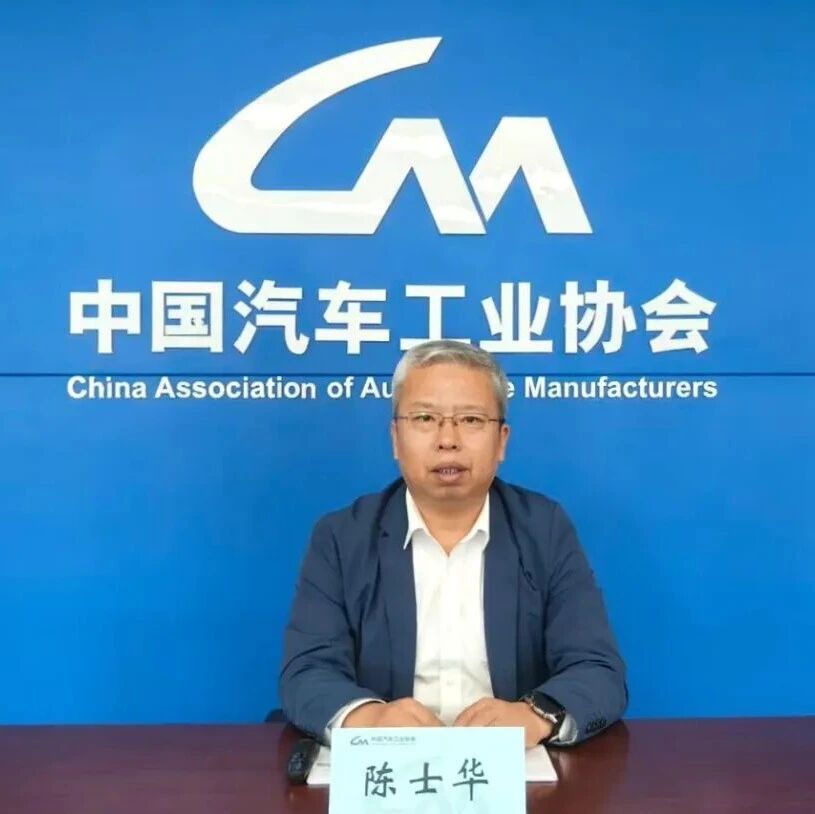
中国汽车工业协会2025年10月信息发布会在北京召开
中汽协会数据· 2025-10-15 09:13
Core Viewpoint - The automotive market in China is experiencing stable growth, supported by favorable macroeconomic policies and initiatives such as the vehicle trade-in program, which has positively impacted production and sales figures [3]. Group 1: Economic Environment - In September 2025, various regions and departments intensified the implementation of proactive macro policies to strengthen domestic circulation, ensuring policy continuity and stability, which has contributed to a steady economic development trend [3]. - The sustained improvement in the macro economy has played a crucial role in the stable operation of the automotive market [3]. Group 2: Market Performance - The automotive market has shown a positive trend, with production and sales growth rates maintaining over 10% year-on-year for five consecutive months [3]. - The recent vehicle trade-in policy has continued to show effectiveness, with some previously paused regions beginning to recover, and local auto exhibitions are thriving [3]. Group 3: Industry Initiatives - The Ministry of Industry and Information Technology, along with eight other departments, issued the "Automotive Industry Stabilization and Growth Work Plan (2025-2026)," which outlines 15 measures across four dimensions: expanding domestic consumption, improving supply quality, optimizing the industrial development environment, and enhancing international cooperation [3]. - These initiatives aim to provide a clear path for stable growth and high-quality development in the automotive industry, ensuring continued positive market conditions [3].
产业运行 | 2025年9月汽车工业产销情况
中汽协会数据· 2025-10-14 06:17
Core Viewpoint - The automotive industry in China is experiencing a positive trend with significant growth in production and sales, driven by policies such as the vehicle trade-in program and the introduction of new models by companies [1][12][62]. Group 1: Overall Automotive Production and Sales - In September, automotive production and sales reached 3.276 million and 3.226 million units respectively, marking a month-on-month increase of 16.4% and 12.9%, and a year-on-year increase of 17.1% and 14.9% [12]. - From January to September, total automotive production and sales were 24.433 million and 24.436 million units, reflecting year-on-year growth of 13.3% and 12.9% [12][13]. Group 2: Domestic Sales Performance - In September, domestic automotive sales were 2.574 million units, with a month-on-month increase of 14.6% and a year-on-year increase of 13.4% [13]. - For the first nine months, domestic sales totaled 19.414 million units, showing a year-on-year increase of 12.5% [13][38]. Group 3: Export Performance - In September, automotive exports reached 652,000 units, with a month-on-month increase of 6.7% and a year-on-year increase of 21% [18]. - From January to September, total automotive exports were 4.95 million units, reflecting a year-on-year growth of 14.8% [18][19]. Group 4: New Energy Vehicles (NEVs) - In September, NEV production and sales reached 1.617 million and 1.604 million units respectively, with year-on-year growth of 23.7% and 24.6% [62]. - For the first nine months, NEV production and sales were 11.243 million and 11.228 million units, showing year-on-year growth of 35.2% and 34.9% [62][69]. Group 5: Key Enterprises and Market Concentration - The top fifteen automotive groups sold a total of 22.476 million units from January to September, with a year-on-year increase of 12.9%, accounting for 92.3% of total automotive sales [78]. - The top fifteen NEV groups sold a total of 10.666 million units, reflecting a year-on-year growth of 36.8%, representing 95% of total NEV sales [80].
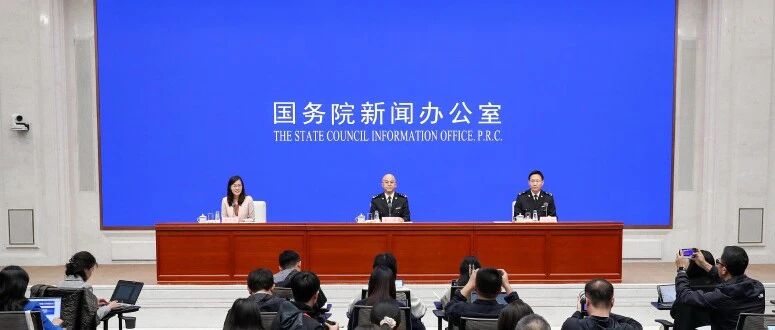
国新办举行新闻发布会 介绍2025年前三季度进出口情况
中汽协会数据· 2025-10-13 07:33
Core Viewpoint - China's foreign trade has shown resilience and growth in the first three quarters of the year, with total imports and exports reaching 33.61 trillion yuan, a year-on-year increase of 4% [4][6]. Group 1: Trade Performance - In the first three quarters, exports amounted to 19.95 trillion yuan, growing by 7.1%, while imports were 13.66 trillion yuan, a slight decline of 0.2% [4][5]. - The trade growth rate has accelerated each quarter, with the third quarter showing a 6% increase, marking eight consecutive quarters of year-on-year growth [4][5]. - The trade with countries involved in the Belt and Road Initiative reached 17.37 trillion yuan, up 6.2%, accounting for 51.7% of total trade [4][5]. Group 2: Export Trends - Exports of mechanical and electrical products reached 12.07 trillion yuan, increasing by 9.6%, representing 60.5% of total exports [5]. - High-tech product exports, including electronic information and high-end equipment, grew significantly, with increases of 8.1%, 22.4%, and 15.2% respectively [5]. - The export of cultural and traditional products has gained popularity, with items like dragon boats and wood carvings seeing strong demand [11]. Group 3: Import Dynamics - Imports began to recover, with a 0.3% increase in the second quarter and a further acceleration to 4.7% in the third quarter [5]. - Key imports such as crude oil and metal ores saw year-on-year increases of 4.9% and 10.1% respectively [5]. - The number of foreign trade enterprises reached 700,000, with private enterprises accounting for 61.3% of total trade [5][6]. Group 4: Regional Trade Developments - The western region of China saw a robust trade performance, with imports and exports totaling 3.21 trillion yuan, a year-on-year increase of 10.2% [14][15]. - The development of infrastructure and trade channels, such as the Western Land-Sea New Corridor, has significantly boosted trade in the western region [14][15]. Group 5: APEC and Bilateral Trade - Trade with APEC economies grew by 2%, reaching 19.41 trillion yuan, which constitutes 57.8% of China's total trade [20]. - Trade with South Korea amounted to 1.74 trillion yuan, with exports growing by 0.6% and imports by 3.1% [20][21]. Group 6: Private Enterprises - Private enterprises contributed significantly to trade, with a total of 19.16 trillion yuan in imports and exports, marking a 7.8% increase [25][26]. - These enterprises have been proactive in exploring new markets, with notable growth in exports to emerging markets like ASEAN and Africa [26]. Group 7: Cross-Border E-commerce - Cross-border e-commerce exports reached approximately 1.63 trillion yuan, growing by 6.6% in the first three quarters [35][36]. - The government has implemented various measures to facilitate the growth of cross-border e-commerce, including streamlined customs processes [36][37]. Group 8: Processing Trade - Processing trade reached 6.18 trillion yuan, a year-on-year increase of 6.9%, accounting for 18.4% of total trade [56][57]. - The sector is increasingly moving towards high-value-added processes, with a notable rise in high-tech product exports [56][57]. Group 9: Trade with ASEAN - Trade with ASEAN reached 5.57 trillion yuan, growing by 9.6%, maintaining ASEAN's status as China's largest trading partner [62][63]. - The upcoming upgrade of the China-ASEAN Free Trade Area is expected to further enhance trade relations [63].
明年起实施!享受车船税优惠的节能、新能源汽车产品技术要求调整
中汽协会数据· 2025-10-11 05:53
Core Viewpoint - The Ministry of Industry and Information Technology, the Ministry of Finance, and the State Taxation Administration have jointly announced adjustments to the technical requirements for energy-saving and new energy vehicles eligible for vehicle and vessel tax exemptions, effective from January 1, 2026 [1][4]. Summary by Sections Announcement Details - The announcement will be implemented starting January 1, 2026, and the previous announcement (2024 No. 10) will be abolished simultaneously [4]. - Applications completed before January 1, 2026, will continue to follow the previous technical requirements [4]. Technical Requirements Updates - The comprehensive fuel consumption limits for energy-saving passenger cars, light commercial vehicles, and heavy commercial vehicles will be updated [3]. - Adjustments to the technical requirements for new energy vehicle products are detailed in the announcement [3]. New Directory - A new directory for energy-saving and new energy vehicles eligible for tax exemptions will be established, starting from the 82nd batch [4][5]. - Vehicles that meet the new technical requirements will be included in this new directory, while those that do not comply must rectify and reapply before January 1, 2026 [5]. Specific Technical Requirements - For plug-in hybrid passenger vehicles, the electric-only range must be no less than 100 kilometers [26]. - For pure electric buses, the range must be no less than 200 kilometers, and for plug-in hybrid buses, it must be no less than 50 kilometers [28]. - Pure electric trucks must have a range of no less than 80 kilometers, while plug-in hybrid trucks must meet a minimum electric range of 50 kilometers [29]. - Fuel cell commercial vehicles must have a rated power of no less than 50 kW and a hydrogen range of no less than 300 kilometers [30][31].

国家发展改革委、市场监管总局:治理价格无序竞争 维护良好市场价格秩序
中汽协会数据· 2025-10-10 02:12
Core Viewpoint - The announcement aims to address disorderly price competition in key industries, which negatively impacts industry development, product innovation, and quality safety, ultimately harming the healthy development of the national economy [1][3]. Group 1: Background of the Announcement - Price competition is a crucial aspect of market competition, and its proper functioning is essential for resource allocation in a socialist market economy [3]. - The current disorderly competition in certain industries may lead to adverse effects, prompting the need for effective measures to maintain a good market price order [3]. Group 2: Measures for Addressing Price Disorder - The announcement outlines several measures, including assessing industry average costs to guide reasonable pricing for operators in industries with significant price disorder [2][4]. - Industry associations are required to adhere to price laws and promote self-discipline among operators to maintain fair competition [2][5]. Group 3: Regulatory Actions Against Disorderly Competition - Operators suspected of engaging in disorderly price competition will receive reminders to comply with pricing norms [5][9]. - Regulatory enforcement will focus on operators who fail to correct their pricing behavior after warnings, including cost investigations and price supervision checks [5][9]. Group 4: Requirements for Tendering and Bidding Behavior - Operators must strictly follow the regulations of the Tendering and Bidding Law, ensuring that bids are not below their own costs [6][9]. - The announcement emphasizes that bids below industry average costs but above individual costs are not subject to rejection [6]. Group 5: Implementation of the Announcement - The National Development and Reform Commission and the Market Supervision Administration will guide local authorities in implementing the announcement's measures [7][9]. - There will be a focus on policy promotion, industry self-discipline, market monitoring, and strict enforcement of regulations to maintain a fair competitive environment [7][9].

工信部等三部门调整2026—2027年减免车辆购置税新能源汽车产品技术要求
中汽协会数据· 2025-10-10 02:12
Core Viewpoint - The announcement by the Ministry of Industry and Information Technology, the Ministry of Finance, and the State Taxation Administration regarding the exemption of vehicle purchase tax for new energy vehicles (NEVs) from 2026 to 2027 outlines new technical requirements for NEVs to qualify for tax exemptions [1][3][6]. Summary by Sections Technical Requirements for Pure Electric Passenger Vehicles - The energy consumption per 100 kilometers for pure electric passenger vehicles must not exceed the limits set in GB 36980.1-2025 for corresponding models [3]. - For passenger vehicles with a maximum design total mass exceeding 3500 kg, the energy consumption limits will follow the same standards as those for 3500 kg vehicles [3]. Technical Requirements for Plug-in Hybrid (Including Extended Range) Passenger Vehicles - The pure electric driving range for plug-in hybrid vehicles must meet a conditional equivalent all-electric range of no less than 100 kilometers [4]. - Fuel consumption limits for plug-in hybrids must be less than 70% for vehicles with a curb weight below 2510 kg and less than 75% for those at or above 2510 kg, compared to the limits in GB 19578-2024 [4]. - The energy consumption limits for plug-in hybrids must be less than 140% for vehicles below 2510 kg and less than 145% for those at or above 2510 kg, following the standards in GB 36980.1-2025 [5]. Implementation Timeline and Compliance - From January 1, 2026, vehicles listed in the "Directory of Exempt Vehicles Purchase Tax for New Energy Vehicles" must comply with the new technical requirements [6]. - Vehicles already listed before December 31, 2025, that meet the new requirements will automatically transition to the 2026 directory, while those that do not will be removed [6]. - Applications for vehicles not meeting the requirements must be submitted by December 12, 2025, for reconsideration [6].

关于召开2025汽车工业统计年报工作会议的通知
中汽协会数据· 2025-10-10 02:12
中国汽车工业协 关于召开 2025 汽车工业统计年报工作会议的通知 各有关企业: 为做好 2025年统计年报及 2026年定期报表工作,进一步加 强汽车工业统计工作,提升统计数据质量,我会定于2025年10 月 22 日至 25 日在湖南省长沙市召开 2025 汽车工业统计年报工 作会议,同期将安排汽车工业信息系统功能培训。现将会议有关 事项通知如下: 一、会议主要内容 1、政府领导介绍统计工作要求; 2、2025年汽车工业经济运行情况; 中汽协函字[2025]368 号 三、会议费用 3、2025年汽车工业统计工作总结及下一步工作计划; 4、表彰 2025年度汽车工业统计工作先进集体及先进工作者; 5、介绍汽车工业统计报表制度修订情况及布置 2025年年 报及 2026年定期报表工作; 6、汽车工业信息系统功能培训; 7、企业生产经营状况及统计工作情况交流。 二、会议时间、地点 时间:2025年10月22日至25日,其中22日全天报到, 25 日代表返程。 地点:长沙高升华美达酒店(湖南省长沙市雨花区中意 一号 798 号),酒店联系电话:0731-82831111。 1、本次会议费用为人民币1900元/人 ...