小Lin说

Search documents
坐拥金山,却变成人间炼狱,委内瑞拉到底经历了什么?
小Lin说· 2026-02-01 13:00
今天咱们来聊一个国家 可以说是人类近代历史上 最大的经济灾难 就是 委内瑞拉 作为全球石油储量最高的国家 起手牌可以说是 "俩王四个二" 却在不到十年的时间里头 GDP下降了80% 根据联合国的估算 2024年有82%的人 生活在贫困线以下 首都加拉卡斯有一整座山的贫民窟 谋杀率全球最高 在这个加油跟几乎不要钱一样的国家 却连卫生纸 粮食药品 这些基本物品都极度短缺 以至于超市买菜都得限号 得看你的身份证尾号 还要配备非常严格的武装安保 十多年持续陷入在恶性通胀的火炉里 钱都得论斤称 这个货币贬值速度 离谱到什么程度啊 如果你把它20年前 100块面值的玻利瓦尔 这么一张一张摞起来 物理上塞满整个鸟巢体育场 还不是一个 塞满40个鸟巢 这么多钱价值多少呢 也就可以去麦当劳买个汉堡 你还不能配薯条跟汽水 等等这些恶魔般的概念 竟然全都附身在了这么一个国家身上 所以你可别觉得 我们今天聊委内瑞拉 就是因为它是一个政治热点 咱来一起看看 它是怎么把这一手好牌打成这样 委内瑞拉 是南美洲北部海岸的一个国家 国土面积大概91万平方公里 比东三省加起来再大点 现在大概有2,800万人口 本来呢这主要是土著的印第安人 从1 ...

一口气了解赌球
小Lin说· 2025-12-12 01:00
行业规模与分布 - 2024年全球体育博彩总投注额估计在15,000亿美元到20,000亿美元之间[1] - 足球博彩占全球体育博彩总额的35%-50%,是无可争议的世界第一运动[1] - 亚洲体育博彩市场占据全球市场约2/3,超过10,000亿美元/年,但多数为地下非法交易[1] 体育博彩的经济影响 - 皇家马德里足球俱乐部是唯一一个突破10亿欧元营收大关的俱乐部,24-25赛季营收为118,500万欧元(约合13.7亿美元)[1] - 欧洲五大联赛中,英超总营收约为85亿美元/年[1] - 欧洲所有足球联赛总营收约为450亿美元,而足球相关博彩市场(庄家/平台营收)高达750亿美元,总下注额约为8,000亿美元[1] 体育博彩的风险与问题 - 体育博彩市场容易出现操控比赛(Match Fixing)问题,大庄家可能通过影响比赛走向或获取内幕消息来获取巨额回报[1] - 操控比赛的重灾区包括板球界和一些低级别联赛、友谊赛,如土耳其、匈牙利、希腊联赛[1] - 地下赌球常以信用赌方式进行,庄家承担信用风险,但也更容易吸引赌徒参与,并可能涉及高利贷和暴力催收[6] 博彩方式与盈利模式 - 常见的博彩方式包括固定赔率和合池下注[2] - 博彩公司通过在赔率中加水钱(抽水)来盈利,正规体育博彩的盈利方式是抽取中介费[2] - 庄家通常希望爆冷的球队获胜,因为热门球队的赔率往往被非理性押注抬高[3] - 越复杂、不确定性越高的博彩项目,博彩公司的利润率越高,例如实时盘、串关(Parlay)等,利润率可高达25%-30%[3] 各国/地区对体育博彩的态度 - 英国是全世界最老牌、最成熟的体育博彩市场之一,对体育博彩态度开放,但监管严格[4] - 美国在2018年之前大部分地区禁止体育博彩,之后开始井喷式发展,目前已有超过38个州将体育博彩合法化[4] - 香港体育博彩由香港赛马会(HKJC)独家经营,收入主要回馈香港社会[4] - 中国大陆体育彩票是唯一合法的体育博彩形式,但返奖率较低[5] - 大多数伊斯兰国家全面禁止体育博彩[5] 地下赌球的风险 - 地下赌球容易与高利贷、洗钱等犯罪活动联系在一起[6] - 地下赌球的传播方式包括金字塔模式(层层代理抽水)和伪装成正规博彩网站/APP[6] - 地下赌球庄家可能通过洗钱获取利润,甚至超过博彩本身[6]

GDP是会骗人的 | 一口气了解GDP
小Lin说· 2025-11-15 01:46
朋友们 你知道GDP它也是可以骗人的吗 前两天我查那个伊朗经济的时候 我就想看看它的人均GDP 我一看哎 80 年代起来了一波 然后不行了 2000 年之后又大涨 然后又不行了 但是你以为 这就是伊朗真实的人均GDP情况了吗 我仔细一搜这个人均GDP 发现有这么多选项 我要是点开这个哎 伊朗人均GDP就长这样了 好家伙 1970 年代伊朗革命之前 就是它最高峰了 到现在都没有那时候高 我要是点开这个呢 它变成了这样 最离谱的啊 我要是点开这个 得伊朗人均GDP变成这样了 咱要是按照这张图分析伊朗经济 那他还不得人人都是马斯克 我跟你说啊 这些都是世界银行统计出来的数据 准不准 咱不保准 但是他一定够官方 你说说 GDP 可以说是衡量各国经济 最最最最最常用的指标了 你以为它就是个数 不会骗人 但是呢却有这么多版本 就好像卢沟桥的狮子一样 大小不一 形态各异的 这背后的门道可不简单 咱们今天就来聊聊这个 你以为你最熟悉的 但实际上 非常会骗人的经济指标 GDP GDP Gross Domestic Product 国内 生产 总值 你看名字就挺清晰的 就是在特定时期里 一个国家或者一个区域内 生产的所有最终产品 ...
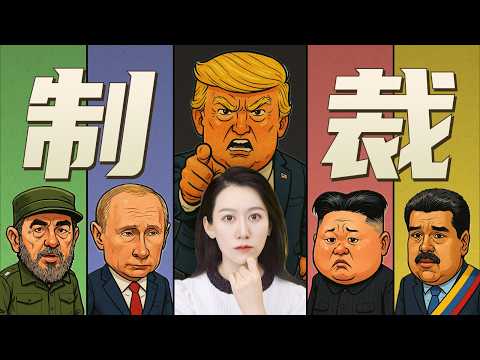
那些被制裁最最严重的国家,都怎么样了?
小Lin说· 2025-10-25 14:05
Sanctions Overview - Sanctions are a form of coercion aimed at compelling behavioral changes through economic disruption [1] - Economic sanctions are generally a means to achieve objectives like policy change, regime change, counter-terrorism, or human rights improvements [1][2] - The effectiveness of sanctions in achieving their intended goals is historically low, with success rates estimated at less than 10% [2] Country-Specific Sanction Strategies and Impacts - **Cuba:** The US has maintained a long-standing embargo against Cuba, employing trade blockades and asset freezes, but its effectiveness has been limited due to support from other nations [1] - **Venezuela:** US sanctions on Venezuela, particularly targeting the state-owned oil company PDVSA, have severely impacted the country's economy by restricting access to financial markets and reducing oil revenues [2] - **North Korea:** The UN has imposed extensive sanctions on North Korea due to its nuclear weapons program, but North Korea's self-imposed isolation and illicit activities have reduced the impact of these measures [3] - **Iran:** The US has employed both primary and secondary sanctions against Iran, targeting its nuclear program and energy sector, leading to economic hardship and prompting negotiations at times [4][5] - **Russia:** Following the invasion of Ukraine, Russia has faced unprecedented sanctions, including asset freezes, SWIFT restrictions, and trade limitations, significantly impacting its economy [6] Sanction Mechanisms and Countermeasures - **Trade Blockades and Asset Freezes:** These are classic economic sanction tools used to prevent trade and freeze assets within the sanctioning country [1] - **Secondary Sanctions:** These involve threatening entities in other countries to prevent them from doing business with the sanctioned country, increasing the pressure [5] - **Circumventing Sanctions:** Sanctioned countries often seek alternative buyers, engage in smuggling, develop shadow banking systems, or use cyber warfare to mitigate the impact of sanctions [3][4][6] Unintended Consequences and Ethical Considerations - Sanctions often disproportionately affect the general population of the sanctioned country, leading to humanitarian crises and potentially strengthening authoritarian regimes [3][7] - The use of sanctions can lead to "sanction fatigue," where the initial impact diminishes over time as sanctioned countries adapt and find alternative solutions [7]
美元暴跌的背后...
小Lin说· 2025-10-12 13:10
Market Trends and Industry Dynamics - The dollar index has fallen by over 10% since the beginning of the year, marking its worst performance in nearly half a century [1] - Global asset prices, including gold and cryptocurrencies like Bitcoin, have experienced a significant surge [1] - Global stock markets, including US, European, A-shares, Hong Kong, and Japanese stocks, have generally increased [1] - The correlation between the S&P 500 index and a "mysterious index" reached a high of 824% over the past 5 years [1] Investment Opportunities and Potential Risks - The primary driver of the dollar's decline is risk, particularly related to Trump's tariff policies and concerns about the US government's creditworthiness [1] - Foreign capital inflows into US stock ETFs have increasingly been hedged against dollar risk, with over 80% of funds now employing hedging strategies [1] - Gold has become a preferred safe-haven asset, with significant inflows into gold ETFs, especially from North America [2] - Market expectations of the Federal Reserve's interest rate decisions are heavily influencing the dollar's movements [2] US Economic Policy and Federal Reserve - The market is closely monitoring US non-farm payroll (NFP) data to anticipate the Federal Reserve's interest rate cuts [2] - There have been substantial revisions to the NFP data, raising concerns about its accuracy and reliability [3] - Trump's administration is attempting to influence the Federal Reserve's interest rate decisions, raising concerns about the central bank's independence [3][4] Global Economic Impact - A weaker dollar and potential Federal Reserve interest rate cuts are expected to benefit other countries, particularly developing nations [4] - Morgan Stanley predicts that the dollar may depreciate by approximately 10% to around 91 by the end of next year [4]
挑战最快速度带你了解伊朗经济~~~
小Lin说· 2025-09-24 07:44
Given the provided content "No content yet!", it's impossible to extract any meaningful insights or summarize main points related to a specific industry or company Therefore, the output will reflect the absence of content General Observation - The document lacks any specific information or data for analysis [1] Conclusion - No conclusions or insights can be drawn due to the absence of content [1]


一口气了解伊朗经济
小Lin说· 2025-09-16 09:01
Political and Economic System - Iran operates under a unique theocratic republic, blending religious rule with democratic elements, where the Supreme Leader holds ultimate authority [1][2] - Religious charities (Bonyads) and the Islamic Revolutionary Guard Corps (IRGC) exert significant control over Iran's economy, estimated at 20% and 30%-50% of GDP respectively, operating independently of government oversight and contributing to a complex power structure [4][5] - The Supreme Leader directly controls key institutions, including the judiciary, military, and media, ensuring religious authority's dominance over elected bodies [1] Economic Challenges and Strategies - Heavily reliant on fossil fuels, with oil exports accounting for 90% of government revenue, Iran faces significant economic pressure from international sanctions, particularly targeting its energy sector [4] - To circumvent sanctions, Iran employs a "Ghost Fleet" of aging tankers to secretly transport oil, engaging in ship-to-ship transfers and other deceptive practices [3] - Iran's economy suffers from high inflation, exceeding 30% in recent years, exacerbated by government subsidies, particularly for energy, which accounted for 27% of its GDP in 2022, equivalent to $100 billion [5] Key Industries and Trade - Despite economic challenges, Iran has developed a significant automotive industry, ranking as the 12th largest globally and accounting for 10% of its GDP [5][6] - Iran is a major producer and exporter of high-value agricultural products and handicrafts, including caviar, saffron, pistachios, and carpets [6] - The country's complex multi-exchange rate system, designed to manage inflation and trade, has been prone to corruption and arbitrage, leading to its eventual abandonment [5] International Relations and Sanctions - Iran's foreign policy is driven by its Shiite Islamic ideology, leading to support for regional allies and confrontation with adversaries, particularly the United States and Israel [2] - US sanctions, intensified since 2010 and further tightened after the US withdrawal from the Iran nuclear deal in 2018, have significantly impacted Iran's GDP and oil exports [3] - The "Twelve Day War" with Israel in June 2025 and subsequent attacks on Iranian nuclear facilities have further escalated tensions and economic challenges [6]
机器人时代,真的来了吗?
小Lin说· 2025-09-07 10:05
Given the provided content "No content yet!", it's impossible to extract any meaningful insights or summarize main points related to a specific industry, financial performance, or market trends Therefore, the output will reflect the absence of content General Observation - No content available for analysis [1]

期货,为什么总是拉爆债市、股市、油价? 资本世界的多空大战有多凶残...
小Lin说· 2025-08-19 13:01
Market Events & Key Players - The "327 Incident" in China's financial market involved a significant battle over a 327 treasury bond futures contract, leading to market turmoil and a temporary halt of treasury bond futures trading for 18 years [1] - 万国证券 (Wanguo Securities), as a major player in the "327 Incident", faced substantial losses due to misjudging保值贴补 (value-guaranteed subsidies) and aggressively shorting the 327 treasury bond futures [1] - 青山控股 (Tsingshan Holding Group), a global stainless steel and nickel producer, encountered difficulties in 2022 due to its large short positions in nickel futures amid the Russia-Ukraine war and related sanctions [2] - 伦敦金属交易所 (LME) intervened in the nickel market crisis by halting trading and nullifying certain transactions, a move that sparked controversy and lawsuits from hedge funds like Elliott, AQR, and Jane Street [3] Financial & Trading Aspects - 万国证券's short positions in the 327 treasury bond futures reached 140万口 (140 million contracts), exposing the company to significant losses as the futures price increased [1] - In the "327 Incident", 万国证券's actions in the final 8 minutes of trading involved selling an estimated 2,000万口 (20 million contracts), with over 1,000万口 (10 million contracts) transacted, equivalent to a face value of 2,000亿元 (200 billion yuan) [2] - The 伦敦金属交易所's (LME) decision to nullify 9,000 futures transactions on March 8 resulted in 万国证券 turning a profit into a 14亿元 (14 billion yuan) loss [2] - 青山控股 faced potential losses of up to 100亿美元 (100 billion USD) due to the surge in nickel prices, prompting a search for financial assistance to cover margin calls [3] 期货逼仓 (Futures Squeezes) & Market Dynamics - 期货逼仓 (Futures squeezes) can occur when the quantity of futures contracts exceeds the available physical supply, potentially leading to extreme price volatility and losses for short-sellers [2] - The negative oil price event in 2020 was driven by a combination of factors, including a collapse in demand due to the COVID-19 pandemic, storage limitations, and the behavior of retail investors in "纸原油 (paper oil)" products [4] - 中国银行's (Bank of China) "原油宝 (Crude Oil Treasure)" product, designed for retail investors, suffered significant losses during the negative oil price event, with some investors experiencing negative settlement prices [4]