13个精算师

Search documents
赵宇龙任保险业协会党委书记;邱智坤拟接任董事长;赵雪军辞任总经理;第四套生命表自2026年1月1日起实施;|13精周报
13个精算师· 2025-11-01 04:03
Regulatory Dynamics - Five departments are promoting the implementation of a long-term care insurance system, supporting the inclusion of qualified medical and nursing institutions as designated service providers [6] - As of the end of September, the cumulative balance of three social insurance funds reached 9.85 trillion yuan, with total income of 6.69 trillion yuan and total expenditure of 6.04 trillion yuan for the first nine months [7] - The Financial Regulatory Bureau announced that the fourth set of life tables will be implemented starting January 1, 2026, which includes various tables for different insurance products [9] - The Financial Regulatory Bureau supports domestic insurance companies in issuing "sidecar" insurance-linked securities in the Hong Kong market [10] - The Financial Regulatory Bureau expects insurance premium income to reach 6 trillion yuan this year [24] Company Dynamics - Ping An Life increased its stake in China Merchants Bank H-shares to 18.02% [30] - China Life plans to invest 2 billion yuan in a private equity investment plan focusing on semiconductors, digital energy, and smart electric vehicles [31] - China Life reported a strong growth of 41.8% in new business value for the first three quarters [32] - China Ping An's net profit attributable to shareholders grew by 45.4% year-on-year in the third quarter [33] - China Reinsurance achieved a net profit of 51.97 billion yuan, a significant increase of 131.49% year-on-year [39] - AIA Group's new business value rose by 25% to 1.476 billion USD in the third quarter [40] Industry Dynamics - The five major insurance companies in A-shares collectively earned over 426 billion yuan in net profit for the first three quarters, a year-on-year increase of 33.5% [53][54] - The first report on reinsurance business in China showed that the ceded business exceeded 200 billion yuan, covering 14 countries and regions [55] - The insurance industry is expected to see a gradual stabilization or decrease in premium rates for new energy vehicle insurance in the short to medium term [26] - The insurance sector is exploring a comprehensive grading system for insurance models to reduce costs across the entire lifecycle of vehicles [26] - The comprehensive expense ratio of the property insurance industry reached a 20-year low, while the comprehensive cost ratio hit a 10-year low in the first nine months of this year [27]







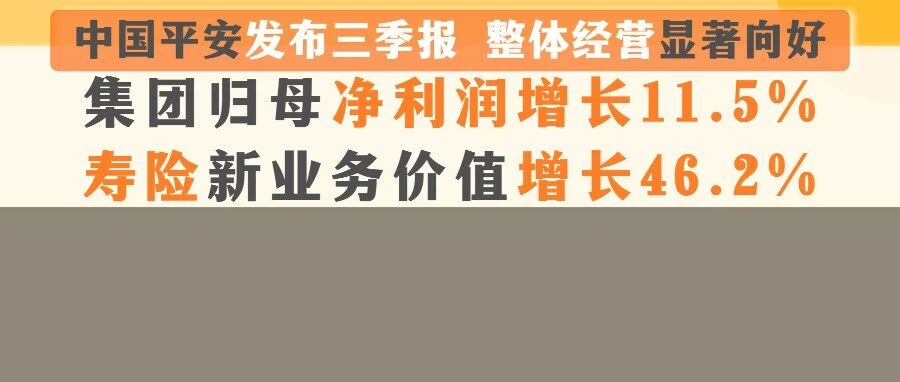
中国平安发布三季报,集团归母净利润增长11.5%,寿险新业务价值增长46.2%,整体经营显著向好
13个精算师· 2025-10-31 03:33
Core Viewpoint - China Ping An's overall business performance showed significant improvement in the first three quarters of 2025, with steady growth across its core business segments [1][4]. Financial Performance - The group reported a net profit attributable to shareholders of 132.9 billion yuan, a year-on-year increase of 11.5% [4]. - Total assets reached 13.65 trillion yuan, growing by 5.3% since the beginning of the year, while net assets increased by 6.2% to 986.4 billion yuan [4]. - Operating revenue for the first three quarters was 832.9 billion yuan, up 7.4%, with Q3 revenue alone at 332.9 billion yuan, reflecting an 18.7% year-on-year growth [4]. - Operating profit attributable to shareholders was 116.3 billion yuan, a 7.2% increase, with Q3 showing a remarkable 45.4% growth year-on-year [4]. Business Segment Performance - The three core business segments—life and health insurance, property insurance, and banking—achieved an operating profit of 116.1 billion yuan, a 1.6% increase [6]. - Life and health insurance contributed 78.77 billion yuan (67.7% of total), property insurance 15.07 billion yuan (13.0%), and banking 22.22 billion yuan (19.1%) [6]. - The investment portfolio of insurance funds exceeded 6.41 trillion yuan, growing by 11.9% since the beginning of the year [7]. Solvency and Investment Returns - As of Q3 2025, the solvency ratios for Ping An Life and Ping An Property remained healthy, well above regulatory requirements [9]. - The annualized comprehensive investment return rate was 5.4%, an increase of 1.0 percentage points year-on-year [10]. Life and Health Insurance Business - New business value in life and health insurance reached 35.72 billion yuan, a significant increase of 46.2% year-on-year [13]. - The new business value rate improved to 30.6%, up 9.0 percentage points year-on-year [16]. - The number of personal customers approached 250 million, with a 2.9% increase since the beginning of the year [14]. Property Insurance Business - Property insurance achieved a premium income of 256.25 billion yuan, a 7.1% increase, with auto insurance premiums at 166.12 billion yuan, up 3.5% [21]. - The comprehensive cost ratio improved to 97.0%, a reduction of 0.8 percentage points, marking the best performance since 2020 [23]. Healthcare and Elderly Care Services - Health insurance premium income was nearly 127 billion yuan, with medical insurance premiums close to 58.8 billion yuan, reflecting a 2.6% growth [25]. - The company has expanded its elderly care services, covering 85 cities and serving nearly 240,000 clients [26]. Financial Empowerment and AI Capabilities - Ping An is leveraging vast data resources to enhance its AI capabilities, with a database containing 30 trillion bytes of data covering nearly 250 million personal customers [27]. - AI applications have improved operational efficiency, with 94% of life insurance policies being underwritten in seconds [29]. Future Outlook - Looking ahead, Ping An aims to maintain strategic focus on its core financial business while deepening its dual strategy of "comprehensive finance + healthcare" and driving digital transformation [30].

长期资本视角下的年金管理思考
13个精算师· 2025-10-31 03:33
Core Viewpoint - The article discusses the significant changes in the investment environment for pension funds in China, emphasizing the need for long-term performance evaluation mechanisms to enhance fund efficiency and support the high-quality development of capital markets [2][3]. Group 1: Changes in Investment Environment - The market and policy environment for pension funds has undergone substantial changes, necessitating that fund management institutions adapt to create sustainable and stable returns for clients and beneficiaries [4]. - The contribution of fixed-income assets to pension funds is declining, while the contribution from equity assets is increasing, indicating a need for improved research and investment capabilities in equity assets [12][13]. Group 2: Fixed-Income Assets - In a low-interest-rate environment, the yield contribution from fixed-income assets is decreasing. For instance, the yield on 10-year government bonds has fallen from 4.72% in November 2013 to 1.86% by September 2025 [8][10]. - The median yield of deposit-type fixed-income pension products has dropped from 4.89% in 2018 to 3.12% in 2024, a decline of 177 basis points over six years [10]. Group 3: Equity Assets - The contribution of equity assets to pension fund performance has risen, with their share in a simulated pension portfolio increasing from 33.6% to 38.3% over the past decade, reflecting the growing importance of equity investments [13][14]. Group 4: Strategic Asset Allocation - The effective boundary for strategic asset allocation of pension funds has shifted downwards, indicating a need to increase equity asset allocation to counteract this trend and optimize the investment structure [15][17]. - The introduction of long-term performance evaluation mechanisms is crucial for enhancing the market-oriented investment operations of pension funds and achieving stable long-term returns [18][19]. Group 5: Recommendations for Fund Management Institutions - Fund management institutions should extend the evaluation period to enhance the equity asset allocation center, which can help achieve long-term value growth goals [21]. - Diversifying investment types by including low-correlation assets such as precious metals and private equity can help improve the overall effectiveness of strategic asset allocation and mitigate risks [22][23]. Group 6: Implementation of Long-Term Evaluation Mechanisms - Fund management institutions must prioritize the interests of clients and beneficiaries by effectively implementing long-term evaluation requirements and enhancing management capabilities [24]. - Trustees should assist clients in setting long-term performance goals and develop strategic asset allocation plans that align with these goals [25][26].

再保险智能体“睿书”亮相金融街论坛
13个精算师· 2025-10-30 03:38
Core Viewpoint - The article emphasizes the integration of artificial intelligence (AI) in the reinsurance sector, highlighting the launch of "Rui Shu," an AI-driven solution by Taiping Reinsurance (China) Company, aimed at enhancing efficiency and addressing industry challenges [1][6]. Group 1: Industry Characteristics - Reinsurance has distinct characteristics, including high professional barriers due to the need for expertise in insurance, actuarial science, and law [3]. - The services provided in reinsurance are highly customized, making standardization and replication difficult [3]. - The industry faces stringent compliance requirements due to the regulatory nature of the financial sector [3]. - Efficiency bottlenecks exist as reinsurance processes often require extensive manual operations and collaboration among specialists [3]. Group 2: AI Integration and Solutions - "Rui Shu" combines large language models with specialized reinsurance knowledge to create an intelligent solution that includes intent understanding, knowledge reasoning, and decision generation [4]. - The intelligent contract assistant can generate complex reinsurance contracts of over 100,000 tokens with an accuracy rate exceeding 95%, significantly reducing the time required for contract preparation from days to minutes [4][5]. - The professional Q&A assistant addresses knowledge gaps faced by reinsurance professionals by integrating system knowledge, industry experience, and cutting-edge research into a comprehensive knowledge graph [4]. - The life insurance underwriting assistant enhances efficiency by breaking down workflows and dynamically optimizing processes, improving overall productivity by over 50% [5]. Group 3: Future Outlook - The reinsurance industry plays a crucial role in supporting the real economy and ensuring public welfare, with China's market needing improvements in professional capabilities and technological strength compared to developed countries [6]. - Taiping Reinsurance (China) Company aims to leverage AI to create a competitive advantage by integrating model capabilities, professional experience, and business scenarios [6]. - The company is committed to implementing the "Artificial Intelligence+" strategy to contribute to the construction of a strong financial nation [6].

2025年前三季度国债收益率回升19个基点,寿险公司综合偿付能力面临着“双向承压”的机理分析!
13个精算师· 2025-10-30 03:38
Core Viewpoint - The article discusses the impact of interest rate fluctuations on the insurance industry, particularly focusing on the reclassification of assets and the potential risks associated with rising interest rates, which could lead to a "double kill" effect on financial stability and solvency ratios. Group 1: Asset Reclassification - Approximately 35 life insurance companies have reclassified their held-to-maturity (HTM) assets to available-for-sale (AFS) financial assets or applied the new financial instrument standard FVOCI in the past three years [1] - The reclassification has significantly increased the fair value of company assets, thereby enhancing net profits or other comprehensive income and improving solvency ratios [2] Group 2: Interest Rate Trends - Long-term interest rates have been declining, leading to rising bond prices, but a structural uptrend in government bond yields has been observed since 2025, with the 10-year government bond yield rising to 1.86% as of September 30, 2025, up 19 basis points from the end of 2024 [4] - The upward trend in interest rates poses a direct impact on insurance companies that have reclassified a large amount of HTM assets to FVOCI, as rising rates lead to a decrease in the fair value of bond investments, thereby exerting short-term pressure on solvency ratios [5] Group 3: Double Kill Risk - The "double kill" risk arises from the simultaneous impact on both asset and liability sides of the balance sheet, particularly due to the mismatch in duration between assets and liabilities [9] - The average asset duration for traditional insurance in China is about 7 years, while the liability duration is approximately 16 years, resulting in a duration gap of about 9 years [10][11][12][13] - As interest rates rise, the fair value of bond assets decreases, while the liability side experiences increased reserve requirements due to the lagging effect of the 750-day moving average of government bond yields, leading to a dual pressure on actual capital [7][8] Group 4: Future Implications - If interest rates continue to rise, it may reflect an improvement in the economic fundamentals, potentially enhancing reinvestment yields for insurance companies in the long term [18] - The focus should be on the company's investment strength and profitability as the core drivers for enhancing actual capital and optimizing solvency ratios, alongside monitoring operational quality indicators such as new business value rate and investment yield [19]

定了!金融监管总局:第四套生命表2026年启用!死亡率平均下降20%左右,价格怎么变?
13个精算师· 2025-10-29 12:25
Core Viewpoint - The release of the fourth set of life tables by the Financial Regulatory Bureau and the Actuarial Association marks a significant update for the life insurance industry, with implications for product pricing and risk assessment starting January 1, 2026 [7][9]. Summary by Sections Life Table Update - The fourth set of life tables will officially be implemented starting January 1, 2026, following the previous update in 2016 [9][7]. - The new life tables reflect an increase in life expectancy, with an average increase of about 10 years compared to the first set [8][3]. - The average mortality rate has decreased by approximately 20% compared to the third set of life tables [22][31]. Pricing Implications - The decrease in mortality rates and the increase in life expectancy raise questions about potential price changes for insurance products [9][13]. - Risk protection products like term life insurance may see price reductions, while survival products such as annuities may experience price increases [13][42]. - The specific impact on pricing will vary by company, as product pricing is influenced by individual actuarial assessments [43][42]. Product Classification - The fourth set of life tables includes four tables, with the addition of a single life table reflecting individual mortality rates [14][15]. - The classification of products has been slightly adjusted, with non-pension life insurance products categorized differently based on their primary risk coverage [19][20]. - The focus on pension-related products has been emphasized due to the increasing aging population [17][18]. Life Expectancy Insights - The new life tables indicate an increase in life expectancy, with males expected to live an average of 85 years (up 2 years) and females 89 years (up 1 year) [36][33]. - The life expectancy reflected in the life tables is generally higher than the national average, suggesting that insured individuals may have better health management practices [39][36]. Regulatory Requirements - Insurance companies are required to regularly review mortality rates and adjust their pricing models accordingly, ensuring compliance with the new life tables [45][46]. - The regulatory framework emphasizes the importance of actuarial accuracy and the need for companies to establish mechanisms for evaluating deviations from expected mortality rates [46][45].

新会计准则下寿险公司利润“释放”机制:深度解析合同服务边际(CSM)及其摊销!
13个精算师· 2025-10-28 11:03
Core Viewpoint - The implementation of new accounting standards in the life insurance industry by 2026 will lead to revolutionary changes in financial statements, breaking the traditional profit recognition smoothness and introducing a more transparent profit recognition model that reflects the economic substance of contracts [1]. Group 1: Contractual Service Margin (CSM) - Contractual Service Margin (CSM) represents the difference between the present value of expected future cash inflows (mainly premiums) and expected future cash outflows (including claims, expenses, investment management costs, and risk adjustments) at the initial recognition of a group of insurance contracts with similar risk characteristics [2][3]. - CSM serves as a "profit pool" or "water reservoir" that insurance companies accumulate in advance for future services, measured at initial recognition and listed on the balance sheet, but not yet realized as profit [3]. Group 2: CSM Amortization - CSM amortization refers to the process of gradually transferring amounts from CSM to profit and loss as the insurance company continues to provide insurance coverage to policyholders, reflecting the accounting principle of matching [3][5]. - The CSM amortization amount constitutes a significant part of the insurance company's current "insurance service revenue," effectively converting "unrealized" profits on the balance sheet into "realized" profits on the income statement [3]. Group 3: CSM Amortization Ratio - The CSM Amortization Ratio is introduced to measure the speed at which different insurance companies release profits, calculated as the ratio of CSM amortization to the CSM amortization basis [5][6]. - A higher amortization ratio indicates a greater proportion of insurance services provided during the period relative to the entire service period, leading to a larger proportion of previously accumulated profits being recognized [8]. Group 4: Industry Insights - The differences in amortization ratios among listed insurance companies provide insights into their business structures, profit models, financial strategies, and long-term development paths [12]. - As of the second quarter of 2025, the CSM for seven listed insurance companies was 2.2612 trillion yuan, with CSM amortization of 98.2 billion yuan, resulting in an amortization ratio of 4.2% [8].

2025年前三季度保险公司罚款超3亿:3家许可证被吊销,22张百万罚单,42人终身禁业!
13个精算师· 2025-10-27 14:54
Core Points - In the first half of 2025, 121 insurance companies were fined over 300 million, with significant penalties imposed on key individuals [1][10][21] - The regulatory authority has intensified its scrutiny, directly penalizing 19 companies and revoking the business licenses of three [1][30][11] - The financial performance of major insurance companies is expected to see substantial growth, with net profits projected to increase by 40% to 70% [8][9] Regulatory Actions - A total of 2050 fines were issued by the financial regulatory authority in the first three quarters of 2025, representing a 15% increase compared to the same period last year [9][10][32] - The regulatory authority has adopted a more stringent approach, with 98 individuals banned from the insurance industry, including 42 receiving lifetime bans [21][22][28] - The regulatory framework has shifted towards localized supervision, resulting in an increase in penalties issued by local financial regulatory bodies [32][30] Company Performance - Major insurance companies like China Life, PICC, and New China Life have reported significant profit increases, with China Life exceeding 150 billion in net profit [8][9] - Despite a slowdown in premium growth, the insurance industry is transitioning towards high-quality development, focusing on stability and efficiency [9][10] - The investment returns for insurance companies have improved significantly due to favorable capital market conditions and increased investments in equity assets [6][9] Specific Cases - The "Tomorrow" group, which includes Tianan Insurance, Tianan Life, and Huaxia Life, faced severe penalties, including the revocation of their business licenses [11][14][17] - The regulatory authority has taken decisive actions against individuals involved in misconduct, with many facing lifetime bans and significant fines [21][22][24] - The overall trend indicates a shift from previous practices of prioritizing growth to a focus on compliance and risk management within the insurance sector [9][18]

期刊GPRI 2025年50卷第4期目录与摘要|保险学术前沿
13个精算师· 2025-10-26 02:04
Core Insights - The article discusses various studies related to the insurance industry, focusing on climate risks, employer insurance, reinsurance, and directors' and officers' liability insurance, highlighting their impacts on risk management and corporate performance. Group 1: Climate Risk - Climate risks significantly increase claim ratios for property-casualty insurers in China, with both short-term and long-term risks contributing to this effect [6][7] - There is no substantial evidence that climate risks lead insurers to enhance their risk management practices, such as increasing reinsurance ratios or adjusting geographic business distribution, resulting in a notable negative impact on performance [6][7] - The adverse effects of climate risks are more pronounced in smaller insurers, those with lower reinsurance coverage, or those with a high concentration of business in specific regions [6][7] Group 2: Employer Insurance - Companies that implement supplementary pension insurance programs (SPIPs) and invest heavily in them exhibit significantly lower operational risks compared to those that do not or invest less [9][10] - The risk-reducing effect of SPIPs is more significant in firms with higher-educated employees, primarily through improved employee retention [9][10] - The study highlights the importance of SPIPs not only as a form of retirement insurance but also as a crucial factor in reducing operational risks [9][10] Group 3: Reinsurance - The duration of the insurer-reinsurer relationship is positively correlated with underwriting performance, with insurers realizing benefits from these relationships only after approximately three years [8][17] - Long-term reinsurance relationships are essential for underwriting, suggesting strategies for sustainable development in the insurance sector [8][17] - Reinsurance is associated with reduced absolute values of actual and target leverage deviations, indicating that it helps insurers align their actual leverage with target levels [16][17] Group 4: Directors' and Officers' Liability Insurance - Companies with directors' and officers' liability insurance (D&O insurance) are more likely to capitalize R&D expenditures, with management's risk appetite being a key factor in this process [12][13] - The effect of D&O insurance on R&D capitalization is stronger under high financing and performance pressures but weaker when effective monitoring mechanisms are in place [12][13] - D&O insurance significantly enhances corporate social responsibility (CSR) performance in state-owned enterprises, functioning as a policy-embedded accountability mechanism [13][14]

刘强东布局香港保险,雷军尝鲜内地财险;友邦、保诚上榜港版“大而不能倒”险企|13精周报
13个精算师· 2025-10-25 03:03
Regulatory Dynamics - The People's Bank of China maintains the 1-year and 5-year Loan Prime Rate (LPR) at 3.0% and 3.5% respectively, unchanged for five consecutive months since May [5] - The National Healthcare Security Administration reports that 25 provinces will implement direct payment of maternity allowances to individuals, covering nearly 90% of coordinated areas [6] - The Ministry of Health aims to increase the average life expectancy in China from 79 to around 80 years within five years [8] - The Financial Regulatory Bureau emphasizes the role of artificial intelligence in enhancing the core competitiveness of insurance institutions [9] Company Dynamics - China Life Insurance expects a year-on-year increase of 50% to 70% in net profit for the first three quarters [27] - China Ping An has completed the repurchase and cancellation of shares, aiming to enhance shareholder returns [28] - Zhong Postal Life has increased its registered capital to approximately 32.64 billion RMB [21] - AIA Group has received an increase in shares from JPMorgan Chase, totaling 768,100 shares [23] Industry Dynamics - Multiple insurance companies report significant profit increases in their third-quarter results, with growth rates between 40% and 70% [40] - Insurance Asset-Backed Securities (ABS) have become a popular investment choice, with nearly 100 billion in scale during the third quarter [43] - The overall dividend realization rate for insurance products has improved, with many companies reporting rates exceeding 100% [46] - A total of 2,565 insurance branch offices have exited the market this year, reflecting a trend of consolidation in the industry [48] Personnel Changes - Zhou Mingqiang has been approved as the Deputy General Manager of Everbright Yongming [32] - Chen Ping has been appointed as the Deputy General Manager of Ruizhong Life Insurance [33] - Zhao Peng has been approved as the financial responsible person for China Insurance [34]