
digihuman(835670)

Search documents
智慧文旅体验新引擎:世优科技“数字人+”战略全场景落地实践
Sou Hu Cai Jing· 2026-01-22 01:32
Core Insights - The traditional cultural tourism industry is undergoing a profound transformation driven by technology, with AI, virtual reality, and mixed reality creating new consumer experiences and industry models [1] - Shiyou Technology, a leader in the digital human field in China, is providing integrated solutions for the cultural tourism industry through its "Digital Human+" innovation model, which includes IP creation, intelligent services, and immersive experiences [1] Technology Foundation - Shiyou Technology's core competitiveness lies in its self-developed full-stack technology system covering the entire digital human technology chain, ensuring high quality and stability in visual realism and interaction [1] - The "Shiyou Bota AI Digital Human Intelligent Agent" features over 180 facial control points and 24 emotional modes, achieving a lip-sync accuracy of 99.5% and a response time of 1.5-2 seconds [1] Digital Human + Motion Capture - By integrating high-precision motion capture technology with digital humans, Shiyou Technology enhances content production and event hosting, exemplified by the official digital human "Xiao Jinhua" in Dali [3] - "Xiao Jinhua" serves as a real-time virtual host during events, interacting with the audience and showcasing Dali's cultural charm, significantly increasing event engagement [3] Digital Human + AI - The integration of AI large models and proprietary knowledge bases transforms digital humans from mere image carriers to AI business intelligent agents, as seen with the "Jiu Qilin Han Han" in Luzhou [5] - This AI digital human provides 24/7 online intelligent services, offering personalized and emotional interactions about local wine culture [5] Digital Human + Mixed Reality - Mixed reality technology allows digital humans to interact with real environments, creating immersive tour experiences, as demonstrated by the digital human project at the Yili General's Mansion [6] - Visitors can engage with a digital general and experience historical scenes through MR technology, enhancing cultural dissemination and visitor engagement [6] Digital Human + Exhibition Performance - The integration of creativity and technology in urban cultural tourism events is crucial for attracting crowds, as shown in the New Year event on Chengdu's Jiaozi Avenue [8] - Shiyou Technology combines customized digital human images with AR and naked-eye 3D technologies to create a visually stunning virtual spectacle, appealing to younger audiences [8] Future Outlook - Shiyou Technology's full-stack digital human technology outlines a clear path for the digital transformation of cultural tourism, connecting history, intelligent services, and immersive experiences [9] - As AI and XR technologies continue to evolve, the integration of digital humans in cultural tourism will deepen, enhancing emotional interactions and expanding knowledge systems [9]



金奥博:公司构建了民爆专业大模型和岗位数字人
Zheng Quan Ri Bao· 2026-01-20 09:38
Group 1 - The company has developed a specialized model for civil explosives and digital personnel, which enhances the efficiency of on-site fault resolution and aids in scientific maintenance and management decision-making [2] - An AI recognition system has been established to proactively monitor and warn against unsafe behaviors and unstable conditions, improving the company's safety production management capabilities [2] - The company has created four evaluation index systems that utilize model algorithms to provide real-time representation and early warning for production safety, equipment health, product quality, and overall energy efficiency [2]


与字节合作数字人,年消耗量5倍增长!浙文互联异动涨停
2 1 Shi Ji Jing Ji Bao Dao· 2026-01-20 06:17
Group 1 - The core viewpoint of the article highlights the contrasting fortunes of AI application companies, with some experiencing significant declines while others see substantial gains, particularly in AI marketing concepts [1] - The collaboration between Zhejiang Wenlian and ByteDance's Douyin Engine has led to the "Pai Zhi" digital human project, which has reportedly consumed over 250 million yuan last year, marking a fivefold increase year-on-year [1] - The market is witnessing a resurgence in AI marketing, with companies like Tiandi Online and Yaowang Technology hitting their daily price limits, while Tianlong Group, Shengguang Group, and BlueFocus also show notable gains [1] Group 2 - GEO (Generative Engine Optimization) has emerged as a key concept in AI applications, focusing on marketing optimization strategies for generative AI, which is expected to transform user information acquisition methods [5] - According to Gartner, traditional search engine traffic is projected to decline by 25% by 2026, as AI chatbots and other virtual AI optimization methods capture more market share [5] - Zhejiang Wenlian has established deep collaborations with major platforms like ByteDance and Tencent, creating a comprehensive cooperative system that includes marketing linkage, technical collaboration, and cloud service support [5] Group 3 - The "Curious" series of AI tools by Zhejiang Wenlian, supported by Volcano Engine, has achieved a 24-fold efficiency improvement in AI intelligent slicing tasks, enabling the analysis of 500 short drama episodes in one hour [6] - BlueFocus, a leading overseas advertising marketing company, reported a net profit of approximately 99 million yuan in Q3 last year, reversing losses, with AI-driven business revenue reaching 2.47 billion yuan in the first three quarters [6] - The integration of AI into advertising is accelerating, with BlueFocus's API token usage expected to exceed 1 trillion by the end of 2025, driven by the development of AI agents across various core business scenarios [6] Group 4 - The commercial application of GEO has reportedly increased customer conversion rates by 2.8 times compared to traditional search methods, with a 40% reduction in user decision-making cycles [7] - E-commerce operators are well-positioned to quickly establish GEO content generation capabilities due to their close collaboration with platforms and deep understanding of consumer insights and brand strategies [8] - The leading e-commerce operator, Yiwang Yichuang, is actively preparing for the GEO trend, planning to invest in content optimization and training for large models, with a dedicated team being formed [9]

多地部署数字人民币年度重点工作 主攻跨境支付与普惠金融
Zheng Quan Shi Bao· 2026-01-19 18:08
Core Viewpoint - The digital renminbi, issued by the People's Bank of China, is gradually demonstrating its systemic value in promoting fintech innovation, enhancing payment efficiency, and fostering inclusive economic growth as its pilot scope expands and application scenarios deepen [1] Group 1: Recent Developments - In early 2026, various provincial branches of the central bank held annual meetings to outline key tasks for the development of digital renminbi, building on the achievements of 2025 [1] - Shanghai has established a digital renminbi international operation center and aims to enhance financial management and service capabilities in 2026 [2] - Yunnan's focus for 2026 includes accelerating the construction of digital renminbi border trade scenarios and promoting cross-border QR code payments with neighboring countries [2] - Chongqing has successfully implemented bilateral digital renminbi settlement trials and aims to continue developing digital renminbi in 2026 [2] Group 2: Application Scenarios - The central bank's work in 2026 emphasizes the expansion of digital renminbi acceptance environments and user groups, aiming to create a widely accessible and sustainable application ecosystem [3] - The digital renminbi's pilot promotion has entered a new phase of scale and deep integration, with acceptance scenarios rapidly expanding across various sectors [4] - As of November 2025, digital renminbi has processed 3.48 billion transactions totaling 16.7 trillion yuan, with 230 million personal wallets opened [4] Group 3: Functional Iteration - A new version of the digital renminbi app was launched on January 1, 2026, introducing interest payments on wallet balances based on current deposit rates [6] - The app has also introduced a "carbon benefit" program that quantifies users' carbon reduction efforts into "carbon points," which can be converted into digital renminbi [6] - This initiative aims to promote green consumption and sustainable development, making it easier for the public to engage in environmentally friendly practices [7]
大唐电信:公司将持续关注数字人民币发展
Zheng Quan Ri Bao· 2026-01-19 14:18
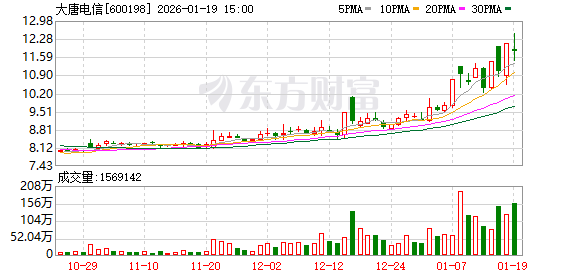
Group 1 - The company, Datang Telecom, is actively monitoring the development of digital currency in China and is making efforts in technology preparation and product layout [2]

2025年XCon×HG议题:数字人安全攻防白皮书
Sou Hu Cai Jing· 2026-01-19 08:09
Core Insights - The report titled "Digital Human Security Offensive and Defensive White Paper" highlights the rapid integration of digital humans into various sectors, including e-commerce and emotional companionship, while also exposing significant security threats associated with this technology [1][2]. Group 1: Industry Growth and Risks - The digital human industry is experiencing explosive growth, with applications expanding from live streaming to AI companions, but the white paper warns that if digital humans are hijacked, they could be used for fraud or manipulation [2][3]. - The technology stack of digital humans, which includes AI, NLP, and computer vision, presents a wide and hidden attack surface, where a single vulnerability could lead to systemic failure [2][3]. Group 2: Technical Architecture and Threats - The white paper outlines a four-layer technical architecture for digital humans, identifying risks at each level, including code injection and business logic vulnerabilities at the front end, signaling hijacking and protocol vulnerabilities in streaming, and data leaks and supply chain attacks at the infrastructure level [3][4]. - Specific attack vectors include prompt injection that can manipulate digital human behavior, DDoS attacks that incapacitate them, and TTS semantic disguise attacks that bypass content moderation [4][5]. Group 3: Compliance and Regulatory Challenges - The report emphasizes compliance risks, particularly the potential for deepfake technology to create highly realistic fraudulent digital humans, complicating the identification of genuine content and making accountability difficult in cases of infringement or fraud [5][6]. - The lack of a standardized "AI-generated" label for digital content further blurs the line between real and virtual, posing challenges to existing legal and regulatory frameworks [5][6]. Group 4: Defense Strategies - To address these threats, the white paper proposes a systematic defense strategy focused on protecting AI models and data assets, including supply chain safeguards, encryption of training data, and strict content filtering [6]. - It advocates for real-time content review mechanisms, the implementation of AI-generated content labels, and enhanced authentication and permission controls to protect user interactions [6].

客易云集团接入TK实现TikTok数字人:开启社交电商全球化互动新纪元
Sou Hu Cai Jing· 2026-01-19 04:13
Core Insights - TikTok has emerged as a vital platform for brands to reach global consumers, but traditional brands face challenges in content creation and cultural adaptation [1] - KKY Group leverages AI and digital content to enhance brand operations on TikTok, redefining interaction models in the social e-commerce era [1] Group 1: Language and Cultural Adaptation - TikTok digital humans break down language and cultural barriers, allowing brands to engage with diverse global audiences without the high costs of multilingual teams [2] - The multi-language intelligent interaction system enables automatic language switching and cultural strategy adjustments based on market characteristics, enhancing user engagement and trust [2] Group 2: Content Creation Efficiency - TikTok digital humans improve content creation efficiency through automated processes, allowing brands to generate culturally relevant content quickly and at lower costs [4] - Brands can input core product features and market characteristics, and the digital human will create tailored content scripts, ensuring alignment with local preferences and trends [4] Group 3: Enhanced User Interaction - The digital human's 24/7 online presence and zero-latency response address user interaction demands, significantly improving engagement and reducing user drop-off [5] - By utilizing a multi-modal perception system, the digital human can adapt responses based on user emotions and interactions, fostering a more engaging experience [6] Group 4: Stability and Consistency - Digital humans provide a stable alternative to human hosts, ensuring consistent brand representation and uninterrupted content delivery, regardless of time or human limitations [6] - Brands can utilize digital humans for live interactions at optimal times, enhancing viewer engagement without concerns over human fatigue or time zone differences [6] Group 5: Global Brand Strategy Empowerment - TikTok digital humans enable brands to establish multi-regional account matrices and accumulate private traffic, while providing real-time data analysis for content optimization [8] - The integration of technology, data, and operations allows brands to efficiently enter global markets and transition from product export to brand establishment [8] - KKY Group's digital human technology aims to provide brands with a global content team, facilitating sustainable growth through localized engagement [8]

政策解读丨数字人民币存款利息如何计算
Ren Min Ri Bao· 2026-01-19 02:33
Core Viewpoint - The upgrade of the digital renminbi to version 2.0 signifies its transition from digital cash to digital deposit currency, allowing users to earn interest on their wallet balances starting January 1 [1][2]. Group 1: User Impact - The most direct change for individual users is that the balance in their digital renminbi wallets can now earn interest, calculated at the prevailing savings deposit rate [2]. - Only authenticated wallets (types one, two, and three) will earn interest, while type four wallets will not [3]. Group 2: Features and Functionality - The digital renminbi application is a public service platform that integrates wallets from various operating institutions, supporting a range of services including payments, transfers, and financial management [3]. - Physical wallets, such as IC cards and wearable devices, are available to accommodate users like the elderly and children, enabling transactions even in offline scenarios [3]. Group 3: Security and Insurance - Digital renminbi balances are covered by the deposit insurance system, providing safety comparable to traditional bank deposits, with additional benefits from digital technology [4]. - The digital renminbi is issued by the People's Bank of China, ensuring higher standards in security and fraud prevention [4]. Group 4: Economic and Financial Integration - The new digital renminbi framework aims to meet the evolving needs of the digital economy and enhance the integration of digital currency with traditional banking services [5][6]. - The transition to digital deposit currency will not lead to a "deposit migration" from commercial banks but will clarify the responsibilities and rights of operating institutions, thus maintaining financial stability [7]. Group 5: Current Statistics and Future Outlook - As of now, 230 million personal wallets have been opened, with a total transaction amount of 19.5 trillion yuan expected by the end of 2025 [8]. - The digital renminbi is positioned to play a significant role in cross-border payments, with a substantial portion of transactions expected to be conducted in digital renminbi [8].
数字人民币升级后有何优势?存款利息如何计算?
Sou Hu Cai Jing· 2026-01-19 01:25
Core Viewpoint - The upgrade of digital RMB to version 2.0 introduces significant advantages, including the ability for users to earn interest on their digital currency balances, transforming it from digital cash to digital deposit currency [1][2]. Group 1: Advantages of Upgraded Digital RMB - Digital RMB wallets can now earn interest based on the current deposit rates, with interest calculated quarterly on the balance of authenticated wallets [2][4]. - The digital RMB is integrated into the deposit insurance system, providing the same level of security as traditional bank deposits, while also leveraging digital technology for enhanced safety and functionality [4][6]. - The upgrade supports a dual-layer operational framework, allowing commercial banks to manage digital RMB balances effectively without risking deposit migration [6][7]. Group 2: User Experience and Accessibility - Users must complete real-name authentication for their wallet balances to earn interest, with different wallet types (Class 1, 2, and 3) eligible for interest payments [2][3]. - The digital RMB application is designed to be user-friendly, including features for various demographics, such as the elderly and children, and offers physical wallet options like IC cards and wearable devices [3][5]. - The application has seen significant adoption, with 230 million personal wallets opened, indicating a growing ecosystem for digital RMB [8][9]. Group 3: Future Developments and Market Impact - The new measurement framework aims to align with the digitalization trends in the economy, enhancing the digital RMB's role in various sectors [5][6]. - The digital RMB's integration into the financial system is expected to facilitate cross-border payments, with significant transaction volumes projected by the end of 2025 [9].
人民日报解读:数字人民币升级后有何优势?存款利息如何计算?
Ren Min Ri Bao· 2026-01-18 23:49
Core Viewpoint - The upgrade of the digital renminbi to version 2.0, effective from January 1, transforms it from digital cash to digital deposit currency, allowing users to earn interest on their wallet balances [1][4]. Group 1: User Impact - The most direct change for individual users is that the balance in their digital renminbi wallets can now earn interest, calculated at the current savings rate on a quarterly basis [2][4]. - Only authenticated wallets (types one, two, and three) will earn interest, while type four wallets will not [3]. Group 2: Advantages of Digital Renminbi - Digital renminbi balances are covered by the deposit insurance system, providing safety comparable to traditional bank deposits, while also leveraging digital technology for enhanced security and functionality [4][6]. - The digital renminbi can be used in various scenarios, including daily transactions and blockchain applications, and supports smart contracts for complex applications [4][6]. Group 3: Operational Framework - The new digital renminbi measurement framework aims to meet the evolving needs of the digital economy and enhance the management and service capabilities of the digital currency [5][6]. - The transition to digital deposit currency will not lead to a "deposit migration" from commercial banks but will instead clarify the responsibilities and rights of operating institutions, thereby maintaining financial stability [6][7]. Group 4: Ecosystem Development - As of now, the digital renminbi application has opened 230 million personal wallets, indicating a growing user base and ecosystem [8][9]. - By the end of 2025, pilot regions are expected to have processed transactions amounting to 19.5 trillion yuan, with a significant portion of cross-border payments being conducted in digital renminbi [9].