
digihuman(835670)

Search documents
迈入数字存款货币时代:稳步发展数字人民币的动态与前景
Sou Hu Cai Jing· 2025-12-30 10:01
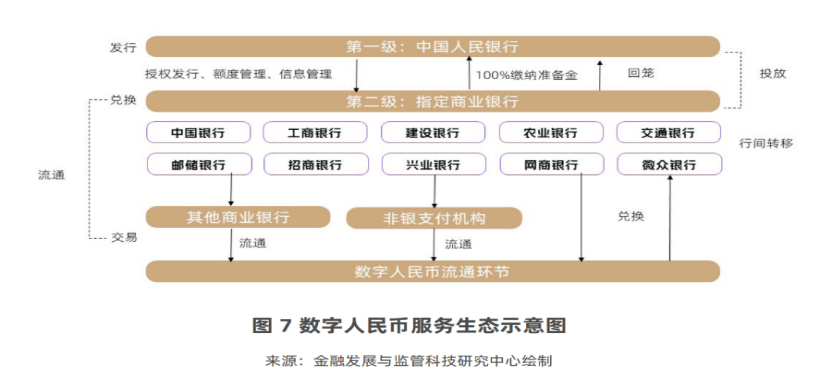
Core Viewpoint - The People's Bank of China (PBOC) is set to officially launch a new generation of the digital renminbi (e-CNY) on January 1, 2026, transitioning from a cash-based model to a deposit currency model, enhancing the resilience and security of the payment system [1][5][8]. Group 1: Development Progress of Digital Renminbi - The development of digital renminbi began in 2014, with theoretical research and closed testing initiated by the PBOC [2]. - The pilot program for digital renminbi officially started at the end of 2019, initially in cities like Shenzhen and Suzhou, and has since expanded significantly [2]. - By November 2025, digital renminbi had processed 3.48 billion transactions, amounting to 16.7 trillion yuan [4]. Group 2: Reasons for Adjustment - The need to respond to rapidly evolving digital payment tools and the challenges they pose to central bank monetary control is a primary reason for the adjustment [6]. - There is a necessity to balance the development of digital cash with the risks of financial disintermediation and to ensure the responsibilities of commercial banks are upheld [6][7]. - The adjustment aims to integrate centralized management with decentralized blockchain characteristics, ensuring compliance with regulatory requirements [7]. Group 3: Content and Feasibility of Adjustments - The action plan outlines a shift from a digital cash model to a digital deposit currency model, with the PBOC providing technical support and regulatory oversight [8]. - The dual-layer operational framework will be optimized, where the central bank issues the currency and designated operating institutions manage wallet services for individuals and non-financial enterprises [9][12]. - The digital renminbi will be treated as a commercial bank liability, allowing for interest payments on wallet balances, thus enhancing user incentives [14][21]. Group 4: Technological Choices - The digital renminbi will be based on an account system, leveraging the advantages of existing banking infrastructure while incorporating smart contract technology for enhanced functionality [16][17]. - Blockchain technology will be utilized to ensure security and traceability in transactions, particularly in complex financial scenarios [18]. Group 5: Financial Regulation - The PBOC will establish a management committee for digital renminbi to oversee operations and ensure system security and continuity [19]. - A separation of management and operational functions will be implemented to enhance regulatory effectiveness while fostering innovation [19]. Group 6: Strategic Confidence and Development - The steady development of digital renminbi is seen as a necessary response to external pressures and a means to strengthen national strategic confidence [20]. - The transition from M0 to M1 and M2 for digital renminbi aims to enhance its usability and integration into the broader financial system, supporting macroeconomic stability [21][22].


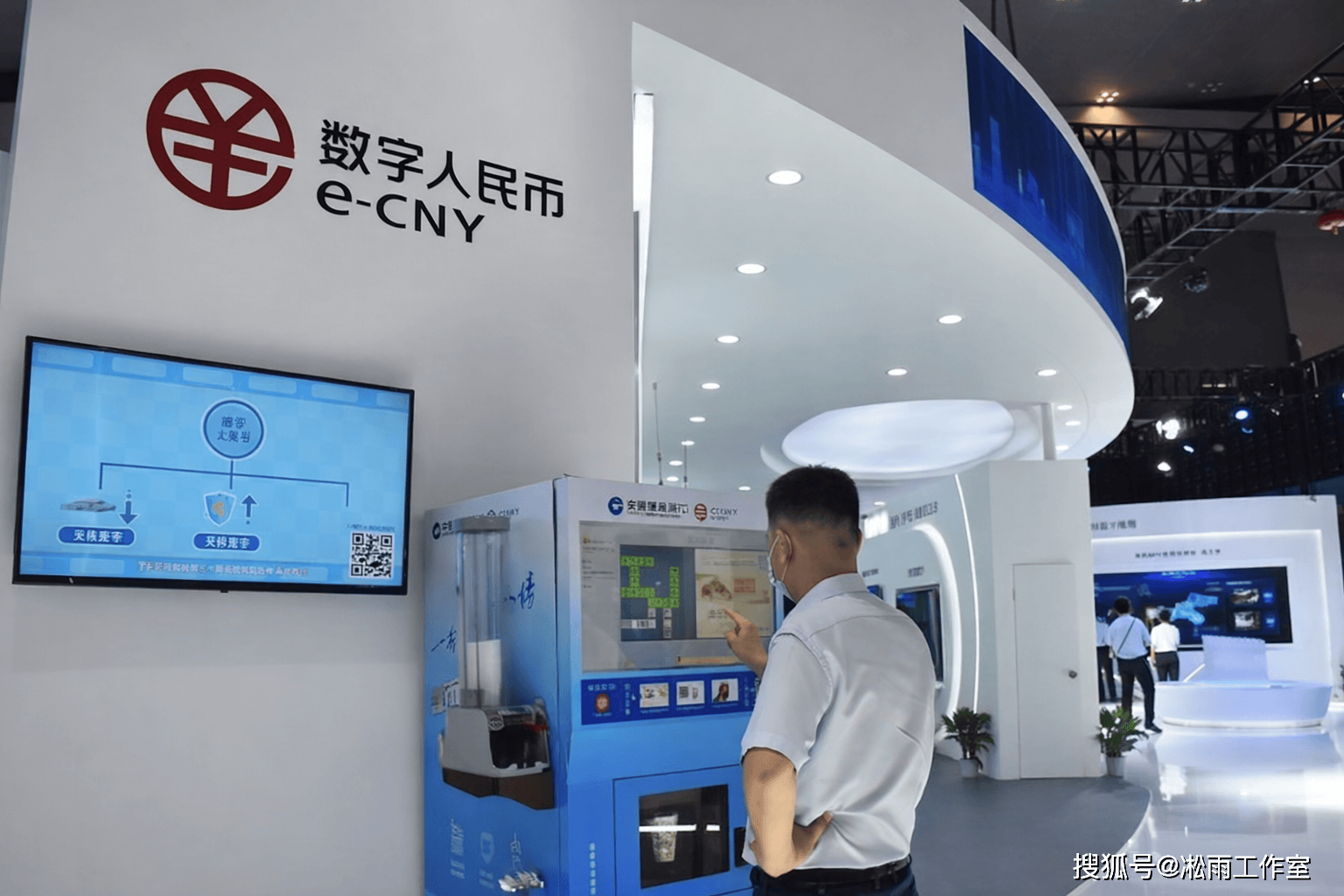
广电运通:数字人民币外币自助兑换机已在多家国有大行落地
2 1 Shi Ji Jing Ji Bao Dao· 2025-12-30 09:58
南财智讯12月30日电,广电运通在投资者关系活动中表示,公司推出的数字人民币外币兑换机支持港 币、美元、英镑、日元、欧元等主要货币实时兑换,可在机场、口岸、涉外酒店、银行网点等场景提供 7*24小时自助服务,已在杭州亚运会投入使用,并在中国工商银行、农业银行、建设银行、交通银行、 广发银行等多家银行落地。公司未来将持续依托全球本地化战略,深耕欧洲、亚太、美洲市场,加快东 南亚、中东、拉美等区域突破,并将国内交通领域创新产品推广至海外,拓展业务增长空间。 ...
深化产教融合共育数字人才 推进校企协同职业技能培训
Qi Lu Wan Bao· 2025-12-30 09:40
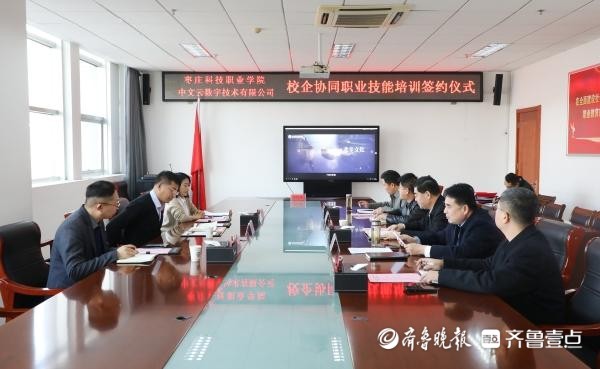
Core Points - The signing ceremony for the collaboration on vocational skills training between Zaozhuang Vocational College of Science and Technology and Zhongwen Cloud Digital Technology Co., Ltd. took place on December 29 [3] - The college aims to achieve significant influence nationally and to be a top institution within the province, having made notable progress in skill competitions and educational quality [3] - Zhongwen Cloud Digital Education Group expressed a desire for deep collaboration in cutting-edge fields such as artificial intelligence and low-altitude economy [3] Group 1 - The collaboration focuses on the new demands of regional economic development, particularly in professional co-construction and talent cultivation models in artificial intelligence and low-altitude economy [3] - Both parties reached a consensus on creating an ecological loop of "education empowering industry, and industry feeding back into education" [3] - The agreement on collaborative vocational skills training was formally signed by representatives from both sides [3] Group 2 - Future cooperation will be driven by a four-dimensional linkage of "policy guidance—technological innovation—industry application—talent cultivation" [3] - The aim is to effectively implement the cooperation content and transform educational resources into advantageous industrial resources [3] - This initiative is expected to inject strong new momentum into the high-quality development of the regional economy [3]
数字人民币迎来重大调整!73%的小县城家庭,正面临这3个隐形陷阱
Sou Hu Cai Jing· 2025-12-30 07:13
就在这周,一则重磅消息在金融圈炸了锅。 但奇怪的是,我们小县城的朋友圈里,大家还在乐呵呵地刷着短视频,完全不知道一场"钱包革命"已经悄悄杀到了家门口。 你绝对想不到,这次数字人民币的调整,根本不是简单的"换个支付方式",而是直接把手伸进了我们每个人的存折里。 我邻居王姨昨天去银行存钱,随口问了一句理财经理,结果对方的一番话,让她当场冷汗直流。 实话实说,咱们普通老百姓过日子,最怕的不是没钱,而是手里的钱"变了味"。 痛点一:你以为是现金,其实是"存款" 以前数字人民币就是M0(纸币替代),放在那里不生钱。现在新规一出,它变成了M1(存款替代)。 看着是好事能有利息了,但这背后的逻辑你细品:一旦变成存款,是不是就得受"取款限制"?是不是就得被大数据监控得死死的? 痛点二:老年人的"数字鸿沟"变成了"数字天堑" 以前我妈去菜市场买菜,掏出纸币就能付。现在倒好,新规推行"全面数字化",以后是不是连卖葱的大爷都只认二维码? 那些玩不转智能手机的老人,在这个"无现金社会"里,不就成了寸步难行的"现代文盲"吗? 什么意思?举个真实的例子: 2025年12月,某地发补贴,结果全是数字人民币红包。很多人想着领了钱去存起来或者 ...
神思电子(300479.SZ):目前公司数字人民币业务营业收入占比较小
Ge Long Hui· 2025-12-30 06:55
格隆汇12月30日丨神思电子(300479.SZ)在互动平台表示,公司的相关产品已为能源、医疗、公交、餐 饮等领域提供服务。公司将跟随行业发展,不断探索数字人民币生态下新的商业模式。目前公司数字人 民币业务营业收入占比较小,未对公司经营业绩产生重大影响。 ...

概念股闻声爆发!数字人民币2.0发令枪已响
Ge Long Hui· 2025-12-30 06:34
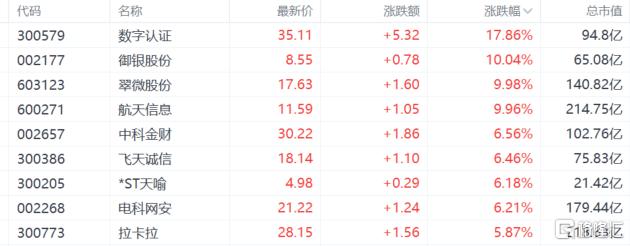
Core Viewpoint - The People's Bank of China has announced that starting January 1, 2026, digital yuan wallet balances will earn interest, marking a significant shift in the digital currency landscape and positioning China as the first central bank digital currency (CBDC) economy to implement interest payments on digital deposits [3][4][5][6]. Group 1: Market Reaction - Digital economy and digital currency concepts have seen strong gains in the stock market, with notable increases in related stocks such as Digital Certification, which rose over 17%, and others like Yuyin Co. and Cuiwei Co. achieving consecutive gains [1][2]. - The stock performance of key companies includes: - Digital Certification: +17.86% to 35.11 CNY, market cap 94.8 billion CNY - Yuyin Co.: +10.04% to 8.55 CNY, market cap 65.08 billion CNY - Cuiwei Co.: +9.98% to 17.63 CNY, market cap 140.82 billion CNY - Aerospace Information: +9.96% to 11.59 CNY, market cap 214.75 billion CNY [2]. Group 2: Digital Yuan Developments - The transition from "digital cash" to "digital deposits" signifies a new era for the digital yuan, enhancing its role in the financial ecosystem [3][6]. - The new framework for the digital yuan will include a management system and operational mechanisms that align with modern digital payment and circulation methods, supported by central bank technology [7]. - As of November 2025, the digital yuan has processed 3.48 billion transactions, amounting to 16.7 trillion CNY, showcasing its growing adoption [9]. - The digital yuan's international competitiveness is highlighted by its 95.3% share in cross-border payments processed through the mBridge platform, which has handled 4,047 transactions worth 387.2 billion CNY [10][11]. Group 3: Future Implications - The introduction of interest on digital yuan balances is expected to bolster China's position in the global CBDC landscape and support the internationalization of the yuan [12]. - The financial market is optimistic about the implications for cross-border payments, banking IT systems, and financial hardware wallets, with expectations of significant growth in these areas [13].


中国推进数字人民币计息框架,全球首例计息央行数字货币落地在即
Sou Hu Cai Jing· 2025-12-30 04:41
Group 1 - The People's Bank of China has issued a notice to further improve the financial system and enhance the efficiency of financial services [2] - The notice emphasizes the importance of supporting the real economy and ensuring financial stability [2] - Key measures include optimizing the credit structure and increasing support for small and micro enterprises [2] Group 2 - The central bank aims to strengthen the coordination between monetary policy and fiscal policy to promote economic recovery [2] - There is a focus on improving the financial service environment to facilitate innovation and entrepreneurship [2] - The notice outlines the need for better risk management practices within financial institutions [2]

元旦起,数字人民币开始“钱生钱”
Zhong Guo Zheng Quan Bao· 2025-12-30 04:33
Core Viewpoint - The People's Bank of China has introduced an action plan to strengthen the management and service system of digital RMB, which will officially start on January 1, 2026, marking the transition from digital cash to digital deposit money. Group 1: Digital RMB Interest Payment - Banks will pay interest on the balances of real-name digital RMB wallets, adhering to self-discipline agreements on deposit interest rates [2][4]. - After January 1, 2026, digital RMB held by commercial bank customers will be converted into bank deposits, generating interest income [4]. - The interest payment standards for digital RMB deposits will reference the current interest rates for demand deposits set by operating institutions, with strict adherence to self-discipline agreements on deposit rates [6][7]. Group 2: Deposit Insurance and Security - Digital RMB deposits will have the same attributes as ordinary bank deposits and will be included in the deposit insurance scheme, providing a maximum compensation limit of 500,000 yuan in case of bank risk [9]. - Only real-name digital RMB wallet balances will earn interest due to the need for clear identification of fund ownership, which aligns with anti-money laundering regulations and supports deposit insurance implementation [11]. Group 3: Digital RMB Operating Institutions - There are currently 10 designated operating institutions for digital RMB, including 6 large state-owned commercial banks, 2 joint-stock commercial banks, and 2 internet banks [13][15]. - The People's Bank of China is working on expanding the number of operating institutions for digital RMB [16].
神思电子:目前数字人民币业务营业收入占比较小,未对公司经营业绩产生重大影响
Mei Ri Jing Ji Xin Wen· 2025-12-30 03:48
(记者 胡玲) 每经AI快讯,有投资者在投资者互动平台提问:可以介绍一下公司的数字人民币方向的业务吗?看资 料公司是业内参与此项目较早的,请问发展的情况如何? 神思电子(300479.SZ)12月30日在投资者互动平台表示,公司的相关产品已为能源、医疗、公交、餐 饮等领域提供服务。公司将跟随行业发展,不断探索数字人民币生态下新的商业模式。目前公司数字人 民币业务营业收入占比较小,未对公司经营业绩产生重大影响。 ...
神思电子:数字人民币业务营收占比较小,未对业绩产生重大影响
Xin Lang Cai Jing· 2025-12-30 03:43
神思电子12月30日在互动平台表示,公司的相关产品已为能源、医疗、公交、餐饮等领域提供服务。公 司将跟随行业发展,不断探索数字人民币生态下新的商业模式。目前公司数字人民币业务营业收入占比 较小,未对公司经营业绩产生重大影响。 ...