
GUANGDONG DRIVE BIO-TECH CO.(838275)

Search documents
JPMorgan:2026 年加密资金流入或继续上升,驱动力转向机构投资者
Xin Lang Cai Jing· 2026-01-14 22:23
Core Insights - JPMorgan analysts predict that the cryptocurrency market will see nearly $130 billion in historic inflows by 2025, representing a year-on-year growth of approximately one-third [1] - The growth in 2025 is primarily driven by Bitcoin and Ethereum ETFs, as well as allocations from Digital Asset Treasury (DAT) companies [1] - In 2026, overall inflows are expected to continue rising, with a significant contribution from institutional investors, although the participation reflected by CME futures is anticipated to slow down compared to 2024 [1]


达美航空四季度业绩超预期 高端客群成增长核心驱动力
Xin Lang Cai Jing· 2026-01-13 14:09
Group 1: Financial Performance - Delta Air Lines reported a record adjusted revenue of $14.61 billion for Q4, slightly below market expectations of $14.67 billion, with a year-over-year growth of 1.2% [1][6] - The adjusted earnings per share for Q4 were $1.55, exceeding market expectations of $1.53, although impacted by a government shutdown which lowered earnings by $0.25 [1][6] - For Q1 2026, the company expects revenue growth of 5%-7%, with an operating margin of 4.5%-6% and adjusted earnings per share between $0.50 and $0.90 [1][6] Group 2: Business Drivers - The core driver of revenue growth is the increase in high-end business income from high-net-worth clients, who prioritize travel spending and seek premium travel experiences [2][7] - Delta's CEO stated that all new seats will be allocated to premium cabins, with no increase in economy class capacity, reflecting the demand from affluent customers [2][7] Group 3: Future Outlook - Delta anticipates a strong start to 2026, with robust demand from both consumer and corporate travel sectors, which is expected to accelerate revenue growth [3][8] - The company does not foresee facing the adverse factors experienced in 2025, such as the "Liberation Day tariffs" and the government shutdown's negative impact on the airline industry [3][8] Group 4: International Business and Partnerships - Delta's international business showed strong performance, with Q4 revenue growing by 5%, driven by transatlantic and transpacific routes [3][8] - The company reported that 90% of its corporate clients expect stable or increased travel frequency in 2026 [3][8] - Revenue from American Express co-branded card commissions grew by 11% in 2025, reaching $8.2 billion, with expectations for "high single-digit" growth in 2026 [3][8] Group 5: Co-branded Credit Card Growth Potential - The growth potential for the co-branded credit card business is considered "extremely high," with increasing consumer spending and an expanding traveler base [4][9] - Delta's CEO expressed confidence that the revenue from co-branded card commissions could exceed $10 billion in the coming years [4][9]

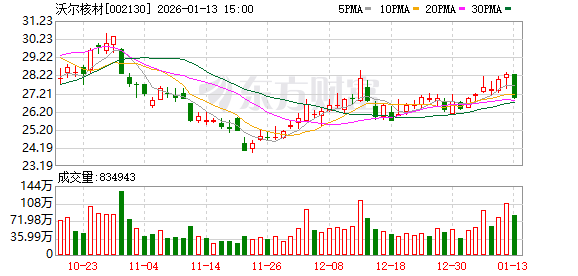
沃尔核材:公司始终坚持以技术创新为核心驱动力
Zheng Quan Ri Bao· 2026-01-13 11:08
Group 1 - The company emphasizes that it consistently focuses on technological innovation as the core driving force for its operations [2] - The company continues to invest in research and development, talent development, and the transformation of technological achievements [2] - The core technological advantages of the company's various business segments are evident, facilitating the continuous extension of its business into high value-added chains [2] Group 2 - The company plans to adopt diversified methods to communicate its technological development achievements [2]


药明康德交卷:营收、利润创新高,主业强劲成核心驱动力
Cai Fu Zai Xian· 2026-01-13 09:25
2026年伊始,全球性CRDMO企业药明康德披露了全年业绩预增公告。根据公告,预计2025年全年药明 康德实现营业收入约454.6亿元,创下历史新高;持续经营业务收入同比增长约21.4%,保持两位数的高 增速。 梳理2025全年表现,药明康德曾两度上调全年业绩指引,其中三季度财报将全年营收目标上调为435- 440亿元,持续经营业务收入增速上调至17-18%。这一系列主动调升,体现了其经营基本面的扎实,也 彰显出其管理层对增长前景的坚定信心。而从刚刚公布的业绩来看,实际营收和增速均超出此前指引上 限,印证了该公司的加速发展态势。 在营收高速增长的同时,药明康德的利润也创下了新高。2025年全年,经调整Non-IFRS归母净利润预 计将实现约149.6亿元,同比增长约41.3%。 值得一提的是,最新公告中接近150亿元的经调整Non-IFRS归母净利润以及高达41.3%的涨幅,是剔除 了出售药明合联股权以及剥离部分业务之后的数据。这样的利润增速不仅反映出其业务模式的成功,还 体现了该公司在管理运营方面的深厚功力。 在去年9月的投资者开放日上,药明康德高管披露了一组数字:过去7年间,通过新技术赋能以及生产运 营效 ...
星驱动力取得物料传输系统专利
Sou Hu Cai Jing· 2026-01-13 08:03
声明:市场有风险,投资需谨慎。本文为AI基于第三方数据生成,仅供参考,不构成个人投资建议。 来源:市场资讯 无锡星驱科技有限公司,成立于2021年,位于无锡市,是一家以从事科技推广和应用服务业为主的企 业。企业注册资本7318.181818万人民币。通过天眼查大数据分析,无锡星驱科技有限公司共对外投资 了4家企业,参与招投标项目17次,财产线索方面有商标信息13条,专利信息322条,此外企业还拥有行 政许可8个。 国家知识产权局信息显示,无锡星驱动力科技有限公司、无锡星驱科技有限公司取得一项名为"物料传 输系统"的专利,授权公告号CN117550317B,申请日期为2023年11月。 天眼查资料显示,无锡星驱动力科技有限公司,成立于2022年,位于无锡市,是一家以从事汽车制造业 为主的企业。企业注册资本50000万人民币。通过天眼查大数据分析,无锡星驱动力科技有限公司参与 招投标项目104次,专利信息319条,此外企业还拥有行政许可44个。 ...
万联证券:2025年电影票房强势增长 动画电影成为市场核心驱动力
智通财经网· 2026-01-13 05:57
Core Viewpoint - The film market is expected to experience significant growth in 2025, with total box office revenue projected to increase by 22.0% to 51.83 billion yuan, primarily driven by the success of "Ne Zha," which contributed approximately 30% of the total box office revenue for the year [1][2]. Group 1: Box Office Performance - The total box office for 2025 is forecasted to reach 51.83 billion yuan, marking a 22.0% year-on-year increase [2]. - "Ne Zha" is anticipated to generate 15.4 billion yuan in box office revenue, significantly impacting the overall market performance [1][2]. - The number of moviegoers is expected to rise by 22.6% to 1.238 billion, with an average ticket price remaining stable at 41.9 yuan [2]. Group 2: Film Supply and Quality - The number of new films released in 2025 is projected to be 465, a decrease of 34 films compared to the previous year, indicating a trend of "less quantity, more quality" in domestic films [3]. - Despite the reduction in the number of new releases, the box office revenue from domestic films is expected to increase by 26.5% to 41.06 billion yuan, reflecting improved content quality [3]. - Animation films are becoming a dominant force in the market, with their box office share rising from 16.6% in 2024 to 49.4% in 2025 [3]. Group 3: Cinema Growth and Industry Leaders - The number of newly built cinemas in 2025 is projected to reach 1,065, a 3.8% increase year-on-year, with 6,206 new screens added [4]. - The operational performance of cinemas shows a 2.5% increase in the number of operating cinemas and a 1.1% increase in the number of screens compared to 2024 [4]. - Wanda Cinemas continues to maintain its leading position in the industry, achieving a box office revenue of 869 million yuan, accounting for 16.76% of the market [4]. Group 4: Investment Recommendations - The film market's growth in 2025, particularly in the animation sector led by "Ne Zha," presents investment opportunities in companies that can consistently produce quality content and develop animation and series IP [5]. - Attention is recommended for cinema operators with high operational efficiency and those involved in the production of quality content [5].
全球智能手机出货量同比增长2%,AI功能正在成为购买的驱动力
Huan Qiu Wang· 2026-01-13 01:08
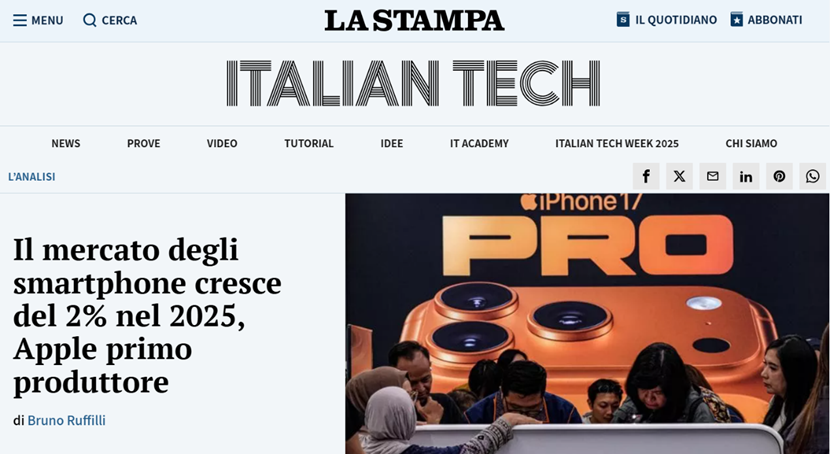
【环球网财经综合报道】市场研究机构Counterpoint表示,受新兴市场需求强劲和经济增长势头的提振,2025年全球智 能手机出货量同比增长2%。得益于新兴市场和中型市场的稳健需求,以及iPhone 17系列的强劲销售,苹果以20%的市 场份额领先市场。 《意大利新闻报》近日发文称,得益于高端需求提升、5G普及和融资购买方式的推动,2025年苹果成为第一大智能手 机生产商,三星和小米紧随其后;消费市场重心转向高端产品,AI功能和差异化设计成为购买驱动力。 路透社则将2025年部分增长动力归因于新兴市场中更好的需求和经济环境。Canalys则强调,一些在2024年增长的地区 开始显示出饱和迹象,而其他地区则因本地特定政策和积极的零售分销继续保持活跃。 报道还提到,需求端重心正向高端产品转移,这带动了价值、利润率和产品策略。同时,设备端的人工智能(AI)功 能正在成为购买的驱动力,而不仅仅是产品介绍中提到的特性。Gartner预计到2025年底,搭载能够运行小型语言模型 的NPU的智能手机支出将达到2982亿美元,并预计2026年将快速增长。 ...

当IP成为消费驱动力,如何“装配”它?
Zhong Guo Jing Ji Wang· 2026-01-12 23:58
Core Insights - The article discusses the rapid growth of the IP (Intellectual Property) and consumer market in China, particularly in the digital entertainment sector, with projections indicating a market size of 753 billion yuan by 2025, reflecting a year-on-year growth of 62.8% [1] - The "IP + food" market is expected to reach 414.8 billion yuan by 2025, with a compound annual growth rate of 10.6% from 2025 to 2029, and an even higher growth rate of 18.5% in the Chinese market during the same period [2] - The integration of IP into consumer products is evolving from mere promotional tools to strategic brand assets that enhance emotional connections with consumers [3][8] Group 1: Market Trends - The IP-related consumer products have seen significant sales, with the "Nezha 2" movie generating hundreds of billions in sales from its merchandise [1] - A survey indicates that 49% of users consider IP to be a "plus" in their purchasing decisions, with 50.3% of respondents planning to increase their IP-related spending in 2025 [1] - The IP + food market is becoming a key driver for brands to innovate and differentiate in a highly competitive landscape [2][7] Group 2: Brand Strategies - Brands like Yili and Mengniu are leveraging popular IPs to create products that resonate emotionally with consumers, moving beyond simple collaborations to deeper brand narratives [3][5] - Yili's collaboration with "Zootopia 2" resulted in a unique jasmine tea milk tea product that aligns with family consumption scenarios, enhancing brand image and consumer engagement [4] - Mengniu's partnership with "Nezha 2" not only produced co-branded products but also integrated the film's themes into product design, significantly boosting social media engagement [6] Group 3: Consumer Engagement - The concept of "social currency" is emerging, where products are designed to be shareable and collectible, enhancing user interaction and brand loyalty [4][8] - The collaboration between brands and IPs is increasingly focused on creating emotional connections, with products designed to evoke feelings and social sharing among consumers [10][11] - The "health food play" category is gaining traction, with products designed for children that combine safety, nutrition, and emotional engagement, reflecting a shift in consumer expectations [12][14]

第九届新驱动力峰会收官 产业园区创新应用场景清单出炉
Zheng Quan Ri Bao Wang· 2026-01-12 10:28
Group 1 - The core viewpoint emphasizes the transformation of Chinese industrial parks and commercial buildings from "space providers" to "industry enablers" driven by technological innovation and industrial integration, particularly highlighted during the "2025 Ninth New Driving Force Summit" [1] - Zhang Guobin, Deputy General Manager of Zhongguancun Development Group, outlined three strategic focuses for economic transformation: strengthening manufacturing foundations, stimulating innovation dynamics, and promoting collaborative openness [1] - High International's research manager noted that the main economic highlights for China in 2025 will stem from improved foreign trade quality and a surge in new productive forces represented by AI, with Zhongguancun's Grade A office market showing a net absorption of over 176,000 square meters, accounting for 53% of the city's total [1] Group 2 - The report indicates that industrial parks are becoming the main force in the new infrastructure and technological transformation, with diverse service demands emerging from various stakeholders, including government, operators, and enterprises [2] - Wang Weixin from Beikejian Group highlighted six characteristics of technology park operations: business diversification, asset securitization, service platformization, park greening, intelligent management, and resource aggregation [2] - Chen Xueyuan, CEO of Suan Zhi China, emphasized that industrial development is a collaborative effort, advocating for innovation as a key driver in connecting technology and industry [2] Group 3 - A list of innovative application scenarios for industrial parks was released, including various projects such as the SoReal Metaverse Park and distributed photovoltaic projects, showcasing the integration of technology and industry [3] - The scenarios also include advancements in smart agriculture and digital twin systems, reflecting the ongoing trend of applying AI and IoT in industrial settings [3]


产业园区从增量竞争转入存量博弈 | 第九届新驱动力峰会
Jing Ji Guan Cha Bao· 2026-01-10 01:35
Core Insights - The 2025 Ninth New Driving Force Summit focused on how industrial parks and commercial buildings can cultivate new productive forces to gain key increments amid deepening policy adjustments, accelerating technological revolutions, and escalating market competition [1] Group 1: Industrial Development - Zhang Guobin, Deputy General Manager of Zhongguancun Development Group, emphasized the need to seize the "14th Five-Year Plan" strategic opportunity to promote the transformation and upgrading of industrial parks, strengthen intelligent manufacturing, and foster collaborative innovation [1] - Liu Meichan from Beijing Guoyan Information Co., Ltd. highlighted the importance of establishing a mechanism for direct dialogue between demand and supply sides, requiring collaboration among government, enterprises, universities, research institutions, and financial entities to create an innovation community [1] Group 2: Market Dynamics - Gao Xinyue from Colliers International noted that the rise of new productive forces has received positive feedback in the Zhongguancun sub-market, with the net absorption of Grade A office space exceeding 176,000 square meters, accounting for 53% of Beijing's total [2] - Chen Liang from Yonyou Industrial Park stated that the success of industrial parks in high-end innovation resource areas relies not only on location and policy but also on transforming core capabilities into park service products, shifting from "landlord" to "industrial partner" [2] Group 3: Innovation and Application - Chen Xueyuan, Deputy Secretary-General of the Zhongguancun High-Precision Industrial Space Supply and Demand Service Alliance, released a list of "Innovative Application Scenarios" for industrial parks, emphasizing that scenario innovation is a key bridge connecting technology and industry [2] - The released innovative application scenarios include various projects such as Shougang Park Experience Space and Zhongguancun Daxing International Hydrogen Energy Demonstration Zone [2] Group 4: Investment Landscape - Ge Cui, Co-founder and General Manager of the Operations Center at Site China, presented the "Beijing Enterprise Location Map (2025)," stating that Beijing is a prime location for business investment with a robust industrial ecosystem and diverse spatial carriers [3] - The market for industrial parks and commercial properties has shifted from incremental competition to stock game, facing challenges in both "quantity" and "price" compared to five years ago [3]