CNOOC(00883)

Search documents
能源早新闻丨突破4000万吨,创历史新高!
中国能源报· 2025-12-21 22:32
Industry News - The National Energy Administration reported five typical violations in the electricity market, including collusion in pricing among power generation companies and improper market power usage, indicating a lack of compliance awareness among some market participants [2] - China's largest offshore oil field, the Bohai Oilfield, achieved a record annual oil and gas production of over 4 million tons, contributing more than 600 million tons of crude oil cumulatively [2] - The first tight oil field in the Sichuan Basin has been established, with proven geological reserves of over 2 million tons of oil and over 2 billion cubic meters of natural gas [3] - The Wari Railway, part of the West-to-East Coal Transport Corridor, has surpassed an annual freight volume of 100 million tons for the third consecutive year, achieving this milestone in the shortest time [3] - The world's first commercial supercritical carbon dioxide power generation unit has been successfully put into operation in Guizhou, marking a significant advancement in carbon capture technology [3] - The first high-altitude rock cavern computing power center in China has been officially put into operation, featuring an investment of 350 million yuan and the deployment of 2,000 domestic computing chips [4] - The total crude oil production in the Inner Mongolia Hetao Basin has exceeded 5 million tons, with an industrial output value of 1.613 billion yuan over the past seven years [4] Corporate News - China Petroleum's Zhongyuan Oilfield gas storage facility has supplied over 100 million cubic meters of natural gas for the winter heating season, with peak daily production reaching 6.5 million cubic meters [7] - China Huadian's "Huadian Ruiyi" E-class gas turbine has successfully completed a 200-hour verification test, marking a significant step in the domestic production of high-temperature components for heavy-duty gas turbines [7]



我国海上最大油田年产油气超4000万吨 关键装备国产化取得重大突破
Jing Ji Ri Bao· 2025-12-21 21:56
渤海油田产量持续增长的底气,源于坚持以科技创新赋能发展。在复杂油气开发领域,关键装备国产化 取得重大突破,成功投用首套国产化浅水水下生产系统,实现了我国浅水海域开发模式"从0到1"的跨 越。形成海上规模化稠油热采技术体系,耐高温注采一体化装备推动旅大5—2北、锦州23—2等非常规 稠油油田高效开发,支撑热采年产量实现从30万吨到200万吨的历史性突破。 国家能源局数据显示,"十四五"期间,我国石油天然气产量稳中有增,海洋原油成为重要"增长极",连 续5年占全国石油新增产量的60%以上。其中,渤海油田近5年保持了年均5%的油气产量增幅,原油增 量约占全国总增量近40%。 (文章来源:经济日报) 本报北京12月21日讯(记者黄晓芳)记者从中国海洋石油集团有限公司获悉,我国海上最大油田——渤 海油田2025年累计生产油气当量突破4000万吨,创历史新高。 渤海油田是我国海洋石油工业的发源地,也是我国海上产量最高、规模最大的主力油田,现拥有60余个 在生产油气田、200余座生产设施,累计生产原油超6亿吨。 ...
中国海上最大油田 年产油气突破4000万吨
Xin Lang Cai Jing· 2025-12-21 16:36
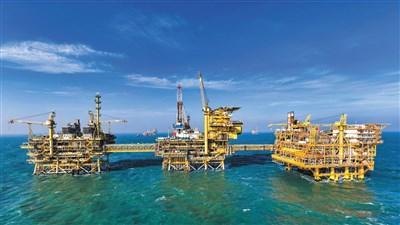
12月21日,中国海油宣布,我国海上最大油田——渤海油田2025年累计生产油气当量突破4000万吨,创 历史新高。渤海油田是我国海上产量最高、规模最大的主力油田,现拥有60余个在生产油气田、200余 座生产设施,累计生产原油超6亿吨。近五年,渤海油田油气产量年均增长5%,原油增量约占全国总增 量近40%。图为12月21日拍摄的渤海油田海上油气平台作业现场。(无人机照片) 新华社图 ...
渤海油田今年油气产量突破4000万吨
Xin Lang Cai Jing· 2025-12-21 14:08
(来源:天津广播电视台) 21日,中国海油发布,渤海油田今年油气产量突破4000万吨。 来源:滚动播报 渤海油田,是我国海上产量最高、规模最大的主力油田,结合渤海油田油气储量资源情况,制定了2025 年实现油气产量4000万吨的目标任务,意味着渤海油田要实现油气产量从3000万吨到4000万吨的跨越。 加强产能建设,今年,多个重点项目快速建成投产,同时加快破解技术创新难题,在复杂油气开发领 域,投用首套国产化浅水水下生产系统,实现了我国浅水海域开发模式"从0到1"的跨越。 ...
中国海上最大油田年产油气突破4000万吨
Xin Hua Wang· 2025-12-21 13:58
Core Viewpoint - China National Offshore Oil Corporation (CNOOC) announced that the Bohai Oilfield, the largest offshore oilfield in China, is expected to achieve a cumulative oil and gas equivalent production of over 40 million tons by 2025, marking a historical high and providing strong support for national energy security and high-quality economic development [1] Group 1: Production and Capacity - The Bohai Oilfield is the highest-producing and largest offshore oilfield in China, currently operating over 60 oil and gas fields and more than 200 production facilities, with a cumulative crude oil production exceeding 600 million tons [1] - In the past five years, the oil and gas production of the Bohai Oilfield has grown at an average annual rate of 5%, with crude oil production accounting for nearly 40% of the national total increase [1] - By 2025, the Bohai Oilfield's capacity construction will accelerate, with the annual drilling and completion operations expected to reach a historical high, facilitating the rapid completion and production of several key projects, including the Kengli 10-2 and Bohai Central 26-6 oilfields [1] Group 2: Technological Advancements and Sustainability - The Bohai Oilfield is advancing its digital transformation and green low-carbon development, achieving significant breakthroughs in the localization of key equipment, including the successful deployment of the first domestically produced shallow-water subsea production system [1] - The Qinhuangdao 32-6 intelligent oilfield is enhancing traditional oil and gas production through technologies that enable unmanned operations and collaborative production and operation [1] - The largest offshore oilfield group in China has completed its shore power application project, with over 80% of the oilfields connected to shore power [1]
视频丨相继发现6个亿吨级油气田!解码我国最大原油生产基地
Yang Shi Xin Wen Ke Hu Duan· 2025-12-21 10:06
Core Viewpoint - CNOOC announced that the Bohai Oilfield will achieve a cumulative oil and gas equivalent production of over 40 million tons by 2025, setting a historical record [1]. Group 1: Bohai Oilfield Overview - The Bohai Oilfield, located in the Bohai Sea, was established in 1965 and consists of eight production areas: Liaodong, Liaobei, Bonan, Bozhong, Boxi, Pengbo, Qinhuangdao, and Caofeidian [3]. - The oilfield has over 200 operational oil and gas production facilities, including five shore power stations and substations, seven land terminals, more than 60 operational oil fields, over 2,900 kilometers of underwater pipelines, and over 1,500 kilometers of underwater cables [5]. Group 2: Technological Advancements - The Bohai Oilfield has made significant breakthroughs in oil and gas exploration and development technologies, transitioning from shallow conventional reservoirs to complex fields such as mid-deep layers and unconventional heavy oil [7]. - Since the implementation of the "Seven-Year Action Plan" for oil and gas reserve increase and production in 2019, the Bohai Oilfield has introduced innovative exploration theories and discovered several billion-ton oil and gas fields [11]. Group 3: Engineering and Equipment Development - The development of marine oil and gas resources has accelerated due to advancements in high-end equipment and the integration of information technology and artificial intelligence [12]. - During the 14th Five-Year Plan period, the manufacturing of marine oil and gas equipment has more than doubled compared to the previous five years, with the total length of underwater oil and gas pipelines exceeding 10,000 kilometers [14]. Group 4: Future Projections - According to the latest data from the National Energy Administration, domestic crude oil production is expected to reach 215 million tons by 2025, with marine crude oil production anticipated to exceed 68 million tons, contributing approximately 80% of the total increase in national crude oil production [22].
本周新闻资讯直通车
Sou Hu Cai Jing· 2025-12-21 10:01
本周看点 1、人民币国际化加速前进的"三重驱动" 跨境使用规模稳步增长,债券投融资受到青睐,离岸人民币市场不断升温……今年以来,人民币国际化不断取得积极进展,受到海外广泛关注和积极评 价。 国际航空运输协会11月初宣布将人民币纳入其清算系统的可结算货币名单,允许全球航空公司与航空供应商以人民币进行结算。今年年中,埃及宣布允许 中国企业使用人民币在埃及注册公司。 人民币在跨境贸易投资领域正获得更广泛使用。据中国人民银行最新发布的《人民币国际化报告(2025)》,2025年上半年,银行代客人民币跨境收付金 额合计为34.9万亿元,同比增长14.0%。人民币已成为全球第二大贸易融资货币;按全口径计算,人民币为全球第三大支付货币。 与此同时,人民币债券投融资受到国际市场青睐。今年4月,中国财政部在英国伦敦发行首笔60亿元人民币绿色主权债券,总申购金额是发行金额的6.9 倍。高认购倍数印证了国际投资者对中国主权债券的认可。10月,中国银行伦敦分行发行全球首笔以英镑和离岸人民币双币种计价的绿色债券。 2、我国海上最大油田年产油气突破4000万吨 中国海油21日宣布,我国海上最大油田——渤海油田2025年累计生产油气当量突 ...

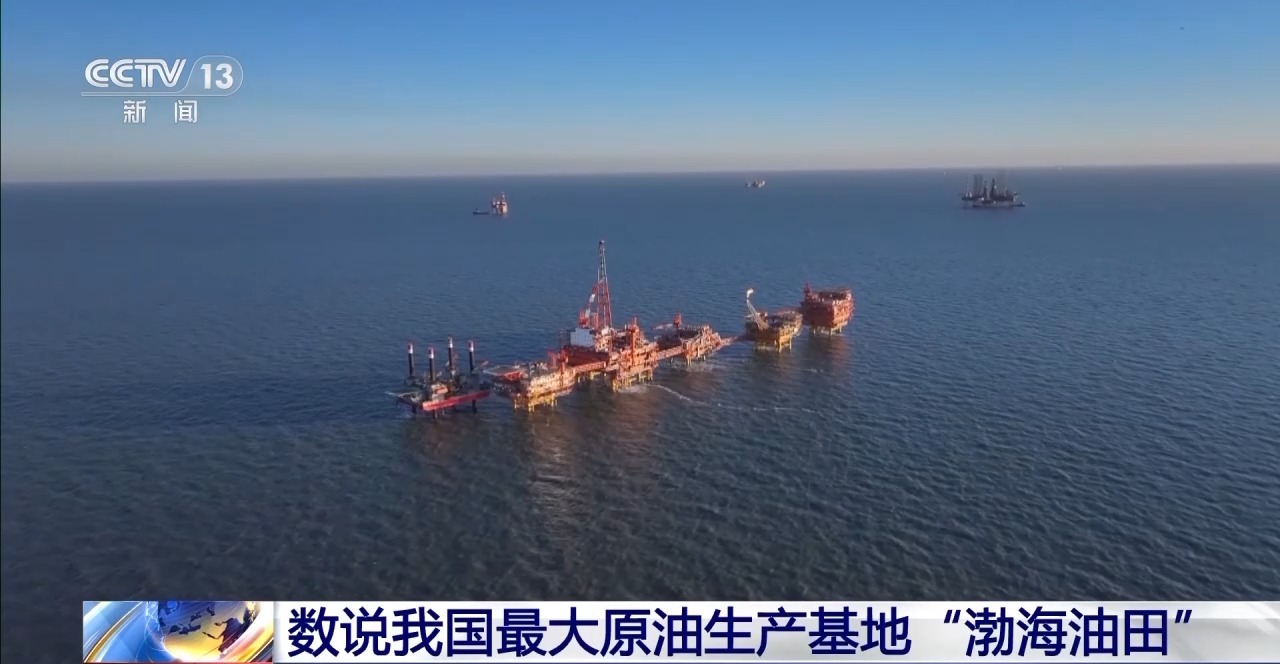
超6亿吨,创新高!“数”说“渤海油田” 海上油气田开发按下“快进键”
Yang Shi Wang· 2025-12-21 09:56
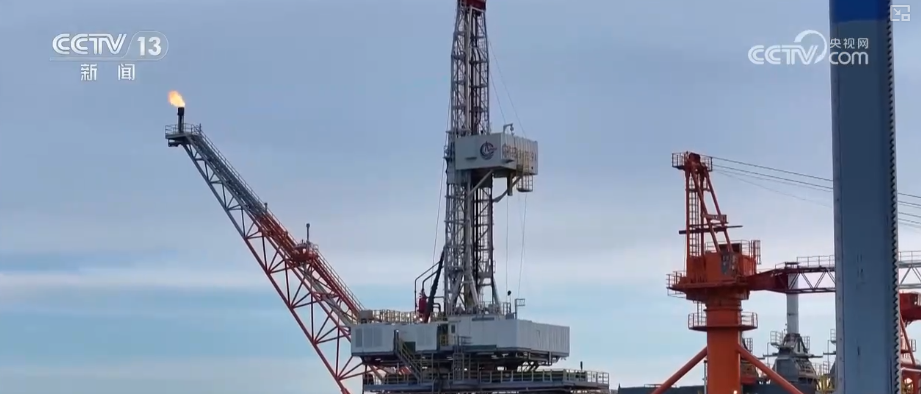
Core Viewpoint - China National Offshore Oil Corporation (CNOOC) announced that the cumulative oil and gas equivalent production of the Bohai Oilfield will exceed 40 million tons by 2025, setting a historical record [1]. Group 1: Bohai Oilfield Overview - The Bohai Oilfield is the largest offshore oilfield in China, having contributed over 600 million tons of crude oil to date [3]. - Established in 1965, the Bohai Oilfield is located in the Bohai Sea and consists of eight production operation areas: Liaodong, Liaobei, Bohan, Bozhong, Boxi, Pengbo, Qinhuangdao, and Caofeidian [4][6]. - The oilfield has over 200 operational oil and gas production facilities, including five shore power land switch stations and substations, and seven land terminals [8]. Group 2: Production and Technological Advancements - The Bohai Oilfield has more than 60 operational oil and gas fields, with an annual production exceeding 40 million tons and a cumulative crude oil production of over 600 million tons [10]. - As a core support area for offshore oil and gas development in China, the Bohai Oilfield has achieved breakthroughs in exploring and developing complex fields, including shallow sea conventional oil reservoirs and unconventional heavy oil [11]. - Since the implementation of the "Seven-Year Action Plan" for oil and gas reserve increase and production in 2019, the Bohai Oilfield has introduced innovative exploration theories and discovered six billion-ton-level oil and gas fields [12]. Group 3: Equipment and Innovation - The development of marine oil and gas resources relies heavily on high-end equipment, with significant growth in marine oil and gas equipment manufacturing during the 14th Five-Year Plan period, doubling the steel processing volume compared to the previous five years [13]. - The industry has transitioned from customized equipment to standardized, modular designs, enhancing construction efficiency by over 20% [14]. - The first marine oil and gas completion tool "smart factory" has been successfully launched, promoting the intelligent manufacturing of high-end marine completion tools [16]. Group 4: Future Projections - By 2025, the Bohai Oilfield is expected to complete seven capacity construction projects ahead of schedule by nearly 150 days, achieving a capacity construction acceleration of over 5% [20]. - According to the National Energy Administration, domestic crude oil production is projected to reach 215 million tons by 2025, with marine crude oil production expected to exceed 68 million tons, contributing approximately 80% of the total increase in national crude oil production [22].
俄乌和平协议谈判进展顺利,油价回吐地缘溢价
Ping An Securities· 2025-12-21 09:32
Investment Rating - The report maintains a "Strong Buy" rating for the oil and petrochemical sector [1]. Core Viewpoints - Progress in peace negotiations between Russia and Ukraine has led to a decrease in oil prices, reflecting a retreat from geopolitical premiums [6]. - The U.S. labor market shows signs of weakness, with a reduction of 41,000 jobs in October and November combined, and the unemployment rate rising to 4.6%, the highest since October 2021 [6]. - The CPI for November recorded a year-on-year increase of 2.7%, below market expectations, suggesting potential easing of inflationary pressures [6]. - In the fluorochemical sector, the 2026 refrigerant quotas are set to increase, and government subsidies for home appliances are expected to continue, supporting demand [6]. - The automotive sector is experiencing sustained growth due to government incentives for vehicle scrappage and replacement [6]. Summary by Sections Oil and Petrochemicals - The report highlights the successful progress in peace talks between Russia and Ukraine, which has contributed to a decline in oil prices, with WTI and Brent crude futures dropping by 1.67% and 1.09% respectively [6]. - The U.S. refining capacity is recovering post-maintenance, with a slight reduction in commercial crude oil inventories, while gasoline and jet fuel stocks are increasing [6]. - The report notes that domestic oil companies are diversifying their oil and gas sources to reduce sensitivity to international oil price fluctuations [7]. Fluorochemicals - The 2026 production quotas for HFCs have been announced, with a total of 797,845 tons, an increase of 5,963 tons from the previous year [6]. - The demand for refrigerants is expected to improve due to ongoing government subsidies and a strong automotive market [6]. Semiconductor Materials - The semiconductor materials sector is experiencing a positive inventory destocking trend, with improving fundamentals in the end market [7]. - The report suggests that the upward cycle in semiconductor materials, combined with domestic substitution, may lead to further price increases [7].

创新高!我国海上最大油田年产油气突破4000万吨
Bei Jing Ri Bao Ke Hu Duan· 2025-12-21 03:19
Core Insights - China National Offshore Oil Corporation (CNOOC) announced that the Bohai Oilfield, the largest offshore oilfield in China, is expected to exceed a cumulative production of 40 million tons of oil equivalent by 2025, setting a historical record [1][3]. Group 1: Production Goals and Achievements - The Bohai Oilfield, established in 1965, is the birthplace of China's marine oil industry and has become the country's largest offshore oil production base, with over 60 producing oilfields and more than 200 production facilities, accumulating over 600 million tons of crude oil [1][3]. - CNOOC has set a target to increase oil and gas production from 30 million tons to 40 million tons by 2025, indicating a significant production leap [3]. Group 2: Capacity Expansion and Technological Innovation - The Tianjin branch of CNOOC stated that capacity construction at the Bohai Oilfield will accelerate, with a focus on standardized upgrades and high-efficiency drilling operations, aiming for a record high in drilling and completion activities in 2025 [3]. - The company is also revitalizing older oilfields, with successful implementation of secondary adjustment projects, ensuring that annual crude oil production from older fields exceeds 32 million tons by 2025 [3]. - Technological innovations have led to significant breakthroughs in domestic equipment for complex oil and gas development, including the deployment of the first domestically produced shallow water subsea production system, marking a major advancement in China's shallow water development model [3]. Group 3: Industry Context - According to the National Energy Administration, during the 14th Five-Year Plan period, China's oil and natural gas production is expected to steadily increase, with offshore crude oil becoming a crucial growth driver, accounting for over 60% of the country's new oil production for five consecutive years [3].