CHINA MOBILE(00941)

Search documents
净买入超28亿港元 加仓阿里健康减持小米和晶泰控股
Xin Lang Cai Jing· 2026-01-14 10:14
Core Viewpoint - Southbound capital continues to flow into Hong Kong stocks, with a net inflow of approximately 28.65 billion HKD today, marking the fourth consecutive day of inflows [1]. Group 1: Southbound Capital Flow - Today's southbound trading volume reached approximately 1606.16 billion HKD, an increase of 233 billion HKD from the previous day, accounting for 47.20% of the total turnover of the Hang Seng Index [1]. - The net inflow from the Shanghai-Hong Kong Stock Connect was about 25.14 billion HKD, while the Shenzhen-Hong Kong Stock Connect saw a net inflow of approximately 3.52 billion HKD [1]. Group 2: Individual Stock Performance - Tencent Holdings (0700.HK) saw a net buy of 20.09 billion HKD, with a 0.88% increase in stock price today [1][2]. - Alibaba Health (00241.HK) experienced a significant rise of 18.96%, with a net buy of 14.58 billion HKD [1][2]. - Alibaba Group (09988.HK) had a net buy of 11.34 billion HKD, with a stock price increase of 5.69% [1][2]. - Kuaishou Technology (01024.HK) recorded a net buy of 4.42 billion HKD, with a 4.46% increase in stock price [1][2]. - China Mobile (00941.HK) faced a net outflow of 9.13 billion HKD, with a slight decline of 0.19% [1][2]. - Xiaomi Group (01810.HK) had a net outflow of 4.23 billion HKD, with a decrease of 0.53% [1][2]. - Crystal International (02228.HK) saw a net outflow of 3.09 billion HKD, with a 3.87% increase in stock price [1][2]. - Semiconductor Manufacturing International Corporation (00981.HK) had a net outflow of 2.43 billion HKD, with a 2.01% increase in stock price [1][2].




史无前例,我国20万颗卫星申报背后的“大棋局”
3 6 Ke· 2026-01-14 07:25
Core Viewpoint - China's recent application to the International Telecommunication Union (ITU) for over 200,000 satellite frequency resources marks a record-breaking action in both the number of applications and the total scale of satellites, indicating a strategic move to secure orbital and frequency resources for future development [1][3][10]. Group 1: Record-Breaking Application - The application includes over 190,000 satellites from a newly registered entity called the "Radio Spectrum Development and Technology Innovation Research Institute," which significantly exceeds previous applications and is several times larger than the current largest constellation, SpaceX's Starlink with 72,000 satellites [1][4]. - In 2025, China submitted 73 frequency coordination applications to the ITU, with a peak of 34 applications in December alone, showcasing unprecedented activity in satellite frequency coordination [4][10]. Group 2: Strategic Intent - The large-scale application is viewed as a "resource positioning" action, aimed at ensuring China has a sufficient "resource pool" of orbital and frequency resources for the next decade or longer [3][10]. - The initiative reflects China's strategic determination to secure more orbital positions and frequencies, which are critical for the development of commercial space and the goal of integrated "space-ground" communication systems, particularly for 6G [3][6][13]. Group 3: Role of Key Institutions - The Radio Spectrum Innovation Institute, established by several key organizations, is positioned as a core research and technical support entity for satellite communication standards and resource management, indicating a strong national strategic intent [6][11]. - The collaboration between the Radio Spectrum Innovation Institute and China SatNet highlights a dual approach where one focuses on demand integration and the other on technological innovation and resource reserve [6][10]. Group 4: Involvement of Telecom Operators - Major telecom operators, including China Telecom and China Mobile, are also involved in the satellite application process, marking a significant step in their satellite internet business and indicating a shift towards integrated communication services [11][12]. - China Telecom aims to complement its existing geostationary satellite capabilities with low Earth orbit satellites to enhance its service offerings, while China Mobile seeks to establish its own satellite constellation to maintain competitive advantages in future communication technologies [11][12][13].

【窩輪透視】中移動震盪加劇!該佈局認購還是認沽窩輪?
Ge Long Hui· 2026-01-13 22:24
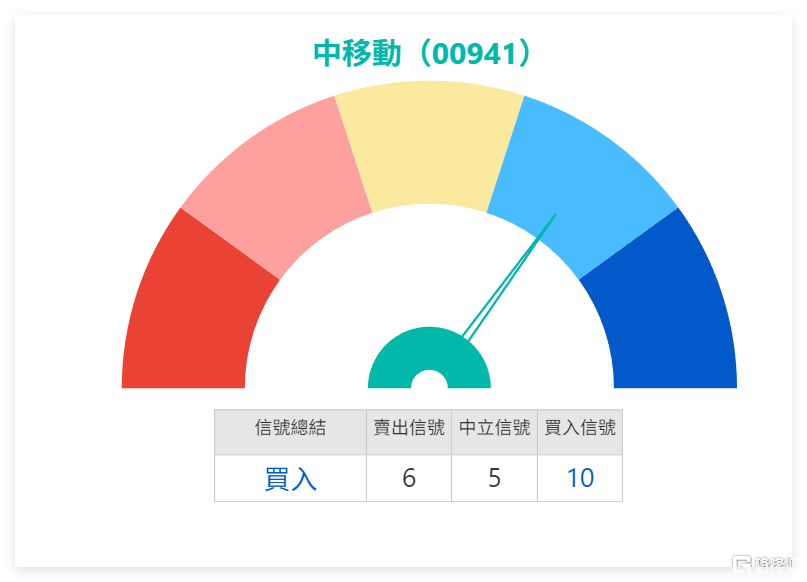
Core Viewpoint - China Mobile's stock price has been on a downward trend, with recent concerns about it potentially falling below 80 HKD, despite some short-term rebounds [1][3]. Technical Analysis - Current stock price is 81.05 HKD, down 0.12%, with a trading volume of 1.173 billion HKD. Support levels are at 78 HKD and 74.7 HKD, while resistance levels are at 84.4 HKD and 87.7 HKD. The probability of an upward movement is 56%, with a 5-day volatility of 2.5% [1]. - The RSI index is at 32, indicating oversold conditions, while the Williams indicator also signals a buy. The VR ratio shows a decrease in selling pressure, suggesting a buy signal. However, MACD and Bollinger Bands still indicate sell signals, leading to mixed market sentiments [1]. Derivative Products Analysis - Historical data shows that the Societe Generale call option (24167) linked to China Mobile rose by 8% within two days of its listing, while the underlying stock only changed by 0.31%, highlighting the leverage effect of options [3]. - Recommended products include: - Bank of China call option (23993) with a leverage of 10.1 and a strike price of 96.28 HKD, noted for its relatively low premium. - Bank of China put option (21625) with a leverage of 18.6 and a strike price of 75.83 HKD, which has the lowest premium and implied volatility [6][7]. Investment Strategy - Investors holding related options are advised to set profit-taking levels based on their risk tolerance to avoid potential losses from short-term volatility. New investors are cautioned against chasing high-premium options due to the unclear trend of China Mobile's stock [6][8].
1月13日港股通净买入12.96亿港元




Zheng Quan Shi Bao Wang· 2026-01-13 14:52
Market Overview - On January 13, the Hang Seng Index rose by 0.90%, closing at 26,848.47 points, with a total net inflow of HKD 1.296 billion through the southbound trading channel [1][4] - The total trading volume for the southbound trading was HKD 137.348 billion, with a net buy of HKD 1.296 billion [1] Trading Activity - In the Shanghai-Hong Kong Stock Connect, the trading volume was HKD 82.493 billion, with a net buy of HKD 0.149 billion, while the Shenzhen-Hong Kong Stock Connect had a trading volume of HKD 54.855 billion and a net buy of HKD 1.147 billion [1] - The most actively traded stock in the Shanghai-Hong Kong Stock Connect was Alibaba-W, with a trading amount of HKD 81.051 billion, followed by Tencent Holdings and Xiaomi Group-W, with trading amounts of HKD 29.445 billion and HKD 28.570 billion, respectively [1][3] Stock Performance - In terms of net buy amounts, Xiaomi Group-W led with a net buy of HKD 0.324 billion, despite its closing price dropping by 1.96% [1] - Alibaba-W had the highest net buy in the Shenzhen-Hong Kong Stock Connect, amounting to HKD 1.161 billion, with its closing price increasing by 3.63% [2][3] - The stock with the highest net sell was China Mobile, with a net sell of HKD 0.804 billion, and its closing price decreased by 0.25% [1][3] Detailed Trading Data - The top ten actively traded stocks in the southbound trading included: - Alibaba-W: HKD 81,050.183 million (net sell: HKD 9.046 million, daily change: +3.63%) [3] - Tencent Holdings: HKD 29,449.159 million (net buy: HKD 0.661 million, daily change: +0.72%) [3] - Xiaomi Group-W: HKD 28,572.459 million (net buy: HKD 32.370 million, daily change: -1.96%) [3] - SMIC: HKD 22,715.902 million (net sell: HKD 17.347 million, daily change: -1.13%) [3]
港股通1月13日成交活跃股名单

Zheng Quan Shi Bao Wang· 2026-01-13 14:49
Market Overview - On January 13, the Hang Seng Index rose by 0.90%, with total southbound trading amounting to HKD 137.35 billion, including buy transactions of HKD 69.32 billion and sell transactions of HKD 68.03 billion, resulting in a net buying amount of HKD 1.30 billion [1] Southbound Trading Activity - The southbound trading through Stock Connect (Shenzhen) recorded a total trading amount of HKD 54.86 billion, with buy transactions of HKD 28.00 billion and sell transactions of HKD 26.85 billion, leading to a net buying amount of HKD 1.15 billion [1] - The southbound trading through Stock Connect (Shanghai) had a total trading amount of HKD 82.49 billion, with buy transactions of HKD 41.32 billion and sell transactions of HKD 41.17 billion, resulting in a net buying amount of HKD 0.15 billion [1] Active Stocks - Alibaba-W was the most actively traded stock with a total trading amount of HKD 139.06 billion and a net buying amount of HKD 10.71 billion, closing with a price increase of 3.63% [1][2] - Tencent Holdings followed with a total trading amount of HKD 52.93 billion and a net buying amount of HKD 7.56 billion, closing with a price increase of 0.72% [1][2] - Xiaomi Group-W had a total trading amount of HKD 49.62 billion and a net buying amount of HKD 6.07 billion, closing with a price decrease of 1.96% [1][2] Continuous Net Buying and Selling - Three stocks experienced continuous net buying for more than three days, with Xiaomi Group-W, Tencent Holdings, and Kuaishou-W having net buying days of 9, 5, and 3 respectively [2] - Tencent Holdings had the highest cumulative net buying amount of HKD 69.99 billion, followed closely by Xiaomi Group-W with HKD 69.33 billion [2] - Two stocks faced continuous net selling, with China Mobile and Meituan-W having net selling amounts of HKD 52.84 billion and HKD 11.67 billion respectively [2]
国泰海通|机械:20万颗“星海”压境,商业航天格局优化
国泰海通证券研究· 2026-01-13 13:20
报告导读: 中国新增申请 20 万颗卫星覆盖 14 个星座,含中国移动、中国星网、垣信卫 星等。本轮申报数量激增近一个数量级,未来可能引发全球对太空战略资源的新一轮关注 事件: 近日,中国向国际电信联盟( ITU )提交了新增 20.3 万颗的卫星申请,此次申报涵盖 14 个卫星星座,其中 CTC-1 和 CTC-2 两个星座各自申请 96,714 颗,成为本轮申报的主力。除中国星网、垣信卫星等专业卫星运营商外,申报主体首次广泛包括无线电创新院、银河航天、国电高科等商业航天企 业,以及中国移动、中国电信等传统通信运营商。 申报超 20 万颗,抢占频轨资源 " 制高点 " 。 此次中国向 ITU 提交的 20.3 万颗卫星申报,规模远超此前 "GW 星座 " (约 1.3 万颗)与 " 千帆星座 " (约 1.5 万颗)的总和,标志着中国低轨星座建设从 " 千星 " 迈向 " 十万星 " 量级的新纪元。其中, CTC-1 与 CTC-2 两个超大星座合计申报近 19.3 万颗,成为绝对主力。在近地轨道( LEO )频轨资源日益拥挤的背景下,这种 " 饱和式申报 " 体现了国家级战略意志,旨在通过 " 占频保轨 ...

20亿!中国移动大单结果出炉,国产厂商的\"春天\"来了!
Xin Lang Cai Jing· 2026-01-13 11:32
Core Insights - China Mobile's significant procurement of 8,581 computing servers for its cloud resource pool reflects a strategic shift towards enhancing its computing power, with a total procurement amount of approximately 2 billion yuan for the first two announced packages [1][11] - The investment in computing power is projected to reach 47.5 billion yuan in 2024, marking a 21.5% year-on-year increase, and its share of capital expenditure is expected to rise from 21.7% to 27.5% [1][11] - The competitive landscape is shifting towards domestic manufacturers, with Wuhan Yangtze Computing winning the largest share of the recent procurement, indicating a growing trend of localization in the supply chain [3][12] Investment Strategy - The procurement strategy is not a spontaneous decision but is backed by a clear vision to position computing power as a new growth driver for China Mobile [1][11] - The company has already invested over 26 billion yuan in server procurement within a year, including 19.1 billion yuan for AI training servers and 5 billion yuan for AI inference servers [1][11] - The shift in focus from training to inference resources indicates a strategic preparation for the commercialization of AI applications [2][11] Domestic Manufacturer Growth - Wuhan Yangtze Computing secured approximately 633.11 million yuan, accounting for 50% of the procurement, followed by Sichuan Huakun Zhenyu and Digital China with 27% and 23% respectively [3][12] - The localization rate for server procurement has increased significantly, with China Mobile's AI chip localization rate exceeding 85% [3][12] Ecosystem Competition - The recent procurement shows a notable shift from CUDA-dominated ecosystems to a more diversified approach, with CANN ecosystem devices accounting for 34 billion yuan compared to 17 billion yuan for CUDA devices [4][13] - This shift is driven by the need for supply chain security and the desire to maintain technological autonomy [4][13] Market Dynamics - The competition among the three major operators in computing power investment is intensifying, with China Mobile's intelligent computing scale reaching 61.3 EFLOPS, compared to China Telecom's 43 EFLOPS and China Unicom's 30 EFLOPS [6][14] - The new servers are intended to integrate into a "computing network" that allows for on-demand access, representing a potential second growth curve for operators beyond traditional cloud services [6][14] Commercialization Challenges - Despite the significant investments, the challenge lies in monetizing AI services, as many enterprise clients view AI as an additional service rather than a necessity [7][15] - The competitive landscape includes major players like Alibaba Cloud, Tencent Cloud, and Huawei Cloud, which have deeper experience in AI applications [7][15] - Cost structures remain a concern, as operators face pressure from price wars despite recent reductions in training and inference costs [7][15] Conclusion - The recent procurement of 2 billion yuan in servers marks a pivotal moment in the development of China's computing power industry, highlighting the rise of domestic manufacturers and the need for a balanced approach between expansion and commercialization [8][16] - The ultimate goal of computing power investment should be to serve the real economy and facilitate digital transformation, avoiding the pitfalls of over-investment seen in previous technology cycles [8][16]

智通港股通活跃成交|1月13日

智通财经网· 2026-01-13 11:02
Core Insights - On January 13, 2026, Alibaba-W (09988), Tencent Holdings (00700), and Xiaomi Group-W (01810) were the top three companies by trading volume in the Southbound Stock Connect, with trading amounts of 81.05 billion, 29.45 billion, and 28.57 billion respectively [1] - The same companies also led in trading volume in the Shenzhen-Hong Kong Stock Connect, with trading amounts of 58.01 billion, 23.48 billion, and 21.05 billion respectively [1] Southbound Stock Connect (Shanghai-Hong Kong) - Alibaba-W (09988) had a trading amount of 81.05 billion and a net buy amount of -90.46 million [2] - Tencent Holdings (00700) recorded a trading amount of 29.45 billion with a net buy amount of +6.61 million [2] - Xiaomi Group-W (01810) achieved a trading amount of 28.57 billion and a net buy amount of +3.24 billion [2] - Other notable companies included Goldwind Technology (02208) with 23.07 billion and a net buy of +85.70 million, and SMIC (00981) with 22.72 billion and a net buy of -1.73 billion [2] Southbound Stock Connect (Shenzhen-Hong Kong) - Alibaba-W (09988) had a trading amount of 58.01 billion and a net buy amount of +1.16 billion [2] - Tencent Holdings (00700) recorded a trading amount of 23.48 billion with a net buy amount of +749 million [2] - Xiaomi Group-W (01810) achieved a trading amount of 21.05 billion and a net buy amount of +283 million [2] - Other significant companies included SMIC (00981) with 18.13 billion and a net buy of -661 million, and Kuaishou-W (01024) with 12.21 billion and a net buy of +114 million [2]
近亿元战略融资,由中国移动独家投资!
Sou Hu Cai Jing· 2026-01-13 10:33
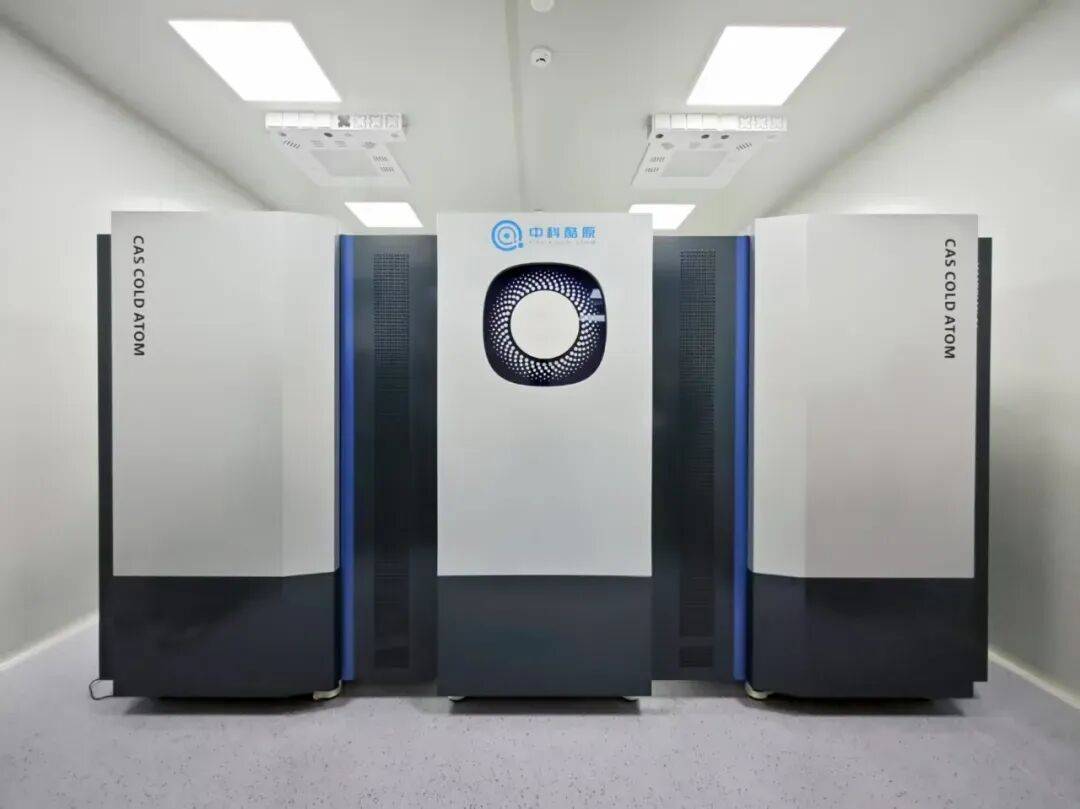
Core Viewpoint - Zhongke Kuyuan Technology (Wuhan) Co., Ltd. has completed a nearly 100 million yuan strategic financing round, exclusively invested by China Mobile Chain Long Fund, highlighting its significant position in the quantum technology sector [1] Group 1: Company Overview - Zhongke Kuyuan was established in 2020, with a core team originating from the Chinese Academy of Sciences, excelling in atomic interference precision measurement and neutral atom quantum computing [1] - The company is a leading enterprise in the quantum technology industry chain in Hubei Province and a founding member of the National Quantum Technology Industry-Academia-Research Innovation Alliance [1] - Zhongke Kuyuan has applied for over 70 patents related to quantum computing and precision measurement, with nearly 50% being invention patents [1] Group 2: Technological Advancements - In 2024, Zhongke Kuyuan launched the "Hanyuan 1" atomic quantum computer, which operates without the need for low-temperature environments, significantly reducing deployment costs [2] - The company also introduced the "Kuyuan Quantum Cloud" platform, enabling universities and enterprises to access quantum computing power via the cloud, accelerating technology dissemination [2] - The "Hanyuan" quantum computer offers advantages such as long coherence time and high control precision, making it suitable for building general-purpose quantum computers [4] Group 3: Commercialization Efforts - Zhongke Kuyuan is focusing on the commercialization of its "Hanyuan" series quantum machines, developing both full programming and global control technology routes, and creating a quantum computing cloud platform to lower user entry barriers [4] - The company collaborates with industries such as finance, pharmaceuticals, and materials to develop quantum algorithms, facilitating the transition from research to industrial application [4] Group 4: Funding and Strategic Partnerships - In the past year, Zhongke Kuyuan has secured multiple rounds of financing, including strategic investments from the Wuhan Guanggu Chip Quantum Technology Investment Fund and other funds totaling several million yuan [6] - The recent investment from China Mobile Chain Long Fund is seen as a strategic move to build an ecosystem that integrates quantum computing with 5G/6G network optimization and big data analysis, aligning with China Mobile's strategic goals [6][7] - This investment also supports the national focus on quantum technology as a key direction in the "9+6" strategic emerging industries layout by the State-owned Assets Supervision and Administration Commission [7]
港股13日涨0.9% 收报26848.47点
Xin Hua She· 2026-01-13 10:17
Market Performance - The Hang Seng Index increased by 239.99 points, a rise of 0.9%, closing at 26,848.47 points [1] - The total turnover for the day on the main board was HKD 315.92 billion [1] - The National Enterprises Index rose by 65.33 points, closing at 9,285.41 points, with a gain of 0.71% [1] - The Hang Seng Tech Index saw a slight increase of 6.59 points, closing at 5,869.79 points, reflecting a gain of 0.11% [1] Blue-Chip Stocks - Tencent Holdings rose by 0.72%, closing at HKD 627.5 [1] - Hong Kong Exchanges and Clearing increased by 1.31%, closing at HKD 431.8 [1] - China Mobile decreased by 0.25%, closing at HKD 80.95 [1] - HSBC Holdings rose by 1.85%, closing at HKD 126.4 [1] Local Hong Kong Stocks - Cheung Kong Holdings fell by 0.19%, closing at HKD 42.56 [1] - Sun Hung Kai Properties increased by 1.22%, closing at HKD 107.9 [1] - Henderson Land Development rose by 2.99%, closing at HKD 31.72 [1] Chinese Financial Stocks - Bank of China increased by 0.9%, closing at HKD 4.48 [1] - China Construction Bank rose by 1.17%, closing at HKD 7.81 [1] - Industrial and Commercial Bank of China increased by 0.96%, closing at HKD 6.3 [1] - Ping An Insurance rose by 2.19%, closing at HKD 70 [1] - China Life Insurance increased by 3.51%, closing at HKD 33 [1] Oil and Petrochemical Stocks - Sinopec increased by 0.65%, closing at HKD 4.65 [1] - PetroChina rose by 1.36%, closing at HKD 8.22 [1] - CNOOC increased by 2.58%, closing at HKD 21.48 [1]