
LENOVO GROUP(00992)

Search documents
超百家企业捐赠总额超12亿港元,企业驰援香港大埔火灾救援


第一财经· 2025-11-29 07:06
Core Points - A significant fire occurred in Hong Kong's Tai Po district, resulting in major casualties and prompting over 100 companies and foundations to donate for emergency relief and community recovery efforts, with total donations exceeding HKD 1.2 billion [2][4]. Donation Summary - Major companies such as Yuexiu Group donated HKD 10 million, while China Overseas and China State Construction contributed HKD 20 million [3]. - Tencent donated HKD 30 million, and Alibaba made an initial donation of HKD 20 million [3]. - Other notable contributions include HKD 30 million from the Li Ka Shing Foundation and HKD 12 million from the Chaozhou Association [4]. - The total amount of donations has surpassed HKD 1.2 billion as of the latest reports [4].


联想取得一种信息确定方法、电子设备和计算机可读存储介质专利
Jin Rong Jie· 2025-11-29 03:31
Group 1 - Lenovo (Beijing) Co., Ltd. has obtained a patent titled "An Information Determination Method, Electronic Device, and Computer Readable Storage Medium," with authorization announcement number CN114596134B, and the application date was February 2022 [1] - Lenovo (Beijing) Co., Ltd. was established in 1992 and is located in Beijing, primarily engaged in the manufacturing of computers, communications, and other electronic devices [1] - The registered capital of Lenovo (Beijing) Co., Ltd. is 565 million Hong Kong dollars [1] Group 2 - According to Tianyancha data analysis, Lenovo (Beijing) Co., Ltd. has invested in 107 companies and participated in 5,000 bidding projects [1] - The company has 1,751 trademark information entries and 5,000 patent information entries, along with 238 administrative licenses [1]

联想申请控制方法、装置及电子设备专利,可基于目标对象身份和动作确定行为意图并输出匹配的控制指令
Jin Rong Jie· 2025-11-29 02:49
Core Insights - Lenovo (Beijing) Co., Ltd. has applied for a patent titled "Control Method, Device, and Electronic Equipment," with publication number CN121028586A, filed on August 2025, focusing on smart home technology [1] - The patent describes a control method that involves obtaining identity and action information of a target object in a specific scene, determining the target behavior intention, and generating corresponding control instructions for terminal devices [1] Company Overview - Lenovo (Beijing) Co., Ltd. was established in 1992 and is located in Beijing, primarily engaged in the manufacturing of computers, communications, and other electronic devices [1] - The company has a registered capital of 565 million HKD and has invested in 107 enterprises, participated in 5,000 bidding projects, and holds 1,751 trademark records and 5,000 patent records [1] - Additionally, Lenovo (Beijing) has 238 administrative licenses [1]
左手AI基建,右手终端入口:AI超级周期重估联想
IPO早知道· 2025-11-29 02:18
Core Viewpoint - The integration of hardware, software, and data is driving the emergence of a new generation of technology companies, with firms that successfully merge personal and enterprise solutions becoming core assets in the AI wave [6][8]. Financial Performance - Lenovo Group reported a 15% year-on-year revenue growth in Q2 of FY2026, reaching 146.4 billion RMB, significantly exceeding market expectations. Adjusted net profit grew by 25% to 3.66 billion RMB, outpacing revenue growth [6][7]. - The IDG smart device business group achieved revenue of 108.1 billion RMB, a 12% increase, while the ISG infrastructure solutions group saw revenue rise by 24% to approximately 29.3 billion RMB, driven by strong AI infrastructure demand [7][15]. AI Infrastructure Investment - Global investment in AI infrastructure is unprecedented, with estimates ranging from 400 to 600 billion USD in 2023, surpassing previous industrial revolutions [9]. - The AI narrative has significantly impacted capital markets, with AI data center ecosystem-related stocks accounting for 75% of S&P 500 returns since the launch of ChatGPT in November 2022 [10]. Market Position and Strategy - Lenovo is one of the few Chinese tech companies fully covering personal and enterprise terminals, software, and hardware within the AI ecosystem [8]. - The company is leveraging AI infrastructure investments to enhance its "one body, multiple ends" strategy, creating highly intelligent and personalized enterprise and personal solutions [8][19]. AI Product Development - Lenovo's AI PC market share reached 31.1%, maintaining its position as the global leader, with AI PC revenue contributing significantly to overall growth [18][19]. - The Tianxi AI system, now at version 3.5, is set to release version 4.0, enhancing user experience through a personal AI twin concept [20][24]. Competitive Advantage - Lenovo's B2B business model provides a strong risk mitigation strategy, particularly in the face of supply chain fluctuations affecting competitors like Dell and HP [29]. - The company's unique position in both B2B and B2C markets allows it to benefit from the ongoing AI wave, with a dual focus on enterprise infrastructure and consumer AI products [26][35].
深夜,集体大涨!芯片,重大利好传来!
Zheng Quan Shi Bao Wang· 2025-11-29 00:07
Core Insights - The global DRAM market is experiencing a supply-demand imbalance, leading to rapid price increases for storage chips, particularly driven by the surge in AI infrastructure demand [1][2][3] Group 1: Market Dynamics - The price of 512GB storage has increased by nearly 500 yuan compared to the previous month, indicating significant price inflation in the storage chip market [2] - Counterpoint Research reports that memory prices have risen by 50% this year, with an expected additional 50% increase by Q2 2026 due to critical chip shortages [4][5] - Major PC manufacturers like Dell and HP are issuing warnings about potential price hikes for their products due to rising storage chip costs and supply constraints [2][3] Group 2: Company Responses - Lenovo's chairman predicts that the shortage and price increases of components, including storage, will persist throughout 2026, prompting the company to secure optimal contracts with suppliers [3] - Xiaomi has proactively signed supply agreements for 2026 to mitigate the impact of rising storage costs and may consider price adjustments and product upgrades to alleviate cost pressures [3] - SK Hynix and Micron are adjusting their production strategies in response to the increased demand for advanced memory, with expectations of significant production growth in the coming years [5][6] Group 3: Future Outlook - The semiconductor industry is entering what analysts describe as a "super cycle," with manufacturers aggressively stockpiling memory chips amid soaring demand [6] - The shift in demand from traditional LPDDR4 to advanced memory types like HBM is causing market disruptions, with significant implications for supply chains [4][5] - Analysts predict that the price of DDR5 memory modules could double by the end of 2026 due to the ongoing supply constraints and heightened demand from major players like NVIDIA [5][6]


2025世界智能制造大会召开 联想天津工厂获评十大科技进展
Zheng Quan Ri Bao· 2025-11-28 12:09
ICT行业首座生态级零碳工厂落地90个减碳场景 本报讯 (记者贾丽)11月28日,在2025世界智能制造大会举办期间,国际智能制造联盟(ICIM)正式 发布了"2025世界智能制造十大科技进展"。联想集团有限公司(以下简称"联想")创新产业园(天津) (以下简称"联想天津工厂")成功入选该榜单。 主办方评价认为,联想天津工厂整体设计贯彻绿色零碳、智能制造两大定位,是业内高水准的零碳智造 工厂。其中,工厂自身减排及绿电绿能占工厂运营总碳排放量90%以上,此外深度融合高自动化产线和 全领域智能化场景应用,自动化率达到行业最高的60%。 世界智能制造大会由江苏省人民政府与国际智能制造联盟共同主办,是汇聚全球智能制造领先企业、权 威机构与前沿专家的顶级交流平台。"世界与中国智能制造十大科技进展"作为大会的核心发布内容,聚 焦智能制造技术前沿性与创新性成果,旨在表彰对推动产业升级、提升制造效能、促进绿色发展具有实 际价值,推动全球及中国智能制造发展积极贡献力量的创新成果。 此外,工厂还拥有一座高达24米的零碳黑灯智慧化立体库。该立体库综合应用了无人拣选、视觉识别及 势能回收等43个智能场景,实现了仓储占地节省超过70% ...
联想提出RNL技术,通过多维感知等解决AI训练中的难题
Xin Lang Ke Ji· 2025-11-28 11:09
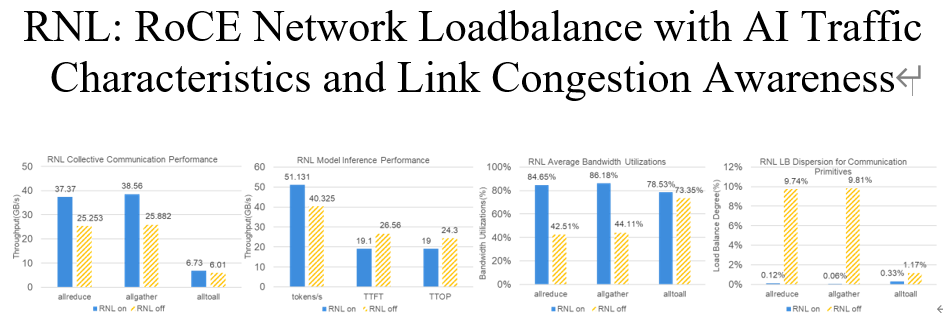
Core Viewpoint - Lenovo's innovative RNL technology addresses long-standing challenges in load balancing for AI training and inference scenarios, particularly in RoCE networks, as recognized by its acceptance at the IEEE CyberSciTech 2025 conference [1][2]. Group 1: Technology Innovation - The RNL technology incorporates a closed-loop system of "multi-dimensional perception + path load balancing + incremental migration," combining algorithmic innovation with practical value [2]. - The multi-dimensional perception mechanism allows real-time awareness of network topology, AI task network demands, and RoCE link load status, providing a data foundation for dynamic scheduling [2]. - Path load balancing optimization utilizes virtual-physical network mapping and path scoring algorithms to intelligently select optimal data transmission paths, maximizing bandwidth utilization [2]. - Incremental flow migration employs a strategy to avoid instantaneous delays during link traffic adjustments, ensuring business continuity [2]. Group 2: Future Plans - Lenovo plans to extend the RNL technology to high-performance storage and HPC scenarios, incorporating deep learning algorithms to enhance congestion prediction capabilities [2]. - The company aims to validate the comprehensive performance of RNL technology in large AI clusters with thousands to tens of thousands of nodes, continuously driving innovation and iteration in AI network technology [2].
联想万全异构智算研发团队论文被IEEE CyberSciTech 2025收录
Huan Qiu Wang· 2025-11-28 09:37
Core Insights - Lenovo's RNL technology addresses long-standing challenges in RoCE network load balancing for AI training and inference scenarios, showcasing innovation in multi-dimensional perception, path load balancing optimization, and incremental flow migration [1][2]. Group 1: RNL Technology Overview - The RNL technology integrates multi-dimensional perception, path load balancing optimization, and incremental flow migration into a closed-loop system, providing both algorithmic innovation and practical value [1]. - The multi-dimensional perception mechanism allows real-time awareness of network topology, AI task network demands, and RoCE link load status, forming a data foundation for dynamic scheduling [1]. - Path load balancing optimization employs virtual-physical network mapping and path scoring algorithms to intelligently select optimal data transmission paths, maximizing bandwidth utilization [1]. Group 2: Performance and Cost Efficiency - RNL technology demonstrates high reliability and dual advantages in enhancing AI business efficiency and reducing total cost of ownership (TCO) [2]. - Performance improvements include a 50% enhancement in communication primitive performance, 85% bandwidth utilization, and a 90% reduction in load balancing discreteness [2]. - In AI inference scenarios, transactions per second (TPS) increased by 26%, time to first byte (TTFT) decreased by 30%, and time per output token (TPOT) reduced by 22%, while overall deployment costs were lowered by 60% [2]. Group 3: Strategic Implications - RNL technology is incorporated into Lenovo's heterogeneous computing platform, reinforcing its technological barriers in the AI heterogeneous computing market and enhancing its industry influence and core competitiveness [4].
Lenovo Neptune Powers the World’s Greenest and Most Efficient HPC & AI Systems, Delivering up to 40% Lower Energy Use
BusinessLine· 2025-11-28 06:20
Core Insights - Lenovo is expanding its Neptune liquid cooling technology across its data center portfolio to enhance sustainable infrastructure for AI, achieving approximately 40% lower power consumption compared to traditional air-cooled systems [1][6]. Company Developments - As of November 2025, Lenovo ranks 1 on both the Top500 and Green500 lists, significantly driven by Neptune-enabled supercomputers that combine high performance with sustainability [2]. - Lenovo's Neptune technology is integral to its mission of achieving net-zero carbon emissions by 2050, focusing on renewable energy, efficient product design, and sustainable data center operations [6]. Industry Trends - The IDC & Lenovo CIO Playbook 2025 identifies sustainability as a top business priority, with data centers facing increased thermal and performance pressures due to rising compute density and energy use as AI adoption accelerates [3]. - Electricity consumption in the Asia Pacific region is projected to increase from 320 terawatt-hours in 2024 to 780 terawatt-hours by 2030, driven by the demand for AI, cloud, and advanced digital services [7]. Technology Innovations - Neptune Direct Water-Cooling (DWC) technology circulates warm water directly to system nodes, allowing coolant temperatures up to ~45 °C, which eliminates the need for chillers and reduces reliance on air-handling units [4]. - The sixth-generation Neptune systems feature advanced water-based cooling architectures that support higher rack densities and efficient operations without specialized air conditioning [5]. Performance Metrics - Lenovo's ThinkSystem SR780a, powered by Neptune, has achieved a Power Usage Effectiveness (PUE) of 1.1, indicating a highly efficient data center environment where only 0.1 watts are used for cooling [10]. - Neptune technology has demonstrated a 20% increase in performance at DreamWorks Animation while reducing cooling requirements, showcasing its effectiveness in demanding workloads [11].
联想取得壳体及设备系统专利,可与电子设备电连接
Jin Rong Jie· 2025-11-28 05:09
Core Insights - Lenovo (Beijing) Co., Ltd. has obtained a patent for a "Shell and Equipment System," with the authorization announcement number CN 223600129 U, applied for on November 2024 [1] - The patent describes a shell that includes a main body with a first connection part for fixing the shell to electronic devices and a first physical contact point for electrical connection with the devices [1] Company Overview - Lenovo (Beijing) Co., Ltd. was established in 1992 and is located in Beijing, primarily engaged in the manufacturing of computers, communications, and other electronic devices [1] - The company has a registered capital of 5.65 billion HKD [1] - Lenovo (Beijing) has invested in 107 companies and participated in 5,000 bidding projects, with 1,751 trademark records and 5,000 patent records [1] - Additionally, the company holds 238 administrative licenses [1]