GREEN ECONOMY(01315)

Search documents
绿色经济(01315)发布中期业绩,股东应占溢利467.7万港元 同比增加114.34%
智通财经网· 2025-11-28 12:55
公告称,溢利增加主要归功于其他收益及亏损增加1910万港元,惟部分被毛利减少约970万港元及已终 止经营业务亏损增加约870万港元所抵销。 智通财经APP讯,绿色经济(01315)发布截至2025年9月30日止6个月的中期业绩,该集团取得收益12.36 亿港元,同比增加0.9%;公司拥有人应占溢利467.7万港元,同比增加114.34%;每股盈利0.75港仙。 ...
绿色经济(01315.HK)中期净利约为470万港元 同比增长约113.6%
Ge Long Hui· 2025-11-28 12:32
Core Viewpoint - Green Economy (01315.HK) reported a slight increase in revenue for the six months ending September 30, 2025, with total revenue from continuing operations reaching approximately HKD 1.236 billion, up about 1% from HKD 1.225 billion in the same period of 2024 [1] Financial Performance - The gross profit from continuing operations decreased from approximately HKD 11.3 million in the previous interim period to about HKD 1.6 million in the current period [1] - The profit attributable to the company's owners increased to approximately HKD 4.7 million, up from about HKD 2.2 million in the previous interim period, marking an increase of approximately HKD 2.5 million [1] - This increase in profit was primarily due to an increase in other income and losses by HKD 19.1 million, although it was partially offset by a decrease in gross profit of about HKD 9.7 million and an increase in losses from discontinued operations of approximately HKD 8.7 million [1] - Earnings per share for the period were approximately HKD 0.075, compared to HKD 0.041 in the previous interim period [1]
绿色经济(01315) - 2026 - 中期业绩
2025-11-28 12:21
Financial Performance - For the six months ended September 30, 2025, the company reported revenue of HKD 1,236,227,000, a slight increase of 0.4% compared to HKD 1,224,709,000 for the same period in 2024[3] - The gross profit for the same period was HKD 1,567,000, a significant decrease of 86.0% from HKD 11,260,000 in 2024[3] - Operating profit increased to HKD 12,779,000, up 541.5% from HKD 1,990,000 in the previous year[3] - The profit attributable to owners of the company from continuing operations was HKD 12,750,000, compared to HKD 1,566,000 in 2024, marking an increase of 715.5%[4] - The total comprehensive income for the period was HKD 7,798,000, up 37.5% from HKD 5,666,000 in the same period last year[4] - Basic earnings per share from continuing and discontinued operations was HKD 0.75, an increase from HKD 0.41 in 2024[4] Assets and Liabilities - The company's total assets as of September 30, 2025, were HKD 736,392,000, compared to HKD 662,102,000 as of March 31, 2025[5] - Current liabilities decreased to HKD 201,014,000 from HKD 417,972,000, indicating improved liquidity[5] - The net assets attributable to owners of the company increased to HKD 155,842,000 from HKD 148,006,000[6] - Trade receivables as of September 30, 2025, amounted to HKD 93,422,000, a decrease from HKD 100,694,000 as of March 31, 2025[33] - Trade payables as of September 30, 2025, amounted to HKD 114.8 million, an increase from HKD 96.8 million as of March 31, 2025[36] Revenue Breakdown - Revenue from external customers in Hong Kong was HKD 117,775 thousand for the six months ended September 30, 2025, down from HKD 240,097 thousand in 2024, indicating a decline of approximately 51%[16] - Revenue from external customers in China (excluding Hong Kong) increased to HKD 1,118,452 thousand in 2025 from HKD 984,612 thousand in 2024, representing a growth of about 13.6%[16] - For the six months ended September 30, 2025, the group recorded revenue from continuing operations of approximately HKD 1,236 million, a slight increase of about 1% compared to HKD 1,225 million in the same period last year[47] - The supply chain management segment recorded revenue of approximately HKD 1,236 million, including material trading revenue of HKD 1,232 million and transportation service revenue of HKD 3.98 million[50] Discontinued Operations - For the six months ended September 30, 2025, the company reported a loss attributable to discontinued operations of HKD 8,113,000, compared to a profit of HKD 602,000 for the same period in 2024[24] - Revenue from customer contracts for discontinued operations was HKD 125,203,000, down 41.7% from HKD 214,777,000 in the previous year[24] - The company incurred service costs of HKD 114,713,000 for discontinued operations, a decrease of 41.7% from HKD 196,921,000 in the prior year[24] - The basic and diluted loss per share from discontinued operations was HKD 1.305, compared to earnings of HKD 0.114 per share in the previous year[32] Strategic Decisions and Future Outlook - The company has not disclosed specific future outlook or guidance in the provided documents[3][4][5][6] - The group has terminated three business segments during the reporting period, which are not included in the reported segment information[14] - The group is currently evaluating the impact of HKFRS 18 on the presentation and disclosure of its consolidated financial statements[11] - The group anticipates that the fair value of the target group after deducting selling costs will be approximately equal to the total book value of the related assets and liabilities[39] - The company aims to reallocate significant financial resources from the discontinued construction business to expand its supply chain management operations[60] Corporate Governance and Compliance - The company has established a remuneration policy linked to performance to attract and retain talent, considering financial conditions and industry benchmarks during performance evaluations[76] - The audit committee has reviewed the group's interim performance during the period[82] - The company has adhered to all provisions of the corporate governance code during the six-month period ending September 30, 2025[78] - The audit committee consists of three independent non-executive directors, ensuring oversight of financial reporting and risk management[81] - The interim results announcement and report are available on the company's and the stock exchange's websites, ensuring transparency[83] Employee and Operational Metrics - The group employed a total of 69 employees as of September 30, 2025, down from 95 employees a year earlier, with total employee compensation during the period amounting to approximately HKD 18.9 million[74] - The group plans to further optimize its logistics and distribution network by establishing long-term relationships with reputable logistics service providers[61] - The group aims to explore and commit to business diversification and development by 2025[61]
对话祥峰投资郑俊聪:绿色经济的根本瓶颈需要以技术为突破点,这是项目的核心竞争力
Xin Lang Cai Jing· 2025-11-28 08:17
Core Insights - The article discusses the "Green Intelligence Future" global sustainability challenge, highlighting the collaboration between Xiangfeng Investment China Fund and Temasek Foundation to promote innovative projects for sustainable development [1][2] - It emphasizes the importance of technology breakthroughs in green projects to address commercialization challenges and meet market demands [2][3] Group 1: Event Overview - The first "Green Intelligence Future" global sustainability challenge was held in Shenzhen, featuring top projects from over 1,000 submissions across approximately 70 countries [1] - The event aims to discover high-quality projects with technological innovation and commercial viability to support global sustainability goals [1] Group 2: Funding and Support Mechanism - Xiangfeng Investment, in collaboration with Temasek Foundation, provides initial funding to help green startups overcome early-stage financing difficulties [2] - The goal is to assist projects in validating their technologies before attracting market capital for scaling [2] Group 3: Market Potential in China - China, with a population of 1.4 billion and strong innovation capabilities, is seen as a fertile ground for discovering quality green projects [2] - The competition aims to help winning early-stage projects expand into potential markets in Shenzhen and Southeast Asia [2] Group 4: Key to Becoming a Green "Unicorn" - Projects with the potential to become the next green "unicorn" must achieve technological breakthroughs in critical areas [2] - Examples include projects addressing high emissions in aviation and solutions for plastic pollution, which align closely with market needs [2] Group 5: Complementarity of Green Investment and AI - Green industries and AI investments are viewed as complementary rather than substitutive, with AI enhancing the efficiency of green technology development [3] - The investment strategy includes balancing long-term green investments with the high commercial value of AI [3] Group 6: ESG Rating Center Initiatives - The Sina Finance ESG Rating Center offers various ESG services to promote sustainable development and responsible investment [4][5] - It aims to establish ESG evaluation standards suitable for China's context and enhance the ESG investment landscape in the asset management industry [5]
绿色经济(01315.HK)拟11月28日举行董事会会议以审批中期业绩
Ge Long Hui· 2025-11-18 08:42
Core Points - Green Economy (01315.HK) announced that it will hold a board meeting on November 28, 2025, to review and approve the interim results for the six months ending September 30, 2025, along with other matters [1]
绿色经济(01315) - 董事会会议通告
2025-11-18 08:35
香港交易及結算所有限公司及香港聯合交易所有限公司對本公佈的內容概不負責,對其準確性或完整性亦不 發表任何聲明,並明確表示,概不對因本公佈全部或任何部分容而生或因倚賴該等容而引致的任何損失承擔 任何責任。 Green Economy Development Limited 綠 色 經 濟 發 展 有 限 公 司 ( 於開曼群島註冊成立的有限公司) (股份代號:1315) 董事會會議通告 綠色經濟發展有限公司(「本公司」)董事會(「董事會」)謹此宣佈,將於二零二五年十一月二 十 八 日 召 開 董 事 會 會 議 , 以 省 覽 及 批 准( 其 中 包 括 其 他 事 項 )本 公 司 及 其 附 屬 公 司(「 本 集 團」)截至二零二五年九月三十日止六個月的中期業績。 承董事會命 綠色經濟發展有限公司 執行董事兼行政總裁 湯洪洋 香港,二零二五年十一月十八日 於本公佈日期,董事會包括六名執行董事,即朱峰先生、湯洪洋先生、朱小東先生、周鼎宸先生、蘇俊杰先 生及馮嘉倫先生;及三名獨立非執行董事,即王偉軍先生、章晟曼先生及李小婷女士。 ...
打造绿色经济新引擎 内蒙古兴安盟勾勒绿氢氨醇产业蓝图
Zhong Guo Jin Rong Xin Xi Wang· 2025-11-17 09:32
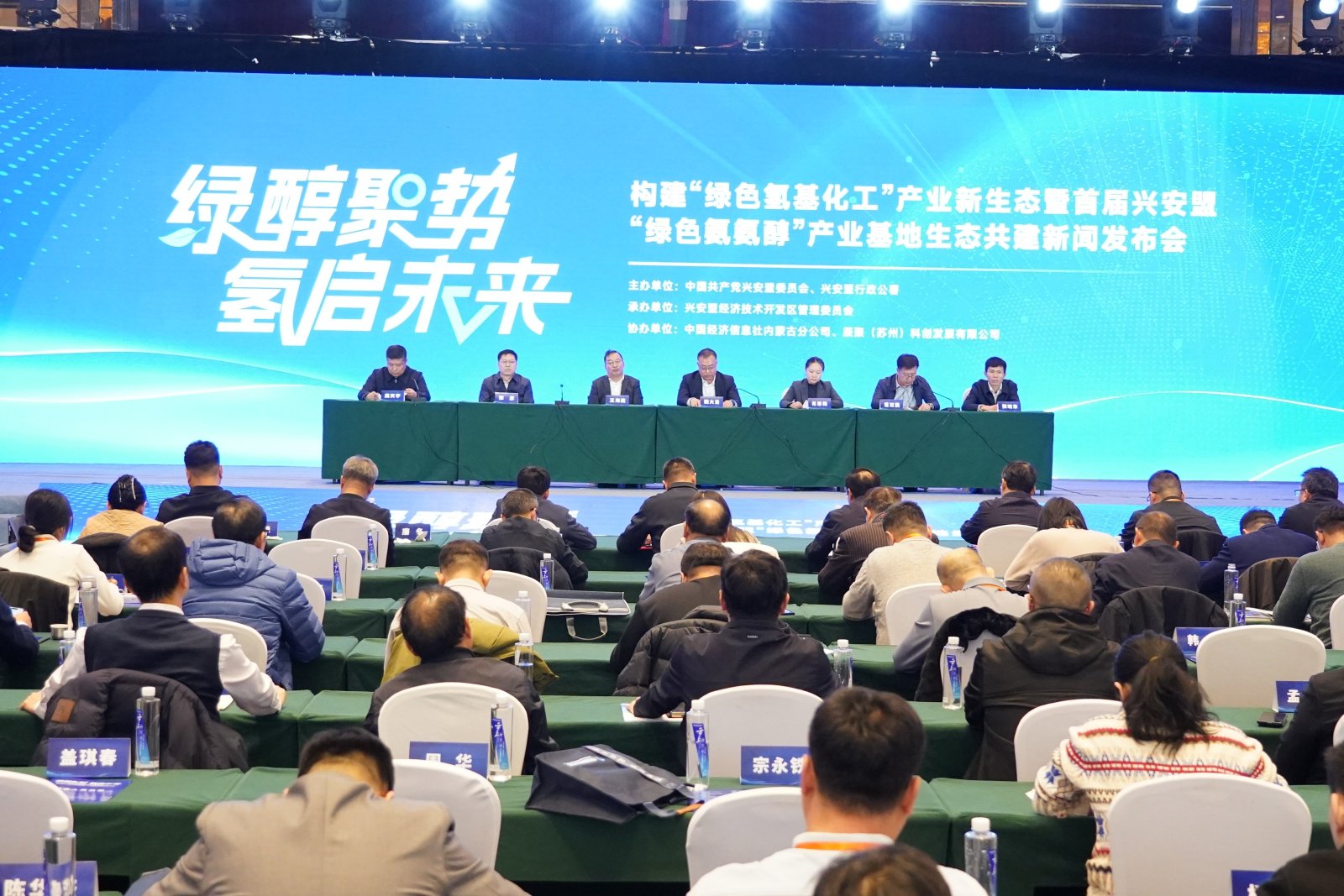
Core Viewpoint - The green hydrogen and methanol industry is entering an unprecedented strategic window as the "dual carbon" strategy deepens and the global energy structure accelerates its transition to green and low-carbon sources [1] Group 1: Industry Development - The Inner Mongolia Xingan League Economic and Technological Development Zone is launching a green hydrogen and methanol industrial cluster, aiming to establish a new ecological model for the industry [1][3] - The development zone plans to create a production capacity of 700,000 tons of green hydrogen, 2 million tons of green ammonia, and 3 million tons of green methanol during the 14th Five-Year Plan period, with an expected annual tax revenue of 1 billion yuan and a total industrial output value exceeding 50 billion yuan [5] Group 2: Infrastructure and Support - The development zone has invested 6 billion yuan to ensure comprehensive infrastructure, including a 25.6 square kilometer planned area with 13.02 square kilometers designated for chemical parks, providing a solid foundation for project implementation [3] - The area is equipped with direct railway access to major ports and comprehensive utility services, ensuring a conducive environment for business operations [3] Group 3: Project Initiatives - A total of 27 related projects have completed preliminary research, aligning with market demands and providing a high-quality platform for investment [5] - Six high-value downstream projects centered around green methanol have been proposed, including a 1.7 billion yuan aviation fuel project and a 1.15 billion yuan polyformaldehyde project, which will utilize green methanol as a key raw material [8][9] Group 4: Competitive Advantages - The combination of abundant renewable resources, a robust industrial ecosystem, clear policy support, and efficient transportation channels positions the Xingan League favorably in the domestic green energy competition [6] - Green methanol is identified as a crucial component in the industrial layout, serving dual roles as a clean energy source and a key chemical raw material, with strong demand anticipated across various sectors [6]

聚焦国际绿色经济标杆城市建设,市政协建议构建绿色消费激励体系
Bei Jing Ri Bao Ke Hu Duan· 2025-11-10 02:25
Core Viewpoint - The development of a green economy has become a core direction for the new round of global technological revolution and industrial transformation [1] Group 1: Policy and Regulation - The Beijing Municipal Political Consultative Conference has proposed to accelerate the construction of an international green economy benchmark city and enhance its international influence [1] - Recommendations include the introduction of the "Beijing Green Transition Promotion Regulations" and the establishment of a green consumption incentive system [1][6] - The proposal aims to implement a carbon points benefit plan covering high-carbon scenarios such as public transport, express delivery, and takeout [1][6] Group 2: Technological Advancements - Beijing has accelerated the iteration and upgrading of green technology, with the number of effective green technology invention patents reaching 67,000, growing at an annual rate of 14.6% [3] - Nearly 200 key laboratories and engineering technology centers for green technology have been established, with ongoing construction of national-level green technology innovation platforms [3] - The establishment of the Beijing Hydrogen Energy Innovation Center and the completion of the National Hydrogen Fuel Cell Testing Center are notable advancements [3] Group 3: Strategic Development - The research group emphasizes that promoting green low-carbon development is a trend and that the green economy is becoming a competitive high ground globally [4] - It is suggested to align the goals of building a green economy benchmark city with the "14th Five-Year Plan" and integrate green development into urban strategies, industrial policies, and spatial layouts [4] - The construction of a green statistical monitoring system and the establishment of a "Beijing Green Brain" to integrate multi-source data on carbon emissions, energy, and transportation is recommended [4] Group 4: Market and Collaboration - The Beijing green cooperation network is gradually expanding, with the establishment of various national and international organizations in the city [3] - Successful hosting of international conferences such as the Global Energy Transition Conference and the Global Energy Internet Conference supports international green development cooperation [3]
市政协聚焦国际绿色经济标杆城市建设召开专题协商会
Bei Jing Ri Bao Ke Hu Duan· 2025-11-07 12:35
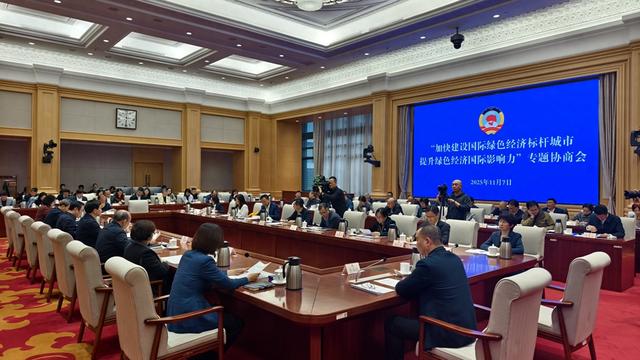
Group 1 - The Beijing Municipal Political Consultative Conference held a special consultation meeting focused on accelerating the construction of an international green economy benchmark city and enhancing its international influence [1][2] - Key topics discussed included improving the green technology innovation ecosystem, leveraging financial support for green economic development, and creating a carbon market ecosystem [1][2] - The meeting featured contributions from various committee members and experts, emphasizing the importance of collaboration and communication among stakeholders [1][2] Group 2 - The municipal government has implemented the "Green Beijing" strategy, resulting in positive outcomes through a series of policies and measures [2] - The Political Consultative Conference plans to continue its research on key issues such as the transformation of green technology innovations, innovation in green financial products, and the establishment of carbon inclusive mechanisms [2] - The conference aims to foster a supportive atmosphere for green development by enhancing policy communication and building consensus among the public [2]
气象科技助力绿色经济“百花齐放”
Huan Qiu Wang· 2025-11-05 07:25
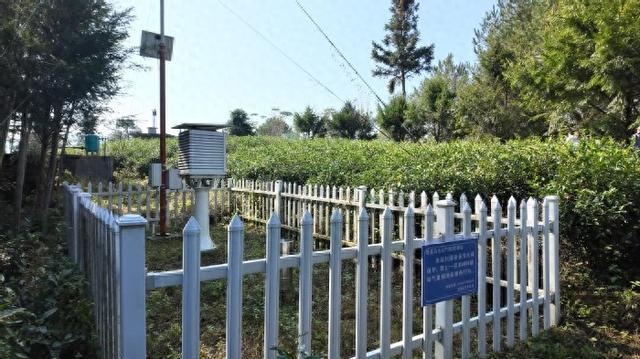
Core Insights - Jiangxi province leverages meteorological technology to enhance ecological protection and boost agricultural productivity, particularly in rice cultivation and other economic crops [1][2][3] Agricultural Development - Early rice planting has been identified as a key strategy to increase grain yield, with a potential early sowing period of 7 to 10 days helping to avoid the adverse effects of the "Hanlu Wind" [1][2] - The average increase in rice yield due to early sowing is reported at 25.6 kilograms per hectare, contributing to a total early rice production of 6.767 million tons in Jiangxi for 2024, ranking second nationally [2] Precision Services for Crop Quality - Meteorological services are crucial for the cultivation of various crops in Jiangxi, including tea and citrus fruits, with real-time weather monitoring enhancing crop management [3][5] - The tea industry in Jiangxi benefits from meteorological technology, with over 6,000 acres of tea gardens utilizing monitoring equipment to optimize growing conditions and improve quality [3][5] - Citrus farmers in Yongxiu County utilize smart weather stations to monitor critical weather parameters, allowing for timely interventions to protect crops from adverse weather [9][10] Tourism and Ecological Development - The integration of meteorological data into tourism has led to the development of eco-tourism in Jiangxi, with the Dajue Mountain scenic area recognized as a "5A Zero Carbon Scenic Area" [10][11] - The establishment of meteorological monitoring stations in tourist areas supports ecological assessments and enhances visitor safety through timely weather alerts [10][11] Innovative Models in Medicinal Plant Cultivation - The "Taihao Traditional Chinese Medicine Meteorological Town" serves as a model for integrating meteorological monitoring with the cultivation of medicinal plants, ensuring optimal growth conditions [11][13] - Advanced weather monitoring allows for proactive measures against extreme weather, significantly reducing potential damage to valuable medicinal crops [13]