
NCI(01336)

Search documents
133万人!上市险企代理人数量见底了吗?
Sou Hu Cai Jing· 2025-09-11 05:59
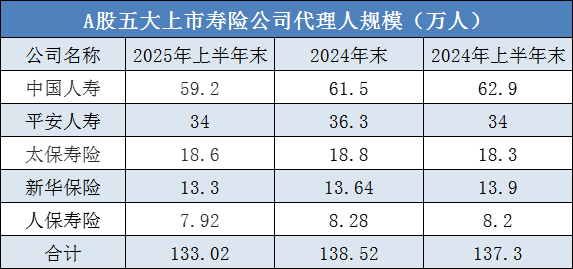
Core Viewpoint - The number of insurance agents in China's five major listed life insurance companies has shown signs of stabilization, with a total of 1.3302 million agents as of mid-2025, down from 1.3852 million at the end of 2024, indicating a decrease of 55,000 agents or 3.97% [1][2] Group 1: Agent Numbers and Trends - As of mid-2025, the total number of agents for the five major life insurance companies is 1.3302 million, a decrease from 1.3852 million at the end of 2024 and 1.373 million in mid-2024 [3] - China Life remains the leader in individual insurance sales personnel with 592,000 agents, down from 629,000 a year earlier [3] - Ping An Life's agent count is stable at 340,000 compared to the previous year, but down 6.34% from the end of 2024 [3] - Taikang Life's agent count increased to 186,000, a year-on-year growth of 1.6% [4] Group 2: Reasons for Stabilization - The stabilization of agent numbers is attributed to strategic transformations focusing on quality over quantity, accelerated digital transformation, and optimization of team structure [4][5] - The new business value for Ping An Life's agents grew by 17.0% year-on-year, with per capita new business value increasing by 21.6% [4] - New business value for Xinhua Insurance's individual insurance channel reached 3.105 billion yuan, up 11.7% year-on-year, with per capita productivity increasing by 74% [4] Group 3: Future Outlook - The insurance agent workforce is expected to stabilize in total numbers while optimizing its structure, driven by aging population and increasing wealth management needs [5][6] - The industry is transitioning from scale expansion to quality enhancement, with a focus on high-quality, professional agents [5] - The demand for long-term protection products like health and pension insurance is anticipated to provide more business opportunities for agents [6]




保险行业2025年中报综述:业绩平稳增长,戴维斯双击渐行渐近
2025-09-10 14:35
Summary of the Insurance Industry Conference Call Industry Overview - The insurance industry showed stable growth in the first half of 2025, with profits slightly increasing. All listed insurance companies, except for China Ping An, achieved positive growth, with total net assets increasing by 1.2% [1][2][22]. Key Points Financial Performance - The overall performance of the insurance industry in the first half of 2025 met expectations, confirming a recovery in profits. The net profit growth ranged from -8.8% for China Ping An to positive growth for other companies, with total net assets reaching 2.19 trillion yuan [2][22]. - New business value (NBV) showed strong momentum, with growth rates between 20% and 65%, primarily driven by accelerated sales through bank insurance channels and improved value rates [2][4]. Investment Performance - Under new accounting standards, investment performance became the dominant factor for profitability. Companies like Xinhua and PICC saw significant increases in the proportion of investment performance to pre-tax profits, while China Pacific and Ping An remained focused on insurance service performance [1][3]. - Net investment income for the five listed insurance companies increased by 6% year-on-year, totaling 285.2 billion yuan, with total investment income rising by 9% to 367.4 billion yuan [8][9]. Distribution Channels - The individual insurance agent channel continued to decline, with a 3.5% decrease in the number of agents. However, the average MVA (Market Value Added) per agent improved significantly [5]. - The bank insurance channel saw an increase in efficiency, with its share of total premiums rising by 11% to 110% year-on-year. The new single value rate in this channel ranged from 12% to 29% [5]. Property Insurance - The growth rate of original premium income in property insurance slowed down, but the comprehensive cost ratio improved significantly. The growth rate for auto insurance slowed, while new energy vehicle insurance maintained rapid growth, with Ping An and PICC reporting increases of 49.3% and 36%, respectively [6][7]. Asset Allocation - The allocation of assets among insurance companies showed a trend towards increasing OCI (Other Comprehensive Income) equity. The proportion of bond assets remained high, with the highest being China Pacific at 76.5% and the lowest being PICC at 49.7% [10][11][14]. - Stock and fund asset allocations saw double-digit growth for several companies, with Ping An leading in new stock proportions at 45% [12]. Future Outlook - The outlook for insurance stocks is positive, with expectations of recovery in valuations due to low interest rates and reduced costs. The potential for increased sales of rights-based products and the impact of economic recovery are also highlighted [22][23]. Recommendations - Focus on companies with low operating costs and valuations, such as China Pacific; those with significant equity returns like Xinhua; and those with good dividend yields and undervaluation like China Ping An and China Taiping [23].

近一年涨105.62%难掩“风格漂移”!前海开源大安全核心混合重仓中国平安、指南针,换手率飙至1143.55%
Xin Lang Ji Jin· 2025-09-10 10:00
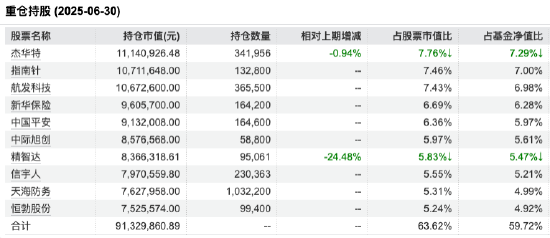
Core Viewpoint - The article highlights the phenomenon of "style drift" in public funds, where several funds have deviated significantly from their stated investment themes, raising concerns in the market [1][11]. Fund Analysis - The Qianhai Kaiyuan Great Security Core Mixed Fund, despite being themed around "Great Security," shows a notable deviation in its actual holdings, which span various sectors including semiconductors, software development, aerospace equipment, insurance, and automotive parts [2][11]. - As of the second quarter of 2025, the fund's top ten holdings include companies like Jiehuate, Guiding Compass, and China Ping An, with a sector distribution of 45.31% in technology, 34.64% in manufacturing, and 16.86% in finance [2][3]. Investment Performance - The fund manager, Liu Hong, has achieved a total return of 53.27% since taking over the fund on August 8, 2022, with an annualized return of 14.80% [4]. - As of September 2025, the fund's performance over the past year reached 105.62%, with two-year and five-year returns of 87.02% and 81.70%, respectively, leading to a total return of 199.80% and an annualized return of 10.91% [5]. Trading Activity - The fund exhibits a highly aggressive investment style, with a turnover rate of 1143.55% in the first half of 2025 and 813.82% at the end of 2024, indicating frequent adjustments in its portfolio [7][8]. - This high turnover rate, combined with the deviation from its investment theme, raises questions about the sustainability and stability of its investment strategy [7]. Market Context - Liu Hong noted that the fund's performance was impacted by the imposition of reciprocal tariffs by the U.S. and China, leading to significant market fluctuations. However, subsequent negotiations and supportive domestic policies resulted in a rebound in A-shares [10]. - The fund's strategy focuses on mid-term performance trends of listed companies and industry trends, particularly in TMT (Technology, Media, and Telecommunications), non-bank financials, and machinery sectors [10]. Fund Characteristics - The fund has a scale of 153 million yuan, which, while not large, is stable and far from the liquidation threshold [11]. - The article serves as a warning to investors about the importance of scrutinizing a fund's actual holdings and investment logic rather than relying solely on its name, to avoid falling into the "style drift" trap [11].


深化改革进入“深水区” 上市险企个险渠道提质增效成主旋律
Jin Rong Shi Bao· 2025-09-10 07:35
Group 1 - The core viewpoint of the articles indicates that the individual insurance channel of listed life insurance companies is under pressure, with premium growth lagging behind the bank insurance channel, which has seen double-digit increases [1][2] - In the first half of the year, five major listed life insurance companies achieved a total premium income of 9,628.14 billion yuan, reflecting a year-on-year growth of 1.01% [1][2] - The individual insurance channel remains a crucial source of premium income, contributing over 70% to the total premium income of these companies [1] Group 2 - Except for China Ping An, all other four listed life insurance companies reported positive growth in individual insurance channel premium income, with China Life achieving 4,044.48 billion yuan (up 2.64%), Taikang Life at 1,373.8 billion yuan (up 0.9%), New China Life at 725.26 billion yuan (up 5.5%), and PICC Life at 354.14 billion yuan (up 3%) [2] - The growth in individual insurance premiums is primarily supported by renewal premiums, while new business premiums have declined for most companies, except for New China Life [2] Group 3 - The average monthly first-year commission income for Taikang Life's core sales force was 7,120 yuan, down 13.4% year-on-year, while Ping An Life's agents earned 9,898 yuan per person per month, a decrease of 17.3% [3] - The decline in agent activity and income is attributed to the implementation of regulatory requirements and product transformation, which are expected to stabilize in the future [3] Group 4 - Since the regulatory "cleaning up and improving quality" initiative began in 2019, the individual insurance channel has seen a significant reduction in personnel, dropping from a peak of 9.12 million to around 2 million [4] - Despite the reduction in personnel, the new business value in the individual insurance channel has shown significant improvement, with Ping An Life's new business value increasing by 17% year-on-year [4] Group 5 - The reduction in personnel has led to a noticeable improvement in the efficiency and quality of the individual insurance channel, driven by marketing system reforms and digital empowerment [5][6] - Taikang Life has optimized its team structure and enhanced its capabilities through digital initiatives, resulting in a 12.7% year-on-year increase in average monthly first-year premium per core salesperson [6] Group 6 - The ongoing transformation of the individual insurance channel is focused on professionalization and specialization, as indicated by the recent regulatory guidance aimed at upgrading the personal agency channel [7][8] - Long-term strategies emphasize improving the quality and productivity of agents to adapt to increasingly complex insurance products [7][8]
上市险企银保渠道迈向优质发展之路 从拼费用到拼实力
Jin Rong Shi Bao· 2025-09-10 07:28
Core Viewpoint - The mid-term performance reports from listed insurance companies indicate a significant increase in both premium scale and business value through the bancassurance channel, suggesting a revitalization of this channel after the strict implementation of the "reporting and operation integration" policy for two years [1][2]. Summary by Sections Premium Income and Business Value Growth - In the first half of the year, five listed life insurance companies achieved a total premium income of 2549.97 billion yuan through the bancassurance channel, representing a year-on-year growth of 46.9% [2]. - Specific contributions include: China Life at 724.44 billion yuan (up 45.7%), PICC Life at 531.04 billion yuan (up 24.1%), New China Life at 461.6 billion yuan (up 65.1%), Taikang Life at 416.6 billion yuan (up 82.6%), and Ping An at 415.97 billion yuan (up 37.5%) [2]. - The contribution of the bancassurance channel to the total premium income of these five companies increased from 14.2% to 19.3% year-on-year [2]. New Business Value and Key Performance Indicators - The bancassurance channel has become a crucial driver for the growth of new business value, with PICC Life reporting that nearly 60% of its premium income came from this channel, leading to a 71.7% year-on-year increase in new business value [2]. - Ping An achieved a new business value of 59.72 billion yuan, marking a significant year-on-year growth of 168.6% [2]. Long-term Premium Income and Strategic Importance - Key indicators for future premium income, such as the first-year premium income from long-term insurance, showed substantial growth, with China Life and New China Life reporting year-on-year increases of 112.4% and 150.3%, respectively [3]. - Executives from various companies emphasized the bancassurance channel's contribution to value, with statements highlighting its importance as a pillar for company value sources [3]. Regulatory Changes and Cost Structure - The implementation of the "reporting and operation integration" policy has led to a more rational fee structure in the bancassurance channel, with regulatory measures aimed at addressing long-standing issues of high costs and unreasonable fee structures [4]. - The regulatory changes have resulted in a unified standard for commissions on long-term premium products, which is expected to enhance the value of new business despite initial declines in new single premium income [5]. Expansion and Collaboration - The removal of restrictions on the number of insurance companies that can collaborate with a single bank branch has facilitated broader cooperation between leading insurance companies and banks, enhancing competitive advantages [6]. - Companies are focusing on optimizing product offerings and improving service quality to adapt to the new competitive landscape, with significant growth in bancassurance channel performance reported by several firms [6][7]. Future Outlook and Challenges - Companies are optimistic about the future of the bancassurance channel, with plans to enhance sustainable development capabilities and strengthen partnerships with key banks [7]. - Challenges remain, including the need for insurance companies to improve product design and service capabilities to meet the heightened expectations of bank customers regarding product profitability and value [7].
从“量增”到“质升” 上市险企深耕普惠保险
Jin Rong Shi Bao· 2025-09-10 06:16
Group 1 - The importance of inclusive insurance in stabilizing livelihoods and promoting economic growth is increasingly evident, with listed insurance companies in A-shares showcasing their contributions through various products and services [1][4] - In the first half of the year, China Life expanded its product offerings for elderly, disabled, and domestic service populations, achieving a 5.9% year-on-year growth in inclusive business [1][3] - China Pacific Insurance has expanded its inclusive insurance coverage to 240 cities, benefiting 460 million people through major illness insurance, long-term care insurance, and other health insurance policies [1][2] Group 2 - Listed insurance companies have developed products tailored for small and micro enterprises, enhancing their risk resilience, with Ping An Insurance providing risk coverage of 189 trillion yuan for 1.61 million small businesses [2][3] - Agricultural insurance has been expanded, with a 31.01% year-on-year increase in premium income for soybean cost and income insurance, and a 14.7% increase for local specialty agricultural products [2][3] - The implementation plan for high-quality development of inclusive finance in the banking and insurance sectors was jointly released by the financial regulatory authority and the People's Bank of China, guiding the development of inclusive insurance services [3][4] Group 3 - China Life's chairman emphasized the company's commitment to expanding coverage, improving quality, and ensuring sustainability in inclusive insurance, focusing on innovative product design and service upgrades [3][4] - The company aims to transform its service model from simple risk compensation to a comprehensive approach that includes health management, enhancing customer experience [3] - Digital empowerment will be leveraged to ensure the sustainable development of inclusive insurance, balancing short-term inclusivity with long-term commitments [3]
新华保险跌2.00%,成交额6.28亿元,主力资金净流出469.91万元
Xin Lang Cai Jing· 2025-09-10 03:07
Core Viewpoint - Xinhua Insurance's stock price has shown volatility, with a year-to-date increase of 30.20% but a recent decline over the past five and twenty trading days [1] Group 1: Stock Performance - As of September 4, Xinhua Insurance's stock price was 62.12 CNY per share, with a market capitalization of 193.79 billion CNY [1] - The stock experienced a 2.00% decline during the trading session on September 4, with a trading volume of 628 million CNY and a turnover rate of 0.48% [1] - Year-to-date, the stock has increased by 30.20%, but it has decreased by 3.97% over the last five trading days and 3.69% over the last twenty trading days [1] - Over the last sixty days, the stock has increased by 15.77% [1] Group 2: Financial Performance - For the first half of 2025, Xinhua Insurance reported a net profit of 14.80 billion CNY, representing a year-on-year growth of 33.53% [2] - The company achieved zero operating revenue for the same period [2] Group 3: Shareholder Information - As of June 30, 2025, the number of shareholders for Xinhua Insurance was 61,000, a decrease of 15.88% from the previous period [2] - The average number of circulating shares per shareholder increased by 18.96% to 34,325 shares [2] - Cumulatively, Xinhua Insurance has distributed 35.94 billion CNY in dividends since its A-share listing, with 13.91 billion CNY distributed in the last three years [3] Group 4: Institutional Holdings - As of June 30, 2025, Hong Kong Central Clearing Limited was the fourth-largest circulating shareholder, holding 60.51 million shares, an increase of 6.70 million shares from the previous period [3] - Huatai-PB CSI 300 ETF ranked as the tenth-largest circulating shareholder, holding 14.90 million shares, an increase of 1.19 million shares [3]
廊坊金融监管分局同意新华保险三河营销服务部变更营业场所
Jin Tou Wang· 2025-09-09 09:27
Core Viewpoint - The approval for the relocation of the marketing service department of New China Life Insurance Co., Ltd. in Sanhe has been granted by the Langfang Financial Regulatory Bureau, indicating regulatory support for the company's operational adjustments [1] Group 1 - New China Life Insurance Co., Ltd. has received approval to change the business location of its Sanhe marketing service department to a new address in Langfang City, Hebei Province [1] - The new business location is specified as the third floor of the Zhengxin Business Building, located in Dayangge Village, Quyang Town, Sanhe City [1] - The company is required to handle the change and obtain the necessary permits in accordance with relevant regulations [1]
保险板块9月9日涨0.14%,新华保险领涨,主力资金净流出5827.62万元
Zheng Xing Xing Ye Ri Bao· 2025-09-09 08:38
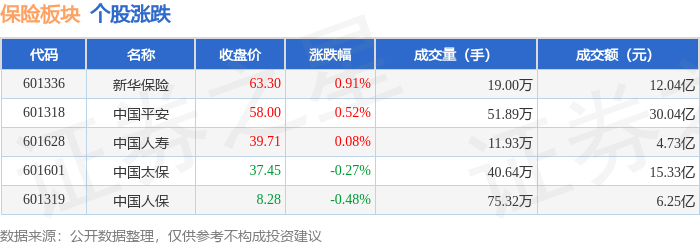
Group 1 - The insurance sector experienced a slight increase of 0.14% on September 9, with Xinhua Insurance leading the gains [1] - The Shanghai Composite Index closed at 3807.29, down 0.51%, while the Shenzhen Component Index closed at 12510.6, down 1.23% [1] - Xinhua Insurance's closing price was 63.30, reflecting a rise of 0.91%, with a trading volume of 190,000 shares and a transaction value of 1.204 billion yuan [1] Group 2 - The net outflow of main funds in the insurance sector was 58.2762 million yuan, while retail investors saw a net inflow of 52.1468 million yuan [1] - Xinhua Insurance had a main fund net inflow of 97.1020 million yuan, but a net outflow from retail investors of 68.7606 million yuan [2] - China Ping An experienced a main fund net inflow of 71.2808 million yuan, with retail investors contributing a net inflow of 39.0728 million yuan [2]
股市必读:新华保险(601336)9月5日主力资金净流入2295.55万元,占总成交额1.76%
Sou Hu Cai Jing· 2025-09-07 18:03
Trading Information Summary - On September 5, 2025, Xinhua Insurance (601336) closed at 63.33 yuan, up 0.83%, with a turnover rate of 1.0% and a trading volume of 209,000 shares, amounting to a total transaction value of 1.307 billion yuan [1]. - On the same day, the net inflow of main funds was 22.9555 million yuan, accounting for 1.76% of the total transaction value; the net inflow of speculative funds was 43.4644 million yuan, accounting for 3.33%; while retail investors experienced a net outflow of 66.4199 million yuan, accounting for 5.08% of the total transaction value [1][3]. Company Announcement Summary - As of August 31, 2025, Xinhua Insurance's H-shares and A-shares showed no changes in their legal/registered capital. The total number of H-shares and A-shares remained at 1,034,107,260 shares and 2,085,439,340 shares respectively, with a par value of 1 yuan, listed on the Hong Kong Stock Exchange and Shanghai Stock Exchange [1]. - The total legal/registered capital at the end of the month was 3,119,546,600 yuan. The number of issued shares and treasury shares remained unchanged, with treasury shares being zero [1][3].