PICC(01339)

Search documents
保险板块11月26日跌0.56%,中国人保领跌,主力资金净流出1.98亿元
Zheng Xing Xing Ye Ri Bao· 2025-11-26 09:05
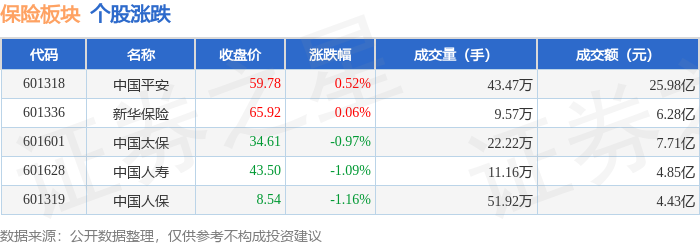
Core Viewpoint - The insurance sector experienced a decline of 0.56% on November 26, with China Life Insurance leading the losses, while the overall market showed mixed results with the Shanghai Composite Index down by 0.15% and the Shenzhen Component Index up by 1.02% [1] Summary by Category Market Performance - The Shanghai Composite Index closed at 3864.18, down 0.15% - The Shenzhen Component Index closed at 12907.83, up 1.02% [1] Insurance Sector Performance - The insurance sector saw a net outflow of 198 million yuan from main funds, while retail funds experienced a net inflow of 266 million yuan [1] - Individual stock performances included: - China Ping An (601318) closed at 59.78, up 0.52% with a trading volume of 434,700 shares and a transaction value of 2.598 billion yuan - New China Life Insurance (601336) closed at 65.92, up 0.06% with a trading volume of 95,700 shares and a transaction value of 628 million yuan - China Pacific Insurance (601601) closed at 34.61, down 0.97% with a trading volume of 222,200 shares and a transaction value of 771 million yuan - China Life Insurance (601628) closed at 43.50, down 1.09% with a trading volume of 111,600 shares and a transaction value of 485 million yuan - China Reinsurance (601319) closed at 8.54, down 1.16% with a trading volume of 519,200 shares and a transaction value of 443 million yuan [1] Fund Flow Analysis - The fund flow analysis for individual stocks showed: - China Pacific Insurance had a main fund net inflow of 29.7664 million yuan, with a retail net outflow of 20.0910 million yuan - New China Life Insurance had a main fund net inflow of 19.6665 million yuan, with a retail net outflow of 26.0477 million yuan - China Reinsurance had a main fund net outflow of 16.4563 million yuan, with a retail net inflow of 14.2729 million yuan - China Life Insurance had a main fund net outflow of 60.9273 million yuan, with a retail net inflow of 38.4305 million yuan - China Ping An had a main fund net outflow of 170.1 million yuan, with a retail net outflow of 74.5134 million yuan [2]






人形机器人如何“放心用”?头部险企接连推专属产品,尚需跨越三大核心障碍
Mei Ri Jing Ji Xin Wen· 2025-11-25 11:08
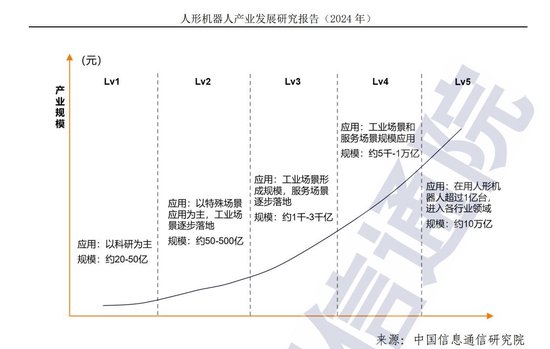
Core Viewpoint - The rapid advancement of artificial intelligence has led to a pressing need for humanoid robots, which are transitioning from laboratory demonstrations to commercial applications, indicating a new phase in industry development [1][3]. Industry Overview - The humanoid robot market in China is projected to reach a scale of 100 billion RMB by 2035, driven by applications in manufacturing, social services, and special operations [1][9]. - The insurance industry is responding to the emerging risks associated with humanoid robots by developing specialized insurance products to cover various dimensions such as property loss, third-party liability, cybersecurity, and data breaches [1][2]. Insurance Product Development - Major insurance companies like China Pacific Insurance and People’s Insurance Company of China have launched dedicated insurance products for humanoid robots, addressing risks from operational failures to third-party injuries [3][4]. - The "Smart Insurance" product by China Pacific Insurance offers integrated coverage for property loss, third-party liability, and flexible policy durations tailored to various commercial scenarios [3][4]. Risk Management Challenges - The application of humanoid robots faces significant challenges, including safety risks, property damage, and liability issues, which are critical for scaling their use [5][7]. - The complexity of humanoid robots, which integrate mechanical, electronic, and AI components, leads to multifaceted risks that traditional insurance products may not adequately cover [8][12]. Market Potential and Support - The humanoid robot market is expected to expand significantly, with projections indicating a market size of 1 trillion to 3 trillion RMB by 2040, and over 100 million humanoid robots in use by 2045 [9][11]. - Government initiatives are increasingly supporting the humanoid robot industry, including financial incentives for insurance premiums to encourage innovation and adoption [13][12]. Ethical and Regulatory Considerations - The industry faces ethical challenges and a lack of unified standards, complicating the insurance landscape and raising questions about liability in cases of malfunction or harm caused by humanoid robots [15][16]. - The need for new insurance products that address algorithmic responsibility and system failures is highlighted, along with the importance of establishing a risk database for accurate pricing [16][14].

机器人险会和车险一样普及吗?
机器人大讲堂· 2025-11-25 09:18
Group 1 - Figure AI's former product safety chief Robert Grendel has filed a lawsuit claiming that the company's humanoid robots could cause skull fractures and alleges he was fired for raising safety concerns [1] - Grendel warned CEO Brett Adcock and chief engineer Kyle Edelberg about the robots' deadly performance, highlighting an incident where a robot caused a quarter-inch crack on a steel refrigerator door [1] - After submitting documented safety complaints, Grendel was terminated in September, claiming he was asked to prepare a safety roadmap for potential investors, which was later abandoned [1] Group 2 - The emergence of humanoid robots in crowded public events raises significant safety risks due to the lack of comprehensive international or industry standards, leading to compatibility and safety issues [3] - An incident at the 2025 World Humanoid Robot Games involved a robot colliding with an engineer, emphasizing the risks associated with humanoid robots [3] - The insurance industry faces challenges in providing risk coverage for robot companies, including complex risk assessments due to rapid technological advancements and the dynamic nature of risk characteristics [3][4] Group 3 - The lack of long-term risk data in the emerging field of robot insurance complicates accurate risk assessment and premium pricing, as traditional actuarial models are not directly applicable [6] - Insurers are developing innovative financial products to mitigate risks in the robot industry, with major companies like Ping An and China Pacific Insurance launching specialized insurance products for humanoid robots [6][7] - The insurance products available include property insurance, machinery damage insurance, third-party liability insurance, and cybersecurity insurance, aimed at covering various risks associated with robot operations [7] Group 4 - The first breakthrough in robot insurance occurred in early 2022 with the launch of the "Mobile Robot Quality Liability Insurance" by PICC, addressing various product quality issues [8] - In 2023, a pilot project in Changzhou provided insurance for local robot companies, demonstrating regional support for the robot insurance market [8] - By 2025, the insurance industry is transitioning from policy formulation to implementation, with various events and initiatives promoting insurance coverage for robots [10] Group 5 - Local governments are responding to the need for robot insurance, with policies in cities like Ningbo and Hainan promoting the development of humanoid robot application insurance [10][11] - Insurance products are being tailored to cover risks from design defects, operational failures, and cyberattacks, with a focus on third-party liability [11][12] - New insurance offerings include specialized products for exoskeleton robots and smart agricultural robots, indicating a growing market for tailored insurance solutions [12][14] Group 6 - The insurance industry views robot insurance as a means to provide comprehensive risk coverage across the entire lifecycle of humanoid robots, addressing various operational scenarios [15][16] - Insurers are adapting their pricing and claims processes based on accumulated data from existing industrial robots, but face challenges due to the rapid evolution of humanoid robots and the lack of historical data [16]

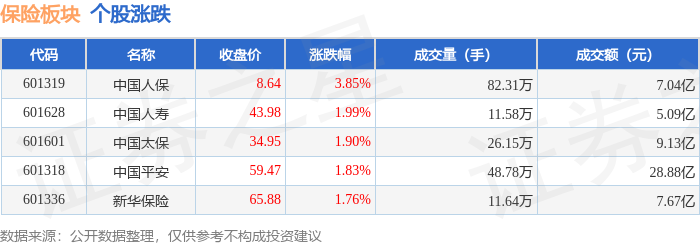
保险板块11月25日涨2.17%,中国人保领涨,主力资金净流入1.48亿元
Zheng Xing Xing Ye Ri Bao· 2025-11-25 09:09
Core Insights - The insurance sector experienced a rise of 2.17% on November 25, with China Pacific Insurance leading the gains [1] - The Shanghai Composite Index closed at 3870.02, up 0.87%, while the Shenzhen Component Index closed at 12777.31, up 1.53% [1] Insurance Sector Performance - China Life Insurance closed at 43.98, up 1.99%, with a trading volume of 115,800 shares and a transaction value of 509 million [1] - China Pacific Insurance closed at 34.95, up 1.90%, with a trading volume of 261,500 shares and a transaction value of 913 million [1] - Ping An Insurance closed at 59.47, up 1.83%, with a trading volume of 487,800 shares and a transaction value of 2.8887 billion [1] - New China Life Insurance closed at 65.88, up 1.76%, with a trading volume of 116,400 shares and a transaction value of 767.1 million [1] Fund Flow Analysis - The insurance sector saw a net inflow of 148 million from institutional investors, while retail investors experienced a net inflow of 40.68 million [1] - Major stocks like Ping An Insurance had a net inflow of 114 million from institutional investors but a net outflow of 54.29 million from retail investors [2] - China Life Insurance had a net inflow of 39.99 million from institutional investors, with retail investors showing a net outflow of 18.06 million [2]
青海金融监管局同意中国人保财险西宁市城西支公司贵南路营销服务部变更营业场所
Jin Tou Wang· 2025-11-25 09:04
一、同意中国人民财产保险股份有限公司西宁市城西支公司贵南路营销服务部将营业场所变更为:青海 省西宁市东川工业园区科技孵化器大厦8层。 2025年11月19日,青海金融监管局发布批复称,《关于中国人民财产保险股份有限公司西宁市城西支公 司贵南路营销服务部变更营业场所的请示》(宁人保财险发〔2025〕80号)收悉。经审核,现批复如 下: 二、中国人民财产保险股份有限公司西宁市城西支公司应按照有关规定及时办理变更及许可证换领事 宜。 ...
玉溪金融监管分局同意撤销中国人保财险新平支公司营销服务部等3家营销服务部
Jin Tou Wang· 2025-11-25 09:04
一、同意撤销中国人民财产保险股份有限公司新平支公司营销服务部、中国人民财产保险股份有限公司 澄江支公司九村镇营销服务部、中国人民财产保险股份有限公司澄江支公司龙街镇营销服务部。 2025年11月20日,玉溪金融监管分局发布批复称,《中国人民财产保险股份有限公司玉溪市分公司关于 撤销新平营销服务部、九村镇营销服务部、龙街镇营销服务部的请示》(玉人保财险发〔2025〕85号) 收悉。经审核,现批复如下: 二、接此批复文件后,上述被撤销机构应立即停止一切经营活动,于15个工作日内向玉溪金融监管分局 缴回许可证,并按照有关法律法规要求办理相关手续。 ...
老龄化+健康需求升级,保证续保破解续保焦虑,让长期医疗保障从“不确定”走向“确定”
13个精算师· 2025-11-25 09:03
Group 1 - The core viewpoint of the article highlights the increasing aging population in China, with projections indicating that by 2030, individuals aged 65 and above will exceed 20% of the total population, leading to a significant rise in healthcare demand and expenditures [3][4]. - As of the end of 2024, the elderly population aged 60 and above is estimated to be 310.31 million, accounting for 22.0% of the total population, with an average life expectancy of 79.0 years [1]. - The demand for commercial health insurance is shifting from optional to essential, particularly for million-dollar medical insurance products, which are becoming critical for filling the gaps in basic medical insurance coverage [4][5]. Group 2 - The article discusses the evolution of commercial million-dollar medical insurance, which has transitioned from short-term products to long-term products with clearer renewal guarantees, following regulatory changes that require insurance companies to specify renewal terms [6][9]. - The differences between guaranteed renewal and non-guaranteed renewal products are outlined, emphasizing the implications for consumers regarding renewal commitments, impact of product discontinuation, and premium adjustment mechanisms [10][12]. - The article presents two key products: "Good Medical Insurance Long-term Medical (Flagship Version 2025)" and "Good Medical Insurance for the Elderly (2025 Version)", which cater to different demographics and address specific health risks, particularly for the aging population [15][18]. Group 3 - The "Good Medical Insurance Long-term Medical (Flagship Version 2025)" is designed for healthy adults aged 18-60, providing 20 years of general medical coverage and lifelong critical illness renewal, particularly for cardiovascular diseases and cancer [18][20]. - The "Good Medical Insurance for the Elderly (2025 Version)" targets individuals aged 50-70, offering friendly underwriting conditions and lifelong cancer renewal coverage, addressing the high incidence of cancer in older age groups [18][20]. - Both products emphasize guaranteed renewal, ensuring that even if the insured's health deteriorates, they cannot be denied coverage, thus mitigating risks associated with non-guaranteed renewal products [21][30].

南平监管分局同意中国人保寿险南平市中心支公司建阳营销服务部变更营业场所
Jin Tou Wang· 2025-11-24 09:17
Group 1 - The National Financial Supervision Administration of Nanping approved the relocation of China People's Life Insurance Co., Ltd. Nanping Central Branch's Jianyang Marketing Service Department [1] - The new business location is specified as: 10 Building, 10501-10503, 10505, 10506, Gaojia Xicheng International, No. 259 Jingxian Road, Jianyang District, Nanping City, Fujian Province [1] - China People's Life Insurance Co., Ltd. Fujian Branch is required to handle the relocation and license renewal in accordance with relevant regulations [1]
保险板块11月24日跌1.12%,中国人保领跌,主力资金净流出1.62亿元
Zheng Xing Xing Ye Ri Bao· 2025-11-24 09:12
| 代码 | 名称 | 主力净流入(元) | 主力净占比 游资净流入 (元) | | 游资净占比 散户净流入 (元) | | 散户净占比 | | --- | --- | --- | --- | --- | --- | --- | --- | | 601318 中国平安 | | = 170.25万 | 0.05% | -8620.72万 | -2.74% | 8450.47万 | 2.69% | | 601628 中国人寿 | | -1301.28万 | -2.37% | 2832.46万 | 5.17% | -1531.18万 | -2.79% | | 601319 中国人保 | | -3669.59万 | -5.14% | 1798.55万 | 2.52% | 1871.03万 | 2.62% | | 601601 中国太保 | | -4434.85万 | -4.63% | 6462.75万 | 6.74% | -2027.91万 | -2.12% | | 601336 新华保险 | | -6998.32万 | -6.58% | 7.75万 | 0.01% | 6990.57万 | 6.57% | 以上内容 ...
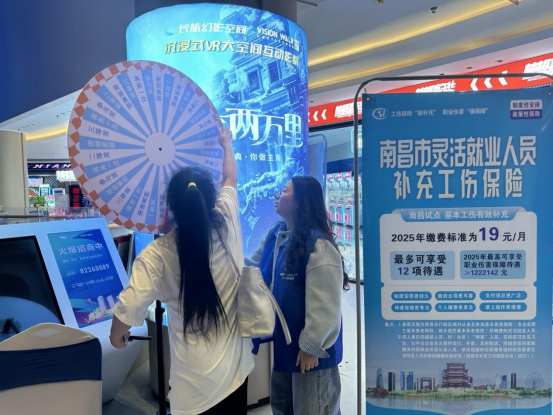
中国人保南昌市分公司开展工伤保险“新补充”、职业伤害“强保障”主题宣传活动
Zhong Guo Jin Rong Xin Xi Wang· 2025-11-24 09:00
"以前总觉得补充工伤保险离自己很远,今天听了讲解才知道,我们快递行业也能参保,遇到意外还有 这么多保障!"刚咨询完的快递小哥拿着宣传册说道。活动中,工作人员还为有需求的从业者提供一对 一答疑服务,针对灵活就业人员参保、工伤待遇核算等热点问题耐心回应,现场氛围热烈而有序。不少 员工表示,这样的宣传活动送到"家门口",既不耽误工作,又能学到实用知识,让人心里格外踏实。 补充工伤保险是劳动者的"安全网""定心丸",更是企业稳健发展的"护航舰"。此次补充工伤宣传进商场 活动,旨在让商场从业者及过往市民都能了解补充工伤权益、掌握维权方法,让商户都能重视补充工伤 保障、规范用工管理。未来,人保财险南昌市分公司将持续开展多场景、多形式的补充工伤保险政策宣 传活动,把安心与保障送到更多劳动者身边,让补充工伤保险保障惠及全民,共同营造"人人懂工伤、 人人享保障"的良好社会氛围。(陶基恩) 转自:新华财经 为让补充工伤保障政策走进千家万户,近日,中国人民财产保险股份有限公司南昌市分公司(以下简 称"人保财险南昌市分公司")联合南昌市人力资源和社会保障局、南昌市社会保险事业服务中心,在南 昌江旅·都市方舟启动工伤保险"新补充"、职 ...