ICBC(01398)

Search documents
李金鸿获批担任工商银行独立董事
Xin Lang Cai Jing· 2026-01-26 08:26
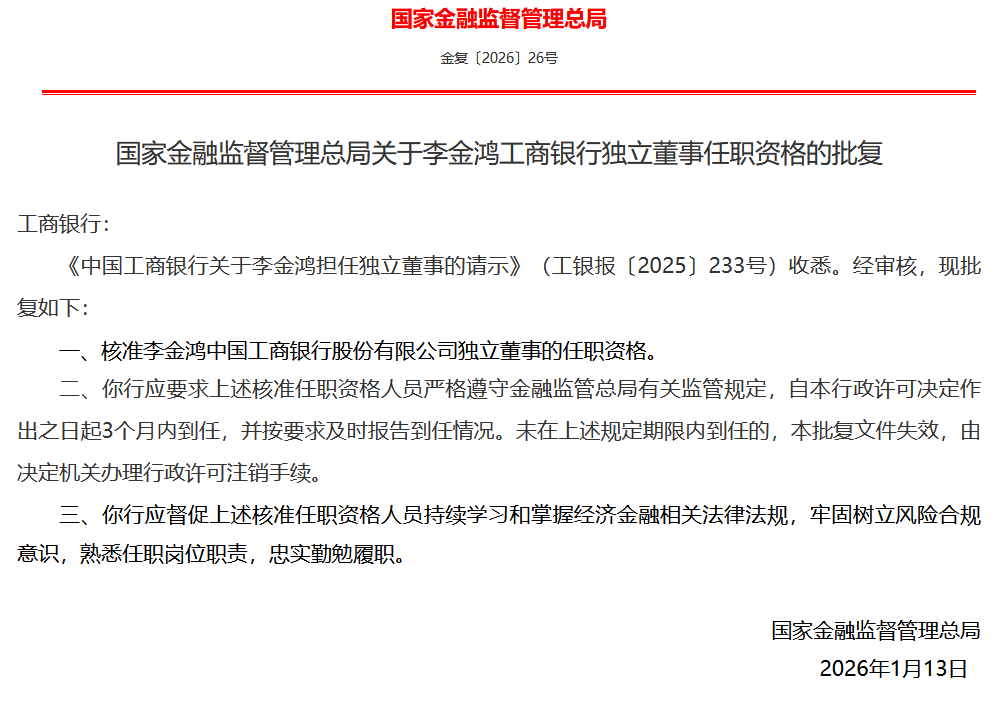
1月26日金融一线消息,国家金融监督管理总局日前发布《关于李金鸿工商银行独立董事任职资格的批复》,核准李金鸿中国工商银行股份有 限公司独立董事的任职资格。 简历显示,李金鸿,男,中国国籍,1954 年出生。目前担任 OSL 集团有限公司主席兼非执行董事,同时从事法律相关工作,兼任香港医院管 理局职员上诉委员会主席、香港证券及投资学会资深会员。曾任贝克麦坚时律师事务所香港地区和中国办事处主席、亚太区域委员会主席、全 球执行委员会成员,曾任香港证监会非执行董事、程序覆检委员会主席、收购及合并委员会、收购上诉委员会成员等职务。毕业于香港大学, 获法律学士学位及法律专业证书(P.C.LL),曾获铜紫荆星章,获委任为太平绅士。 责任编辑:曹睿潼 1月26日金融一线消息,国家金融监督管理总局日前发布《关于李金鸿工商银行独立董事任职资格的批复》,核准李金鸿中国工商银行股份有 限公司独立董事的任职资格。 简历显示,李金鸿,男,中国国籍,1954 年出生。目前担任 OSL 集团有限公司主席兼非执行董事,同时从事法律相关工作,兼任香港医院管 理局职员上诉委员会主席、香港证券及投资学会资深会员。曾任贝克麦坚时律师事务所香港地区和中 ...


大行评级|中银国际:维持对内银板块H股“增持”评级,首选工商银行
Ge Long Hui· 2026-01-26 07:37
中银国际发表研报,维持对内银板块H股"增持"评级,并列出具体推荐名单,首选工商银行,认为其估 值在同业中相对吸引;同时建议买入农业银行、招商银行、建设银行、邮储银行及中国光大银行。中银 国际预测,随着超过50万亿元的长期定期存款将于2026年集中到期,银行业负债成本有望迎来重新定价 窗口,这将显著缓解近年困扰行业的净息差下行压力。 ...
中银国际:维持对内银板块H股“增持”评级,首选工商银行
Xin Lang Cai Jing· 2026-01-26 07:36
Core Viewpoint - Zhongyin International maintains an "overweight" rating on the H-share segment of the domestic banking sector, highlighting the attractiveness of valuations, particularly for Industrial and Commercial Bank of China (ICBC) [1] Group 1: Recommendations - The report recommends buying shares of Agricultural Bank of China, China Merchants Bank, China Construction Bank, Postal Savings Bank of China, and China Everbright Bank in addition to ICBC [1] Group 2: Market Outlook - It is predicted that over 50 trillion yuan of long-term fixed deposits will mature by 2026, which is expected to create a window for repricing bank liabilities, significantly alleviating the downward pressure on net interest margins that has troubled the industry in recent years [1]

工商银行取得指标生成方法专利
Sou Hu Cai Jing· 2026-01-25 17:16
国家知识产权局信息显示,中国工商银行股份有限公司取得一项名为"指标生成方法、装置、计算机设 备和存储介质"的专利,授权公告号CN114461647B,申请日期为2022年2月。 天眼查资料显示,中国工商银行股份有限公司,成立于1985年,位于北京市,是一家以从事货币金融服 务为主的企业。企业注册资本35640625.7089万人民币。通过天眼查大数据分析,中国工商银行股份有 限公司共对外投资了28家企业,参与招投标项目5000次,财产线索方面有商标信息969条,专利信息 5000条,此外企业还拥有行政许可79个。 声明:市场有风险,投资需谨慎。本文为AI基于第三方数据生成,仅供参考,不构成个人投资建议。 来源:市场资讯 ...
黄金跌价,金条跌价,26年1月21日,各大金店黄金、金条最新价格
Sou Hu Cai Jing· 2026-01-25 16:51
Group 1: Gold Market Dynamics - International gold prices are experiencing fluctuations, leading to adjustments in domestic high-end jewelry brand prices, with Chow Tai Fook quoting 1455 CNY/gram, Lao Feng Xiang at 1456 CNY/gram, and others around 1453 CNY/gram for gold [1] - Platinum prices remain high at around 940 CNY/gram, while discounts on gold jewelry are increasing, reflecting a cautious consumer sentiment and a relatively quiet market [1] Group 2: RMB Gold Prices - The Shanghai Gold Exchange reports the RMB-denominated gold spot price at 1047.60 CNY/gram, a slight increase of 2.33 CNY or 0.223% from the previous day, with a trading range between 1042.74 CNY and 1048.50 CNY [6] - Retail prices for gold jewelry or bars are higher than the exchange prices due to additional costs such as design and processing, influenced by international market fluctuations, exchange rates, and domestic supply and demand [6] Group 3: Financial Institutions Gold Bar Prices - Various financial institutions have set their gold bar prices, with China Construction Bank at 1050.74 CNY/gram, Industrial and Commercial Bank at 1050.58 CNY/gram, and others ranging from 1049.2 CNY to 1096.5 CNY per gram [7][8][9][10][11][12][13] Group 4: Wholesale and Retail Price Differences - The wholesale price for gold in Shui Bei is approximately 1203 CNY/gram, with significant price differences compared to retail prices, which can be attributed to store rent, operational costs, and brand premiums [14] - The pricing structure for jewelry includes "gold value + processing fee + brand premium," indicating a need for consumers to be aware of the price alignment with base gold prices when investing [14] Group 5: Domestic Gold Price Trends and Market Analysis - Current gold prices are reported at 1047.00 CNY/gram, with a slight increase of 0.11%, while platinum prices are at 606.79 CNY/gram, reflecting a 0.72% increase [15] - Despite rising gold prices, consumer purchasing enthusiasm is declining, with a reported 7.95% year-on-year decrease in gold consumption and a 32.50% drop in gold jewelry consumption in the first three quarters of 2025 [15] Group 6: Retail Strategies and Market Outlook - Brands are adopting strategies like trade-in programs to lower consumer purchase barriers, while research indicates that retailers need to enhance profit margins per gram of gold jewelry and optimize product offerings [16] - The technical structure of gold prices remains in an upward channel, but with weakening momentum, influenced by a strong dollar and rising real interest rates, which increase the opportunity cost of holding gold [17]




二级资本债周度数据跟踪-20260125
Soochow Securities· 2026-01-25 07:11
1. Report Industry Investment Rating There is no information about the industry investment rating in the provided content. 2. Core Viewpoints of the Report - This week (January 19 - January 23, 2026), there were no new secondary capital bonds issued in the inter - bank market and the exchange market [1]. - This week, the total trading volume of secondary capital bonds was approximately 334.2 billion yuan, an increase of 69.1 billion yuan compared to last week. The top three bonds in terms of trading volume were 25 Bank of China Secondary Capital Bond 02BC (44.352 billion yuan), 25 China Guangfa Bank Secondary Capital Bond 01BC (21.98 billion yuan), and 25 Bank of China Secondary Capital Bond 03A(BC) (7.753 billion yuan) [2]. - In terms of the issuing regions, the top three regions in terms of trading volume were Guangdong Province, Shanxi Province, and Shandong Province, with trading volumes of approximately 252.1 billion yuan, 29.9 billion yuan, and 14.7 billion yuan respectively [2]. - As of January 23, the changes in the yields to maturity of 5Y secondary capital bonds with ratings of AAA -, AA +, and AA compared to last week were - 2.18BP, - 2.84BP, and - 3.84BP respectively; for 7Y secondary capital bonds, the changes were - 2.72BP for all ratings of AAA -, AA +, and AA; for 10Y secondary capital bonds, the changes were - 4.60BP, - 5.09BP, and - 5.09BP respectively [2]. - This week, the overall deviation of the average trading price valuation of secondary capital bonds was not significant. The proportion of discount transactions was greater than that of premium transactions, and the discount amplitude was greater than the premium amplitude [3]. 3. Summary by Related Catalogs 3.1 Primary Market Issuance - This week (January 19 - January 23, 2026), there were no new secondary capital bonds issued in the inter - bank market and the exchange market [1]. 3.2 Secondary Market Transactions - **Trading Volume**: The total trading volume of secondary capital bonds this week was approximately 334.2 billion yuan, an increase of 69.1 billion yuan compared to last week. The top three bonds in terms of trading volume were 25 Bank of China Secondary Capital Bond 02BC (44.352 billion yuan), 25 China Guangfa Bank Secondary Capital Bond 01BC (21.98 billion yuan), and 25 Bank of China Secondary Capital Bond 03A(BC) (7.753 billion yuan) [2]. - **Regional Distribution**: In terms of the issuing regions, the top three regions in terms of trading volume were Guangdong Province, Shanxi Province, and Shandong Province, with trading volumes of approximately 252.1 billion yuan, 29.9 billion yuan, and 14.7 billion yuan respectively [2]. - **Yield to Maturity**: As of January 23, the changes in the yields to maturity of 5Y secondary capital bonds with ratings of AAA -, AA +, and AA compared to last week were - 2.18BP, - 2.84BP, and - 3.84BP respectively; for 7Y secondary capital bonds, the changes were - 2.72BP for all ratings of AAA -, AA +, and AA; for 10Y secondary capital bonds, the changes were - 4.60BP, - 5.09BP, and - 5.09BP respectively [2][10]. 3.3 Top Thirty Bonds with Valuation Deviation - **Discount Bonds**: The top three discount bonds were 23 Kecheng Rural Commercial Secondary Capital Bond 01 (- 1.7012%), 22 Xinchang Rural Commercial Bank Secondary Capital Bond 01 (- 1.6229%), and 25 Ninghai Rural Commercial Secondary Capital Bond 01 (- 1.6108%). The Zhongzhai implicit ratings were mainly AAA -, AA +, and AA -, and the bonds were mainly distributed in Beijing, Zhejiang, and Guangdong [3][13]. - **Premium Bonds**: The top three premium bonds were 25 Jilin Bank Secondary Capital Bond 02 (0.6619%), 22 Shengjing Bank Secondary Capital Bond 01 (0.1965%), and 24 Shengjing Bank Secondary Capital Bond 01 (0.1959%). The Zhongzhai implicit ratings were mainly AAA -, AA, and AA +, and the bonds were mainly distributed in Beijing, Zhejiang, and Liaoning [3][14].



抢疯了!金饰克价突破1500元,银行保管箱业务火爆,预约排到两三个月后,网友:这都要抢?
Mei Ri Jing Ji Xin Wen· 2026-01-25 03:50
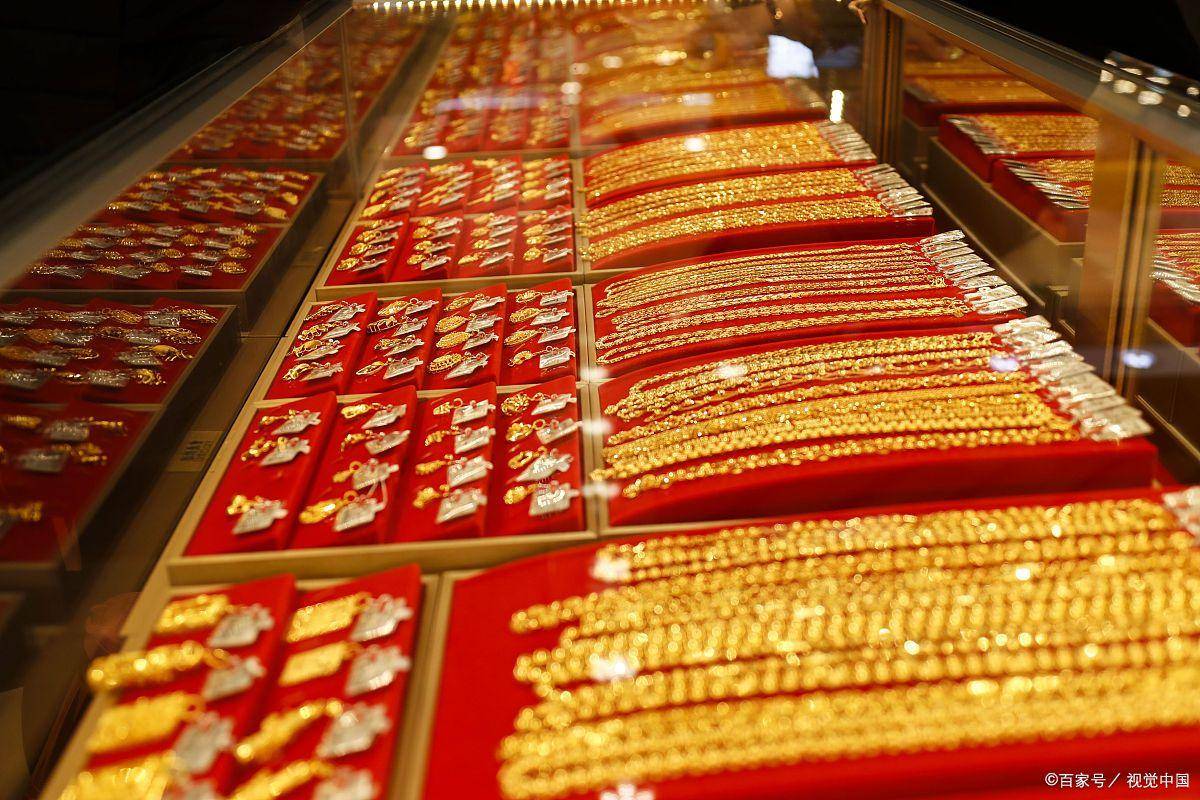
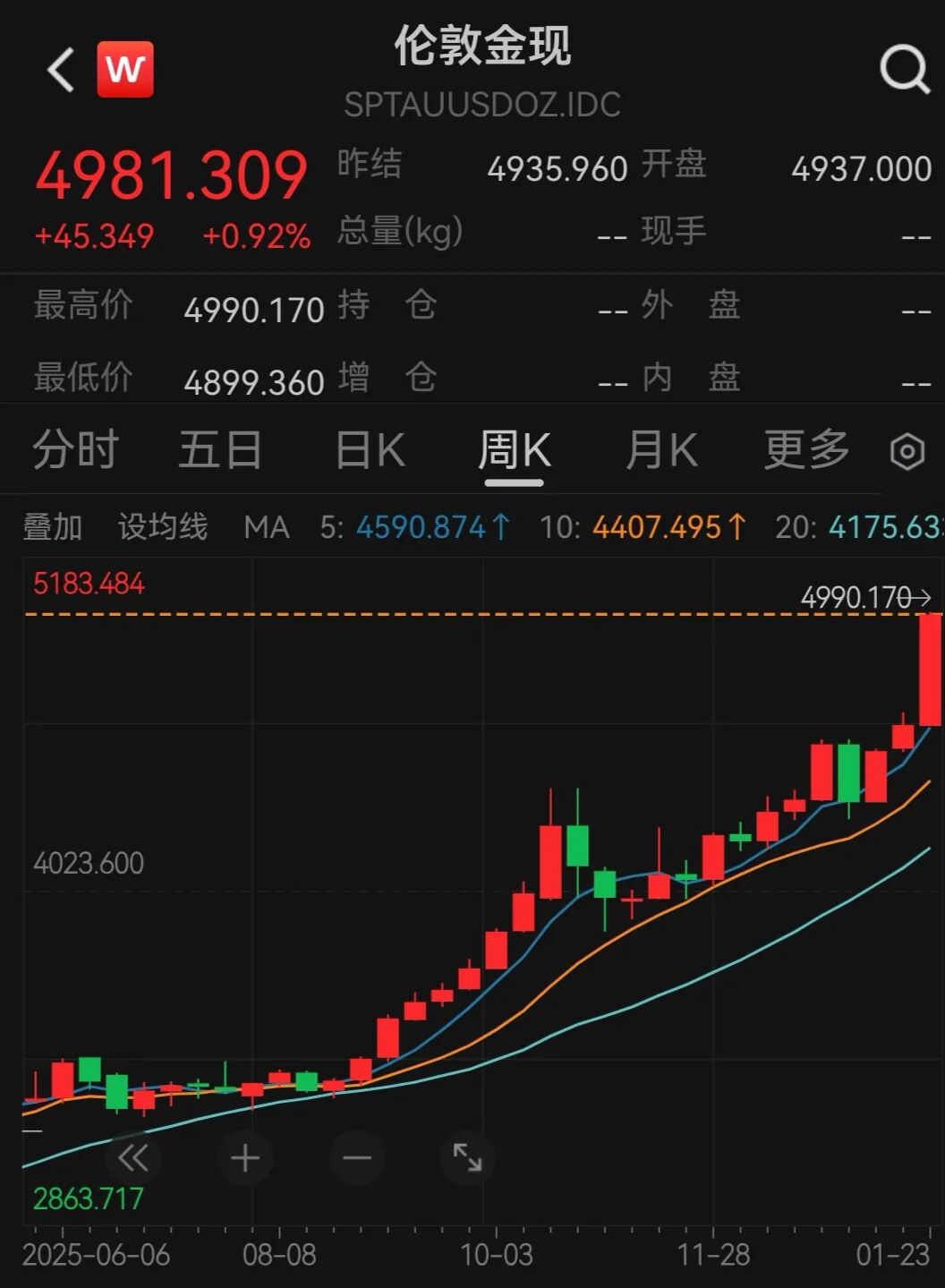
Group 1: Gold Price Surge - The price of gold has surged significantly, with spot gold reaching $4981.309 per ounce, approaching the $5000 mark [1] - Domestic gold prices have also increased, with several brands of gold jewelry exceeding 1500 yuan per gram, and some reaching 1548 yuan, marking a daily increase of over 50 yuan [3] Group 2: Demand for Bank Safe Deposit Boxes - The demand for bank safe deposit boxes has skyrocketed, with many banks reporting that all available boxes are rented out, leading to waiting lists for new customers [7][9] - In Hangzhou, major banks have completely rented out their safe deposit boxes, and new customers must wait for existing customers to return their boxes before they can rent one [8] - The surge in demand for safe deposit boxes is attributed to the increasing need for secure storage of high-value items like gold bars, particularly among high-net-worth individuals in major cities [9]
展望“十五五” 八桂启新篇 | 关键金属里的“金”动力
Guang Xi Ri Bao· 2026-01-25 02:58
Group 1 - The first major acquisition loan in the critical metals industry in Guangxi was successfully issued, amounting to 224 million yuan, aimed at supporting resource integration and capacity expansion [1] - Guangxi is recognized as a significant region for non-ferrous metals, holding a leading position in the reserves of various critical metals such as tin, antimony, indium, gallium, germanium, and rare earths [1] - To promote the high-quality development of the critical metals industry, Guangxi has introduced several policy documents in 2025, including measures for financial support and the establishment of the "Nandan Critical Metals Loan" [1] Group 2 - Financial institutions in Guangxi are innovating to support the green and high-quality development of the critical metals industry, with notable loans such as 100 million yuan from China Construction Bank for operational needs and 300 million yuan from Industrial and Commercial Bank of China for production stability [2] - The establishment of the Guangxi Critical Metals Industry Development Group in January 2026 aims to provide comprehensive financial services, with plans for Guangxi Beibu Gulf Bank to invest at least 20 billion yuan in the critical metals sector over the next five years [2] - By the end of 2025, 53 enterprises in the critical metals industry chain in Guangxi had been included in the "Nandan Critical Metals Loan" list, with 33 enterprises receiving a total of 2.838 billion yuan in loans [3]

金融行研系列:17 中国私人银行业2025发展报告
Xin Lang Cai Jing· 2026-01-24 23:03
Core Insights - The Chinese private banking industry is undergoing a historic shift from "scale expansion" to "value cultivation," with high-quality growth expected by 2025 [3][4] - The number of high-net-worth individuals (HNWIs) in China has surpassed 3 million, with assets under management (AUM) reaching 24.6 trillion yuan, projected to grow to 42 trillion yuan by 2030, reflecting a compound annual growth rate (CAGR) of 9.5% [3][6] - The market is characterized by a dual trend of "head concentration and distinctive breakthroughs," with major state-owned banks dominating the sector [3][8] Industry Overview - The private banking sector in China continues to show steady growth, with AUM reaching 18.8 trillion yuan by mid-2025, a 9.3% increase from the end of 2024 [5][6] - The number of clients served by 16 banks reached 1.649 million, a year-on-year growth of 13.17% [5] - The market is highly concentrated, with the top four state-owned banks holding nearly 70% of the total AUM among the 12 major private banks [8][7] Market Dynamics - Business innovation is becoming a new driving force for industry development, with family trusts and insurance trusts experiencing rapid growth [4][19] - By Q3 2025, the total scale of family trusts exceeded 950 billion yuan, while insurance trusts reached 420 billion yuan, reflecting growth rates of 5.6% and 19.1% respectively [4][19] - The industry faces challenges such as stricter regulations, talent shortages, and intensified competition [4][29] Client Demographics - The number of high-net-worth families in China reached 2.066 million by 2025, with the total wealth of billionaires growing to 1.8 trillion USD, a 22.2% increase [12][6] - The average age of high-net-worth individuals is 35, with a significant portion being young entrepreneurs [13][12] - The income sources of high-net-worth individuals are diverse, with business income being the primary source [13][16] Business Model Innovations - Family office services are rapidly developing, with over 85% of private banking departments establishing independent family office service systems by the end of 2023 [22] - The demand for family office services is expected to grow, with annual expenditures on tax planning projected to reach 2.8 million yuan by 2025 [23] - ESG investments are becoming a key focus, with ESG-themed financial products seeing significant growth [24][25] Digital Transformation - The digital transformation of the private banking sector is entering a deepening phase, with at least 60% of institutions expected to adopt AI-driven advisory systems by 2025 [26][27] - Technology investments are projected to exceed 4.8 billion yuan, with a CAGR of 27.3% [26] - The integration of digital services is crucial for enhancing customer experience and operational efficiency [28] Regulatory Environment - The regulatory environment is becoming stricter, leading to increased compliance costs, which are expected to rise by 23 percentage points of operating income [29][30] - The implementation of new asset management regulations is reshaping product design and increasing the entry barriers for new players [29][30] Talent Shortage - The private banking industry faces a significant talent shortage, with a demand gap of approximately 24,000 professional bankers by 2025 [33][34] - The ratio of talent supply to demand is 1:8, indicating a critical need for skilled professionals [33] - The industry is increasingly focusing on talent training and recruitment to address this gap [34]

银行响应消费贷“国补” 深圳信用卡业务办理量增加
Sou Hu Cai Jing· 2026-01-24 14:59
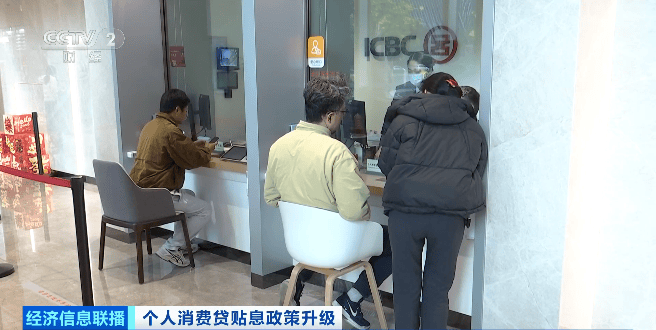
(央视财经《经济信息联播》)财政部等三部门近日发布通知,升级优化个人消费贷款财政贴息政策。 此次新政发布后,多家银行迅速响应,纷纷发布实操细则,部分机构同步开启信用卡分期贴息操作路 径。 记者在工商银行深圳分行的一家营业厅内看到,随着新政策落地,网点陆续有客户前来咨询。客户经理 徐碧婷,刚刚就成功帮助一名客户申请了信用卡分期的贴息优惠。 中国工商银行深圳市分行营业部客户经理 徐碧婷:客户近期准备购买家具,我们引导他通过手机银行 去操作贴息的办理,整个流程非常的简单、方便,通过手机银行就能马上看到我们的贴息优惠。 银行工作人员表示,这几天,信用卡业务办理量明显增加。 中国工商银行深圳市分行银行卡中心总经理 胡济峰:目前看,客户参与的积极性非常高。我们工行深 圳分行这两天的账单分期每日平均办理量比政策发布前提升了16.27%,日均办理金额由860万元提升到 了1千万元以上。 业内人士表示,此次政策升级的核心突破在于,实现了全场景、全机构、强激励的普惠化转型。为实现 精准促消费,各家银行也在着力打造"全场景覆盖"的消费支持体系。不过,银行也做出提醒,若相关申 请未通过审核或存在违法违规套取贴息资金的行为,银行将按规 ...