
PSBC(01658)

Search documents
一线调研:千亿赛道竞速 广东园区成银行转型新增长极
2 1 Shi Ji Jing Ji Bao Dao· 2025-10-11 09:40
Core Insights - The article discusses the role of industrial parks in promoting high-quality economic development and how financial services are evolving to support these parks, particularly in Guangdong Province [2][3]. Group 1: Industrial Parks and Economic Contribution - Industrial parks are crucial for China's industrialization and urbanization, contributing significantly to economic and social development [3]. - As of last year, 59 industrial parks have GDPs exceeding 100 billion yuan, with Jiangsu, Guangdong, and Shandong leading in development [3]. - The Ministry of Industry and Information Technology and the National Development and Reform Commission have issued guidelines to promote the high-quality development of industrial parks [3]. Group 2: Financial Solutions for Industrial Parks - Banks are increasingly treating industrial parks as primary business units, offering integrated financial solutions that include credit, investment banking, leasing, and digital platforms [2][3]. - The shift from traditional credit models to a more integrated approach is aimed at addressing the financing challenges faced by small and medium-sized enterprises (SMEs) in these parks [4][5]. - New financing models focus on "scene-based empowerment" and "ecological collaboration," utilizing operational data as credit references and park risk control as security [4][5]. Group 3: Case Study and Implementation - A case study of Guangdong Xinbangle Technology Co., Ltd. illustrates how banks are adapting to the needs of light-asset technology companies by providing loans based on future production capacity assessments [5][6]. - The "Park Loan 2.0" initiative in Shenzhen aims to enhance financial support for SMEs by fostering collaboration among government, parks, banks, and guarantors [7][8]. - The model's success relies on the ability of parks to provide real-time operational data, reducing information asymmetry and enhancing risk management [8]. Group 4: Cross-Provincial Cooperation and Future Prospects - Cross-provincial cooperation in industrial parks is emerging, with Guangdong and Guangxi collaborating on 125 parks, generating a combined output value of 60 billion yuan [9]. - The integration of Guangdong's financial resources with Guangxi's labor and land advantages is expected to accelerate the development of industrial chains [9][10]. - The financial support for industrial parks is seen as a way to optimize resource allocation and promote high-quality economic growth in China [10].



三季度金融机构被罚没超10亿 四家机构收超6000万大额罚单
2 1 Shi Ji Jing Ji Bao Dao· 2025-10-11 07:54
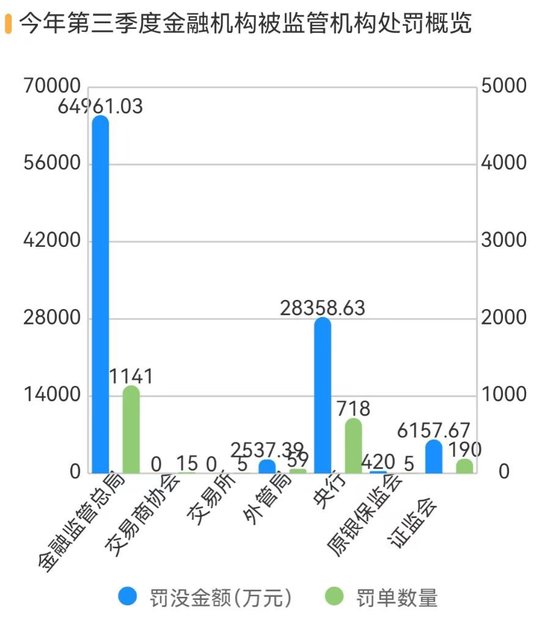
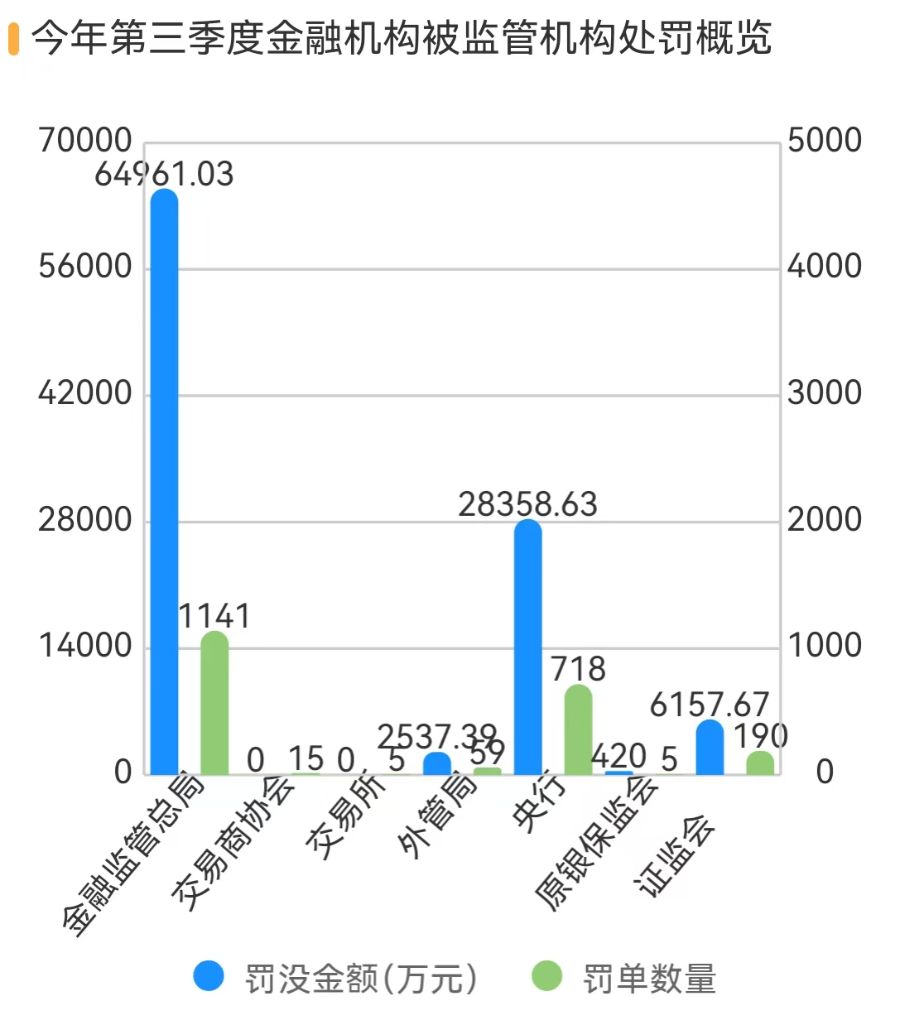
Core Insights - In the third quarter of this year, financial institutions received a total of 2,133 fines, amounting to 1.024 billion yuan, representing significant increases of 36.12% and 190.91% respectively compared to the previous quarter, and a notable rise compared to the same period last year [1] Summary by Sections 1. Penalty Situation in Q3 - The National Financial Regulatory Administration issued 1,141 fines to financial institutions in Q3, totaling 650 million yuan, with a slight decrease of 20.82% in the number of fines year-on-year, but a 46.4% increase in the total amount [2] - The central bank significantly increased its penalties, issuing 718 fines, which is a year-on-year increase of 357.32%, with a total penalty amount of 284 million yuan, also up 353.34% year-on-year [2] 2. Overall Penalty Trends - The overall penalty situation for financial institutions in the first three quarters shows a strong enforcement in Q1, a slight decline in Q2, and a resurgence in Q3 [4] 3. Breakdown by Institution Type - Banks received 1,448 fines in Q3, an increase of 18.3% year-on-year, with penalties totaling 829 million yuan, a year-on-year increase of 84.63% [7] - Insurance companies received 471 fines, with a slight increase of 7.29% year-on-year, and penalties amounting to 93.86 million yuan, up 41.57% [7] - Securities firms received 45 fines, a decrease of 30.77% year-on-year, but an increase of 40.63% compared to the previous quarter [7] 4. Major Penalties - In Q3, there were four penalties exceeding 60 million yuan, with Huaxia Bank receiving the largest fine of 87.25 million yuan for improper management of loans and regulatory data reporting [11] - Guangfa Bank received the second-largest fine of 66.70 million yuan for similar violations [12] - Hengfeng Bank was fined 61.50 million yuan for issues related to loan management and investment [13] 5. Compliance Cases - Huaxia Securities faced penalties for promoting false financial products, resulting in significant client losses [15] - Donghua Futures was penalized for improper procurement processes involving funds [14] 6. Compliance Characteristics - There has been an increase in penalties related to internet business violations, with 15 fines issued in Q3, a 275% increase from Q2 [15] - Loan misappropriation issues were prominent, with 60 related fines issued, a 130.77% increase from the previous quarter [17] 7. Penalty Rankings - In Q3, Huaxia Bank had the highest total penalty amount of 91.62 million yuan, followed by Guangfa Bank at 72.84 million yuan, and Hengfeng Bank at 65.55 million yuan [19] - Among non-bank institutions, Donghai Securities led with a penalty of 60 million yuan, followed by Huaxia Wealth Management and Guangyin Wealth Management [21]



三季度金融机构被罚没超10亿,四家机构收超6000万大额罚单
2 1 Shi Ji Jing Ji Bao Dao· 2025-10-11 07:47
Summary of Key Points Core Viewpoint - In the third quarter of this year, financial institutions received a total of 2,133 fines amounting to 1.024 billion yuan, representing significant increases of 36.12% and 190.91% respectively compared to the previous quarter, and a notable rise from the same period last year [1]. Group 1: Penalty Overview - The National Financial Supervision Administration issued 1,141 fines totaling 650 million yuan in the third quarter, with a year-on-year increase of 46.4% in penalty amounts despite a slight decrease of 20.82% in the number of fines [1]. - The central bank's penalties surged, with 718 fines issued, marking a year-on-year increase of 357.32%, and total penalties amounting to 284 million yuan, up 353.34% [1]. Group 2: Sector-Specific Penalties - Banks received 1,448 fines in the third quarter, an increase of 18.3% year-on-year, with penalties totaling 829 million yuan, reflecting an 84.63% increase [6]. - Insurance companies faced 471 fines, a slight increase of 7.29%, with penalties amounting to 93.86 million yuan, up 41.57% [6]. - Securities firms received 45 fines, a decrease of 30.77% year-on-year, but an increase of 40.63% compared to the previous quarter [6]. Group 3: Major Penalties - Four fines exceeding 60 million yuan were issued in the third quarter, with Huaxia Bank receiving the largest fine of 87.25 million yuan for improper management of loans and regulatory data reporting [11]. - Guangfa Bank was fined 66.70 million yuan for similar violations, while Hengfeng Bank received a fine of 61.50 million yuan for issues related to loan and wealth management [11]. Group 4: Compliance Cases - Hua'an Securities faced penalties for promoting false financial products, resulting in significant client losses [12]. - Donghua Futures was penalized for improper procurement practices involving funds from its parent company [13]. Group 5: Compliance Trends - There has been a notable increase in penalties related to internet business violations, with 15 fines issued in the third quarter, a 275% increase from the previous quarter [14]. - Major banks such as Postal Savings Bank and Zhejiang Merchants Bank were penalized for improper management of internet loan operations [15]. Group 6: Loan Misuse Issues - A total of 60 fines related to loan misuse were recorded, a 130.77% increase from the previous quarter, with funds often misallocated to repay bad loans or for investment purposes [17]. Group 7: Penalty Rankings - In terms of total penalties, Huaxia Bank led with 91.62 million yuan, followed by Guangfa Bank with 72.84 million yuan, and Hengfeng Bank with 65.55 million yuan [17].
邮储银行青岛分行双补贴激活家电焕新消费热
Zhong Guo Jin Rong Xin Xi Wang· 2025-10-11 07:05
Group 1 - The core idea of the news is the successful implementation of a dual subsidy model in Qingdao, combining government incentives for replacing old appliances with bank discounts, which has significantly boosted consumer spending during the holiday season [1][2] - Qingdao's government has expanded its old-for-new appliance subsidy policy to include 12 categories, with subsidies reaching up to 2000 yuan, enhancing consumer interest in purchasing new appliances [1] - Postal Savings Bank of Qingdao has effectively integrated government subsidies with its own credit card promotions, creating a "policy dividend + financial benefit" effect that reduces shopping costs for consumers [1] Group 2 - This initiative marks the fourth old-for-new themed activity by Postal Savings Bank of Qingdao this year, demonstrating the bank's responsiveness to government policies and consumer needs [2] - The bank aims to extend its promotional efforts beyond appliances to other consumer sectors, fostering a diverse consumption ecosystem in Qingdao and contributing to the recovery of the local market [2] - The bank's promotional strategy includes a comprehensive online and offline approach, effectively communicating the benefits of the dual subsidy model to consumers, resulting in a nearly 30% increase in inquiries during the holiday period [1]
邮储银行沁阳市支行开展金融教育进校园活动
Huan Qiu Wang· 2025-10-11 03:24
Core Viewpoint - Postal Savings Bank of China is actively engaging in financial education initiatives to enhance public financial literacy and promote financial rights protection, demonstrating its commitment to social responsibility [1] Group 1: Financial Education Activities - The bank organized a financial knowledge promotion event at Qinyang Foreign Language School, themed "Protecting Financial Rights, Supporting a Better Life" [1] - Employees set up promotional displays and banners at the school, providing information about the 2025 Financial Education Promotion Week and key financial knowledge points [1] Group 2: Impact and Future Plans - The event successfully raised financial awareness among students and staff, enhancing their understanding of financial risk prevention [1] - The bank plans to organize more financial education activities in the future to further improve public financial literacy and share the benefits of a better life [1]
银行业从“渠道竞争”转型“生态竞争”
Zheng Quan Ri Bao· 2025-10-10 22:27
Core Viewpoint - Postal Savings Bank of China has announced the absorption and merger of Postal Huinong Bank, aiming to enhance operational efficiency and resource allocation in the banking sector [1][2]. Group 1: Company Actions - The shareholders of Postal Savings Bank approved the merger proposal on October 9, which is expected to lower operational costs and facilitate centralized customer data management [1]. - The merger will integrate Postal Huinong Bank's online operational experience into Postal Savings Bank, strengthening its online business capabilities [1]. - The merger aims to optimize resource allocation by injecting new talent and business resources from Postal Huinong Bank into Postal Savings Bank [1]. Group 2: Industry Trends - Several banks have been shutting down or integrating their direct banking services, indicating a shift in the banking landscape towards a more integrated model [2]. - The independent direct banking model has not developed a complete service ecosystem, leading to redundancy and resource waste for traditional banks [2]. - The trend towards merging direct banks into traditional banking structures reflects a new phase of development reliant on the parent bank's mobile ecosystem [2]. Group 3: Digital Transformation - The evolution of direct banks represents a phase in the digital transformation of the banking industry, with a focus on deep ecological restructuring rather than just channel innovation [3]. - Traditional banks are encouraged to leverage their existing service channels and explore integration into various life scenarios using digital technology [3]. - The future of banking will involve a combination of online and offline services, with an emphasis on enhancing management through AI technology [3].
邮储银行股价连续6天下跌累计跌幅6.6%,华泰柏瑞基金旗下1只基金持1.97亿股,浮亏损失7897.05万元
Xin Lang Cai Jing· 2025-10-10 11:58
10月10日,邮储银行跌0.7%,截至发稿,报5.66元/股,成交7.51亿元,换手率0.20%,总市值6797.38亿 元。邮储银行股价已经连续6天下跌,区间累计跌幅6.6%。 资料显示,中国邮政储蓄银行股份有限公司位于中国北京市西城区金融大街3号,香港湾仔皇后大道东 248号大新金融中心40楼,成立日期2007年3月6日,上市日期2019年12月10日,公司主营业务涉及中国 邮政储蓄银行股份有限公司在中国提供银行及相关金融服务。该银行主要通过个人银行、企业银行及资 金业务运营。个人银行业务向个人客户提供多种产品及服务,包括人民币及外汇存储、贷款、银行卡及 中间业务产品及服务。企业银行业务为企业客户提供多样化金融产品及服务,包括企业贷款、贴现票 据、企业存款及中间业务产品及服务,如:结算、票据管理、现金管理、投资银行、托管及公司理财。资 金业务主要包括金融市场业务,如:市场交易、投资、同业融资及票据贴现。资金业务还包括资产管理。 主营业务收入构成为:个人银行业务69.57%,公司银行业务19.70%,资金业务10.65%,其他业务 0.07%。 从邮储银行十大流通股东角度 数据显示,华泰柏瑞基金旗下1只基金 ...
邮储银行股价连续6天下跌累计跌幅6.6%,华商基金旗下2只基金合计持1048.56万股,浮亏损失419.42万元
Xin Lang Cai Jing· 2025-10-10 10:47
Group 1 - Postal Savings Bank of China (PSBC) shares fell by 0.7% to 5.66 CNY per share, with a total market capitalization of 679.738 billion CNY, marking a cumulative decline of 6.6% over six consecutive days [1] - The bank was established on March 6, 2007, and listed on December 10, 2019, providing a range of banking and financial services primarily through personal banking, corporate banking, and funding operations [1] - The revenue composition of PSBC is as follows: personal banking accounts for 69.57%, corporate banking for 19.70%, funding business for 10.65%, and other businesses for 0.07% [1] Group 2 - Two funds under Huashang Fund hold a total of 10.4856 million shares of PSBC, resulting in a floating loss of approximately 419.42 thousand CNY during the recent six-day decline [2] - The Huashang Shengshi Growth Mixed Fund reduced its holdings by 586.7 thousand shares in the second quarter, currently holding 9.5451 million shares, which represents 1.67% of the fund's net value [2] - The Huashang Hengxin Return Mixed A Fund holds 940.5 thousand shares, accounting for 2.23% of the fund's net value, with a floating loss of about 37.62 thousand CNY during the same period [2]
青海省海南州举办知识产权转移转化与质押融资推介活动
Zhong Guo Zhi Liang Xin Wen Wang· 2025-10-10 09:06
Core Insights - The event organized by the Hainan Prefecture Market Supervision Administration and the Qinghai Patent Service Center aims to promote the implementation of the intellectual property (IP) strong province strategy and enhance the support of IP for the real economy [1][2] - The activity attracted over 50 participants from research institutions, financial institutions, and enterprises, with more than 378 attendees participating offline [1] Summary by Sections Intellectual Property Development - Hainan Prefecture has seen continuous improvement in the creation, utilization, protection, and service capabilities of intellectual property [1] - As of now, the effective trademark registration in the region has reached 4,434, with 41 effective invention patents, marking a year-on-year growth of 6% and 14% respectively [1] - The number of effective invention patents per 10,000 people is 0.91, with 46 authorized patents and 20 high-value invention patents [1] - In 2024, the Hainan Prefecture Library was approved as a provincial-level public service point for intellectual property, further enhancing the local IP service system [1] Event Highlights - Researchers from the Chinese Academy of Sciences and Qinghai University presented projects related to energy storage materials and multi-energy complementary heating technologies [2] - Experts provided training on the patent-intensive product identification process and corporate IP compliance management systems [2] - Banks, including China Bank and Postal Savings Bank, introduced favorable credit policies for enterprises, addressing financing challenges and transforming patents into active capital [2] - Feedback from participating enterprises indicated that IP pledge financing effectively alleviated issues related to "difficult and expensive financing" [2] Future Directions - The Hainan Prefecture Market Supervision Administration plans to focus on the development needs of enterprises throughout their lifecycle and continuously improve the collaborative mechanism for IP transformation and financial services [2] - There will be regular policy promotion and enterprise-bank matchmaking events to enhance the last mile of IP services, contributing to a new pattern of regional innovation and high-quality economic development [2]

以金融 “活水” 润泽科技创新
Huan Qiu Wang· 2025-10-10 08:55
Core Insights - Shenzhen Xinguang Precision Technology Co., Ltd. has transformed from "manufacturing" to "creation" with the support of Postal Savings Bank's "Tengfei Loan" for medium to long-term funding [1] - The bank's focus on technology finance is highlighted by its goal to serve over 100,000 technology enterprises and achieve a technology loan balance exceeding 930 billion yuan by June 2025 [1] - Postal Savings Bank has developed a new evaluation model called "Look to the Future," which assesses technology companies based on their R&D investment, patents, growth potential, and policy support [2] Group 1 - The transformation of Xinguang Precision is a representation of Postal Savings Bank's commitment to technology finance [1] - The bank has shifted its credit evaluation from traditional collateral-based methods to a future-oriented approach, focusing on orders, turnover, and partnerships [1][2] - The bank's innovative evaluation model allows for precise profiling of technology companies, enhancing their access to funding [2] Group 2 - The establishment of a small and micro enterprise financing coordination mechanism by national authorities aims to alleviate financing difficulties for small businesses [3] - Postal Savings Bank has adopted a "full lifecycle support" approach to provide continuous financial assistance to technology-driven small and micro enterprises [3] - A case study illustrates how the bank's support enabled a small eco-friendly building materials company to transition from R&D to becoming a national high-tech enterprise [4] Group 3 - Postal Savings Bank has created a comprehensive service system centered around products like "Science and Technology Loan" and "Science and Technology e-Loan" to facilitate technology innovation [5] - The bank utilizes big data to construct precise profiles of enterprises and evaluate their innovation capabilities, ensuring financial resources are directed towards promising technology innovators [5] - The bank's efforts in breaking traditional credit logic and building a full-cycle service ecosystem aim to stimulate innovation and support industrial upgrades [5]
