Pony AI(02026)

Search documents
港股破发股小马智行跌11% 上市募67亿港元首日跌9%
Zhong Guo Jing Ji Wang· 2025-11-07 09:03
Group 1 - The stock of Xiaoma Zhixing (02026.HK) closed at HKD 111.90, down 11.26%, hitting a new low with a minimum price of HKD 108.10, indicating it is currently in a state of decline [1] - Xiaoma Zhixing was listed on the Hong Kong Stock Exchange yesterday, opening with a drop of 10.79% at HKD 124.00 and closing at HKD 126.10, reflecting a decline of 9.28% [1] - The final offering price for the company's shares was HKD 139.00, raising a total of HKD 6.707 billion, with a net amount of HKD 6.454 billion [1] Group 2 - The total number of shares offered globally by Xiaoma Zhixing was 48,249,000, with 4,195,600 shares allocated for the Hong Kong offering and 44,053,400 shares for international offering [1] - The cornerstone investors received the following allocations: Eastspring Investments (Singapore) Limited - 1,117,800 shares, Ghisallo Fund Master Ltd - 2,794,600 shares, Athos Capital Limited - 1,397,300 shares, Hel Ved Master Fund - 838,400 shares, and Ocean Arete Limited - 558,900 shares [2]
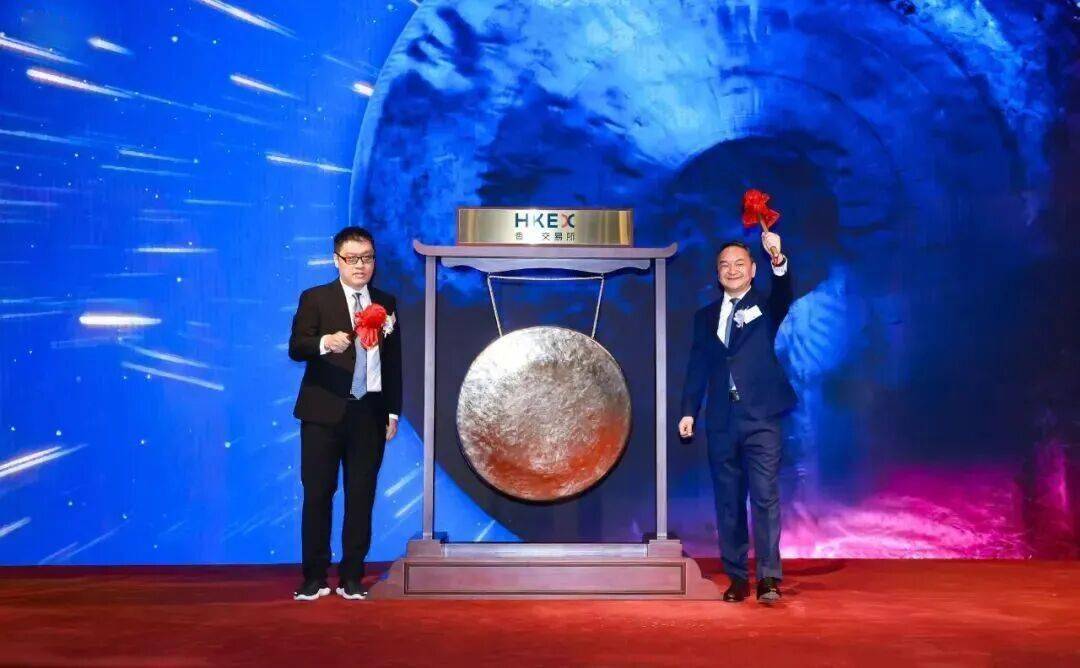
77亿港元募资成行业最大IPO,小马智行港股上市
Sou Hu Cai Jing· 2025-11-07 07:08
Core Insights - Xiaoma Zhixing officially listed on the Hong Kong Stock Exchange on November 6, 2025, with an issue price of HKD 139 per share, completing a global offering [1] - The company exercised its overallotment option, increasing the share issuance by 15%, potentially raising HKD 7.7 billion, making it the largest IPO in the global autonomous driving sector in 2025 [3] - The IPO marks the establishment of Xiaoma Zhixing's dual primary listing structure in both the US and Hong Kong [3] Business Focus and Strategy - The IPO proceeds are primarily directed towards the mass production of Robotaxi vehicles, deployment of a fleet of over 1,000 vehicles, and expansion into fully autonomous operational areas [4] - Founded in 2016, Xiaoma Zhixing's core business revolves around autonomous driving services (Robotaxi), autonomous truck services (Robotruck), and technology licensing, with Robotaxi being the primary focus [4] - The seventh-generation Robotaxi model has recently commenced operations, developed in collaboration with Toyota, BAIC, and GAC [4] Cost Reduction and Operational Scale - The BOM cost of the seventh-generation autonomous driving suite has decreased by 70% compared to the previous generation, with a reduction of 80% in computing unit costs and 68% in solid-state LiDAR costs, laying the groundwork for scalable operations [6] - As of the IPO, Xiaoma Zhixing is the only company in China to have obtained full autonomous driving service licenses in four first-tier cities, operating a fleet of 726 vehicles with a cumulative mileage of 93 million kilometers [6] - The strategic goal is to make Robotaxi a profitable business, aiming for operational breakeven with a fleet of 1,000 vehicles, currently advancing towards 24-hour fully autonomous operations in key areas of Beijing, Shanghai, Guangzhou, and Shenzhen [6] Financial Performance and Revenue Sources - In the first half of 2025, autonomous truck services became the main revenue source, generating USD 1.73 million, accounting for 48.8% of total revenue; Robotaxi services generated USD 325.6 million, making up 9.2%; and technology licensing and application services accounted for approximately 42% [7] - Financial data from the prospectus shows total revenues of USD 6.84 million, USD 7.19 million, USD 7.50 million, and USD 3.54 million for the years 2022 to 2024 and the first half of 2025, with cumulative net losses of USD 639 million, including a net loss of USD 90.64 million in the first half of 2025 [7] - The fundraising will focus on commercializing L4 autonomous driving technology, with 50% allocated for business development, fleet expansion, and scaling operations; approximately 38% for technology research and development, focusing on autonomous driving system iterations and AI model applications; and the remaining funds for working capital [7]

小马智行在港上市,中国AI迈入“定义时代”
Jing Ji Guan Cha Bao· 2025-11-07 02:05
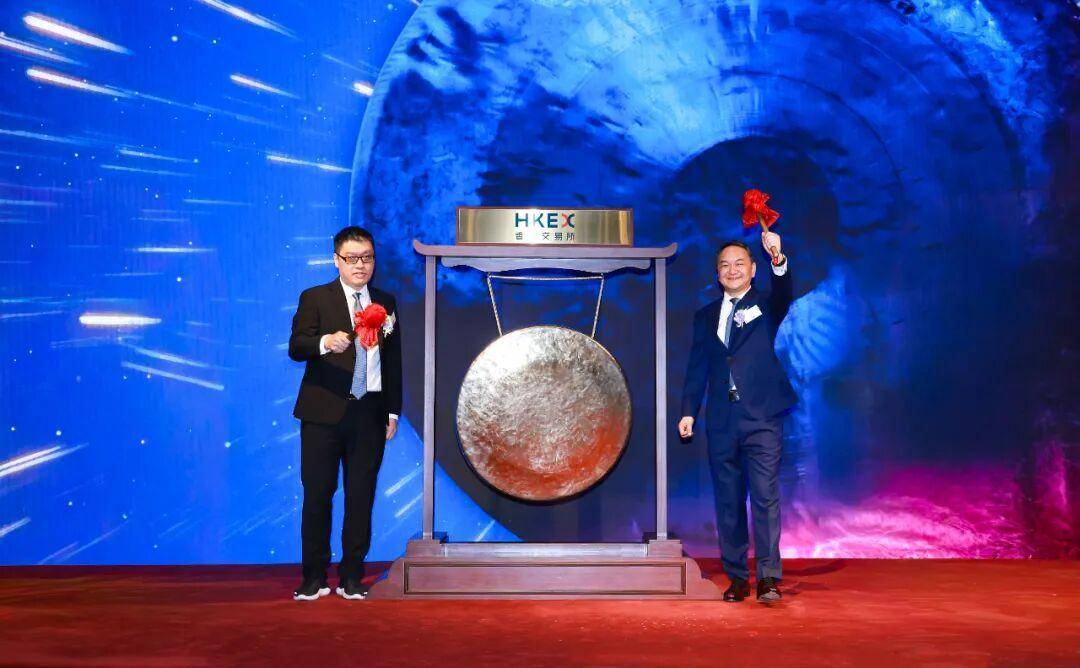
Core Insights - Pony.ai, founded in 2016, is set to go public on the Nasdaq in 2024, followed by a listing in Hong Kong, indicating a global capital strategy and accelerated commercialization in the Robotaxi industry [1] - The company raised approximately HKD 7.7 billion, setting a record for IPO financing in the autonomous driving sector since 2022 and marking the largest listing in the AI sector on the Hong Kong market this year [1] - As the electric vehicle boom slows, the automotive industry in China is shifting from manufacturing-driven to intelligence-driven, with Pony.ai's growth path reflecting this transformation [1] Industry Evolution - The Chinese automotive industry has undergone three significant transitions, with the latest being the shift towards electrification and now intelligence, redefining competition metrics from mechanical attributes to cognitive capabilities [2] - The transition is not just an energy revolution but a cognitive revolution, where vehicles evolve from mechanical devices to computational platforms, emphasizing algorithms and data over traditional metrics [2] - This shift has led to a deep restructuring of the industry, moving the focus from mechanical manufacturing to artificial intelligence, providing fertile ground for new autonomous driving companies like Pony.ai [2] Market Positioning - Pony.ai's dual listing strategy in both the US and Hong Kong reflects its ambition to establish a comprehensive capital presence [3] - The Chinese AI industry is projected to exceed CNY 900 billion in 2024, growing by 24%, with autonomous driving becoming a key strategic focus [5] - The Chinese approach to autonomous driving emphasizes engineering organization and institutional integration, contrasting with the US focus on testing, positioning China as a leader in this field [5][6] Commercialization Efforts - Pony.ai's seventh-generation Robotaxi has achieved mass production and is operational in cities like Beijing, Guangzhou, and Shenzhen, demonstrating rapid commercialization capabilities [8] - The company has reduced the overall BOM cost of its systems by approximately 70%, making the Robotaxi's production cost close to commercial viability [11] - Pony.ai's strategy includes a gradual rollout of its Robotaxi services across major cities, with expectations of reaching breakeven as fleet size increases [11] Technological Advancements - The company's technology framework integrates perception, prediction, decision-making, and control into a unified software architecture, enhancing operational stability and safety [9] - Pony.ai's internal statistics indicate that its system's accident rate is about ten times lower than that of human drivers, showcasing significant safety improvements [9] - The modular design of its systems allows for adaptability across different vehicle models, reducing development costs and increasing efficiency in testing and certification [11] Global Expansion - Pony.ai's international operations in countries like South Korea, Luxembourg, and the UAE highlight its ambition to establish a global presence, aligning with China's strategy for high-end manufacturing and AI globalization [14] - The company is not just competing on price but is leveraging technological expertise and engineering execution to build trust in various markets [14] Conclusion - Pony.ai's listing in Hong Kong signifies a pivotal moment in the evolution of China's automotive industry, showcasing a shift from manufacturing to innovation and self-definition [15] - The future of autonomous driving will hinge on organizational capability and resilience, with companies that prioritize long-term strategies and engineering authenticity likely to succeed [15]
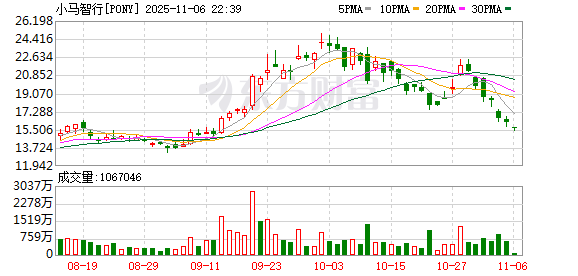
小马智行美股跌8.8%近1个月跌38% 昨港股上市首日破发
Zhong Guo Jing Ji Wang· 2025-11-07 01:49
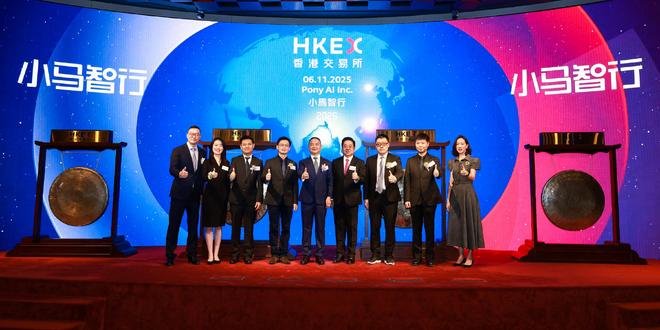
Group 1 - The core viewpoint of the article highlights the significant decline in the stock price of Pony.ai, with a drop of 8.80% to $14.82 on November 6, following a 38.40% decrease over the past month from a closing price of $24.06 on October 2 [1] - Pony.ai's Hong Kong stock debut on November 6 saw the stock open below its offering price, closing at HKD 126.10, which represents a decline of 9.28% [1] - The final offering price for Pony.ai's shares in Hong Kong was HKD 139.00, raising a total of HKD 67.07 billion, with a net amount of HKD 64.54 billion after expenses [1]
两轮加注小马智行,卓源亚洲林海卓:投资小马智行就像1996年投英伟达
IPO早知道· 2025-11-07 00:45
Core Viewpoint - Autonomous driving is expected to fundamentally reshape human social behavior paradigms, liberating the "third space" of human activity, which is currently constrained by commuting time and energy expenditure [2][6]. Group 1: Company Overview - Pony AI Inc. (stock code: 02026.HK) completed its dual listing on the Hong Kong Stock Exchange on November 6, 2025, with a total market capitalization of approximately HKD 53.9 billion [3]. - The company had previously gone public on NASDAQ under the stock code "PONY" on November 27, 2024, raising about USD 452 million through its IPO, marking the largest IPO in the autonomous driving sector that year [6]. Group 2: Investment Background - 卓源亚洲, one of the earliest investors in Pony AI, made investments in 2016 and 2021, with its founder 林海卓 having a background in computer science from Tsinghua University, similar to Pony AI's founders [4][5]. - The investment firm has also invested in various AI companies, including 中科时代, 清微智能, and others, focusing on integrated circuits and artificial intelligence [7]. Group 3: Market Perception - The perception of autonomous driving as a transformative technology is rooted in its potential to free up time for creative activities, as many individuals in first- and second-tier cities spend up to two hours commuting daily [6]. - The early discussions among the founders and investors highlighted the significance of algorithms like BFS and D* in the future of autonomous driving, indicating a strong technical foundation for the company's development [5].
美股重挫,英伟达跌超3%,市值一夜蒸发1.2万亿,小马智行跌近9%
2 1 Shi Ji Jing Ji Bao Dao· 2025-11-06 23:37
Market Overview - Major U.S. stock indices closed lower, with the Nasdaq dropping nearly 2% as several prominent tech stocks experienced declines [1] - Large-cap tech stocks fell broadly, with Nvidia down 3.65%, resulting in a market cap loss of $173.3 billion (approximately ¥12,337.92 billion) [2][3] - Tesla and Qualcomm both fell over 3%, while Oracle, Amazon, and Meta dropped more than 2% [2] - Microsoft has seen a continuous decline for seven trading days, marking its longest losing streak since 2022 [2] Chinese Stocks Performance - The Nasdaq Golden Dragon China Index saw a slight decline of 0.03%, with mixed performances among Chinese stocks [3] - Xpeng Motors rose nearly 10%, while Arctech Solar increased by nearly 7% [3] Global Market Trends - European stock markets also closed lower, with Germany's DAX and France's CAC40 indices both dropping over 1% [6] - Investors are increasingly concerned about high valuations following a strong market rally driven by AI hype and interest rate cut expectations, leading to a general market pullback [7] Commodity and Cryptocurrency Market - International oil prices showed volatility, with U.S. crude oil contracts down 0.12% and Brent crude down 0.08% [7] - The cryptocurrency market faced significant declines, with nearly 200,000 individuals experiencing liquidations totaling $563 million [8][9] Tesla's Compensation Plan - Tesla shareholders approved a compensation plan for Elon Musk potentially worth up to $1 trillion, requiring him to remain CEO for 7.5 years to earn the full stock awards [12][13] - Tesla's Q3 results showed a 12% year-over-year revenue increase, reaching a record high, but net profit fell by 37%, with an operating margin of only 5.8%, the lowest in nearly five years [13][14]



全球首个工业5G国际标准正式发布;小马智行称将于2028年或2029年实现盈利|数智早参
Mei Ri Jing Ji Xin Wen· 2025-11-06 23:11
Group 1 - The International Electrotechnical Commission (IEC) has officially released the world's first international standard for industrial 5G, titled "General Requirements for Industrial Network 5G Communication Technology," marking a significant milestone in the integration of 5G and industrial applications [1] - The standard was jointly proposed by China and Germany, with contributions from experts from the United States, France, Japan, and other countries, filling a gap in international standards for industrial 5G [1] - The release of this standard is expected to accelerate the implementation of smart manufacturing and IoT applications, promoting the digital and intelligent transformation of the global manufacturing industry, benefiting the 5G equipment and industrial internet sectors [1] Group 2 - Pony.ai's CEO announced that the company aims to achieve profitability by 2028 or 2029, with plans to operate a fleet of approximately 50,000 autonomous taxis by that time [2] - The planned fleet size indicates the potential for autonomous driving technology to reshape the transportation and logistics industries, which may alleviate investor concerns regarding the industry's cash-burning model and attract long-term capital [2] - Achieving this profitability goal will depend on multiple factors, including technological reliability, cost control, and policy support [2] Group 3 - Lixun's announcement of a strategic cooperation agreement with Zhejiang Rongtai focuses on the development of core components for industrial robots, specifically the rolling body applications of screw components [3] - This collaboration targets a critical segment of the robotics supply chain, reflecting domestic companies' efforts to overcome bottlenecks in key component areas [3] - Breakthroughs in screw technology, as a core component of precision transmission, will directly enhance the accuracy and lifespan of industrial robots, aligning with the urgent demand for high-end equipment in the manufacturing sector [3]


小马智行副总裁莫璐怡:自动驾驶出租车技术门槛非常高 不会以恶意低价方式竞争
Mei Ri Jing Ji Xin Wen· 2025-11-06 14:38
Core Viewpoint - The launch of the seventh-generation Robotaxi by the company marks a significant step in its operational strategy, aiming for single-vehicle profitability and a competitive edge in the rapidly evolving Robotaxi industry [2][4]. Group 1: Product Launch and Features - The seventh-generation Robotaxi officially commenced operations in cities like Guangzhou and Shenzhen on November 5, just before the company's listing on the Hong Kong stock exchange [2]. - The new model's autonomous driving suite has seen a 70% reduction in total costs compared to the previous generation, primarily due to significant cost reductions in computing units and LiDAR technology [3][4]. - The vehicle features improved stability and comfort, with voice interaction capabilities allowing passengers to start their journey by simply saying "start the trip" [3]. Group 2: Operational Strategy and Goals - The company plans to gradually increase the number of seventh-generation vehicles on the road, with hundreds expected to be operational by the end of the year [2][4]. - Achieving profitability at a fleet size of 1,000 vehicles is a key operational goal, with each additional vehicle expected to be self-sustaining [4][6]. - The company emphasizes that it will not engage in predatory pricing strategies, maintaining competitive pricing similar to that of Didi Chuxing, and believes that customers will pay for quality service [6]. Group 3: Industry Competition and Trends - The Robotaxi industry is anticipated to become increasingly competitive by 2025, with new players entering the market and existing companies ramping up their efforts [2][6]. - Companies like Hello and Gaode are also planning to enter the Robotaxi space, with ambitious production and deployment goals set for the coming years [4][5]. - The industry is expected to undergo another round of elimination as it matures, with the technological demands for fully autonomous Robotaxis remaining high [6].
小马智行完成美股+港股双重上市!
Sou Hu Cai Jing· 2025-11-06 14:02
Core Insights - Xiaoma Zhixing, a leading global autonomous driving company, successfully completed a dual listing on both the US Nasdaq and Hong Kong Stock Exchange, marking a significant milestone in its growth strategy [2][4][10] Company Overview - Founded in 2016 and headquartered in Nansha, Guangzhou, Xiaoma Zhixing focuses on providing autonomous driving technology and solutions for the global mobility and logistics markets [5] - The company operates in multiple cities, including Silicon Valley, Beijing, Shanghai, Guangzhou, Shenzhen, and Luxembourg, and has established a comprehensive operational system for autonomous driving services [5][12] IPO Details - The Hong Kong IPO raised approximately HKD 7.7 billion (around USD 1 billion), making it the largest IPO in the global autonomous driving sector for 2025 and the highest fundraising in the AI field on the Hong Kong market [2][9] - The IPO received strong interest from international investors, with cornerstone subscriptions reaching USD 120 million, including participation from major firms like Uber [9] Business Model and Growth - Xiaoma Zhixing's core business includes Robotaxi services, Robotruck services, and technology licensing, with a focus on operational-driven growth [12] - The company has achieved significant revenue growth, with Robotaxi revenue reaching USD 3.256 million (approximately RMB 23.32 million) in the first half of 2025, a year-on-year increase of 178.8% [12] Future Plans - Approximately 50% of the net proceeds from the IPO will be allocated to advancing the large-scale commercialization of L4 autonomous driving technology over the next five years [13] - The company plans to deploy a fleet of 1,000 seventh-generation Robotaxi vehicles in major cities by 2025-2026, enhancing its operational capabilities [15] Global Expansion - Xiaoma Zhixing is actively pursuing global expansion, conducting autonomous driving tests in six countries, including South Korea, Luxembourg, and the UAE [17] - The company aims to achieve full commercial operation of Robotaxi services in Dubai by 2026 and has received national testing permits in South Korea [17] Industry Context - The global mobility market is projected to reach approximately USD 4.5 trillion by 2025, with Robotaxi services expected to become commercially viable around 2026 [17] - The competitive landscape is shifting from technology validation to scaling operations, where Xiaoma Zhixing holds a significant first-mover advantage due to its extensive operational experience and international strategy [17]
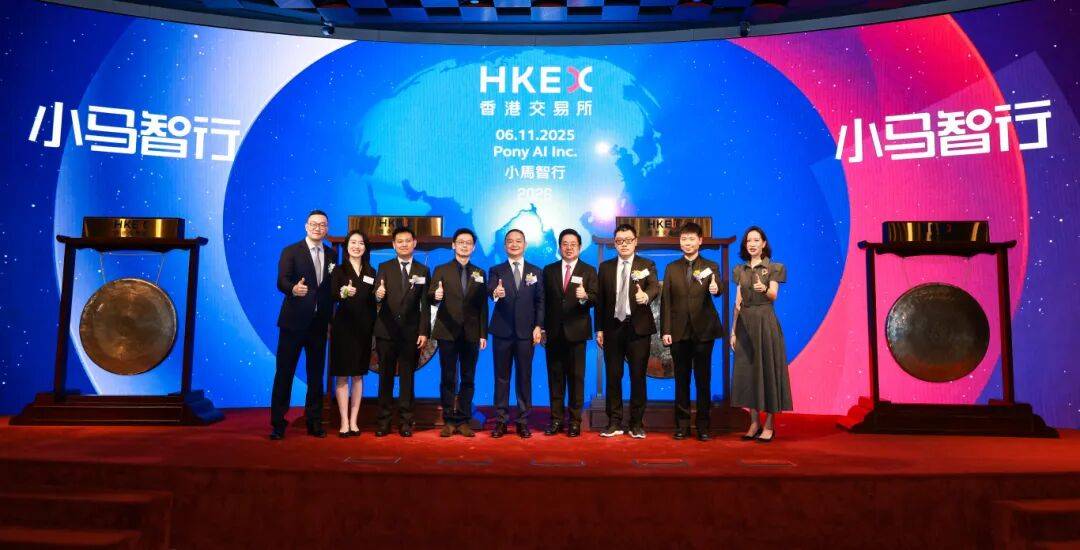
祝贺小马智行港交所成功上市
Sou Hu Cai Jing· 2025-11-06 14:02
Core Insights - Pony.ai officially listed on the Hong Kong Stock Exchange on November 6, 2025, under stock code 2026, marking the largest IPO in the global autonomous driving sector for 2025 and the highest fundraising in the AI field on the Hong Kong market for the year [1] - The company has successfully established a dual primary listing structure with its previous listing on NASDAQ under the stock code "PONY" in November 2024, becoming the first global Robotaxi stock [1][3] Company Overview - Founded in 2016, Pony.ai focuses on providing autonomous driving technology and solutions for the global transportation and logistics sectors, with core business segments including Robotaxi services, Robotruck services, and technology licensing [5] - Pony.ai is the only autonomous driving technology company that has obtained all necessary regulatory permits to provide public autonomous driving services in four major Chinese cities [5] Technological Advancements - In April 2025, Pony.ai launched three seventh-generation Robotaxi models developed in collaboration with Toyota, BAIC Group, and GAC Group, achieving significant cost efficiency improvements: a 70% reduction in the production material cost of the autonomous driving kit, an 80% reduction in the cost of the autonomous driving computing unit, and a 68% reduction in the cost of solid-state LiDAR [5] Strategic Expansion - Pony.ai is actively expanding its global footprint, seeking opportunities in key growth markets such as Europe, East Asia, and the Middle East, and aims to build a strong localized cooperation ecosystem with local governments, industry leaders, and technology innovators [6] - The dual primary listing represents a critical step in the company's capital strategy and a firm commitment to future development, leveraging its technological advantages and experience in fully autonomous operations to accelerate the large-scale commercialization of autonomous driving [6]