PING AN OF CHINA(02318)

Search documents
智通港股通持股解析|10月9日
智通财经网· 2025-10-09 00:32
Core Insights - The top three companies by Hong Kong Stock Connect holding ratios are Green Power Environmental (70.12%), China Telecom (69.73%), and COSCO Shipping Energy (69.52%) [1][2] - Alibaba-W, Tracker Fund of Hong Kong, and Tencent Holdings saw the largest increases in holding amounts over the last five trading days, with increases of +36.52 billion, +14.31 billion, and +11.54 billion respectively [1][2] - The largest decreases in holding amounts were observed in China Mobile (-6.21 billion), China Telecom (-3.50 billion), and China Construction Bank (-3.35 billion) [1][3] Group 1: Hong Kong Stock Connect Holding Ratios - Green Power Environmental (01330) has a holding ratio of 70.12% with 284 million shares [2] - China Telecom (00728) has a holding ratio of 69.73% with 9.678 billion shares [2] - COSCO Shipping Energy (01138) has a holding ratio of 69.52% with 901 million shares [2] Group 2: Recent Increases in Holdings - Alibaba-W (09988) increased by +36.52 billion with a change of +20.56 million shares [2] - Tracker Fund of Hong Kong (02800) increased by +14.31 billion with a change of +52.11 million shares [2] - Tencent Holdings (00700) increased by +11.54 billion with a change of +1.71 million shares [2] Group 3: Recent Decreases in Holdings - China Mobile (00941) decreased by -6.21 billion with a change of -7.46 million shares [3] - China Telecom (00728) decreased by -3.50 billion with a change of -66.46 million shares [3] - China Construction Bank (00939) decreased by -3.35 billion with a change of -45.96 million shares [3]




平安斥2.38亿港元再次增持农业银行
Shen Zhen Shang Bao· 2025-10-08 22:34
本次增持后,中国平安在农业银行H股的持股数增至58.48亿股,持股比例由18.87%上升至19.02%。值 得关注的是,此前,平安人寿已在今年内3次举牌农业银行H股。 据港交所披露易的消息显示,早在今年2月17日,平安人寿便首次举牌农业银行H股,彼时平安人寿增 持农业银行的金额为64.63亿元,所持农业银行H股数量达到该行H股股本的5%。 【深圳商报讯】(首席记者 谢惠茜)近日,据联交所最新权益披露资料显示,中国平安保险(集团) 股份有限公司(以下简称"中国平安")于9月26日在场内以每股均价5.149港元增持农业银行4625.4万H 股,涉资约2.38亿港元。 在今年2月17日至8月26日期间,平安人寿合计增持近31.26亿股农行H股。以区间成交均价计,其间合计 耗资近156亿港元。 9月2日,平安人寿发布公告称,平安资管受托平安人寿资金,投资于农业银行H股股票,于2025年8月 26日达到农业银行H股股本的15%。 5月12日,平安人寿又耗资7.1亿港元,增持农业银行H股,持股占比突破该行H股数量总数的10%。 ...


钱从“楼”中来:险资加码收租型资产
Zhong Guo Zheng Quan Bao· 2025-10-08 20:46
Core Insights - The article discusses the increasing involvement of insurance capital in the commercial real estate sector, particularly in REITs and rental housing projects, highlighting a strategic shift towards stable income-generating assets [1][2][3][4][5][6][7] - Insurance companies are focusing on high-quality, stable rental properties as they seek to balance cost and returns amid a challenging interest rate environment [1][2][6][7] Investment Trends - Insurance capital is increasingly investing in commercial real estate, including shopping centers and office buildings, with a notable example being the strategic allocation by Caixin Life in the Huaxia Kaide Commercial REIT, amounting to approximately 50 million yuan [1][2] - The investment strategy has shifted from non-standard private equity products to standardized products like public REITs and ABS, indicating a broader diversification in investment types [2][5] Market Dynamics - The rental housing market is emerging as a new focal point for insurance capital, with significant investments in long-term rental housing projects in major cities like Beijing and Shanghai [4][5][6] - The demand for stable cash flow assets is heightened due to declining yields on fixed-income investments, prompting insurance companies to explore high-yield rental properties [6][7] Performance Metrics - The occupancy rates of key assets are critical, with the Changsha Kaide Plaza reporting an occupancy rate of approximately 97%, showcasing the attractiveness of well-leased properties [1] - The rental yield for commercial properties in first-tier cities is reported to be between 5.5% and 6.5%, which is favorable compared to the yields on 10-year government bonds, enhancing the appeal of commercial real estate investments [7] Regulatory Environment - Recent regulatory support from financial authorities encourages insurance capital to invest in rental housing projects, facilitating a more structured approach to funding and investment [5][6] - The establishment of a closed-loop system for fundraising, investment, management, and exit strategies is becoming more defined, addressing concerns about liquidity and investment returns for insurance companies [5][6]


高盛最新增持股票名单曝光:联想、华虹半导体等位列其中




Ge Long Hui· 2025-10-08 10:12
Core Viewpoint - Goldman Sachs released its October Asia-Pacific strategy report, highlighting a list of recommended stocks based on the "earnings revision leading indicator" criterion, focusing on Hong Kong and Chinese concept stocks [1] Group 1: Recommended Stocks - Tencent (00700.HK) is included in the list of recommended stocks [1] - Alibaba-W (09988.HK) is also featured as a buy recommendation [1] - Xiaomi-W (01810.HK) is highlighted as a potential investment opportunity [1] - AIA Group (01299.HK) is part of the recommended stocks [1] - Pinduoduo (PDD.US) is listed among the buy stocks [1] - Hong Kong Exchanges and Clearing (00388.HK) is included in the recommendations [1] - Ping An Insurance (02318.HK) is mentioned as a buy [1] - Kuaishou-W (01024.HK) is part of the recommended list [1] - Techtronic Industries (00669.HK) is highlighted as a potential investment [1] - China Pacific Insurance (02328.HK) is included in the buy recommendations [1] - Lenovo Group (00992.HK) is featured in the list [1] - ZTO Express-W (02057.HK) is also recommended [1] - Hua Hong Semiconductor (01347.HK) is part of the buy list [1] - Kingdee International (00268.HK) is included in the recommendations [1] - GDS Holdings Limited-SW (09698.HK) is highlighted as a potential investment [1] - AAC Technologies (02018.HK) is part of the recommended stocks [1] - BYD Electronic (00285.HK) is included in the buy recommendations [1] - China International Capital Corporation (03908.HK) is featured in the list [1] - Weichai Power (02338.HK) is mentioned as a buy [1] - CRRC Corporation (01766.HK) is included in the recommendations [1] - JD Logistics (02618.HK) is part of the recommended stocks [1] - Swire Pacific A (00019.HK) is highlighted as a potential investment [1] - Miniso Group (09896.HK) is included in the buy recommendations [1] - Times Electric (03898.HK) is part of the recommended list [1] - Haitian International (01882.HK) is also featured in the recommendations [1]
港股8日跌0.48% 收报26829.46点
Xin Hua Wang· 2025-10-08 09:11
Market Performance - The Hang Seng Index fell by 128.31 points, a decrease of 0.48%, closing at 26,829.46 points [1] - The National Enterprises Index dropped by 49.51 points, closing at 9,523.87 points, a decline of 0.52% [1] - The Hang Seng Tech Index decreased by 36.11 points, closing at 6,514.19 points, down by 0.55% [1] Blue Chip Stocks - Tencent Holdings decreased by 0.37%, closing at 675 HKD [1] - Hong Kong Exchanges and Clearing fell by 0.76%, closing at 445 HKD [1] - China Mobile dropped by 0.78%, closing at 83.2 HKD [1] - HSBC Holdings declined by 0.27%, closing at 110.6 HKD [1] Local Hong Kong Stocks - Cheung Kong Holdings increased by 1.39%, closing at 37.96 HKD [1] - Sun Hung Kai Properties rose by 1.23%, closing at 94.35 HKD [1] - Henderson Land Development fell by 0.22%, closing at 27.1 HKD [1] Chinese Financial Stocks - Bank of China decreased by 0.95%, closing at 4.16 HKD [1] - China Construction Bank fell by 0.14%, closing at 7.28 HKD [1] - Industrial and Commercial Bank of China dropped by 1.06%, closing at 5.6 HKD [1] - Ping An Insurance decreased by 0.94%, closing at 52.75 HKD [1] - China Life Insurance fell by 0.37%, closing at 21.78 HKD [1] Oil and Petrochemical Stocks - China Petroleum & Chemical Corporation remained unchanged, closing at 4.08 HKD [1] - China National Petroleum Corporation increased by 0.42%, closing at 7.15 HKD [1] - CNOOC Limited fell by 1.39%, closing at 18.5 HKD [1]





平安好医生:委任郭晓涛为董事会主席、何明科为首席执行官
Zhong Guo Zheng Quan Bao· 2025-10-08 08:44
Group 1 - The board of Ping An Good Doctor appointed Guo Xiaotao as the chairman and He Mingke as the CEO, following the resignation of Li Dou due to personal work arrangements [1] - Guo Xiaotao, aged 53, has extensive experience in the financial and insurance sectors, having served as a partner at Boston Consulting Group and held various executive roles at Ping An [1] - He Mingke, aged 46, has a diverse background in finance, internet, and healthcare, previously holding senior positions at companies like 58.com and Baidu [1] Group 2 - Ping An Good Doctor aims to implement a dual-driven strategy of "comprehensive finance + healthcare for the elderly," enhancing the "medical insurance collaboration" model [2] - The company plans to strengthen the core hub construction of family doctors and elderly care managers, leveraging medical AI to provide efficient services that save time and money for users [2] - The focus is on creating sustainable long-term value for shareholders and society through improved user experience and operational efficiency [2]
高盛10月买入名单出炉:腾讯、联想、华虹半导体等24只个股在列
智通财经网· 2025-10-08 08:31
Core Viewpoint - Goldman Sachs released its October Asia-Pacific strategy report, highlighting a list of recommended stocks based on the "Earnings Revisions Leading Indicator" criteria, focusing on Hong Kong and Chinese concept stocks [1] Group 1: Recommended Stocks - The report includes a list of stocks recommended for purchase, which are: - Tencent (00700.HK) - Alibaba-W (09988.HK) - Xiaomi-W (01810.HK) - AIA (01299.HK) - Pinduoduo (PDD.US) - Hong Kong Exchanges and Clearing (00388.HK) - Ping An Insurance (02318.HK) - Kuaishou-W (01024.HK) - Techtronic Industries (00669.HK) - China Pacific Insurance (02328.HK) - Lenovo Group (00992.HK) - ZTO Express-W (02057.HK) - Hua Hong Semiconductor (01347.HK) - Kingdee International (00268.HK) - GDS Holdings-SW (09698.HK) - AAC Technologies (02018.HK) - BYD Electronic (00285.HK) - China International Capital Corporation (03908.HK) - Weichai Power (02338.HK) - CRRC Corporation (01766.HK) - JD Logistics (02618.HK) - Swire Pacific A (00019.HK) - Miniso Group (09896.HK) - Times Electric (03898.HK) - Haitian International (01882.HK) [1]
平安产险莆田中心支公司:“移动照相馆”开进乡间小院 守护金婚“圆”满中秋
Zhong Jin Zai Xian· 2025-10-08 03:19
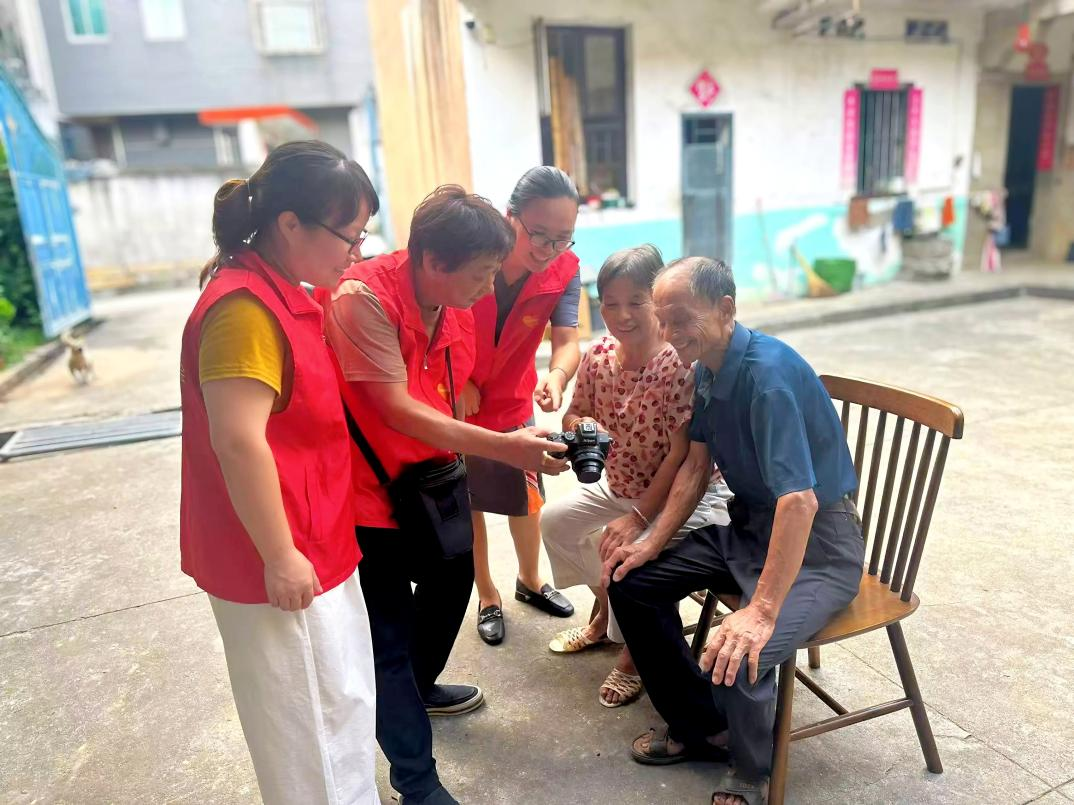
Core Viewpoint - The article highlights a heartwarming initiative by Ping An Property & Casualty Insurance, where volunteers organized a photography event for elderly couples to commemorate their long-lasting love during the Mid-Autumn Festival, emphasizing the importance of capturing memories and emotional connections in later life [1][3][5]. Group 1 - The event took place in a quiet courtyard in Putian's Xiuyu District, where a couple celebrated their 50th Mid-Autumn Festival together, marking a significant milestone in their marriage [1]. - Volunteers from Ping An Property & Casualty brought professional photography equipment to capture the couple's joyful moments, creating lasting memories for them [3]. - The elderly couple expressed gratitude for the opportunity to have their love story documented, reflecting on their past and the simplicity of their earlier life [3]. Group 2 - The initiative aims to address the emotional needs of elderly individuals who may not have had the chance to celebrate significant anniversaries with professional photographs [5]. - Ping An Property & Casualty plans to continue its community service efforts, focusing on various forms of public welfare activities that cater to the emotional needs of special groups, particularly the elderly [5].

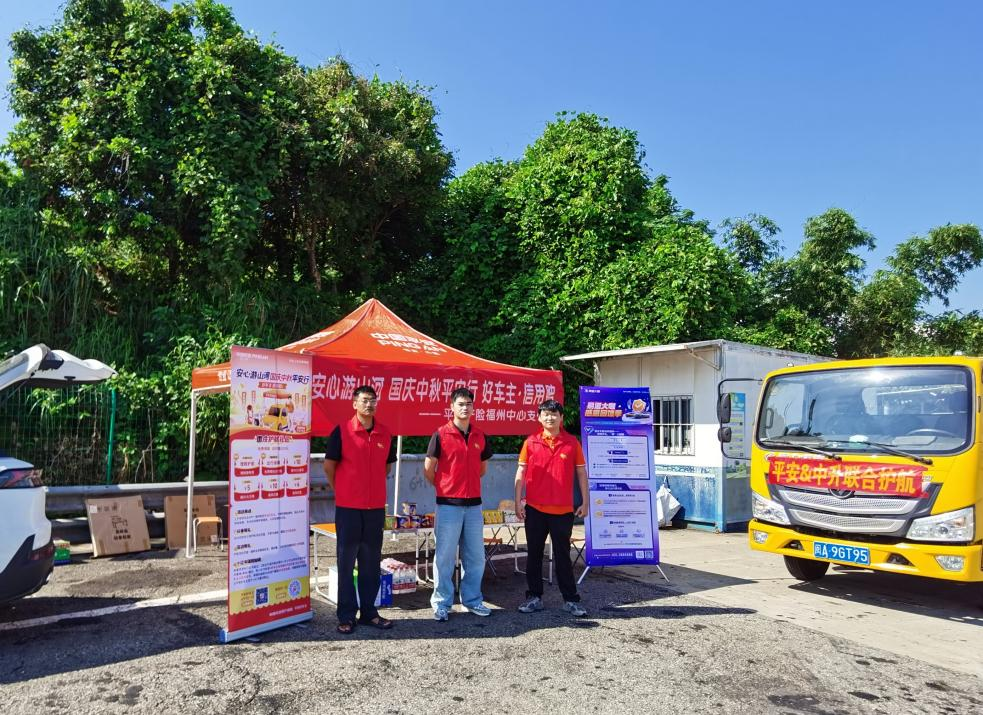
平安护航十五载 温馨守护每一程 ——平安产险福建分公司启动2025年国庆中秋护航行动
Zhong Jin Zai Xian· 2025-10-08 03:13
Core Viewpoint - The company has launched the "Safe Travel for National Day and Mid-Autumn Festival" initiative, emphasizing a service philosophy of "worry-free, time-saving, and cost-effective" to enhance travel experiences for car owners during the holiday season [1][18]. Service Upgrades - The company has upgraded its "three major claims services" and "six vehicle services" to transition from "passive claims" to "proactive protection" [4]. - The "three major claims services" include: - "Credit Compensation" for clients with three consecutive years without claims, allowing immediate compensation without waiting for on-site investigation [4]. - "Comprehensive Injury Handling" that covers all aspects from accident prevention to medical treatment, alleviating financial pressure on accident victims [4]. - "Repair Quality Guarantee" ensuring quality service at over 20,000 selected repair shops [4]. - The "six vehicle services" offer 24/7 roadside assistance, priority for ride-hailing during peak hours, home vehicle inspection services, compensation for charging issues, discounts at gas stations, and free car washes if not cleaned properly [4]. Community Support - During the holiday period, the company has set up 11 offline service points at key highway exits and tourist areas to provide essential services such as tire inflation, jump-starts, and emergency supplies [6]. - The service points are staffed with professional teams to ensure a warm and supportive travel experience for car owners [6]. Claims Processing - A "green claims channel" has been established to enhance online claims processing during the holiday, aiming to minimize customer wait times and ensure prompt compensation [8]. - The company has deepened its collaboration with local traffic police to facilitate quick resolution of minor accidents, ensuring smooth travel for clients [10]. Digital Services - The company has launched a "National Day Travel Season - Safety Support" page on its app, allowing users to access exclusive benefits such as rental discounts and roadside assistance [16]. - Users can view nearby service points and their offerings in real-time, enhancing the convenience of travel services [16]. Commitment to Service - Since 2011, the company has conducted public service actions during major holidays for 15 consecutive years, serving over 100,000 car owners [18]. - The company emphasizes that customer experience remains the core focus of its operations and plans to continue leveraging technology for improved service delivery [18].
“苏超”狂飙:一场草根足球的逆袭史诗,“十三太保”背后竟藏着4万
Xin Lang Cai Jing· 2025-10-08 00:36
Core Insights - The "Su Super" amateur football league in Jiangsu has gained significant attention and sponsorship, showcasing the region's economic vitality and cultural pride [1][9][11] Sponsorship and Economic Impact - The league attracted major sponsors, including Heineken, and has a total of 19 sponsors, with 15 being publicly listed companies, representing a combined market value exceeding 4 trillion yuan [7][9] - Jiangsu's 13 cities, each with a GDP over 400 billion yuan, are projected to become the first province in China with an average GDP exceeding 1 trillion yuan per city by 2024 [7][9] - Notable sponsorships include Jiangsu Bank's 8 million yuan title sponsorship, which is viewed as a strategic investment rather than mere sponsorship [7] City Representation and Team Highlights - Each city in the league showcases its unique identity and pride, with teams like Nanjing leveraging strong local corporate support, while Suzhou operates with a more understated approach [3][5] - The South Jiangsu team has received significant insurance coverage from China Ping An, amounting to 44.6 million yuan, reflecting corporate alignment with local spirit [5] - The league has become a platform for local brands to connect with community sentiments, as seen with Yanghe's branding efforts in Suqian [5][9] Cultural and Social Significance - The "Su Super" league represents a cultural awakening and a collective expression of regional identity, moving beyond just sports to embody local pride and community engagement [9][11] - The league's popularity has sparked a sense of unity among the cities, with fans expressing a strong local identity and competitive spirit [9][11]