PING AN OF CHINA(02318)

Search documents
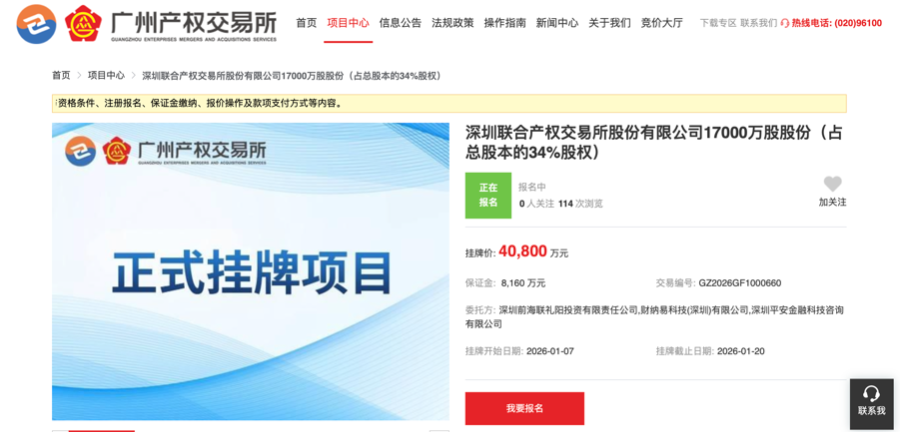
持股超10年 “平安系”4亿出售深圳联交所34%股权
2 1 Shi Ji Jing Ji Bao Dao· 2026-01-14 07:19
Core Viewpoint - China Ping An is selling a 34% stake in Shenzhen United Property Exchange for 408 million yuan after holding the shares for over ten years, indicating a routine financial investment arrangement [1][3]. Group 1: Share Transfer Details - The stake being sold consists of 170 million shares, representing 34% of the total equity of Shenzhen United Property Exchange [1]. - The selling entities are all part of the "Ping An system," including Fintech Consulting, Qianhai Lianliang Investment, and Fintech Technology, with ownership stakes of 15%, 10%, and 9% respectively [3]. - The shares were initially acquired between December 2013 and December 2015, indicating a long-term investment horizon [3]. Group 2: Qualification for Buyers - Potential buyers must meet specific criteria, including being a legally registered entity in China with a net asset of at least 10 million yuan and a clean legal record over the past three years [4]. - The transfer will not change the actual control of Shenzhen United Property Exchange, which remains under the influence of state-owned enterprises [4]. Group 3: Company Financials - As of November 30, 2025, Shenzhen United Property Exchange reported revenues of 142 million yuan, total profits of 76.89 million yuan, and net profits of 61.77 million yuan, with total assets of 3.376 billion yuan and total liabilities of 2.278 billion yuan [6].


一场跨越万里的救援
Jin Rong Shi Bao· 2026-01-14 02:37
"我摔伤了……想回家。" 日前,一通从瑞士打来的援助电话,打破了中国平安服务网络的日常运转。电话那头,是因疼痛与 无助导致声音微微颤抖的陈女士。一场跨越万里、争分夺秒的守护行动,自此迅速展开。 这场本应充满欢笑的瑞士之旅,在2025年12月4日骤然改变。陈女士因路滑不慎摔倒,致左脚骨 折。剧痛之外,语言障碍与陌生的就医流程,更让身处异国他乡的陈女士倍感焦虑,于是她拨通了一串 并不熟悉的号码——平安24小时全球急难援助热线。 责任编辑:袁浩 从意外发生时的茫然无助,到最终安然归国接受治疗,陈女士的感慨真挚而朴素:"在异国他乡意 外受伤,语言还不通,心里特别着急。没想到仅仅是一个求助电话,平安就派来了专业的守护团队,不 仅关心我的伤势,更如同家人般陪伴全程,令我非常感动。" 此次万里救援是中国平安庞大应急救援网络与专业服务能力的一个缩影。面对全球范围内客户突发 的急难险重事件,中国平安的响应机制总能快速激活。 美国时间2025年5月1日晚,美国黄石国家公园附近发生重大交通事故,造成中国公民5死8伤。中国 平安启动紧急预案,在72小时内完成跨越太平洋的急救协调,协助遇险客户医疗救治与平安返程。2025 年7月30日 ...

2026年险资举牌热度能否延续?
Jin Rong Shi Bao· 2026-01-14 02:37
Core Viewpoint - In 2025, insurance capital's shareholding activities reached a record high of 35 times, driven by regulatory encouragement, the pursuit of higher returns in a low-interest environment, and new accounting standards that help smooth profit fluctuations [1][4]. Group 1: Characteristics of Insurance Capital Shareholding - The number of shareholding activities by insurance capital in 2025 significantly exceeded the average level of recent years, marking the most active year since 2015 [2]. - A total of 14 insurance institutions participated in shareholding activities, including major listed insurance companies, bank-affiliated insurers, and Sino-foreign joint ventures, with Ping An Life being the most active, conducting 12 shareholdings [2]. - Approximately 80% of the shareholding activities were executed through the Hong Kong Stock Connect or continuous purchases in the secondary market, with other methods including agreement transfers and passive shareholding due to mergers [2]. Group 2: Strategic Logic Behind Shareholding - Insurance capital's shareholding activities were not random but followed a clear strategic logic, with a preference for the financial sector, which saw 15 shareholdings involving six banks and two insurance institutions [3]. - Other favored sectors included public utilities, transportation, and environmental protection, indicating a focus on stable, cash-generating industries [3]. - The core demand of insurance capital is for long-term, stable returns, leading to an increased allocation to equity assets as traditional fixed-income returns fail to cover liability costs [3]. Group 3: Factors Driving Shareholding Activities - Regulatory policies have encouraged long-term capital to enter the market, with measures such as increasing the investment limit for insurance companies in equity assets to 50% [4]. - Insurance institutions are responding to downward pressure on interest rates by increasing their allocation to equity assets to enhance long-term investment returns [4]. - New accounting standards impose higher requirements for asset-liability matching, allowing insurance companies to reduce the impact of market value fluctuations on current profits through shareholding [5][6]. Group 4: Future Outlook for Insurance Capital Shareholding - There is optimism that insurance capital will continue to increase equity asset allocations in 2026, with expectations of maintaining high shareholding activity levels [8]. - Analysts suggest that insurance capital's shareholding motivations will focus on stable dividend cash flows and high return on equity (ROE) targets, particularly in sectors aligned with national strategic directions such as high-end manufacturing and technological innovation [8].
开年“瘦身”步履不停 险企渠道转型聚焦精细化服务
Jin Rong Shi Bao· 2026-01-14 02:37
Core Viewpoint - The insurance industry is undergoing a significant transformation characterized by the continuous withdrawal of branch offices, reflecting a shift from extensive expansion to a focus on value and efficiency [5][6]. Group 1: Branch Withdrawals - In early 2026, multiple insurance companies, including China Life and Sunshine Insurance, have received approval to withdraw branch offices, continuing a trend observed in recent years [1]. - Over the past six years, more than 13,000 branch offices have been closed, with the number of withdrawals increasing from 971 in 2020 to over 3,100 in 2025, marking a new high [2]. - The majority of the withdrawn branches are located in third and fourth-tier cities, with over 70% of the closures in 2025 being marketing service departments [2][3]. Group 2: Factors Driving Closures - The closures are driven by three main factors: regulatory policies, changing market conditions, and technological advancements [4]. - Regulatory bodies have pushed for the elimination of "empty" and "inefficient" branches, particularly following the implementation of the "reporting and operation integration" policy [4]. - The competitive insurance market and rising operational costs have made it essential for companies to optimize branch structures and eliminate low-efficiency outlets [4]. Group 3: Industry Transformation - The ongoing withdrawal of branch offices is seen as a necessary process for the industry to abandon extensive expansion and reconstruct channel value [5]. - The industry is at a critical juncture, focusing on high-quality transformation while addressing challenges such as customer service continuity and talent retention [7]. - Companies are shifting from a traditional sales model to a service-oriented approach, integrating insurance products with health management and other value-added services to enhance customer loyalty [8]. Group 4: Future Outlook - The future of insurance branch offices will not be a complete replacement by online channels but rather a transformation of their functions to enhance customer experience and provide specialized services [8]. - The new channel structure will consist of comprehensive service points in major cities, grid-based service units in lower-tier markets, and a blend of online and offline services [8].

港股保险股盘初走低
Mei Ri Jing Ji Xin Wen· 2026-01-14 02:04
Group 1 - Hong Kong insurance stocks opened lower on January 14, with China Life and China Taiping both dropping over 2% [1] - Other stocks such as New China Life and Ping An also experienced declines [1]

智通港股沽空统计|1月14日
智通财经网· 2026-01-14 00:38
Group 1 - Anta Sports (82020), Lenovo Group (80992), and Kuaishou (81024) have the highest short-selling ratios at 100.00%, 78.04%, and 71.83% respectively [1][2] - Alibaba (09988), Tencent Holdings (00700), and Xiaomi Group (01810) lead in short-selling amounts, with 2.968 billion, 1.700 billion, and 1.588 billion respectively [1][2] - China National Building Material (03323), Jiangsu Nanjing Highway (00177), and China Liansu (02128) have the highest deviation values at 33.68%, 31.58%, and 22.77% respectively [1][2] Group 2 - The top short-selling stocks by amount include Alibaba (09988) at 2.968 billion, Tencent Holdings (00700) at 1.700 billion, and Xiaomi Group (01810) at 1.588 billion [2] - The top short-selling ratios are led by Anta Sports (82020) at 100.00%, followed by Lenovo Group (80992) at 78.04%, and Kuaishou (81024) at 71.83% [2] - The highest deviation values are recorded for China National Building Material (03323) at 33.68%, Jiangsu Nanjing Highway (00177) at 31.58%, and China Liansu (02128) at 22.77% [2][3]



多家险企发布2025年理赔年报 中国人寿赔付金额超千亿元
Zheng Quan Ri Bao· 2026-01-13 17:12
Core Insights - The insurance industry is showcasing its claims service reports for 2025, highlighting the effectiveness of service and the current gaps in critical illness coverage for consumers [2] Claims Efficiency and Timeliness - China Life Insurance Company reported over 62.24 million claims in 2025, a 7% increase year-on-year, with total claims amounting to over 100.4 billion yuan, up 10% [3] - Other insurers also reported significant claims, with Ping An Life processing 4.958 million claims totaling 41.51 billion yuan, and Xinhua Insurance handling 5.01 million claims amounting to 14.7 billion yuan [3] - The digital transformation in the insurance sector has significantly improved claims efficiency, with China Life's "Digital Guo Life" strategy enabling 8.17 million direct claims payments totaling over 4.3 billion yuan [4] Medical Insurance Claims Dominance - Medical insurance claims are increasingly dominating the claims structure, with Ping An Life reporting that 92% of claims were for medical insurance, while critical illness insurance accounted for only 5% [5] - Despite the high volume of claims, there remains a significant gap in critical illness coverage, with 80% of claims being under 100,000 yuan, indicating insufficient coverage for actual treatment costs [5] Market Dynamics and Recommendations - The rapid growth of medical insurance, due to its affordability and high leverage, is causing a diversion from the critical illness insurance market, which may slow down growth and lead to customer segmentation [6] - Experts suggest that consumers should utilize medical insurance to cover high medical expenses while relying on critical illness insurance for income loss compensation, emphasizing the complementary nature of both products [6]


多家险企发布2025年理赔年报中国人寿赔付金额超千亿元
Zheng Quan Ri Bao· 2026-01-13 16:51
Core Insights - The insurance industry is revealing its 2025 claims service annual reports, highlighting the effectiveness of service and the current structure of insurance products, indicating a significant gap in critical illness coverage for consumers [1] Claims Efficiency and Timeliness - China Life Insurance Company reported over 62.24 million claims in 2025, a 7% increase year-on-year, with total claims amounting to over 100.4 billion yuan, up 10% [2] - Other insurers also reported substantial claims, with Ping An Life at 4.958 million claims totaling 41.51 billion yuan, and Xinhua Insurance at 5.01 million claims totaling 14.7 billion yuan [2] Notable Claims Stories - A case from Ping An Life illustrates the proactive service approach, where a client initially claimed 5,000 yuan but ultimately received over 5.51 million yuan due to the insurer's initiative in identifying additional coverage [3] - The digital transformation in the insurance sector has significantly improved claims processing efficiency, with China Life's "Digital Guo Life" strategy facilitating 8.17 million direct claims payments totaling over 4.3 billion yuan [3] Medical Insurance Claims Analysis - Medical insurance claims are increasingly dominating the claims structure, with Ping An Life reporting that 92% of claims were for medical insurance, while critical illness claims accounted for only 5% [4] - Despite the high volume of claims, there remains a notable gap in critical illness coverage, with 80% of claims being under 100,000 yuan, indicating insufficient coverage for actual treatment costs [4] Market Dynamics and Recommendations - The rapid growth of medical insurance, due to its affordability and high leverage, is causing a diversion from the critical illness insurance market, particularly affecting budget-conscious consumers [5] - Experts suggest that consumers should utilize medical insurance for high medical expenses while relying on critical illness insurance for income loss compensation, emphasizing the complementary nature of both products [5]
中国平安:截至2025年9月30日股东总数为696248户
Zheng Quan Ri Bao· 2026-01-13 13:13
(文章来源:证券日报) 证券日报网讯 1月13日,中国平安在互动平台回答投资者提问时表示,根据公司发布的2025年第三季度 报告,截至2025年9月30日,公司股东总数共计696248户。 ...
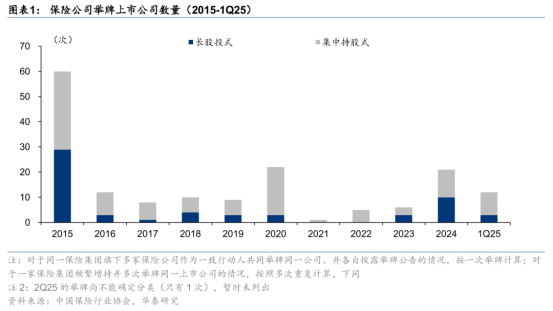
险资新年第一举!太保举牌上海机场,去年险资41次举牌创十年新高
Di Yi Cai Jing· 2026-01-13 12:38
Core Viewpoint - The trend of insurance capital "shareholding" is expected to continue into 2026, driven by the focus on high dividend stocks and the need for long-term equity investments to enhance return on equity (ROE) [2][18]. Group 1: Recent Trends in Insurance Capital Shareholding - In 2025, insurance capital shareholding reached 41 instances, a significant increase from 20 in 2024, marking a new high in the past decade [2][3]. - The current wave of shareholding differs from the past, as it is influenced by a low interest rate environment and the need for stable cash returns through high dividend stocks [5][14]. - Analysts indicate that the demand for high dividend and high ROE stocks will persist, suggesting that the shareholding trend will continue [18]. Group 2: Characteristics of the Current Shareholding Wave - The shareholding activities are more diversified compared to previous years, with "Ping An" leading with 15 instances, primarily targeting bank and insurance stocks [11][12]. - Bank stocks were the most favored, being targeted 17 times, accounting for 41.5% of total shareholding instances in 2025 [13][14]. - The average dividend yield of the targeted companies was approximately 5.0%, higher than previous waves, indicating a preference for high-yield investments [15]. Group 3: Investment Strategies and Regulatory Environment - The new accounting standards implemented in 2023 require insurance companies to choose between FVTPL and FVOCI for stock investments, influencing their investment strategies [6][7]. - The regulatory environment has encouraged long-term capital market participation, enhancing the attractiveness of shareholding for insurance companies [7][18]. - The investment strategy includes a focus on high ROE assets, particularly state-owned enterprises with stable business models, to improve the overall ROE of insurance capital [17].