
China Resources Beverage (Holdings) Company(02460)

Search documents
华润饮料(02460) - 截至二零二六年一月三十一日止月份之股份发行人的证券变动月报表
2026-02-05 08:30
股份發行人及根據《上市規則》第十九B章上市的香港預託證券發行人的證券變動月報表 截至月份: 2026年1月31日 狀態: 新提交 致:香港交易及結算所有限公司 公司名稱: 華潤飲料(控股)有限公司 呈交日期: 2026年2月5日 I. 法定/註冊股本變動 | 1. 股份分類 | 普通股 | 股份類別 | 不適用 | | 於香港聯交所上市 (註1) | | | 是 | | | --- | --- | --- | --- | --- | --- | --- | --- | --- | --- | | 證券代號 (如上市) | 02460 | 說明 | | | | | | | | | | | 法定/註冊股份數目 | | | 面值 | | | 法定/註冊股本 | | | 上月底結存 | | | 100,000,000,000 | USD | | 0.0000005 | USD | | 50,000 | | 增加 / 減少 (-) | | | | | | | USD | | | | 本月底結存 | | | 100,000,000,000 | USD | | 0.0000005 | USD | | 50,000 | 本月 ...
港股评级汇总:交银国际维持安踏体育买入评级
Xin Lang Cai Jing· 2026-01-28 07:16
Group 1 - CMB International maintains a "Buy" rating for Anta Sports with a target price of HKD 108.70, noting a low single-digit decline in Q4 revenue for the Anta brand, while FILA and other brands show resilience with a growth of 35%-40% [1] - CMB International also maintains a "Buy" rating for China Resources Beverage with a target price of HKD 11.87, indicating that 2025 will be a year of pressure release, with stable market share in packaged water and potential improvements in sales incentives [1] Group 2 - CMB International maintains a "Buy" rating for Hutchison China MediTech, highlighting the significant superiority of Savolitinib combination therapy over chemotherapy in MET amplified NSCLC, with global sales peak potential exceeding USD 1.8 billion [2] - CMB International maintains a "Buy" rating for China Resources Power with a target price of HKD 21.05, projecting a 6.7% increase in core profit for 2025, with a 9.8% decrease in thermal coal fuel costs partially offsetting coal price rebounds [3] Group 3 - CITIC Securities maintains a "Buy" rating for Geek+, setting a target price of HKD 53.00, with a significant upward revision of order growth from 30% to 40% for 2026, and successful penetration into North American key accounts [4] - CITIC Securities maintains a "Buy" rating for Jiangnan Buyi, noting excellent performance in FY1H26 and a fundraising of HKD 270 million to enhance brand development, with expected high single-digit to double-digit growth in revenue and profit [5] Group 4 - CITIC Securities maintains a "Buy" rating for Xaircraft with a target price of HKD 87.00, emphasizing its leading position in general aviation and private aviation, with current valuations not reflecting its brand potential and scarcity [6] - CITIC Jiantou maintains a "Buy" rating for Xtep International, indicating flat revenue for the main brand in Q4 2025, with bright performance in running categories and successful adjustments in e-commerce [7][8]


大行评级|招银国际:下调华润饮料目标价至11.87港元,预期最快今年出现复苏
Ge Long Hui· 2026-01-28 03:00
Core Viewpoint - 招银国际 forecasts that China Resources Beverage's net profit for the fiscal year 2025 will decrease by 35.5% to 1.06 billion yuan, with a more significant decline expected in the second half of the year due to the impact of large marketing contracts and increased supply chain investments [1] Group 1 - The company is expected to implement significant reforms under the new chairman, which could positively influence its operations [1] - Frontline sales personnel may receive more positive incentives, potentially enhancing sales performance [1] - The company might consider increasing its dividend payout ratio, which could attract investors [1] Group 2 - The firm anticipates a recovery for China Resources Beverage as early as 2026, maintaining a "buy" rating despite lowering the target price from 12.85 HKD to 11.87 HKD to reflect profit revisions [1] - Investors are advised to closely monitor the upcoming performance announcement, which may present a good buying opportunity [1]
华润饮料:Leave the worst behind in 2025-20260127
Zhao Yin Guo Ji· 2026-01-27 02:24
Investment Rating - The report maintains a Buy rating for CR Beverage with a target price of HK$11.87, reflecting an 8% decrease from the previous target price of HK$12.85 [1][3]. Core Insights - The forecast for CR Beverage's FY25E net profit is a decline of 35.5% to RMB1.06 billion, with a more significant drop expected in the second half of FY25E due to large marketing contracts and increased supply chain investments [1]. - The company is expected to experience pressure release in 2025, with better growth anticipated during the 15th Five-Year Plan period, potentially starting as early as 2026 [1][9]. - Key positive developments include the appointment of a new Chairman with extensive experience expected to drive significant reforms, particularly in sales [1][9]. - The company is considering increasing its dividend payout ratio in light of weaker performance in 2025 [1][9]. Financial Summary - Revenue for FY25E is projected at RMB11.46 billion, a decrease of 15.2% year-on-year, with a recovery expected in FY26E with 8.3% growth [2][10]. - Net profit for FY25E is expected to be RMB1.06 billion, down from RMB1.64 billion in FY24A, with a recovery to RMB1.29 billion in FY26E [2][10]. - The company's P/E ratio for FY25E is projected at 17.9x, with a decrease in net profit margin to 9.2% [2][10]. Market Position and Share Performance - CR Beverage's market capitalization is approximately HK$24.46 billion, with a current share price of HK$10.20, indicating a potential upside of 16.4% to the target price [3][4]. - The company's packaged water market share has stabilized, showing slight growth at the end of Q3 [9]. - The share performance over the past six months has seen a decline of 21.5% [6].
华润饮料:出现触底迹象,但竞争与渠道投入拖累盈利前景
2026-01-26 02:49
Summary of China Resources Beverage Conference Call Company Overview - **Company**: China Resources Beverage (CR Bev) - **Industry**: Soft Drinks - **Description**: CR Beverage produces and sells soft beverage products including packaged drinking water, tea, juice, and sports drinks, with a comprehensive production capacity across 15 self-owned factories and 31 OEM partners in China [10][11]. Key Financial Metrics - **2025 Estimates**: Sales expected to decline by 18% YoY to RMB 11.0 billion, with NPAT down 42% YoY to RMB 951 million [1][3]. - **Gross Profit Margin (GPM)**: Estimated at 43.0% in 2H25, down from 44.8% in 2H24 [1]. - **Net Profit Margin (NPM)**: Expected to decrease to 3.1% in 2H25 from 8.6% in 2H24 [1]. - **2026 EPS**: Revised down by 6% to RMB 0.51 [14]. Strategic Initiatives - **New Leadership**: Mr. Gao Li appointed as Chairman and Executive Director, focusing on scaling the beverage business and cost discipline [2]. - **Channel Reform**: Expected to be completed by 1H26, aimed at improving channel efficiency and profit distribution [2]. - **5-Year Plan**: Key priorities include renegotiating OEM fees, optimizing production structure, and improving cost efficiency [1]. Market Dynamics - **Competitive Landscape**: Increased competition from packaged water and freshly-made beverage peers is expected to pressure margins [1]. - **Channel Inventory**: Anticipated to normalize, but reinvestment in channels may limit near-term profitability [2]. Financial Outlook - **Sales Projections**: Expected to recover slightly in 2026 with a projected increase to RMB 12.3 billion [15]. - **Free Cash Flow**: Expected to improve significantly by 2027, reaching RMB 853 million [17]. - **Valuation**: Price objective set at HK$11.00, based on a blend of DCF and P/E methods [19]. Risks and Opportunities - **Downside Risks**: Include competition uncertainty in the packaged water industry, challenges in expanding new beverage categories, and commodity price volatility [20]. - **Upside Risks**: Faster sales recovery post-channel reform and strong beverage innovation could enhance margins [20]. Conclusion - **Investment Rating**: Neutral, reflecting strong competitive advantages but concerns over earnings uncertainty due to market competition and ongoing channel reforms [11].
西贝获投资;半亩花田母公司冲刺IPO;华润饮料换帅
Sou Hu Cai Jing· 2026-01-25 12:30
Financing Dynamics - Xibei Restaurant Group has completed an A-round financing with investors including Taizhou Xinrongtai Investment Co., Hohhot Collective Co-Creation Enterprise Management Center, Chengdu Xunda Optoelectronics Co., and Hangzhou Zhouxuan Equity Investment Management Partnership. The financing amount has not been disclosed [3] - The registered capital of Xibei Restaurant increased from 89.902896 million yuan to 101.680175 million yuan, a growth of approximately 13.1%. The shareholder list has been updated with the new investors, leading to a corresponding decrease in the shareholding ratios of founder Jia Guolong and some existing shareholders [3] Acquisition Dynamics - L Catterton, a private equity firm backed by LVMH, has acquired a majority minority stake in French high-end perfume brand Ex Nihilo from Eurazeo. The transaction value exceeds the 29 million euros Eurazeo paid in 2024 [7] - Ex Nihilo, founded in 2013, is known for its unique fragrances and personalized services. The brand plans to reopen its flagship store in Paris in 2026 and expand into multiple cities in the U.S. [7] - China Duty-Free Group has agreed to acquire DFS's travel retail business in Greater China from LVMH and co-founder Robert Miller. This acquisition will give CTG control over DFS retail stores in Hong Kong and Macau, along with exclusive rights to the DFS brand and intellectual property [10] Listing Dynamics - Shandong Huawutang Cosmetics Co., the parent company of the brand "Banmu Huatian," has submitted an application for an IPO on the Hong Kong Stock Exchange, with CITIC Securities as the sole sponsor. The company expects revenue of 1.4989 billion yuan in 2024, a 25% increase from 1.1987 billion yuan in 2023 [12] - The funds raised from the IPO will primarily be used for brand exposure, supply chain expansion, and R&D upgrades, aiming to capture the mid-to-high-end body care market [12] Brand Dynamics - Bosideng has launched a new high-end product line "Areal" in the Galeries Lafayette Haussmann in Paris, marking its first overseas public presentation since the line's release in 2025 [15] - This event signifies Bosideng's establishment as the first Chinese down jacket brand to open a pop-up store in Galeries Lafayette, marking a significant milestone for the brand's entry into the EU market [15] Personnel Dynamics - Tiffany & Co. has appointed David Ponzo as the new Vice CEO, effective January 26, succeeding the retiring Chief Commercial Officer Gavin Haig. Ponzo previously served as Chief Commercial Officer at Louis Vuitton [17] - Nike has announced that Angela Dong, the head of Greater China, will leave the company on March 31, with Cathy Sparks taking over the position. This change is part of Nike's strategy to enhance competitiveness in the Chinese market [20] - Barry Callebaut has appointed Hein Schumacher, a former Unilever executive, as the new CEO, effective January 26. This leadership change comes as the company faces challenges in cocoa sales [23] - China Resources Beverage has announced a leadership change, with Gao Li taking over as chairman from Zhang Weitong, amid a significant decline in revenue and profit [27]




大行评级|大和:下调华润饮料目标价至12.5港元,惟重申“买入”评级
Ge Long Hui· 2026-01-21 07:47
Core Viewpoint - Daiwa's report indicates a recent change in the chairman of China Resources Beverage, with the new chairman, Gao Li, having previously served as the group's CFO and playing a significant role during the company's rapid growth [1] Group 1: Company Management Changes - The new chairman, Gao Li, has a background as the group's CFO and was instrumental during the company's growth phase [1] Group 2: Market Performance and Predictions - The management of China Resources Beverage stated that the retail market share for bottled water has stabilized over the past few months [1] - Investors are awaiting a clear turning point, with market attention focused on the company's sales performance in the second quarter of this year [1] Group 3: Financial Forecast Adjustments - Daiwa has adopted a more conservative outlook for revenue growth and operating profit margin expansion, leading to a downward revision of the earnings per share forecast for 2025 to 2027 by 18% to 25% [1] - The target price for the company has been reduced from HKD 15.3 to HKD 12.5, while maintaining a "buy" rating, as the company’s channel adjustments are expected to yield significant results this year [1]
市值缩水近四成 华润饮料换帅破局
Guo Ji Jin Rong Bao· 2026-01-19 16:04
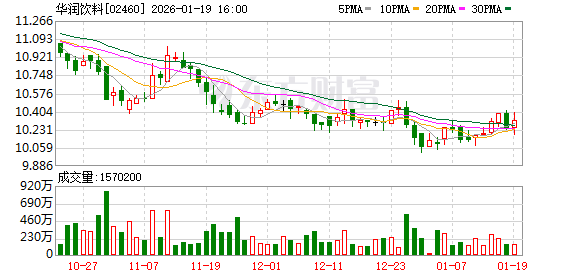
Core Viewpoint - The leadership change at China Resources Beverage, with Gao Li taking over as chairman, comes at a critical time as the company faces performance pressures and intensified industry competition [2][3]. Group 1: Leadership Change - Gao Li, a veteran of the China Resources Group, has been appointed as the new chairman, succeeding Zhang Weitong, who stepped down due to work adjustments [2]. - Gao Li has a strong financial background, having served as the financial director of China Resources Beverage from 2012 to 2020 and as the general manager of the finance department of China Resources Group since January 2025 [2]. Group 2: Performance Challenges - China Resources Beverage's revenue growth has stagnated, with a reported revenue of 13.52 billion yuan in the year of its IPO, reflecting only a 0.05% increase, while profit growth of 23.12% was primarily due to cost control [4]. - In the first half of 2025, the company experienced a decline in both revenue and profit, with revenue dropping to 6.206 billion yuan, a year-on-year decrease of 18.52%, and net profit falling to 808 million yuan, down 28.63% [4]. Group 3: Market Competition - The bottled water market has seen significant changes, with competitors like Wahaha and Nongfu Spring impacting China Resources Beverage's sales, particularly in the small-sized bottled water segment [5]. - In the first half of 2025, Nongfu Spring's bottled water revenue grew by 10.7% to 9.443 billion yuan, while China Resources Beverage's revenue in the same segment fell by 23.1% to 5.251 billion yuan [6]. Group 4: Strategic Initiatives - To diversify its revenue streams, China Resources Beverage has been actively launching new products in tea, juice, and sports drinks, introducing 14 new SKUs in the first half of the previous year [7]. - Despite these efforts, non-water beverage revenue only accounted for approximately 15.4% of total revenue, indicating that the second growth curve has not yet materialized [7]. Group 5: Market Position and Valuation - China Resources Beverage's revenue has remained stagnant around 13.5 billion yuan in 2023 and 2024, with expectations that its total revenue for 2025 will likely be surpassed by competitors like Dongpeng Beverage and Yuanqi Forest [7]. - As of January 19, 2026, the company's stock price had dropped to 10.32 HKD, a decline of 29% from its one-year high and over 38% from its IPO closing price, resulting in a market capitalization of 24.749 billion HKD, down 36.8% from its IPO value [8].
市值缩水近四成,华润饮料换帅破局
Guo Ji Jin Rong Bao· 2026-01-19 16:02
Core Viewpoint - The leadership change at China Resources Beverage comes at a critical time as the company faces declining performance and increased competition in the beverage industry [1][3]. Group 1: Leadership Change - Zhang Weitong has stepped down as Chairman of China Resources Beverage due to work adjustments, with Gao Li taking over for a three-year term [1]. - Gao Li has a strong financial background and has previously held key positions within the China Resources Group, including serving as the CFO of China Resources Beverage from 2012 to 2020 [1]. Group 2: Performance Challenges - In 2024, China Resources Beverage's revenue growth stagnated, with total revenue at 13.521 billion yuan, reflecting a mere 0.05% increase, while net profit grew by 23.12% mainly due to cost control [3]. - By the first half of 2025, the company experienced a decline in both revenue and profit, with operating income at 6.206 billion yuan, down 18.52% year-on-year, and net profit at 0.805 billion yuan, down 28.63% [3]. - The core packaged water business, which accounts for nearly 90% of revenue, has seen significant declines, particularly in the sales of its flagship product, Yibao [3][5]. Group 3: Market Competition - The competitive landscape in the packaged drinking water market has shifted, with Wahaha regaining market presence and Nongfu Spring launching a low-priced product that negatively impacted Yibao's sales [3]. - In the first half of 2025, Nongfu Spring's revenue from packaged drinking water reached 9.443 billion yuan, a 10.7% increase, while China Resources Beverage's water segment revenue fell to 5.251 billion yuan, a 23.1% decline [5]. Group 4: Growth Strategy - China Resources Beverage has been criticized for its reliance on a single product line and has attempted to diversify by launching new products in tea, juice, and sports drinks [6]. - In the first half of 2025, non-water beverage revenue was 0.955 billion yuan, a 21.3% increase, but still only accounted for about 15.4% of total revenue, indicating that a second growth curve has not yet materialized [6]. Group 5: Market Position and Valuation - Competitors like Dongpeng Beverage and Yuanqi Forest are expected to surpass China Resources Beverage in revenue, with Dongpeng projected to exceed 20 billion yuan and Yuanqi Forest anticipating a 26% growth [8]. - China Resources Beverage's stock price has declined significantly, with a closing price of 10.32 HKD on January 19, 2026, down 29% from its peak and over 38% from its IPO price, leading to a market capitalization decrease of 36.8% from its initial value [8].
中金:维持华润饮料目标价12港元及“跑赢行业”评级
Zhi Tong Cai Jing· 2026-01-19 07:36
Core Viewpoint - CICC's report indicates that China Resources Beverage (02460) is expected to achieve a revenue of 11 billion RMB and a net profit of 970 million RMB in 2025, aligning with market expectations. The target price is maintained at 12 HKD with an "outperform" rating [1] Group 1 - The company is anticipated to experience a deep adjustment period in 2025, with a potential recovery in revenue and profit margins expected in 2026 following channel adjustments [1] - The appointment of Gao Li as chairman, who has a deep understanding of the company's fundamentals from his previous role as CFO from 2012 to 2020, is seen as a positive development [1] - The report suggests that 2026 may mark a turning point for the company, with expectations of a rebound in performance [1]