
雀巢咖啡

Search documents
四五十块一杯的蓝瓶咖啡,为什么在巨头雀巢的手里难赚钱?|声动早咖啡
声动活泼· 2026-03-18 09:32
Core Viewpoint - Luckin Coffee's controlling shareholder, Dazheng Capital, has reached an agreement with Nestlé to fully acquire Blue Bottle Coffee's global store operations for less than $400 million, significantly lower than the over $700 million valuation when Nestlé acquired a stake in Blue Bottle in 2017 [3][4]. Group 1: Acquisition Details - The acquisition price for Blue Bottle Coffee's store operations is under $400 million, which is substantially lower than the valuation during Nestlé's previous investment [4]. - Nestlé retains Blue Bottle's retail-related businesses, including capsules, instant coffee, and coffee machines, while Dazheng Capital takes over the store operations [4]. - As of the end of last year, Blue Bottle Coffee had 140 stores globally, with the majority located in the U.S., and only 15 stores in mainland China [4]. Group 2: Brand Background - Blue Bottle Coffee is recognized as one of the most distinctive specialty coffee brands in the past two decades and is considered a representative of the third wave of coffee [4]. - The founder, James Freeman, started Blue Bottle Coffee in 2005 after noticing a lack of fresh coffee options and has maintained profitability since its inception, although it has struggled under Nestlé's ownership [5]. Group 3: Industry Challenges - The specialty coffee industry faces challenges such as high labor costs and low turnover rates, with barista wages in the U.S. rising by 38% from 2020 to 2023, while average retail prices increased only by 12% [6]. - Blue Bottle's high-end positioning limits its market size, as fewer consumers are willing to pay premium prices for coffee, leading to a competitive disadvantage against larger chains like Starbucks [6]. Group 4: Strategic Changes Post-Acquisition - After the acquisition, Blue Bottle's location strategy has shifted to align more closely with Starbucks, moving towards high-traffic areas rather than unique historical spaces [7]. - The brand's minimalist design, once a unique selling point, has become less distinctive as competitors adopt similar styles, and younger consumers are gravitating towards more vibrant and social coffee environments [7]. Group 5: Future Prospects and Challenges - Dazheng Capital may accelerate Blue Bottle's store expansion, but the focus should remain on brand integrity, location, design, and operational capabilities rather than just efficiency [10]. - Blue Bottle's current inability to achieve stable profitability raises concerns about the risks of blind expansion, especially given the limited supply of high-quality coffee beans and the potential need to enter price-sensitive markets [11]. - Labor issues, including unionization efforts among baristas, present additional challenges for Dazheng Capital as it navigates the U.S. market [11].


雀巢 2025 财年:提价见顶、中国失速,百年巨头启动激进瘦身转型
Xin Lang Cai Jing· 2026-02-25 10:39
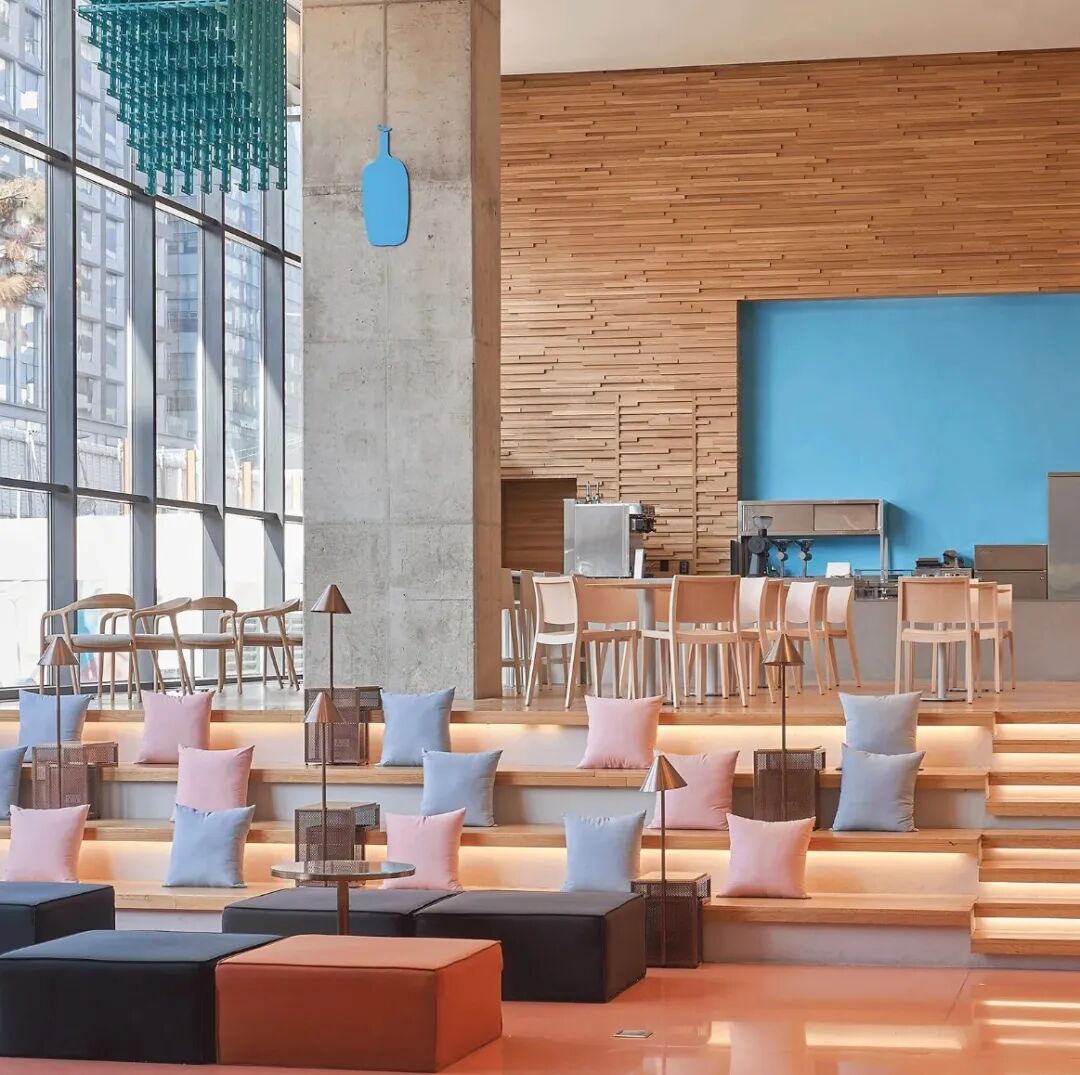
Core Insights - Nestlé Group reported a mixed performance for the fiscal year 2025, with total sales of 89.49 billion Swiss francs, a year-on-year decline of 2%, and net profit of 9.033 billion Swiss francs, down 17% year-on-year. However, the organic growth rate reached 3.5%, an increase of 1.3 percentage points compared to 2024, indicating a recovery in growth momentum in the second half of the year [1][5][6] Performance Breakdown - The organic growth of 3.5% was primarily driven by pricing, contributing 2.8%, while actual internal growth was only 0.8%. This highlights the company's reliance on price increases to offset rising costs of raw materials like coffee and cocoa [1][6] - In the fourth quarter, the organic growth rate rose to 4%, with internal growth improving from 0.2% in the first half to 1.4% in the second half, reflecting the gradual effectiveness of strategic adjustments [1][6] Category and Regional Analysis - Solid and liquid beverages and confectionery categories achieved organic growth rates of 7.3% and 8.2%, respectively, becoming key growth drivers. The pet care segment grew steadily by 2.2%, while prepared foods and seasonings saw a slight decline of 0.4% due to a sluggish U.S. frozen food market. Dairy, ice cream, and bottled water businesses maintained stable growth [2][6] - Regionally, Europe led with an organic growth rate of 4.3%, emerging markets grew by 5.4%, and developed markets saw a growth of 2.3%. In contrast, the Greater China region reported an organic growth decline of 6.4%, significantly dragging down the overall performance of the group [2][6] Challenges in Greater China - The decline in Greater China is identified as the most significant challenge for Nestlé in 2025. Factors include shrinking offline supermarket traffic, ineffective distribution models, high inventory leading to price wars, and a recall incident affecting the infant formula segment, which exacerbated supply chain and quality control issues [3][7] - The management indicated a shift from a distribution-driven model to one driven by consumer demand, aiming to reduce inventory and rebuild channel confidence through restructuring [3][7] Strategic Adjustments - In response to growth challenges, Nestlé's new management team has initiated a comprehensive and aggressive strategic adjustment, focusing on core areas and divesting low-efficiency segments. Resources will be concentrated on coffee, pet care, nutrition, and food and snacks [3][7] - The company is in negotiations to sell its remaining ice cream business and plans to initiate the divestiture of its bottled water and premium beverage segments in early 2026, with completion expected by 2027. The bottled water business has a profit margin of only 9.1%, significantly below the overall group level, making divestiture a key move to enhance asset returns [3][7] Future Outlook - For 2026, Nestlé has provided an organic growth guidance of 3%-4%. The transition from price-driven growth to a focus on core quality and efficiency, along with asset simplification, reflects the broader challenges faced by global fast-moving consumer goods companies amid inflation, consumer differentiation, and intensified local competition [4][8]

雀巢寒了谁的心?
创业家· 2026-01-15 11:16
Core Viewpoint - Nestlé is currently facing a trust crisis due to product recalls and issues with its distribution network, which have led to significant concerns among consumers and partners [4][8][19]. Group 1: Product Recall Crisis - Recently, Nestlé recalled multiple batches of infant formula in 45 countries due to potential contamination with Bacillus cereus, raising quality control concerns [5][10]. - The recall affects a product batch that constitutes less than 0.5% of the company's annual sales, indicating that the financial impact may be limited [13]. - Despite Nestlé's assurances that no adverse health reports have been received, consumer anxiety remains high, particularly among parents [14][15]. Group 2: Distribution Network Issues - Prior to the recall, Nestlé faced a crisis in its distribution channels, with reports of significant unpaid subsidies to distributors, some exceeding 19 million yuan [8][21]. - The company's distribution model, which requires distributors to purchase at higher prices and rely on rebates, has led to financial strain and dissatisfaction among partners [22][23]. - Many distributors have reported long-standing unpaid amounts, indicating deeper issues within Nestlé's operational management [26][28]. Group 3: Performance Decline - In 2025, Nestlé China experienced a 6.4% decline in sales, with the need for internal restructuring becoming increasingly urgent [36][40]. - The company is attempting to shift its strategy from pushing distribution to pulling consumer demand, but this transition is complex and time-consuming [39]. - Nestlé's market share in key segments like infant formula and pet food is lagging behind competitors, highlighting the need for significant improvements in product offerings and market strategy [42].
雀巢暴雷,信任已死
3 6 Ke· 2026-01-13 00:56
Core Viewpoint - The dispute between Chongqing Yichong Technology Co., Ltd. and Nestlé (China) Co., Ltd. highlights the challenges in the traditional high-price and post-rebate business model, revealing underlying issues in trust and cooperation within the industry [1][2][3]. Group 1: Dispute Details - Chongqing Yichong Technology accuses Nestlé of improper conduct, including high rebate promises that led to significant unpaid rebates totaling nearly 19 million yuan [1]. - The cooperation model between the two companies involved high initial purchase prices with subsequent rebates, which were initially paid but began to be delayed from Q3 2023 [1]. - Nestlé proposed a "three-fold package" solution to settle the debt, which was rejected by Yichong, leading to arbitration proceedings [1]. Group 2: Market Context - Nestlé faces multiple challenges in both global and Chinese markets, with a reported 6.1% decline in organic growth in the Greater China region for the first three quarters of 2025 [1]. - The company is undergoing a global restructuring, planning to lay off approximately 16,000 employees over the next two years to cut costs and focus on core businesses like coffee and pet care [1]. Group 3: Business Model Analysis - The rebate model used by Nestlé is described as a double-edged sword, where high pricing and post-sale rebates create a risky dynamic for distributors [3][4]. - This model relies heavily on trust, with Nestlé holding significant power over pricing and terms, leading to potential delays in rebate payments as a means of maintaining control over distributors [5][6]. Group 4: Internal Management Issues - The lack of clarity in the formal distribution agreement regarding rebate calculations and payment guarantees has left Nestlé with legal leeway [6]. - Promises made by Nestlé employees through informal channels have created a dual system of formal contracts and informal commitments, which can lead to disputes when market conditions change [7][10]. Group 5: Implications for Future Relationships - The arbitration case reflects a shift from cooperative business relationships to zero-sum games, indicating a lack of flexibility and foresight in Nestlé's local management under financial pressure [9][31]. - The incident has damaged Nestlé's reputation in the Chinese market, potentially affecting future partnerships and increasing the psychological costs for new collaborators [15][31]. Group 6: Broader Industry Challenges - Nestlé's traditional business model is under scrutiny as it struggles to adapt to the rapidly changing market dynamics in China, where local competitors are more agile [17][20]. - The company's reliance on outdated channel strategies and a complex management structure has hindered its ability to respond effectively to market demands [24][26]. Group 7: Future Considerations - The need for Nestlé to redefine its business philosophy in China is emphasized, moving from a focus on financial negotiations to a model based on data sharing and collaborative value creation [31][29]. - Companies must recognize the importance of building trust and transparent relationships with partners to avoid similar disputes in the future [31][29].
拟购蓝瓶咖啡:瑞幸的“高端化”
Xin Lang Cai Jing· 2025-12-26 12:21
Core Viewpoint - Luckin Coffee is considering acquiring Blue Bottle Coffee, a premium coffee brand owned by Nestlé, marking a significant potential merger between the "old king" Nestlé and the "new king" Luckin Coffee [1][13]. Group 1: Nestlé and Blue Bottle Coffee - Nestlé acquired a 68% stake in Blue Bottle Coffee for approximately $425 million in 2017, which was seen as a strategic move to embrace the "third wave" of specialty coffee [3][15]. - Over the past eight years, Blue Bottle has shifted from being a prized asset to a less valuable one for Nestlé, which reported nearly 740 billion RMB in annual revenue [3][15]. - The new CEO, Philippe Naefratil, has emphasized a growth strategy focused on internal growth rates and has raised critical questions regarding the attractiveness and positioning of Blue Bottle within Nestlé's portfolio [3][15]. Group 2: Blue Bottle's Market Position - Blue Bottle Coffee operates around 150 stores globally, with only 14 in mainland China, and its expansion has been nearly stagnant [5][17]. - The brand's commitment to a slow and artisanal coffee-making process contrasts sharply with Nestlé's focus on structured scale, making Blue Bottle a financial burden [5][17]. - Nestlé's growth is driven by its billion-dollar brands, while Blue Bottle's niche retail business contributes minimally and is misaligned with Nestlé's fast-moving consumer goods model [5][17]. Group 3: Luckin Coffee's Acquisition Intent - Luckin Coffee's potential acquisition of Blue Bottle is driven by a desire to elevate its brand perception from a budget option to a premium player in the coffee market [8][20]. - The acquisition could serve as a shortcut for Luckin to shed its "cheap drink" label and establish a presence in the high-end market, similar to how Anta leveraged acquisitions to build its brand matrix [8][20]. - Luckin's international expansion has been cautious, with only 108 overseas stores, making Blue Bottle's established presence in mature markets an attractive opportunity for global growth [8][20]. Group 4: Market Reactions and Concerns - Following the acquisition rumors, Luckin's stock price fell over 7%, indicating investor concerns about potential dilution of earnings [10][22]. - There is a fundamental cultural clash between Luckin's algorithm-driven operations and Blue Bottle's emphasis on artisanal craftsmanship, raising questions about the compatibility of their business models [10][22]. - Despite having approximately 9.4 billion RMB in cash, Luckin faces intense competition in the Chinese coffee market, with rising costs and price wars impacting profitability [10][22]. Group 5: Industry Trends - The potential merger is part of a broader trend in the global coffee industry, where major players are strategically divesting non-core assets while retaining valuable brand equity [12][24]. - This trend reflects a shift in the coffee value proposition, focusing on brand equity and intellectual property rather than the operational complexities of physical stores [12][24]. - The acquisition of Blue Bottle by Luckin symbolizes a clash of coffee philosophies and business models, highlighting the ongoing reevaluation of coffee's value in the market [12][24].
雀巢想瘦身,瑞幸在狂奔:蓝瓶咖啡收购传闻背后的资本局
3 6 Ke· 2025-12-17 11:27
Group 1 - The core of the news revolves around the potential acquisition of Blue Bottle Coffee by Luckin Coffee, which symbolizes a shift in the global coffee landscape, especially as both companies are in different strategic phases [1][9] - Nestlé, having acquired a 68% stake in Blue Bottle Coffee for approximately $425 million in 2017, is now considering divesting it as the brand no longer aligns with its current focus on large-scale products [4][5] - The new CEO of Nestlé, Philipp Navratil, emphasizes a shift towards "RIG-led growth," indicating a need for rational evaluation of all business segments, which may lead to the sale of Blue Bottle Coffee if it does not meet performance standards [4][8] Group 2 - Luckin Coffee's recent financial performance shows a significant increase, with Q3 revenue reaching 15.3 billion yuan, a 50% year-on-year growth, and a total of nearly 30,000 stores, highlighting its ambition to acquire a premium brand like Blue Bottle [11][17] - The acquisition could fill a gap in Luckin's brand portfolio, providing a high-end image and facilitating international expansion, particularly in the U.S. market where Blue Bottle has a presence [11][12] - Despite the potential benefits, Luckin's management has historically been cautious about acquisitions, preferring organic growth strategies, which raises questions about the feasibility of the Blue Bottle acquisition [14][15][16] Group 3 - Nestlé's financial urgency is evident as it announced a cost-saving plan of up to 2.5 billion Swiss francs and plans to cut 12,000 white-collar jobs, making the retention of Blue Bottle Coffee seem impractical [7][8] - The operational model of Blue Bottle Coffee, which relies on high-touch, artisanal coffee preparation, contrasts sharply with Luckin's automated and efficiency-driven approach, creating a fundamental conflict in business philosophies [16] - Luckin's cash flow is strong, with approximately 9.3 billion yuan in cash and equivalents as of September 30, 2025, but the competitive landscape in China necessitates careful financial management, especially in light of rising delivery costs [17][18]
2025饮料新品TOP100丨元气森林、农夫山泉、康师傅、统一激战新品、乳饮退潮谁来补位?
3 6 Ke· 2025-12-16 02:59
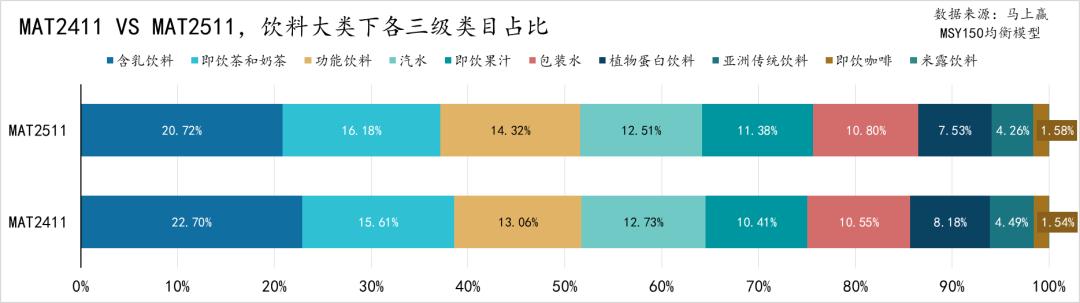
Core Insights - The article discusses the year-end review of the beverage market, focusing on the top 100 new products from December 2024 to November 2025, and compares them with the same period from the previous year to identify trends and shifts in the market [1][4]. Summary by Sections Overview of the Year-End Review - The year-end review will analyze the top 100 new beverage products and their market performance over the specified period, highlighting new trends and shifts in consumer preferences [1]. Data Collection and Methodology - The data for the top 100 products is sourced from the "马上赢" brand CT and various models, covering a wide range of retail channels across major cities in China [3]. - The selection criteria for the top 100 products exclude private label products and multi-pack items, focusing solely on individual SKUs based on sales revenue [1][2]. Market Performance Analysis - The beverage market is categorized into ten subcategories, including packaged water, functional drinks, dairy drinks, ready-to-drink tea, and more [4][5]. - The analysis reveals that dairy drinks are the only category exceeding 20% market share, while ready-to-drink tea, functional drinks, and carbonated beverages also hold significant shares [8]. Year-on-Year Comparison - A comparison between the two periods shows that the market share of dairy drinks has decreased by approximately 2%, with a sales growth decline of over 13% [13]. - Functional drinks and ready-to-drink juices have shown positive growth, while traditional categories like carbonated drinks and Asian traditional beverages have experienced declines [12][13]. New Product Trends - The top 100 new products for the current year show a significant increase in non-refrigerated ready-to-drink juices and sweetened ready-to-drink teas, while categories like sugar-free ready-to-drink tea and sports drinks have seen a reduction in new product entries [19][14]. - Notably, the top brands include "元气森林" and "康师傅," each with multiple products in the top rankings, indicating strong competition and innovation in the beverage sector [19][22]. Pricing and Specifications - The average price per 100ml for new products varies across categories, with non-refrigerated ready-to-drink juices and sweetened ready-to-drink teas generally priced higher [28]. - The distribution of product specifications indicates a growing preference for larger packaging sizes, reflecting changing consumer consumption patterns [25]. Launch Timing Insights - The timing of new product launches has shifted, with a noticeable increase in products launched in February and March compared to the previous year, suggesting a trend towards earlier market entry [31].





研判2025!中国即饮咖啡行业发展历程、市场政策、产业链图谱、销售现状、竞争格局及发展趋势分析:雀巢咖啡龙头优势明显[图]
Chan Ye Xin Xi Wang· 2025-11-29 05:27
Core Insights - The ready-to-drink (RTD) coffee market in China has seen significant growth, with 2023 offline sales reaching 3.76 billion liters and a revenue of 10.653 billion yuan, but a decline is expected in 2024 due to economic slowdown and competition from freshly brewed coffee [1][5]. Overview - RTD coffee refers to coffee products that can be consumed directly without brewing, primarily packaged in bottles and cans, characterized by convenience and stable shelf life [1]. Development History - The development of China's RTD coffee industry can be divided into four stages: initial enlightenment, steady growth, diversified competition, and high-quality upgrade, with a focus on health, premium quality, and localization since 2020 [2]. Regulatory Policies - The food and beverage industry is facing stricter regulations, impacting the RTD coffee sector, which must comply with various food safety laws throughout the production process [3]. Industry Chain - The RTD coffee industry chain includes upstream suppliers of raw materials (coffee beans, milk, etc.), midstream production processes, and downstream sales channels such as convenience stores and e-commerce [4]. Upstream Supply - Yunnan province is the primary coffee bean production area in China, contributing over 90% of the national output, with 2024 production expected to reach 150,200 tons [4]. Consumer Demographics - By 2024, the number of coffee consumers in China is projected to reach 417 million, with a significant portion of the core consumer group aged 25-35, primarily urban professionals [5]. Current Market Status - The RTD coffee market is becoming mainstream in China, with a notable increase in consumer adoption, although a decline in sales volume is anticipated for 2024 [1][5]. Competitive Landscape - The market is highly concentrated, with the top five companies holding an 87.2% market share. Nestlé leads with a 60.4% share, while new brands are emerging, intensifying competition [6][7]. Company Analysis - **China Resources Beverage**: A state-owned enterprise with a revenue of 6.206 billion yuan and a gross profit margin of 46.67% in the first half of 2025 [8]. - **Nongfu Spring**: A leading beverage company with a revenue of 25.62 billion yuan and a gross profit margin of 60.3% in the first half of 2025 [8]. Future Trends - Health-oriented products, including sugar-free and plant-based options, are expected to dominate the market, along with the introduction of functional ingredients in RTD coffee [9].

巨头宣布:裁员1.6万人,其中1.2万是白领!新任CEO:树立绩效导向思维!前任CEO因与直接下属谈恋爱被解雇
Mei Ri Jing Ji Xin Wen· 2025-10-17 16:35
Core Insights - Nestlé's third-quarter performance is under scrutiny due to recent leadership changes, with a new CEO taking charge during a critical transformation period [1][6] - The company reported a sales figure of 65.869 billion Swiss francs for the first three quarters, with an organic growth rate of 3.3% [1] - The new CEO, Mark Schneider, emphasized a performance-driven culture and the need to avoid market share loss [6][7] Financial Performance - For the third quarter, Nestlé achieved an organic growth rate of 4.3%, with an internal growth rate of 1.5% [1] - The Asia-Pacific region, particularly Greater China, continues to be a drag on overall growth, contributing negatively to the organic growth rates [3][4] - The company plans to cut approximately 16,000 jobs globally over the next two years, aiming to enhance agility and performance [4][5] Market Dynamics - The stock price of Nestlé rose by over 9% following the earnings report, marking the largest single-day increase since 2008 [3] - The organic growth rate in emerging markets was 5.2%, while developed markets saw a growth rate of 2.1% [3] - E-commerce sales experienced a significant organic growth of 13.2%, indicating a shift in consumer purchasing behavior [3] Strategic Initiatives - The new CEO outlined four key priorities: internal growth rate focus, profitable investment portfolio, performance culture, and transformation efficiency [6] - The company is shifting its focus in Greater China to drive consumer demand rather than reducing trade inventory levels [3][4] - The leadership changes and job cuts are part of a broader strategy to streamline operations and improve efficiency [5][6]
茶咖日报|3项指标全国占比均超97%,“云南咖啡”成为中国咖啡代名词
Guan Cha Zhe Wang· 2025-10-17 10:43
Group 1: Yunnan Coffee Industry - Yunnan coffee has become synonymous with Chinese coffee, with a planting area of 1.1931 million acres, accounting for 97.85% of the national total [1] - The total production of Yunnan coffee is 150,200 tons, representing 98.65% of the national output, with an agricultural output value of 4.872 billion yuan, which is 98.61% of the national figure [1] - In 2024, Yunnan's coffee planting area is expected to grow by 4% year-on-year, and production is projected to increase by 3% [1] - The average price of coffee beans in Yunnan is 41.02 yuan/kg, up 10.3% year-on-year, and the average price of specialty coffee is 67.37 yuan/kg [1] - The proportion of specialty coffee has increased from less than 8% in 2021 to 31.6% [1][2] Group 2: Nestlé Group Financial Performance - Nestlé reported total sales of 65.9 billion Swiss francs for the first nine months of 2025, a decrease of 1.9% year-on-year [3] - The organic growth rate for the same period was 3.3%, with all regions and global direct operations achieving positive growth [3] - The organic growth rate in the third quarter was 4.3%, an improvement from 2.9% in the first half of the year, driven by pricing in the coffee and candy segments [3][4] Group 3: Coffee Machine National Standards - The national standard for home and similar use coffee machines (GB/T 46503—2025) will be implemented starting May 1, 2026, aimed at improving product quality and consumer experience [8] - The standard specifies performance requirements, including extraction pressure, water tank volume deviation, and steam frothing moisture content [8][9] - User experience and environmental indicators are also addressed, including noise control and energy consumption management [9] Group 4: Bawang Tea Ji Expansion - Bawang Tea Ji has opened its highest store globally in Thailand, located on the 74th floor of King Power Mahanakhon, a landmark building [5][6] - The brand is accelerating its development in Thailand, with plans to open five new stores this month, bringing the total to 13 [6] - Bawang Tea Ji has entered multiple markets in the Asia-Pacific region, including Malaysia, Singapore, and the United States [6] Group 5: Lu Yu Tea Industry Model - Anhui Agricultural University has released the Lu Yu Tea Industry Model, an AI tool designed to assist in tea research and industry applications [10] - The model contains over 40,000 tea-related documents and can identify pests and diseases from leaf images with over 90% accuracy [10]