BANK COMM(03328)

Search documents
九卦 | 一步之遥:股份制银行集体逼近全球系统重要性银行门槛
Sou Hu Cai Jing· 2025-12-08 13:40
Core Viewpoint - The Financial Stability Board (FSB) has released the 2025 list of Global Systemically Important Banks (G-SIBs), which includes 29 banks globally, with China's five major state-owned banks maintaining their positions. Notably, Industrial and Commercial Bank of China (ICBC) has moved from Group 2 to Group 3 for the first time [1][5][10]. Group 1: G-SIBs List and Rankings - The 2025 G-SIBs list remains consistent with 2024, but there are changes in group classifications. The third group has increased from 2 to 4 banks, including ICBC and others [5][10]. - In the "Bucket 0" category, which does not incur additional capital requirements, China Merchants Bank has improved its ranking from 34th to 30th, closely approaching the G-SIBs threshold [5][6][10]. - Other Chinese banks, such as Industrial Bank and CITIC Bank, are also nearing the G-SIBs threshold, indicating a shift in the global financial stability focus [3][5][9]. Group 2: Factors Influencing Rankings - The rise in rankings for Chinese banks is attributed to improvements in interconnectedness and complexity metrics rather than size, which has traditionally been the focus [3][8]. - For instance, China Merchants Bank's total score increased significantly from 103 to 122, with interconnectedness and complexity contributing 31 and 60 points, respectively [7][8]. Group 3: Implications of G-SIBs Inclusion - Being classified as a G-SIB entails stricter capital regulatory requirements, which could compress the Return on Equity (ROE) for these banks [3][10]. - The additional capital requirements for G-SIBs range from 1% to 3.5% depending on the group, which could impact the capital strategies of banks approaching the threshold [10][11]. Group 4: Future Considerations for Chinese Banks - Chinese banks need to enhance their capital buffers and risk management frameworks to prepare for potential G-SIBs inclusion, as this could lead to increased systemic risk distribution [12][13]. - The banks are encouraged to diversify their capital tools and optimize asset structures to improve capital efficiency [12][13]. Group 5: Cross-Border Business Development - There is a need for Chinese banks to accelerate their cross-border business development to adapt to low-interest-rate environments and reduce reliance on single markets [15][14]. - Despite some progress, the density of overseas branches and subsidiaries remains low, indicating a need for strategic growth in international operations [15][14].






融入民营经济发展脉络,解构交通银行的四重角色
Mei Ri Jing Ji Xin Wen· 2025-12-08 13:38
Core Viewpoint - The article emphasizes the importance of the private economy in China's economic development and highlights the role of financial institutions, particularly Bank of Communications, in supporting and nurturing this sector through innovative financial services and products [1]. Group 1: Support for Private Enterprises - The Bank of Communications addresses the funding challenges faced by private small and micro enterprises by optimizing services like "no repayment renewal" loans, enhancing approval processes, and upgrading risk control models to facilitate seamless funding transitions [2][3]. - The bank has developed a dynamic credit assessment system using big data, allowing credit limits for stable and promising private small and micro enterprises to reach up to 20 million yuan [2]. Group 2: Online Financing Solutions - The bank has established an efficient online comprehensive credit service system, enabling enterprises to complete financing operations from application to withdrawal without physical presence, with nearly 50% coverage of online loans for private small and micro enterprises [3]. - The bank's collaboration with core enterprises in various industries, such as agriculture, has led to innovative financing solutions that streamline the loan application process for farmers [3]. Group 3: Focus on Technological Innovation - The Bank of Communications has created a proprietary evaluation model for technology-based enterprises, transforming their innovation capabilities into financing power, with products like "Talent Loan" offering up to 10 million yuan in unsecured loans [4]. - The bank has tailored 26 regional specialty products to support the unique funding needs of technology-driven private enterprises during their transformation and upgrading phases [4]. Group 4: Comprehensive Financial Services - The bank has built a financing support system encompassing equity investment, debt financing, leasing, and asset management, with a bond investment scale nearing 50 billion yuan as of Q3 this year [5]. - The bank's equity investment strategy focuses on early-stage and small investments, with individual investment limits reaching 5 million yuan [5]. Group 5: Cross-Border Financing Support - The Bank of Communications provides comprehensive cross-border financial services for private enterprises looking to expand internationally, including cross-border fund transfers, trade financing, and foreign exchange risk management [6]. - The bank has developed a platform to assist enterprises in overcoming logistical and financial challenges associated with international operations, enhancing overall operational efficiency [7]. Group 6: Collaborative Growth with Private Enterprises - The bank has shifted its role from merely providing funds to becoming a strategic partner for private enterprises, offering customized growth plans that encompass supply chain finance and market expansion strategies [8]. - The bank actively engages with various stakeholders, including government and industry associations, to better align its services with the needs of private enterprises [9]. Group 7: Commitment to High-Quality Development - The Bank of Communications has initiated numerous actions to enhance its financial service system, significantly increasing its credit balance for high-tech private enterprises by 24% since the beginning of the year [9]. - The bank aims to continue fostering innovation and supporting the resilient growth of private enterprises as part of its commitment to high-quality economic development [9].

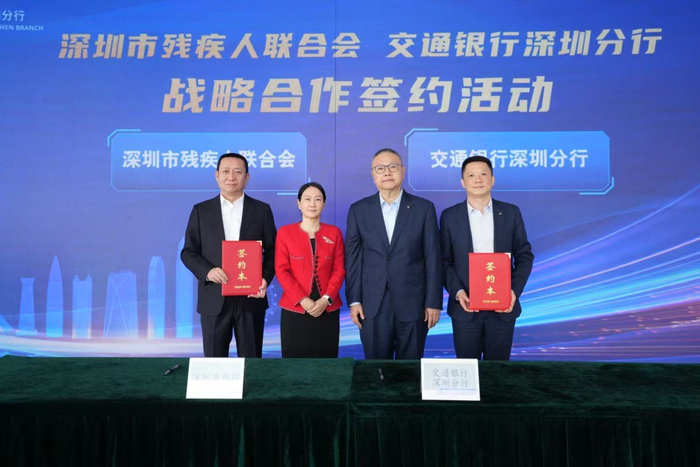
交通银行深圳分行发布“鹏城助康贷”
Ren Min Wang· 2025-12-08 12:56
Group 1 - The core viewpoint of the article is the strategic cooperation between the Bank of Communications Shenzhen Branch and the Shenzhen Disabled Persons' Federation to launch the "Pengcheng Assistive Loan" financial product aimed at supporting enterprises and rehabilitation institutions for the disabled [2] - The "Pengcheng Assistive Loan" product is designed to address the financing difficulties faced by rehabilitation service institutions for the disabled by providing dedicated credit limits, preferential interest rates, and green approval channels [2] - The cooperation includes signing agreements with multiple assistive organizations, ensuring timely and convenient financial support for the first batch of beneficiary institutions [2] Group 2 - The president of the Bank of Communications Shenzhen Branch emphasized that this cooperation is a key step in fulfilling social responsibility and promoting inclusive finance [2] - The bank plans to deepen collaboration with the Shenzhen Disabled Persons' Federation and various assistive organizations, continuously improving the "Pengcheng Assistive Loan" product system and expanding service coverage [2] - The initiative aims to explore more precise financial solutions for assisting the disabled, providing a replicable "Shenzhen experience" for national cooperation in assistive finance [2]
交通银行全力护航2025年全国残特奥会
Xin Lang Cai Jing· 2025-12-08 11:22
2025年12月,全国第十二届残疾人运动会暨第九届特殊奥林匹克运动会首次由广东、香港、澳门联合承 办,这既是"一国两制"实践中湾区同心共进的生动注脚,更是推动残疾人事业高质量发展、践行共同富 裕的重要载体。 交通银行广东省分行携手深圳分行、香港分行和澳门分行深度融入城市发展脉络,将金融服务的专业性 与助残事业的温度相结合,构建起覆盖线下网点、线上平台、现场保障的无障碍金融服务矩阵,让"无 障便捷、全域可达"的服务理念贯穿赛事全程,为每一位参与者搭建起通往盛会的畅通桥梁,以金融力 量书写湾区残健共融新篇章。 "暖心网点"焕新升级,筑牢赛事服务硬支撑 大型赛事的保障力,往往藏在城市的毛细血管里。作为与市民、赛事参与者最贴近的服务触点,银行网 点的服务是2025年全国残特奥会保障体系中不可或缺的一环。 来源:交通银行 在粤港澳大湾区的热土上,承载着自强不息精神、区域协同使命与体育强国愿景的2025年全国残特奥会 正火热进行。 交行立足赛事需求与残障群体使用场景,打造示范网点入口处的无障碍通道,搭配清晰的指引标识,方 便轮椅使用者顺畅通行;网点内设立的爱心窗口,配备了面向残障群体的便民工具;墙上张贴着"追梦 大湾区 ...
银行业周度追踪2025年第48周:保险长钱入市,聚焦红利与科创-20251208
Changjiang Securities· 2025-12-08 05:32
Investment Rating - The report maintains a "Positive" investment rating for the banking sector [10] Core Insights - The banking sector has experienced a third consecutive week of decline, primarily due to a rebound in market risk appetite, leading to the outflow of previously defensive capital. The bond market has also adjusted, affecting investment returns. Despite short-term style changes, the report remains optimistic about the revaluation direction of bank stocks, particularly favoring large banks like Bank of Communications and China Merchants Bank, as well as leading city commercial banks such as Nanjing Bank, Jiangsu Bank, and Hangzhou Bank [2][7] - Recent adjustments in insurance risk factors encourage long-term allocations towards low volatility dividend stocks and technology innovation sectors. The National Financial Regulatory Administration has lowered risk factors for certain indices, which is expected to enhance the solvency of insurance companies and promote long-term investments in quality equity assets [4][39] Summary by Sections Market Performance - The banking index fell by 1.1% this week, underperforming the CSI 300 and ChiNext indices by 2.3% and 2.9% respectively. The average dividend yield for the six major state-owned banks in A-shares rose to 3.85%, with a 200 basis point spread over the 10-year government bond yield. H-shares maintain a 5% average dividend yield, with a 23% discount compared to A-shares [7][20][26] Credit Growth - As of the end of October 2025, credit growth across various regions remains differentiated, with major provinces like Jiangsu, Zhejiang, Shandong, Sichuan, and Anhui maintaining growth rates above 8%. Sichuan leads with a growth rate of 10.8%. Corporate loans continue to be the main growth driver, with Jiangsu and Sichuan showing growth rates of 13.6% and 13.3% respectively [6][34] Insurance Capital Allocation - Insurance capital is in a continuous process of increasing allocations to bank stocks, particularly during the third quarter adjustment period. The report outlines three core strategies for capital allocation: large insurance funds strategically investing in state-owned banks and leading city commercial banks, and smaller insurance companies seeking long-term equity investment opportunities in smaller banks [5][39]


信用卡市场持续收缩,三年累计减少1亿张
Di Yi Cai Jing· 2025-12-07 04:11
Core Insights - The credit card market in China is experiencing a significant contraction, with a total issuance of 707 million cards as of Q3 2025, down from 715 million in Q2 2025 and a peak of 807 million in Q3 2022, marking a decline of approximately 100 million cards over three years [2][3] - The non-performing loan (NPL) rate for credit cards has risen to 2.40% as of mid-2025, indicating increasing pressure on asset quality within the banking sector [5][6] Credit Card Issuance Trends - The total number of credit cards has been on a downward trend for 12 consecutive quarters, with a notable reduction of 800 million cards in Q3 2025 compared to the previous quarter [2] - Major banks have reported a significant decrease in credit card loan balances, with a reduction of nearly 600 billion yuan in the first half of 2025 compared to the end of 2024 [3] - Credit card transaction volumes have also declined, with an overall decrease of approximately 8% year-on-year, particularly affecting banks like China Merchants Bank and Bank of Communications [3] Factors Influencing Market Contraction - The contraction in the credit card market is attributed to multiple factors, including regulatory policies that encourage banks to move away from aggressive card issuance and the rise of mobile payments and internet credit tools that are replacing traditional credit card usage [4] - Banks are shifting their focus from merely expanding card issuance to more refined management and risk control strategies [4] Asset Quality Concerns - The total amount of overdue credit card loans has increased from 842.85 billion yuan in Q2 2022 to 1,239.64 billion yuan by the end of 2024, indicating a growing concern over asset quality [5] - The average NPL rate for credit card overdrafts among 12 domestic banks has risen from 2.33% at the end of 2024 to 2.40% by mid-2025, with specific banks like ICBC and CCB reporting even higher rates [5] Risk Management and Asset Disposal - In response to rising NPLs, banks are accelerating the disposal of non-performing assets, with over 260 billion yuan in personal loan asset packages being transferred in November alone [6] - Notable cases include large asset packages from banks like Minsheng Bank and SPDB, indicating a proactive approach to managing credit risk [6] Operational Adjustments in Banking - Banks are implementing cost-cutting measures, including the closure of credit card centers and integrating credit card operations into broader retail banking strategies [7] - The future of credit card services is expected to focus on providing safer and more value-added financial services rather than merely promoting overspending [7] - The competitive landscape is likely to favor larger banks with strong risk management capabilities, while smaller banks will need to find ways to attract and retain customers without compromising on risk [7]

恒生科技带头反转,银行、消费延续弱势
Ge Long Hui· 2025-12-06 12:46
Group 1 - The Hang Seng Index experienced a sharp drop after opening but rebounded significantly, closing up by 0.58% [1] - The Hang Seng Tech Index led the gains, rising by 1.33%, with notable increases from Baidu Group (up 5.01%), Kuaishou (up 2.52%), and Xiaomi Group (up 1.91%) [3] - The banking sector showed signs of recovery, with a 0.28% increase, highlighted by China Merchants Bank (up 2.09%) and Industrial and Commercial Bank of China (up 1.77%) [3] Group 2 - Despite the overall market rebound, some banks like Everbright Bank fell by 1.91%, while others like Agricultural Bank of China and Minsheng Bank also saw slight declines [3] - The pharmaceutical sector faced mixed results, with companies like Innovent Biologics and BeiGene experiencing declines, while Hansoh Pharmaceutical saw an increase of 3.66% [3]


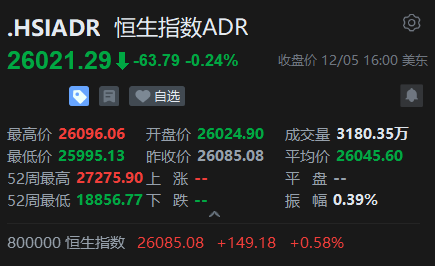
智通ADR统计 | 12月6日
智通财经网· 2025-12-05 23:49
Market Overview - Major blue-chip stocks mostly declined, with HSBC Holdings closing at HKD 110.541, down 0.41% from the previous close; Tencent Holdings closed at HKD 608.677, down 0.22% [2] Stock Performance Summary - Tencent Holdings: Latest price HKD 610.000, down HKD 2.000 (-0.33%); ADR price HKD 608.677, down HKD 1.323 [3] - HSBC Holdings: Latest price HKD 111.000, down HKD 0.500 (-0.45%); ADR price HKD 110.541, down HKD 0.459 [3] - Alibaba Group: Latest price HKD 155.000, up HKD 0.600 (0.39%); ADR price HKD 154.057, down HKD 0.943 [3] - AIA Group: Latest price HKD 78.300, down HKD 0.700 (-0.89%); ADR price HKD 78.371, up HKD 0.071 [3] - Meituan: Latest price HKD 99.050, up HKD 0.950 (0.97%); ADR price HKD 98.981, down HKD 0.069 [3] - Ping An Insurance: Latest price HKD 60.450, up HKD 3.800 (6.71%); ADR price HKD 60.370, down HKD 0.080 [3] - BYD Company: Latest price HKD 99.150, up HKD 0.750 (0.76%); ADR price HKD 98.086, down HKD 1.064 [3]





交通银行上海市分行为首批试点企业成功办理自由贸易账户功能升级
21世纪经济报道· 2025-12-05 13:02
12月5日,随着《上海自由贸易试验区自由贸易账户功能升级实施办法(试行)》正式施行,交通银行上海市分行当日即为两家试点企业成功办理 FTE账户功能升级,成为上海地区首批落地该业务的试点银行,标志着交行在自贸区金融创新领域再迈关键一步。 业务的顺利落地离不开中国人民银行上海总部的悉心指导与支持。政策筹备阶段,交行上海市分行多次参加人行上海总部组织的政策调研与专 题座谈,协助收集相关企业反映业务诉求及政策建议,使最终落地的政策更贴合市场主体需求。办法实施前夕,人行上海总部组织的政策解 读,为银行精准吃透政策、合规推进业务提供了关键指引,有效赋能金融创新服务实体经济发展。 试点行的入围与业务的成功落地,是交通银行上海市分行深耕自贸区金融服务、满足实体企业新发展需求、深化上海自贸区跨境资金流动管理 制度型开放的重要成果,为客户跨境资金统筹管理及调拨使用注入了高效动能,充分彰显了交通银行在跨境金融领域的专业服务能力、创新实 践水平与行业引领地位。 自2 0 2 5年6月《上海自由贸易试验区自由贸易账户功能升级试点实施办法(征求意见稿)》下发后,交通银行上海市分行快速响应政策导向, 精准对接核心要点,锚定自贸区内多家符合 ...
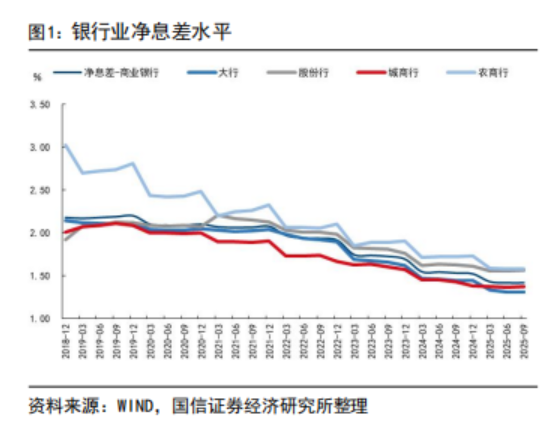
【国信银行·深度】银行业2026年经营展望之价格篇:货币政策相机抉择,净息差下降尾声
Xin Lang Cai Jing· 2025-12-05 12:56
Group 1: Core Insights - The current bottom line for the net interest margin (NIM) of major banks is approximately 1.2% to 1.3%, indicating limited room for further significant declines [1][6][84] - Maintaining a reasonable level of NIM is essential for economic growth and financial stability, as it relates to capital balance, breakeven points, and risk pricing mechanisms [6][20][21] Group 2: NIM Bottom Line Calculation - The projected nominal GDP growth during the "14th Five-Year Plan" period is estimated to be between 6.0% and 6.9%, which necessitates an M2 growth rate of about 7.0% to 8.0% [1][23][28] - The bottom line for NIM is calculated based on a required return on equity (ROE) of 7% to 8%, leading to a NIM bottom line of approximately 1.2% to 1.3% [36][84] Group 3: 2026 NIM Projections - If the Loan Prime Rate (LPR) decreases by 10 basis points (bps) and deposit rates remain unchanged, the NIM is expected to decline by approximately 5 to 8 bps in 2026 [2][85] - Without considering further interest rate cuts, the model predicts a decrease in loan rates by about 24 bps and deposit rates by 14 to 17 bps, resulting in a net interest margin contraction of about 2 to 5 bps [2][39][59] Group 4: Monetary Policy Outlook for 2026 - The monetary policy for 2026 is expected to be characterized by a "reasonable and ample" approach, with a likely LPR decrease of 10 bps and a reserve requirement ratio (RRR) cut of 50 bps [3][86] - The central bank's strategy will focus on balancing short-term and long-term goals, supporting economic growth while maintaining the health of the banking system [60][61] Group 5: Economic Recovery and Regulatory Impact - Economic recovery may not meet expectations, and regulatory changes could temporarily impact the banking sector's fundamentals [4][80] - The banking sector is under strong regulatory oversight, and any adverse policies could affect short-term valuations [80]