CICC(03908)

Search documents
提高资本市场制度包容性适应性
Jing Ji Ri Bao· 2025-12-08 22:14
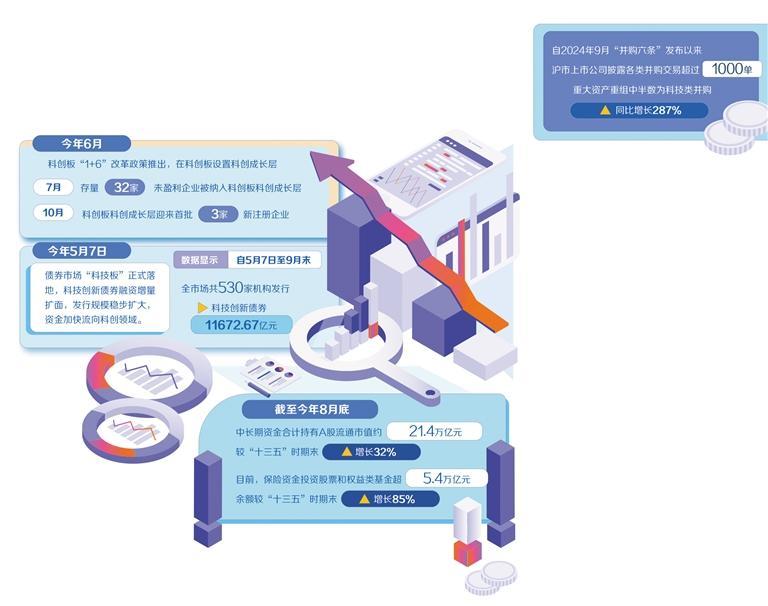
Group 1 - The overall market capitalization has exceeded 100 trillion yuan, indicating a significant improvement in investor confidence and expectations, with enhanced market resilience and risk resistance [2] - The "14th Five-Year Plan" outlines the direction and goals for the next phase of capital market reform, emphasizing the need to improve the inclusiveness and adaptability of the capital market system [2] - The focus is on enhancing institutional inclusiveness for technological innovation, optimizing the market ecology for long-term investments, and better utilizing the capital market as a platform for resource allocation [2] Group 2 - The development of direct financing through equity and bonds is a key task outlined in the "14th Five-Year Plan," aimed at improving the inclusiveness and adaptability of the capital market [2] - The China Securities Regulatory Commission (CSRC) has been actively promoting multi-tiered capital market systems and enhancing services for high-quality technology enterprises [2][4] - The introduction of the "1+6" reform policy for the Sci-Tech Innovation Board in June and the establishment of a growth tier for unprofitable companies in July are significant steps in this direction [2][3] Group 3 - The bond market plays a crucial role in serving the real economy and optimizing resource allocation, with a focus on developing technology and green bonds [4] - Since the launch of the "Technology Board" for bonds on May 7, 2023, a total of 11,672.67 billion yuan in technology innovation bonds have been issued by 530 institutions by the end of September [4][5] - The future of the bond market is expected to continue focusing on technology innovation, foreign openness, and green development, with a diverse range of issuers [5] Group 4 - The A-share merger and acquisition market has been heating up, with significant reforms in the M&A market aimed at supporting the transformation and upgrading of listed companies [6] - Since the implementation of the "M&A Six Guidelines," over 1,000 M&A transactions have been disclosed in the Shanghai market, with a notable increase in technology-related mergers [6] - The future role of M&A is expected to further enhance the integration of technology and industry, reflecting a shift from factor-driven to innovation-driven economic growth [6][7] Group 5 - The cultivation of high-quality listed companies is essential for the stable operation of the capital market, with ongoing reforms to improve the delisting mechanism [7] - The delisting mechanism is being optimized to ensure a more orderly market ecology, allowing for a more effective selection process [7] - The focus on enhancing the delisting standards and mechanisms aims to improve the overall health and resource allocation efficiency of the capital market [7] Group 6 - As of the end of August, medium- and long-term funds held approximately 21.4 trillion yuan of A-share circulating market value, a 32% increase from the end of the "13th Five-Year Plan" period [8] - The acceleration of medium- and long-term funds entering the market is expected to stabilize market fluctuations and promote a shift towards value investment and long-term investment [8][9] - The establishment of a more attractive "long money, long investment" system environment is crucial for supporting innovation and capital formation [9][10] Group 7 - The "14th Five-Year Plan" period is expected to position the capital market as an aggregator of innovation, linking technology, industry, and policy [10] - The focus will be on providing long-term patient capital for technological innovation and supporting the transformation and upgrading of traditional industries [10]


中金公司增持海伟股份17.96万股 每股作价约11.62港元
Zhi Tong Cai Jing· 2025-12-08 11:37
Group 1 - CICC increased its stake in Haiwei Holdings by purchasing 179,600 shares at a price of HKD 11.622 per share, totaling approximately HKD 2.0873 million [1] - After the purchase, CICC's total shareholding in Haiwei Holdings reached approximately 9.1862 million shares, representing a holding percentage of 14.24% [1]

中金公司增持海伟股份(09609)17.96万股 每股作价约11.62港元
Xin Lang Cai Jing· 2025-12-08 11:28
Group 1 - CICC increased its stake in Haiwei Holdings (09609) by 179,600 shares at a price of HKD 11.622 per share, totaling approximately HKD 2.0873 million [1] - Following the increase, CICC's total shareholding in Haiwei Holdings is approximately 9.1862 million shares, representing a holding percentage of 14.24% [1]
花旗:内地政策支持A股市场 中资券商股首选东方证券
智通财经网· 2025-12-08 09:55
花旗发布研报称,中国证监会主席吴清指,要通过并购或行业整合建立一流投资银行的政策方向,并放 宽对部分证券商的资本要求,鼓励他们提高杠杆。 该行相信,中国券商将受惠于A股市场支持政策,特别是具有高杠杆比率的券商,如中金公司 (03908,601995.SH)、中信证券(06030,600030.SH)、及东方证券(03958,600958.SH),预计中国证券商的 ROE将进一步上升,并可能促使公司重新估值,行业首选东方证券H股。 MACD金叉信号形成,这些股涨势不错! 该行提到,中国证监会就《基金管理公司绩效评估管理指引》向基金管理公司征求意见,为使公募基金 经理的利益与其基金的长期表现保持一致,另政策持续鼓励保险公司调整风险因素,将更多长期资金投 入A股市场,显示出内地对市场的支持。 ...

花旗:内地政策支持A股市场 中资券商股首选东方证券(03958)
智通财经网· 2025-12-08 09:48
该行相信,中国券商将受惠于A股市场支持政策,特别是具有高杠杆比率的券商,如中金公司 (03908,601995.SH)、中信证券(06030,600030.SH)、及东方证券(03958,600958.SH),预计中国证券商的 ROE将进一步上升,并可能促使公司重新估值,行业首选东方证券H股。 该行提到,中国证监会就《基金管理公司绩效评估管理指引》向基金管理公司征求意见,为使公募基金 经理的利益与其基金的长期表现保持一致,另政策持续鼓励保险公司调整风险因素,将更多长期资金投 入A股市场,显示出内地对市场的支持。 智通财经APP获悉,花旗发布研报称,中国证监会主席吴清指,要通过并购或行业整合建立一流投资银 行的政策方向,并放宽对部分证券商的资本要求,鼓励他们提高杠杆。 ...
头部券商把脉十五五投资主线:新质生产力为核心,AI、航天、创新药成焦点
Xin Lang Cai Jing· 2025-12-08 04:16
Group 1 - The core viewpoint of the news is that the "14th Five-Year Plan" outlines a clear roadmap for the high-quality development of China's capital market, with a strategic opportunity period for deepening capital market reforms and building first-class investment banks and institutions in the next five years [1][10] - The China Securities Regulatory Commission Chairman Wu Qing emphasized the importance of this period for the capital market [1][10] Group 2 - During the "14th Five-Year Plan" period, the securities industry is expected to undergo significant restructuring, leading to the emergence of ten leading comprehensive institutions [2][11] - Regulatory cycles for investment banking, derivatives, futures, and asset securitization are anticipated to gradually improve, allowing securities firms to achieve long-term growth through internal growth and mergers [2][11] - The focus on asset allocation, comprehensive services, and international capabilities will be key differentiators in the industry [2][11] Group 3 - The insurance, securities, and banking sectors are expected to achieve coordinated growth in scale and quality during the "14th Five-Year Plan" [3][12] - By 2030, insurance premium income is projected to reach 8 trillion yuan, with total industry assets expected to exceed 60 trillion yuan [3][12] - The securities industry is likely to see the emergence of several trillion-yuan-level firms, with a more diversified income structure and increased industry concentration [3][12] - The banking sector is expected to maintain stable performance, with a gradual slowdown in asset expansion and improved asset quality [3][12] Group 4 - The focus on technological innovation and future industries is a strong consensus, with significant progress in economic structural adjustments [4][13] - Key industries to watch include digital technology (AI, 6G, quantum technology), space economy (low-altitude economy, commercial aerospace), high-end manufacturing, and healthcare [4][13] - The core themes for investment opportunities are expected to revolve around the AI industry chain and innovative pharmaceuticals [4][13] Group 5 - The Ministry of Industry and Information Technology has proposed advancing future manufacturing, information, materials, energy, space, and health during the "14th Five-Year Plan" [7][16] - Ten key sub-sectors for capital market focus include AI, robotics, aerospace, drones, strategic resource metals, shipping, controllable nuclear fusion, energy storage, brain-computer interfaces, and innovative drugs [7][16] - The market narrative is expected to be driven by confidence, consensus, and structural adjustments, with a focus on technology growth industries [7][16]



证监会主席的表态,“适当松绑”对券商意味着什么?
华尔街见闻· 2025-12-08 03:40
证监会主席吴清近日明确提出对优质券商"适度松绑",进一步优化风控指标,适度打开资本空间和杠杆限制。这一表态被市场视为券商行业政策环境转向积极 的重要信号。 12月6日,中国证监会主席吴清在中国证券业协会第八次会员大会上表示,各证券公司要立足自身资源禀赋,发挥好比较优势,从价格竞争加快转向价值竞 争。头部机构要保持时不我待、不进则退的紧迫感,在市场竞争力、客户和投资者服务、风险管理等方面树标杆做表率,要进一步增强资源整合的意识和能 力,用好并购重组机制和工具,实现优势互补、高效配置,力争在"十五五"时期形成若干家具有较大国际影响力的头部机构。 "需要强调的是,一流投行不是说就是头部机构的专属,中小机构也要把握优势、错位发展,在细分领域、特色客户群、重点区域等方面集中资源,深耕细作, 努力打造'小而美'的精品投行、特色投行和特色服务商。"吴清说。 吴清表示,证监会将着力强化分类监管、扶优限劣,对优质机构适当松绑,进一步优化风控指标,适度打开资本空间和杠杆限制,提升资本利用效率;对中小 券商、外资券商在分类评价、业务准入等方面,探索实施差异化监管,促进特色化发展;对少数问题券商要依法从严监管,违法的要依法从严惩治。 ...


券商资管公募化改造冲刺 以投研与协同能力突围
Zhong Guo Ji Jin Bao· 2025-12-08 03:31
Group 1 - The core viewpoint of the article is that the transformation of brokerage asset management large collective products into public offerings is entering a critical phase, with a deadline set for the end of 2025 for completion [1][2][4] - The three main paths for product disposal include transferring to affiliated public funds, liquidation, or transitioning to private equity [2][3] - The trend of "cross-group migration" is emerging, where some brokerages are transferring products to third-party public fund managers without direct equity ties [3][4] Group 2 - The application for public fund licenses by brokerages has reached a standstill, indicating the end of the licensing rush that began in 2023, leading to a new phase of differentiated competition [4][5] - Some brokerages are leveraging their dual licenses (public and private) to accelerate business expansion, with examples like Caitong Asset Management showcasing a stable business structure [4][5] - The focus is shifting from merely obtaining public licenses to enhancing investment research capabilities and business collaboration as key competitive advantages [7][8] Group 3 - Investment research and collaborative capabilities are identified as critical factors for brokerages to compete effectively against banks and public funds [7][8] - Brokerages can utilize their integrated financial ecosystem to provide comprehensive services, enhancing their competitive edge in a saturated market [8] - The ability to quickly respond to market changes and adapt product offerings is highlighted as a significant strength of brokerage asset management [8]


中证监适度打开资本空间和杠杆限制 机构看好中资券商估值修复(附概念股)
Zhi Tong Cai Jing· 2025-12-08 02:32
Group 1 - The core viewpoint of the article emphasizes the need for the securities industry in China to shift from price competition to value competition, focusing on resource integration and the development of internationally influential benchmark institutions [1] - The regulatory framework will enhance differentiated supervision, optimizing evaluation indicators for quality institutions and exploring differentiated policies for small and foreign institutions to promote specialized development [1] - The report from Guotai Junan highlights that the easing of capital leverage for quality institutions is a significant benefit for leading brokerages, indicating a shift towards professional operations for profitability, which is expected to catalyze valuation recovery in the sector [1] Group 2 - The article lists several Chinese securities firms in the Hong Kong stock market, including Huatai Securities, GF Securities, China Galaxy, Guotai Junan, CICC, CITIC Securities, and others [2]


看好证券保险岁末年初行情!
2025-12-08 00:41
Summary of Key Points from Conference Call Records Industry Overview - The conference call discusses the securities and insurance sectors, highlighting regulatory encouragement for broker consolidation and mergers to enhance industry concentration and competitiveness [1][2][4][7]. Core Insights and Arguments - Regulatory bodies are promoting a shift from price competition to value competition, emphasizing high-quality service to attract clients and stabilize fees, which is expected to foster healthy industry development [1][6][7]. - The new solvency regulations for insurance companies have adjusted risk factors, reducing the risk weights for certain stocks, which supports long-term capital market entry and alleviates capital pressure on smaller insurance firms [1][10][13]. - As of September 2025, the equity allocation scale of insurance funds in the secondary market reached 5.59 trillion yuan, an increase of 1.49 trillion yuan from the end of 2024, with a configuration ratio nearing 15%, reflecting an accelerated entry of insurance capital into the market [1][14]. Specific Regulatory Changes - The adjustments in risk factors for insurance companies include: - Risk factor for stocks held over three years in the CSI 300 index reduced from 0.3 to 0.27 - Risk factor for stocks held over two years in the STAR Market reduced from 0.4 to 0.36 - Risk factor for export credit insurance business reduced from 0.467 to 0.42 [10]. Market Performance and Future Expectations - Recent market movements in the securities and insurance sectors were influenced by the reduction of stock investment risk factors, which injected confidence into the market [2][3]. - The insurance sector is expected to see a valuation uplift, supported by long-term interest rates and ongoing capital market entry, with a focus on asset-liability matching and core business indicators [3][17]. - The anticipated increase in equity allocation in the secondary market over the next three years is projected to reach between 1.34 trillion yuan and 1.7 trillion yuan, with an average annual growth rate of 5% [16]. Investment Recommendations - Recommended stocks include: - Guangfa Securities for its financial management and asset management benefits - Dongfang Securities for its flexibility in financial management - Guotai Junan for its significant integration effects and limited downside potential [8][9]. - Other notable companies with investment potential include China Galaxy, CICC, and various securities firms with strong international business [9]. Additional Insights - The transition from price to value competition is a significant trend, with policies aimed at enhancing service quality rather than competing on fees [6][7]. - The overall solvency of insurance companies is crucial, with core solvency ratios expected to improve due to regulatory adjustments, thereby enhancing capital adequacy and supporting further market entry [11][12][15].