
CM BANK(03968)

Search documents
再聊“磁升芯”背后的多重考量
凤凰网财经· 2025-09-05 12:28
Core Viewpoint - The announcement of the upgrade of UnionPay-Visa dual-branded magnetic stripe cards to chip cards marks a significant step in the internationalization of the Renminbi, providing enhanced security and user experience compared to single-branded chip cards [1][6]. Group 1: Security and Acceptance - The chip card offers a substantial upgrade in security compared to traditional magnetic stripe cards, utilizing dynamic authentication to prevent data copying and fraud [2][3]. - Chip cards have a broader acceptance range, especially in cross-border scenarios, where they have become essential as many markets no longer accept magnetic stripe transactions [4][5]. Group 2: Strategic Considerations - The transition from magnetic stripe to chip cards reflects a strategic shift in the market, driven by the need for enhanced security and the internationalization of the Renminbi [6][7]. - The collaboration between UnionPay and Visa in launching the chip card is seen as a mutually beneficial outcome, aligning their strategic interests in expanding market presence [8]. Group 3: Evolution of Payment Tools - The upgrade to chip cards signifies an evolution in credit card functionality, transforming them from mere payment tools to international bridges for commerce and communication [9]. - Banks are enhancing their product offerings to cater to cross-border needs, providing additional benefits and rewards for overseas transactions [9][10]. Group 4: Market Performance - The performance of credit cards, particularly from China Merchants Bank, indicates a strong market position, with significant overseas transaction volumes and a leading industry presence [10].



招商银行(600036):2025年中报点评:利润转正,不良新生成率降至近年新低
Changjiang Securities· 2025-09-05 10:43
Investment Rating - The investment rating for the company is "Buy" and is maintained [9]. Core Views - The company's profit growth has turned positive, with a notable improvement in asset quality, as indicated by a decrease in the new non-performing loan generation rate to a near historical low [6][11]. - The wealth management income has turned positive this year after several years of adjustments, contributing to the overall revenue recovery [11]. - The company has announced its first interim dividend this year, with a payout ratio of 35%, consistent with the previous year [11]. Summary by Sections Financial Performance - In the first half of the year, the company's revenue growth was -1.7%, while the net profit attributable to shareholders grew by 0.3%. The net interest income increased by 1.6%, but non-interest income decreased by 6.7% [2][6]. - The asset quality shows positive signals, with a non-performing loan ratio of 0.93% at the end of the first half, down 2 basis points from the beginning of the year, and a provision coverage ratio of 411% [2][6]. Loan and Deposit Growth - Total assets increased by 4.2% from the beginning of the year, with loans growing by 3.3%. Retail loans saw a slight increase of 0.9%, while corporate loans rose by 7.9% [11]. - Deposits grew by 3.6%, with demand deposits accounting for 51.0% of total deposits at the end of the first half [11]. Interest Margin and Cost - The net interest margin was 1.88%, a decrease of 10 basis points compared to the previous year. The loan yield dropped to 3.45%, reflecting a shift in loan structure towards lower-yielding corporate and consumer loans [11]. - The deposit cost rate decreased to 1.26%, indicating a strong customer retention and pricing capability [11]. Asset Quality Improvement - The new non-performing loan generation rate for the first half was 0.98%, down 2 basis points from the first quarter, reflecting improvements in both corporate and retail segments [11]. - The retail non-performing loan generation rate decreased to 1.70%, and the credit card non-performing loan generation rate fell to 4.22% [11]. Investment Recommendations - The company is expected to benefit from a restructuring of institutional allocation ratios, with a current A/H share price-to-book ratio of 0.98x/1.00x and a dividend yield of 4.7%/4.6% [11].
招商银行东莞分行首笔“园区贷”落地
2 1 Shi Ji Jing Ji Bao Dao· 2025-09-05 09:10
Core Viewpoint - The successful issuance of the first "Park Loan" by China Merchants Bank Dongguan Branch marks a significant step in addressing the financing difficulties faced by small and micro enterprises in Dongguan, injecting new vitality into their development [2][3]. Group 1: Product Overview - The "Park Loan" is an innovative financial product aimed at supporting Dongguan's "8+8+4" industrial system, focusing on key sectors such as technological innovation, green low-carbon initiatives, and foreign trade [2]. - The loan amount issued was 3 million yuan, providing convenient financing services to enterprises in the pilot park [2]. Group 2: Implementation Mechanism - The product establishes a collaborative mechanism among the government, banks, and park management, integrating government "credit easy loan" platforms with park operational data to create tailored, no-collateral, low-cost, and efficient credit services [2][3]. - Eligible enterprises can also benefit from multiple policy incentives, including interest subsidies and risk compensation from Guangdong Province for manufacturing and high-tech enterprises [2]. Group 3: Service Strategy - China Merchants Bank Dongguan Branch has formed a specialized service team to conduct on-site visits and joint research, utilizing big data models to create a precise profile of pilot parks like Tianan Digital City [3]. - The bank offers customized financing solutions that align closely with the actual needs of Dongguan's technology and manufacturing enterprises, enhancing the relevance of their credit marketing projects [3]. Group 4: Future Plans - The bank plans to leverage the "Park Loan" as an opportunity to explore new models and pathways for financial support to the real economy, aiming to provide robust financial backing for the construction of a modern industrial system in Dongguan [3].

AI无界,共创无限|招银浦江数字金融生态大会成功举办
Guan Cha Zhe Wang· 2025-09-05 07:15
Core Insights - The conference held by China Merchants Bank focused on the integration of artificial intelligence (AI) and financial services, emphasizing the importance of large model applications in enhancing financial productivity and service quality [1][2][7] - Industry experts discussed the transformative potential of AI, particularly in the context of large models, and their implications for the future of the financial sector [2][3][4] Group 1: Conference Highlights - Over 100 representatives from banks, securities, funds, and technology companies attended the conference, showcasing a collaborative effort to explore AI's role in financial development [1] - Keynote speakers included prominent figures from academia and industry, who shared insights on the evolution of AI technologies and their applications in finance [2][3] Group 2: AI and Financial Integration - China Merchants Bank's CIO highlighted the need for collaboration among industry players to effectively leverage large models, advocating for a cooperative approach to maximize opportunities [1][5] - The bank has made significant investments in AI infrastructure, with a reported technology expenditure of 4.444 billion yuan, representing 2.93% of its revenue in the first half of 2025 [7] Group 3: Applications and Innovations - The bank has integrated AI into its retail and wholesale banking operations, enhancing customer service and risk management through intelligent systems [8] - Innovations such as the "Risk Assistant" and "CRM Assistant" have improved operational efficiency and customer engagement, with active user numbers exceeding 7,000 [8] Group 4: Future Directions - The focus on AI and large models is expected to drive significant changes in banking service models and operational processes, positioning China Merchants Bank as a leader in the digital transformation of the financial sector [5][6][8] - The bank aims to continue its investment in AI technologies and foster an ecosystem for collaborative development in the AI space [1][7]
费率高十倍:招行「独断」卖部分基金,为何背刺基民?
Sou Hu Cai Jing· 2025-09-05 04:56
Core Viewpoint - The article discusses the recent actions of China Merchants Bank (CMB) that are perceived as detrimental to retail investors, particularly regarding the sale of mutual funds at higher fees and exclusive offerings that limit investor choice [5][19]. Group 1: CMB's Actions and Impact on Investors - CMB has pressured fund companies to sell certain mutual funds exclusively through its platform, resulting in higher purchase fees for investors [5][19]. - For example, the purchase fee for the Huatai Zijin Value Selection Mixed Fund on CMB's app is 1.5%, compared to just 0.15% on platforms like Ant Fund and Tencent Finance [10][11]. - This practice has led to a significant increase in costs for investors, with a potential difference of 1,350 yuan for a 100,000 yuan investment [11][16]. Group 2: Regulatory Context and Market Dynamics - The regulatory environment is pushing for reduced fees and improved investor experiences in the mutual fund industry, contrasting with CMB's current practices [20]. - CMB's net interest margin has been under pressure, leading to a focus on increasing non-interest income, which may explain its strategy to sell funds at higher fees [21][22]. - Despite a recent recovery in fund income due to a bullish A-share market, CMB's overall fund income has seen a decline compared to competitors like Ant Fund [22][23]. Group 3: Future Outlook and Recommendations - The article suggests that CMB needs to shift its focus from a sales-driven approach to one that prioritizes customer asset growth and loyalty [25]. - With a large potential market of 720 million retail investors and a growing mutual fund industry, the bank must adapt to remain competitive and truly serve its customers [26].

股份行三杰的“马拉松”:谁在远虑、谁在阵痛、谁在苦练?
Nan Fang Du Shi Bao· 2025-09-05 04:16
Group 1 - The core viewpoint of the articles emphasizes that the banking sector, particularly joint-stock banks, is facing significant challenges in a low-interest-rate environment, leading to increased competition and pressure on profit margins [2][6][15] - As of mid-2025, 42 A-share listed banks reported a year-on-year growth in operating income and net profit attributable to shareholders of 1.0% and 0.8%, respectively, indicating a slight recovery from the first quarter [2] - Joint-stock banks experienced a decline in revenue growth of -2.3% and a net profit growth of only 0.3%, highlighting the pressure they face compared to state-owned and city commercial banks [2][15] Group 2 - The concept of banking as a marathon rather than a sprint was reiterated by the president of China Merchants Bank, Wang Liang, emphasizing the importance of balancing short-term and long-term interests for sustainable development [4][6] - Wang Liang noted that the bank's operating income for the first half of the year was 169.97 billion yuan, a decrease of 1.72% year-on-year, while net profit attributable to shareholders was 74.93 billion yuan, a slight increase of 0.25% [6] - Other banks, such as Ping An Bank and CITIC Bank, also reported declines in revenue and net profit, with Ping An Bank's revenue down 10.0% and net profit down 3.9%, indicating a broader trend across the sector [8][10] Group 3 - The emphasis on long-term value creation and quality growth is becoming a mainstream perspective among banks, moving away from a focus on scale [8][10] - CITIC Bank's president, Lu Wei, stated that the bank is focusing on quality and efficiency rather than short-term profits, with a net profit growth of 2.78% despite a revenue decline of 2.99% [10] - Other bank leaders echoed similar sentiments, advocating for sustainable development and a focus on risk management rather than aggressive competition [10][15] Group 4 - The joint-stock banks are facing increasing market concentration, with large banks holding 43.7% of the total assets in the banking sector, which is significantly higher than the growth rate of joint-stock banks [15] - This trend suggests that joint-stock banks and smaller banks are experiencing a reduction in market share and may need to adopt more effective strategies to compete [15][16] - The ongoing challenges highlight the need for banks to explore resilience and adaptability in their operations to navigate the evolving financial landscape [16]



河北金融监管局核准李俊招商银行石家庄分行副行长任职资格
Jin Tou Wang· 2025-09-05 04:06
Group 1 - The Hebei Financial Regulatory Bureau approved the qualification of Li Jun as the Vice President of the Shijiazhuang Branch of China Merchants Bank [1] - The approval requires Li Jun to report to his position within three months from the date of the decision, or the approval will become invalid [1] - China Merchants Bank is responsible for ensuring that Li Jun continues to learn and understand relevant economic and financial laws and regulations, and to maintain a strong awareness of risk compliance [1]
汇丰晋信港股通精选股票:2025年上半年利润1209.02万元 净值增长率23.73%
Sou Hu Cai Jing· 2025-09-04 17:49
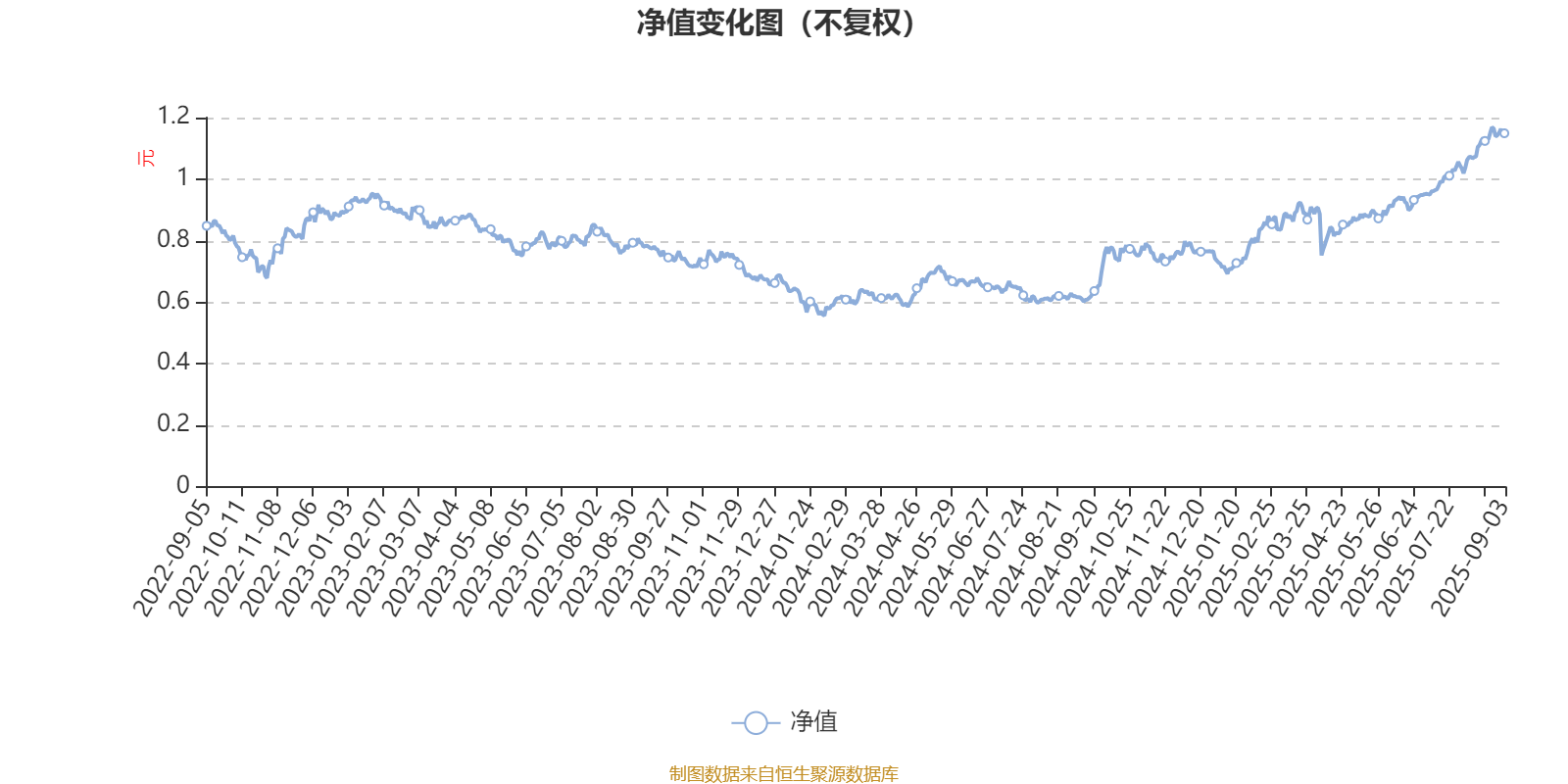
Group 1 - The core viewpoint of the article highlights the performance and outlook of the HSBC Jintrust Hong Kong Stock Connect Selected Fund (006781), which reported a profit of 12.09 million yuan for the first half of 2025, with a weighted average profit per fund share of 0.1802 yuan and a net asset value growth rate of 23.73% [2] - As of September 3, 2025, the fund's unit net value was 1.149 yuan, and the fund manager is Xu Tingquan [2] - The fund's scale reached 61.259 million yuan by the end of the first half of 2025 [31] Group 2 - The fund's recent performance shows a three-month net value growth rate of 28.34%, a six-month growth rate of 37.30%, and a one-year growth rate of 85.25%, ranking it 10th among 110 comparable funds [6] - The fund's weighted average price-to-earnings ratio (TTM) is approximately 9.81 times, significantly lower than the industry average of 28.84 times, indicating a potential undervaluation [10] - The fund's weighted average revenue growth rate (TTM) for the first half of 2025 is 0.13%, and the weighted average net profit growth rate (TTM) is 0.16% [18] Group 3 - The fund's top ten holdings include major companies such as Tencent Holdings, China Biologic Products, and Alibaba Group, reflecting a diversified investment strategy [41] - The fund has maintained a high average stock position of 90.75% over the past three years, compared to the industry average of 88.09% [29] - The fund's recent six-month turnover rate is approximately 106.27%, which is consistently lower than the industry average [38]





7家上市银行私行管理资产余额均超万亿元
Zheng Quan Ri Bao· 2025-09-04 16:18
Core Insights - The private banking sector is identified as a key area for value extraction within retail banking, reflecting the strength of banks' wealth management capabilities [1] - As of mid-2023, most banks reported growth in both the number of private banking clients and assets under management (AUM), indicating a continuous expansion of the high-net-worth wealth management market [1][2] Client Growth - Among the 13 listed banks that disclosed private banking client data, Agricultural Bank, China Bank, and Construction Bank lead with over 200,000 clients each, with respective figures of 279,000, 265,500, and 216,900 [2] - Construction Bank saw a 14.69% increase in private banking clients compared to the end of 2022, while China Bank surpassed the 200,000 client mark [2] - Among national joint-stock banks, China Merchants Bank leads with 182,700 clients, followed by Ping An Bank and CITIC Bank, both exceeding 90,000 clients [2] AUM Performance - Of the 13 banks analyzed, 11 disclosed AUM data, with Agricultural Bank, China Bank, and Construction Bank each exceeding 3 trillion yuan in AUM, at 3.5 trillion, 3.4 trillion, and 3.18 trillion yuan respectively [3] - Traffic Bank's AUM reached 1.39 trillion yuan, reflecting a 7.20% growth since the end of 2022 [3] - Among national joint-stock banks, Ping An Bank, CITIC Bank, and Industrial Bank are part of the "trillion yuan club," with AUM figures of 1.97 trillion, 1.28 trillion, and 1.05 trillion yuan respectively [3] Service Optimization - Private banking has become a significant profit growth point for banks, especially as traditional retail banking growth slows [4] - The sector is evolving from a single financial advisory model to a comprehensive service ecosystem, incorporating diverse products such as family trusts and cross-border asset allocation [4] - Major banks are enhancing their private banking services through product optimization and resource integration, aiming to build a robust service ecosystem [4] Future Directions - The future of private banking is expected to focus on three main areas: deepening digitalization, creating service ecosystems, and expanding global investment options [6] - Digital transformation will leverage technologies like AI and blockchain to enhance client service processes and risk management [6] - The integration of external resources such as legal and tax services will be crucial in developing a comprehensive service framework, particularly for family office and legacy planning services [6]



蚂蚁卖基金业绩狂飙,远远甩开招商银行和天天基金
Sou Hu Cai Jing· 2025-09-04 15:05
Core Viewpoint - Ant Fund has experienced significant growth in both revenue and profit, with a notable increase in net profit margin, indicating a strong performance in the market [2][3][10]. Financial Performance - In the first half of this year, Ant Fund's operating income reached 9.251 billion yuan, a 22.46% increase from 7.554 billion yuan in the same period last year [2]. - The net profit for the same period was 434 million yuan, showing a staggering year-on-year growth of over 360% [2][3]. - The net profit margin improved to 4.69%, up from 2.76% at the end of last year, reflecting a significant enhancement in profitability [8][9]. Market Position and Strategy - Ant Fund's performance is attributed to favorable market conditions, a strong user base from Alipay, and a strategic focus on "Index+" products, which have higher management fees compared to traditional ETFs [10][12][19]. - The company has established itself as a leader in the fund distribution market, with its revenue scale being 6.5 times that of its closest competitor, Tiantian Fund, and 3.8 times that of China Merchants Bank [20][21][23]. Competitive Landscape - Ant Fund's dominance is evident as it has significantly outperformed competitors in terms of both revenue and net profit, with a substantial lead over other major players in the fund distribution sector [20][21][27]. - The company has captured a large share of the market, with its fund distribution covering over 82% of the total public funds available [28]. Future Outlook - Despite its current success, Ant Fund must balance its focus on user traffic and service quality to maintain its competitive edge in the evolving market landscape [29][30].
