
BANK OF CHINA(03988)

Search documents
二级资本债周度数据跟踪-20251018
Soochow Securities· 2025-10-18 09:31
Group 1: Industry Investment Rating - No industry investment rating is provided in the report. Group 2: Core Viewpoint - The report presents a weekly data tracking of secondary capital bonds from October 13, 2025, to October 17, 2025, covering primary market issuance, secondary market trading, and valuation deviation of individual bonds [1]. Group 3: Summary Based on Related Catalogs Primary Market Issuance - One new secondary capital bond was issued in the inter - bank and exchange markets this week, with an issuance scale of 4.5 billion yuan, a maturity of 10 years. The issuer is a local state - owned enterprise in Jiangsu Province with a subject rating of AAAspc [1][6]. Secondary Market Trading - **Trading Volume**: The total weekly trading volume of secondary capital bonds was approximately 166.8 billion yuan, an increase of 122.3 billion yuan compared to last week. The top three bonds in terms of trading volume were 25 ICBC Secondary Capital Bond 02BC (6.075 billion yuan), 25 BOC Secondary Capital Bond 01BC (5.131 billion yuan), and 25 CCB Secondary Capital Bond 01BC (5.024 billion yuan) [2]. - **Regional Trading Volume**: The top three regions in terms of trading volume were Beijing, Shanghai, and Guangdong, with trading volumes of approximately 129 billion yuan, 12.3 billion yuan, and 6.8 billion yuan respectively [2]. - **Yield to Maturity**: As of October 17, the yield - to - maturity changes of 5Y secondary capital bonds with ratings of AAA -, AA +, and AA compared to last week were - 7.98BP, - 7.12BP, and - 7.12BP respectively; for 7Y bonds, the changes were - 9.74BP for all three ratings; for 10Y bonds, the changes were - 9.29BP, - 8.58BP, and - 8.58BP respectively [2][11]. Valuation Deviation of Top 30 Individual Bonds - **Overall Situation**: The overall valuation deviation of the weekly average trading price of secondary capital bonds was not significant this week. The proportion of discount trading was greater than that of premium trading, and the discount range was larger than the premium range [3]. - **Discount Bonds**: The top three bonds with the highest discount rates were 20 Fuxin Bank Secondary 01 (- 15.2060%), 17 Yanbian Rural Commercial Secondary 02 (- 2.5373%), and 22 Chengdu Rural Commercial Secondary 01 (- 0.7800%). The majority of ChinaBond implied ratings were AAA -, AA +, and A +, and the bonds were mainly distributed in Beijing, Guangdong, and Shanghai [3][13]. - **Premium Bonds**: The top three bonds with the highest premium rates were 22 Chouzhou Commercial Bank Secondary Capital Bond 01 (0.2822%), 21 Jinshang Bank Secondary 01 (0.2143%), and 21 Huishang Bank Secondary 01 (0.1652%). The majority of ChinaBond implied ratings were AAA -, AA, and AA +, and the bonds were mainly distributed in Beijing, Guangdong, and Shanghai [3][14].



中欧资管合作提速,中国银行助力全球资管枢纽建设
Di Yi Cai Jing· 2025-10-18 07:54
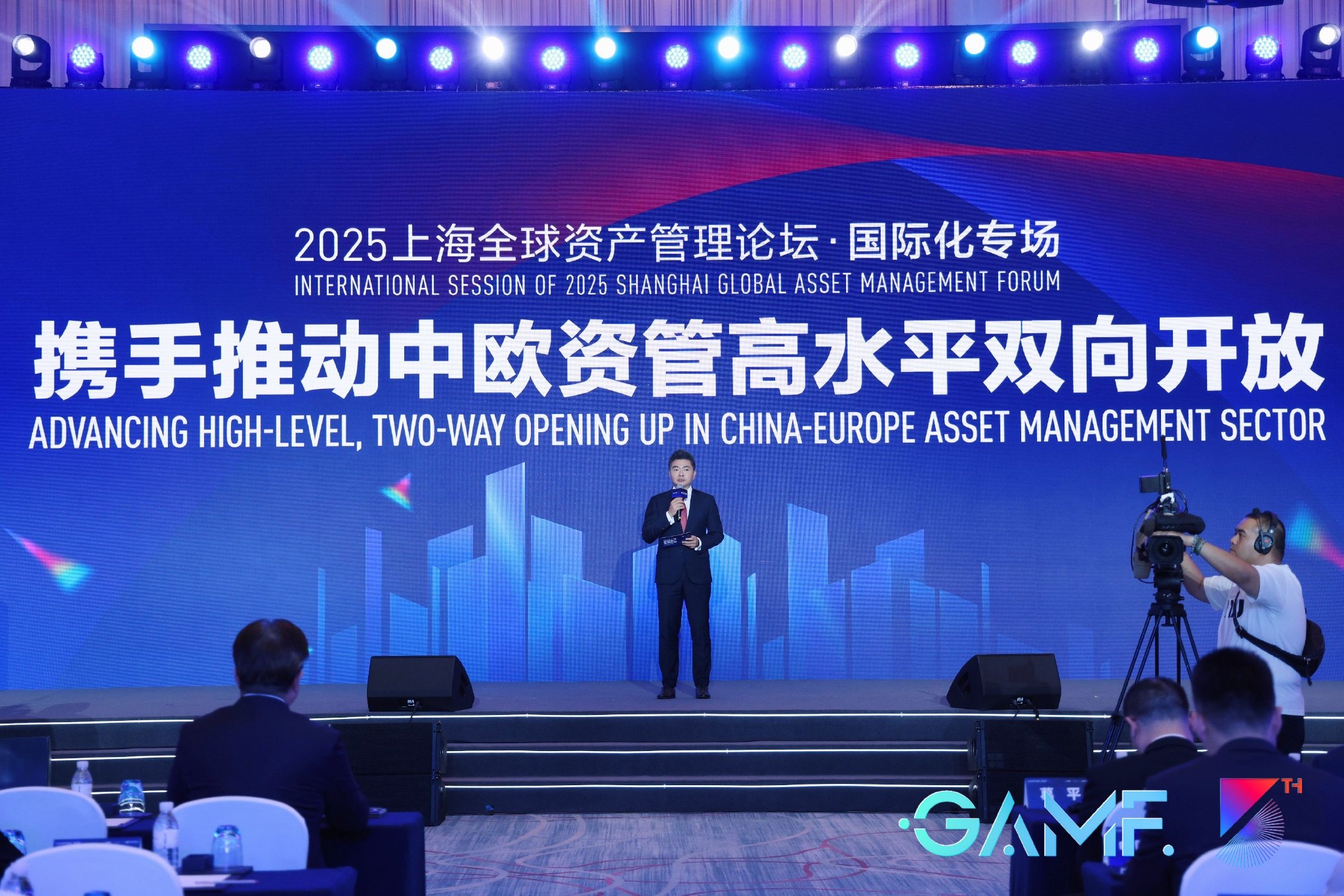
Core Insights - The "2025 Shanghai Global Asset Management Forum" emphasizes the importance of promoting high-level bilateral openness in the asset management sector between China and Europe amidst a complex international economic landscape [1][2] - China is enhancing its financial market and asset management openness, with the RMB gaining global attention as an investment and reserve currency, leading to increased interest from European institutions in China's stock and bond markets [3][4] Group 1: Economic and Financial Performance - Shanghai's GDP reached 2.6 trillion yuan in the first half of 2025, growing by 5.1% year-on-year, with the financial sector contributing 250 billion yuan, an 8.8% increase, accounting for 17.2% of the city's GDP [3] - The three leading industries in Shanghai—artificial intelligence, integrated circuits, and biomedicine—saw a combined output growth of 9.1%, supporting the city's competitiveness as an international financial center [3] Group 2: Policy and Institutional Developments - Shanghai is actively promoting the aggregation of financial institutions and enhancing financial service functions, currently hosting over one-third of the nation's foreign banks and nearly half of foreign insurance institutions [4] - The Shanghai Stock Exchange signed a memorandum of cooperation with the Swiss Exchange to advance cross-border openness, while also improving cross-border financial services and the internationalization of financial institutions [4] Group 3: Investment Trends and Opportunities - International investors are increasingly favoring Chinese assets due to supportive policies, technological innovations, and market performance, with net inflows exceeding 60% of the total for 2024 by mid-2025 [5] - The Chinese market is seen as having significant potential in areas like institutional openness, green finance, and pension markets, with suggestions to gradually relax restrictions on overseas investments in pensions [6] Group 4: Sector Performance and Investment Focus - From 2022 to 2024, energy and financial sectors showed resilience, while 2025 is expected to highlight sectors related to artificial intelligence and leading companies in pharmaceuticals and materials [7] - China is emerging as a leader in innovative drug development, with clinical-stage innovations accounting for 50% of global totals, and is also making strides in electric vehicles and robotics [7] Group 5: Financial Cooperation and Market Integration - The cooperation between China and Europe is characterized by accelerated infrastructure connectivity and deepening policy communication, with the RMB's role in bilateral cooperation becoming increasingly diverse [8] - The London Stock Exchange is implementing reforms to enhance its competitiveness, while also exploring opportunities for collaboration in green economy and energy sectors with Chinese firms [9] Group 6: Strategic Initiatives and Future Outlook - China Bank is positioned as a key player in facilitating China-Europe financial cooperation, with a global custody scale of 4.7 trillion yuan, serving over 100 countries [10] - Future initiatives will focus on enhancing collaboration in green finance, technology empowerment, product innovation, and risk management, aiming to leverage historical opportunities for high-quality development in China and green transitions in Europe [14]

金价持续攀升,商业银行上调积存金门槛
Huan Qiu Wang· 2025-10-18 03:48
Core Viewpoint - The international gold price has been rising significantly, driven by factors such as expectations of interest rate cuts by the Federal Reserve and increasing geopolitical risks, leading to heightened investment interest in gold as a traditional safe-haven asset [1][2]. Group 1: Gold Price Trends - As of October 16, 2025, the opening price of London gold was reported at $4208.757 per ounce, maintaining above the $4000 per ounce mark for several consecutive days, with a year-to-date increase of 61% [2]. - The strong expectations for interest rate cuts, concerns about the global economic outlook, and the weakening of the dollar's credibility are identified as key drivers of the current surge in gold prices [2]. - Since September, gold prices have increased by over 13%, following recommendations from analysts to invest in gold [2]. Group 2: Risk Management by Banks - In response to the rapid increase in gold prices and potential volatility risks, several commercial banks in China have raised the minimum purchase amounts for gold accumulation and related investment plans [3][4]. - For instance, Bank of China increased the minimum purchase amount for gold accumulation products from 850 yuan to 950 yuan starting October 15, 2025, while Industrial and Commercial Bank of China raised its minimum investment for gold accumulation from 850 yuan to 1000 yuan as of October 13, 2025 [3]. - Other banks, including China Construction Bank and Ningbo Bank, have also implemented similar increases in October [3]. Group 3: Market Observations - Analysts believe that the banks' decision to raise business thresholds and enhance investor suitability management is a necessary and prudent response to the heightened market volatility [5]. - This approach aims to help investors better understand potential risks and avoid neglecting their risk tolerance while chasing market trends, contributing to the long-term healthy and stable development of the gold investment market [5]. - Despite the favorable factors benefiting the gold market, the increased price volatility necessitates proactive measures from financial institutions to maintain market stability [5].
银行清理个人长期不动户:部分认定标准调至10元,取出需到柜台
Xin Jing Bao· 2025-10-18 03:00
Core Viewpoint - Multiple banks are implementing stricter measures to clean up long-dormant personal bank accounts, with standards for inactivity being lowered significantly, reflecting a response to regulatory requirements and a need for risk management in the financial sector [1][2][5]. Summary by Sections Bank Actions - Banks like Industrial Bank have reduced the threshold for identifying long-dormant accounts from 100 yuan to 10 yuan and extended the inactivity period from 180 days to 365 days [3][5]. - Other banks, such as Bank of China, are also implementing restrictions on transactions for accounts that meet the new criteria [2][3]. Variability in Standards - Different banks have varying criteria for identifying long-dormant accounts, with inactivity periods ranging from 1 to 3 years and balance thresholds from 10 yuan to 100 yuan [2][4]. - The lack of uniformity in standards is attributed to banks' autonomy in execution and differing risk appetites [4]. Regulatory Context - The cleanup of long-dormant accounts is part of a broader regulatory effort to combat financial crimes such as money laundering and telecom fraud [5][6]. - Regulatory bodies like the People's Bank of China and the Ministry of Public Security have issued guidelines mandating banks to manage dormant accounts more effectively [6][7]. Resource Management - The existence of numerous long-dormant accounts leads to resource wastage for banks, as these accounts still require server storage and system maintenance [7]. - Cleaning up these accounts is seen as a way to optimize financial infrastructure and align with compliance requirements [7]. Customer Guidance - Customers with frozen accounts can reactivate them by visiting bank branches with proper identification [8][9]. - Banks emphasize that they will not request sensitive information via phone or text during this process, urging customers to protect their personal information [9][10].

多家银行关停旗下App,银行App关闭潮意味着什么?
Sou Hu Cai Jing· 2025-10-18 01:21
Group 1 - Multiple banks have recently announced the shutdown of their mobile apps, with over 10 banks ceasing operations of various apps, including credit card and direct banking apps [3][4] - The trend of shutting down apps is attributed to the inefficiencies and high operational costs associated with maintaining multiple apps, which often leads to resource wastage and management confusion [6][9] - The closure of these apps is also driven by the need for banks to optimize resources and reduce operational costs in a tightening economic environment, as banks face pressure on profitability and must focus on core business areas [10][12] Group 2 - The proliferation of multiple apps within banks has created a "data island" effect, making it difficult for banks to achieve a comprehensive understanding of their customers and provide personalized services [9] - The competitive landscape with internet financial platforms necessitates that banks consolidate their efforts to create a powerful "super app" that can compete effectively against third-party payment platforms [10][12] - The future of banking apps is expected to shift from quantity to quality, with a focus on developing a core app that serves as a comprehensive service platform, integrating financial and lifestyle services [12]


储户质疑办张银行卡被“多重审核”,反诈与客户便利该如何平衡?
Xin Lang Cai Jing· 2025-10-18 00:13
Core Viewpoint - The balance between the convenience of banking services and the necessity of anti-fraud measures is under scrutiny, as banks face pressure from law enforcement to implement stringent account management practices while also serving customer needs [2][10]. Group 1: Customer Experience - Customers are experiencing increased difficulty in opening bank accounts due to stringent requirements for documentation, including proof of local residency and employment, which were not previously necessary [3][7]. - The limitations on account types, such as the issuance of only secondary accounts with lower transaction limits, are causing frustration among customers who require more flexibility for transactions [3][4]. - The banking staff's explanations indicate that these measures are in place to comply with anti-fraud regulations, but they also acknowledge that communication with customers may lead to misunderstandings regarding the requirements [7][8]. Group 2: Regulatory Environment - The Chinese government has reported significant financial losses due to telecom fraud, exceeding 300 billion yuan annually, prompting banks to adopt stricter measures to prevent such incidents [2][10]. - The People's Bank of China has established guidelines that categorize bank accounts into different types, each with specific transaction capabilities, which banks must adhere to when processing account applications [6]. - Banks are required to verify customer identities rigorously, and if standard identification is insufficient, additional documentation may be requested to mitigate fraud risks [6][8]. Group 3: Industry Response - Some banks have implemented automated systems to adjust transaction limits based on customer behavior, which can lead to unexpected restrictions for users [9]. - Industry experts suggest that banks should enhance their operational precision and utilize technology to minimize unnecessary restrictions while still complying with legal requirements [10][11]. - There is a call for law enforcement to avoid overstepping legal boundaries in their interactions with banks, ensuring that customer rights are protected while still addressing fraud concerns [11].
利安科技1.1亿元闲置募集资金现金管理到期赎回,获收益2.57万元
Xin Lang Cai Jing· 2025-10-17 10:58
Core Viewpoint - Lian Technology has announced the redemption of cash management products using temporarily idle raised funds, with a total investment of 1.1 billion yuan approved for cash management activities [1] Group 1: Cash Management Activities - The board of directors approved the use of up to 1.1 billion yuan of temporarily idle raised funds for cash management, effective for 12 months from the approval date [1] - The redeemed product was a structured deposit purchased from Bank of China, with a subscription amount of 37.23 million yuan, an annualized yield of 0.60%, and a total return of 25,700 yuan [1] Group 2: Deposit and Investment Details - The company has engaged in various cash management products, including agreements with Bank of China and China Merchants Bank, with varying annualized yields and maturity dates [2][3] - Specific structured deposits include amounts ranging from 1.6 million yuan to 8.39 million yuan, with expected annualized yields between 0.59% and 2.79% [2][3]

你的账户会被清吗?银行密集清理长期不动户,认定标准各不同
Nan Fang Du Shi Bao· 2025-10-17 09:19
Core Viewpoint - Recent announcements from multiple banks indicate a concerted effort to clean up long-dormant accounts, which include both personal and corporate accounts, primarily targeting low-balance accounts with no recent transactions [2][5][7]. Summary by Relevant Sections Long-Dormant Account Cleanup - Banks are initiating a wave of clean-up actions for long-dormant accounts, with varying criteria for what constitutes a "long-dormant account" [2][7]. - The criteria generally include accounts that have not had any active transactions for over three years, excluding interest-related transactions [7][11]. Reasons Behind the Cleanup - The clean-up is driven by three main factors: preventing misuse of dormant accounts for illegal activities such as money laundering and fraud, optimizing resource allocation by reducing the number of inactive accounts, and complying with regulatory requirements for customer identity verification [7][14]. Variability in Standards - Different banks have established their own criteria for identifying long-dormant accounts, leading to inconsistencies across the industry [11][12]. - For example, some banks define long-dormant accounts as those with balances below 10 yuan and no transactions for over a year, while others may have different thresholds [10][12]. Expansion of Cleanup Scope - The cleanup efforts are not limited to personal accounts; some banks are also targeting corporate accounts that have been inactive for over a year [13]. - Specific criteria for corporate accounts include those that have not had any payment activities for over a year and have no outstanding loans [13]. Consumer Impact and Recommendations - The cleanup of long-dormant accounts may pose risks to consumers, such as potential fees for maintaining inactive accounts and the risk of accounts being used for fraudulent activities [10][14]. - Industry experts suggest that banks should establish clearer and more consistent criteria for account cleanup to protect consumer rights and reduce confusion [14].


中国银行宁波市分行成功落地宁波地区首批绿色外债试点业务
Zhong Guo Jin Rong Xin Xi Wang· 2025-10-17 08:19
Core Viewpoint - The Bank of China Ningbo Branch has become one of the first pilot banks for non-financial enterprise green foreign debt in Ningbo, supporting enterprises in expanding financing channels and promoting green finance development [1][2]. Group 1: Green Foreign Debt Pilot Program - The State Administration of Foreign Exchange has launched a green foreign debt foreign exchange management policy pilot in 16 provinces and cities, including Ningbo, to encourage non-financial enterprises to use cross-border financing for green or low-carbon transformation projects [1]. - The pilot program aims to help enterprises expand their cross-border financing space and reduce financing costs, providing strong financial support for achieving carbon neutrality goals [1]. Group 2: Bank's Initiatives and Achievements - The Bank of China Ningbo Branch has established a special working group to conduct policy training and improve internal control systems for green foreign debt pilot business [2]. - On the first day of the pilot policy implementation, the bank successfully processed two green foreign debt transactions for local companies, with funds allocated for green projects such as new energy lithium batteries and new energy vehicles [2]. - The bank has streamlined the registration process for green foreign debt, enhancing efficiency and reducing the impact on the foreign debt quota, thereby increasing the upper limit of cross-border financing [2].
多家银行宣布:清理长期不动户,余额10元还能取吗?
3 6 Ke· 2025-10-17 07:58
Core Points - Several banks in China are tightening management of long-term inactive accounts, with some lowering the threshold for inactivity from 100 yuan to 10 yuan [1][2] - The People's Bank of China reported that as of Q2 2025, there were 15.122 billion personal bank accounts, reflecting a 0.93% quarter-on-quarter increase [2] - The adjustments in the definition of long-term inactive accounts are seen as a necessary measure for banks to mitigate financial risks and optimize resource allocation [2][3] Group 1: Changes in Inactive Account Standards - Xinyu Bank announced a new standard for long-term inactive accounts effective October 15, reducing the balance threshold from 100 yuan to 10 yuan and extending the inactivity period from 180 days to 365 days [1] - Other banks have varying standards for defining long-term inactive accounts, with some requiring no transactions for up to three years and balance thresholds ranging from 10 yuan to 100 yuan [3][4] - The adjustments reflect a trend towards more precise management of accounts, balancing risk control with customer experience [3][4] Group 2: Implications for Customers - Customers with long-term inactive accounts may face restrictions on transactions and services, but accounts with remaining balances will not be automatically closed [6][7] - To reactivate a restricted account, customers must verify their identity at a bank branch or through mobile banking [6] - Customers are advised to conduct small transactions periodically to avoid their accounts being classified as long-term inactive [6][7]