
BANK OF CHINA(03988)

Search documents
复旦张江向中国银行认购总金额为1.5亿元的结构性存款产品
Zhi Tong Cai Jing· 2026-01-06 10:08
复旦张江(01349)发布公告,近日,公司与中国银行订立中国银行结构性存款产品协议,同意以A股公开 发行所得暂时闲置募集资金向中国银行认购总金额为人民币1.50亿元的结构性存款产品。 ...

中国银行(03988) - 关於风险总监赵蓉女士离任的公告
2026-01-06 10:05
香港交易及結算所有限公司及香港聯合交易所有限公司對本公告的內容概不負責,對其準確性 或完整性亦不發表任何聲明,並明確表示,概不對因本公告全部或任何部分內容而產生或因倚 賴該等內容而引致之任何損失承擔任何責任。 中國銀行股份有限公司 BANK OF CHINA LIMITED (於中華人民共和國註冊成立的股份有限公司) (「本行」) (股份代號:3988) 關於風險總監趙蓉女士離任的公告 # 獨立非執行董事 二、離任對本行的影響 趙蓉女士已確認其與本行董事會無不同意見,亦沒有任何其他事項需要通知本行 股東,並已按照有關要求做好交接工作。 本行董事會對趙蓉女士任職期間對本行做出的貢獻表示感謝。 中國銀行股份有限公司 董事會 中國,北京 2026年1月6日 於本公告日期,本行董事為葛海蛟、張輝、劉進、蔡釗、張勇*、黃秉華*、劉輝*、師永彥*、 樓小惠*、李子民*、讓•路易•埃克拉 # 、喬瓦尼•特里亞 # 、劉曉蕾 # 、張然 # 、高美懿 # 、胡展雲 # 。 * 非執行董事 本行董事會收到趙蓉女士的辭呈。因工作調動,自2026年1月6日起,趙蓉女士不 再擔任本行風險總監職務。 一、離任的基本情況 姓名 離任職務 ...
复旦张江(01349.HK):认购中国银行1.5亿元结构性存款产品
Ge Long Hui· 2026-01-06 10:04
Core Viewpoint - Fudan Zhangjiang (01349.HK) has entered into an agreement with Bank of China to subscribe to a structured deposit product using temporarily idle funds raised from its A-share public offering, amounting to RMB 150 million [1] Group 1 - The company has agreed to invest a total of RMB 150 million in a structured deposit product [1] - The funds used for this investment are temporarily idle funds from the company's A-share public offering [1]
这家银行拿出100亿做股权投资
母基金研究中心· 2026-01-06 09:05
Core Viewpoint - China Bank has announced a special fund pool of 600 billion yuan to support technology enterprises, including 100 billion yuan for equity investment and 500 billion yuan for credit funds, with initial trials in five cities [1][3]. Group 1: Financial Support and Investment Strategy - The financial support from China Bank will encompass a comprehensive range of services including equity, loans, and investment banking, tailored to the operational rhythm of enterprises, supporting their growth from small to large throughout their lifecycle [3]. - The establishment of a 100 billion yuan equity investment fund by China Bank is seen as a positive exploratory signal, likely to encourage more bank-related funds to enter the equity investment sector and support technological innovation [3]. - In recent years, China Bank has made significant investments in the equity investment sector, including the establishment of a 300 billion yuan science and technology innovation mother fund in 2024, which was later expanded to over 500 billion yuan in March 2025 [3]. Group 2: Role of Banks in Private Equity Investment - Bank funds are becoming increasingly important participants in China's private equity investment limited partner (LP) sector, with banks being the largest financial institutions in China and their asset management market being the largest in terms of scale and investor coverage [4]. - Although bank funding for equity funds has been limited, policy changes have removed barriers and encouraged banks to collaborate with qualified securities and venture capital funds [4][5]. - The 2021 policy documents emphasized the need for banks to increase support for technological innovation and venture capital, indicating significant potential for growth in this area [5]. Group 3: Financial Asset Investment Companies (AIC) - The pilot program for financial asset investment companies (AIC) has expanded to 18 cities, with signed amounts exceeding 3.5 trillion yuan, indicating a growing trend in bank-led equity investment [5][6]. - Currently, most AIC funds have not participated as LPs in private equity funds but have acted as direct investment fund managers, which has increased competition for private fund managers in fundraising [6]. - The establishment of AIC mother funds, such as the 70 billion yuan fund launched in Shenzhen, marks a significant step in attracting bank funds for strategic emerging industry investments [7]. Group 4: Industry Development and Recognition - The Mother Fund Research Center has released the 2025 annual list to encourage excellence in the private equity mother fund and fund industry, promoting healthy development in the equity investment sector [8].


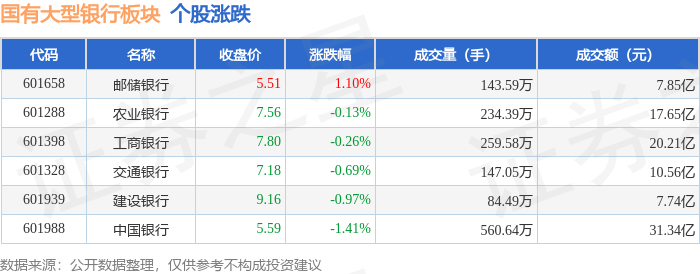
国有大型银行板块1月6日跌0.37%,中国银行领跌,主力资金净流出7.27亿元
Zheng Xing Xing Ye Ri Bao· 2026-01-06 09:00
证券之星消息,1月6日国有大型银行板块较上一交易日下跌0.37%,中国银行领跌。当日上证指数报收 于4083.67,上涨1.5%。深证成指报收于14022.55,上涨1.4%。国有大型银行板块个股涨跌见下表: 从资金流向上来看,当日国有大型银行板块主力资金净流出7.27亿元,游资资金净流入4.2亿元,散户资 金净流入3.07亿元。国有大型银行板块个股资金流向见下表: | 代码 | 名称 | 主力净流入 (元) | 主力净占比 游资净流入 (元) | | 游资净占比 散户净流入 (元) | | 散户净占比 | | --- | --- | --- | --- | --- | --- | --- | --- | | 601658 邮储银行 | | 4820.08万 | 6.14% | -4386.57万 | -5.59% | -433.51万 | -0.55% | | 601398 工商银行 | | 592.09万 | 0.29% | 583.85万 | 0.29% | -1175.94万 | -0.58% | | 601288 农业银行 | | -2728.64万 | -1.55% | -1928.45万 | - ...



晋中金融监管分局核准任斌中国银行晋中市分行副行长任职资格
Jin Tou Wang· 2026-01-06 03:19
三、中国银行应督促上述核准任职资格人员持续学习和掌握经济金融相关法律法规,牢固树立风险合规 意识,熟悉任职岗位职责,忠实勤勉履职。 一、核准任斌中国银行晋中市分行副行长任职资格。 二、中国银行应要求上述核准任职资格人员严格遵守金融监管总局有关监管规定,自中国银行政许可决 定作出之日起3个月内到任,并按要求及时报告到任情况。未在上述规定期限内到任的,本批复文件失 效,由决定机关办理行政许可注销手续。 2025年12月31日,晋中金融监管分局发布批复称,《中国银行(601988)山西省分行关于任斌同志拟任 中国银行晋中市分行副行长任职资格的请示》(晋中银报〔2025〕215号)已收悉。经审核,现批复如 下: ...
戈壁变绿洲 “牧”“光”两相宜
Jin Rong Shi Bao· 2026-01-06 02:05
Core Viewpoint - The transformation of the Taratang area from a semi-desert to a thriving ecological zone is attributed to the innovative "water-light complementary" model and sustained financial support, showcasing a successful case of green finance empowering ecological and economic development [1][2][9]. Group 1: Ecological Transformation - The Taratang photovoltaic industrial park has evolved from barren land to a vibrant ecosystem, integrating photovoltaic power generation with sheep farming, creating a "pastoral photovoltaic city" [1][2]. - The "water-light complementary" system connects hydropower and photovoltaic power, allowing for flexible energy management and stable grid output [2][3]. - The installation of photovoltaic panels has led to a reduction in surface temperature by 2-3°C, a 50% decrease in wind speed, and a 30% reduction in soil moisture evaporation, promoting vegetation growth [3]. Group 2: Financial Support - The People's Bank of China (PBOC) in Qinghai has significantly supported green finance, providing 42.04 billion yuan in carbon reduction support tools and facilitating 70.06 billion yuan in carbon reduction loans [1][4]. - China Bank has approved 8.9 billion yuan in project loans for key green energy enterprises, ensuring financial backing for the development of clean energy projects [5][6]. - The establishment of a "green channel + special quota" service mechanism by China Bank aims to enhance financial service efficiency for green industries [5]. Group 3: Industry Development - Qinghai Province has leveraged its natural advantages to develop a clean energy industry, establishing three "million-kilowatt" clean energy bases and a high-capacity transmission line that has delivered over 68 billion kilowatt-hours of electricity [7][9]. - The local government has implemented policies to support the clean energy sector, resulting in a 46.04% increase in green loan balances since 2020, with clean energy loans growing by 157.21% [9]. - The collaboration between various financial institutions has created a robust support system for clean energy projects, with 33 out of 45 targeted enterprises receiving credit support since 2022 [8][9].

中国银行举办学习贯彻党的二十届四中全会精神宣讲报告会
Jin Rong Shi Bao· 2026-01-06 01:47
近日,中国银行举办学习贯彻党的二十届四中全会精神宣讲报告会,该行党委书记、董事长葛海蛟 围绕学习贯彻习近平总书记在全会上的重要讲话和《中共中央关于制定国民经济和社会发展第十五个五 年规划的建议》,结合贯彻中央经济工作会议精神作宣讲报告。 葛海蛟强调,坚持和加强党的全面领导是推进中国式现代化的根本保证。全行各级党组织要坚持和 加强党的全面领导,完善党中央重大决策部署落实机制,把党的领导落实到公司治理各环节,抓好中央 巡视整改等重大政治任务落实落地,切实把党的领导的政治优势转化为治理效能。要持之以恒推进全面 从严治党,坚持不懈用习近平新时代中国特色社会主义思想凝心铸魂,牢固树立正确用人导向,进一步 严密党的组织体系,锲而不舍落实中央八项规定精神、推进作风建设常态化长效化。要充分调动全行上 下积极性主动性创造性,既加强思想引领也注重能力提升,既严格管理也热情关心,既严格考核也科学 评价,激发干部创新创造活力,形成推动高质量发展的强大合力。 责任编辑:杨喜亭 葛海蛟表示,全行各级党组织和党员干部要坚守国有大型商业银行职责定位,围绕"十五五"时期的 战略任务和重大举措,不断找准助力中国式现代化建设的切入点、落实党中央部 ...
中国银行(601988)披露截至二零二五年十二月三十一日止之股份发行人的证券变动月报表,1月5日股价下跌1.05%
Sou Hu Cai Jing· 2026-01-05 14:29
截至2026年1月5日收盘,中国银行(601988)报收于5.67元,较前一交易日下跌1.05%,最新总市值为 18269.4亿元。该股当日开盘5.73元,最高5.76元,最低5.64元,成交额达19.64亿元,换手率为0.16%。 最新公告列表 《H股公告-截至二零二五年十二月三十一日止之股份发行人的证券变动月报表》 以上内容为证券之星据公开信息整理,由AI算法生成(网信算备310104345710301240019号),不构成 投资建议。 近日,中国银行发布《截至二零二五年十二月三十一日止之股份发行人的证券变动月报表》公告。公告 显示,截至2025年12月31日,公司普通股H股和A股的法定/注册股本均无变动。H股总数为 83,622,276,395股,每股面值人民币1元;A股总数为238,590,135,419股,每股面值人民币1元。优先股方 面,境内优先股第三期和第四期的注册股份也未发生变化,分别为7.3亿股和2.7亿股,每股面值人民币 100元。已发行股份及库存股均无变动,无新增或减少股份。 ...
中国银行吉林省分行多举措助力文旅产业发展
Zhong Guo Jin Rong Xin Xi Wang· 2026-01-05 12:22
转自:新华财经 近年来,中国银行吉林省分行立足区域特色资源禀赋,精准对接文旅产业发展需求,在长春、珲春、辽 源等地因地制宜推出定制化服务方案,通过科技赋能、场景创新、特色信贷等举措,为全省文旅消费市 场注入金融动能。 科技赋能打造智慧冰雪消费场景 中国银行长春南湖大路支行聚焦冰雪文旅季,创新"科技+场景"服务模式。联合天定山滑雪场、长春冰 雪大世界投入300万元打造"智慧冰雪"项目,构建覆盖滑雪服务、酒店入住、消费支付的全场景智能支 付体系。 特色信贷激活边贸文旅新动能 针对珲春市"边贸+海产+文旅"产业特点,中国银行延边分行创新推出"珲春海鲜贷"专项信贷产品。针对 中小餐饮商户升级改造、冷链仓储建设等资金需求,提供精准融资支持。通过在海鲜一条街、景区餐饮 集聚区设立金融服务站,深入产业链上下游对接海产养殖基地、冷链物流企业,实现金融服务全覆盖。 截至目前已累计投放贷款2160万元,有效破解行业资金瓶颈,助推文旅餐饮深度融合。 全链条服务构建文旅消费闭环 此外,通过搭建线上线下一体化支付系统,实现主园区数字化管理,显著提升游客体验。结合政府消费 券发放、商户满减优惠等活动,打造冰雪消费优惠矩阵,精准激发市场需 ...