SPD BANK(600000)

Search documents
从“标配”到“累赘”,中小银行跨境业务选择“战略性撤退”
Tai Mei Ti A P P· 2026-01-12 12:04
Core Insights - A significant trend has emerged in the domestic financial market, where multiple rural banks and credit cooperatives have announced the closure of debit card overseas transaction functions due to risks associated with overseas fraud [1][2][3] - This move has sparked widespread discussion regarding the cross-border financial operations of small and medium-sized banks, highlighting the challenges they face in re-entering overseas transaction markets once they exit [1][3] Group 1: Closure of Overseas Transaction Functions - As of January 13, 2026, at least 10 small and medium-sized banks have explicitly announced the closure of their debit card overseas transaction functions, primarily among rural banks, with a nationwide distribution across several provinces [1][2] - The closure affects three main categories of overseas transactions: ATM cash withdrawals, POS card payments at physical merchants, and certain online cross-border payment services [2][3] - Different banks have adopted varying strategies for closure, with some implementing a blanket ban while others allow customers to request reactivation of services based on actual needs [3][4] Group 2: Customer Impact and Feedback - For the majority of rural bank customers, the impact of closing overseas transaction functions is negligible, as their customer base primarily consists of rural residents with minimal overseas travel or spending needs [3][4] - Feedback on social media indicates a low level of concern among users, with many stating that the closure does not affect their daily financial activities [4][5] - A small number of users with cross-border needs expressed inconvenience, but overall complaints were minimal, suggesting that the closure aligns with the actual usage patterns of these banks' customer bases [5][6] Group 3: Risk Management and Compliance - The closure of overseas transaction functions is seen as a proactive measure to mitigate risks associated with overseas fraud, which has been a growing concern for both small and large banks [7][8] - Large banks have adopted more sophisticated risk management strategies, while small banks struggle with inadequate technology and expertise to handle complex fraud risks [8][9] - New regulations effective January 1, 2026, requiring identity verification for certain cross-border transactions, further complicate the operational landscape for small banks, increasing compliance costs [8][9] Group 4: Future of Cross-Border Business - Despite the current closures, there remains potential value in cross-border financial services for small banks, particularly if they can align their offerings with local economic needs [9][10] - Future opportunities for re-entering cross-border business will depend on the development of robust risk management systems, clear market positioning, and sustainable profit models [10][11] - The transition back into cross-border services will require a phased approach, focusing on pilot programs and gradual expansion once the necessary conditions are met [11]



股票行情快报:浦发银行(600000)1月12日主力资金净买入3742.80万元
Sou Hu Cai Jing· 2026-01-12 11:45
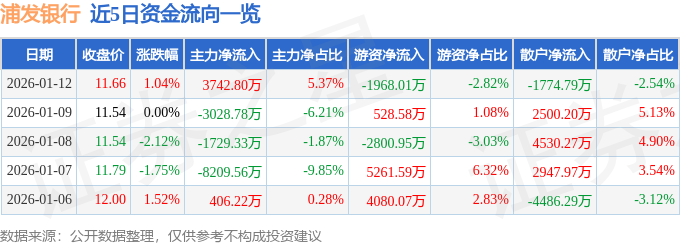
Core Viewpoint - As of January 12, 2026, Shanghai Pudong Development Bank (SPDB) shares closed at 11.66 yuan, reflecting a 1.04% increase, with a trading volume of 601,100 hands and a transaction value of 698 million yuan [1] Group 1: Stock Performance and Trading Data - On January 12, 2026, the net inflow of main funds was 37.43 million yuan, accounting for 5.37% of the total transaction value, while retail investors experienced a net outflow of 17.75 million yuan, representing 2.54% of the total transaction value [1] - Over the past five days, the stock has seen fluctuations in net fund flows, with notable outflows on January 9 and January 8, where main funds recorded net outflows of 30.29 million yuan and 17.29 million yuan respectively [2] Group 2: Financial Metrics and Industry Ranking - SPDB's total market capitalization is 388.35 billion yuan, with a net asset value of 840.84 billion yuan and a net profit of 38.82 billion yuan, ranking 10th in the industry [3] - The bank's price-to-earnings ratio (P/E) stands at 7.5, which is higher than the industry average of 5.74, while its price-to-book ratio (P/B) is 0.54, lower than the industry average of 0.61 [3] - For the first three quarters of 2025, SPDB reported a main revenue of 132.28 billion yuan, a year-on-year increase of 1.88%, and a net profit of 38.82 billion yuan, up 10.21% year-on-year [3] Group 3: Analyst Ratings - In the last 90 days, six institutions have provided ratings for SPDB, with five recommending a buy and one suggesting an increase in holdings, while the average target price set by analysts is 15.96 yuan [4]

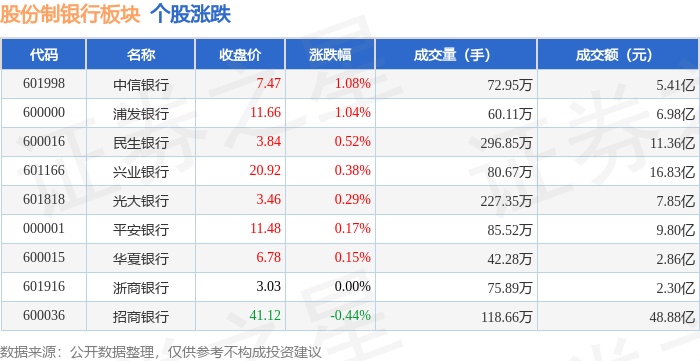
股份制银行板块1月12日涨0.26%,中信银行领涨,主力资金净流出10.83亿元
Zheng Xing Xing Ye Ri Bao· 2026-01-12 09:04
Group 1 - The banking sector saw a slight increase of 0.26% on January 12, with CITIC Bank leading the gains [1] - The Shanghai Composite Index closed at 4165.29, up 1.09%, while the Shenzhen Component Index closed at 14366.91, up 1.75% [1] - The trading volume and turnover for major banks were significant, with CITIC Bank's closing price at 7.47, reflecting a 1.08% increase and a turnover of 541 million yuan [1] Group 2 - The net outflow of main funds from the banking sector was 1.083 billion yuan, while retail investors saw a net inflow of 579 million yuan [1] - CITIC Bank had a net inflow of 53.24 million yuan from main funds, despite a net outflow from retail investors [1] - The overall fund flow indicated a mixed sentiment, with some banks experiencing significant net outflows from main funds, such as Industrial Bank with a net outflow of 75.54 million yuan [1]


浦发银行入选“2025中国企业ESG百强”榜单
Xin Lang Cai Jing· 2026-01-12 06:58
Group 1 - The core viewpoint of the article emphasizes the growing importance of ESG (Environmental, Social, and Governance) as a key measure of high-quality corporate development and a vital link between corporate value and social value [1][2] - The "2025 China Enterprise ESG Top 100" list was released by Sina Finance, evaluating over 5,000 A-share listed companies and mainland enterprises listed in Hong Kong using 18 industry ESG evaluation models and over 150 ESG indicators [1][2] - The list serves as a benchmark for industry development and provides valuable decision-making references for investors [1][2] Group 2 - Shanghai Pudong Development Bank was recognized in the "2025 China Enterprise ESG Top 100" list, ranking 95th, highlighting its achievements in ESG practices [2] - The publication of the list is seen as an authoritative recognition of the sustainable development practices of the listed companies and promotes the core values of ESG across the industry [2] - Companies are encouraged to integrate ESG principles into their strategic planning, operations, and supply chain collaboration to achieve a symbiotic relationship between commercial and social value [2] Group 3 - The article includes a ranking of companies based on their ESG scores, with notable mentions such as China Construction Bank, China Mobile, and Agricultural Bank of China, all receiving a five-star rating [4][5] - The list features a diverse range of industries, including finance, telecommunications, information technology, and consumer goods, indicating a broad commitment to ESG practices across sectors [4][5][6]

银行业周度追踪2026年第1周:如何理解银行股开年调整?-20260112
Changjiang Securities· 2026-01-12 04:41
Investment Rating - The investment rating for the banking sector is "Positive" and is maintained [12]. Core Insights - In the first week of 2026, the banking sector continued to adjust, with a cumulative decline of 1.9% in the banking index, significantly underperforming the CSI 300 and ChiNext indices by -4.7% and -5.8% respectively. Despite this, the fundamental expectations for the sector remain unchanged, and the market's risk appetite has notably increased [2][6][19]. - The main banks are expected to maintain stable growth in performance throughout 2026. Following recent adjustments, the PB-ROE valuation attractiveness of bank stocks has further increased, suggesting a favorable timing for allocation [2][6][19]. Summary by Sections Market Performance - The banking sector's performance in the first week of 2026 showed a cumulative decline of 1.9%, with significant negative excess returns compared to the CSI 300 and ChiNext indices [6][19]. - Individual stocks such as Chongqing Rural Commercial Bank saw price recovery after management uncertainties were resolved, while stable performers like Hangzhou Bank led the city commercial bank sector [2][6][19]. Fundamental Analysis - The banking sector's performance has been influenced by structural concerns, particularly regarding real estate and retail asset quality. Despite these concerns, overall performance remains stable with steady growth [8][37]. - The LTV (Loan-to-Value) ratios for major banks are stable at 40%-50%, providing a safety margin despite rising asset quality pressures in mortgage loans [8][37]. Trading Dynamics - The increase in market risk appetite has continued to suppress bank stock valuations. Historically, January has seen excess returns for bank stocks, but this year, the rapid recovery in market sentiment has led to underperformance [9][38]. - The report recommends focusing on high-quality city commercial banks such as Hangzhou Bank, Nanjing Bank, and Jiangsu Bank, as well as dividend-oriented assets like Bank of Communications and China Merchants Bank [9][38]. Convertible Bonds - The prices of convertible bonds linked to bank stocks have generally followed the sector's adjustment, with the distance to mandatory conversion prices widening. The report highlights potential trading opportunities in convertible bonds for banks like Changshu Bank and Shanghai Bank, which have stable fundamental performance expectations [7][32].




关于汇添富制造业升级研究精选一年持有期混合型发起式证券投资基金可能触发基金合同终止情形的提示性公告
Xin Lang Cai Jing· 2026-01-11 19:16
Group 1 - The core point of the announcement is that the "Huitianfu Manufacturing Upgrade Research Selected One-Year Holding Mixed Fund" may trigger contract termination if its net asset value falls below 200 million RMB by January 17, 2026 [1][4][5] - The fund's contract became effective on January 17, 2023, and will automatically terminate if the net asset value is below the specified threshold three years later [1][4] - To mitigate the impact of potential contract termination on investors, the fund will suspend subscription, regular investment, and conversion-in services starting January 12, 2026, while redemption and conversion-out services will continue as per the fund contract [2][4][5] Group 2 - If the fund's net asset value is below 200 million RMB by the end of January 17, 2026, the fund will enter liquidation procedures the following day, January 18, 2026, and will cease all business operations [2][5] - The fund management will establish a liquidation team to handle the fund's assets in accordance with relevant laws and regulations if the termination condition is met [2][5] - Investors are encouraged to understand the risks associated with fund investments and to make informed decisions regarding their investments [6][8]
平安基金管理有限公司关于新增华泰证券股份有限公司为平安添润债券型证券投资基金销售机构的公告
Xin Lang Cai Jing· 2026-01-11 19:16
Core Viewpoint - Ping An Fund Management Co., Ltd. has signed a sales agreement with Huatai Securities Co., Ltd. to add the latter as a sales institution for its products starting from January 12, 2026 [1]. Group 1: Sales Agreement and Product Offerings - Starting from January 12, 2026, investors can open accounts, subscribe, redeem, invest regularly, and convert funds through the newly added sales institutions [2]. - The same product's different share classes cannot be converted into each other [3]. Group 2: Fee Discounts - Investors who subscribe or regularly invest through the sales institution will enjoy fee discounts, with the specifics determined by the sales institution [4]. - The company does not impose restrictions on the discount rates for subscription fees, regular investment fees, and conversion fees, which are managed by the sales institution [4]. Group 3: Important Notes on Investment - Regular investment allows investors to set up automatic deductions for fund purchases, with minimum deduction amounts specified in the prospectus and related announcements [5]. - Fund conversion allows holders to switch their shares from one fund to another managed by the same fund manager, following the rules outlined in the company's announcements [5]. Group 4: Contact Information - Investors can consult for more details through Huatai Securities Co., Ltd. at 95597 or visit their website [7]. - Additionally, inquiries can be made to Ping An Fund Management Co., Ltd. at 400-800-4800 or their website [7].

银行行业2025年度业绩前瞻:利息收入有望回正
ZHESHANG SECURITIES· 2026-01-11 15:27
Investment Rating - The industry investment rating is "Positive" [3][17] Core Insights - Interest income is expected to return to positive growth, supported by an improvement in net interest margins in Q4 2025, which will offset other non-interest impacts [1] - For the full year 2025, listed banks are projected to see a net profit growth rate of 1.8% and revenue growth of 1.2%, both showing a quarter-on-quarter improvement [1] - Quality city commercial banks are expected to lead the sector, with revenue and profit growth rates projected between 5-10% for 2025 [1] Summary by Relevant Sections Industry Outlook - The overall outlook for 2025 indicates an improvement in net profit and revenue growth for listed banks, primarily due to the alleviation of margin pressures and increased provisions [1] - The asset scale of listed banks is expected to grow by 9.0% year-on-year, reflecting a slowdown compared to previous quarters due to weak credit demand [1] Key Drivers - **Margin Stabilization**: Q4 2025 is expected to see a 2 basis point improvement in net interest margin to 1.32%, driven by a larger decline in funding costs compared to asset yields [1] - **Non-Interest Income**: Non-interest income is projected to grow by 3.2% year-on-year, a decrease from earlier quarters, with a slight positive trend in commission income [1] - **Credit Quality**: The credit cost ratio is expected to decline to 0.67%, indicating a stable improvement in non-performing loans, particularly in retail lending [1] Investment Recommendations - The report suggests that banks with new growth drivers are likely to see significant value recovery, recommending major state-owned banks and select city commercial banks as key investment targets [1][2]


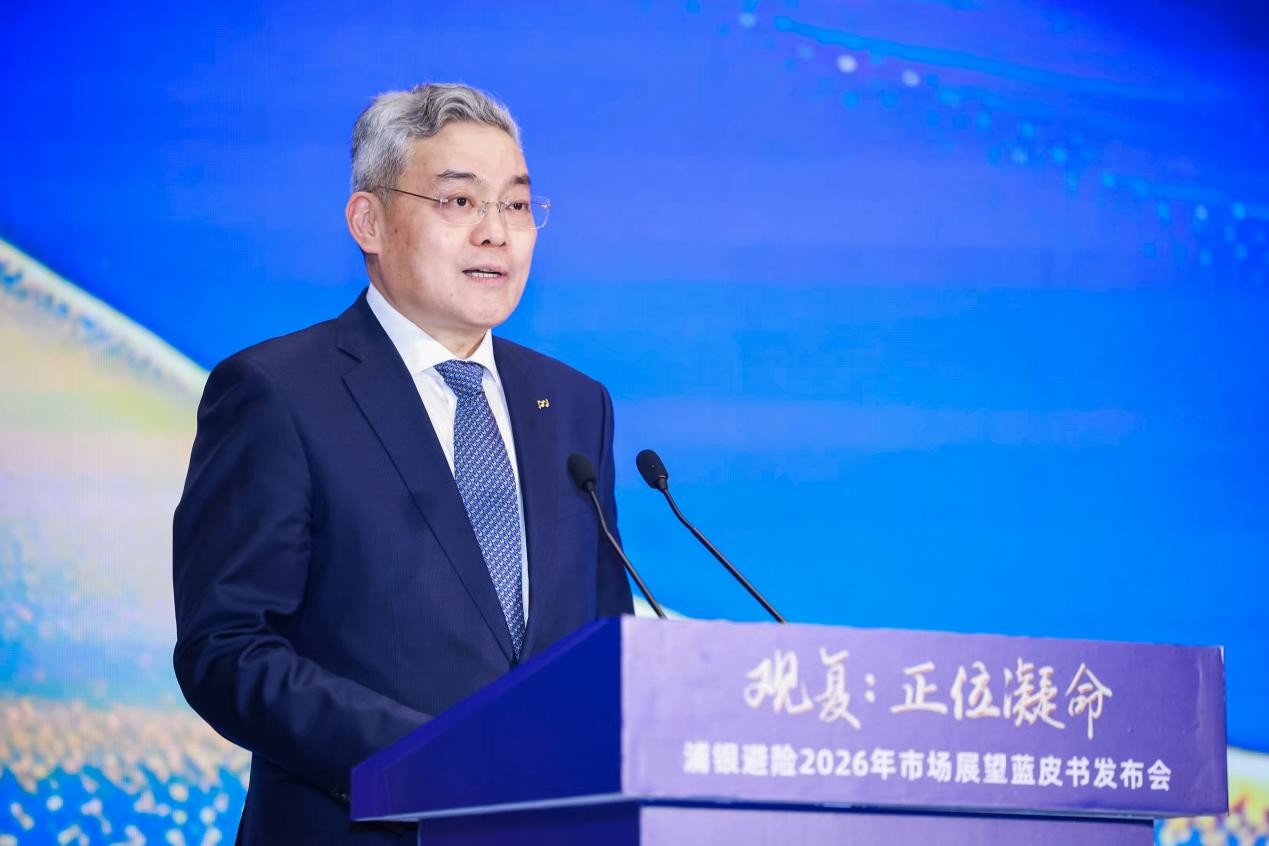
品牌焕新、服务升级,《浦银避险市场展望蓝皮书》连续八年发布
Zhong Guo Jin Rong Xin Xi Wang· 2026-01-11 09:56
Core Viewpoint - The release of the "Puhua Risk Avoidance 2026 Market Outlook Blue Book" marks the eighth annual report by Pudong Development Bank, emphasizing the importance of risk management services in navigating uncertain markets and supporting stable operations for various clients [1][2]. Group 1: Brand and Service Upgrade - The "Puhua Risk Avoidance" brand has been upgraded to "Puhua Risk Avoidance+" to provide more comprehensive and efficient risk management services [1][11]. - The brand aims to assist clients in managing risks more simply and effectively, emphasizing a commitment to enhancing service quality and expanding service boundaries [13]. Group 2: Economic Context and Opportunities - The report highlights the role of risk management services as a crucial link between financial markets and the real economy, contributing to high-level opening-up and resource optimization [2]. - The launch of the Hainan Free Trade Port on December 18, 2025, presents new opportunities for the financial industry, with Pudong Development Bank actively participating in its development [2][4]. Group 3: Market Outlook and Strategic Insights - The blue book forecasts that global economic growth will continue to be asynchronous, with a focus on balancing domestic macro policies among demand cultivation, industrial upgrading, and risk mitigation [6][9]. - It emphasizes the need for market participants to anchor their strategies in the underlying logic of financial markets and their own capabilities to build sustainable profit systems [9]. Group 4: Collaborative Efforts and Innovations - The event featured discussions among representatives from various sectors, including government and financial institutions, to explore new strategies for empowering the real economy through risk management [14]. - Pudong Development Bank has successfully launched pilot cross-border asset management projects in Hainan, showcasing its commitment to leveraging local policy advantages [14].
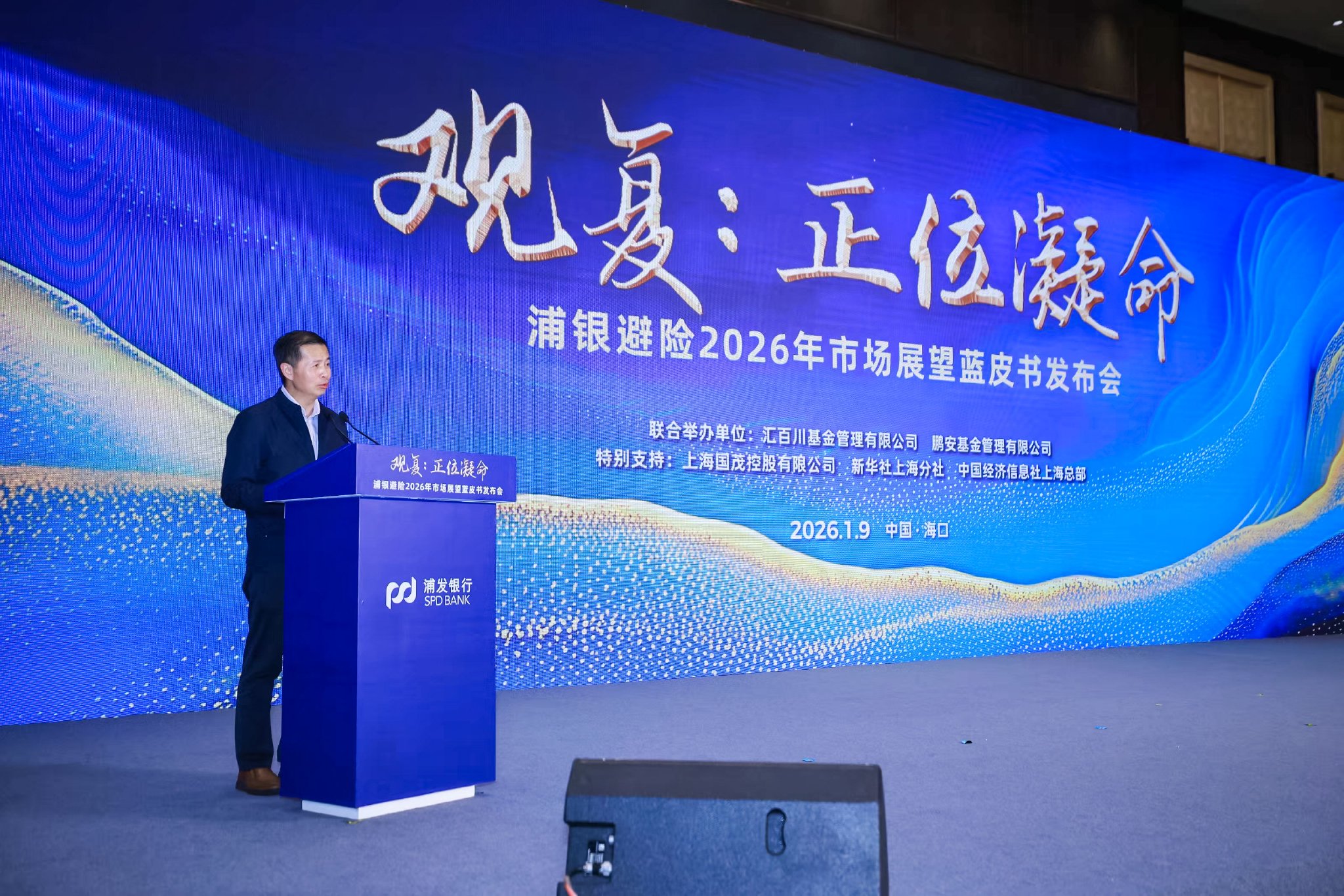
浦发银行行长谢伟:助力企业在全球竞争中稳健前行
Zhong Guo Jin Rong Xin Xi Wang· 2026-01-11 09:56
Group 1 - The core viewpoint of the article emphasizes the strategic positioning of Pudong Development Bank (PDB) in the financial market, aiming to be among the top five, with enhanced core competitiveness and market influence [1][3] - PDB's cross-border financial services have seen significant growth, with a business volume exceeding 4 trillion yuan in 2025, marking a 27% year-on-year increase [3] - The launch of the "Pudong Risk Hedging" blue paper is highlighted as a key initiative for sharing risk management expertise and enhancing brand value, particularly in the context of the Hainan Free Trade Port [4] Group 2 - PDB's stock price performance ranked third among 42 listed banks in 2025, with a successful conversion of 500 billion yuan in convertible bonds [3] - The bank is committed to leveraging its geographical advantages to explore new financial innovation models in the Hainan Free Trade Zone [4] - The year 2026 is identified as a pivotal year for financial openness, coinciding with the operational commencement of the Hainan Free Trade Port, which is expected to accelerate the release of financial benefits [3][4]