HUA XIA BANK(600015)

Search documents
首现国有大行关停信用卡App
21世纪经济报道· 2025-10-13 12:35
Core Viewpoint - The recent shutdown of credit card apps, particularly by major state-owned banks like Bank of China, reflects a broader trend in the banking industry towards consolidating digital services and reducing operational costs amid a shrinking credit card business [1][5][16]. Group 1: Credit Card App Shutdowns - Bank of China announced the gradual shutdown of its "Bountiful Life" app, migrating its functions to the main "Bank of China" app, which has drawn market attention [1][4]. - Several banks, including Shanghai Rural Commercial Bank and Beijing Rural Commercial Bank, have previously shut down their credit card apps, indicating a trend towards integrating these services into existing banking apps [5][6]. Group 2: Market Dynamics and User Engagement - The credit card app market is experiencing significant differentiation, with major state-owned banks and some joint-stock banks dominating user engagement metrics [7][8]. - As of June 2025, the top credit card apps by monthly active users include those from major banks, with Bank of China's "Bountiful Life" app ranking 13th with 1.5454 million active users, significantly lower than leading apps [7][8]. Group 3: Credit Card Loan Performance - State-owned banks maintain a strong position in credit card loan volumes, with China Construction Bank reporting a credit card loan scale of 1.0549 trillion yuan, the only bank exceeding 1 trillion yuan [9][10]. - Joint-stock banks also show robust performance, with China Merchants Bank's credit card loan balance reaching 924.49 billion yuan, accounting for 12.99% of its total loans [9][10]. Group 4: Digital Transformation and App Management - The closure of independent credit card apps is part of a broader strategy for centralized management of banking applications, as mandated by regulatory authorities to optimize user experience and reduce redundancy [16][17]. - Banks are increasingly focusing on comprehensive apps that integrate various financial services, moving away from multiple standalone apps to enhance operational efficiency and customer engagement [17].








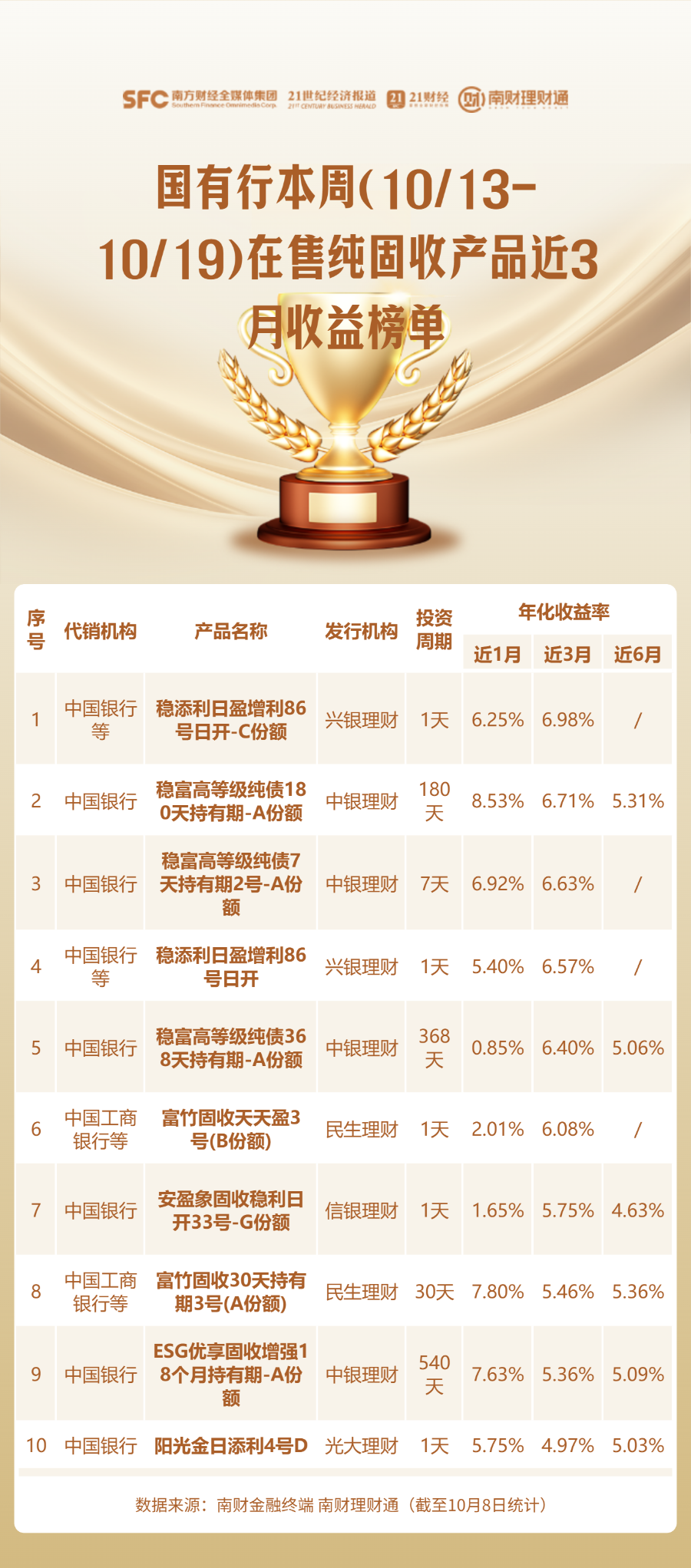
银行渠道本周在售纯固收理财产品榜单(10/13-10/19)
2 1 Shi Ji Jing Ji Bao Dao· 2025-10-13 01:16
Core Insights - The article discusses the diverse range of bank wealth management products available, emphasizing the need for investors to discern and select suitable options amidst similar-sounding and vaguely characterized products [1] - The South Finance Wealth Management team compiles a weekly performance ranking of wealth management products sold through various distribution channels, focusing on those with outstanding performance [1] - The ranking criteria include product type, specifically targeting pure fixed income, "fixed income plus," and mixed products, along with performance stability, requiring a minimum of three months of performance data [1] Product Performance Summary - The ranking showcases annualized performance over the past month, three months, and six months, sorted by the three-month annualized return to reflect multidimensional performance during recent market fluctuations [1] - The current focus is on pure fixed income products issued by wealth management companies, highlighting those available for investors through distribution channels [1] Distribution Institutions - A total of 28 distribution institutions are mentioned, including major banks such as Industrial and Commercial Bank of China, Bank of China, Agricultural Bank of China, and others [2] - The ranking's assessment of the "on-sale" status of wealth management products is based on their investment cycle, but actual availability may vary due to factors like sold-out quotas or differences in product listings for different customers [2] Performance Data - The article provides specific performance data for various wealth management products, including annualized returns and investment periods, with notable products listed from institutions like Bank of China and Minsheng Bank [5][7][10] - For instance, products from Bank of China show annualized returns ranging from 5.40% to 8.53% over different holding periods, indicating competitive performance in the current market [5][10]


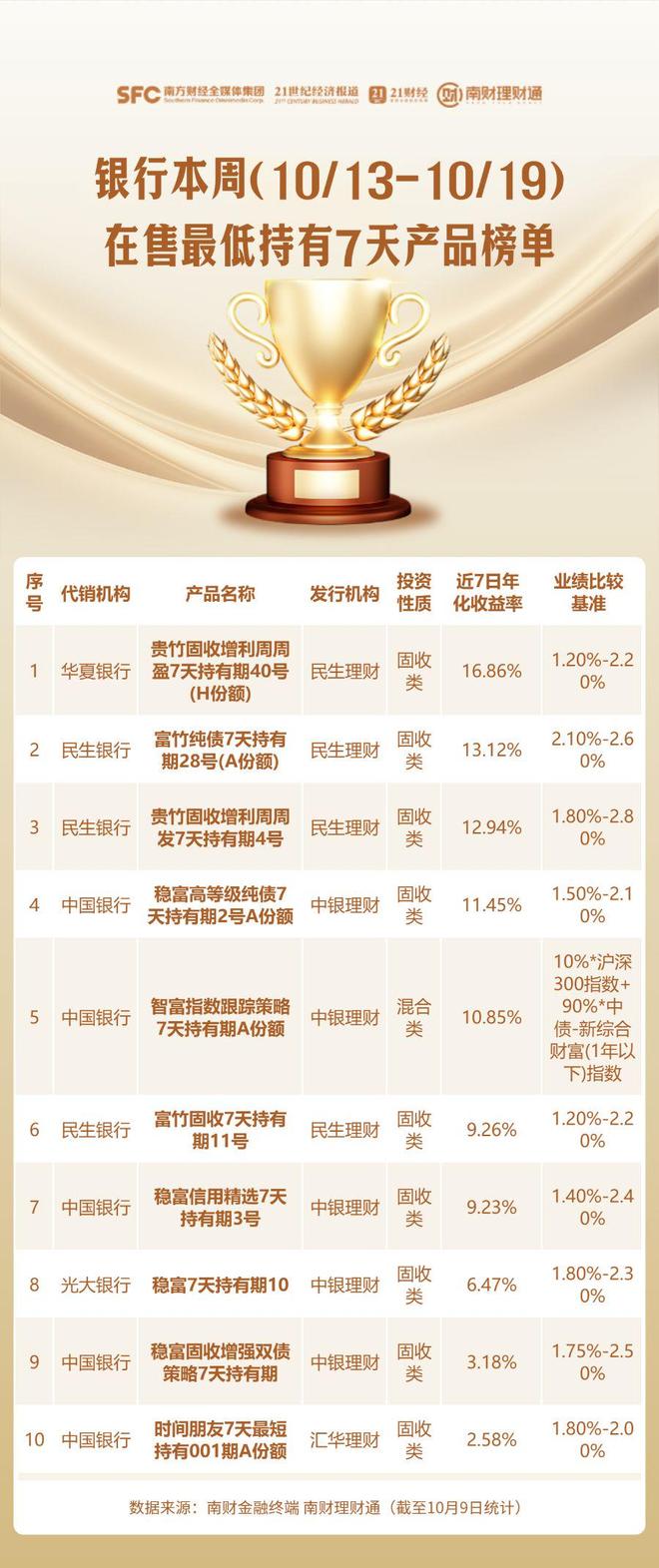
银行渠道本周在售最低持有期产品榜单(10/13-10/19)
2 1 Shi Ji Jing Ji Bao Dao· 2025-10-13 01:09
Core Insights - The article focuses on the performance of bank wealth management products with varying minimum holding periods, specifically highlighting the annualized returns of these products to assist investors in making informed choices [1][2]. Summary by Categories 7-Day Holding Period Products - The top-performing product is from Huaxia Bank, with an annualized return of 16.86% [4]. - Other notable products include: - Minsheng Bank's "Fuzhu Pure Bond" at 13.12% [4]. - Minsheng Bank's "Guizhu Fixed Income" at 12.94% [4]. - Bank of China’s "Stable Wealth High-Grade Pure Bond" at 11.45% [4]. 14-Day Holding Period Products - Minsheng Bank's "Guizhu Fixed Income" leads with a return of 13.71% [7]. - Other significant products include: - Minsheng Bank's "Fuzhu Pure Bond" at 10.97% [7]. - Bank of China's "Stable Wealth Fixed Income" at 9.67% [7]. 30-Day Holding Period Products - Minsheng Bank's "Fuzhu Pure Bond" has an annualized return of 9.51% [9]. - Other key products include: - Minsheng Bank's "Guizhu Fixed Income" at 8.99% [10]. - Bank of China's "Stable Wealth Preferred" at 7.13% [10]. 60-Day Holding Period Products - Bank of China's "Smart Wealth Index Tracking Strategy" tops the list with a return of 23.99% [12]. - Other notable products include: - Minsheng Bank's "Fuzhu Pure Bond" at 7.48% [12]. - Bank of China's "Stable Wealth Credit Selection" at 6.31% [12].
三季度金融机构被罚没超10亿,四家机构收超6000万大罚单
2 1 Shi Ji Jing Ji Bao Dao· 2025-10-11 15:02
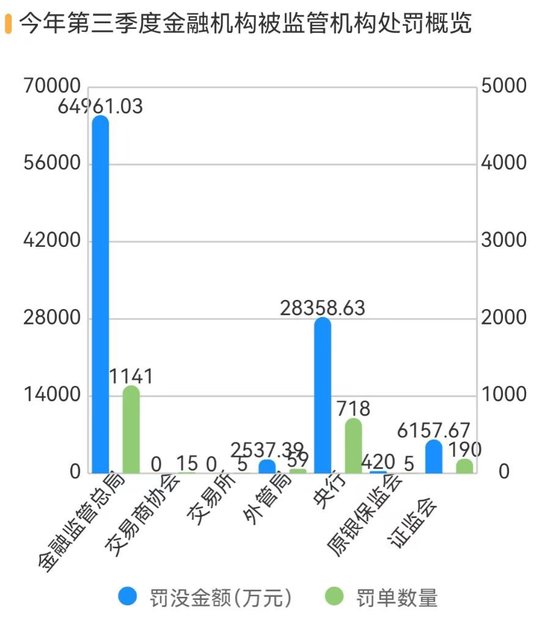
Core Points - In the third quarter of this year, financial institutions received a total of 2,133 fines, amounting to 1.024 billion yuan, representing significant increases of 36.12% and 190.91% respectively compared to the previous quarter, and a notable rise compared to the same period last year [1] Summary by Sections 1. Penalty Situation of Different Types of Institutions in Q3 - The National Financial Regulatory Administration issued 1,141 fines to financial institutions in Q3, totaling 650 million yuan, with a slight decrease of 20.82% in the number of fines year-on-year, but an increase of 46.4% in the total amount [3] - The central bank's penalties increased significantly, with 718 fines issued, a year-on-year increase of 357.32%, and a total penalty amount of 284 million yuan, up 353.34% year-on-year [3] 2. Overall Penalty Situation in the First Three Quarters - The penalty intensity was high in Q1, decreased in Q2, and increased again in Q3 [4] 3. Penalty Breakdown by Institution Type in Q3 - Banks received 1,448 fines, an increase of 18.3% year-on-year, with a total penalty amount of 829 million yuan, up 84.63% year-on-year [8] - Insurance companies received 471 fines, a slight increase of 7.29%, with a total penalty amount of 93.86 million yuan, up 41.57% year-on-year [8] - Securities firms received 45 fines, a decrease of 30.77% year-on-year, but an increase of 40.63% compared to the previous quarter [8] 4. Major Penalties in Q3 - Four fines exceeding 60 million yuan were issued, with Huaxia Bank receiving the largest fine of 87.25 million yuan for imprudent management of loans and related business [13][14] - Other significant fines included 66.70 million yuan for Guangfa Bank and 61.50 million yuan for Hengfeng Bank, both for similar violations [14] 5. Compliance Characteristics in Q3 - There was a notable increase in penalties for internet business violations, with 15 fines issued, a 275% increase from Q2, involving institutions like Postal Savings Bank and Zhejiang Merchants Bank [19] - Loan misappropriation issues were prominent, with 60 related fines issued, a 130.77% increase, primarily involving funds misused for repaying bad loans or investment [21] 6. Penalty Rankings of Financial Institutions in Q3 - Huaxia Bank ranked first in total penalties with 91.62 million yuan, followed by Guangfa Bank with 72.84 million yuan and Hengfeng Bank with 65.55 million yuan [23] - Among non-bank institutions, Donghai Securities topped the list with 60 million yuan in penalties, followed by two wealth management companies, Huaxia Wealth Management and Guangyin Wealth Management [25]


三季度金融机构被罚没超10亿,四家机构收超6000万大罚单
21世纪经济报道· 2025-10-11 14:05
Core Viewpoint - The article highlights a significant increase in penalties imposed on financial institutions in the third quarter, with a total of 2,133 fines amounting to 1.024 billion yuan, marking substantial year-on-year and quarter-on-quarter growth [1]. Group 1: Penalty Overview - In the third quarter, the National Financial Regulatory Administration issued 1,141 fines totaling 650 million yuan, showing a 46.4% increase in penalty amounts year-on-year despite a 20.82% decrease in the number of fines [3]. - The People's Bank of China significantly increased its penalties, issuing 718 fines with a total amount of 284 million yuan, representing a year-on-year increase of 357.32% in the number of fines and 353.34% in penalty amounts [4]. - Overall, the penalty intensity increased in the third quarter after a decline in the second quarter, indicating a trend of heightened regulatory scrutiny [7]. Group 2: Penalty Distribution by Institution Type - Banks received 1,448 fines in the third quarter, an 18.3% increase year-on-year, with total penalties amounting to 829 million yuan, a substantial year-on-year increase of 84.63% [10]. - Insurance companies faced 471 fines, with a slight year-on-year increase of 7.29%, and total penalties of approximately 93.86 million yuan, reflecting a 41.57% increase [10]. - Securities firms received 45 fines, showing a 30.77% decrease year-on-year but a 40.63% increase quarter-on-quarter [10]. Group 3: Major Penalties - Four fines exceeded 60 million yuan in the third quarter, with Huaxia Bank facing the largest penalty of 87.25 million yuan for improper management of loans and regulatory non-compliance [14]. - Guangfa Bank received the second-largest fine of 66.70 million yuan for similar violations, while Hengfeng Bank was fined 61.50 million yuan for issues related to both loan management and wealth management [14]. Group 4: Compliance Cases - Huaxia Securities was penalized for promoting false financial products, resulting in significant client losses, leading to administrative measures against the responsible employee [16][17]. - Donghua Futures faced penalties for improper procurement practices involving funds from its parent company, highlighting internal control deficiencies [18]. Group 5: Compliance Trends - There has been a notable increase in penalties related to internet business violations, with 15 fines issued in the third quarter, a 275% increase from the previous quarter, involving institutions like Postal Savings Bank and Zhejiang Merchants Bank [20]. - Loan misappropriation issues have become prominent, with 60 related fines issued in the third quarter, primarily for using loan funds to repay bad debts or for investment purposes [22][23]. Group 6: Penalty Rankings - In the third quarter, Huaxia Bank led in total penalties with 91.62 million yuan, followed by Guangfa Bank with 72.84 million yuan and Hengfeng Bank with 65.55 million yuan [25]. - Among non-bank institutions, Donghai Securities topped the list with a penalty of 60 million yuan, while two wealth management companies, Huaxia Wealth and Guangyin Wealth, ranked second and third with penalties of 12 million and 11.60 million yuan, respectively [28].

三季度金融机构被罚没超10亿 四家机构收超6000万大额罚单
2 1 Shi Ji Jing Ji Bao Dao· 2025-10-11 07:54
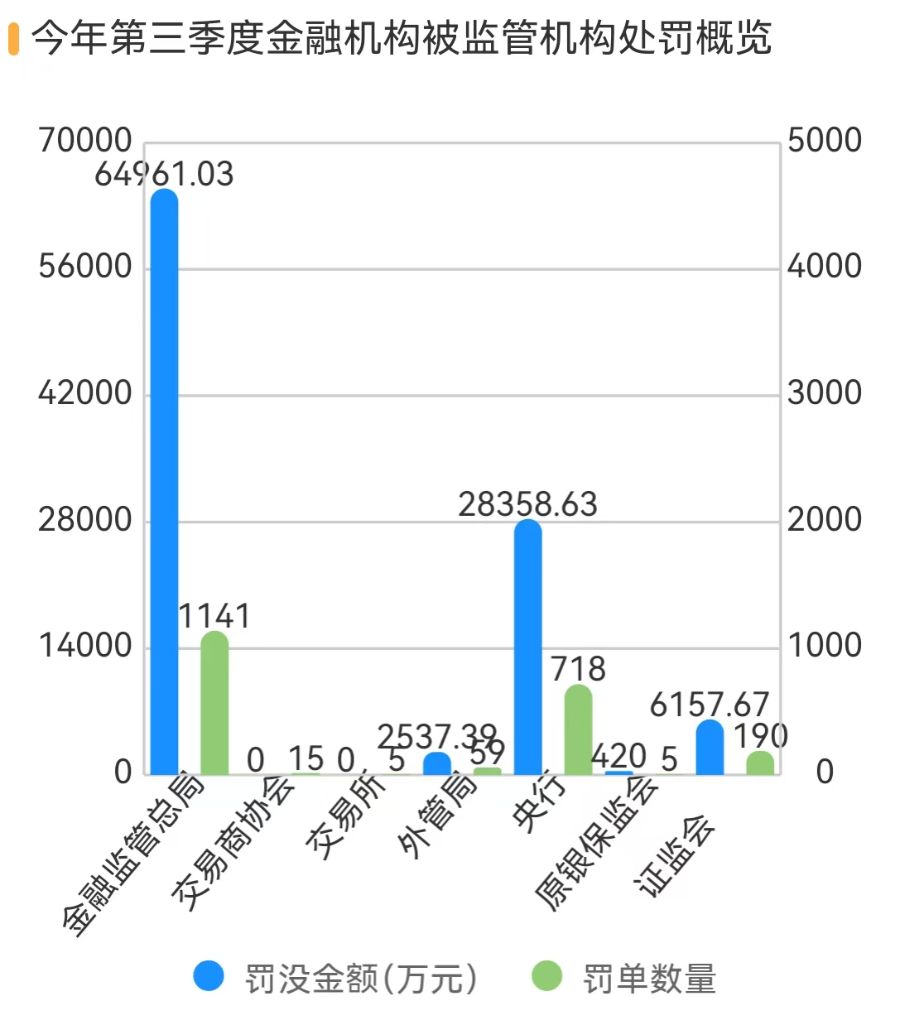
Core Insights - In the third quarter of this year, financial institutions received a total of 2,133 fines, amounting to 1.024 billion yuan, representing significant increases of 36.12% and 190.91% respectively compared to the previous quarter, and a notable rise compared to the same period last year [1] Summary by Sections 1. Penalty Situation in Q3 - The National Financial Regulatory Administration issued 1,141 fines to financial institutions in Q3, totaling 650 million yuan, with a slight decrease of 20.82% in the number of fines year-on-year, but a 46.4% increase in the total amount [2] - The central bank significantly increased its penalties, issuing 718 fines, which is a year-on-year increase of 357.32%, with a total penalty amount of 284 million yuan, also up 353.34% year-on-year [2] 2. Overall Penalty Trends - The overall penalty situation for financial institutions in the first three quarters shows a strong enforcement in Q1, a slight decline in Q2, and a resurgence in Q3 [4] 3. Breakdown by Institution Type - Banks received 1,448 fines in Q3, an increase of 18.3% year-on-year, with penalties totaling 829 million yuan, a year-on-year increase of 84.63% [7] - Insurance companies received 471 fines, with a slight increase of 7.29% year-on-year, and penalties amounting to 93.86 million yuan, up 41.57% [7] - Securities firms received 45 fines, a decrease of 30.77% year-on-year, but an increase of 40.63% compared to the previous quarter [7] 4. Major Penalties - In Q3, there were four penalties exceeding 60 million yuan, with Huaxia Bank receiving the largest fine of 87.25 million yuan for improper management of loans and regulatory data reporting [11] - Guangfa Bank received the second-largest fine of 66.70 million yuan for similar violations [12] - Hengfeng Bank was fined 61.50 million yuan for issues related to loan management and investment [13] 5. Compliance Cases - Huaxia Securities faced penalties for promoting false financial products, resulting in significant client losses [15] - Donghua Futures was penalized for improper procurement processes involving funds [14] 6. Compliance Characteristics - There has been an increase in penalties related to internet business violations, with 15 fines issued in Q3, a 275% increase from Q2 [15] - Loan misappropriation issues were prominent, with 60 related fines issued, a 130.77% increase from the previous quarter [17] 7. Penalty Rankings - In Q3, Huaxia Bank had the highest total penalty amount of 91.62 million yuan, followed by Guangfa Bank at 72.84 million yuan, and Hengfeng Bank at 65.55 million yuan [19] - Among non-bank institutions, Donghai Securities led with a penalty of 60 million yuan, followed by Huaxia Wealth Management and Guangyin Wealth Management [21]

三季度金融机构被罚没超10亿,四家机构收超6000万大额罚单
2 1 Shi Ji Jing Ji Bao Dao· 2025-10-11 07:47
Summary of Key Points Core Viewpoint - In the third quarter of this year, financial institutions received a total of 2,133 fines amounting to 1.024 billion yuan, representing significant increases of 36.12% and 190.91% respectively compared to the previous quarter, and a notable rise from the same period last year [1]. Group 1: Penalty Overview - The National Financial Supervision Administration issued 1,141 fines totaling 650 million yuan in the third quarter, with a year-on-year increase of 46.4% in penalty amounts despite a slight decrease of 20.82% in the number of fines [1]. - The central bank's penalties surged, with 718 fines issued, marking a year-on-year increase of 357.32%, and total penalties amounting to 284 million yuan, up 353.34% [1]. Group 2: Sector-Specific Penalties - Banks received 1,448 fines in the third quarter, an increase of 18.3% year-on-year, with penalties totaling 829 million yuan, reflecting an 84.63% increase [6]. - Insurance companies faced 471 fines, a slight increase of 7.29%, with penalties amounting to 93.86 million yuan, up 41.57% [6]. - Securities firms received 45 fines, a decrease of 30.77% year-on-year, but an increase of 40.63% compared to the previous quarter [6]. Group 3: Major Penalties - Four fines exceeding 60 million yuan were issued in the third quarter, with Huaxia Bank receiving the largest fine of 87.25 million yuan for improper management of loans and regulatory data reporting [11]. - Guangfa Bank was fined 66.70 million yuan for similar violations, while Hengfeng Bank received a fine of 61.50 million yuan for issues related to loan and wealth management [11]. Group 4: Compliance Cases - Hua'an Securities faced penalties for promoting false financial products, resulting in significant client losses [12]. - Donghua Futures was penalized for improper procurement practices involving funds from its parent company [13]. Group 5: Compliance Trends - There has been a notable increase in penalties related to internet business violations, with 15 fines issued in the third quarter, a 275% increase from the previous quarter [14]. - Major banks such as Postal Savings Bank and Zhejiang Merchants Bank were penalized for improper management of internet loan operations [15]. Group 6: Loan Misuse Issues - A total of 60 fines related to loan misuse were recorded, a 130.77% increase from the previous quarter, with funds often misallocated to repay bad loans or for investment purposes [17]. Group 7: Penalty Rankings - In terms of total penalties, Huaxia Bank led with 91.62 million yuan, followed by Guangfa Bank with 72.84 million yuan, and Hengfeng Bank with 65.55 million yuan [17].
股份制银行板块10月10日跌0.01%,招商银行领跌,主力资金净流出14.22亿元
Zheng Xing Xing Ye Ri Bao· 2025-10-10 08:46
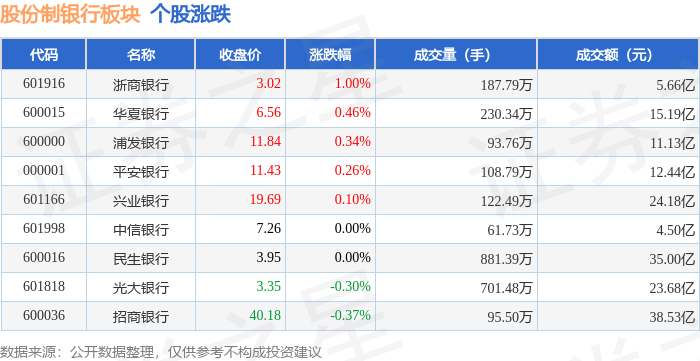
证券之星消息,10月10日股份制银行板块较上一交易日下跌0.01%,招商银行领跌。当日上证指数报收于3897.03,下跌0.94%。深证成指报收于 13355.42,下跌2.7%。股份制银行板块个股涨跌见下表: | 代码 | 名称 | 收盘价 | 涨跌幅 | 成交量(手) | 成交额(元) | | --- | --- | --- | --- | --- | --- | | 601916 | 浙商银行 | 3.02 | 1.00% | 187.79万 | 5.66亿 | | 600015 | 半夏银行 | 6.56 | 0.46% | 230.34万 | 15.19亿 | | 600000 | 浦发银行 | 11.84 | 0.34% | - 93.76万 | 11.13亿 | | 000001 | 平安银行 | 11.43 | 0.26% | 108.79万 | 12.44亿 | | 601166 | 兴业银行 | 19.69 | 0.10% | 122.49万 | 24.18亿 | | 666109 | 中信银行 | 7.26 | 0.00% | 61.73万 | 4.50亿 | | 600016 | 民生 ...

华夏银行、亚洲开发银行“促进产业园区绿色低碳发展项目”首笔贷款落地江苏
Zhong Jin Zai Xian· 2025-10-10 01:59
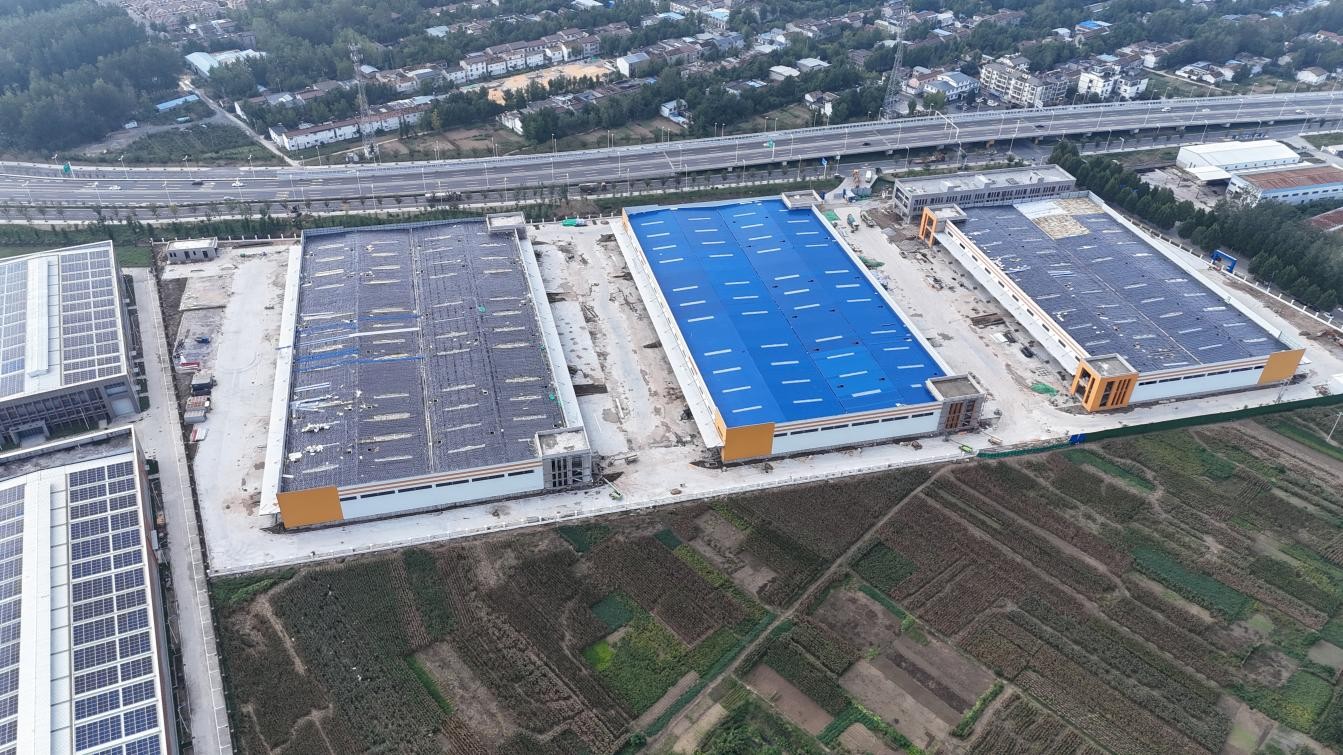
Core Viewpoint - The article highlights the development of the Suqian Port Smart Logistics Park in Jiangsu as a significant project supporting the green and low-carbon transformation of industrial parks in China, aligning with national strategies for sustainable development and the Belt and Road Initiative [3][7][13]. Group 1: Project Overview - The Suqian Port Smart Logistics Park is a key component of Suqian's logistics network, aiming to create a "gateway to the sea" and enhance the region's economic position in the Yangtze River Delta [3][4]. - The construction of the logistics park is progressing rapidly, with three energy-efficient logistics warehouses being built, set to be operational by the end of this year [6][9]. Group 2: Financial Support and Green Initiatives - Huaxia Bank and the Asian Development Bank (ADB) have jointly provided 220 million yuan in financing for the logistics park, marking the first loan issued under their collaboration to promote green and low-carbon development in industrial parks [6][7]. - The project aims to meet "zero carbon park" standards, with energy savings projected to reach 72% compared to traditional construction methods [9][11]. Group 3: Policy and Strategic Alignment - The initiative aligns with national policies aimed at establishing zero-carbon parks and promoting green transformation in industrial zones, contributing to China's dual carbon goals [7][8]. - The project utilizes an innovative financing model where ADB loans are matched by Huaxia Bank, providing long-term, efficient funding in local currency to mitigate exchange rate risks [8][12]. Group 4: Service and Implementation - Huaxia Bank's proactive approach included on-site assessments and tailored financial solutions to address the park's funding challenges, demonstrating effective collaboration between financial institutions and local governments [11][12]. - The bank has established a comprehensive service system that includes carbon management consulting, enhancing the project's international impact and supporting its green objectives [8][13].
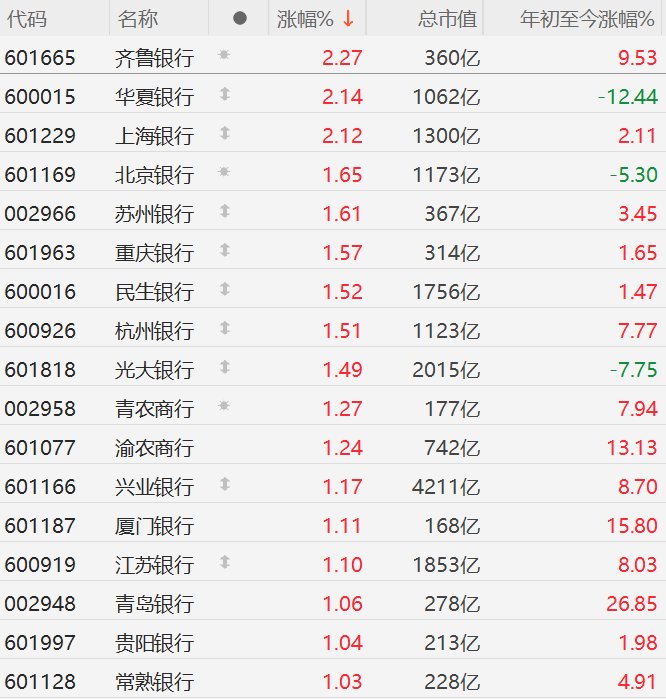
银行股逆势上涨,上海银行等涨超2%
Ge Long Hui· 2025-10-10 01:58
Core Insights - The A-share market has seen a rise in bank stocks, with notable increases in Qilu Bank, Huaxia Bank, and Shanghai Bank, all exceeding 2% [1] Group 1: Stock Performance - Qilu Bank's stock increased by 2.27%, with a total market capitalization of 36 billion and a year-to-date increase of 9.53% [2] - Huaxia Bank's stock rose by 2.14%, with a market cap of 106.2 billion and a year-to-date decline of 12.44% [2] - Shanghai Bank's stock saw a 2.12% increase, with a market cap of 130 billion and a year-to-date increase of 2.11% [2] - Beijing Bank's stock increased by 1.65%, with a market cap of 117.3 billion and a year-to-date decline of 5.30% [2] - Suzhou Bank's stock rose by 1.61%, with a market cap of 36.7 billion and a year-to-date increase of 3.45% [2] - Chongqing Bank's stock increased by 1.57%, with a market cap of 31.4 billion and a year-to-date increase of 1.65% [2] - Minsheng Bank's stock rose by 1.52%, with a market cap of 175.6 billion and a year-to-date increase of 1.47% [2] - Hangzhou Bank's stock increased by 1.51%, with a market cap of 112.3 billion and a year-to-date increase of 7.77% [2]