
Sinopec Corp.(600028)

Search documents
研判2025!中国功能性碳基材料行业政策、产业链、发展现状、重点企业及未来前景展望:下游高端应用需求强劲,驱动行业规模突破两百亿元[图]
Chan Ye Xin Xi Wang· 2025-11-02 00:08
Core Insights - The functional carbon-based materials industry in China is experiencing significant growth due to increasing applications across various sectors and expanding downstream market demand. The market size is projected to grow from 7.992 billion yuan in 2019 to 23.952 billion yuan by 2024, with a compound annual growth rate (CAGR) of 24.55% [1][8]. Industry Overview - Carbon-based materials, primarily composed of carbon elements, exhibit unique physical and chemical properties, making them suitable for high-tech applications. Key types include carbon quantum dots, fullerenes, carbon fibers, carbon nanotubes, carbon nanowires, and graphene, which are essential for upgrading the new materials industry [4][8]. Market Applications - Functional carbon-based materials are widely used in high-end fields such as aerospace (rocket engine nozzles, space shuttle components), automotive (brake discs), medicine, electronics, and photovoltaic power generation. These applications are characterized by high growth rates and strong drivers for market expansion [1][8]. Industry Policies - The functional carbon-based materials industry in China is still in its early stages of industrialization, facing international trade and technological barriers. Recent government policies aim to guide and support the industry's healthy development, including the inclusion of carbon-based materials in encouraged projects [6][7]. Industry Chain - The industry chain consists of upstream raw materials (coal, oil, methane, etc.), midstream production processes, and downstream applications across various sectors such as photovoltaics, wind power, semiconductors, and aerospace [7][8]. Competitive Landscape - The global market for functional carbon-based materials is characterized by both international and domestic competition. International giants like SGL Group and Morgan Advanced Materials dominate the high-end market, while domestic companies such as Chujiang New Materials and Guangwei Composite Materials are rapidly emerging through innovation and market expansion [9][10]. Development Trends - The industry is shifting focus from scale to performance breakthroughs, emphasizing the design and synthesis of precursor structures to develop materials with superior properties. Future trends include precision applications tailored to specific markets, such as renewable energy and biomedical fields, and a transition towards green manufacturing and recycling practices [11][12][13].


首次世界五百强断崖差距:日本149家,美151家,中国3家,现在呢
Sou Hu Cai Jing· 2025-11-01 12:12
Group 1 - In 1995, China had only 3 companies in the Fortune Global 500, while the US had 151 and Japan had 149, indicating a significant gap in economic strength [2] - As of August 2024, the US remains the leader in the Fortune Global 500 with 139 companies, showcasing its long-standing economic dominance [4][6] - Walmart, Amazon, and State Grid are among the top three companies in the 2024 ranking, with Walmart generating revenue of $648.125 billion, Amazon at $574.785 billion, and State Grid at $545.9475 billion [9][11] Group 2 - Japan's presence in the Fortune Global 500 has significantly declined from 149 companies in 1995 to only 40 in the latest ranking, reflecting its economic struggles [12] - Japan's economic growth peaked in the 1980s but has since faced challenges due to reliance on traditional manufacturing and an aging population [16][19] - The decline in Japan's economic power is attributed to factors such as the bursting of the economic bubble and a lack of innovation in emerging sectors like AI and renewable energy [17][19] Group 3 - China has made remarkable progress, with a total of 133 companies, including those from Taiwan, in the Fortune Global 500, indicating a strong economic presence [21] - The increasing number of private companies like Xiaomi, Huawei, and Tencent in the rankings demonstrates the growing vitality of China's private sector [21] - China's achievements are attributed to its resilience in the face of external pressures, particularly from the US, which has attempted to hinder China's development through trade and technology wars [23][25][26]



LP圈发生了什么
投资界· 2025-11-01 07:54
Core Insights - The article highlights the establishment of various investment funds across different regions in China, focusing on strategic industries and innovation-driven sectors. Group 1: Fund Establishments - A central enterprise strategic emerging industry development fund was launched in Beijing with an initial scale of 510 billion RMB, involving major state-owned enterprises as contributors [2] - The Zhejiang Social Security Science and Technology Innovation Fund was established with an initial scale of 500 billion RMB, aimed at supporting key areas of technological innovation [3] - The first biomanufacturing industry fund in Shanghai was initiated, combining resources from industry leaders and venture capital to drive technological breakthroughs [4] Group 2: Regional Funds - Chengdu established a high-level talent innovation and entrepreneurship fund, focusing on early-stage investments to support talent and technology transfer [5][6] - Dongguan's Songshan Lake completed the registration of a 100 billion RMB mother fund to promote technological finance and regional industrial upgrades [7] - Wuhan launched its first concept verification fund group with an annual funding pool of 112.5 million RMB to support startup projects [8] Group 3: Sector-Specific Funds - The Hebei Xiong'an concept verification fund was set up with a focus on aerospace information and biotechnology, with an initial scale of 20 million RMB [9] - The Jilin Province Ice and Snow Economy Fund was established with a total scale of 500 million RMB, targeting the ice and snow tourism and technology sectors [11] - The Zhuhai Zuguang New Intelligence Fund was launched to support high-end intelligent manufacturing, marking a significant step in the region's industrial investment [12] Group 4: Investment Strategies - The Chengdu fund emphasizes market-oriented operations to facilitate talent and technology commercialization [6] - The Dongguan fund aims to create a comprehensive fund system covering the entire lifecycle of enterprises through collaboration with various investment institutions [7] - The Jiangsu Yangzhou Aerospace Industry Fund focuses on strategic emerging industries, leveraging a significant capital structure to enhance investment capabilities [14]



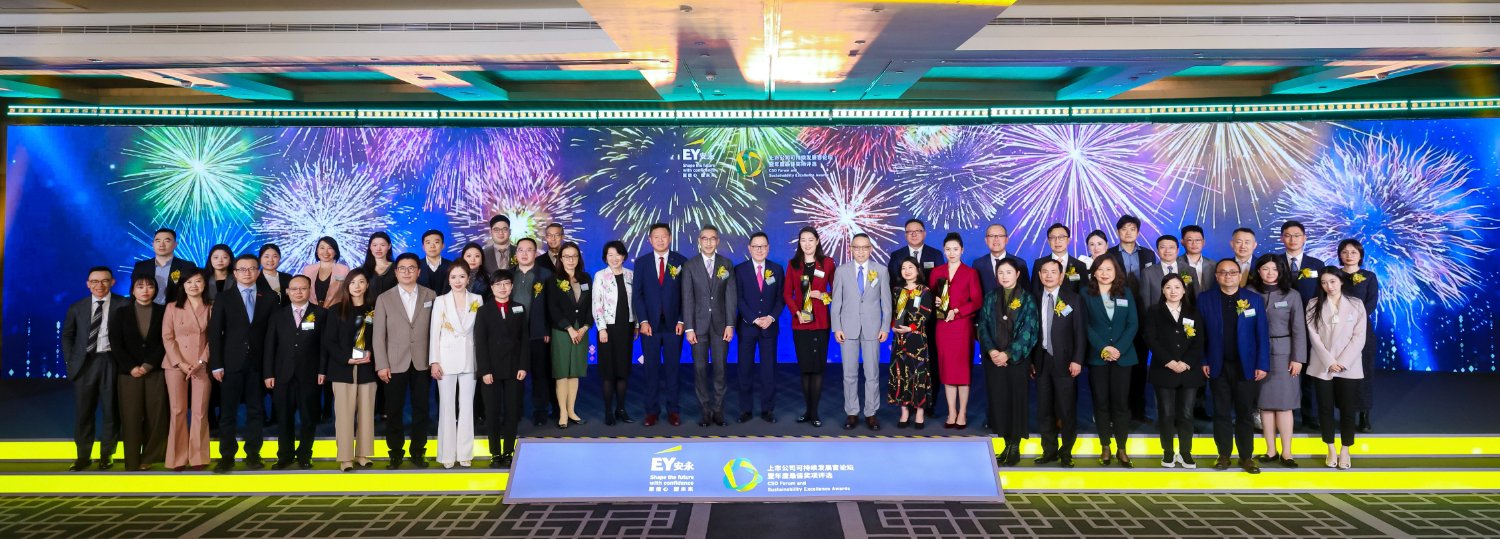
以数为擎,向绿而行,企业可持续发展迎“智”变——第四届上市公司可持续发展官论坛暨年度最佳奖项评选结果隆重揭晓
Zhong Guo Jin Rong Xin Xi Wang· 2025-10-31 14:58
Core Insights - The integration of "digital intelligence" and "green" initiatives is advancing corporate ESG (Environmental, Social, and Governance) practices from conceptual advocacy to systematic and intelligent implementation [1][3] - The fourth annual forum on sustainable development for listed companies, themed "Digital Intelligence and Green Movement Leading New Journey," was held in Beijing, revealing the winners of the "Ernst & Young Sustainable Development Annual Best Awards 2025" [1][3] - The awards highlighted the innovative practices of Chinese companies in the ESG and AI integration space, showcasing their contributions to building a modern industrial system and achieving high-quality development [1][3] Group 1: Event Overview - The forum featured 2 special awards, 12 outstanding companies, 2 distinguished individuals, 16 excellent cases, and 1 special contribution award for technological innovation in ESG development [1][3] - The focus of this year's awards was on the role of digitalization as an innovative driving force, emphasizing zero-carbon technology and AI's role in enhancing productivity [1][3] Group 2: Industry Trends - Ernst & Young's China Chairman noted that 2023 is a pivotal year for global sustainable development, marking the 10th anniversary of the Paris Agreement and the 20th anniversary of the "Green Mountains and Clear Water are Gold and Silver Mountains" concept [3] - The rapid advancement of AI technology is accelerating the digital and green transformation of Chinese enterprises, positioning them as key players in sustainable development [3][4] Group 3: AI and ESG Integration - Companies are encouraged to integrate ESG into their core strategies and leverage technology to transform sustainable development into a quantifiable and operational value system [4][5] - Ernst & Young has introduced AI-driven solutions, including the DeepSeek model and the METIS AI platform, to support enterprises in their green transformation efforts [4][5] Group 4: Award Evaluation and Criteria - The evaluation framework for the awards includes nine dimensions, focusing on technological innovation, low-carbon benefits, and social responsibility [5] - This year, an AI assessment component was introduced to enhance the evaluation process, utilizing a comprehensive ESG information database [5] Group 5: Future Outlook - Ernst & Young aims to deepen its professional service capabilities, helping companies embed sustainable development into their strategic core and operational processes [6]





油价下跌,“三桶油”每天少赚3.8个亿!
Di Yi Cai Jing· 2025-10-31 13:54
Core Insights - The decline in international oil prices has significantly impacted the performance of China's major oil companies, known as the "Big Three" [2] - For the first three quarters, China Petroleum, China National Petroleum, and China National Offshore Oil Corporation reported net profits of 29.984 billion yuan, 126.279 billion yuan, and 101.971 billion yuan, respectively, representing year-on-year declines of 32.2%, 4.9%, and 12.6% [2] - The average price of crude oil sold by China Petroleum fell by 14.7% to $65.55 per barrel, while China National Offshore Oil's average price dropped by 13.6% to $68.92 per barrel, contributing to revenue declines in their oil and gas segments [2][3] Financial Performance - The combined net profit of the "Big Three" decreased by over 35 billion yuan compared to the previous year, equating to a daily loss of approximately 3.8 million yuan [2] - Despite the drop in oil prices, the profit decline for China Petroleum and China National Offshore Oil was less severe than the price drop due to effective cost management and operational efficiency [3] - China Petroleum's oil and gas equivalent production increased by 2.6% to 1,377.2 million barrels, with unit operating costs decreasing by 6.1% to $10.79 per barrel [3] Natural Gas Segment - China National Offshore Oil reported a nearly 12% increase in natural gas production, significantly outpacing overall production growth, with natural gas sales revenue rising by 15.2% [3] - The average price of natural gas sold by China National Offshore Oil increased by 1% to $7.86 per thousand cubic feet, contributing positively to its financial performance [3] Downstream and Chemical Business - The downstream oil product sales and refining chemical sectors of China Petroleum and China Petrochemical are facing challenges due to decreased market demand and falling prices [3] - China Petroleum's chemical business reported an operating profit of 1.787 billion yuan, a year-on-year decline of 50%, while China Petrochemical's chemical segment experienced a pre-tax loss of 8.223 billion yuan, widening by nearly 68% [4] Industry Trends and Strategic Shifts - The peak demand for gasoline in the Chinese market was reached in 2023, with expectations of a significant decline post-2030, impacting the overall oil product demand [5] - In response to the pressures from renewable energy, the "Big Three" are accelerating their diversification into non-oil businesses [5] - China Petrochemical aims to transform into a comprehensive energy service provider by expanding into natural gas, hydrogen, and electric vehicle charging services [5] - China Petroleum is also focusing on integrating oil and gas exploration with renewable energy development, emphasizing the construction of comprehensive energy stations [5]


油价下跌,“三桶油”每天少赚3.8个亿!
第一财经· 2025-10-31 13:38
Core Viewpoint - The article discusses the significant impact of declining international oil prices on the performance of China's major oil companies, referred to as the "Three Barrels of Oil" (China Petroleum, Sinopec, and CNOOC), highlighting their financial results and strategic responses to the changing market conditions [3][4]. Financial Performance - In the first three quarters, China Petroleum, Sinopec, and CNOOC reported net profits of 29.984 billion yuan, 126.279 billion yuan, and 101.971 billion yuan, respectively, representing year-on-year declines of 32.2%, 4.9%, and 12.6% [3]. - The combined net profit of these companies decreased by over 35 billion yuan compared to the previous year, equating to a daily loss of approximately 380 million yuan [3]. - The average price of crude oil for China Petroleum fell by 14.7% to $65.55 per barrel, while CNOOC's average price dropped by 13.6% to $68.92 per barrel, leading to revenue declines in their oil and gas segments [3][4]. Operational Efficiency - Despite the decline in profits, China Petroleum and CNOOC managed to limit their profit drops compared to the oil price decline due to effective cost management and operational efficiency [4]. - China Petroleum's oil and gas equivalent production increased by 2.6% to 1,377.2 million barrels, with unit operating costs decreasing by 6.1% to $10.79 per barrel [4]. - CNOOC's net production rose by 6.7% to 578.3 million barrels of oil equivalent, with costs per barrel down by 2.8% to $27.35 [4]. Natural Gas Segment - The natural gas segment showed positive growth, with CNOOC's natural gas production increasing by nearly 12%, significantly outpacing overall production growth [5]. - The average price of natural gas rose by 1% to $7.86 per thousand cubic feet, contributing to a 15.2% increase in natural gas sales revenue [5]. Downstream Business Challenges - The downstream oil product sales and refining sectors faced challenges due to declining market demand and falling prices for key petroleum and petrochemical products [5]. - China Petroleum's chemical business saw operating profits drop by 50%, while Sinopec's chemical segment reported a pre-tax loss of 8.223 billion yuan, widening by nearly 68% year-on-year [5]. Strategic Shifts - In response to the pressures from the renewable energy sector, the "Three Barrels of Oil" are accelerating their diversification into non-oil businesses [6]. - China Petroleum plans to develop a comprehensive energy service model focusing on oil, gas, hydrogen, electricity, and services, while Sinopec is investing in electric vehicle charging infrastructure and clean energy operations [6]. - Both companies are emphasizing the integration of oil and gas exploration with renewable energy development, aiming to enhance their positions in the evolving energy landscape [6].

财报解读|三桶油前3季度减利超350亿元,三桶油加速战略转型
Di Yi Cai Jing· 2025-10-31 12:55
Core Insights - The "Three Barrel Oil" companies (China Petroleum, Sinopec, and CNOOC) experienced a significant decline in net profits in the first three quarters, totaling over 35 billion yuan, primarily due to falling international oil prices [1][2] Group 1: Financial Performance - China Petroleum reported a net profit of 126.28 billion yuan, down 4.9% year-on-year, while Sinopec and CNOOC reported net profits of 29.98 billion yuan and 101.97 billion yuan, down 32.2% and 12.6% respectively [1] - The combined net profit decline of over 35 billion yuan translates to a daily loss of approximately 380 million yuan [1] Group 2: Oil Price Impact - The average price of crude oil for China Petroleum fell by 14.7% to $65.55 per barrel, leading to an 8.3% decrease in oil and gas revenue to 622.39 billion yuan [1] - CNOOC's average price for crude oil decreased by 13.6% to $68.92 per barrel, resulting in a 5.9% drop in oil and gas sales revenue to 255.48 billion yuan [1] Group 3: Production and Cost Management - China Petroleum's oil and gas equivalent production increased by 2.6% to 1,377.2 million barrels, with unit operating costs decreasing by 6.1% to $10.79 per barrel [2] - CNOOC's net oil and gas production rose by 6.7% to 578.3 million barrels of oil equivalent, with costs per barrel down by 2.8% to $27.35 [2] Group 4: Natural Gas Performance - CNOOC's natural gas production increased by nearly 12%, significantly outpacing the overall growth rate of the company's oil and gas production [2] - The average price of natural gas for CNOOC rose by 1% to $7.86 per thousand cubic feet, contributing to a 15.2% increase in natural gas sales revenue [2]
财报解读|油价下跌致前三季度减利超350亿元,“三桶油”加速战略转型
Di Yi Cai Jing· 2025-10-31 12:08
Core Viewpoint - The "Three Barrel Oil" companies in China are facing significant profit declines due to the ongoing drop in international oil prices, prompting a strategic shift towards comprehensive energy services including oil, gas, hydrogen, and electricity [2][5]. Financial Performance - In the first three quarters, China Petroleum, China National Petroleum, and China National Offshore Oil Corporation reported net profits of 29.984 billion yuan, 126.279 billion yuan, and 101.971 billion yuan respectively, reflecting year-on-year declines of 32.2%, 4.9%, and 12.6% [2]. - The combined net profit decrease exceeded 35 billion yuan compared to the previous year, averaging a loss of approximately 3.8 billion yuan per day [2]. - The average selling price of crude oil for China Petroleum fell by 14.7% to $65.55 per barrel, while China National Offshore Oil's average selling price dropped by 13.6% to $68.92 per barrel, impacting their oil and gas revenue [2][3]. Operational Efficiency - Despite the profit declines, the reduction in net profit for China Petroleum and China National Offshore Oil was less severe than the drop in oil prices, attributed to effective cost management and operational efficiency [3]. - China Petroleum's oil and gas equivalent production increased by 2.6% to 1,377.2 million barrels, with unit operating costs decreasing by 6.1% to $10.79 per barrel [3]. - China National Offshore Oil's net production rose by 6.7% to 578.3 million barrels of oil equivalent, with costs per barrel down by 2.8% to $27.35 [3]. Natural Gas Segment - The natural gas segment showed positive growth, with China National Offshore Oil's natural gas production increasing by nearly 12%, significantly outpacing overall production growth [3]. - The average price of natural gas rose by 1% to $7.86 per thousand cubic feet, leading to a 15.2% increase in natural gas sales revenue [3]. Downstream Business Impact - The downstream oil product sales and refining chemical businesses of China Petroleum and China Sinopec are facing challenges due to declining market demand and falling prices of key petroleum and petrochemical products [3][4]. Chemical Business Challenges - The chemical business is experiencing reduced profit margins due to the continuous release of new production capacity, with China Petroleum's chemical operations reporting a profit of 1.787 billion yuan, halving year-on-year, while China Sinopec's chemical sector faced a pre-tax loss of 8.223 billion yuan, widening by nearly 68% [4]. Strategic Shift Towards New Energy - In response to the pressures from new energy on traditional markets, the "Three Barrel Oil" companies are accelerating their non-oil business development [5]. - China Sinopec plans to focus on stabilizing oil, expanding gas, promoting hydrogen, increasing electricity, and strengthening services, aiming to transform into a comprehensive energy service provider [5]. - China Petroleum's president emphasized the construction of integrated energy stations and the integration of oil and gas exploration with new energy development [5].
中国石化(600028) - 中国石化H股公告-翌日披露表格
2025-10-31 09:49
Section I must be completed by a listed issuer where has been a charge in its issued shares or teasury shares which is disoloseable pursuant to rule 13.25A of the Rules Gov .isting of Securities on The Stock Exchange of Hong King Limited the "Exchange") (the "Main Board Rules") or rule 17.27A of the Rules Governing the Listing of Securities on Exchange (the "GEM Rules"). | Section I | | | | | | | | --- | --- | --- | --- | --- | --- | --- | | 1. Class of shares | Ordinary shares | H Type of shares | | Listed ...
中国石油化工股份(00386) - 翌日披露报表
2025-10-31 09:15
FF305 翌日披露報表 (股份發行人 ── 已發行股份或庫存股份變動、股份購回及/或在場内出售庫存股份) 表格類別: 股票 狀態: 新提交 公司名稱: 中國石油化工股份有限公司 呈交日期: 2025年10月31日 如上市發行人的已發行股份或庫存股份出現變動而須根據《香港聯合交易所有限公司(「香港聯交所」)證券上市規則》(「《主板上市規則》」)第13.25A條 / 《香港聯合交易所有限公司GEM證券 上市規則》(「《GEM上市規則》」)第17.27A條作出披露,必須填妥第一章節 。 | 1). | 其他 (請註明) | | % | | | | | --- | --- | --- | --- | --- | --- | --- | | | 見B部分 | | | | | | | | 變動日期 | 2025年10月31日 | | | | | | | 於下列日期結束時的結存 (註5及6) | 2025年10月31日 | 97,232,263,098 | 0 | | 97,232,263,098 | | | | B. 贖回/購回股份 (擬註銷但截至期終結存日期尚未註銷) (註5及6) | | | | | | 1). | ...