
Sinopec Corp.(600028)

Search documents
央企红利ETF富国(159332)开盘涨0.98%,重仓股中远海控涨0.72%,中国神华跌1.76%
Xin Lang Cai Jing· 2026-03-24 01:39
Group 1 - The central enterprise dividend ETF, Fu Guo (159332), opened at 1.234 yuan with an increase of 0.98% on March 24 [1][2] - Major holdings of the ETF include China Merchants Industry Holdings, which rose by 0.72%, and China Shenhua Energy, which fell by 1.76% [1] - The ETF's performance benchmark is the China Central Enterprises Dividend Index return rate, managed by Fu Guo Fund Management Co., Ltd., with a return of 26.33% since its establishment on July 16, 2024, and a monthly return of 2.08% [2] Group 2 - The MACD golden cross signal has formed, indicating a positive trend for certain stocks [3]




中国石油天然气:基于油气价格的更真实盈利评估-China Oil & Gas_ More realistic earnings assessment against oil_gas prices
2026-03-24 01:27
Summary of Key Points from the Conference Call Industry Overview - The conference call focuses on the **China Oil & Gas** sector, particularly the implications of rising oil and gas prices due to geopolitical disruptions, specifically the closure of the **Strait of Hormuz** [1][2]. Core Insights and Arguments - **Oil and Gas Price Forecasts**: - Brent crude price forecast for 2026 has been raised to **USD80/b** from **USD65/b**; for 2027, it is now **USD70/b** from **USD66.3/b** [2]. - JKM (Japan Korea Marker) price forecasts have increased to **USD15/mmBtu** for 2026 and **USD10.5/mmBtu** for 2027 [2]. - **Impact on China’s Oil Supply**: - The Middle East accounts for approximately **40%** of China's crude supply and **7%** of its gas supply. A one-month disruption can be managed through floating storage and strategic inventory [3]. - China holds about **1.1-1.3 billion barrels** of crude in inventory, sufficient for **110-140 days** of imports [3]. - **Cost Escalation for Gas Utilities**: - Gas utilities are expected to face cost increases in March due to annual contract renewals with oil and gas majors. However, a more liberalized gas pricing framework in China allows for quicker pass-through of costs to consumers [4]. - Companies like **ENN** and **Kunlun** are expected to be more resilient due to better cost management and more LNG supply [4]. - **Upstream Earnings Sensitivity**: - **CNOOC** and **PetroChina** are positively correlated to oil prices, with CNOOC being the most sensitive. **Sinopec**, however, faces challenges due to its reliance on Middle Eastern crude, which could disrupt refinery utilization [5][10]. - A **25% reduction** in refinery runs for one month could decrease Sinopec's EBIT by approximately **2%** [5]. Additional Important Insights - **Refinery Utilization and Export Suspension**: - The National Development and Reform Commission (NDRC) has requested refiners to pause clean product exports to ensure domestic supply, which could negatively impact profits for PetroChina and Sinopec [18]. - A one-month export suspension could impact Sinopec's earnings by **2.0%** and PetroChina's by **0.5%** at the EBIT level [19]. - **Earnings Impact Scenarios**: - Three scenarios were outlined regarding the closure of the Strait of Hormuz: - **Base Case**: One-month closure followed by normalization, with Brent averaging **USD86/b** in Q2 2026. - **Optimistic Case**: Immediate resolution with a one-month recovery, Brent trending down to **USD70/b**. - **Pessimistic Case**: Four-month closure leading to Brent averaging **USD100/b** for 2026 [21][22]. - **Earnings Estimates Revisions**: - **PetroChina**: Revenue estimates for 2026 increased by **12%** to **RMB2,660 billion**; net income estimates increased by **17%** to **RMB179 billion** [32]. - **Sinopec**: Revenue estimates for 2026 increased by **7%** to **RMB2,837 billion**; net income estimates increased by **18%** to **RMB42 billion** [36]. - **CNOOC**: Revenue estimates for 2026 increased by **17%** to **RMB441 billion**; net income estimates increased by **28%** to **RMB153 billion** [40]. - **Gas Utilities Performance**: - ENN and Kunlun are expected to show resilience against gas cost hikes, with earnings projected to decline by **8-9%** for every **10%** increase in gas costs, compared to over **10%** for peers [27]. Conclusion - The conference call highlighted the significant impact of geopolitical events on oil and gas prices, the resilience of certain companies in the gas utility sector, and the varying sensitivity of major Chinese oil companies to these price changes. The revisions in earnings estimates reflect a more optimistic outlook for upstream companies like CNOOC and PetroChina, while Sinopec faces challenges due to its reliance on Middle Eastern crude.



光大证券晨会速递-20260324
EBSCN· 2026-03-24 01:06
Real Estate - In January-February 2026, the supply of residential land in 100 cities decreased by 17% year-on-year, while the transaction area dropped by 34%, and the average transaction floor price fell by 24% year-on-year [1] - In the core 30 cities, 9 plots of land were sold with a premium rate exceeding 20%, accounting for 11.1%, while 68 plots were sold at zero premium, making up 84.0% of the total transactions, indicating low transaction volume and prices [1] - The report recommends companies such as China Jinmao and Greentown Service as the market continues to stabilize with the implementation of previous policies [1] Real Estate - High-Frequency Tracking - As of March 22, 2026, new home transactions in 20 cities totaled 114,000 units, down 28.8% year-on-year, with Beijing at 5,452 units (-31%), Shanghai at 17,000 units (-13%), and Shenzhen at 3,193 units (-58%) [2] - For second-hand homes in 10 cities, total transactions reached 200,000 units, a decrease of 7.3% year-on-year, with Beijing at 35,000 units (-4%), Shanghai at 56,000 units (-0.2%), and Shenzhen at 11,000 units (-14%) [2] Oil and Gas - Company Research - In 2025, the company achieved total revenue of 27.2 billion yuan, a decrease of 9.3% year-on-year, and a net profit attributable to shareholders of 2.084 billion yuan, down 3.6% year-on-year [3] - The forecast for net profit attributable to shareholders for 2026-2028 is 2.436 billion, 2.733 billion, and 3.020 billion yuan respectively, indicating an improvement in profitability [3] Oil and Gas - Sinopec - In 2025, the company reported total revenue of 2.7836 trillion yuan, down 9% year-on-year, and a net profit attributable to shareholders of 31.8 billion yuan, a decline of 37% [4] - The forecast for net profit attributable to shareholders for 2026-2028 is 403 billion, 471 billion, and 556 billion yuan, with expectations of performance improvement as new capacity comes online and investments in the new energy sector materialize [4] Building Materials - The company anticipates an improvement in the supply-demand structure for coarse yarn in 2026, with a positive price trend for electronic fabrics, leading to an upward revision of net profit forecasts for 2026-2027 to 5.52 billion and 6.39 billion yuan respectively [5] Jewelry - Chow Tai Fook - The company is the largest gold and jewelry company in China, facing challenges due to weak retail demand and rising gold prices, leading to a reduction in franchise stores [7] - The company is optimizing inefficient stores and has seen a positive quarterly same-store sales growth in the second half of 2025, with projected net profits for FY2026-2028 of 8.131 billion, 8.980 billion, and 9.547 billion yuan respectively [7] Pharmaceuticals - Tian Tan Biology - The company has received a high-tech enterprise certificate for its subsidiary, emphasizing its commitment to innovation and research [8] - The product pipeline is expanding, with several products making progress in the approval stages, which is expected to strengthen the company's leading position in the recombinant coagulation factor and immunoglobulin sectors [8]


大手笔!4家公司,分红均超百亿元
证券时报· 2026-03-24 00:00
Core Viewpoint - The article highlights the increasing trend of cash dividends among listed companies in the Shanghai Stock Exchange, with a significant number of companies announcing dividend plans alongside their annual reports, indicating a strong support for company valuations [1][3]. Group 1: Dividend Announcements - As of now, 122 companies in the Shanghai Stock Exchange have released annual reports, with 120 of them announcing cash dividend plans, representing over 98% [1]. - Among the 89 companies that disclosed annual reports on the main board, 70 have announced dividend proposals, with an expected total dividend amount of 765.24 billion RMB [1]. - In the Sci-Tech Innovation Board, 33 companies have disclosed annual reports, with 31 announcing dividends, totaling an expected dividend amount of 37.88 billion RMB [1]. Group 2: Major Dividend Payers - Four companies among those that have announced dividend plans have proposed dividends exceeding 100 billion RMB [2]. - China CITIC Bank plans to distribute a total cash dividend of 212.01 billion RMB for the year 2025, with a cash dividend per 10 shares of 3.81 RMB, marking a historical high with a payout ratio of 31.75% [3]. - Sinopec intends to distribute a total cash dividend of 135.44 billion RMB for the fiscal year 2025, with an annual profit distribution ratio of 81% when accounting for share buybacks [3]. - Industrial Fulian plans a total cash dividend of approximately 194.51 billion RMB for 2025, with a dividend rate of 55.12% [3]. - Zijin Mining plans to distribute cash dividends of approximately 101.04 billion RMB, with a dividend of 3.8 RMB per 10 shares, and also announced a share buyback plan of 1.5 billion to 2.5 billion RMB [3]. Group 3: Investor Engagement and Market Trends - The increasing transparency and standardization of dividend decisions among listed companies are attracting more enterprises to follow suit, indicating a positive market feedback loop [4]. - It is anticipated that measures to encourage companies to increase dividend amounts and frequency will continue to evolve, leading to more companies joining the trend of high-frequency dividends [4]. - This trend is expected to create a virtuous cycle of "governance optimization - dividend enhancement - valuation reshaping," fostering a new paradigm of shared value creation between investors and companies, and driving a systematic reshaping of the capital market's value discovery mechanism [4].




【中国石化(600028.SH/0386.HK)】炼化景气下滑业绩承压,提升分红比例积极回报股东——2025年报点评(赵乃迪/蔡嘉豪/王礼沫)
光大证券研究· 2026-03-23 23:05
事件: 公司发布2025年报,2025年,公司实现营业总收入27836亿元,同比-9%,实现归母净利润318亿元,同 比-37%。2025Q4单季,公司实现营业总收入6701亿元,同比-5%,环比-5%,实现归母净利润18亿元,同 比-70%,环比-79%。 点击注册小程序 查看完整报告 特别申明: 本订阅号中所涉及的证券研究信息由光大证券研究所编写,仅面向光大证券专业投资者客户,用作新媒体形势下研究 信息和研究观点的沟通交流。非光大证券专业投资者客户,请勿订阅、接收或使用本订阅号中的任何信息。本订阅号 难以设置访问权限,若给您造成不便,敬请谅解。光大证券研究所不会因关注、收到或阅读本订阅号推送内容而视相 关人员为光大证券的客户。 报告摘要 2025年,公司销售板块实现息税前利润132亿元,同比-40.7%,主要受国内新能源替代加速以及油价下行 带来库存减利等因素影响。公司充分发挥网络优势,巩固油品市场份额,车用LNG经营量和充电量同比大 幅增长,不断提升非油业务经营质量。2025年,公司成品油总经销量22902万吨,同比-4.3%,其中境内成 品油零售量11016万吨,同比-2.9%,境内成品油直销分销量6 ...
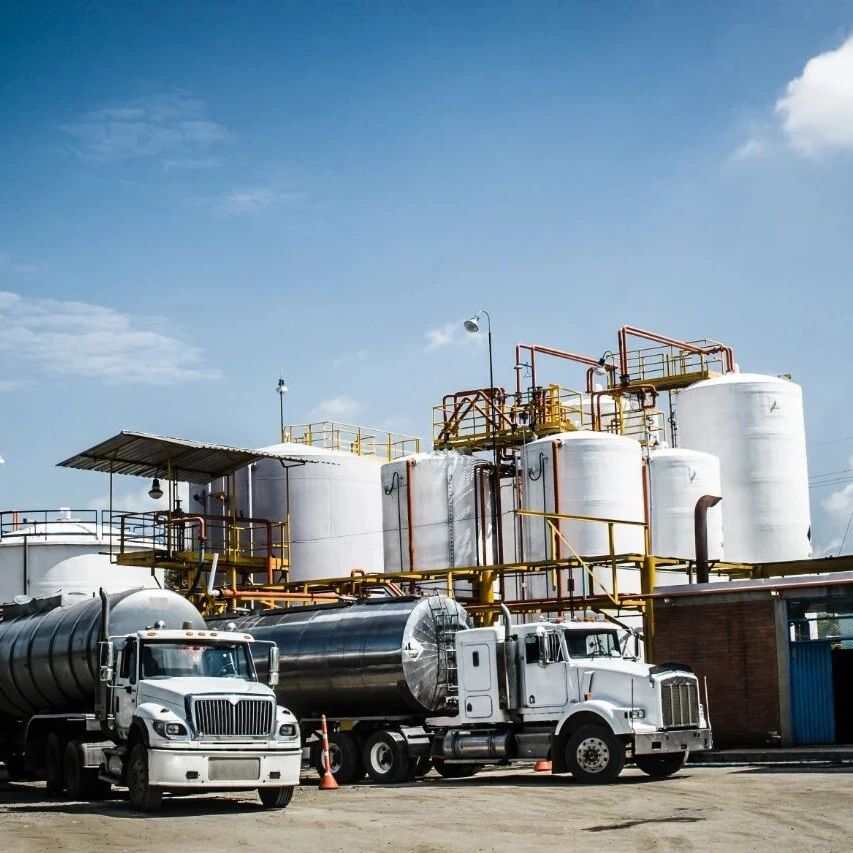
中石化,首套全链条国产化溶液法POE装置联动试车
DT新材料· 2026-03-23 16:05
Core Viewpoint - The article highlights the significant advancements in China's domestic production of polyolefin elastomers (POE), particularly through the successful trial operation of a 100,000 tons/year POE industrial facility in Tianjin, marking a critical step towards self-sufficiency in this sector [1][2]. Group 1: Technological Advancements - The first fully domestically produced 100,000 tons/year POE industrial facility in Tianjin is now in the key trial operation phase, building on the successful operation of a 50,000 tons/year demonstration facility in Maoming [1]. - The technology encompasses a complete domestic upgrade of the catalyst, process technology, equipment, and control systems, with a focus on high activity and low-cost self-developed metallocene catalysts [1][2]. - The facility's equipment has achieved a domestic production rate of 99%, enhancing the level of domestic production capabilities for high-performance synthetic materials [2]. Group 2: Production Capacity and Market Impact - Future plans indicate that China Petrochemical Corporation (Sinopec) will have a total POE production capacity of 250,000 tons/year, which is expected to increase the domestic self-sufficiency rate of POE by approximately 23% [3]. - This expansion will reduce the import dependency of POE to around 53%, marking a significant milestone in the domestic production process [3]. Group 3: Broader Industry Implications - In addition to POE, Sinopec is actively developing various new materials, indicating a broader strategy to enhance its position in the new materials sector [4].

中国石化(600028):公司业绩受库存减利短期承压,高分红彰显长期投资价值
Xinda Securities· 2026-03-23 12:34
Investment Rating - The investment rating for Sinopec (600028.SH) is "Buy" [1] Core Views - The report indicates that Sinopec's performance is under pressure in the short term due to declining oil prices, but its high dividend payout reflects long-term investment value [1][4] - The company reported a revenue of CNY 2,783.58 billion in 2025, a decrease of 9.46% year-on-year, and a net profit attributable to shareholders of CNY 31.81 billion, down 36.78% year-on-year [1][2] Financial Performance Summary - In Q4 2025, Sinopec achieved a revenue of CNY 670.14 billion, a decline of 5.35% year-on-year and 4.86% quarter-on-quarter, with a net profit of CNY 1.83 billion, down 69.91% year-on-year and 78.53% quarter-on-quarter [2] - The average Brent oil price in 2025 was USD 68 per barrel, down 15% year-on-year, impacting the company's profitability across various segments [4] - The exploration and production segment saw a record oil and gas equivalent production of 525.28 million barrels, a 1.9% increase year-on-year, with domestic crude oil production at 255.75 million barrels [4] - The refining segment processed 250 million tons of crude oil, producing 14.49 million tons of chemical light oil, an 8.4% increase year-on-year [4] - The company plans to distribute a cash dividend of CNY 0.20 per share, totaling CNY 25.76 billion, maintaining a profit distribution rate of 81% [5] Earnings Forecast and Valuation - The forecast for net profit attributable to shareholders for 2026-2028 is CNY 40.87 billion, CNY 45.08 billion, and CNY 50.86 billion, with corresponding EPS of CNY 0.34, CNY 0.37, and CNY 0.42 [7] - The report maintains a "Buy" rating based on the company's long-term development advantages and the expected recovery in the refining industry [7]
Sinopec Announced 2025 Annual Results Annual Payout Ratio Reached 81%
Accessnewswire· 2026-03-23 11:32
Core Viewpoint - Sinopec Corp. reported its annual results for 2025, highlighting stable financial performance despite challenges in the oil and gas sector, with a focus on shareholder returns and strategic initiatives for future growth [1][2][6]. Financial Performance - The company's revenue for 2025 reached RMB 2.78 trillion, with an operating profit of RMB 48.608 billion and a profit attributable to shareholders of RMB 32.476 billion [2][30]. - Basic earnings per share were RMB 0.268, while net cash generated from operating activities increased by RMB 13.1 billion year-on-year to RMB 162.5 billion [2][30]. - The annual payout ratio reached 81% according to CASs, with a proposed final cash dividend of RMB 0.112 per share [4][30]. Production and Operations - Oil and gas equivalent output hit a record high of 525.28 million barrels, up 1.9% year-on-year, with natural gas production increasing by 4.0% to 1,456.6 billion cubic feet [3][8]. - The refining segment processed 250 million tonnes of crude oil, producing 149 million tonnes of refined oil products, with jet fuel production up by 7.3% [3][9]. - Total chemical sales volume reached 87.12 million tonnes, marking a 3.6% increase year-on-year, with significant growth in export volume [3][16]. Strategic Initiatives - The company plans to enhance exploration and production efforts, focusing on high-quality reserves and profitable development, with an annual target of producing 280.91 million barrels of crude oil in 2026 [23][24]. - In refining, the strategy includes optimizing resource procurement and increasing the output of chemical feedstocks while reducing refined oil products [24][25]. - The marketing and distribution segment aims to expand its integrated energy services, including the development of EV charging and hydrogen refueling networks [25][26]. Research and Development - Significant advancements in R&D were reported, including breakthroughs in shale oil development technologies and digital intelligence initiatives, with nearly 10,000 patent applications filed [19][27]. - The company is focusing on integrating technological innovation with industrial applications to enhance productivity and efficiency across its operations [27][28]. Capital Expenditures - Capital expenditures for 2025 totaled RMB 147.2 billion, with significant investments in exploration and production, refining, and chemical projects [21][29]. - Planned capital expenditures for 2026 are projected between RMB 131.6 billion and RMB 148.6 billion, reflecting a continued commitment to growth and development [29].

中国石油化工股份(00386):暴风雨前的平静
citic securities· 2026-03-23 07:17
Investment Rating - The report assigns a negative outlook for Sinopec, indicating that the 2025 performance is expected to be 19% lower than market consensus [2][3]. Core Insights - Sinopec's net profit for 2025 is projected at 32.5 billion yuan, a 34% year-on-year decline, and significantly below market expectations [3]. - The fourth quarter of 2025 showed a meager net profit of 400 million yuan, down 89% year-on-year and 95% quarter-on-quarter, primarily due to a 7.35 billion yuan inventory loss from falling oil prices [3]. - The downstream segments, including refining, marketing, and chemicals, have all weakened, with the marketing segment turning to a loss and the chemicals segment's losses tripling [4]. - The escalating situation in the Middle East is expected to impact Sinopec's downstream operations significantly, with potential supply disruptions in the second quarter of 2026 [5]. Summary by Sections Financial Performance - Sinopec's 2025 net profit is forecasted at 32.5 billion yuan, a 34% decrease from the previous year and 19% lower than market consensus [3]. - The fourth quarter of 2025 recorded a net profit of 400 million yuan, a drastic decline of 89% year-on-year and 95% quarter-on-quarter, largely due to inventory losses [3]. Downstream Operations - All three major downstream segments (refining, marketing, chemicals) showed deterioration in the fourth quarter of 2025, with the marketing segment reporting a loss and the chemicals segment's losses expanding significantly [4]. - The exploration and production segment remained relatively stable, with a 15% decline in earnings before interest and taxes [4]. Market Conditions - The report highlights that the Middle East situation could lead to significant supply disruptions, impacting Sinopec's operations and potentially leading to a shortage of refined products [5]. - The report notes that as the largest downstream operator in China/Asia, Sinopec may face substantial operational pressures due to these geopolitical developments [5].
Sinopec Profit Slumps in 2025 as Oil Prices and Chemicals Weigh
Yahoo Finance· 2026-03-23 04:37
Core Viewpoint - China Petroleum & Chemical Corp. experienced a significant earnings decline in 2025 due to lower crude prices, weaker fuel demand, and ongoing pressure in the chemicals sector, despite achieving record oil and gas output and maintaining a strong shareholder return policy [1][2] Financial Performance - The company reported revenue of RMB2.78 trillion, a decrease of 9.5% year over year, and a net profit attributable to shareholders of RMB32.48 billion, down 33.6% year over year [1] - Cash flow from operations increased to RMB162.5 billion [1] - A final cash dividend of RMB0.112 per share was proposed, resulting in a total annual payout of RMB0.20 per share [1] Market Conditions - Chairman Hou Qijun indicated that the earnings drop was due to significantly lower international crude prices and weak chemical margins, with Brent averaging $69.1 per barrel in 2025, down 14.5% from the previous year [2] - China's demand for refined products fell by 4.1%, highlighting challenges for integrated downstream players [2] Operational Highlights - Oil and gas output reached 525.28 million barrels of oil equivalent, an increase of 1.9% year over year, with natural gas production rising 4.0% to 1,456.6 billion cubic feet [3] - Domestic oil and gas equivalent production and profitability in the natural gas value chain reached record highs, supported by advancements in deep, unconventional, and offshore exploration [3] Refining Segment - The refining segment showed resilience, processing 250.33 million tonnes of crude, remaining stable year over year [4] - Light chemical feedstock production increased by 8.4%, and jet fuel output rose by 7.3% [4] - Segment operating profit in refining surged by 40.7% to RMB9.45 billion, driven by a strategy to shift more barrels towards chemical feedstocks and specialty products [4] Chemicals Business - The chemicals segment faced challenges, with revenue declining by 11.4% and an operating loss of RMB14.58 billion due to new domestic capacity, lower benchmark oil prices, and reduced margins [5] - The company is addressing these issues by cutting feedstock costs, optimizing product offerings, and accelerating the production of higher-value materials such as polyolefin elastomers and carbon fiber [5] Marketing and Distribution - The marketing and distribution segment was impacted by China's energy transition, with total oil product sales volume decreasing by 4.3% to 229.02 million tonnes [6] - Segment operating profit fell by 46.5% to RMB9.97 billion [6] - Despite these challenges, the company maintained leading positions in automotive LNG, hydrogen refueling, and low-sulfur bunker fuel, and expanded its alternative mobility footprint to over 13,000 EV charging and battery swapping stations [6]